Hood design-Week 2
Hood Design
Introduction
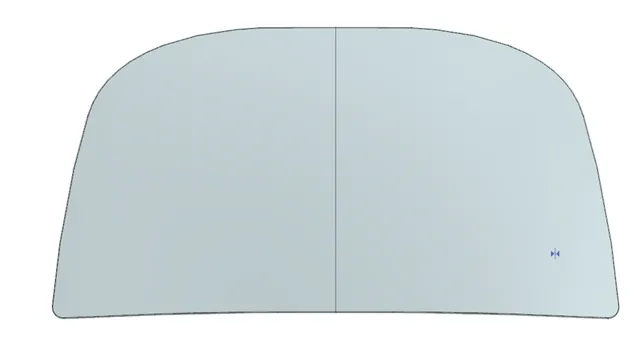
Hood is the outer panel covering the engine compartment in the front of the car providing access to the engine of the car. The complete body of hood act as a door which covers the Engine. The hood door consists of an outer panel and inner panel.
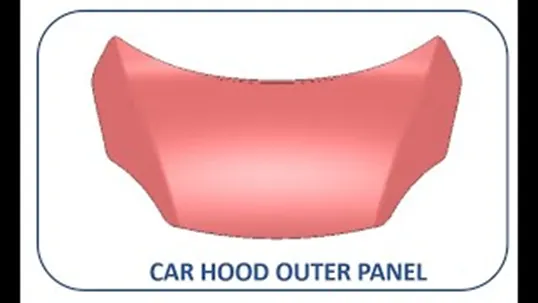
Outer panel provides the shape to the hood and a good look to the car.
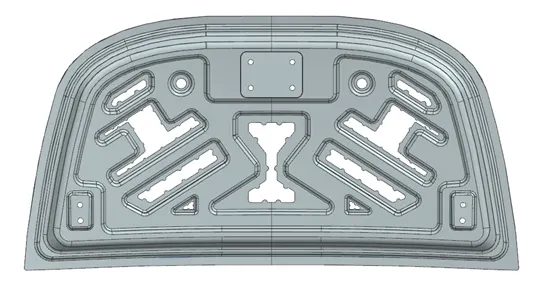
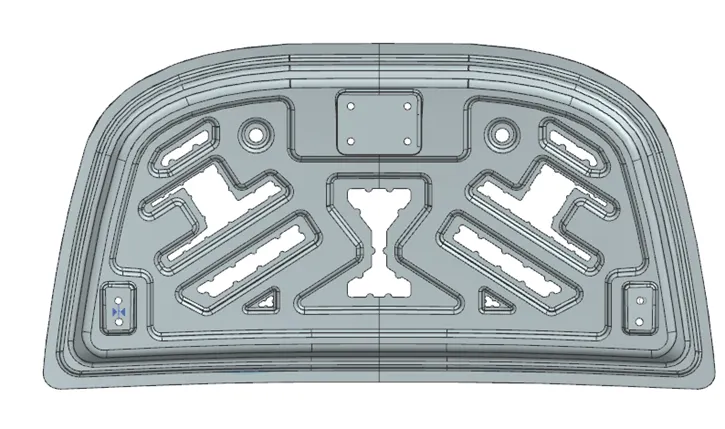
Inner Panel provides strength and rigidity to the car’s engine compartment. It also provides direction to the force coming after the collision towards the hinge.
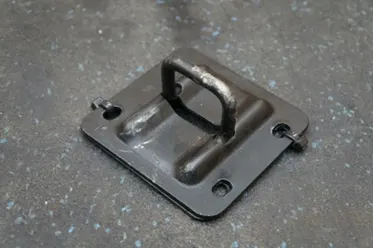
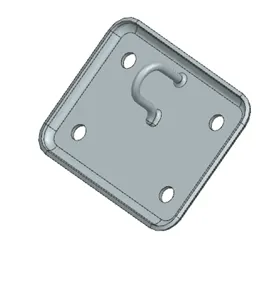
Striker: It is U shaped bend that attaches to the latch in order to lock the hood and prevent any loose movement during the car motion
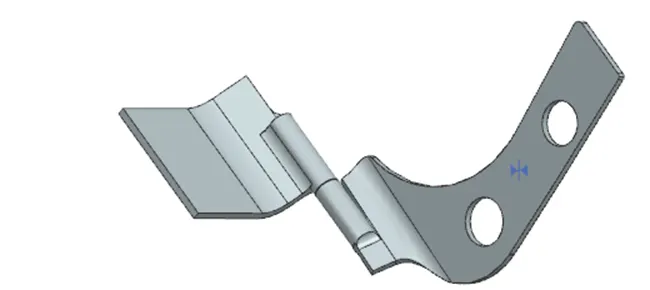
Hinge: It is the pivoting point from which the hood opens and closes.
Materials
Conventional car bonnets today are mostly made of steel or aluminum. Such car bonnets weigh about 10 kgs. This is considered too high and the potential for improvement by weight reduction is expected.
Design Considerations
- First design consideration for hood is its opening angle
The first important criteria about the designing of the hood are its opening angle. When we first develop a car, it is important to understand as the opening angle varies from region to region. For example, in Indian market the average height of a human being is 5.5ft and at that situation it is enough to open the hood at a particular angle, but the average European height is 6ft, so I need to open the hood a little more. This is controlled by support rod or gas stay.
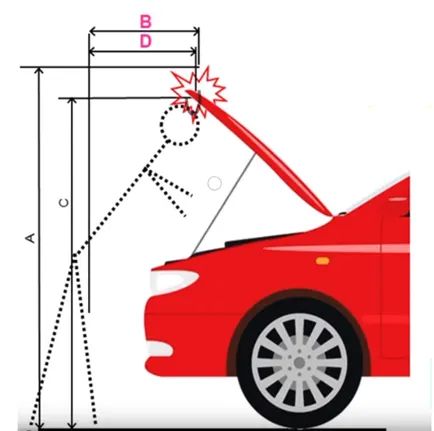
So, whenever a human wants to open the hood, a rod will be there to hold the hood at an angle, so by predefining the length of the rod I can manage the opening angle of the hood. The main criteria of opening the hood is that whenever a human open the hood door a clearance should be there between the head of human and tip point of the hood.
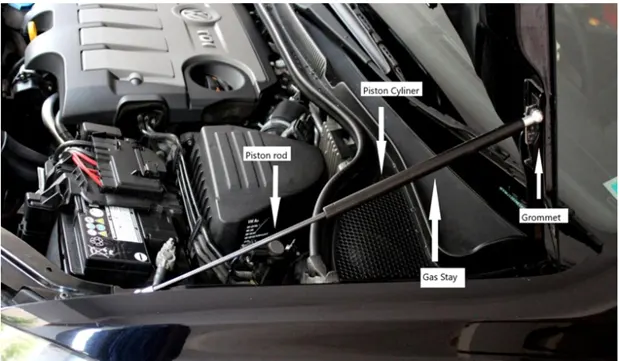
Gas Stay is a mini version of the bicycle pump in which the compressed nitrogen is stored with and tightly sealed so that the gas can’t escape. The gas allows to store energy which produced by the force acting on the piston and also lubricates it. When force is acted upon piston, the stored energy is released moving the piston to its free state position.
Gas stay helps in lifting heavy hood body in open position. Since gas stay supports the weight of the hood reinforcements should be given at the mounting points of the gas stay and grommets are used to attach the gas stay to the hood inner panel. There no human effort is needed.
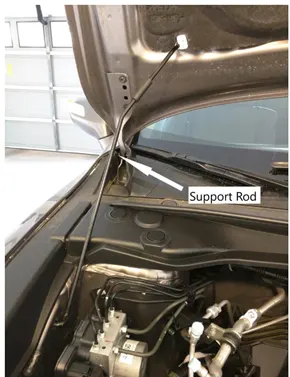
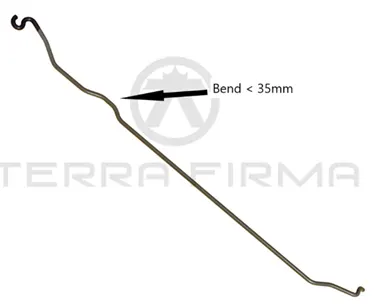
Support rod serve the same function as the gas stay but in case, the hood has to lift with all the loads and it is held in position using the support rods. Its length is decided on the basis of hood opening angle. In the support rod maximum bend of 35mm is given in order to strengthen the support rod to bear all the load of the hood. There the human effort is needed.
Reinforcement
Whenever I add weight to the material, I lose strength of the material locally. So, in the area of latch and striker and hinges I need to add material which is known as reinforcement which will give strength to the latch and striker and hinges areas.
Hood outer panel also has an reinforcement in the middle of it which is known as NVH (Noise vibration harness Level) which is used to reduce the noise and vibrations of the hood due to engine compartment.
Low NVH means good vehicle.
Mastic Sealant
The reinforcement of hood outer panel is removed due to cost reduction, so there is also an other material or another criteria that can be used between the outer panel and inner panel are the Mastic Sealants and this is an NVH topic.
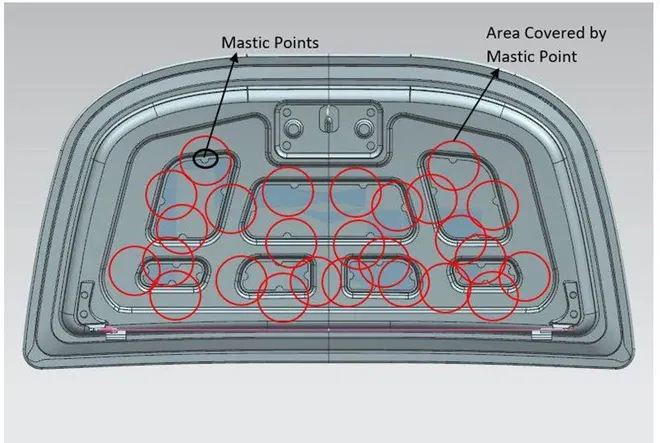
All Mastic sealants have tendency of improving the strength locally at around 80 mm diameter. I’ll position the mastics in such a way that most of the Hood regions are covered and I also have this mastic which have some influence.
Now to improve NVH we had the mastic points, mastic sealants, which is again a small rubber part which is hard. We introduce it in between inner and outer panel as a paste and when gets into the hot furnace it will get hardened and this will join the outer and inner panel.
Manufacturing Processes
The following are the manufacturing steps done to generate the outer and inner panel of the hood.
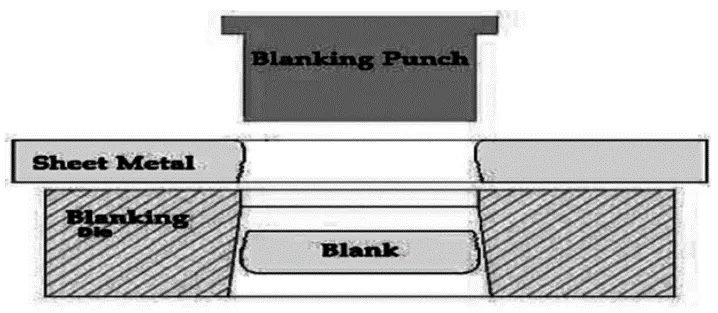
Blanking: It is the process where the required sheet metal material is cut from the sheet metal coil for the manufacturing of the hood using a blanking die.
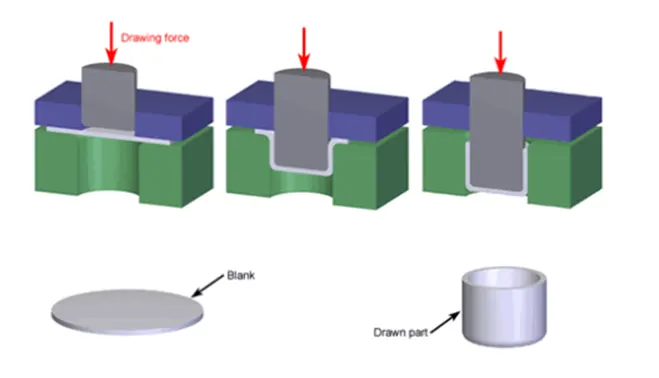
Stamping: The material obtained from the blanking is stretched using the stamping die. The stamping die is designed according to the embossed design. The process is called deep drawing.
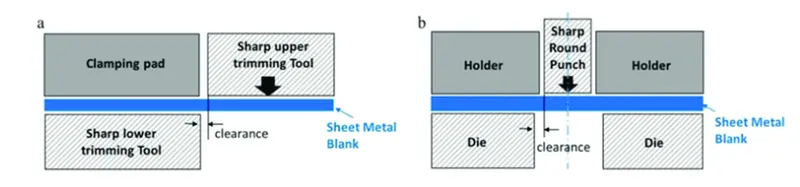
Trimming and Punching: The outer panel is obtained from the forming is placed in the trimming and punching die to carry out trimming and shaping operations to obtain the hood panel with the required dimensions and emboss cutouts.
- Trimming and (b) punching process.
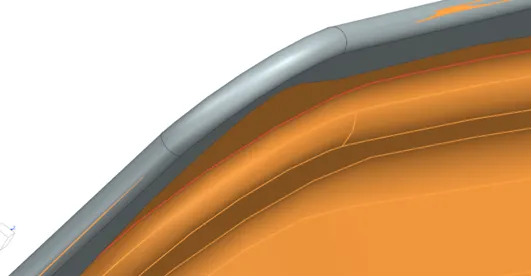
Hamming is a technology used in the automotive industry to join inner and outer closure panels together. It is the process of bending of the sheet of outer sheet over the inner sheet to join both the sheets together.
Different types of hemming methods are.
- Die Hemming
- Table Top Hemming
- Robotic roller hemming
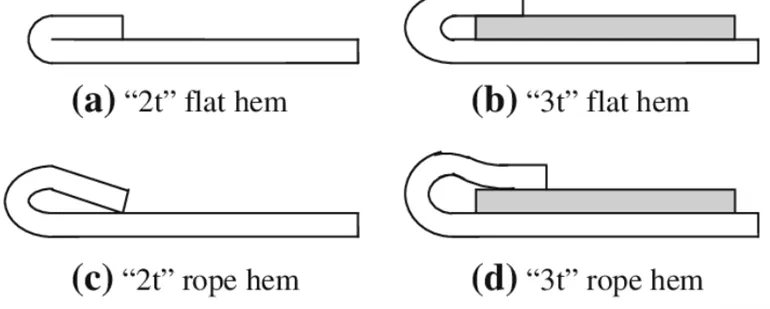
3t flat hem is used to join hood inner and outer panel.
Corner Relief
It is having to be provided for sheet metal bending otherwise deformation of sheet will occur.
Emboss
Sheet metal embossing is the stamping process to obtained raised or sunken edges for the desired design pattern on the sheet metal. This done with help of male and female dies between which sheet metal is placed and the dies are pressed against the sheet metal to obtained the designed pattern. In some cases, roller dies are used to get the raised edges in the sheet metal.
Manufacturing considerations for the emboss creation
- The distance between the outer edges of the emboss should be a minimum of 5 mm.
- Draft angle should be provided to the emboss with 7degrees to 9degrees for the easy removal of the part from the die.
- No sharp corners to be provided to the emboss can it would load to inefficient manufacturing.
- The height of the emboss should not be more than 5 mm.
Design Standards
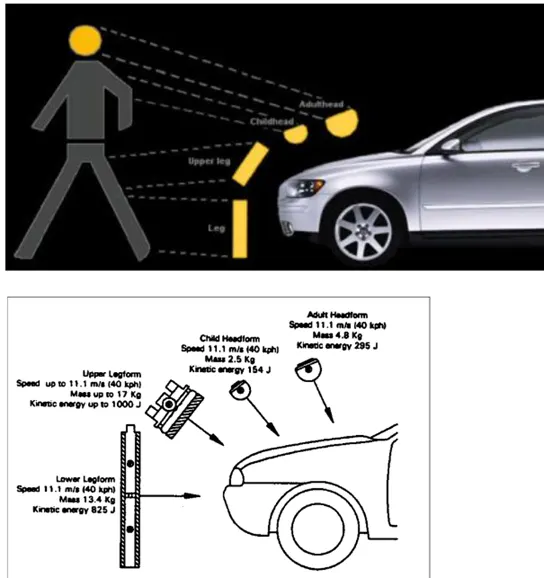
The most important criteria in designing a bonnet are pedestrian safety from a frontal collision. The EURO NCAP has developed series of crash test and rating systems for assessing pedestrian, driver, and passenger injuries during impact with of the vehicle.
The below image illustrates a pedestrian is in standing perpendicular to the road and a crash test performed with a head on collision.
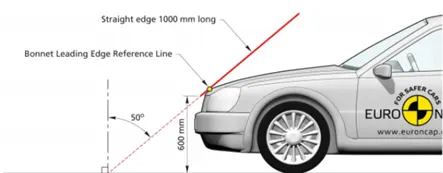
Wrap around distance
It is the distance from the road to the point where the head of the pedestrian collides with the hood.
In the below images we can see the wrap-around distance for adults and children.
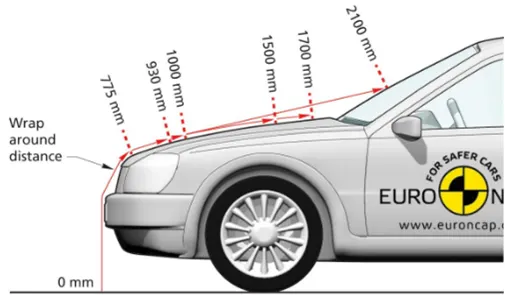
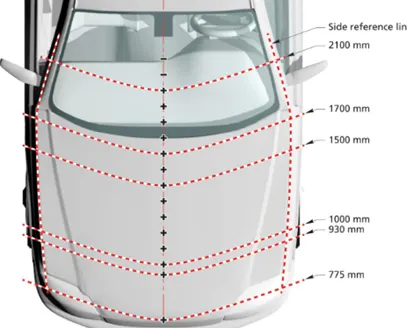
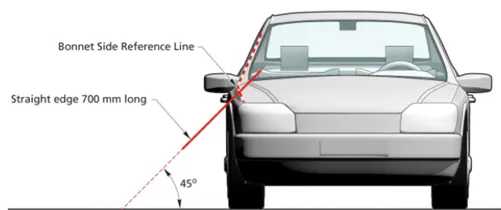
Side Reference line: A line is drawn at 45degrees from the ground such that it touches the end of the hood. This type of hood is called the inlaid hood. If the end of the point of the side reference line is at A-pillar then it is called the wrap-around hood.
Inputs
Outer panel
Striker
Hinge
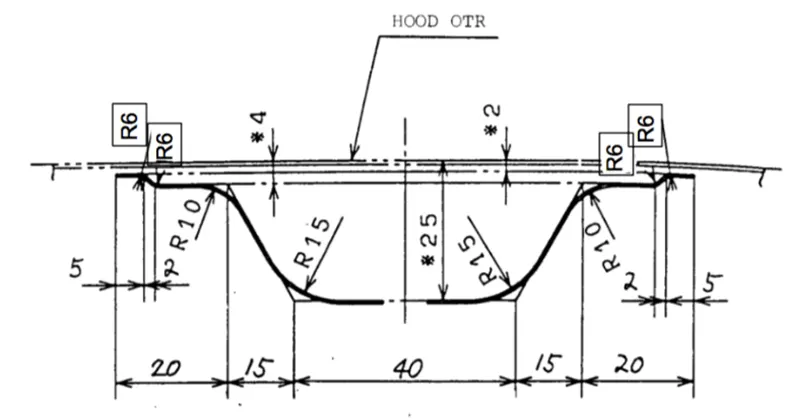
Master Section
Inner Panel with Emboss
Hemming
Conclusion
The design consideration of hood is taken into consideration while designing the hood. While designing the hood it gave the knowledge of how the engineer thinks while designing.