Hood design-Week 2
What is HOOD?
A car hood also referred to as a bonnet in some other countries is the hinged cover that rests over the engine of a front-engine vehicle. Hood is the one of the main component in of car's front region. it will add protection as well as esthetic look to the car along with it will add aerodynamics effect to car's design.
Hood Design Consideration-
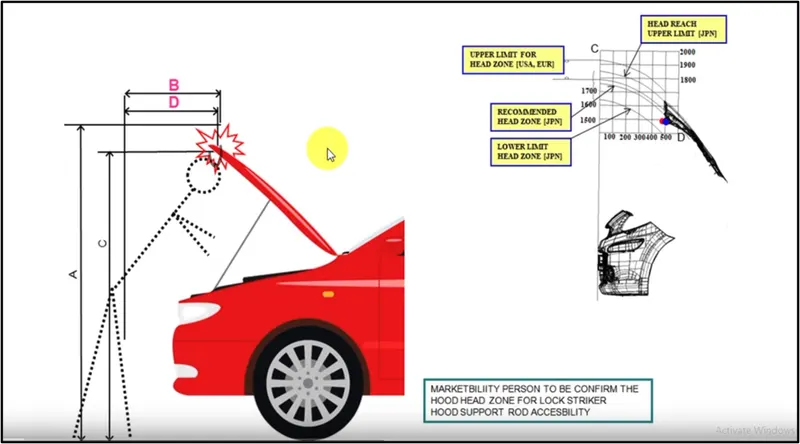
Head Clearance criteria
Head clearance values depends on regions/country. That's why even for same car model we will find different opening angles depends on the regions/country where it is going to be sold. In the following image you will get brief idea about how opening angle is changes country to country
Wrap Around Distance (WAD)
In the case of accident pedestrain are more vulnerable compared to passengers that's why we have think about saftey of padestrian also. Here WAD comes in the picture WAD is nothing but the distance from the ground to the point on the bonnet along the vehicle front structure.
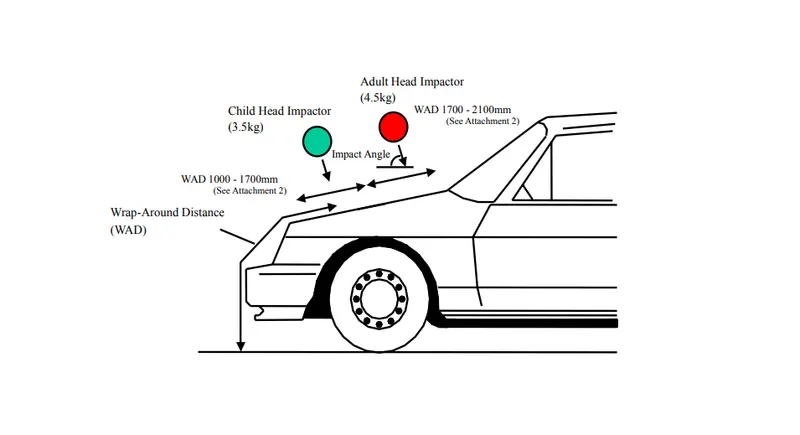
Child impact zone is - 1000-1700 mm WAD, Adult impact zone is - 1700-2100 mm WAD
To avoid major injuries the impact zone on hoods are designed with less thickness plus no reinforcement is provided within or near to that impact zone.
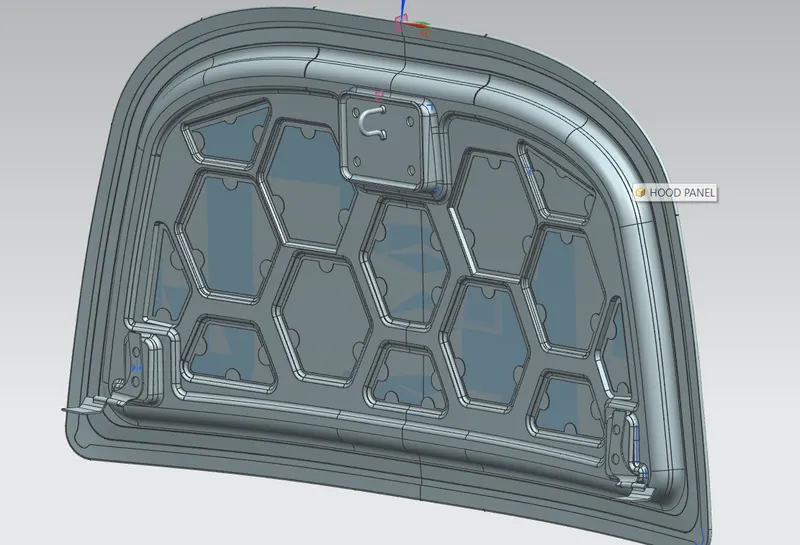
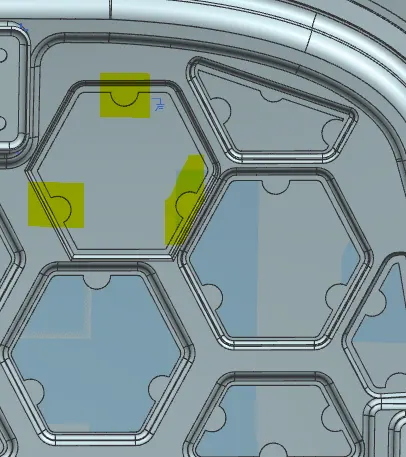
Arrangement of Emboises on the inner panel of hood
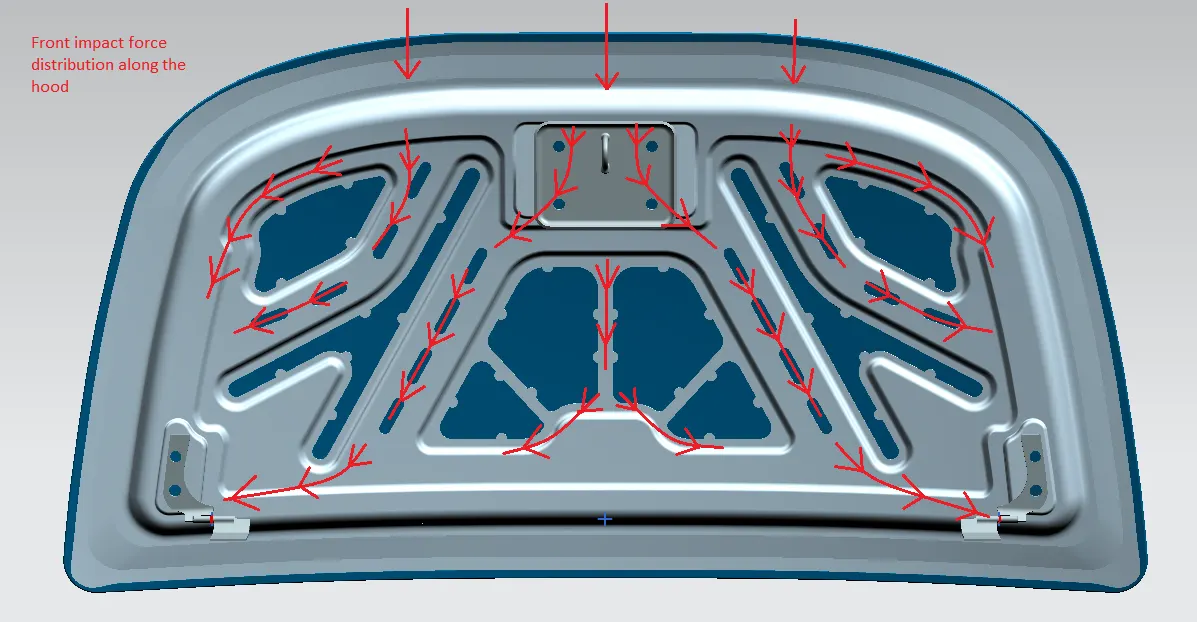
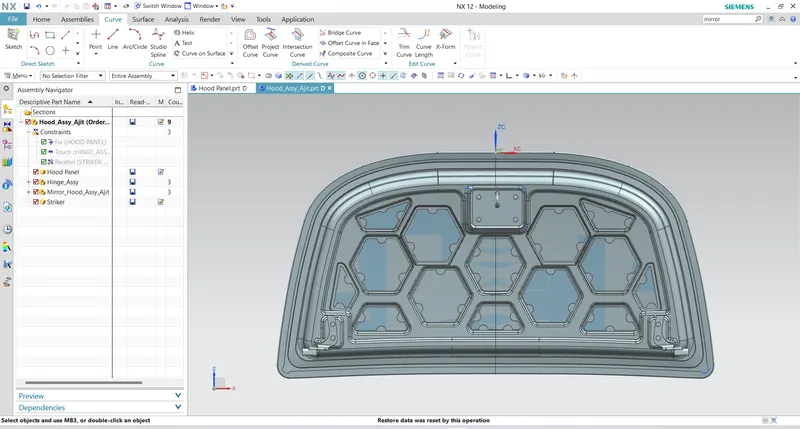
As we can in case of suddent impact force the force get distributed away from the passengers hence passengers will experience less intensity of impact force. This type of specific arrangement of emboises will increase the passenger's saftey.
Following parts are used in the assembly
- Hood Inner Panel
- Hood Outer Panel
- Latch
- Hinge
1) Hood Inner Panel -
(Thickness = 0.75mm)
Hood inner panel plays important roles in saftey for both pedestrians and passengers it contains embosses, mastic points and reinforcements.
2) Hood Outer Panel -
(Thickness = 0.75mm)
This act as cover ti inner panel. This part is reaponsible for luxurious and aesthatic view to hood along with aerodynamics properties. Outer panel and Inner panel attched with each other with the help of Hemming process which will attach both panels without any welding or rivets which will affects the look of outer panel.
3) Hinge
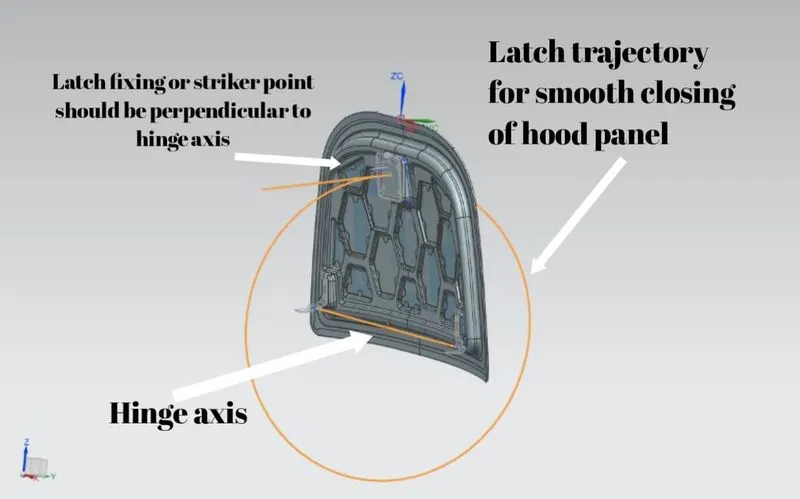
This part helps to attach hood to the fender of the car the direction of the latch must be perpendicular to hinge axis for proper fit.
4) Latch
Latch and striker helps to locked hood to the car's body.
Processes involved in designing the hood
- Hemming
- Blanking
- Piercing
- Deep drawing
- Embossing
Hemming
Hemming is a sheet metal forming process in which sheets are joined by bending it usually to 180°. Automotive body panels and automotive parts such as deck-lids, trunk-lids, doors, hoods and tailgates are formed by hemming process
There are 2 types of hemming operations:
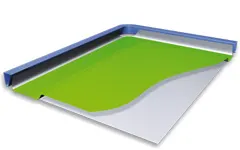
1) Conventional die hemming
In conventional die hemming, the flange is folded over the entire length with a hemming tool.
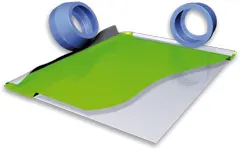
2) Roll hemming
In roll hemming, the hemming roller is guided by an industrial robot to form the flange.
Blanking
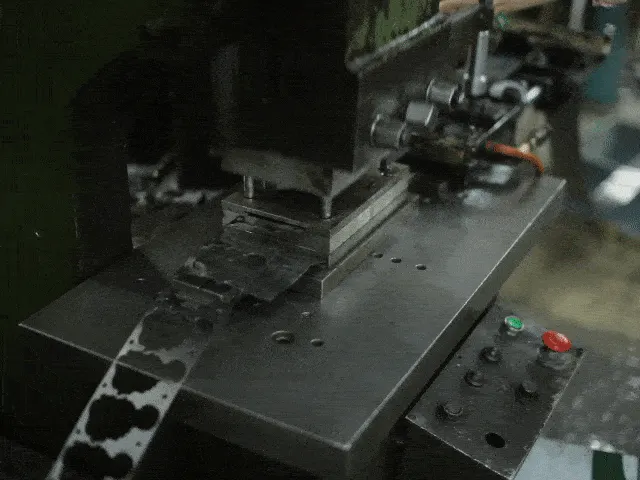
Blanking is a metal production process, during which a metal workpiece is removed from the primary metal strip or sheet when it is punched. The material that is removed is the new metal workpiece or blank.
Piercing Operation
Piercing is the process of cutting small, cylindrical holes in the sheet metal whilst removing very little quantity of material. This is done by using a bullet shaped punch during the punch and die operation.
Deep Drawing
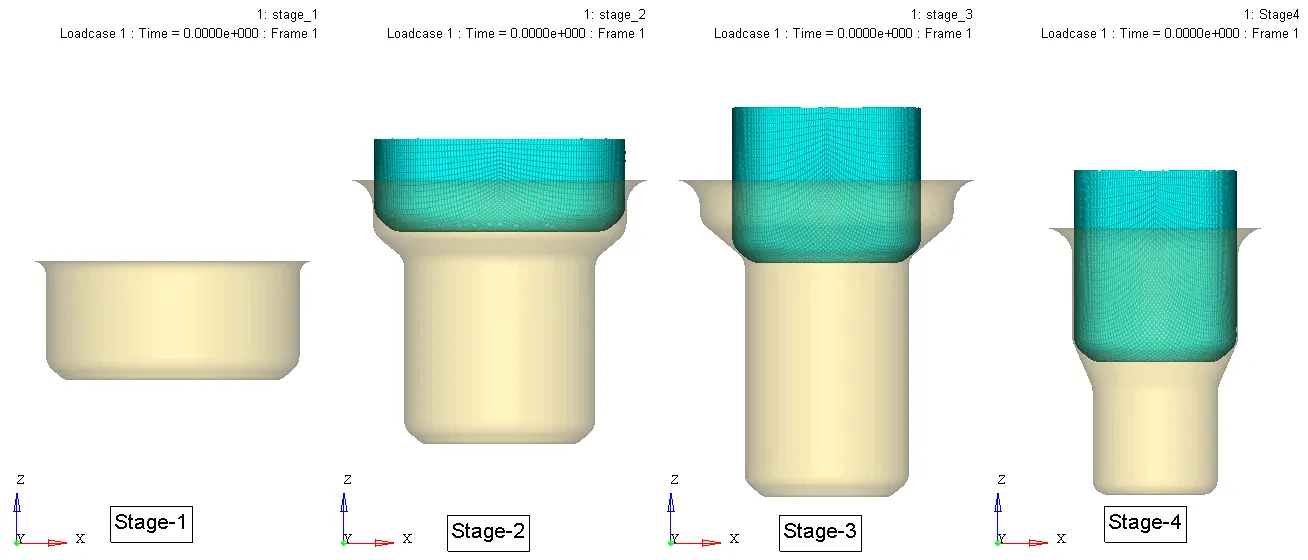
Deep drawing is the process of converting blank of sheet metal into a cylindrical containers with a flat or hemispherical base. If the ratio of height to diameter of the product is greater than 0.5 then this drawing operation is known as deep drawing.
Embossing
Sheet metal embossing is a stamping process for producing raised or sunken designs or relief in sheet metal. This process can be made by means of matched male and female roller dies, or by passing sheet or a strip of metal between rolls of the desired pattern. It is often combined with foil stamping to create a shiny, 3D effect.
Latch Trajectory
For better fit or while opening/closing of hood the latch must be pefectly match with striker. To achieve this we have to keep latch's trajectory perpendicular to hinge's axis
Mastic Data
mastics are point / surfaces given on embosses for applying mastic sealant to join outer and inner panel and also give good value of NVH. So mastic sealants are joining material used to join inner and Outer panel and at the same time reduces the NVH value. One spot of mastic sealant provides strength locally at around 80 mm so we need to put these mastic points in such a way that it covers the most of the hood region except reinforcement area of latch and hinge because that alone provide good NVH so no worries there.
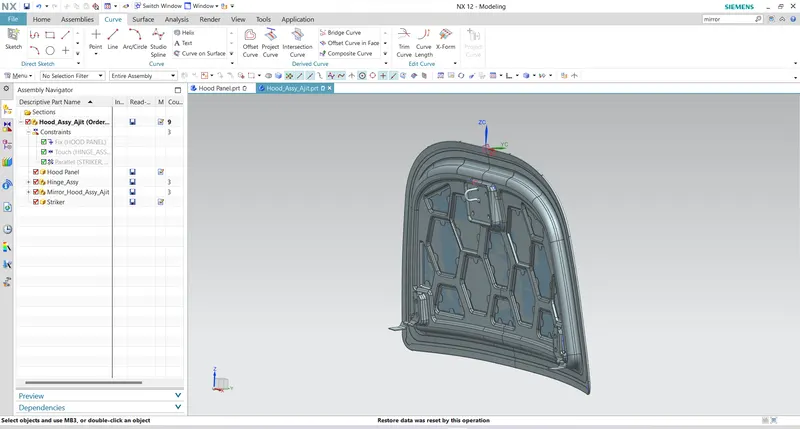
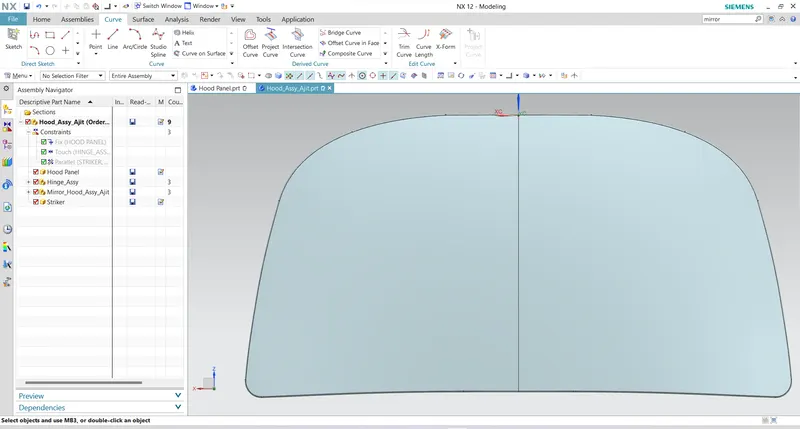
Final View of Hood Panel After Assembly