Hood design-Week 2
Note:
Please use the above link to download the Hood Inner Panel part file as I was unable to upload it with the zip file due to size constraints. It may be moved to the zip folder after being downloaded separately. Inconvenience is regretted.
Hood:
A car hood, also referred to as a “bonnet” in some countries, is the hinged cover that rests over the engine bay of a front-engine vehicle. It protects the engine and connected parts from the elements while providing easy access for repairs and maintenance.
Typically constructed from steel and sometimes aluminium, aftermarket car hoods may be also constructed from various other materials, including carbon fiber, fiberglass or dry carbon.
A concealed latch is typically used to lock the hood in place while driving. A release for the mechanism can be accessed from the dash below the steering wheel. On race cars and vehicles with an aftermarket hood, exposed pins may be used to secure the car hood.
Hoods, generally in performance cars, sometimes also contain a hood scoop or a power bulge to accommodate engines of higher capacities and also to increase the airflow to improve the car’s performance output.
But in this case we will consider a hood for a commuter car and only consider the design preference required for pedestrian and passenger safety.
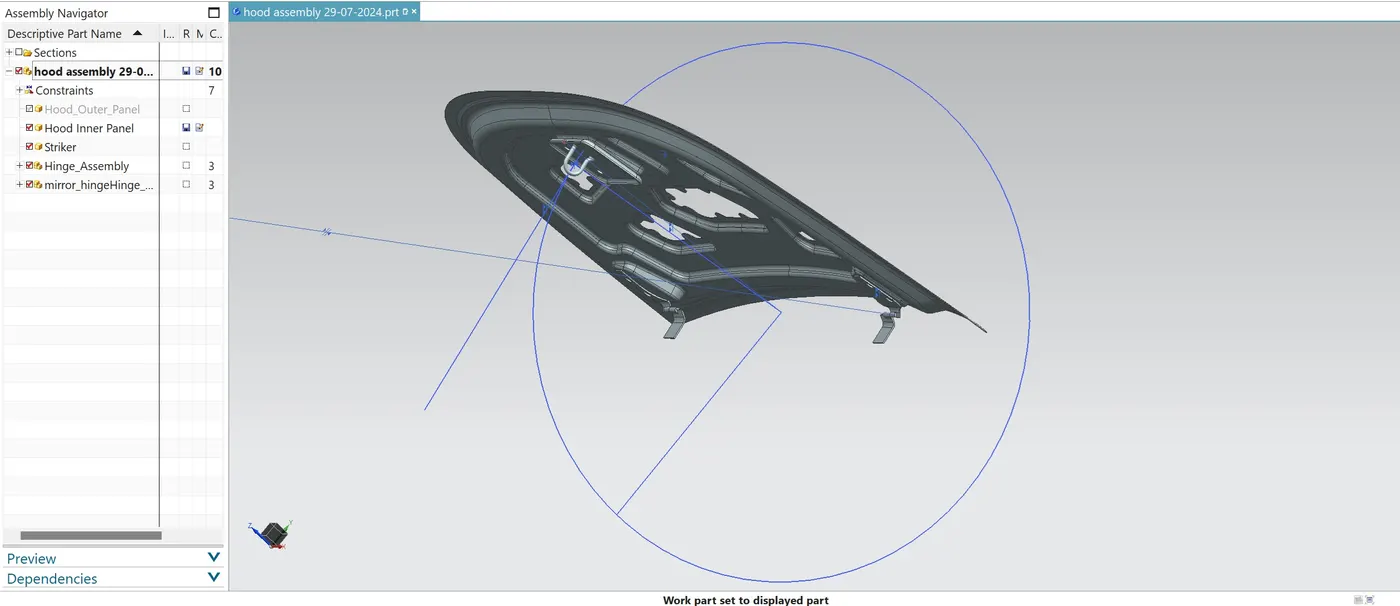
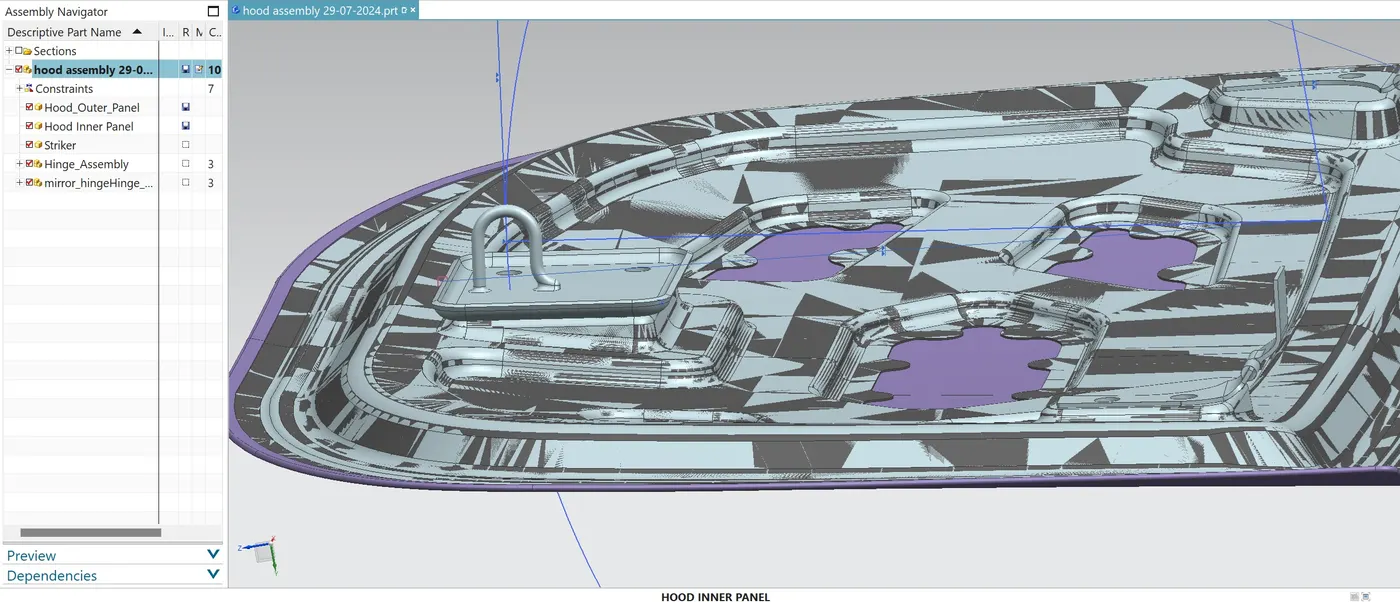
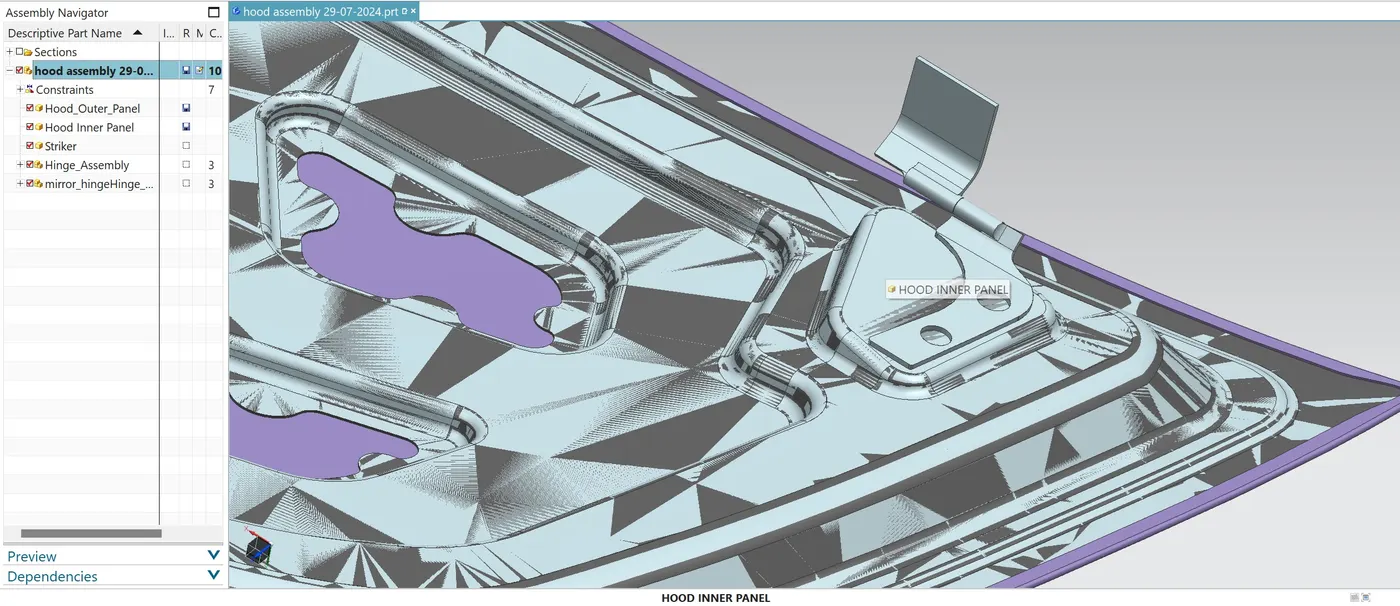
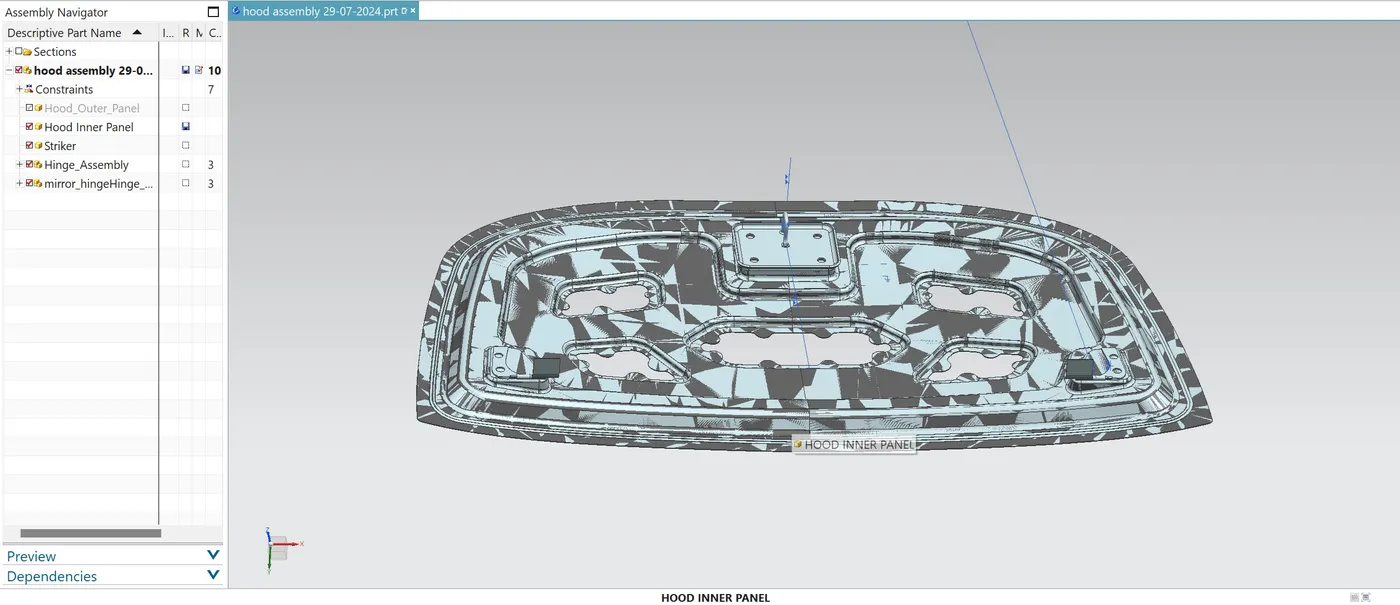
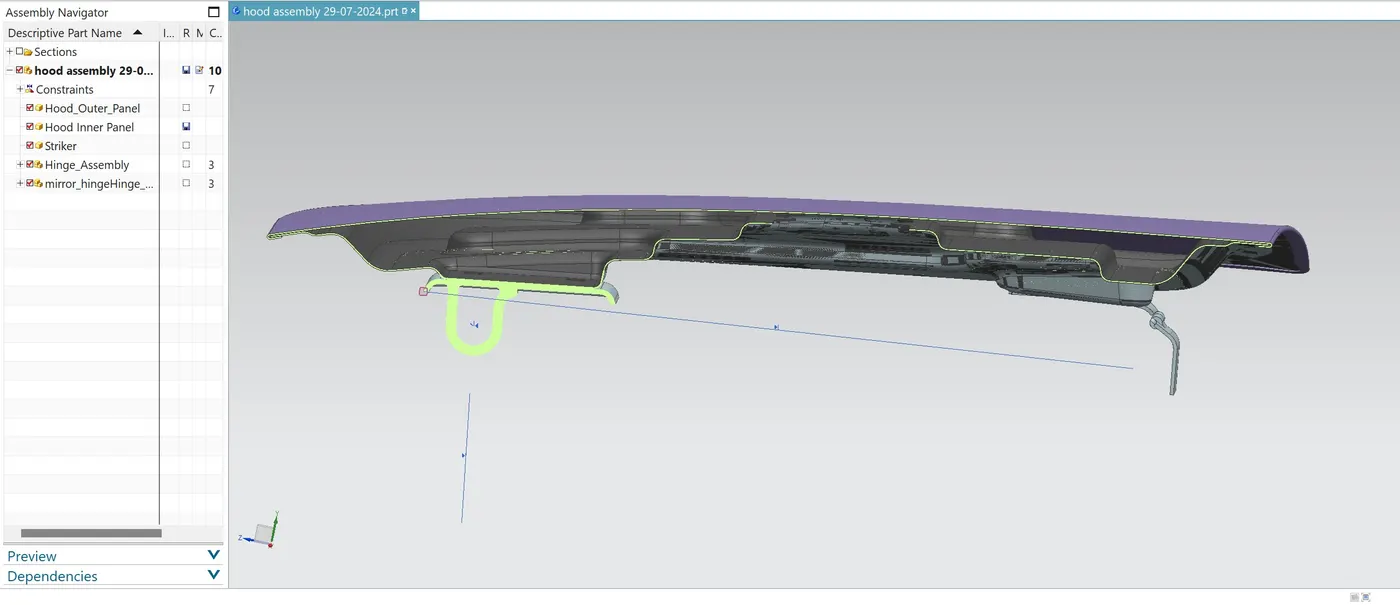
The Hood consists of the following components:
1. Outer Panel:
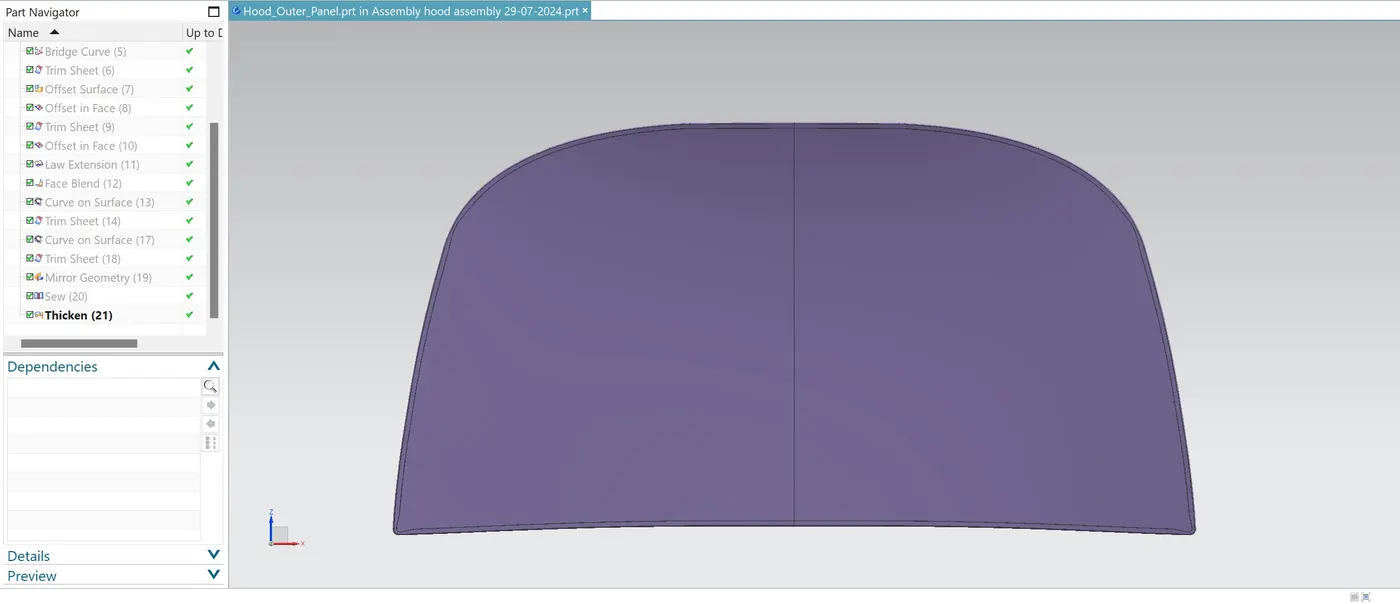
The outer panel provides the aesthetic looks to the hood. It is attached to the inner panel via hemming.
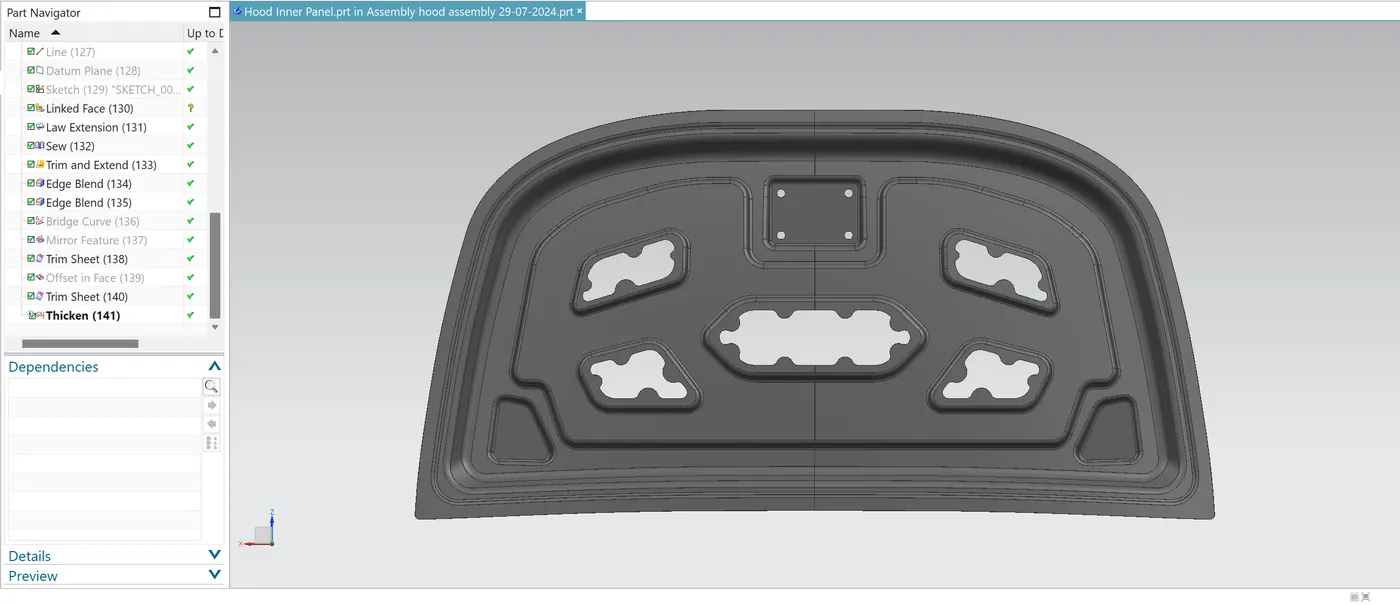
2. Inner panel:
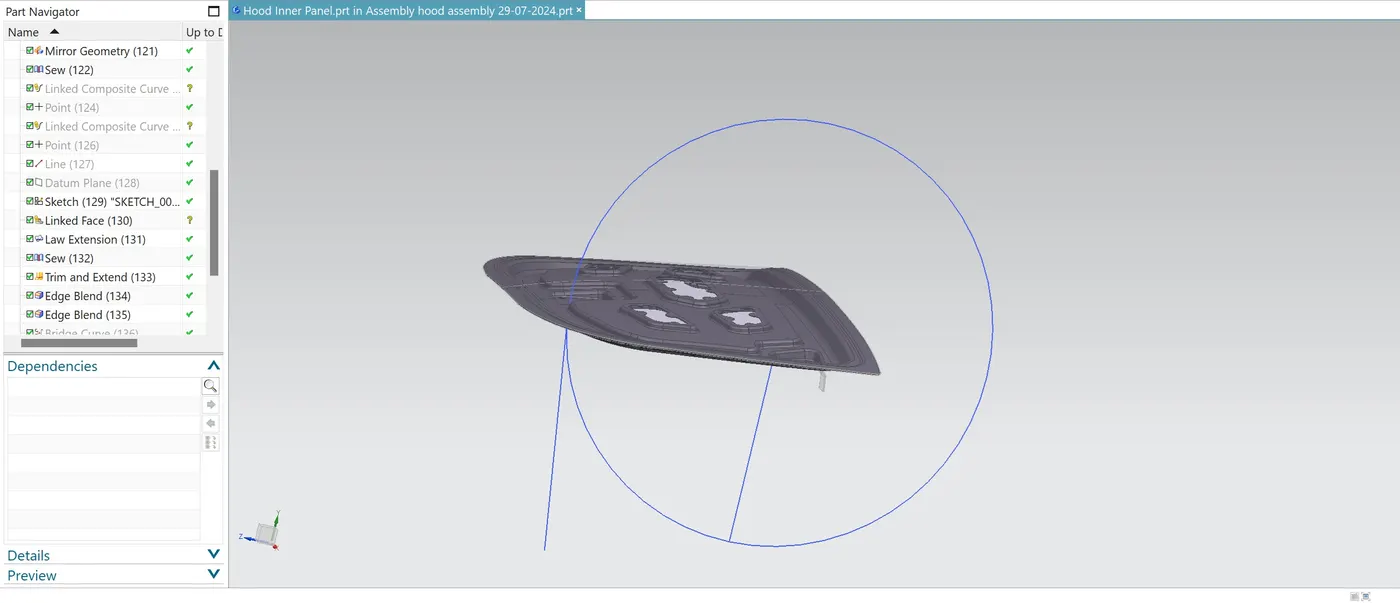
The inner panel provides the strength and rigidity to the hood. It contains the embosses and required reinforcements.
3. Hinge System:
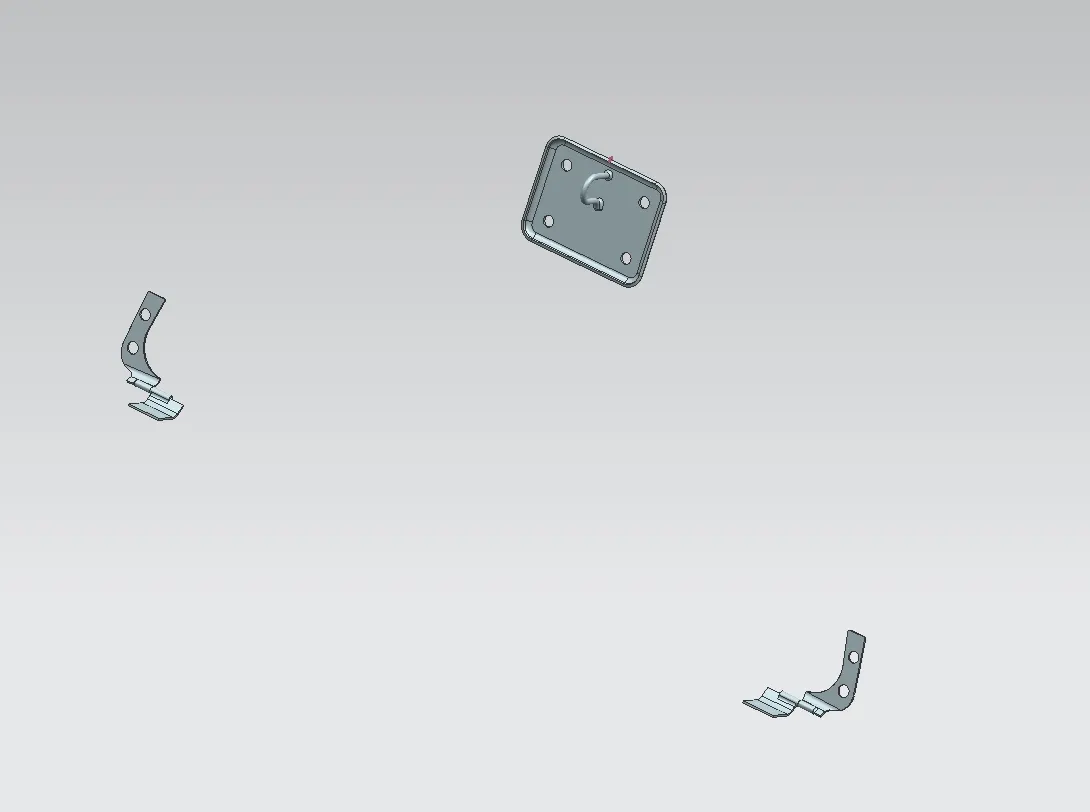
The hinges are placed towards the rear end of the hood. They serve the purpose of opening and closing of the hood. It is also used to fix the hood to the engine compartment.
4. Striker:
The latch and striker serve the purpose of locking the hood to the engine compartment until the operator decides to open it by pulling a certain lever positioned near the driver's seat.
Design considerations:
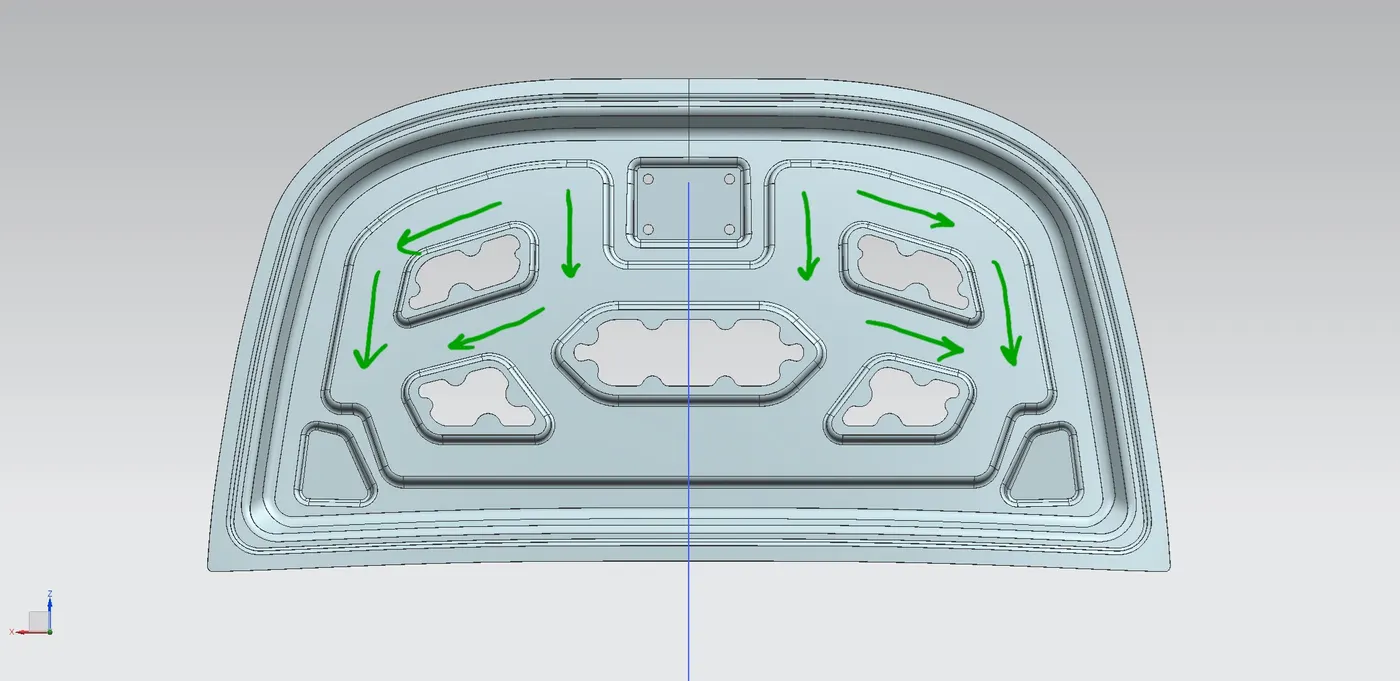
1. Emboss:
Embosses are made in the inner panel that provide strength to the panel. The embosses are made in such a way that the force resulting from an impact is directed away from the passengers.
2. Latch trajectory:
It is the path through which the striker moves when opening or closing the hood. It is an important aspect when deciding the striker and latch installation points.
3. Mastic sealants:
Mastic sealants are elastic compounds that behave like hard rubber. They are placed between the outer panel and inner panel and after heat is applied, it spreads over an area of around 80 mm diameter. It also seals the inner and outer panel together in a clean way since bolts and nuts are not drilled on top of the outer panel, which would ruin the aesthetics.
The various mechanical process involved in hood design are:
Deep Drawing:
Deep drawing is one the most widely used processes in sheet metal forming. Apart from its use in many other sectors, it is applied in the automotive industry for the manufacturing of car body parts. The deep drawing process is a forming process which occurs under a combination of tensile and compressive conditions. A flat sheet metal blank is formed into a hollow body open on one side or a hollow body is formed into a hollow body with a smaller cross-section.
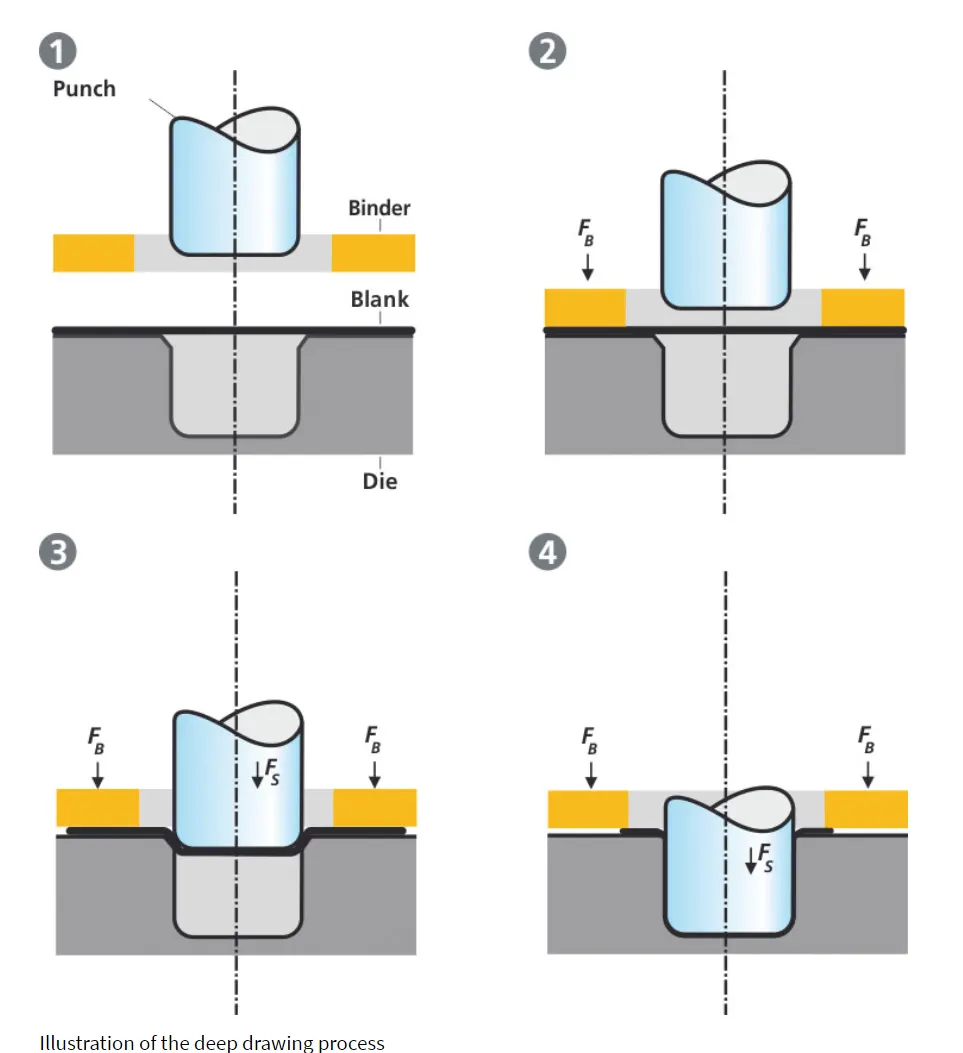
Image source: autoform.com
Hemming:
Hemming in sheet metal operations refers to the bending of a sheet metal edge onto itself. It is very similar to edge stitching in clothes. Similar to how an edge stitch strengthens the edge and makes it more durable, a hem imparts strength to the metal edge and improves its appearance. The edge of one part may also be folded onto another part to create a joint.
Hemming is usually done in two stages. The first stage creates an acute bend using acute tooling (V die) followed by a flattening of the return flange using a flattening die.
A complete list of hemming benefits on a sheet metal product is as follows:
- Hems strengthen the sheet metal edge
- They improve the surface appearance and surface quality
- They hide defects such as rough edges and burns
- They can connect parts
- They make the edges safer to handle
Hem types:
The different sheet metal hems based on the hem shape are as follows:
- Flat or closed hem
- Open hem
- Teardrop hem
- Rope hem
- Rolled hem
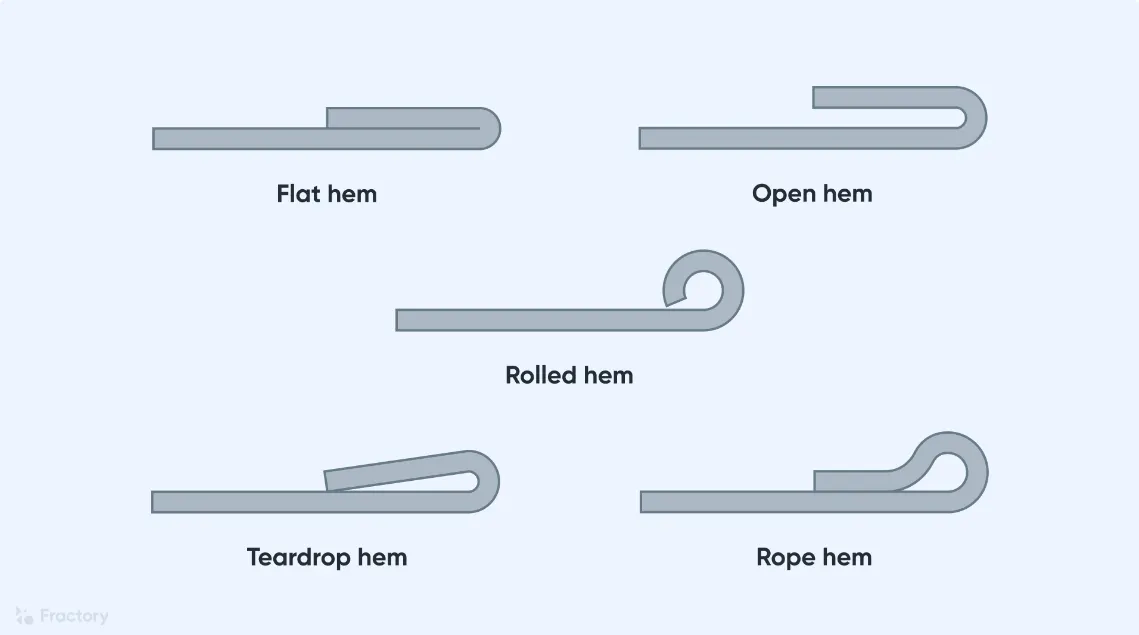
Image source: fractory.com
Emboss:
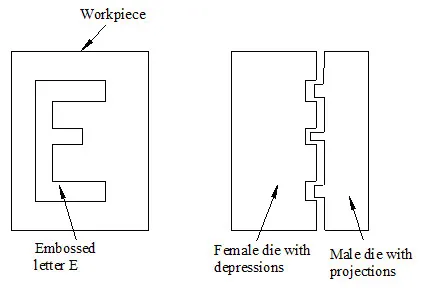
In the context of sheet metal fabrication, embossing is a technique used to create raised or sunken designs or reliefs in metals. The process is versatile, catering to a wide range of industries from automobile and construction to arts and crafts. With a balance of pressure, heat and precision, sheet metals can be transformed into a detailed metal sheet.
In the process, the punch, or the die, or both of them may have the engravings of the shape to be produced on the workpiece material is stretched over a male die and caused to conform to the male die surface by a mating female surface die. The finished product will have depressed detail on one side and a raised detail on the other. Embossing is a cold working process.
Shearing:
Shearing refers to straight line cuts to separate large metal sheets or bar stock. This method involves using sharp blades to slice through the material, creating a sheared edge on the flat metal sheet. Sheet metal shearing is a preparatory step and prepares the metal for other cutting processes.
Image source: researchgate.com
Blanking:
It is a process that precisely cuts out a product from a sheet metal. A punch and die are used to remove the material through massive shearing forces. The desired shape that is punched out is used for specific applications while the excess material left is treated as scrap.
A blanking die consists of a die, guide plate and punch. The die is stationary and is usually below the metal sheet that is secured by the guide plate. The geometry of the die is shaped in the form of the desired cut. A punch applies pressure to the metal sheet, exerting a specific amount of load to perform the cut.
Image source: researchgate.com
Punching:
It is a process that involves punching holes or other more complex shapes to remove material from metal sheets. The removed material end up as scrap which is the complete opposite of blanking, where the punched out shapes are the product.
Image source: researchgate.com
Final Assembly:
References:
1. https://www.kbb.com/what-is/car-hood/#:~:text=A%20car%20hood%2C%20also%20referred,access%20for%20repairs%20and%20maintenance.
2. https://www.autoform.com/en/glossary/deep-drawing/
3. https://fractory.com/sheet-metal-hemming/
4. https://msvs-dei.vlabs.ac.in/mem103/Unit2lesson6.html#embossing
5. https://fractory.com/shearing-blanking-punching-piercing/