Hood design-Week 2
AUTOMOBILE HOOD DESIGN
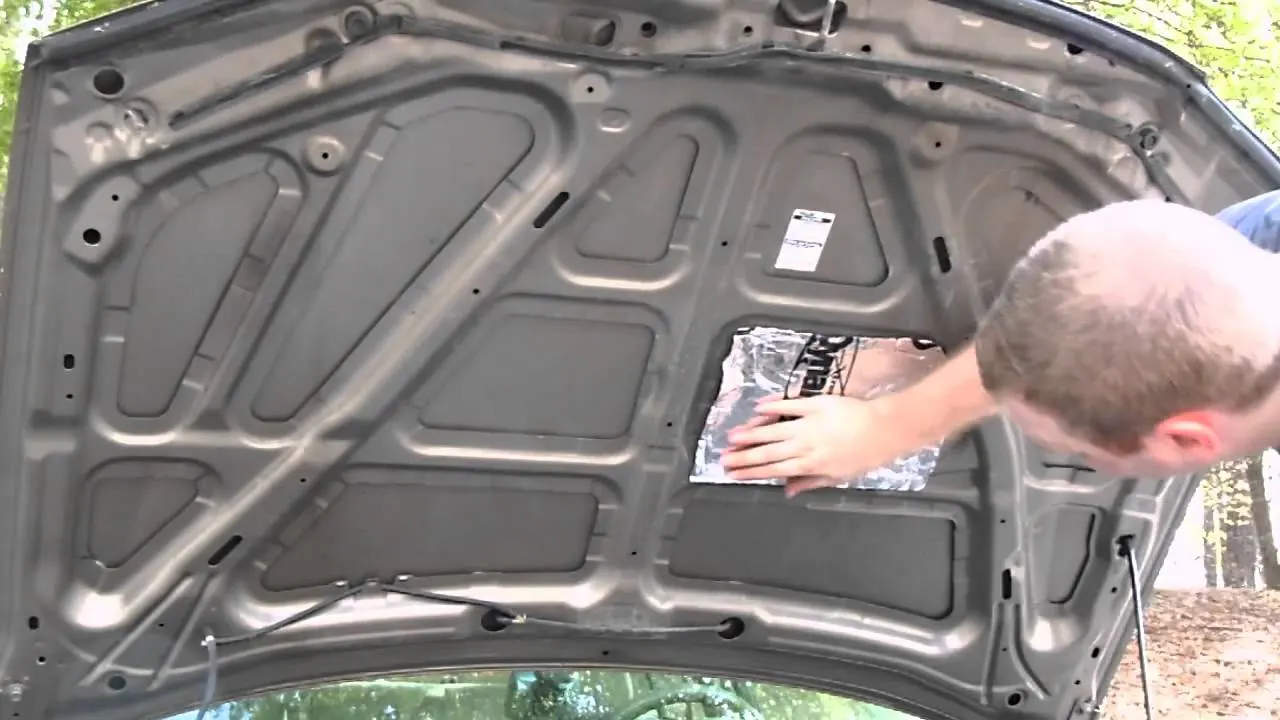
Introduction:
In this project we are going to understand and design the concept of front-mounted engine’s hood according to the standards. The hood or bonnet is the hinged cover over the engine of motor vehicles that allows access to the engine compartment, or trunk for maintenance and repair.
On front-mounted engine cars, the hood may be hinged at either the front or the rear edge, or in earlier models, it may be split into two sections, one each side, each hinged along the centreline. A further variant combines the bonnet and wheel arches into one section and allows the entire front bodywork to tilt forwards around a pivot near the front of the vehicle.
Hoods are typically made of the same material as the rest of the bodywork. This may include steel, aluminium, fiberglass, or carbon fibre. However, some aftermarket companies produce replacements for steel hoods in fiberglass or carbon fibre to make the vehicle lighter.
Components Of Hood:
- OUTER PANEL
- INNER PANEL
- STRIKER
- HINGE ASSEMBLY
DESIGN METHODOLOGY:
In this project top-down method used to designing the hood. With the help of a master sketch. the master sketch is nothing but a design principle of sketch workflow.
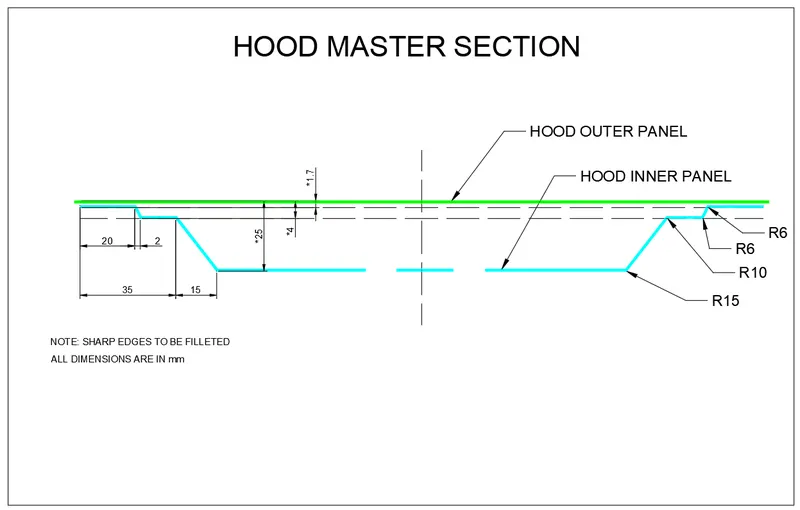
Manufacturing Process:
The process involved in manufacturing hood as a sheet metal operation are-
- Blanking
- hemming
- Punch cutting or piercing
- Deep drawing
- Embossing
DESIGN CONSIDERATION:
- Pedestrian rating
- Force distribution
- Ensuring DFM (sheet metal process)
- Hood standards
Pedestrian rating-
- India, however, ranks 1 in the number of road accident deaths across the 199 countries reported in the World Road Statistics, 2018 followed by China and the US. As per the WHO Global Report on Road Safety 2018, India accounts for almost 11% of the accident-related deaths in the World.
- Road transport remains the most favoured mode of transport for both freight and passenger movement in India. The fast-growing population, exceptional rate of motorization coupled with the ever-growing urbanization has made people vulnerable to frequent road accidents resulting in fatalities, injuries/disabilities.
the most important thing is a safety regardless of anything. so there are times that pedestrians will be hit by the hood of a car. while the head is laid on the hood that specific portion should absorb the energy instead of resisting. to prevent causes. the hitting zone will be different because of so many factors like ages, country, etc.
wrap around distance:
when a car crashes on a pedestrian the whole-body wraps around the front shape of the car. and the head impact on the windscreen. the distance on which the head impacts the car from the ground is called (WAD).
child's head impact zone=1000mm to 1700 mm (3.5 kg)
adult head impact zone = 1700mm to 2100mm (4.5 kg)
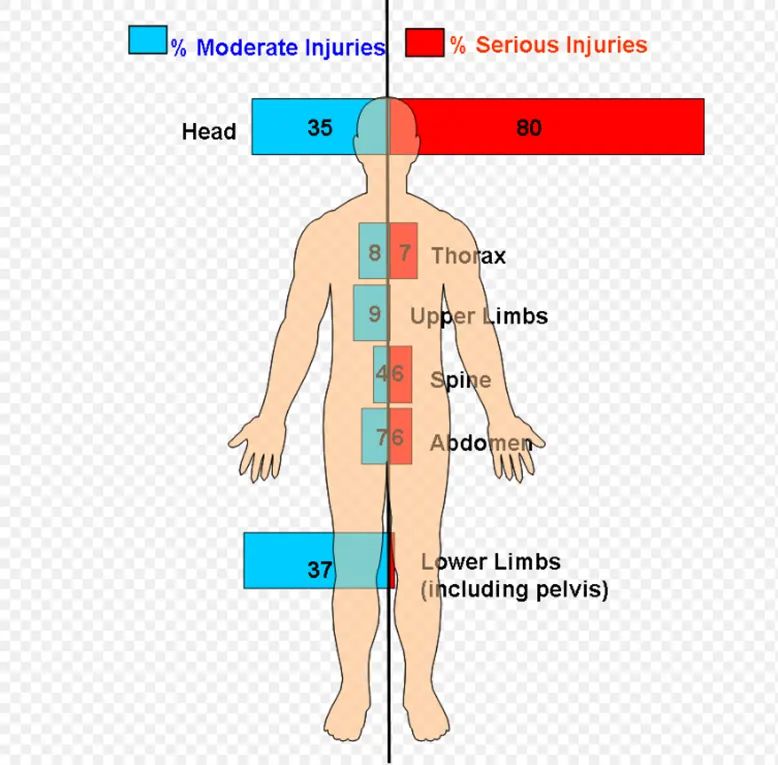
sequence of injuries and events in pedestrian collision images are mentioned below-
INNER PANEL:-
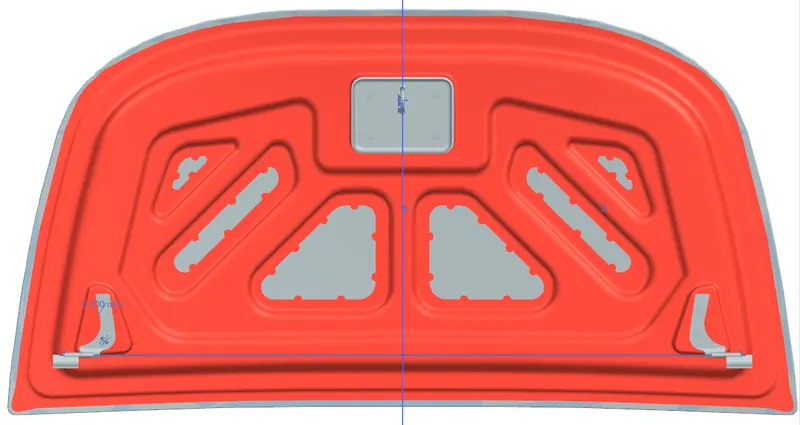
The hood inner panel is required to have a high initial reaction force against the impact exerted on the hood to enhance the energy absorption capacity. The hood is further required to minimize a reduction of a reaction force by deformation in a collision.
It is an object of the present invention to provide a hood inner panel capable of reduction of a reaction force of the hood inner panel even if a level of deformation of a hood of a vehicle increases, and ensuring a sufficient energy absorption capacity.
In the inner panel only we can research and implement the safety of pedestrians and as well as the driver.in this panel only we can attach the reinforcement, embossed, mastic points, etc.
OUTER PANEL:-
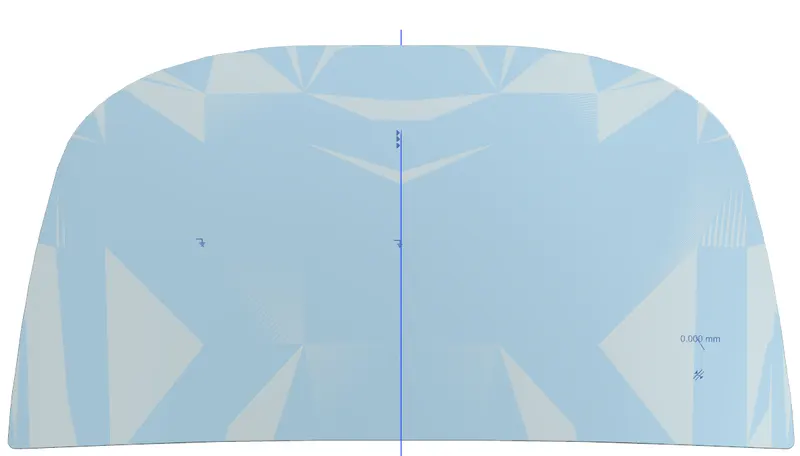
Outer panels are the aesthetic elements of a car. It is the styling team who provides the skin for the outer panel. The shape, position and size of the hood should satisfy the safety norms. So while designing the hood we should give more importance to pedestrian safety. The outer panel is attached to the inner panel by hemming. So, it is necessary to provide required hemming flange and reliefs for the hemming operation. We also provide mastic sealants between outer panel and inner panel to reduce vibration.
STRIKER AND HINGE:-
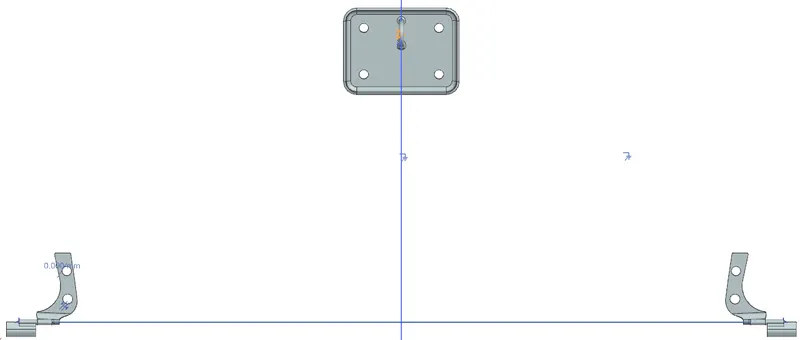
Hinge is used to open and close the hood in a certain axis. Striker is used to lock the hood when it is closed.
Latch Trajectory-
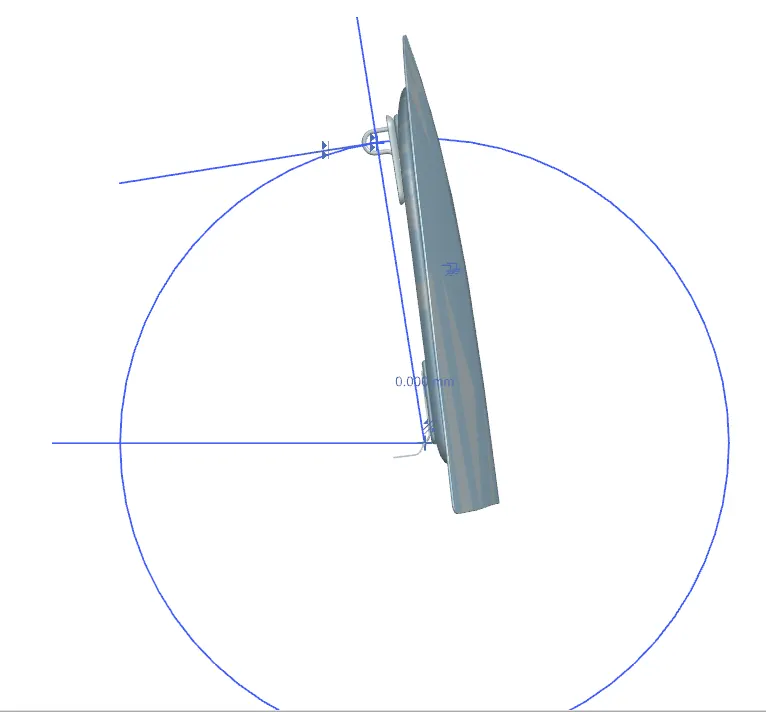
Latch trajectory is given by the circle drawn from the hinge axis point. Hinge axis point is the centre point of the hinge axis. First, we can fix either the latch or the hinge. If we have fixed the hinge position then we should plot the Trajectory circle for the latch. For proper mating condition the striker axis through the tip of the striker should be tangential to the latch trajectory.
Emboss-
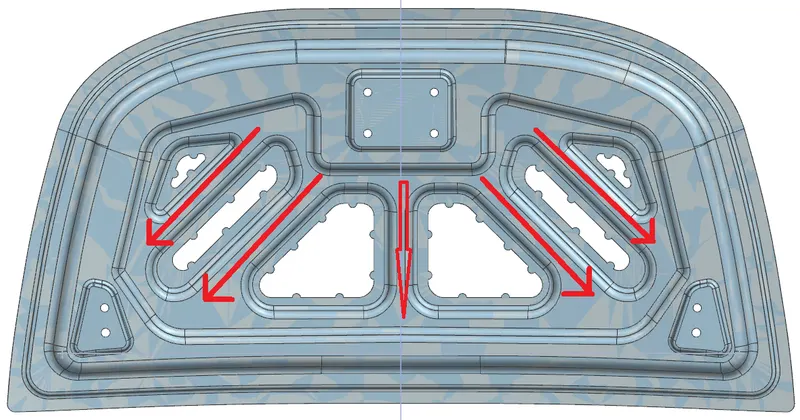
Throughout the inner panel we provide different embosses. We can increase the stiffness of the inner panel through these embosses. The shape and size of the embosses also determines the direction of the force distribution resulted from frontal collision. The force should be always distributed away from the passengers. Here in the figure the embosses are designed in such a way that the force is directed to either side of the car.
Mastic Data-
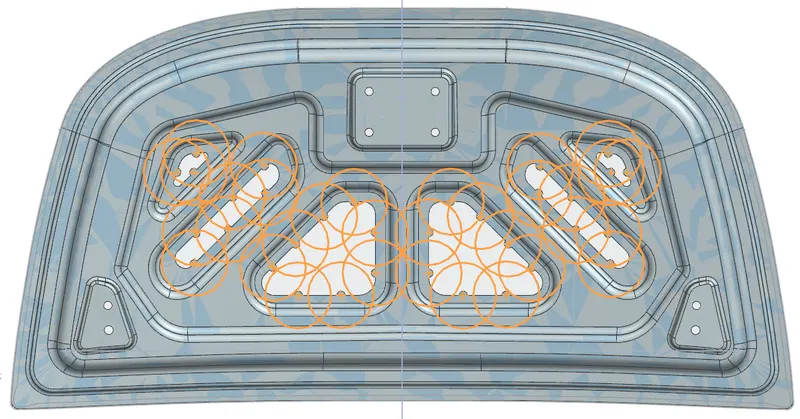
Hood commonly possess large surface area and hemming can only be provided through its boundary. We cannot use other joining techniques like welding, riveting etc because they leave marks on the outer panel which spoil its aesthetic appearance. So, mastic sealants are used to stick the inner surfaces of outer panel and inner panel. Mastic sealants are elastic compound that behave like rubber. It is applied between the inner and outer panels at specified spots. Each spot of mastic sealants has its effect around a circular region of 80mm diameter. Thus, the mastic points are arranged in such a way that it covers the areas away from the hemming which are more vulnerable to vibrate.
Deep Drawing-
Deep drawing is one of the most widely used processes in sheet metal forming. Apart from its use in many other sectors, it is applied in the automotive industry for the manufacturing of car body parts. The deep drawing process is a forming process which occurs under a combination of tensile and compressive conditions.
Sheet metal blank is radially drawn into a forming die by the mechanical action of a punch. It is thus a shape transformation process with material retention. The process is considered "deep" drawing when the depth of the drawn part exceeds its diameter. This is achieved by redrawing the part through a series of dies. The flange region (sheet metal in the die shoulder area) experiences a radial drawing stress and a tangential compressive stress due to the material retention property. These compressive stresses (hoop stresses) result in flange wrinkles. Wrinkles can be prevented by using a blank holder, the function of which is to facilitate controlled material flow into the die radius.
Hemming-
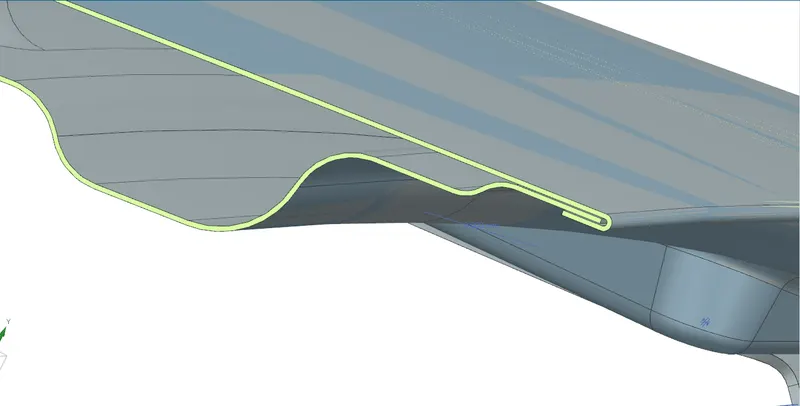
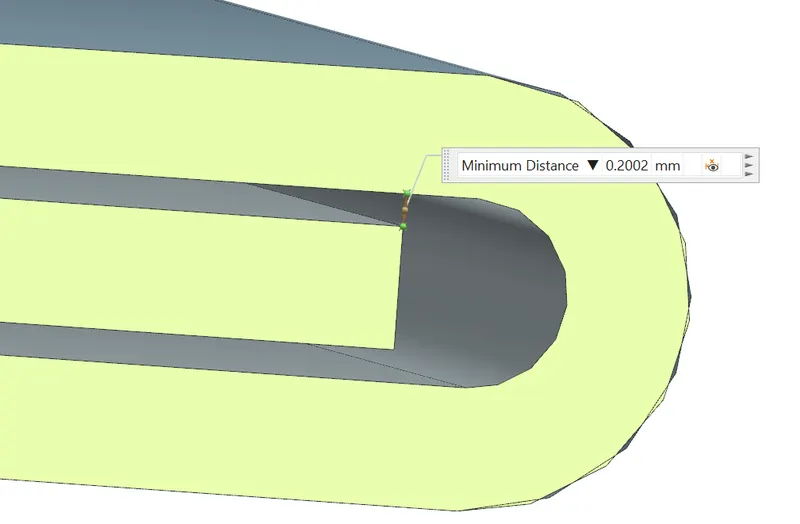
Hemming is a forming operation in which the edges of the sheet are folded or folded over another part in order to achieve a tight fit. Normally hemming operations are used to connect parts together, to improve the appearance of a part and to reinforce part edges.
In car part production, hemming is used in assembly as a secondary operation after deep drawing, trimming and flanging operations to join two sheet metal parts (outer and inner) together. Typical parts for this type of assembly are hoods, doors, trunk lids and fenders.
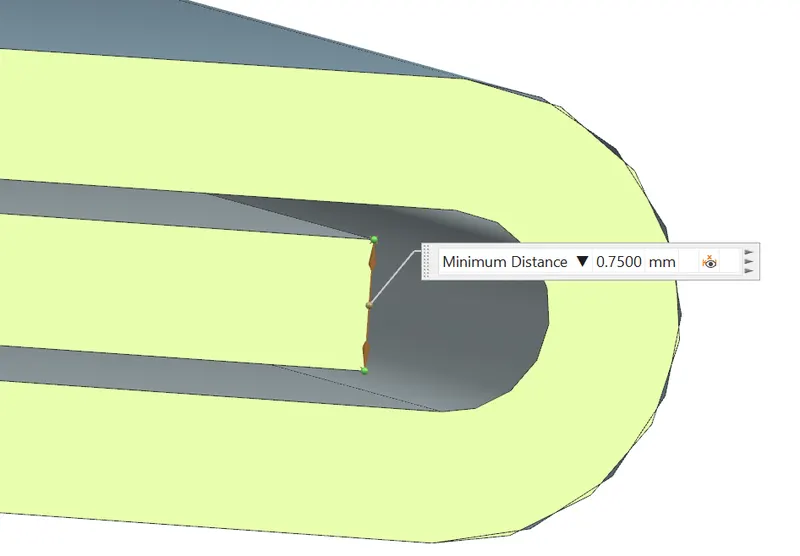
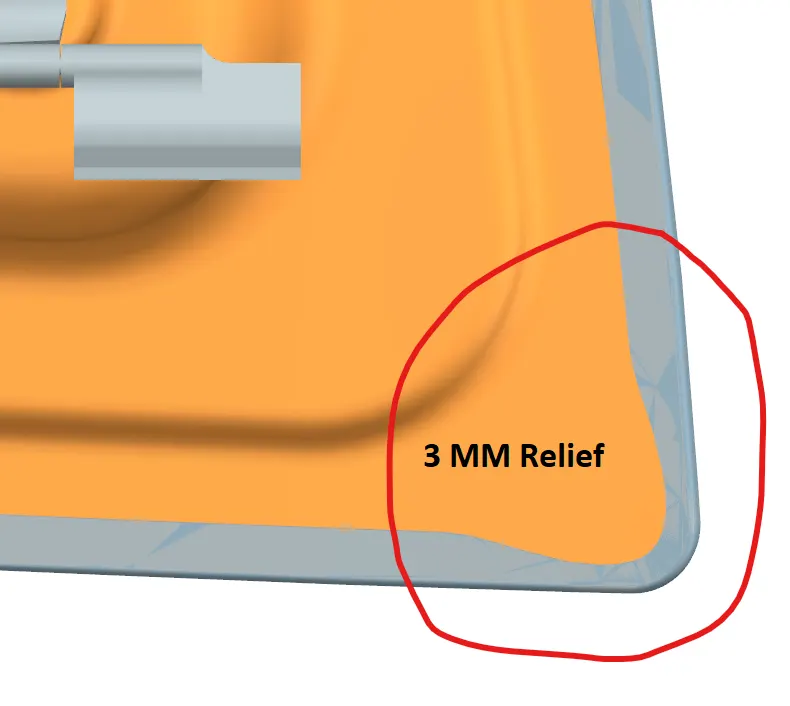
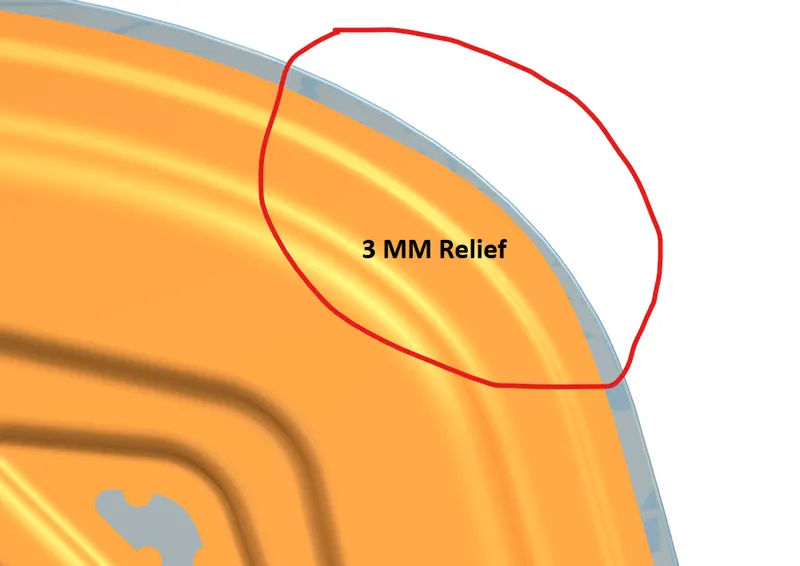
The accuracy of the hemming operation is very important since it affects the appearance of the surface and surface quality. Material deformations, which occur during the hemming process, can lead to dimensional variations and other defects in parts. Typical hemming defects are splits or wrinkles in the flange, material overlaps in the corner areas or material roll-in. This is why it is important to provide required reliefs at the corners.
There are two types of hemming operations-
- Conventional die hemming
- Roll hemming
In conventional die hemming, the flange is folded over the entire length with a hemming tool.
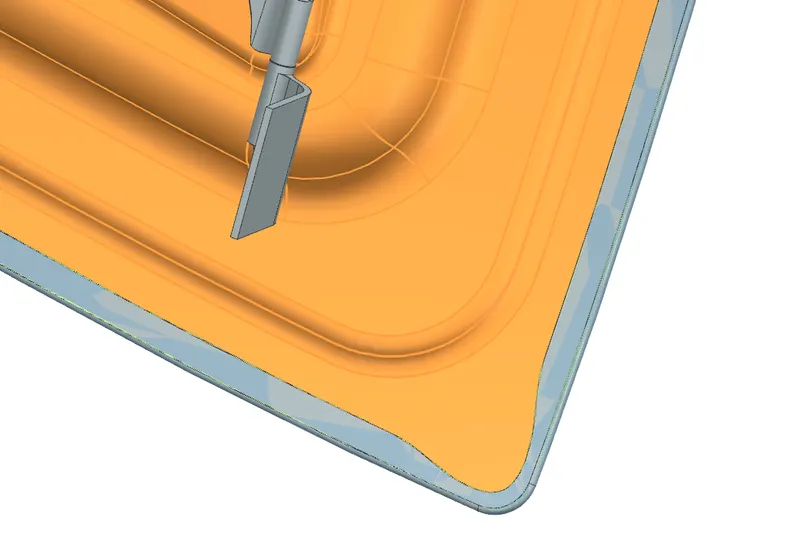
It is the roll hemming process that is used for automotive sheet metals. Roll hemming is carried out incrementally with a hemming roller. An industrial robot guides the hemming roller and forms the flange. Roll hemming operation can also be divided into several pre-hemming and final hemming process steps. Roll hemming is very flexible to use and tool costs are significantly lower as compared to those of conventional die hemming. However, the cycle times are much higher since the hemming is realized using a hemming roller which follows a defined path.
Draft Analysis-
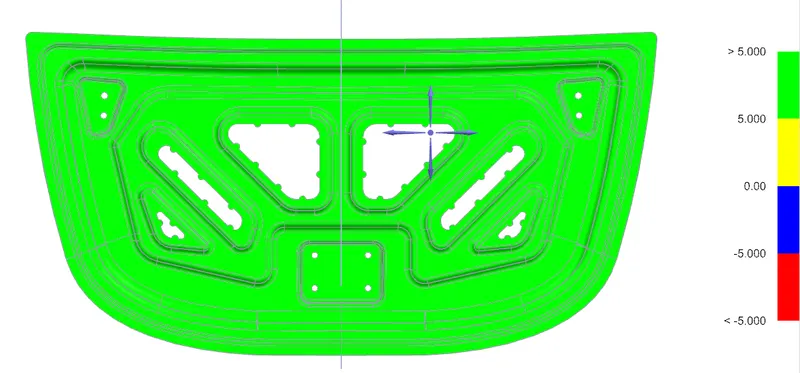
5 degrees of draft analysis is made to the inner panel to find any negative draft. this process is done because we need to develop and submit a positive design to the manufacturers. we can see that there are no negative drafts by the inner panel, hence the design is positive and ready to manufactured.
FINAL ASSEMBLIES-
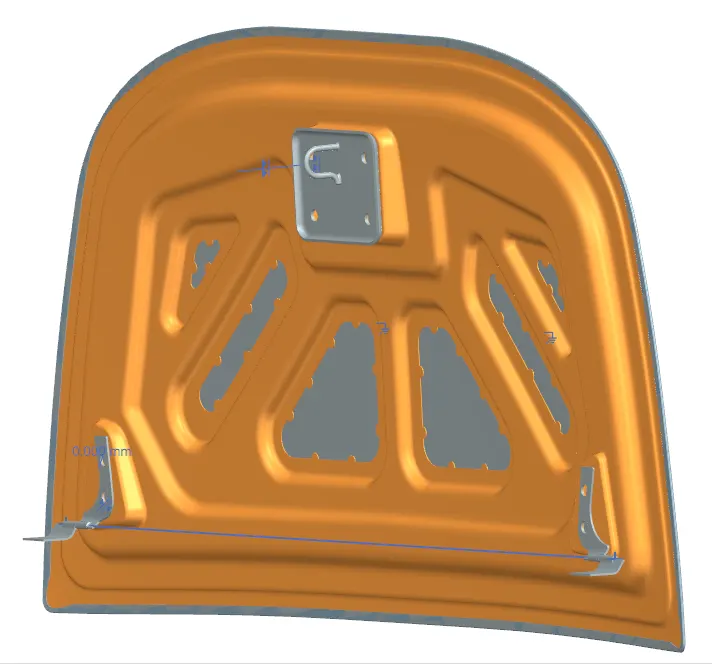
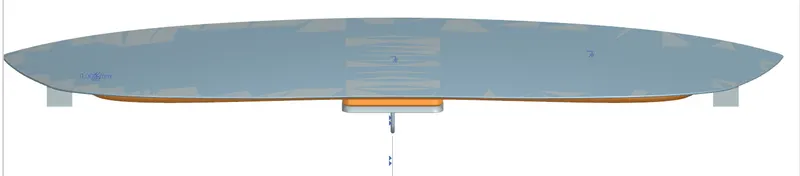
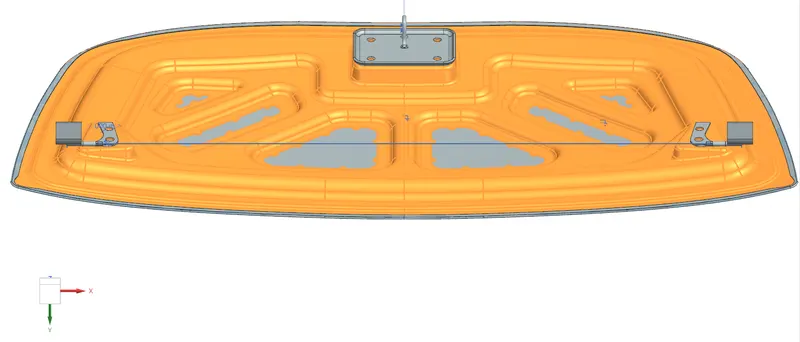
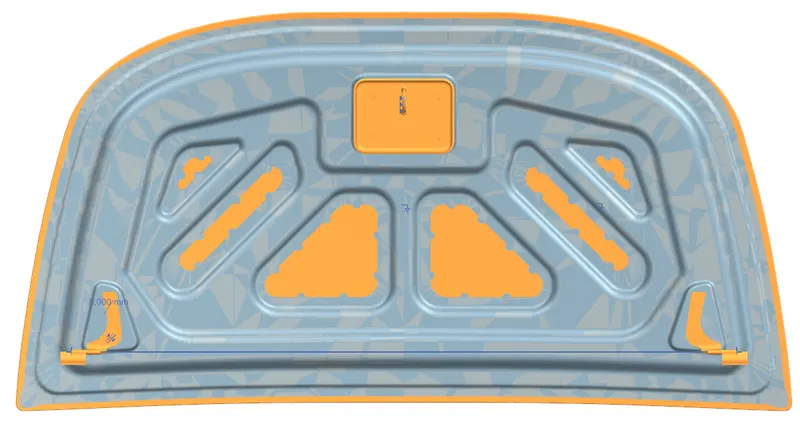
link of Assemblie files are given below-
https://drive.google.com/file/d/1FWFK6gLm0pNhSZ7BFMB8uBC1-V8pVzcL/view?usp=sharing
https://drive.google.com/file/d/1lU2CqEXpKvMHPpac3n8YXymGxG-Kufeu/view?usp=sharing