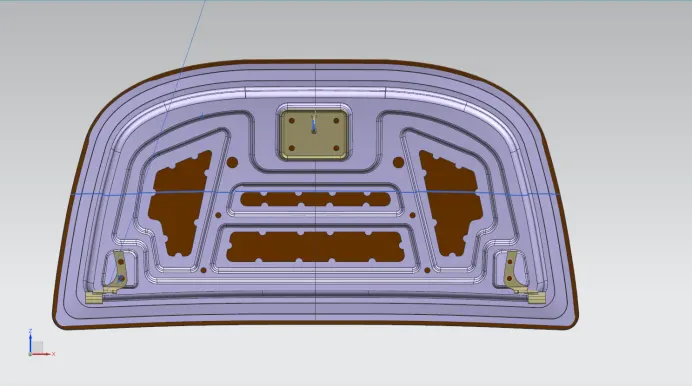
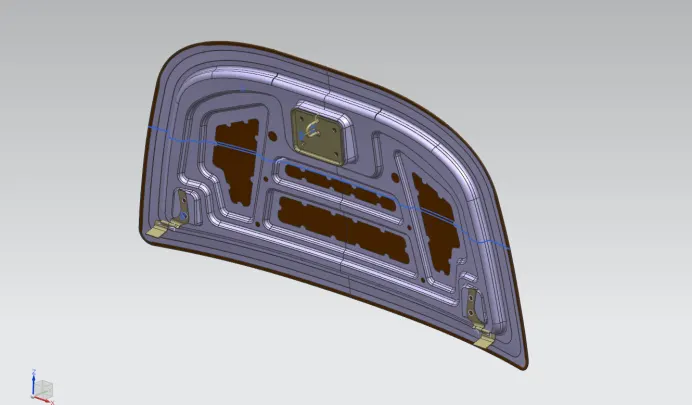
Hood design-Week 2
HOOD DESIGN USING SIEMENS NX CAD
Hood is located at the frontal portion of an automobile through which the engine compartment can be accessed, it is like a door that opens and closes by utilizing hinges located at the back end of the panel.
Design Considerations for the hood
- The hood design should follow a master section that meets all the safety and structure requirements.
- The hood should be designed in such a way that in case of a crash it should dissipate the crash force towards the hinges away from the passenger compartment.
- The opening and closing of the hood should be seamless without any interruptions this can be achieved by placing the latch and striker mechanism at an optimum distance from the hinges.
- In case of a crash maximum amount of force should be absorbed as it is the frontal part of the car.
- The design should be in a manner that easy access and serviceability of the engine compartment are achieved.
- It should be aerodynamic and aesthetic to reduce drag force and looks appealing.
Hood Thickness Information -
Outer Panel Thickness = 0.75mm
Inner Panel Thickness = 0.75mm
Reinforcement Thickness = 1.5mm
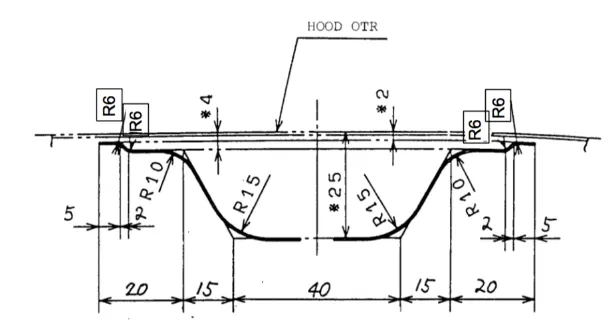
HOOD
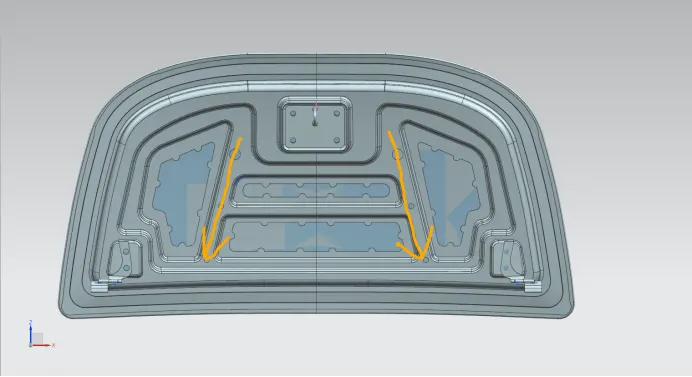
The design hood employs a V shape design which effectively dissipates the crash forces away from the passenger compartment and also satisfies the structural requirements.
Embosses are provided at various possible locations to increase the strength of the hood.
Mastic -
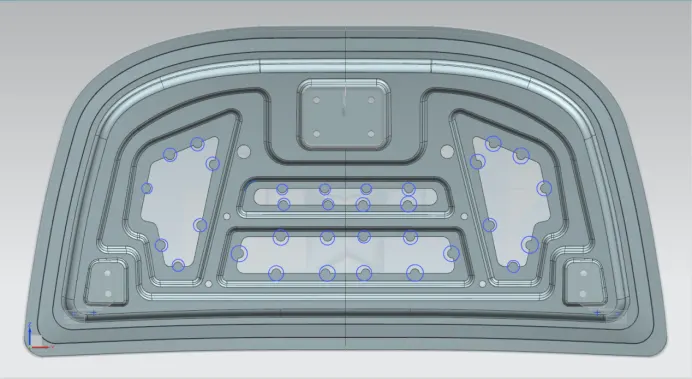
Mastic is an adhesive used to fill the gap and join the inner and outer panels.
Mastic points also increase the strength by around 80mm in diameter from where they are placed.
Hemming -
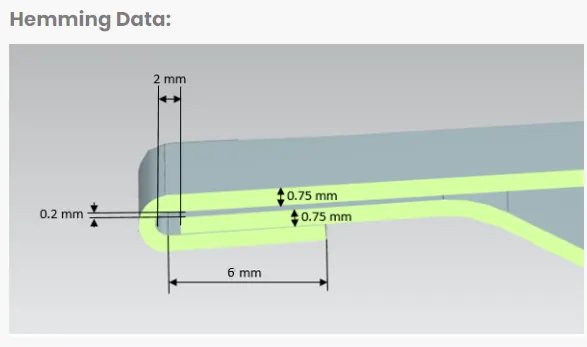
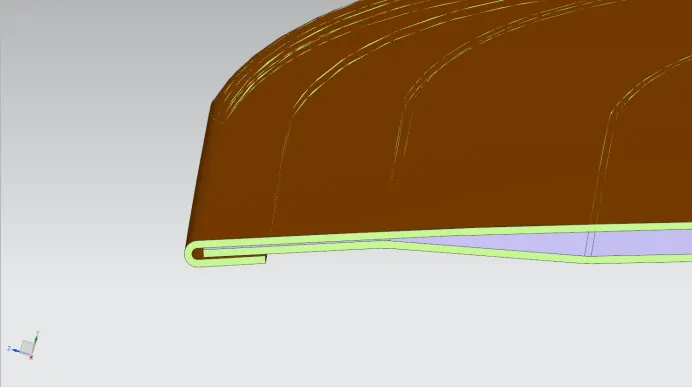
Hemming is a sheet metal operation that is widely used in the automobile sector because welding or any joining operations can not be done on styling parts as it may affect the aesthetic of the car. Here the outer panel is rolled around the inner panel which effectively joins the two of them without affecting the aesthetic. The gap between the hem is filled with a mastic sealant.
Reliefs -
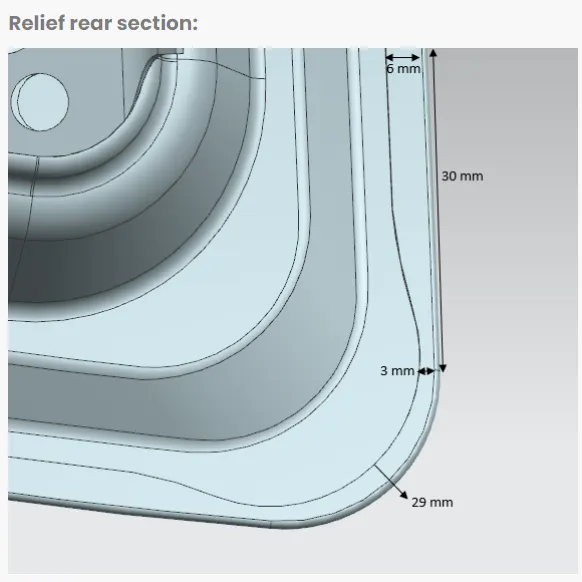
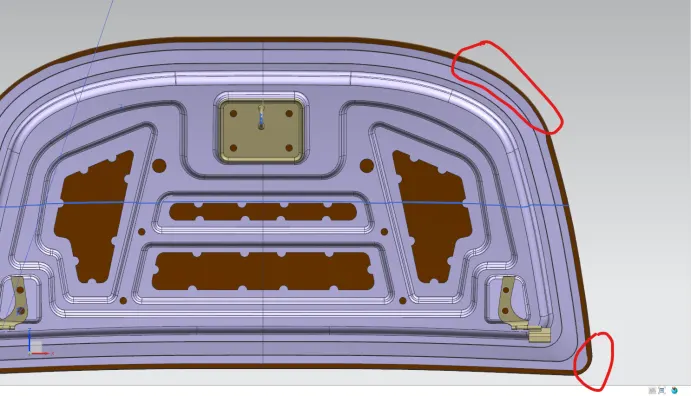
Reliefs are provided at the front and side portions of the panel for smooth rolling operations. So that no tearing of the sheet happens when the roller passes through certain portions.
Assembly -
After the Hemming is complete the latch and hinges are mounted on the panel into their respective embosses which are used to mount the hood onto the body of the car.
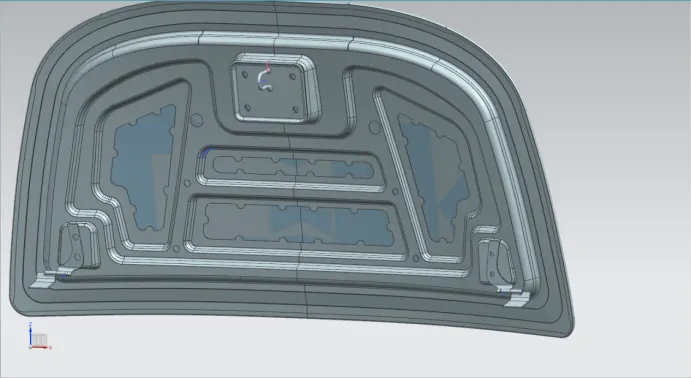
Hinges -
The hinges act as a pivot point for the opening and closing of the hood
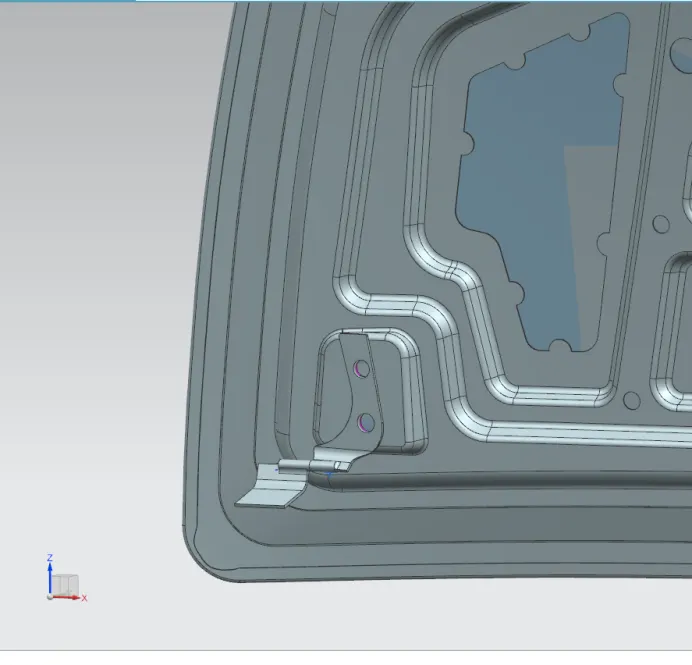
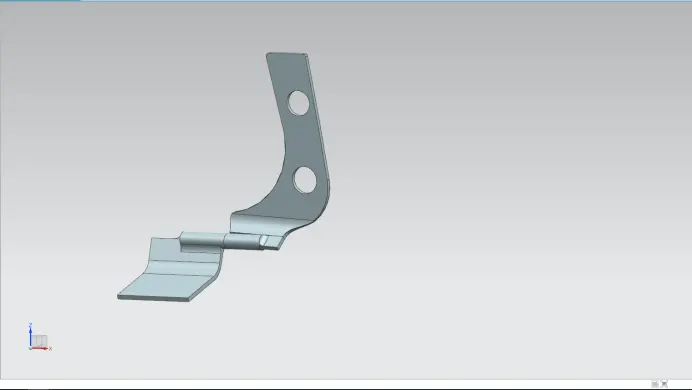
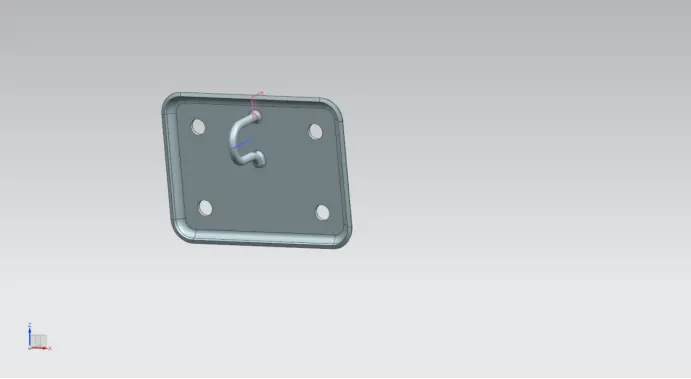
Striker Assembly -
Latch and Striker are used for locking the hood with the car. Its usually placed on the space provided on the inner panel.
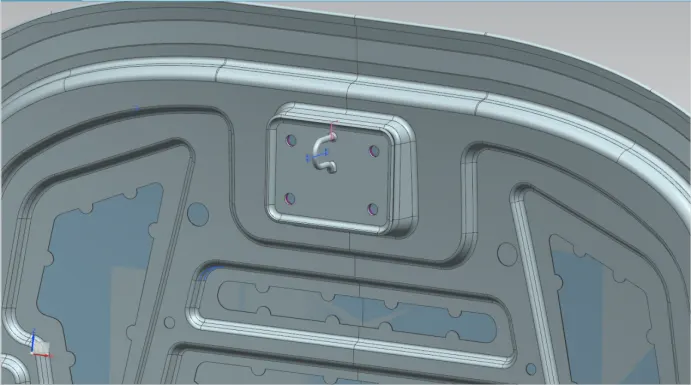
Reinforcements -
Reinforcements with 1.5 mm thickness are provided into the embossing to add strength to the component assembly.

Latch Positioning -
The latch should be positioned in a way that it should not interfere with the opening and closing of the hood.
This is done by positioning it at a distance that is tangential from the center point on the axis of the hinge.
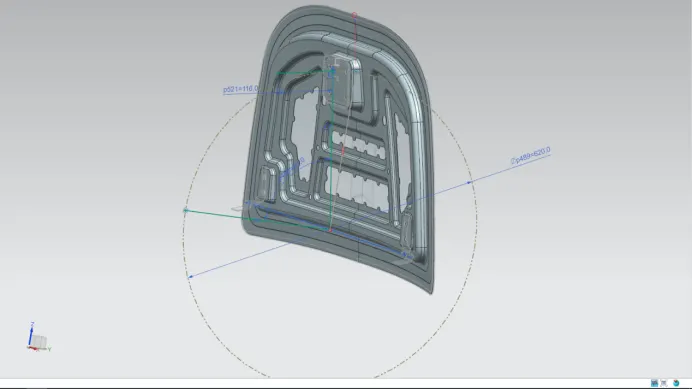
Impact Force Distribution in Hood -
A hood design must be made in such a way that when a force is impacted in the front of the hood, all the force must be directed outwards from the vehicle. And the distribution of the force must be controlled along with the hood.
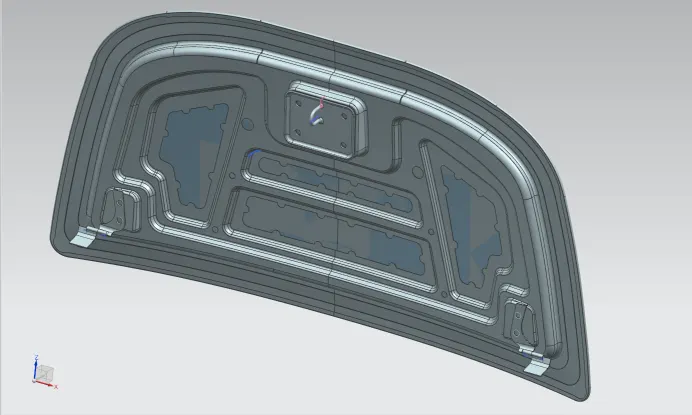
Hood Assembly Output Model