Hood design-Week 2
AIM: To design components of the hood of a car and assemble them together.
INTRODUCTION: Hood or Bonnet is the hinged cover over the engine of motor vehicles. Hoods can open to allow access to the engine compartment or trunk on the rear engine and some mid-engine vehicles for maintenance and repair
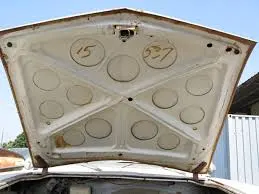
On front-engined cars the hood may be hinged at either the front or the edge or in the earlier models, it may be split into two sections, one on each side, each hinged along the centerline. Hoods are typically made out of the same material as the rest of the bodywork. this may include steel, aluminum, fiberglass, or carbon fiber. However, some aftermarket companies produce replacements for steel hoods in fiberglass or carbon fiber to make the vehicle lighter.
Support Rod: A hood rod is designed to hold your hood propped open whenever you need to do some work in your car's engine bay. when used, it must be firmly secured to ensure that it provides a stable hold on the hood. Meanwhile, when not in use, it provides a stable hold in place and must not move around.
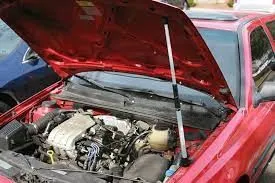
the hood rod clip is stable in place and must not move around. the hood rod clip is the part assigned with that function. this clip clamps onto the rod and ensures that it is firm in its place when not in use. it keeps the rod from moving around under the hood and firm causing trouble.
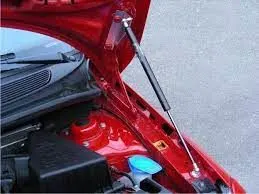
Gas stay: This is used to open the car hood by just providing a little lift force. A small effort is all it needs and other work is done by gas pressure. it is normally found in high-end cars where the mass of the hood is more normal
Manufacturing operations involve
sheet metal operations:
- Blanking & Piercing: Blankingand piercing are shearing processes in which a punch and die are used to produce parts from coil or sheet stock. Blanking produces the outside features of the component, while piercing produces internal holes or shapes. The web is created after multiple components have been produced and are considered scrap material. The slugs produced by piercing internal features are also considered scrap.
- Deep drawing: Deep drawing is a sheet metal forming process in which a sheet metal blank is radially drawn into a forming die by the mechanical action of a punch
- Embossing: Sheetmetal embossing is a stamping process for producing raised or sunken designs or relief in sheet metal.
- Hemming: Hemming is a forming operation in which the edges of the sheet are folded over another part in order to achieve a tight fir. Normally hemming operations are used to connect parts together, improve the appearance of a part, and reinforce part edges.
- Mastic parts: These are the spots where the inner panel and the outer panel of the hood are joined or can say sealed together using mastic glue. to fix the outer panel, if a process like boating, riveting, or welded is used, It will lose all its aesthetics.
Hood design: There are a lot more things before the hood gets in tho designing hands that to be considered.
The height of the hood is designed based on the country standards as the height of a average person changes from a place.
The material consideration is also required that should be cost-effective for manufacturing
the hood should be designed a lightweight for the pedestrian safety as the person hit to hood there should be minimal harm to the person.
Parts of a Hood & procedure:
- Hood outer panel
- Hood inner panel
- Hinge assembly
- latch & stricker
Design Approach:
- The master sketch of the panel was already provided on the basis of which, the inner panel is created here
- Firstly we will make comments as assembly formate there will be modeling the required shapes.
- wee will design the inner panel first, with the given data, body stretched to the full dimension of the outer panel.
- next, trim the sheet in half by using the Trimbody command
- And then take a topmost surface offset and keep dimension according to ti master section 2mm
- take the outer curve offset on the surface of 20 mm (taken from the master sketch)
- trim sheet and keep the outer part
- take another surface to offset 4 mm then offset the surface the outer curve the same way 40inside trim outer part of the sheet
- Now we added surface through the curve and fill the gap by using a through the curve
- Taking another offset of the same surface up to 25 mm Do curve offset on surface and trim sheet, now fill the gap, we create a surface by law extension command and keep draft of 5 degrees outwards and after using trim &extend
- now we will blend these sharp edges by edge or face blends and keep dimensions according to the master sketch
- after blending we will create a sketch and project it to the working surface by using emboss command to create the embosses according to the aerodynamics.
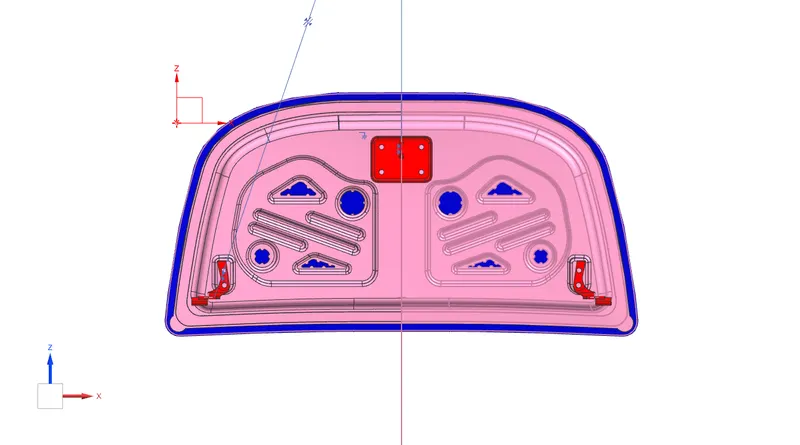
- then create a hinge and striker placement and embossing according to tho the standards
-
Latch Trajectory: It is simply the path that a striker will follow when the hood is being opened or closed, so we have to keep it in such a way that it will hit the latch or the lock mechanism
- hemming is the process of sheet metal it helps to join the sheets It will do by using the three face blend command.
- After finishing the model sew the model it helps to join the single part.
- after thickening the all parts Inner panel, an outer panel, thicken 0.75 mm
Main Outer panel
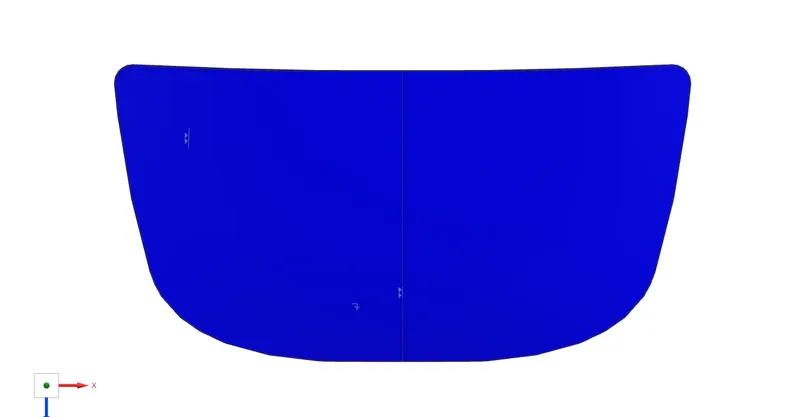
Main Outer panel
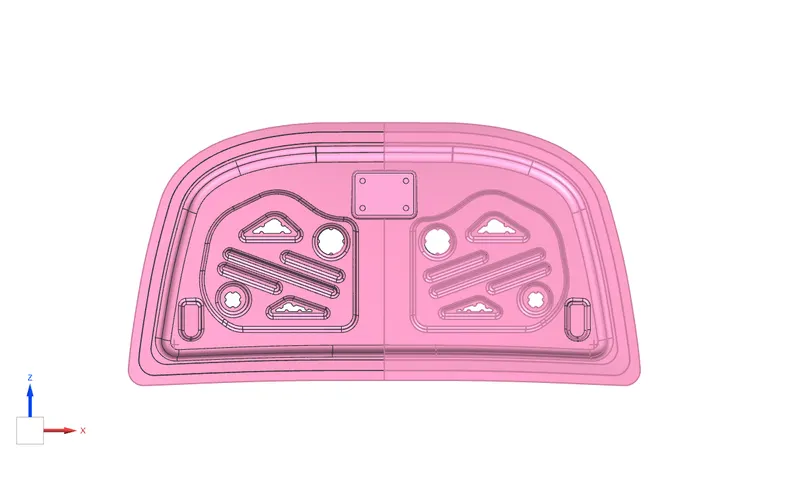
Hinge & striker placement and mounted
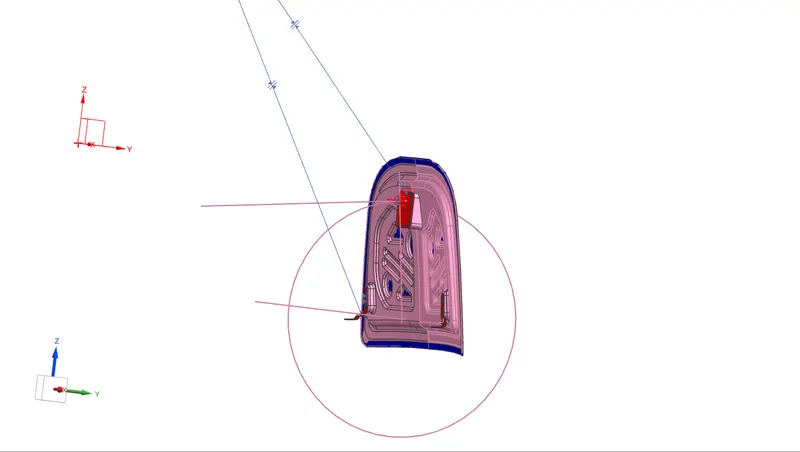
Final hood model
Conclusion: In this way designed the hood according to tho the master sketch
Google drive link:
https://drive.google.com/file/d/1HedoxHoziMxX2GsEC2cw4ekH2JppK3U_/view?usp=sharing