Hood design-Week 2
What is a Hood/Bonnet?
The hood or bonnet is the hinged cover over the engine of motor vehicles. Hoods can open to allow access to the engine compartment for maintenance and repair.
On front-engined cars, the hood may be hinged at either the front or the rear edge, or in earlier models, it may be split into two sections, one on each side, each hinged along the centre line. A further variant combines the bonnet and wheel arches into one section and allows the entire front bodywork to tilt forwards around a pivot near the front of the vehicle.
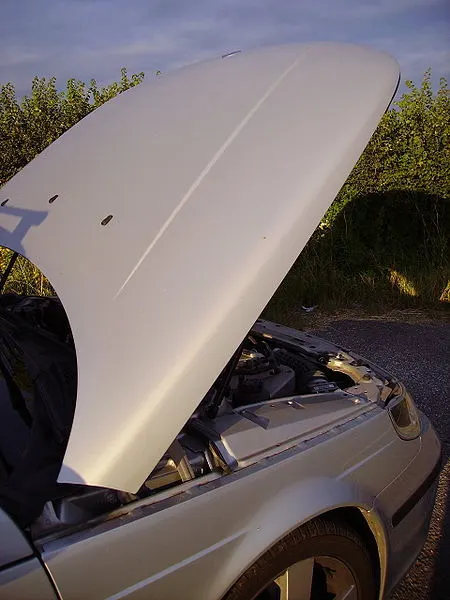
SAAB BONNET
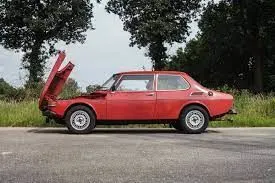
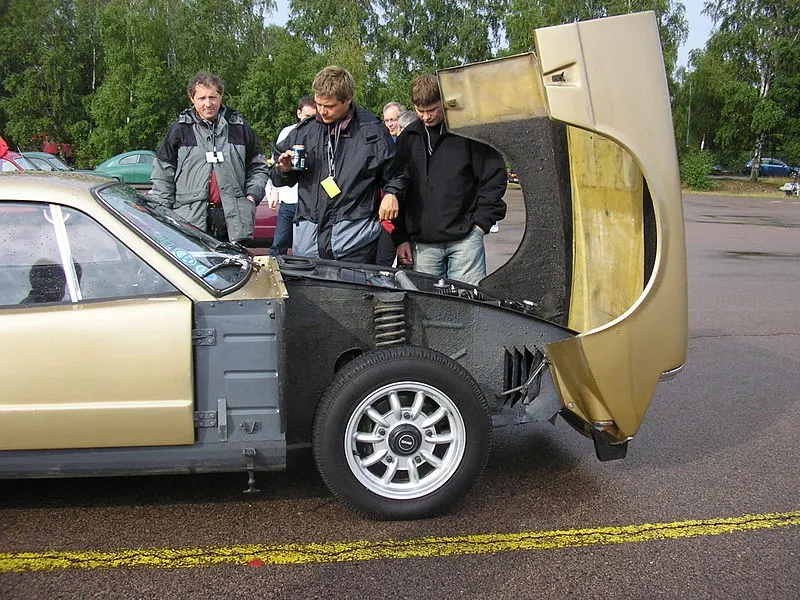
A rear-hinged clamshell hood on a Saab 9-5
 \
\
Hoods are typically made out of the same material as the rest of the bodywork. This may include steel, aluminium, fibreglass or carbon fibre. However, some aftermarket companies produce replacements for steel hoods in fibreglass or carbon fibre to make the vehicle lighter.
The hood release system is common on most vehicles and usually consists of an interior hood latch handle, hood release cable and hood latch assembly. The hood latch handle is usually located below the steering wheel, beside the driver's seat or set into the door frame. On race cars or cars with aftermarket hoods, the hood may be held down by hood pins. Some aftermarket hoods that have a latch system are still equipped with hood pins to hold the hood buttoned down if the latch fails.
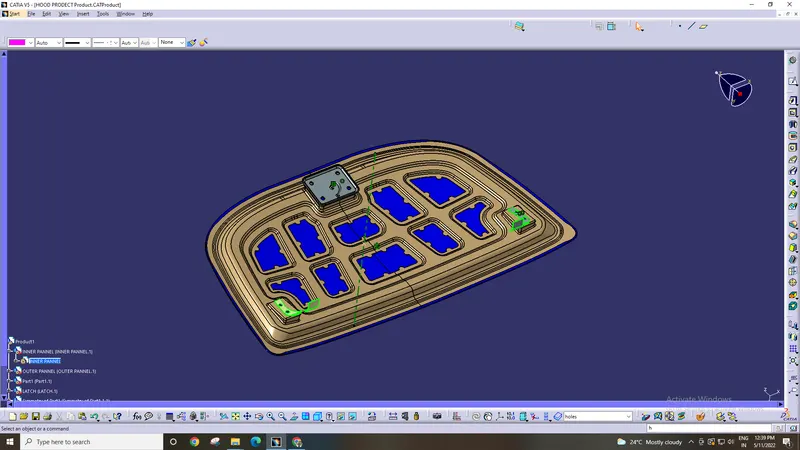
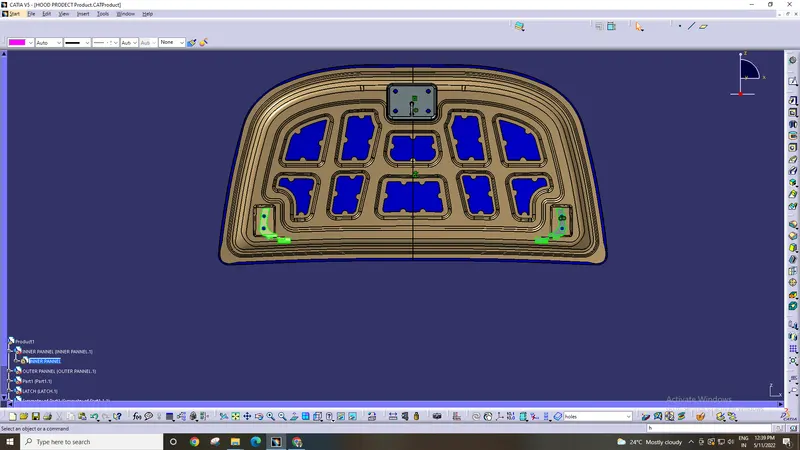
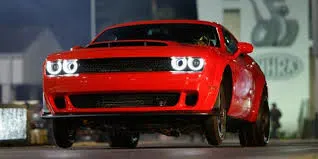
The car’s hood consists of an inner and an outer panel. The inner panel provides strength, while the outer panel is just a metal cover. The underside of the hood is often covered with a sound-absorbing material. Some high-performance cars have ‘hood scoops’ that channel outside air directly to the air filter, which gives improved performance and efficiency.
HOOD SCOPE
Manufacturing Processes
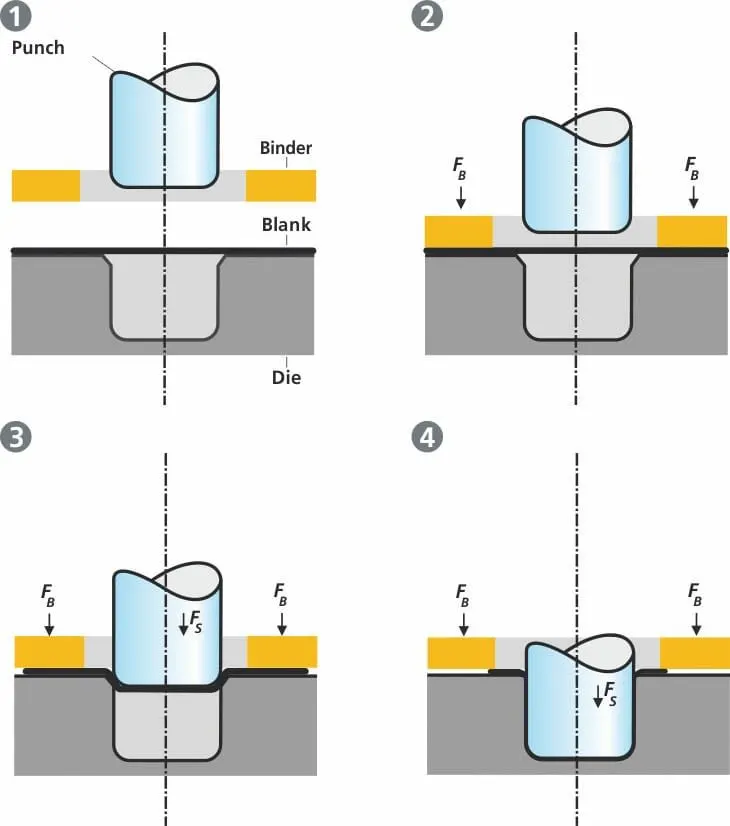
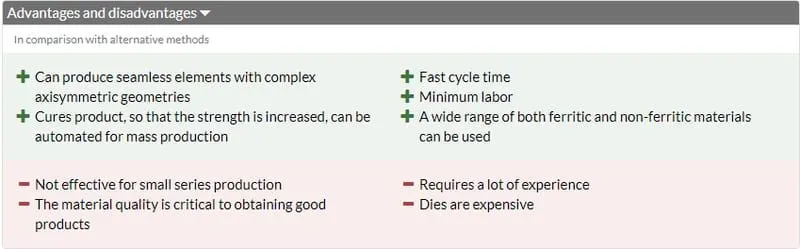
Deep Drawing
Deep drawing is a form of metal forming, where rigid tools such as punch, die and blank holder is used. The blank is placed between the die and the holder and then deformed by the punch pushing the sheet into the die and the blank finally assumes the shape of the die.
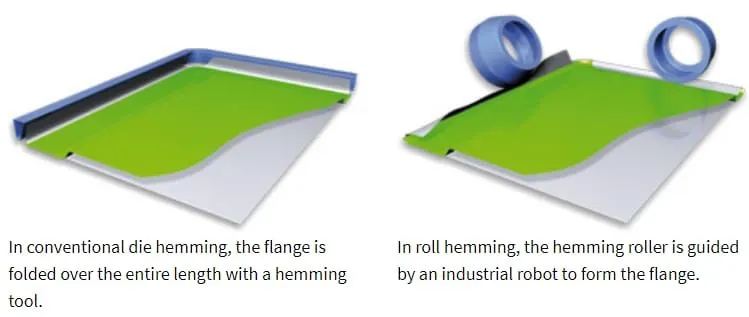
Hemming Process
Hemming is a forming operation in which the edges of the sheet are folded or folded over another part in order to achieve a tight fit. Normally hemming operations are used to connect parts together, improve the appearance of a part and reinforce part edges.
In-car part production, hemming is used in assembly as a secondary operation after deep drawing, trimming and flanging operations to join two sheet metal parts (outer and inner) together. Typical parts for this type of assembly are hoods, doors, trunk lids and fenders.
Embossing
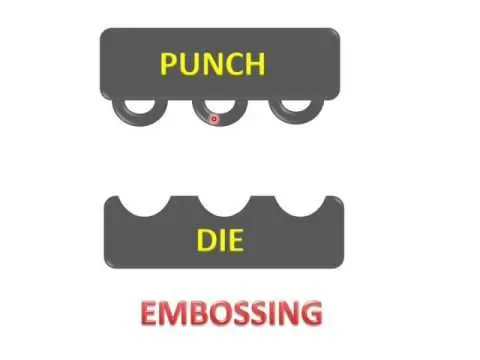
Embossing is a metal forming process for producing raised or sunken designs or relief in sheet material by means of matched male and female roller dies, theoretically with no change in metal thickness, or bypassing sheet or a strip of metal between rolls of the desired pattern.
The metal sheet is drawn through the male and female roller dies producing a pattern or design on the metal sheet. Depending on the roller dies used, different patterns can be produced on the metal sheet.
Mastic Points
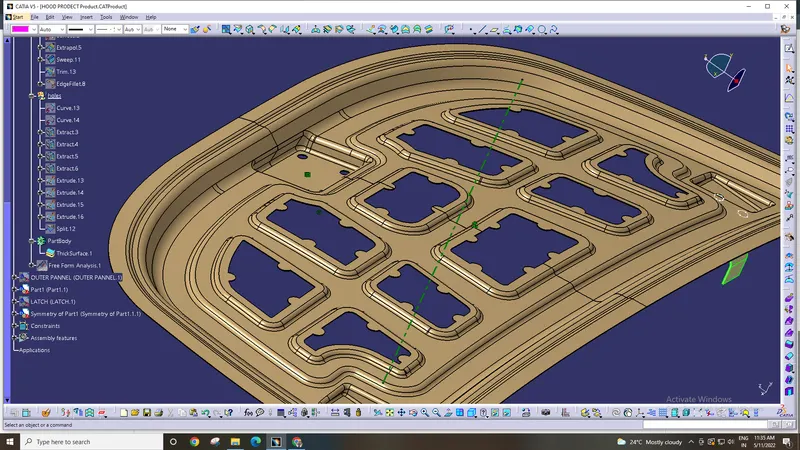
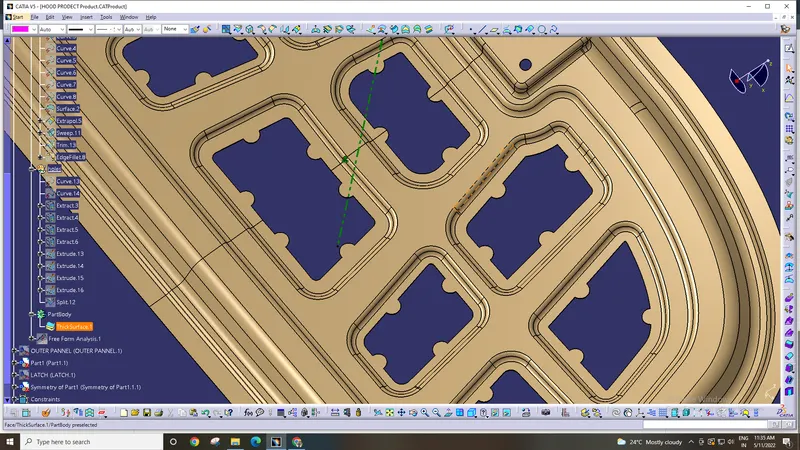
Mastic points are the points where the inner panel and outer panel are stuck together. Some projections are made along with the embossing where glue will be applied to make the inner and outer panels fix together.
Pedestrian Safety
Regulations have come into effect that place a limit on the severity of pedestrian head injury when struck by a motor vehicle. This is leading to more advanced hood designs, as evidenced by multi cone hood inner panel designs. Other changes are being made to use the hood as an active structure and push its surface several centimetres away from the hard motor components during a pedestrian crash.
With advancements in-vehicle technology, safety is in the limelight across the world. Automakers have already managed to make the cars much safer for the occupants over time. This is clear from the fact that many of the recent vehicles have scored a perfect 5-star safety rating in Global NCAP tests. Now, cars are being required to protect others around them as well. A major chunk of this focuses on pedestrian safety.
Several countries, including the US and the UK, have already set up strict legal requirements as well as consumer protection tests for vehicles. The idea is to design the vehicles in such a manner that they do not harm - or at least reduce harm - to a pedestrian in case of a collision.
One of the recent innovations in hood design to ensure pedestrian safety is the "Active Hood". Such a hood is meant to raise its height automatically as soon as it detects an accident. With the hood height raised several inches, the pedestrian is much less likely to hit the hard part of the engine upon collision. This would in turn reduce the impact on the pedestrian as he/she hits the car.
For this, sensors are employed at the front of the vehicle which is linked to the airbag control unit. The unit in turn uses infrared technology to detect a crash with a pedestrian. When it does so in the event of an accident, it triggers the actuators in the vehicle to lift the engine hood by several inches, thus protecting the pedestrian from a potentially critical fall on the car.
Many pedestrian crashes involve a forward-moving car. In such a crash, a standing or walking pedestrian is struck and accelerated to the speed of the car and then continues forward as the car brakes to a halt. The pedestrian is impacted twice, first by the car and then by the ground, but most of the fatal injuries occur due to interaction with the car. Vehicle designers usually focus on understanding the car-pedestrian interaction, which is characterized by the following sequence of events: the vehicle bumper first contacts the lower limbs of the pedestrian, the leading edge of the hood hits the upper thigh or pelvis, and the head and upper torso are struck by the top surface of the hood and/or windshield.
Pedestrian impact test
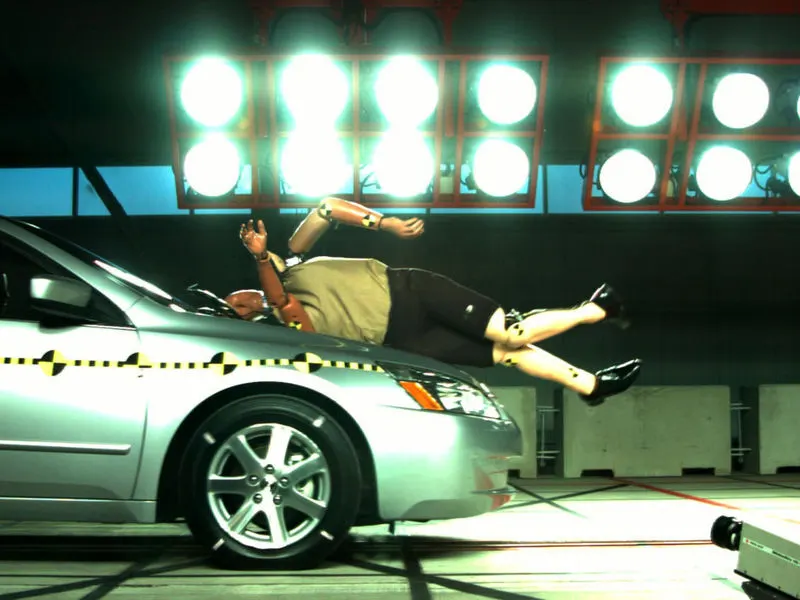
The hood of most vehicles is usually fabricated from sheet metal, which is a compliant energy-absorbing structure that poses a comparatively small threat. Most serious head injuries occur when there is insufficient clearance between the hood and the stiff underlying engine components. A gap of approximately 10 cm is usually enough to allow the pedestrian’s head to have a controlled deceleration and a significantly reduced risk of death. Creating a room under the hood is not always easy because usually there are other design constraints, such as aerodynamics and styling. In some regions of the hood, it can be impossible. These include along the edges on which the hood is mounted and the cowl, where the hood meets the windshield. Engineers have attempted to overcome this problem by using deformable mounts, and by developing more ambitious solutions such as airbags that are activated during the crash and cover the stiff regions of the hood.
pedestrian injury patterns
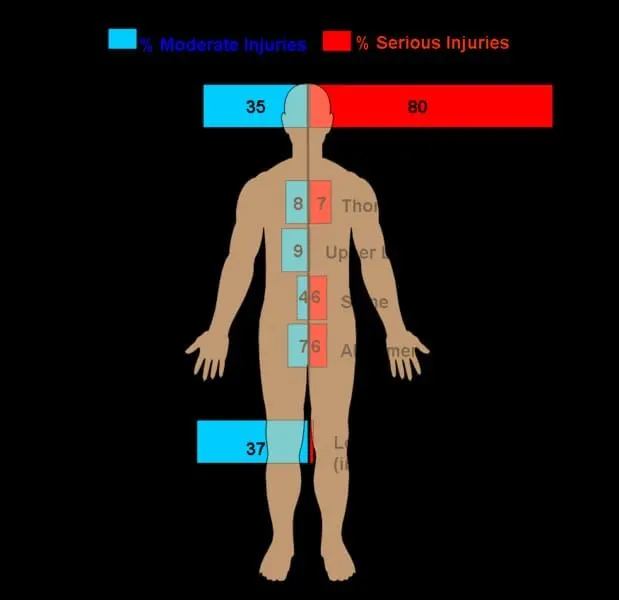
Input
Master section
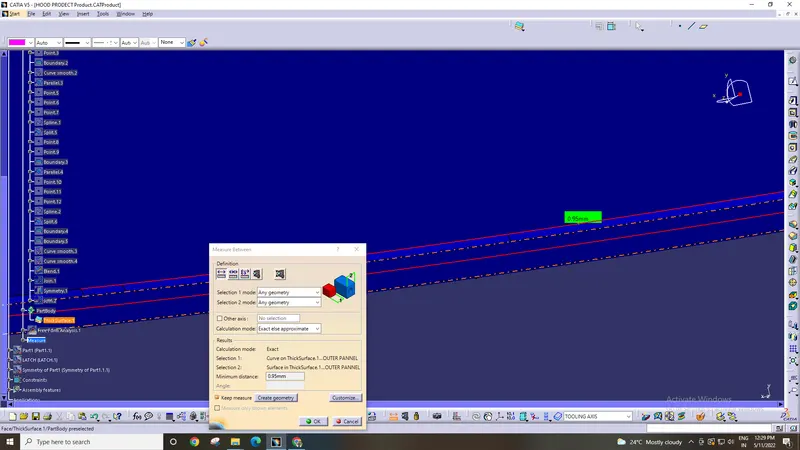
There is an offset of 0.2mm from the outer panel which is not given here in the master section. This offset surface is the one that will be surrounded by the hemming from the outer panel. (shown below)
Outer panel
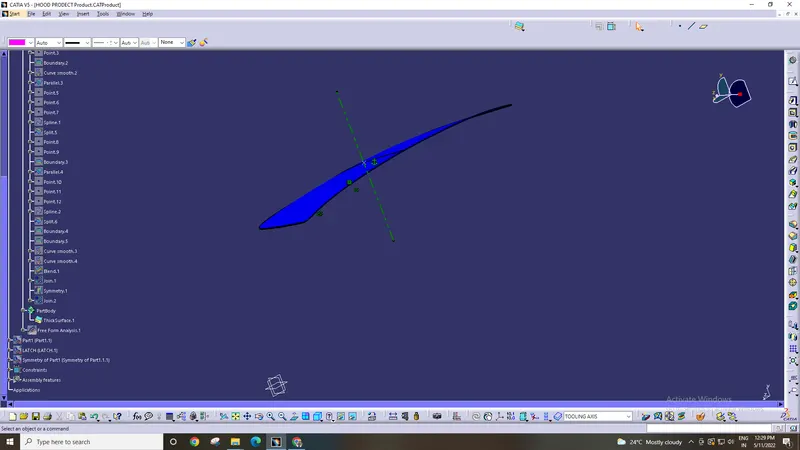
hemming of the outer pannel
Draft analysis
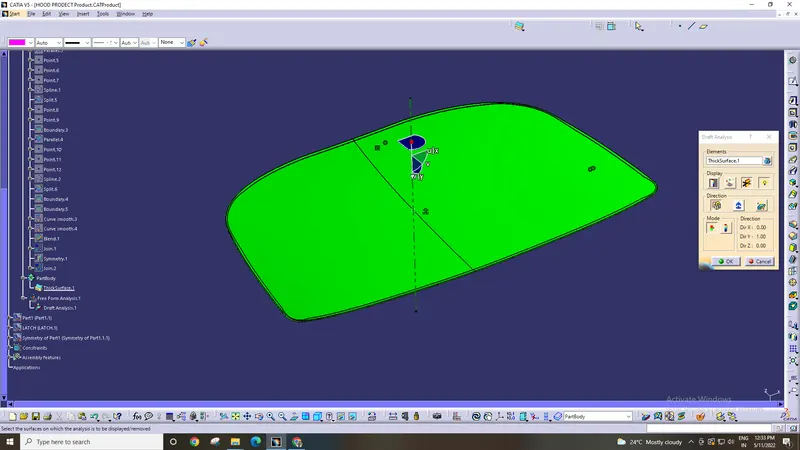
Inner pannel
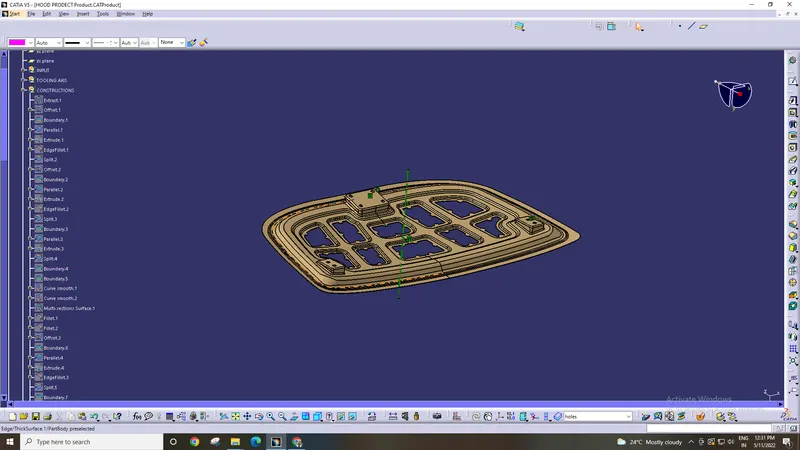
Draft analysis
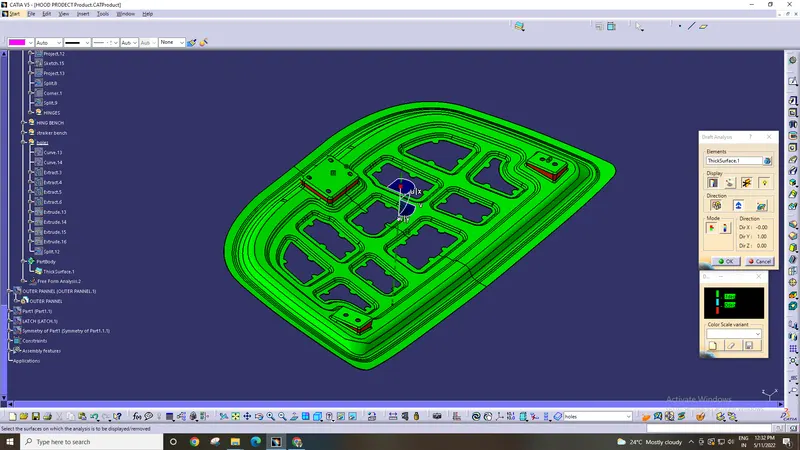
Passing of hing and striker
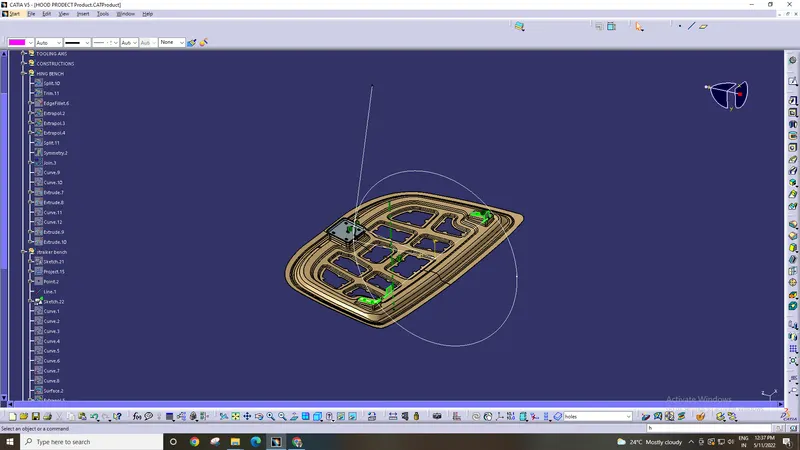
Final part