Hood design-Week 2
HOOD DESIGN USING NX CAD
1.AIM: To Design Hood outer panel, Inner panel, Striker, Hinges and the necessary Reinforcements by given master section with Engineering parameters by using Siemens NX.
2.INTRODUCTION:
Hood is the main component of the car in the front portion. It is used to decorate the car and add a luxurious look. Hood is generally used to access the parts easily such as radiator, engine and many other parts. A car hood, also referred to as a bonnet in some other countries, is the hinged cover that rests over the engine of a front-engine vehicle. Its purpose is to provide access to the engine for repair and maintenance. A concealed latch is typically used to hold down the hood. Car hoods are typically constructed from steel and sometimes from aluminum. Aftermarket car hoods may be constructed from various other materials, including carbon fiber, fiberglass, or dry carbon.
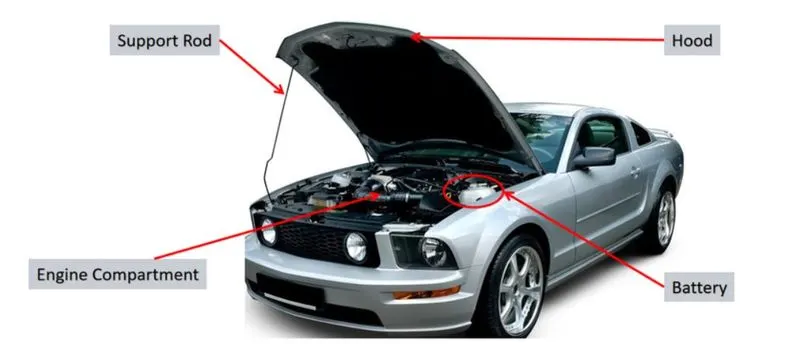
The hood design may vary from one model to another while access for repairs and maintenance Hodd can fix by two methods.
1.SUPPORT ROD
2.GAS STAY
3.DESIGN REQUIRMENTS OF CAR HOOD:
- HOOD HEAD ZONE FOR LOCK STRIKER:
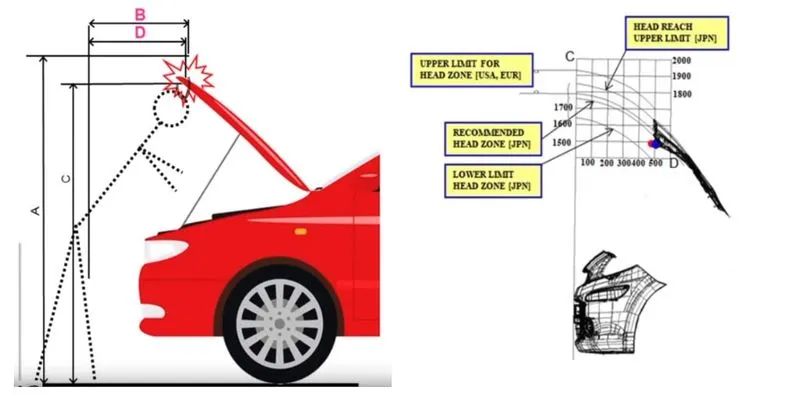
From the above figure. The open angle of hood will give A, C, B and D with respect to the ground. Those A, B, C and D are decided in the head zone. Opening angle varies from region to region depending upon on average human height. Depending on the standards we decide angles. So, from angle data, Support rod or Gas stay is designed.
The position of support rod or gas stay is placed on the opposite side of the battery for easy installation of battery which is shown in fig. below,
- ADDING LATCHES AND STIFFENER PAD:
Latches are added where and all the weight is added. On the inner panel we have hinges and striker so, which are added on the inner panel so due to this attachment the strength of the inner panel is going week.
In order to strengthen the inner panel Latches were plays an important role to strengthen. Stiffener pad is sponge like material which placed b/n inner and outer panel to reduce vibrations.
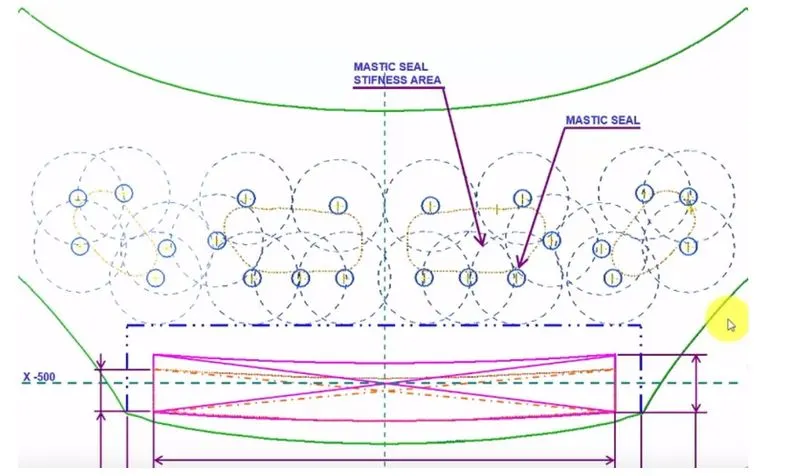
- MASTIC SEALS
Mastic seals are placed b/n outer and inner panel to reduce the noise, vibrations and harshness. (Inner & Outer panel gap is 2 to 5 mm)
- EMBOSS:
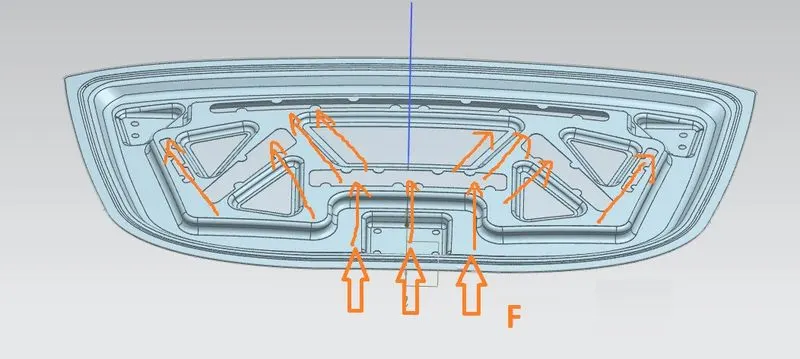
Emboss are provided in the inner panel of the hood assembly. This helps in weight reduction of the hood and also to dissipate the force during collision. Force dissipate is shown in below fig. project design.
- DEEP DRAWING:
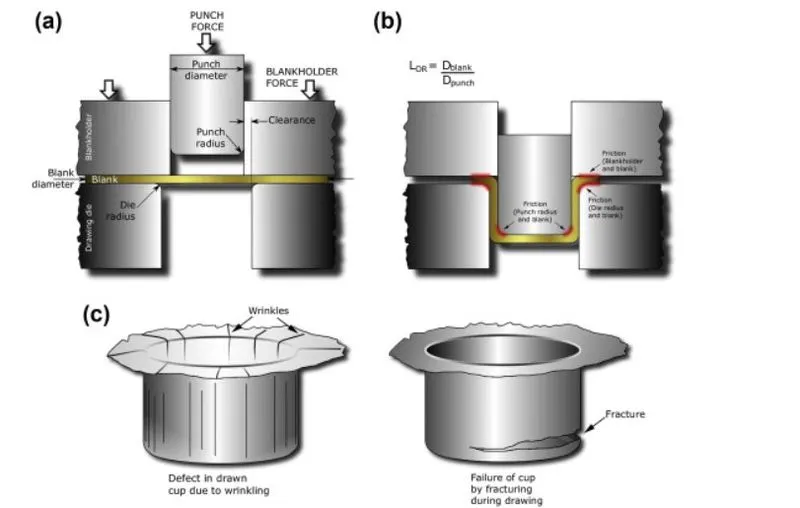
Deep drawing is a sheet metal forming process in which a sheet metal blank is radially drawn into a forming die by the mechanical action of a punch. It is thus a shape transformation process with material retention. The process is considered "deep" drawing when the depth of the drawn part exceeds its diameter.
- HEMMING:
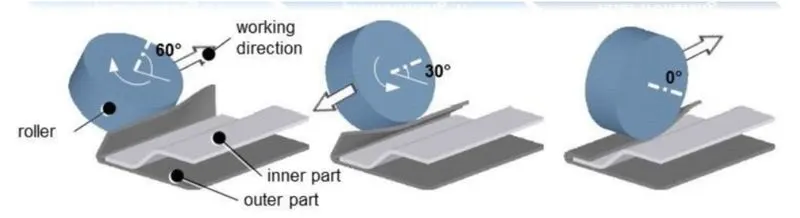
Hemming is a forming operation in which the edges of the sheet are folded or folded over another part in order to achieve a tight fit. Normally hemming operations are used to connect parts together, to improve the appearance of a part and to reinforce part edges
- HOOD FOR BETTER PEDISTRAIN RATING
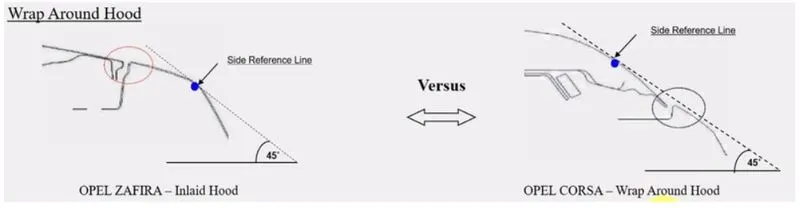
Inlaid Hood: The line which is drawn 45 deg. from ground to side Reference of caranad which is meeting point on Fender is called Inlaid Hood
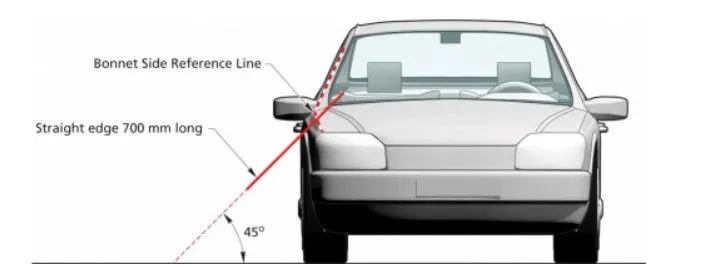
Wrap Around Hood: The line which is drawn 45 deg. from ground to front surface of the Hood and which is the meeting point on the outer panel of hood is called as Wrap Around Hood.
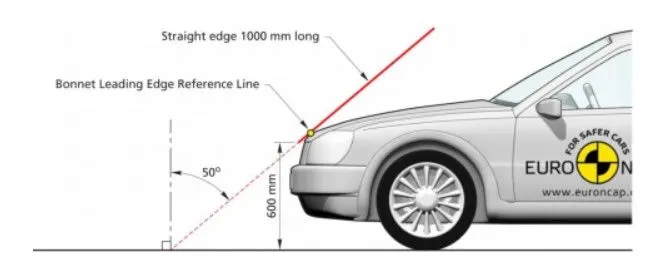
Depending on the Inlaid & Wrap Around Hood we can design Hood for Head impact in the below fig. shown position of head impactor.
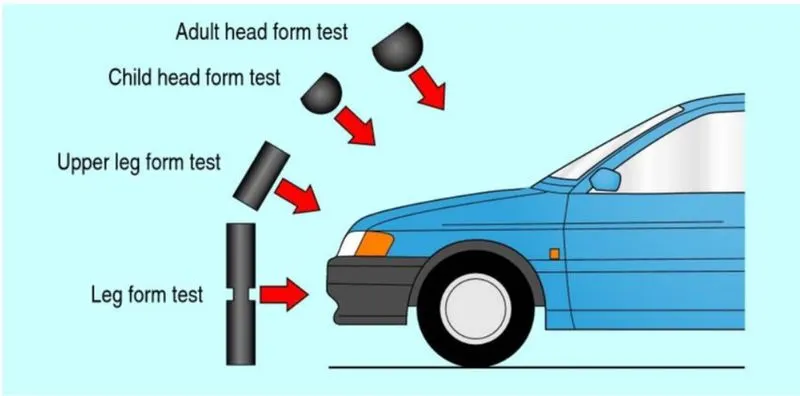
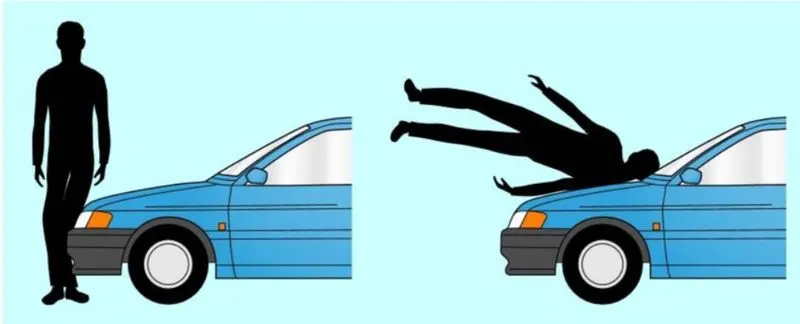
Position of Head impactor
So, based on the position of head impactor we are providing emboss.
4.DESIGN PROCEDURE:
Given information:
- Outer Panel Thickness = 0.75mm
- Inner Panel Thickness = 0.75mm
- Reinforcement Thickness = 1.5mm
Master section:
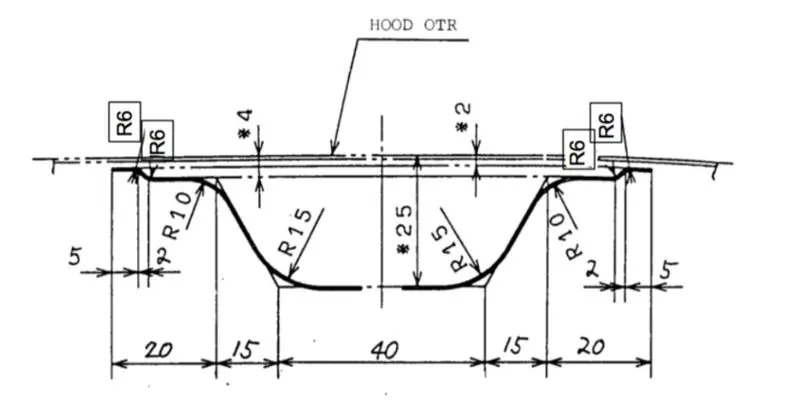
Features/Tools used for project:
- Sketch
- Offset surface
- Offset curve in face
- Trim sheet
- Through curves
- Law extension
- Trim and extend
- Extend sheet
- Face Blend
- Edge Blend
- Emboss
- Mirror geometry
- Sew
- Thicken
- Extract geometry
- Wave geometry linker
Offset surface: It creates the copy of original body by offsetting a set of faces.
Offset curve in face: It creates the curve on the surface's edges.
Trim sheet: It trims the unwanted portion of the sheet body.
Through curves: It creates the surfaces through multiple selection of surfaces and it creates the shape.
Law extension: It creates a law-controlled extension from base sheet.
Trim and extend: Trim or extends a set of edges or faces to intersection with another set of edges or faces.
Extend sheet: It creates extension of sheet or surface.
Emboss: Sheet metal embossing is a stamping process for producing raised or sunken designs on relief in sheet metal. This process can be made by means of matched male and female roller dies, or by passing sheet or a strip of metal between rolls of the desired pattern. it is often combined with stamping to create a shiny, 3D effect.
The metal sheet embossing operation is commonly accomplished with a combination of heat and pressure on the sheet metal, depending on what type of embossing is required. Theoretically, with any of these procedures, the metal thickness is changed in its composition.
Face blend: Add tangent blend faces between the selected set of faces. The blend shape can be circular, conic or law controlled.
Edge blend: Round sharp edges between faces. The radius can be constant or variable.
Mirror geometry: Copies the whole surface geometry across the plane.
Sew: Combine sheet body by sewing the common edges together, or combine the solid bodies by sewing common faces.
Thicken: Creates a solid body by adding thickness to the set of faces.
Extract geometry: Creates associative copies of bodies within the part.
Wave geometry linker: Copies geometry from the other parts in the assembly into the work part.
Hemming in sheet metal:
Hemming in a sheet metal forming process in which sheets are joined by bending it usually to 180 degrees. Automotive body panels and automotive parts such as deck-lids, trunk-lids, doors, hoods and tailgates are formed by hemming process.
Hems are commonly used to reinforce an edge, hide burrs and rough edges, and improve appearance.
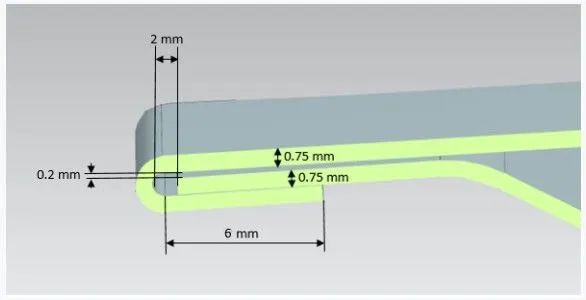
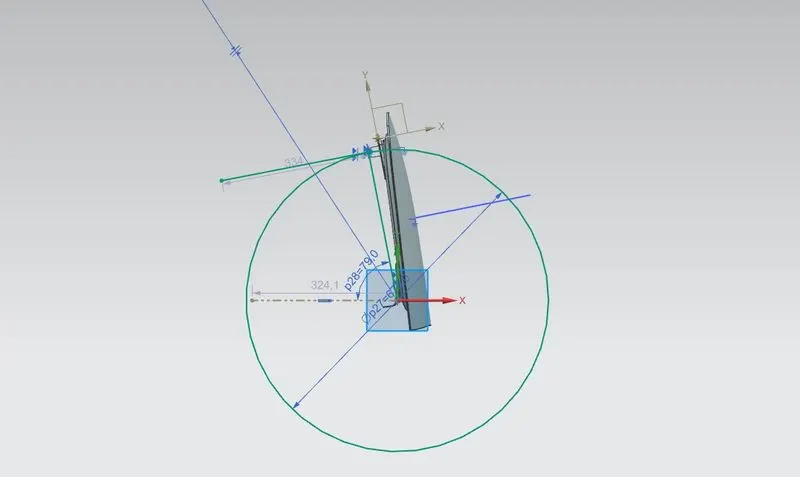
Latch Trajectory:
It is a calculation done in the striker part of Hood opening and closing angle axis is drawn. The axis drawn from the center lines of 2 hinge axis. The axis should be accurate to the latch so that it fixes and locks into the latch lock, while closing Hood.
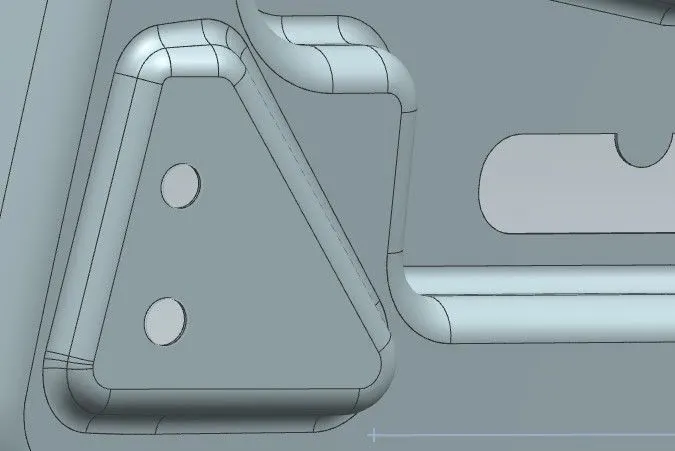
Reinforcement: This is the process of strengthening the body (in hinge and striker area)
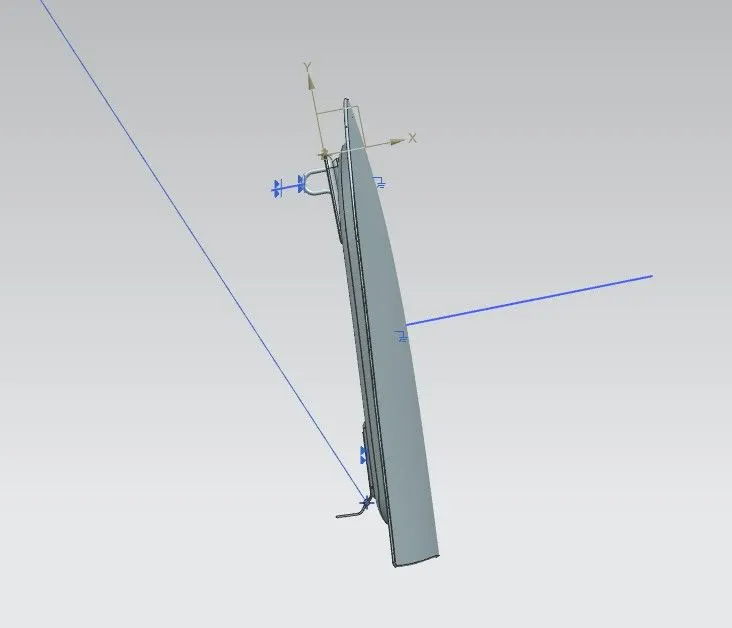
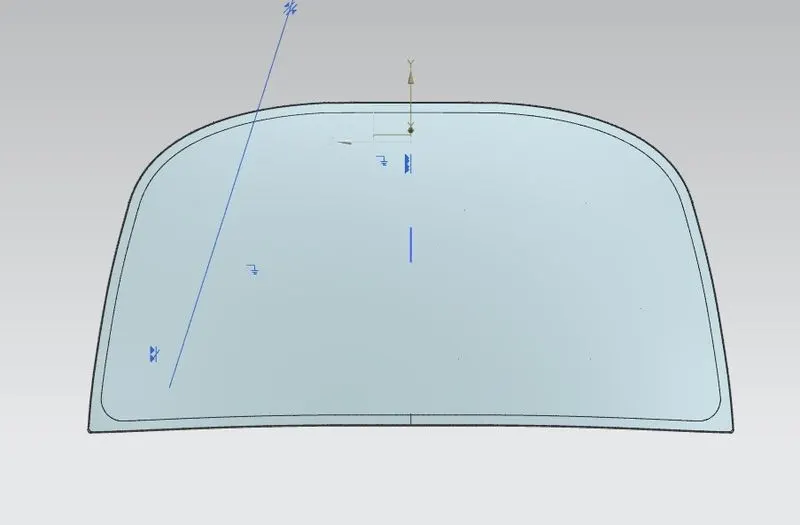
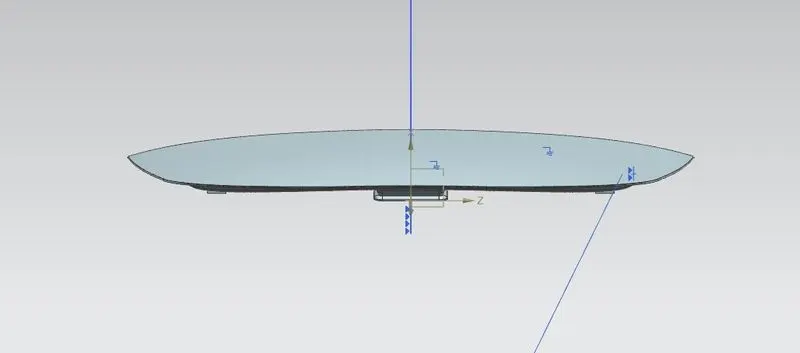
5. UPLOADING OF IMAGES
FRONT VIEW:
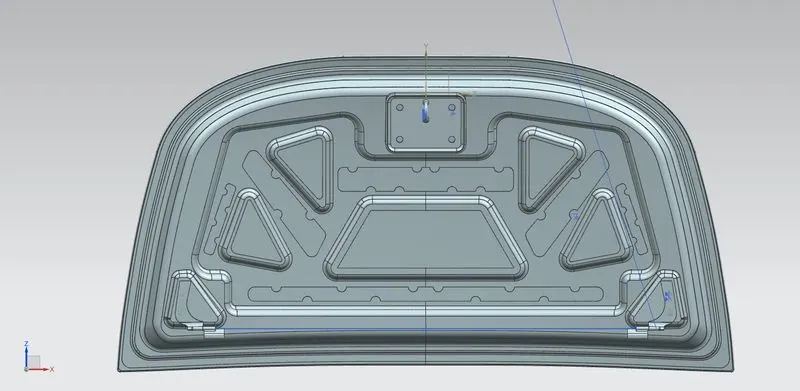
SIDE VIEW:
BACK VIEW:
TOP VIEW:
6.CONCLUSION:
Therefore, I have designed Automotive Hood Design according to EURO NCAP standards by using siemens NX.