Hood design-Week 2
AIM: To design the hood outer panel, inner panel and the necessary reinforcements by following the master section and create an assembly of hood inner panel, outer panel, latch, hinge and the reinforcements.
HOOD:
The Hood or the Bonnet of a car is considered as the frontal enclosure component.The Hood is an opening body panel that covers the engine in a front-engine vehicle. The hood is also considered as another type of door in a vehicle as it consists of an outer panel and inner panel. The inner panel provides strength while the outer panel functions as the metal cover. Bonnets are designed to reduce air resistance as the air flows around the car. The design of the bonnet is vital since it affects the aerodynamic flow around the car. Apart from this, bonnets are also designed to meet several other requirements. They serve a great deal of purpose in protecting the passengers inside the car and the pedestrians in the event of an accident. It also acts as the engine cover.
HOOD THICKNESS INFORMATION:
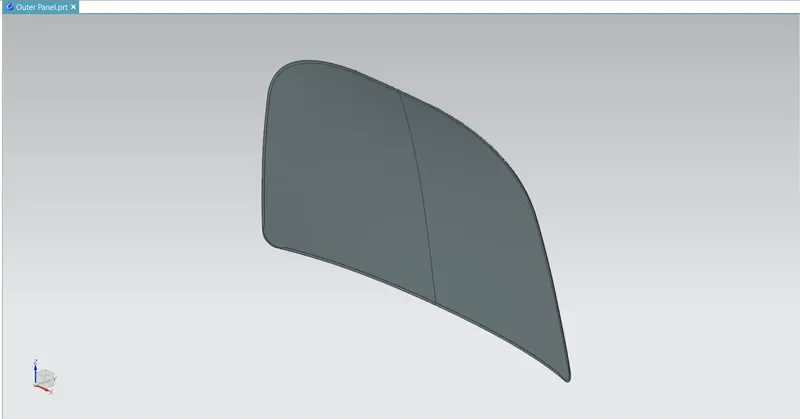
- Outer Panel Thickness = 0.75mm
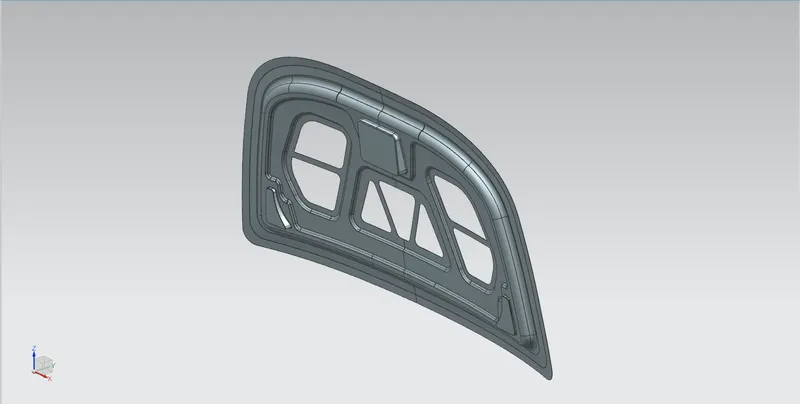
- Inner Panel Thickness = 0.75mm
- Reinforcement Thickness = 1.5mm
MASTER SKETCH:
OUTER PANEL:
INNER PANEL:
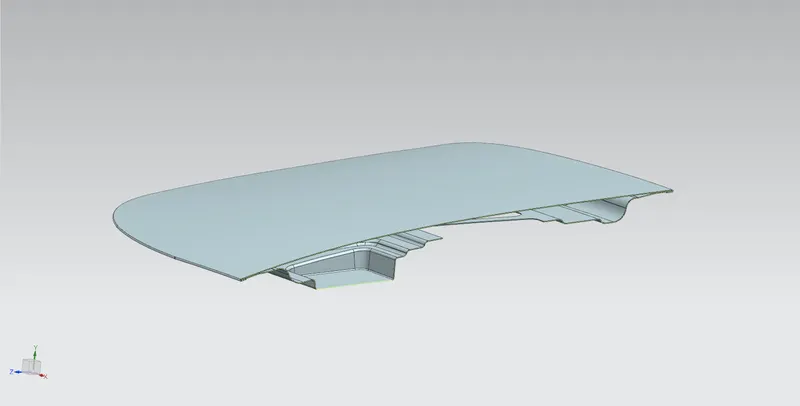
CROSS-SECTION:
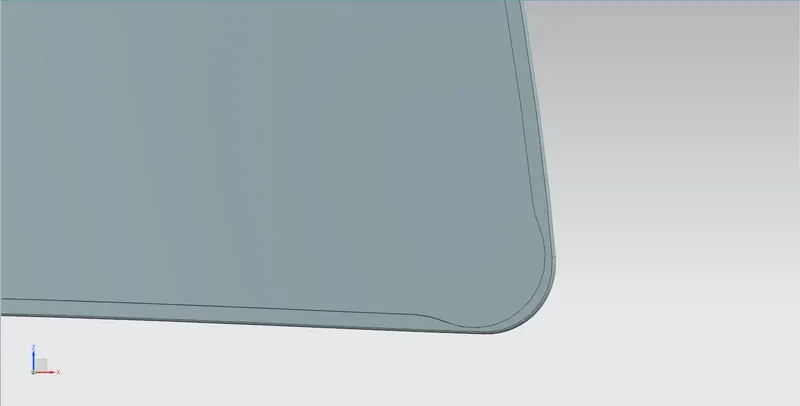
RELIEF:
HOOD COMPONENTS:
LATCH:
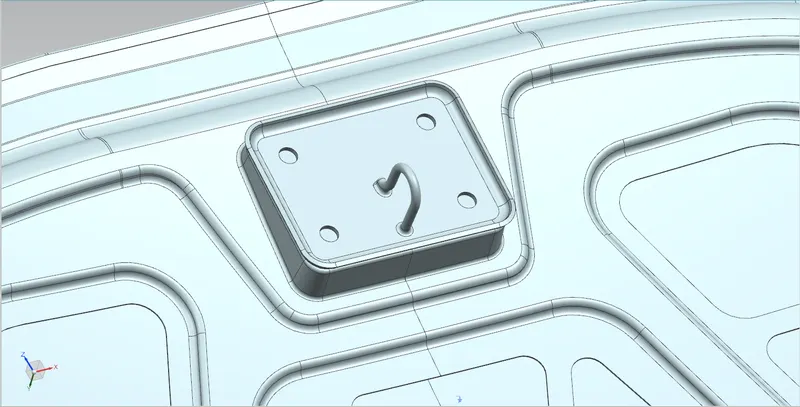
A hood latch is a very simple component. It’s basically the fastener that keeps your hood closed shut. Latch ensures that your hood is securely connected to your vehicle and that it doesn’t pop open unexpectedly when tension is applied to the cable from the hood release handle, it pivots the secondary latch, which pulls away from a retaining seat located under the hood. By design, the secondary latch then releases the hood a few inches before a safety latch takes over.
HINGE:
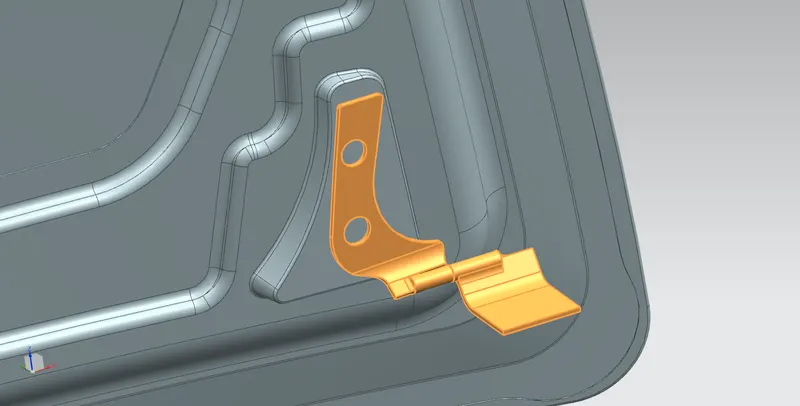
Hinge is a component that fixes the hood to the fenders of the car. The latch must be fixed perpendicular to the hinge axis so that the hood opens or closes properly.
MASTIC DATA:
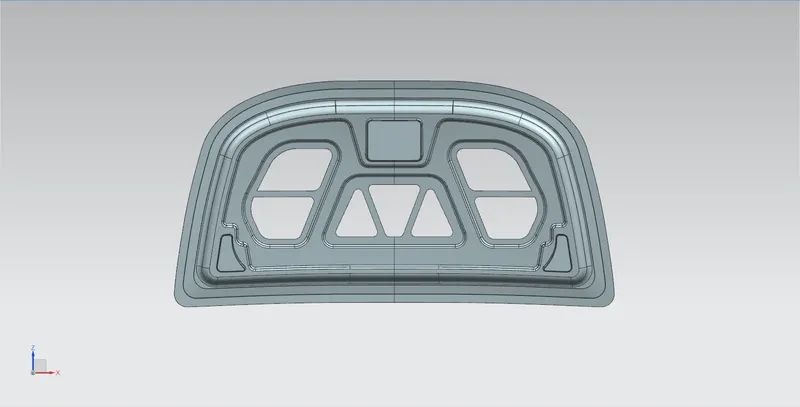
- Mastic data is used to fix the hood outer and inner panel together and also helps to reduce the weight of the panel
- The Mastic sealant or the Mastic point is an elastic compound that behaves like a rubber
- The mastic points are defined on the hood inner panel where the hood can easily deform
- They help the hood outer panel to come back to its original shape after it gets deformed
HEMMING:
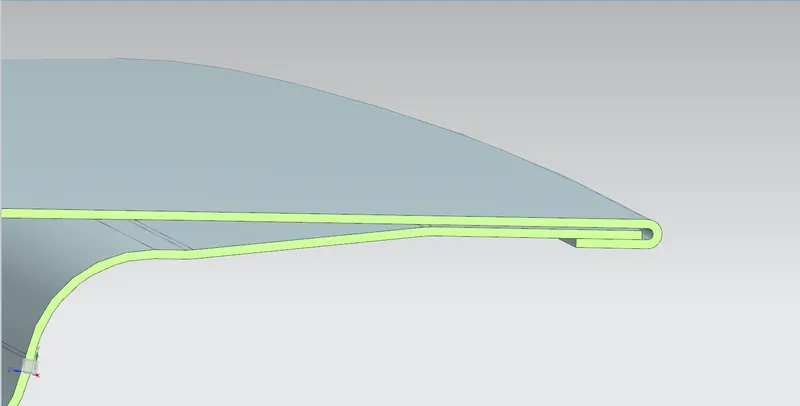
- Hemming is the process of joining both the outer and inner panels together
- It is the process in which the edge is rolled flush to itself, while a seam joins the edges of two materials
- Hems are commonly used to reinforce an edge, hide burrs and rough edges, and improve appearance
- The hemming process roles and wraps the hood outer panel around the inner panel and holds it tightly together
EMBOSSING:
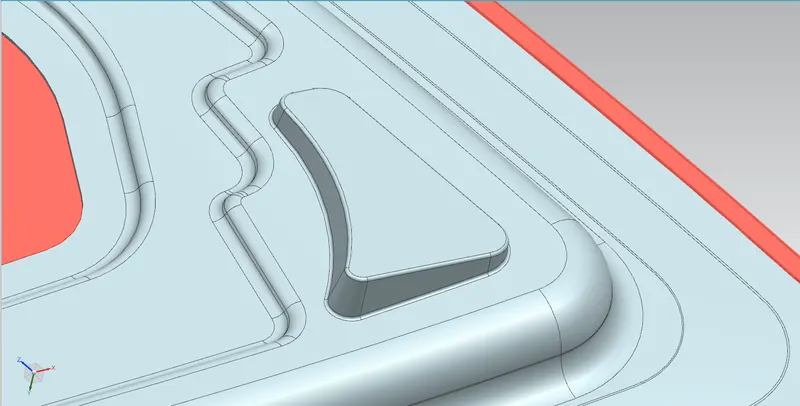
Sheet metal embossing is a stamping process for producing raised or sunken designs or relief in the sheet metal. This process can be made by means of matched male and female roller dies or by passing sheet or a strip of metal between rolls of the desired pattern. It is often combined with foil stamping to create a shiny, 3D effect. To provide strength to the inner panel and to distribute the forces produced during the impact with pedestrian or other obstacles to ensure the safety of the passengers. The forces are directed outwards through the embossing path.
DEEP DRAWING:
Deep drawing is a manufacturing process that is used extensively in the forming of sheet metal into a cup or box-like structures. Pots and pans for cooking, containers, sinks, automobile parts, such as panels and gas tanks, are among a few of the items manufactured by sheet metal deep drawing. A deep drawing of sheet metal is performed with a punch and die. The punch is the desired shape of the base of the part, once drawn. The die cavity matches the punch and is a little wider to allow for its passage, as well as clearance. For many calculations, the sheet metal thickness is assumed to remain constant. However, there are changes in thickness in certain areas, due to the forces involved.