Hood design-Week 2
HOOD
the hood is opening body panel that covers the engine in a front-engine vehicle.the hood is also considered as another type of door in a vehicle as it consiste of an outer panel and inner panel.the inner panel provides strength it desipate the energy outside the car body rather then inside the car body.the outer panel function as the metal cover.
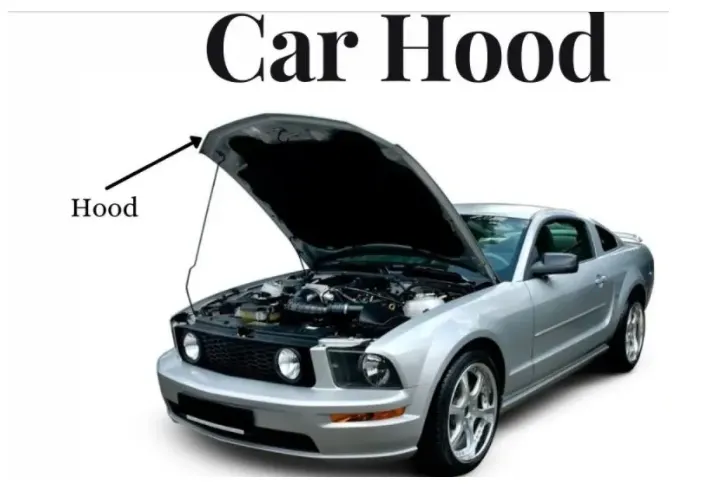
The hood or the bonnet is commonly manufactured using Stainless steel of various grades. For vehicles that weigh less, the bonnet is made up of aluminium. The Stainless steel bonnet uses a technique called deep drawing to manufacture the component. The Aluminum bonnet employs a procedure called as casting.
componet of hood :-
1. Hood outer panel
2. Hood inner panel
3. Latch and Striker re-enforcement
4. Hinge re-enforcement
5. Gas Stay re-enforcement
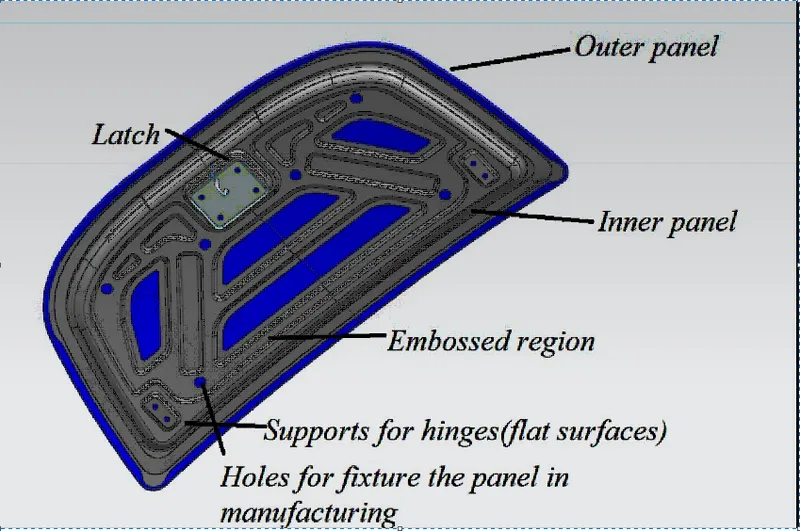
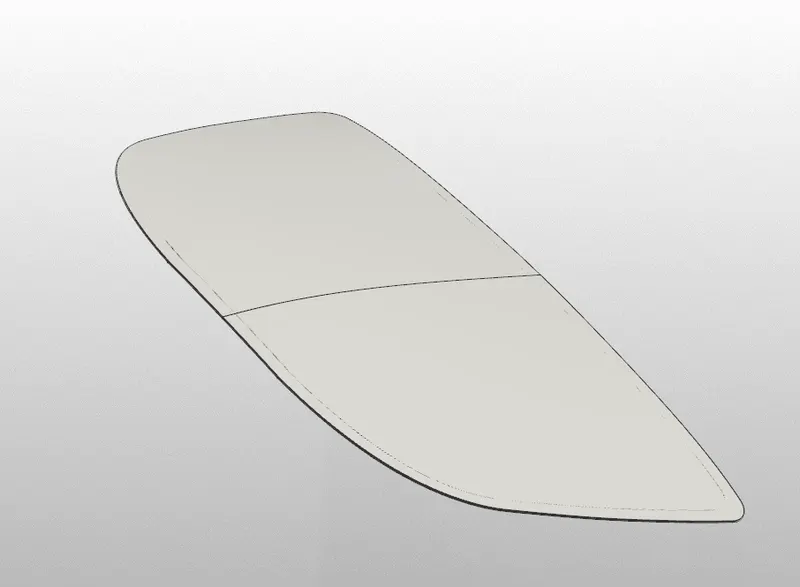
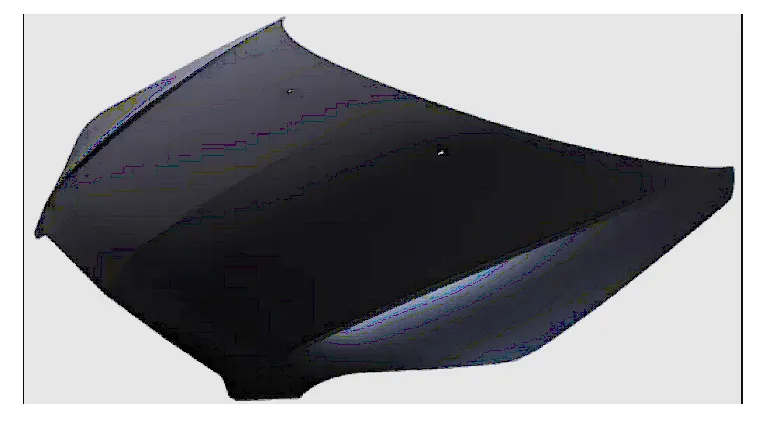
1. Hood outer panel :- outer panel is nothing but a outer skin of inner panel. it is the part which give attractive look to the car of the hood or bonnet. outer pannel cannot join by any welding process like spot or rivet welding, which spoil the outer look of the car. the outer pannel is generally extracted model from the prototype or master design.
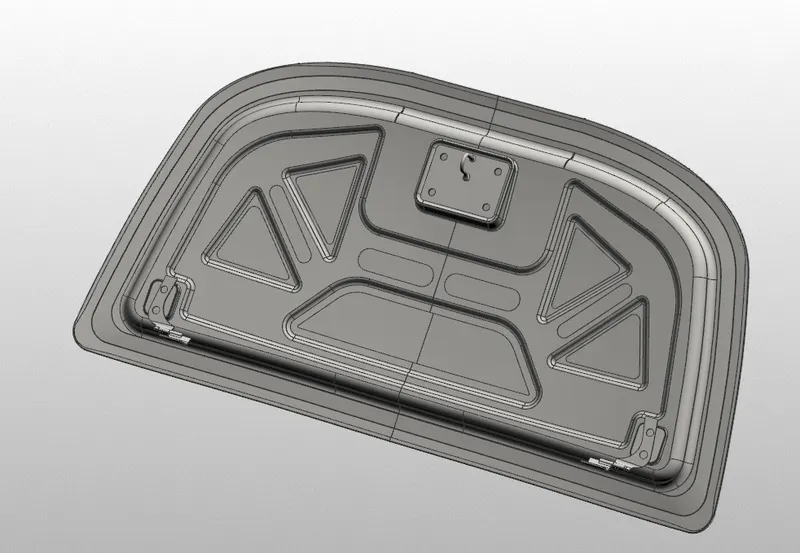
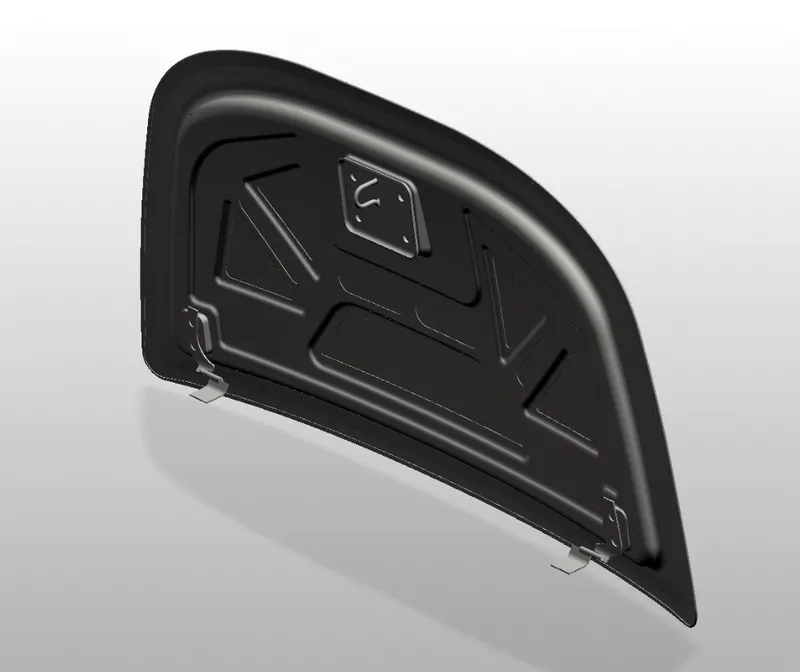
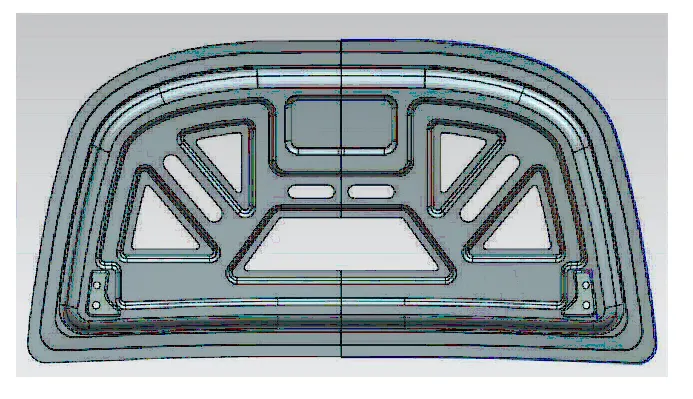
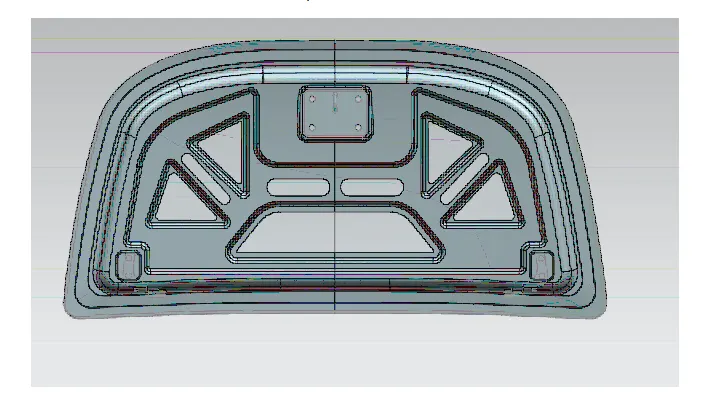
2. Hood inner panel :- Inner panel is used to support the outer panel. it consist of different embosses and holes at diffrence place. embosses provide stiffness as well as dissipate the energy towards hinges.to determinre the most effective position of hole the method of modal stiffness is employed. inner panel is offset of the parent work surface and inner panel thickness is genrally 0.75mm.
3. Latch and Striker re-enforcement :- Federal Motor Safety Standard (FMVSS) 206 regulates the minimum strength of side door latches in passenger carrying vehicles. The purpose of the standard's requirements is “to reduce the likelihood of occupants being ejected from vehicles in real world accidents.”
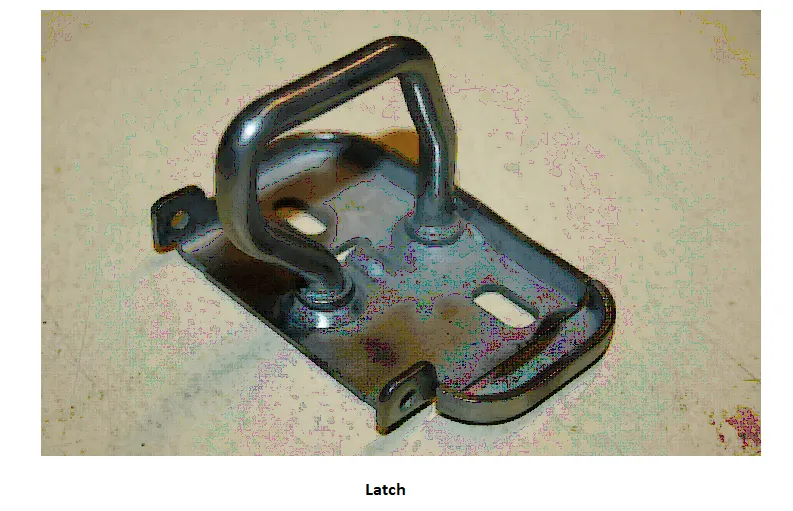
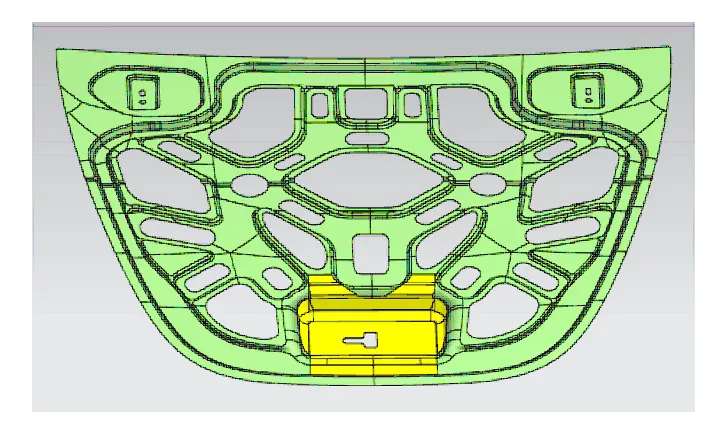
Striker re-enforcement :- whenever add weight to a material i loose the strength of material locally. for example:- where the latch and striker are placed on the inner panel of hood i will remove the material at that area to place the latch and striker so at that time we remove the strength of material at that area locally. but how do i compensate the strength by adding addisnal material at that area which is called as re-enforcement.
4. Hinge re-enforcement :- whenever add weight to a material i loose the strength of material locally. for example:- where the Hinges are placed on the inner panel of hood i will remove the material at that area to place the Hinges so at that time we remove the strength of material at that area locally. but how do i compensate the strength by adding addisnal material at that area which is called as Hinge re-enforcement.
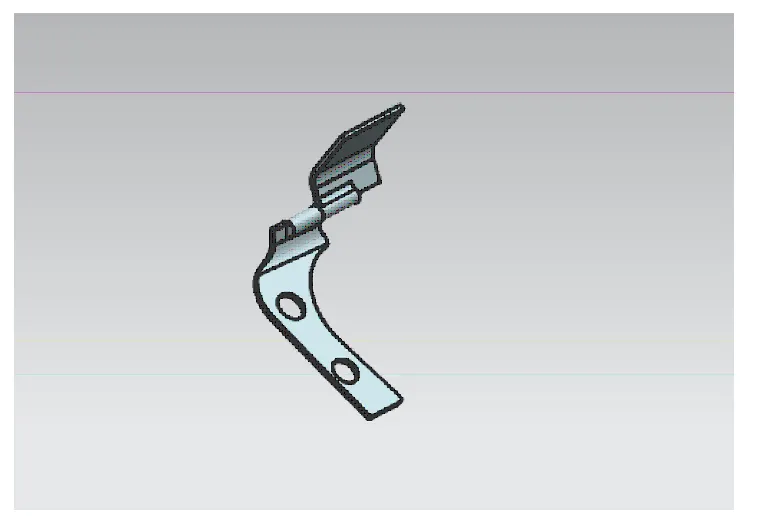
5. Gas Stay re-enforcement :-
There are two types of support rod:-
1. Gas stay
2. Support rod
1. Gas stay :- spring stay are designed to be used on upward lifting hood once yo have opened the hood slightly the spring will push the hood to the fully open position.Euro fit stok various size spring depending on the hood size requirements. this is mostly used for where the car bonnet or hood weight is heavy. these contain nitrogen gas under pressure and some oil to damp movement and to lubrecate the seals.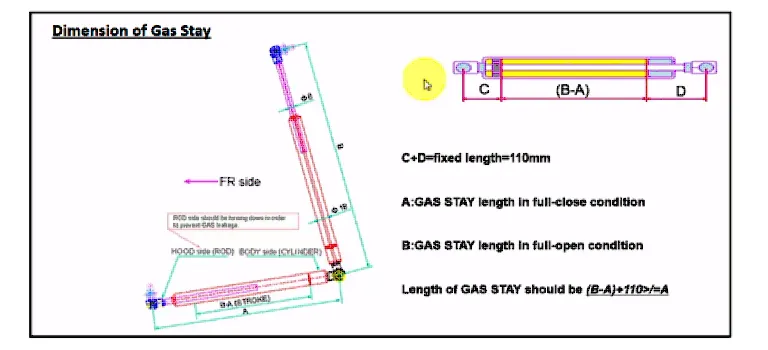
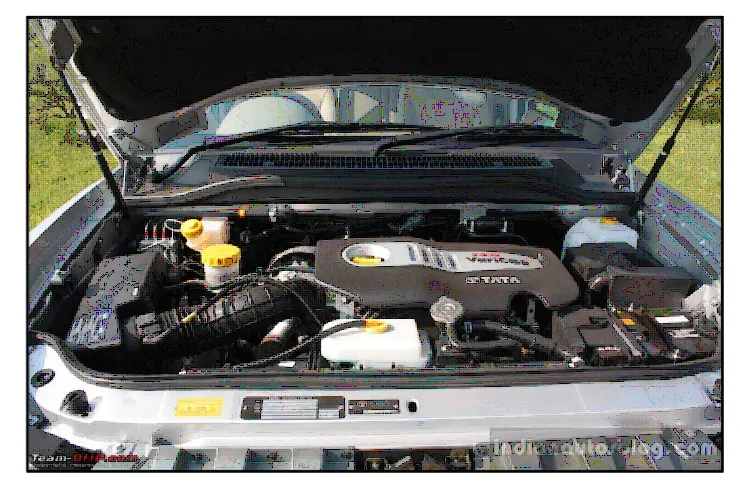
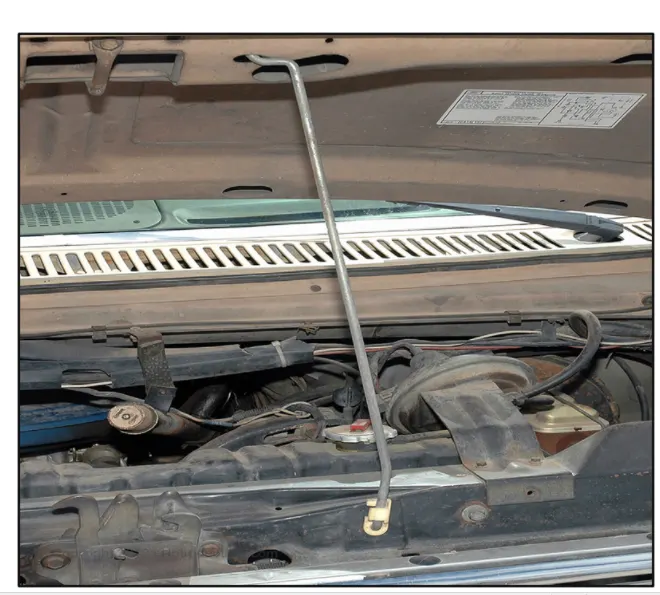
2. Support rod :- support rod can be mounted with grommet side on the engine compartment of dody and rod loking hole on hood or vice versa.
grommet and the clip of the rod are standard parts. support rod is used to incrrease the support force,automatic buffering capacity, safe use , not easy to fall, avoid hot hands, support the engine more easily and bance the force without shaing.
LATCH :- Latch is striker,Which is placed over the hood & get attached to the hole provide in engine compartment. it is used for locking purpose of hood with engine compartment.
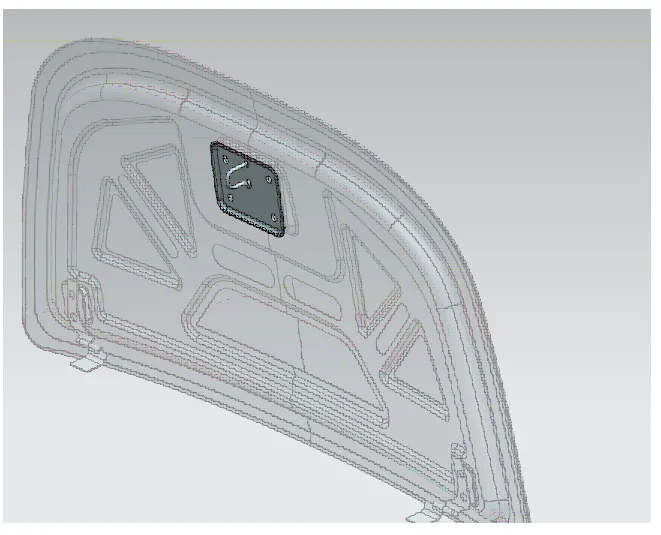
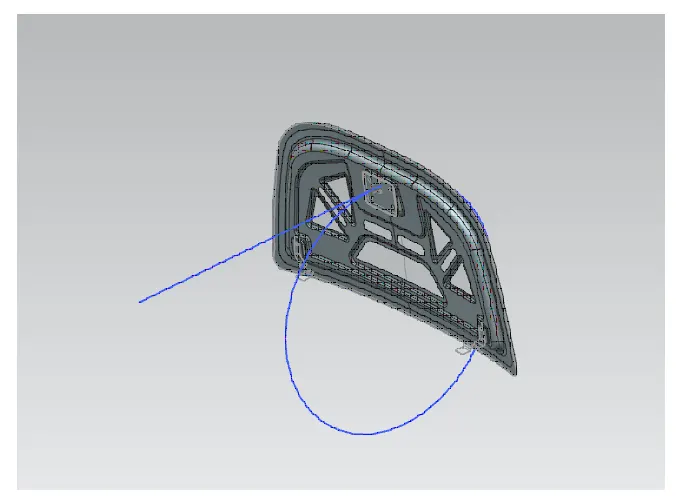
LATCH TRAJECTRY:- While assembly the latch with the hood panel it is strictly recommended that the position of latch striker should be plaed such that the latch striker exactly fit into the lock hole in the engine compartment. keeping this in mind , the latch striker is placed on the inner hood panel using latch trajectory path. This path is created using the hinge axis taken as reference to draw a big trajectory path.
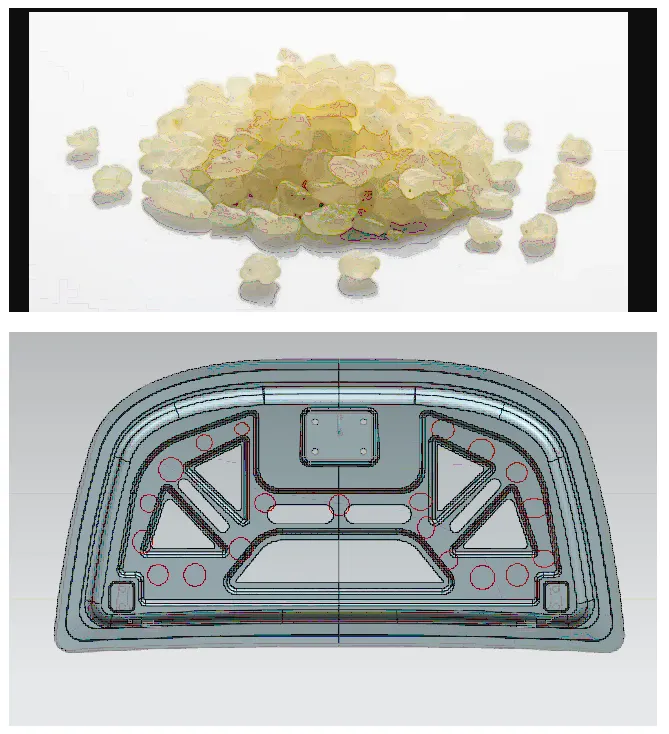
MASTIC DATA :- As we know that the main purpose of the outer panel is for the aesthetic look.thus we can not use bolts or welding. This has to be done with the help of the hemming and mastic sealants. Mastic sealants are elastic compound that behave like the rubber. it is placed between the outer and inner panel.Mastic sealant has the tendancy to increase the strength of the panel and has influence of 80mm diameter. the minimum gap between the inner hood panel & outer hood panel is 2mm.
EMBOSSED SURFACE :- Embossed surface play an important role in car hood panel while crasing or accident of car. Besause during the collision ,hood is most affected part which sustain all the impact forces while crasing. most of the impacte force are directly flow in the dirction of collison & thus can harm the driver stting under the car, thus to over come this problem generally.V or Y shaped emboss are given in inner hood panel. so that impact foce coming in the direction of collision is diverted towards the corner point of the hood & driver couldn't be harmed.
DEEP DRAWING
deep drawing is a sheetmetal forming process in which a sheet metal blank is radially drawn into a forming die by the mechanical action of a punch. it is thus a shap transforming process withmaterial retention. the process is considerd "deep" drawing when the depth of the drawn part exceed its diameter.
HEMMING
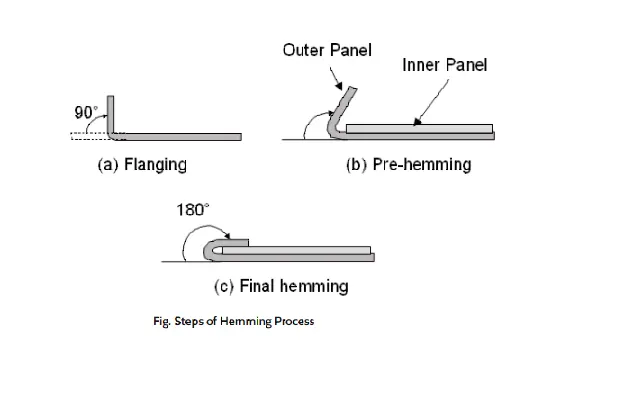
Hemming and seaming are two similar metalworking processes in which a sheet metal edge is rolled over onto itself. Hemming is the process in which the edge is rolled flush to itself, while a seam joins the edges of two materials.Hems are commonly used to reinforce an edge, hide burrs and rough edges, and improve appearance.
Types of hemming
1.closed hems
2.open hems
There are two types of hemmed edges: closed hems and open hems. Closed hems are completely flush while open hems have an air pocket in the bend. The major difference is that the tonnage required for a closed hem is much greater than that for an open hem.
This my Hood project link in which all parts and assembly are given.
RENDERD IMAGES