Hood design-Week 2
Aim :
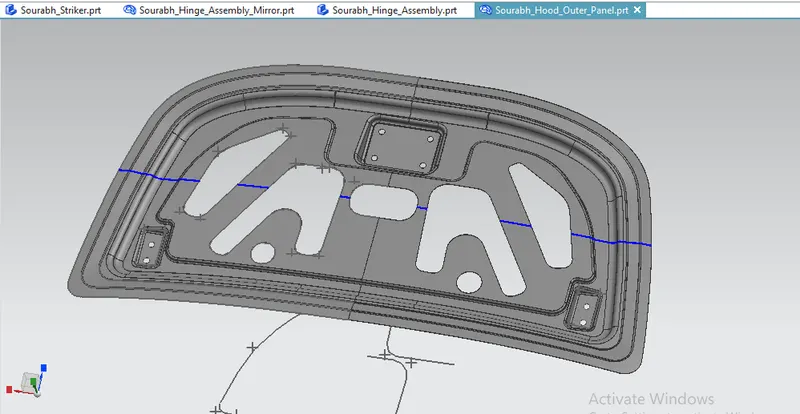
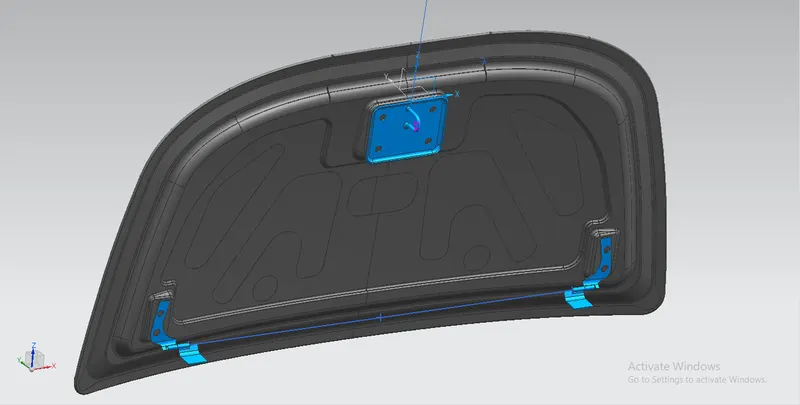
To Design a Hood using Nx Cad
Hood Definition :
A Hood or Bonnet is main component of a car at the front portion. It is used to decorate the car and add luxurious look. The shape of the bonnet is made aerodynamic in order to minimize the air effect. Bonnet is generally used to access the parts easily such as radiator, engine and many other parts. In automotive world the weight optimization plays an important role. In this paper material changes is applied to the bonnet for the same design and finally showing the stiffest bonnet and less weight component. For designing the hood 3D model CATIA V5 R19 is used, then import the cad model in to hypermesh and pre-processing is done using Hypermesh, solver is Optistruct Fea which helps to do the analysis for hood. For results visualization Hyperview and HyperGraph is chosen.
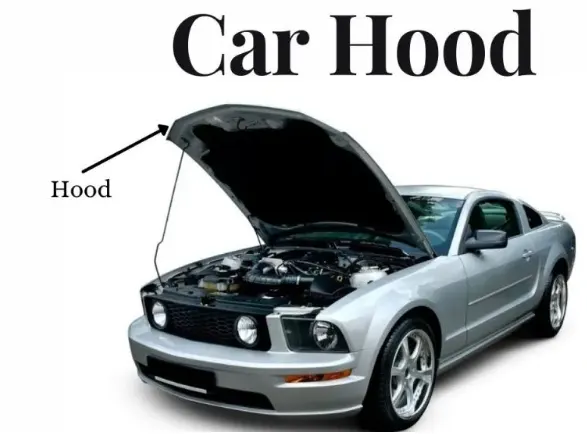
Types of Hood :
1. Cowl Hoods
This type of hood describes a complete, factory made hood that is ready for assembly right from the manufacturer. This type of hood allows air to be forced through quickly and directly into the air inducers, which allows the air to blow into the combustion chambers. This is often known as cowl induction, hence the cowl hood. Since air is one of the most important components to get the proper fuel ignition for performance, a cowl hood is an easy fix. The more air that the engine receives, the better the engine will run. The process of custom fitting a cowl hood involves an alteration of the previous hood. You need to determine the exact size to have it fit on your vehicle and work right. The cowl is then attached to the hood to allow proper ventilation. There are various types of cowl hoods that you can choose from, depending on your tastes and what looks good on your vehicle.
2. Carbon Fiber Hoods
You can buy carbon fiber hoods in various colors and sizes, depending how big your vehicle is and what color you would like the hood. They are made from carbon fiber which allows your engine to get the proper air circulation, while still being able to look stylish. A carbon fiber hood will give your vehicle the air it needs for maximum engine performance.
3. Fiberglass Hoods
Fiberglass hoods are easy to assemble and they allow the right amount of air ventilation while still being stylish. You can order your fiberglass hood, choosing from different colors and sizes to match the needs of your vehicle. They are made from fiberglass, which means that they are not easily dented or ruined by small accidents. This can save you a lot of money in the long run.
4. Steel Hoods
Depending on your vehicle, you may need a steel hood. These are heavy duty hoods that are rather large and bulky. They can be bought inexpensively, and in an assortment of colors and sizes to meet your vehicles needs. They also allow proper ventilation throughout the hood of your vehicle to ensure the engine is getting enough for the air inducers, which allows your engine to run better.
Components of a hood
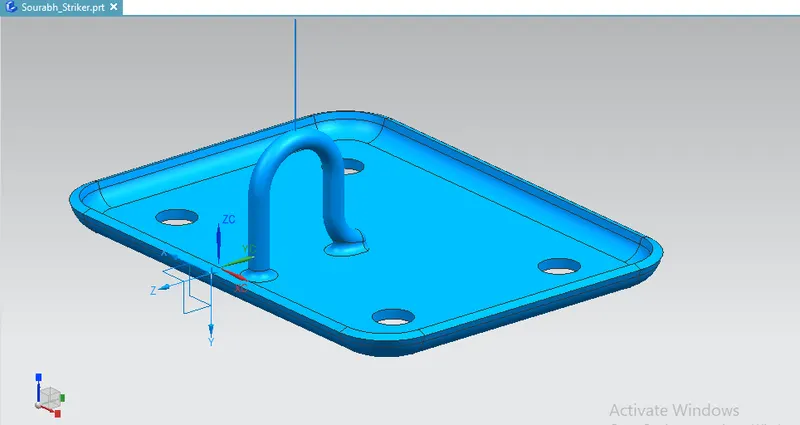
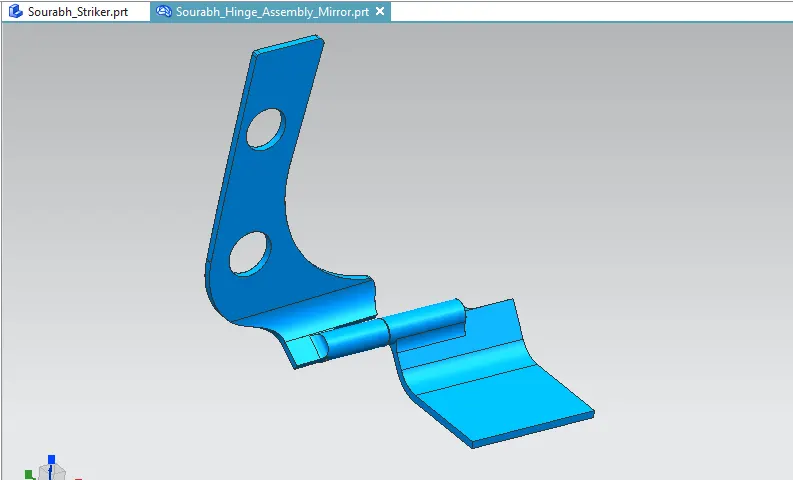
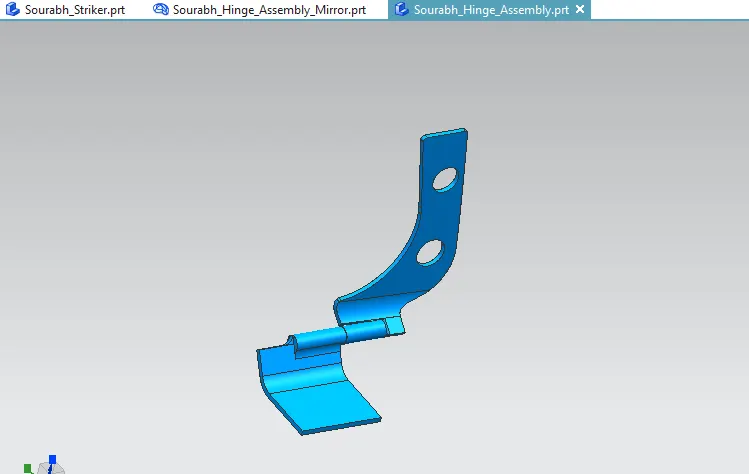
latch trajectory is the path which the striker will follow when the hood is open/closed while pivoting on the hinge axis.
The latch trajectory is taken as a circle with the hinge axis as the center of the circle. The striker is placed 90 degree such that it is tangent to the circle.
2. Mastic Data :
It is the sealant applied between hood's outer panel (which is styling surface) and hood's inner panel.
Manufacturing Process Required For Hood :
- Deep Drawing : The deep drawing process is a forming process which occurs under a combination of tensile and compressive conditions. A flat sheet metal blank is formed into a hollow body open on one side or a hollow body is formed into a hollow body with a smaller cross-section. [DIN 8584]
Deep drawing processes are divided into three types:
- Deep drawing with tools
- Deep drawing with active means
- Deep drawing with active energy
- Hemming : It is a forming operation in which the edges of the sheet are folded or folded over another part in order to achieve a tight fit. Normally hemming operations are used to connect parts together, to improve the appearance of a part and to reinforce part edges.
In car part production, hemming is used in assembly as a secondary operation after deep drawing, trimming and flanging operations to join two sheet metal parts (outer and inner) together. Typical parts for this type of assembly are hoods, doors, trunk lids and fenders.
Conclusion :
The Hood Design and assembly of given dimensions is completed using NX CAD Software.