Hood design-Week 2
HOOD DESIGN
The car hood or bonnet is the front part of an automobile generally cars, is the hinged cover that rests over the engine of a front-engine vehicle. Its general purposes are to protect and enclose the engine and other power drive components and also to provide access to the engine for repair and maintenance. A concealed latch is typically used to hold down the hood.
While this purpose may look clear and uncomplicated the design aspects, considerations and the criteria for its structure takes and plays a crucial role while designing a car. There is one more primary concern with the hood design, the safety and impact nature during a crash and also the pedestrian safety together comprise the hood design.
Also, the design must consider the opening and closing of it as the engine, transmission unit, battery resources are housed below it, the servicing accessibility also lies in designing the hood.
Then the aesthetic part where the car's front look appearance has a good deal of approach and attraction in the automobile retail market.
Hence, the styling features, service accessibility, pedestrian safety together has to be carried out in the hood design.
DESIGN CONSIDERATIONS:
- Noise Vibration Harness: One of the key considerations in the design of the hood is the noise vibration damping factor, the noise and the vibration from various transmission systems, engines must be reduced within the hood though this can be sustained with silencing elements and dampers, the design aspect plays a crucial role in bringing it to the minimum.
- Safety: The safety factor has a wide scope of coverage. Initially, the pedestrian saftey is kept at priority which is discussed in detail in the later part. The pedestrian saftey is that the impact must taken within the panel and reducing the casualities. Then the hood must also prevent the engine and transmission assemblies in case of a crash.
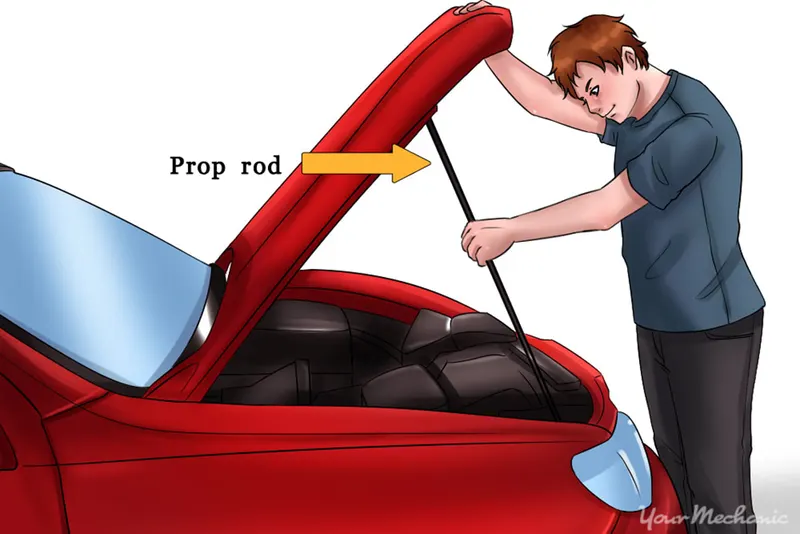
- Latching: When the hood is opened for servicing and troubleshooting purpose the opening of the hood must be inclined uptil the average human height, generally this is taken from the geographical statistical data. There is usually an linkage mechanism prop rod provided while gas struts are also used in the luxury variants reducing the human effort.
HOOD ASSEMBLY:
The hood assembly consists of the parts as follows:
- Hood outer panel:The outer part of the hood, the interface surface, where the styling features and the aesthetic aspects of the designer and class A stylist are incorporated. This is primarily designed with the market in mind for the pull the customer eyes.
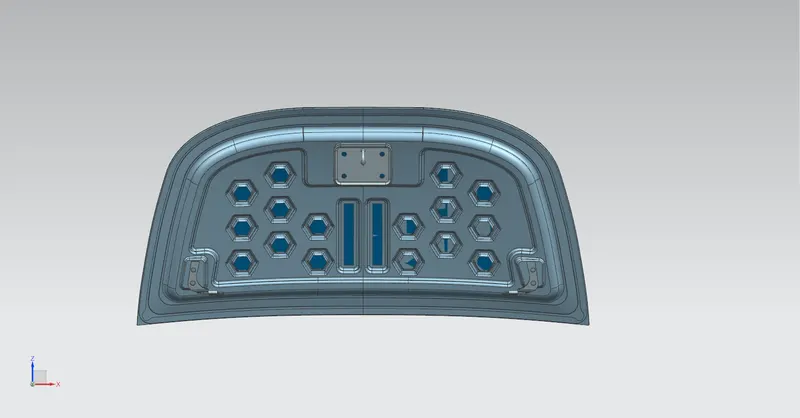
- Hood Inner panel:This incorporates the engineering features like the crumbling factor of the hood, mastic attachment, the hinge assembly, striker positioning. The pedestrian safety impact, crumpling factor are designed in the panel.
- Hinge assembly: The hinge assembly axis is along which the hood inner panel is operated.
- Striker: The striker is positioned with the hinge axis and is used for latching of the hood at closed position.
- Prop rod/ Gas struts: The rod or strut is positioned in such a position it opens and holds the hood at position for an average huma height inside without interruption.
DESIGN OF HOOD:
PEDESTRIAN AND VEHICLE SAFETY:
Once the design is carried out, then the hinge, striker reinforcement are created. Before that, the safety considerations are at crucial play here.
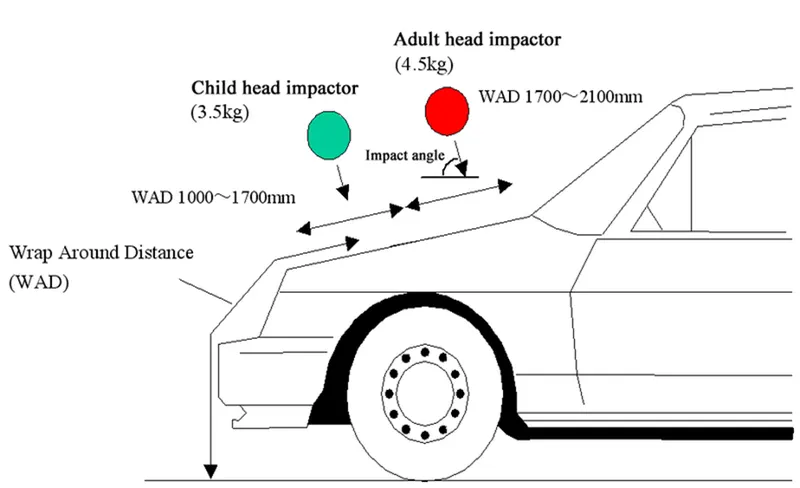
Pedestrian safety standard is effective in reducing the fatalities by traffic accidents. The image below depicts the impact zones of adult and child, taken for a specific geographical area. During a hit from the car frontal part the pedestrian is hit with an impact and then the head zone falls on the hood during the hood.
The below image gives a more clear representation of the impact.
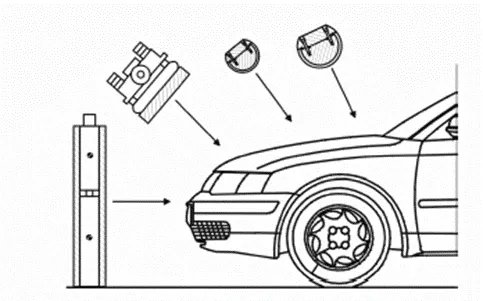
The safety is now playing its role in the design, the hood inner panel is designed in such a way that the force imparted during the frontal crash tends to push it outward to the hood letting the hood to crumple and crush rather than rigid and also not imparting the force on the passenger and driver during a frontal crash. The below image is given as a representation for the force demonstration.
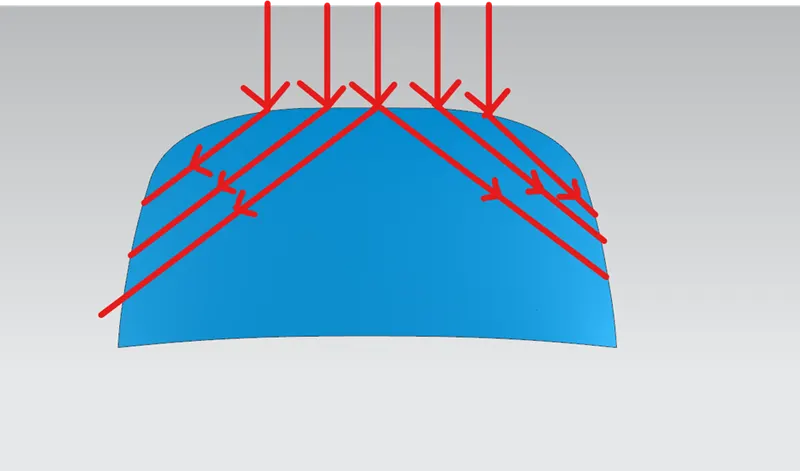
As the image depicts the frontal crash impact should be diverted outward of the hood panel.
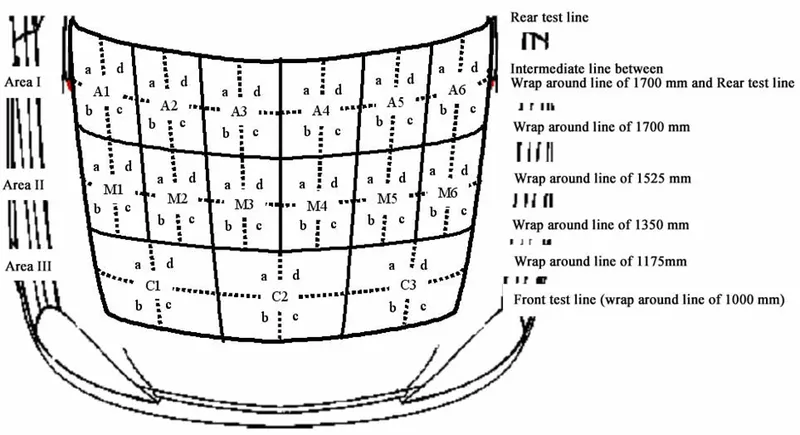
The impact areas of Area I and Area II are each divided into 6 portions in the latitudinal direction of the vehicle. As to Area III, the latitudinal division is made into 3 portions because of fewer impact positions of high injury value due to the structures inside the engine compartment, and the forward section of the bonnet having the possibility of occupying a smaller area than
the rear section due to the position of the bonnet leading edge.
INNER PANEL:
Now the hood design is primarily based on the master section provided. This gives the dimension of the inner panel to be made and the hemming section dimensions.
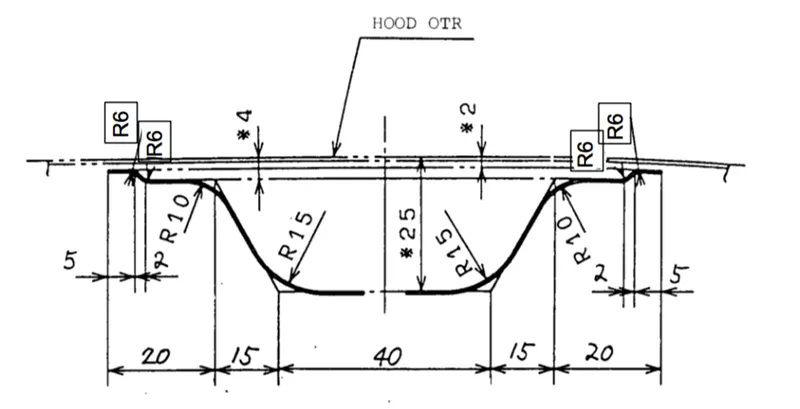
Now, since the hood outer panel, the interface surface is created and altered by the class A stylist, the inner panel needed to be created from the outer panel data and the master section analysis.
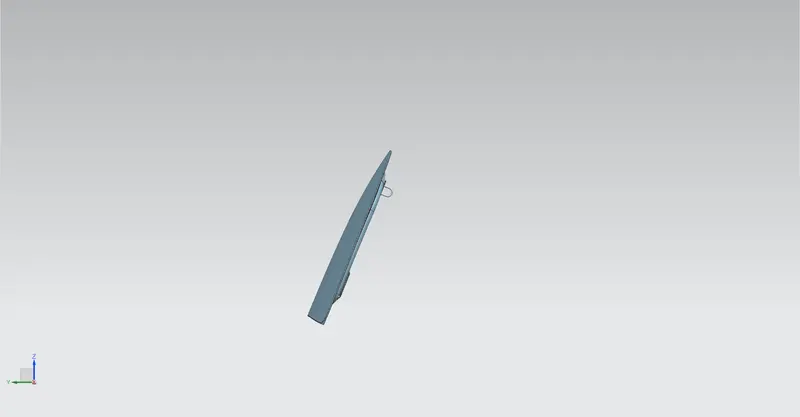
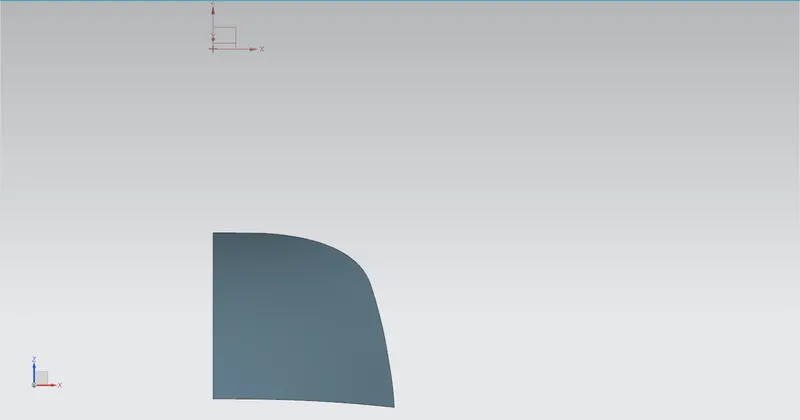
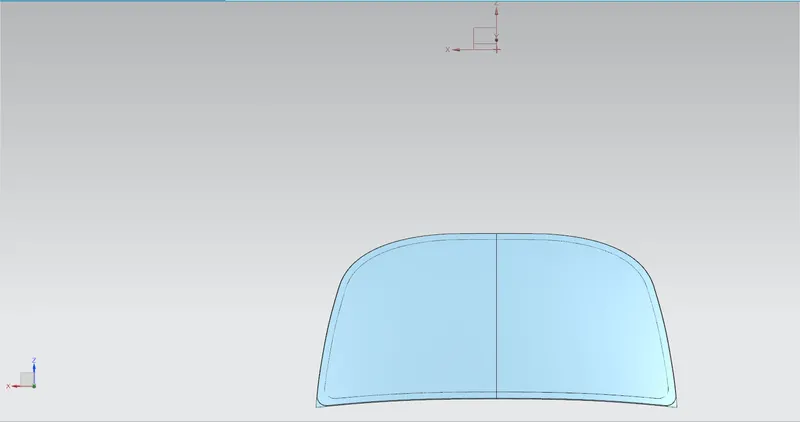
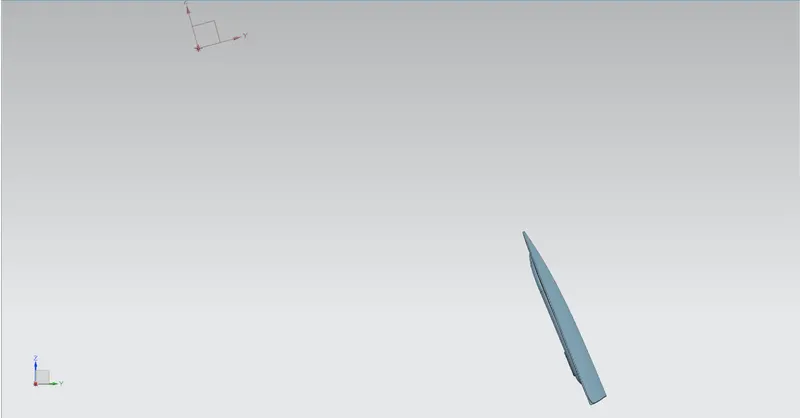
The hood inner panel designing is shown in the below detailed images:
The given outer panel is initially given an offset for making the working surface and then it is trimmed along the YZ plane as the panel is symmetrical along this plane.
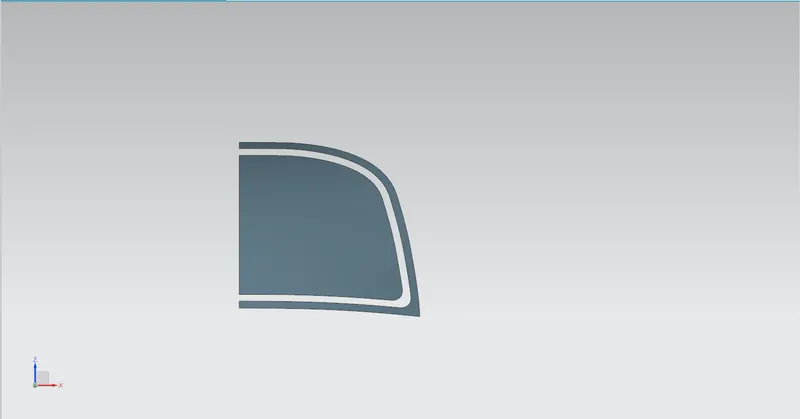
Then the initial hemming portion of the surface is given an offset with the master section dimension
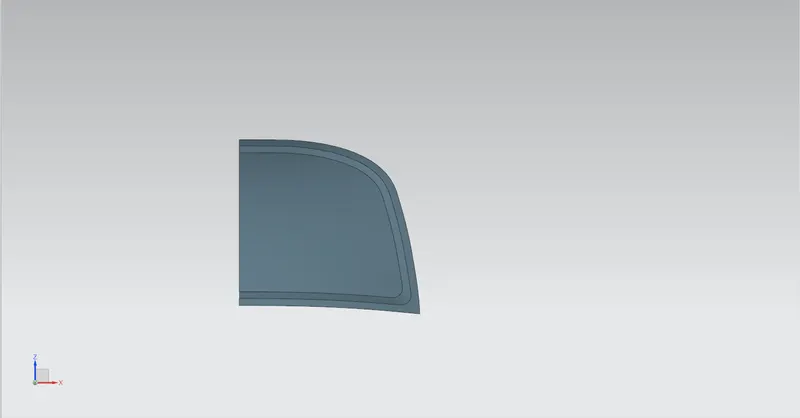
Then they are connected through an in built command in the NX through curves.
Then this working surface is again offset for the inner panel cavity section for the engineering features and embosses to be made. This is then law extended and the inner panel is trimmed and extended. Then the faces of the surface are blended and the edges are blended to the surface.
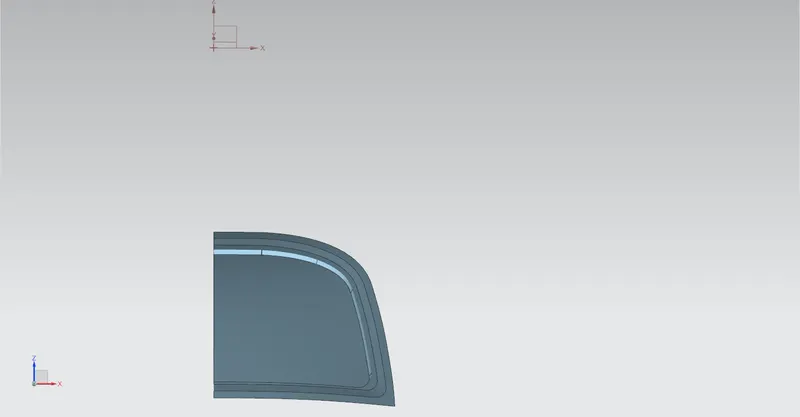
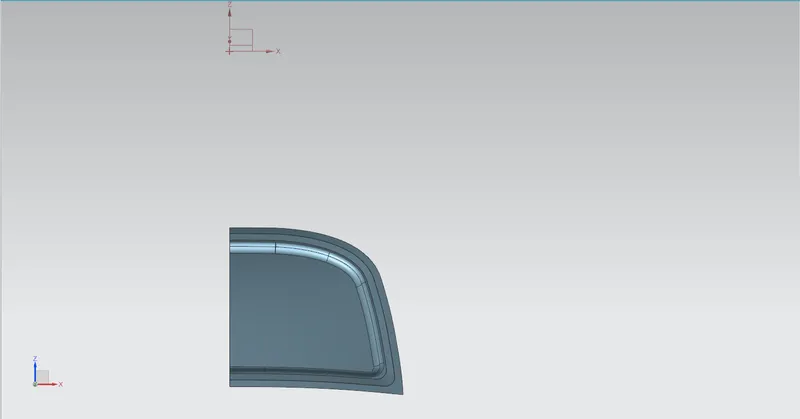
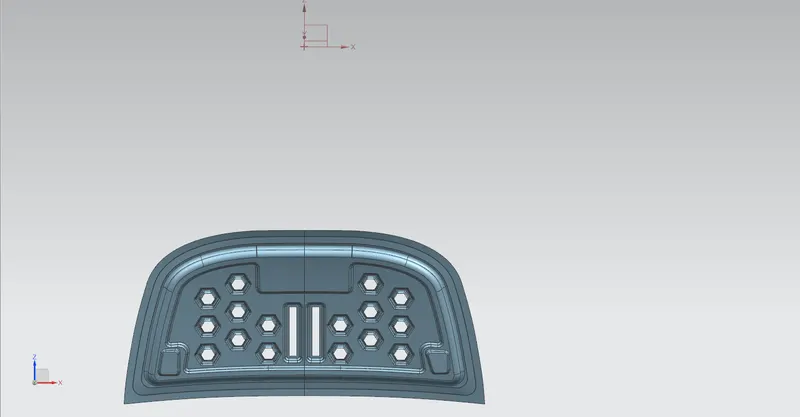
Now the reinforcement for the striker, hinge assembly and the emboss for the inner panel design for the saftey factors discussed earlier are carried out.
The emboss profile and the trimming are approximated with the oem standards available.
ASSEMBLING INNER AND OUTER PANEL:
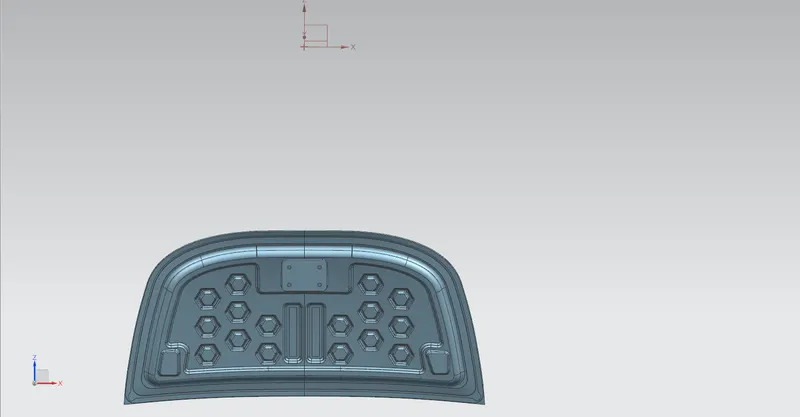
Once the inner panel is designed it can be fixed with the outer panel. This is carried by a manufacturing process called hemming. In short, hemming is where the edges of the working surface are rolled onto itself.
Hemming is a technology used by the automotive industry to join inner and outer closure panels together (hoods, doors, tailgates, etc.). It is the process of bending/folding the flange of the outer panel over the inner one.
In car part production, hemming is used in assembly as a secondary operation after deep drawing, trimming and flanging operations to join two sheet metal parts (outer and inner) together. Typical parts for this type of assembly are hoods, doors, trunk lids and fenders. The accuracy of the hemming operation is very important since it affects the appearance of the surface and surface quality. Material deformations, which occur during the hemming process, can lead to dimensional variations and other defects in parts. Typical hemming defects are splits or wrinkles in the flange, material overlaps in the corner areas or material roll-in. The front relief is provided at the edges of the panel.
STRIKER AND HINGE ASSEMBLY:
Now the striker, for latching, and the hinge assembly, for the opening and closing of the panel, are assembled to the panel.
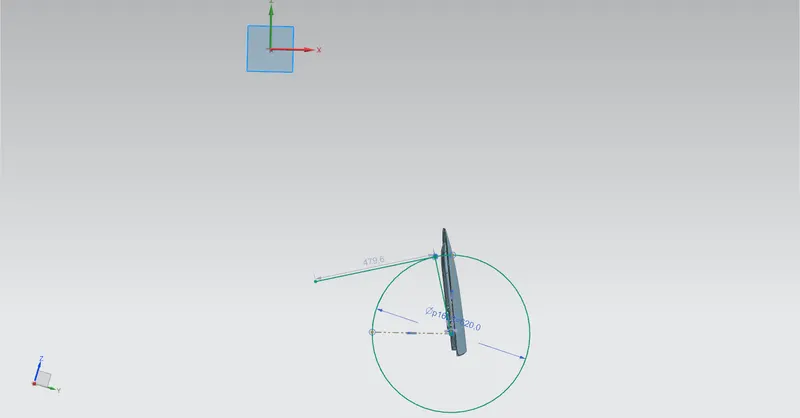
The hinges are placed onto the inner panel and the reinforcements are created for the same. Then the assembly is mirrored along the YZ plane. Then the hinge axis is kept as reference and the striker positioning is made. The thumb rule for the assembly is that the hinge assembly axis circle and the striker be tangential.