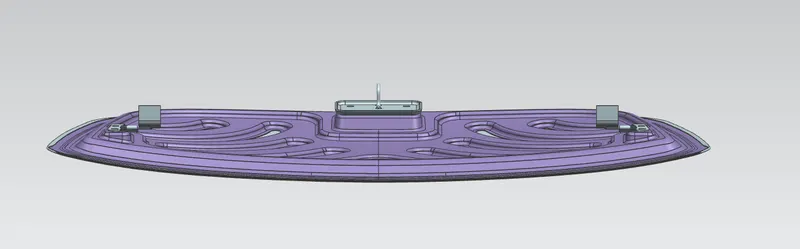
Design of Frontal BIW Enclosure ( Hood or Bonnet ) of a Car
AIM - Design of Frontal BIW Enclosure of a car ( Hood or Bonnet )
OBJECTIVES -
- Design of Hood Inner Panel by following given Master section with emboss creation
- Creation of Embosses on Hood Inner Panel for Hinges
- Assembly of Hinges with Inner Panel
- Creation of Latch Trajectory
- Mounting and assembly of Striker with the creation of embossing for it onto the hood inner panel
- Creation of Reinforcements for Hinge and Striker
- Design of Hood Outer Panel along with hem creation
THEORY -
- The hood is an opening body panel that covers the engine in the front-engine vehicle. Basically, it consists of the inner panel and an outer panel. The inner panel provides strength while the outer panel functions as the metal cover.
-
A car hood, also known as a bonnet in certain other countries, is the hinged cover that sits over a front-engine vehicle's engine. Its function is to allow access to the engine for repairs and maintenance. Typically, a hidden latch is utilized to secure the hood.
Tesla Car Hood panel


Design Considerations in Hood Design
Head Impact Zone
- A lot of engineering happens behind a stylish hood design. When a pedestrian is hit by a car, he falls onto the hood. A side reference line is the trace of the highest contact point between a straight edge inclined at 45 degrees from the ground and the side of the vehicle. If the side reference line touches the fender of the car the hood is of inlaid type. If it touches the hood then it is called a wrap-around hood.
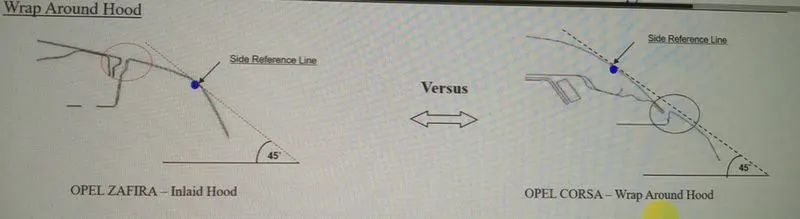
Opel Zafira - Inlaid Hood Design

Open Corsa - Wrap around hood

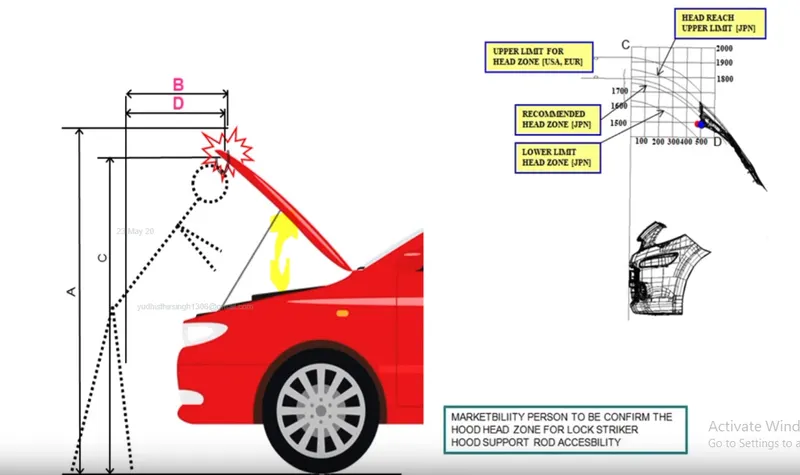
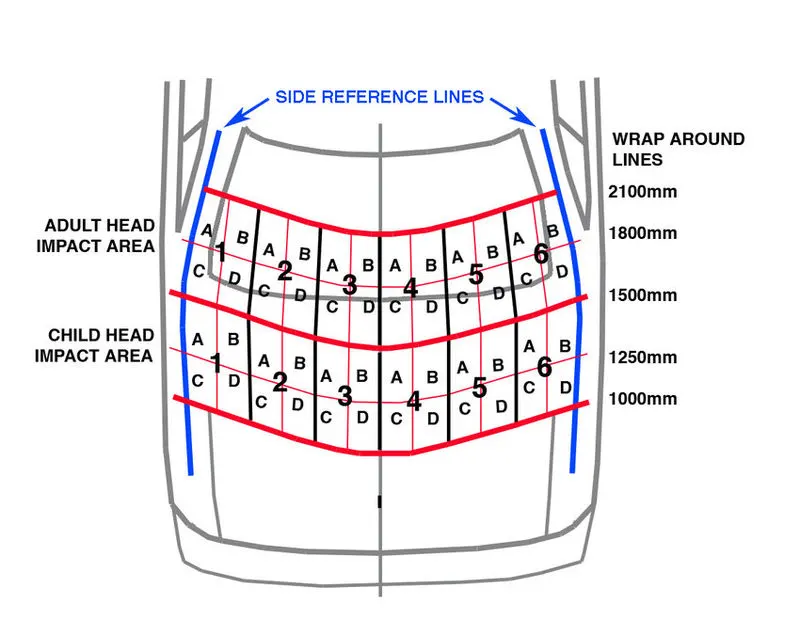
- According to different regions, head zones are defined by considering the average heights of pedestrians. The below image shows American, European, and Japanese head zone standards. The opening angle of the hood is also decided as per predefined standards.
- Wrap around distance is the trace of points received on the front structure when one end of the flexible tape of required length is held at the ground reference line and the other end in contact with the front structure.
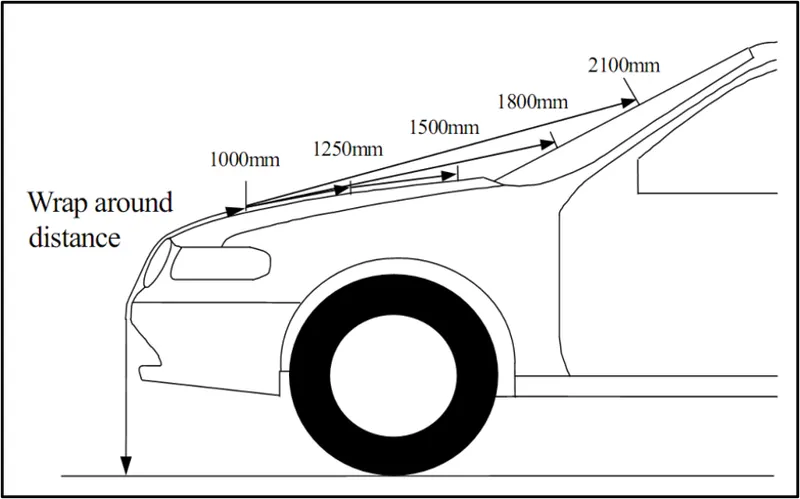
- When a child hits on a hood his head will fall between 1000 to 1500 mm area whereas When an adult hits on a hood his head will fall between 1500 to 2100 mm.
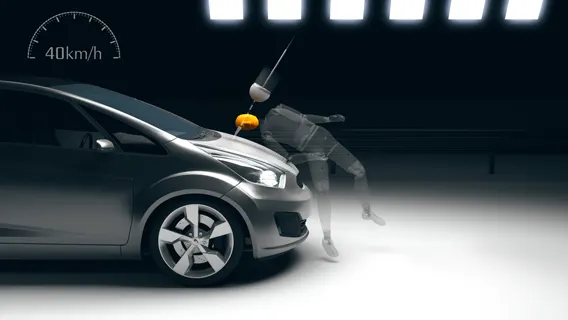
EURO NCAP Test
- EURO NCAP Test is performed to check the safety of pedestrians by considering head impact, leg impact, etc.
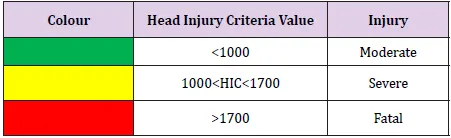
- As per NCAP Head impact criteria should be below 1000 to have a moderate injury. The hood designer's aim is to develop a hood having a major green zone.
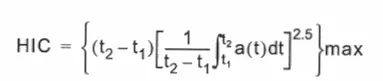
- Where t1 and t2 are the initial and final times (expressed in seconds) of the interval during which the HIC attains a maximum value and a(t) is the resultant acceleration (expressed in G) measured at the head CG.
- The time duration (t1-t2) used in the calculation should be taken as the contact time for the impact, however, this is often very difficult to ascertain in physical evaluations using crash test dummies or headform simulators. In using HIC for assessing the potential of concussion then a maximum time duration of 15 msec should be used, which was the maximum time duration for which the original tolerance curve was developed. Longer contact time durations can be used to predict skull fracture.
- The highest acceleration, independent of location or direction, should be used in the Head Injury Criterion, which will therefore be the resultant acceleration measured at the head's center of gravity.
- After a test, points are allocated to the impact portion ( which shows the color code at impact areas ), and accordingly, a pedestrian safety rating is assigned to the vehicle. The below Image shows different color zones for pedestrian safety.
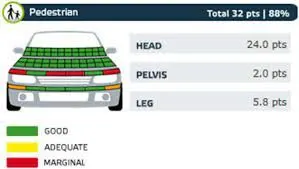
- Head Impact Injury Criteria
- The below image shows different ratings given to the vehicles in 2019 which also consists of pedestrian rating.

Different ways to Increase Rating
- By removing the excess material from the hood inner panel head injury value can be reduced
- By providing deformable mounting points so that in case of collision they can consume a force by deforming easily leading to an increase in rating.
Different Parts used in Hood
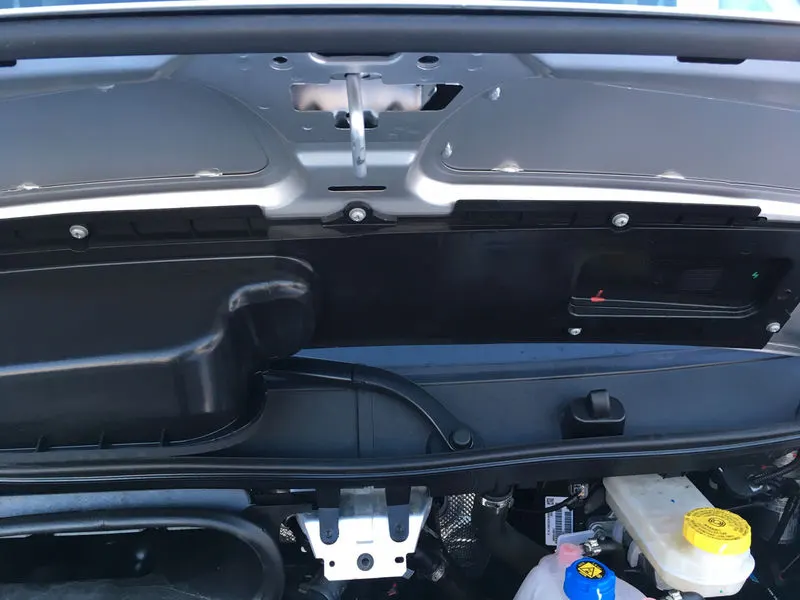
Hood Stay
- A Hood stay is an apparatus for an engine room of a car, which can safely keep an engine hood in an open state even if an external force is abruptly generated due to vibration, wind and can facilitate an opening/closing of the engine hood.
- The hood stay has two types. One is a support rod and the other is a gas stay.
- A support rod is a device used for supporting an engine hood of a motor vehicle in its open position by means of a rod.
Support Rod
- Support rods are designed by providing embosses and hole on them to avoid bending of the rod as compared with straight support rods.
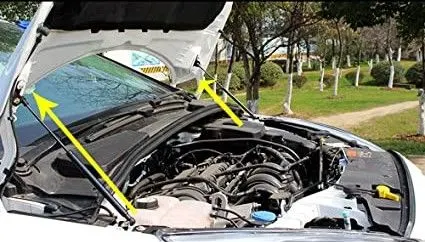
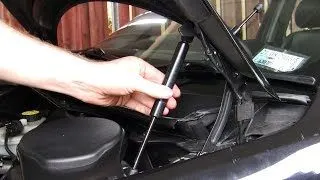
- Gas Stay is a device used for supporting an engine hood of a motor vehicle in its open position by means of an actuator that is activated by gas.
Hinge
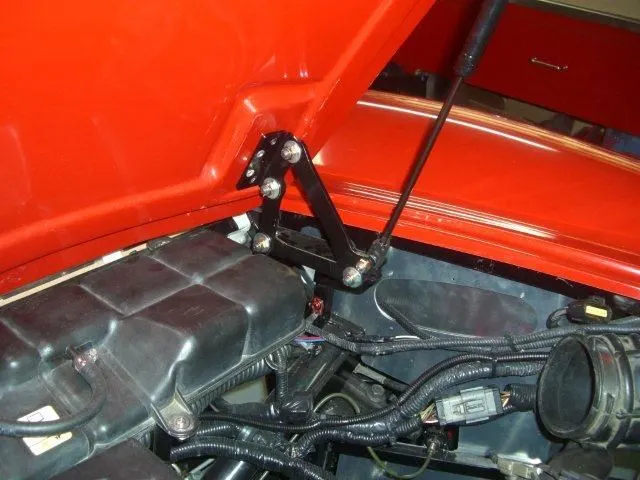
- The hood hinge is a pivot and bracket mechanism that makes it possible for you to open and close your hood. Each car typically has a pair of hood hinges installed in the front of the vehicle.
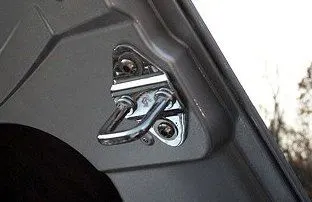
Striker
- It is attached to the hood and is used to keep the hood panel in the lock position.
- Hood Latch Striker is designed for long-lasting use. Its durable steel construction safeguards against body damage, ensuring the vehicle hood won't unexpectedly open while driving.
Manufacturing Processes used in Hood Design
Deep Drawing
-
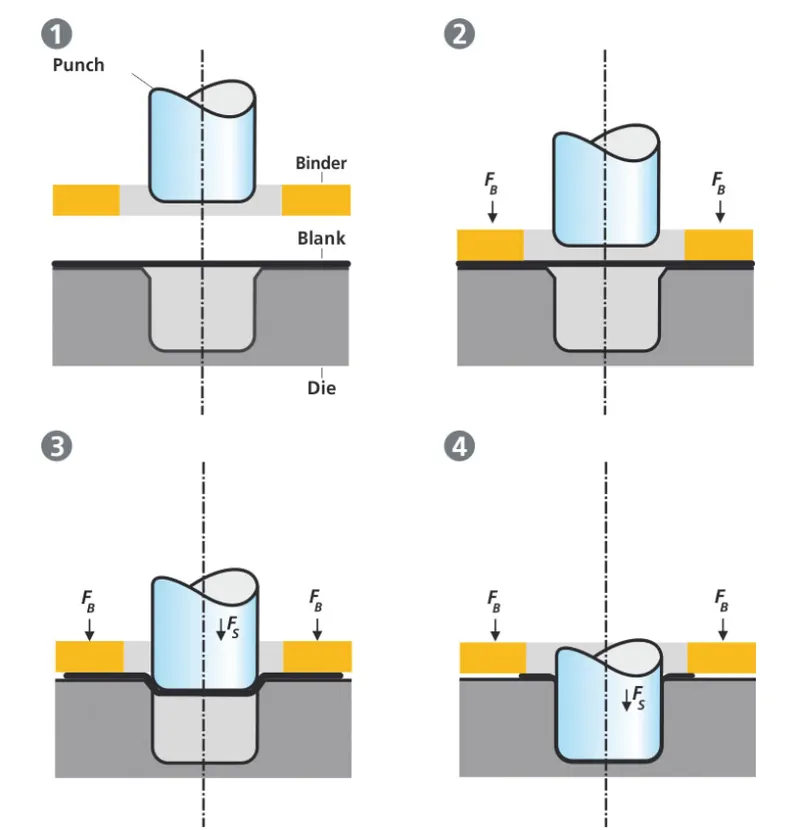
The illustration depicts the deep drawing technique. A punch, die, and binder is stiff tools. After inserting the metal sheet blank, the plate holder shuts in deep drawing.
-
The sheet is then clamped between the die and binder. This procedure slows the flow of the sheet as it is pulled, preventing wrinkles from accumulating under the binder. The punch creates the sheet in the die by stretching it over the die radius. As a result, the amount of punch power required for formation is gradually increased up to the punch's lower dead center.
Hemming
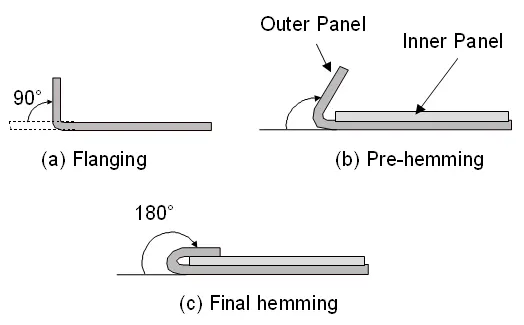
- Hemming is a sheet metal forming operation that joins sheets by bending them to 180°.
- The hemming technique is used to create automobile body panels and pieces such as deck lids, trunk lids, doors, hoods, and tailgates.
MAIN CONTENT -
- Siemens NX 11 software was used to create CAD parts and assembly of all the hood components. Using surfacing, the majority of the hood is designed.
- Following commands are commonly used to create the design of the hood.
- Offset Surface - This command is used to offset the surface to the required distance from the original surface.
- Through Curves - By using this command, the surface is created between two different curves.
- Trim Sheet - Input for this command is the face of the surface and any curve lying on that face. Using this command unwanted portion of the surface can be removed.
- Sew - It is a joining operation performed to knit or join two or more than two surfaces together to create a single surface.
- Projected Curve - 2D Sketch can be projected onto any flat or irregular face of the surface or body.
- Edge Blend - Fillet can be applied to the edges. Edge is chosen where two surface forms the edge.
- Emboss - With the help of this command any curve can be extruded with some draft.
- Mirror Geometry - Used to mirror the surface.
- Thicken - Used to give thickness to any surface for converting it into a solid body.
- Datum Plane - Reference plane which is created on any solid body, surface body, or with reference of origin.
- Extend Sheet - It is used to extend the surface to the required distance by selecting the boundaries of the surface.
- Offset Curve in the face - It is used to offset the boundaries of that surface.
- Offset - This command is a part of the sketch workbench where entities are offset to the required distance.
Design of Hood Inner Panel
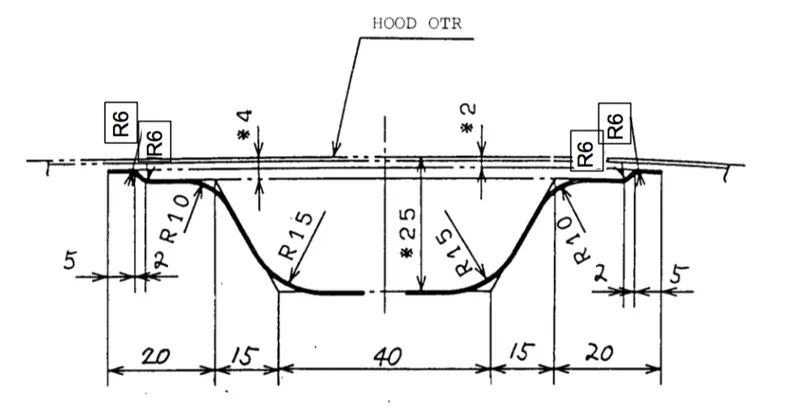
- The below image shows the given Master section to create a hood inner panel.
- Hood Thickness and other design parameters information
- Outer panel thickness - 0.75 mm
- Inner Panel thickness - 0.75 mm
- Reinforcement thickness - 1.5 mm
- Minimum fillet radius - 3.75 mm
- No sharp corners inside the component
- A minimum draft angle of 7 degrees
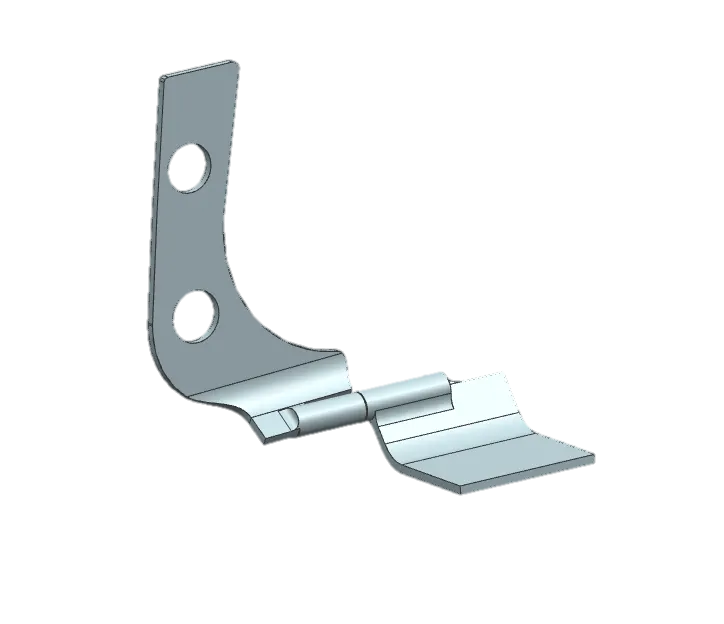
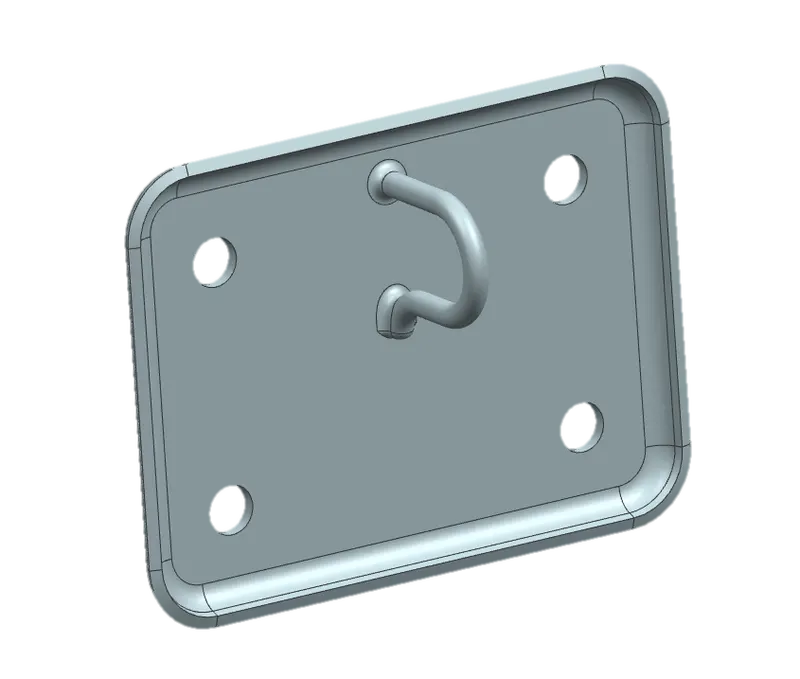
- Parts Given: Hing and Striker
Hinge
Striker
Emboss Creation
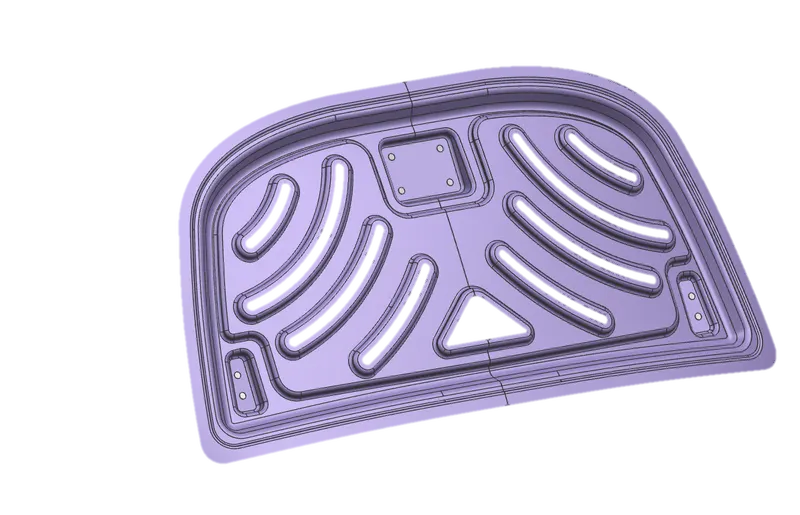
Emboss Creation for Inner Panel
- Sheet metal embossing is a stamping process for producing raised or sunken designs or relief in sheet metal. This process can be made by means of matched male and female roller dies or by passing sheet or a strip of metal between rolls of the desired pattern. It is often combined with foil stamping to create a shiny, 3D effect.
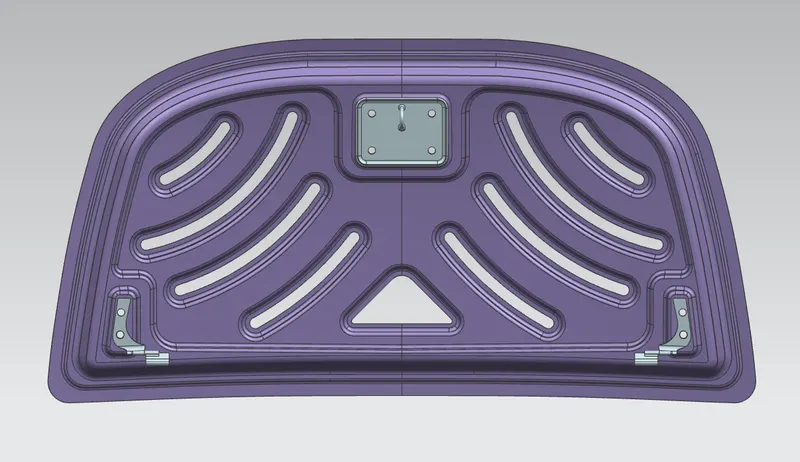
- 8 embosses were created onto the inner panel which is a type of circular slot. One triangular emboss was created in the middle of the inner panel.
- The purpose of providing these embosses is to reduce the intensity of the front impact by diverging the forces into different directions rather than in the straight direction.
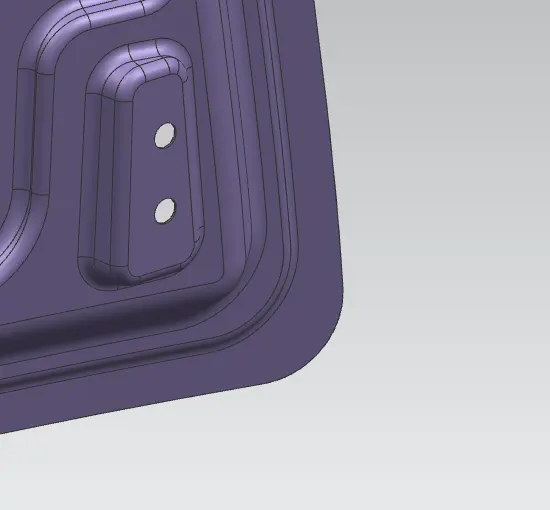
Emboss Creation for Hinge
- The inner panel surface is not a flat one. It is a curvy surface. Hinges will not fit properly on a curvy surface. Hence, a flat surface is created at some distance from the inner panel, and using law Extention, emboss is created onto it.
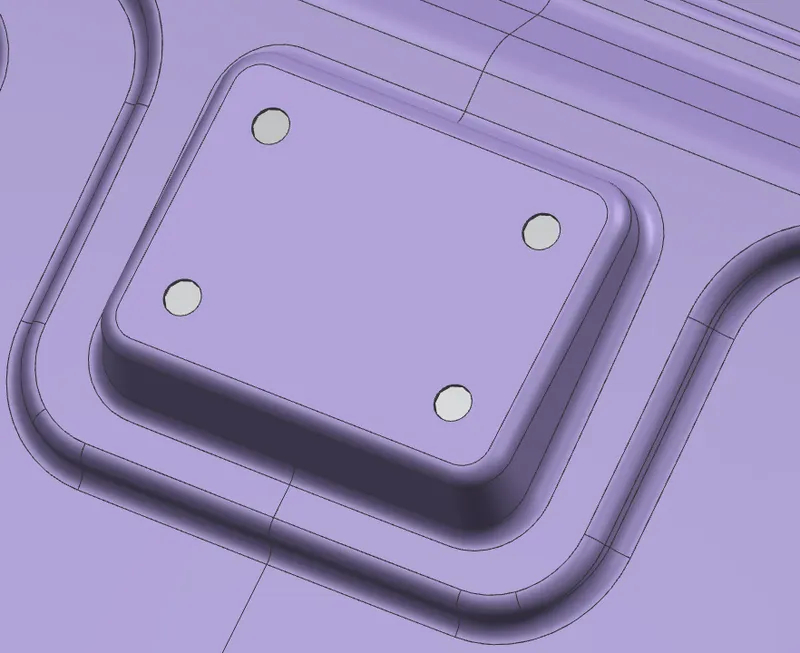
Emboss Creation for Striker
- The inner panel surface is not a flat one. It is a curvy surface. The striker will not fit properly on a curvy surface. Hence, a flat surface is created at some distance from the inner panel, and using law Extention, emboss is created onto it.
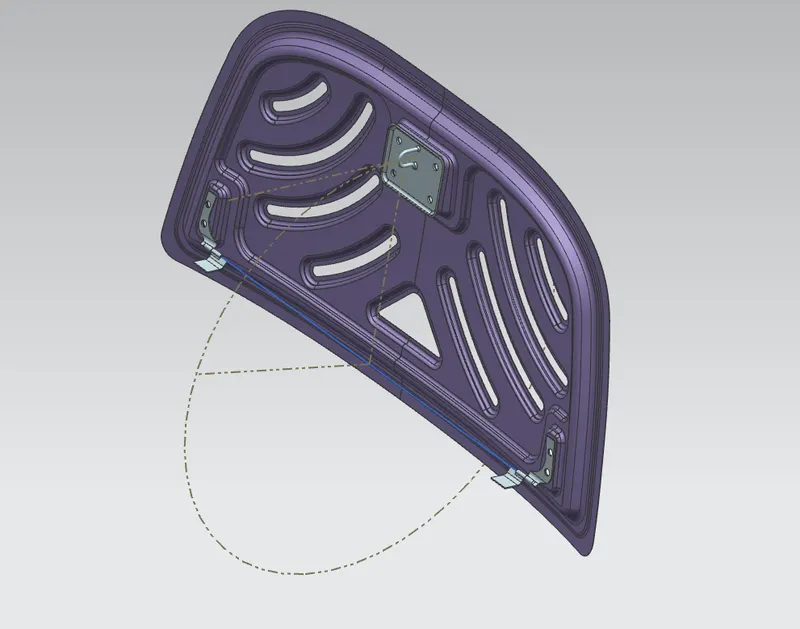
Latch Trajectory Motion
- To ensure proper closing and opening of the hood panel, the striker is placed in such a way that its trajectory is perpendicular to the hinge axis( shown in blue)
Reinforcement Creation
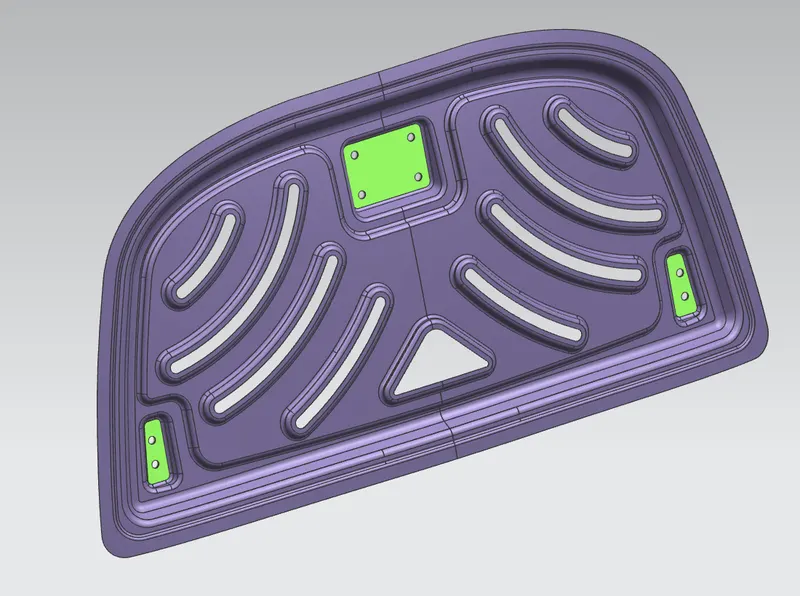
- Reinforcements are the support given to hinge and latch emboss as direct forces act onto it. To provide extra strength reinforcements have been provided.
- 1.5 mm plates used as reinforcements at the hinge and latch emboss back face.
- The below image shows reinforcements in the green color.
Mastic Sealant
- The Mastic sealant, often known as the Mastic point, is a rubber-like elastic material. Mastic spots are specified on the inner panel of the hood where the hood may readily distort.
- They aid in the restoration of the hood's outer panel to its original shape once it has become distorted. The mastic has an 80mm influence area.
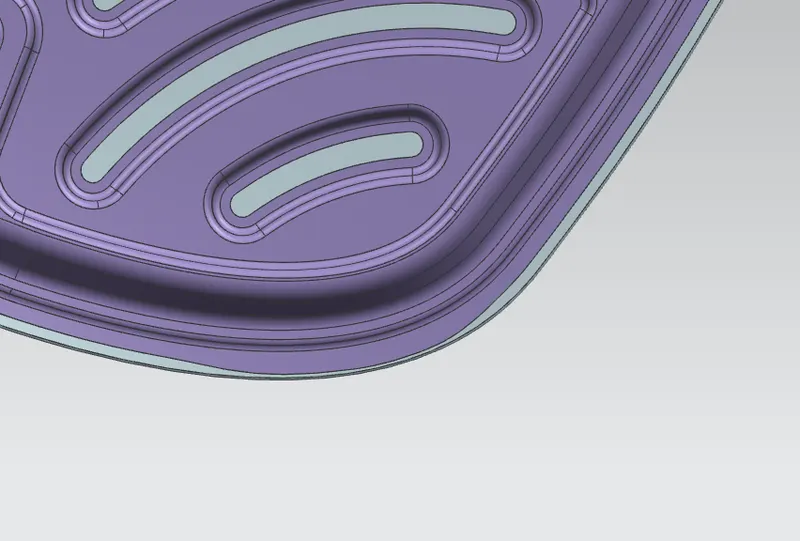
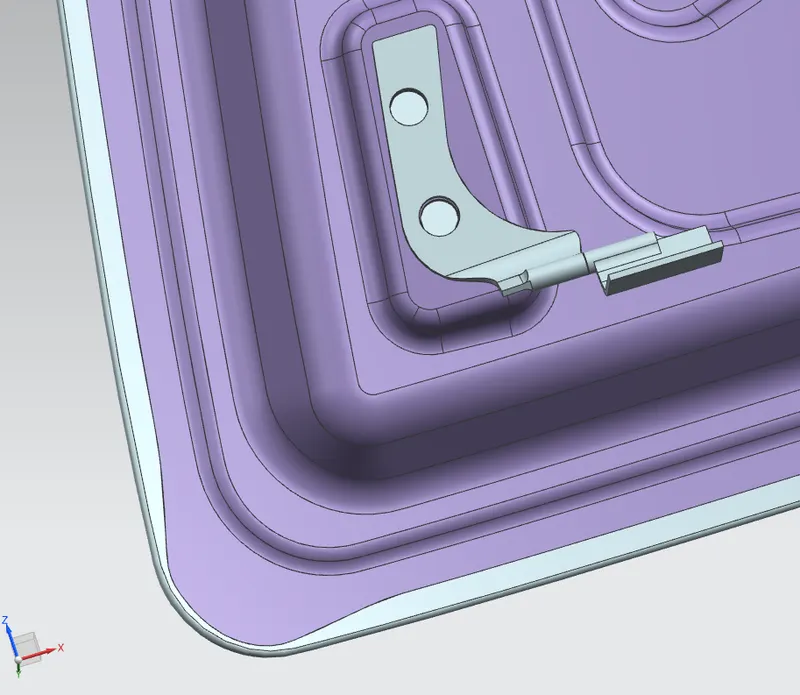
Hem Relief
- While performing hemming operation rollers rolls over the outer panel surface to create a hem.
- At the corner, the portion roller tends to roll the sheet in a nonuniform manner due to the presence of curvature.
- Hence it is necessary to provide some relief at corners.
Front Relief for Hem
Rear Relief for Hem
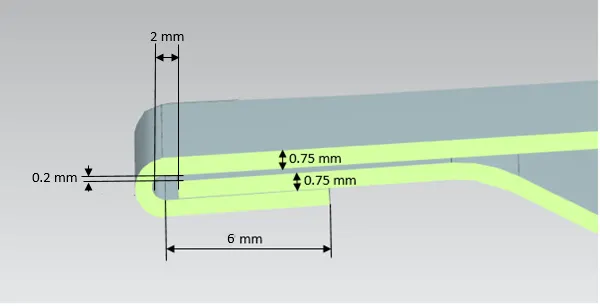
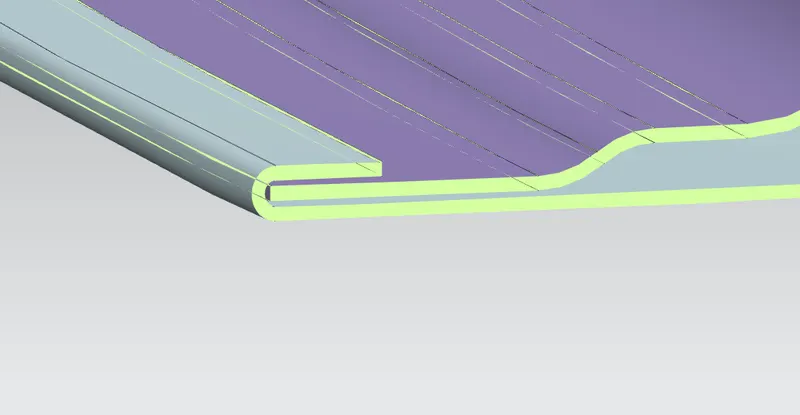
Required Hem
- By following the given dimensions hem is created to join an outer panel with the inner panel.
- Using three face blend option hem is formed.
Assembly
- Striker is assembled using trajectory sketch point, midplane, and axis alignment constraints.
- Hinges are assembled using face alignment and distance constraints.
Isometric View
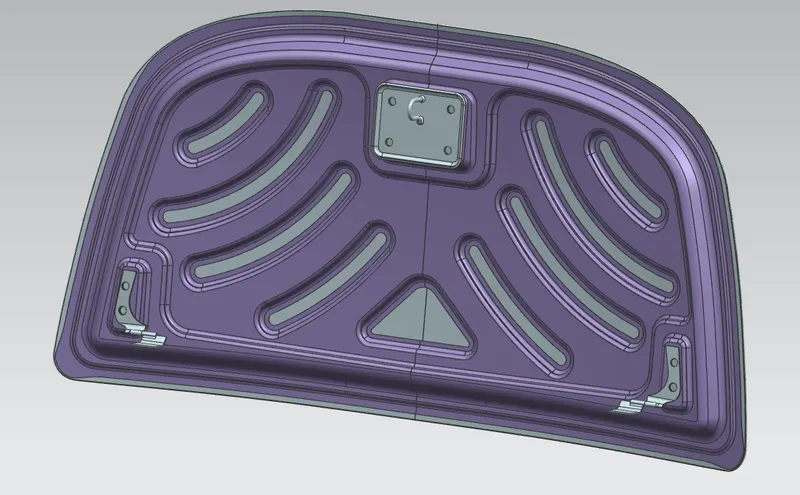
Back View
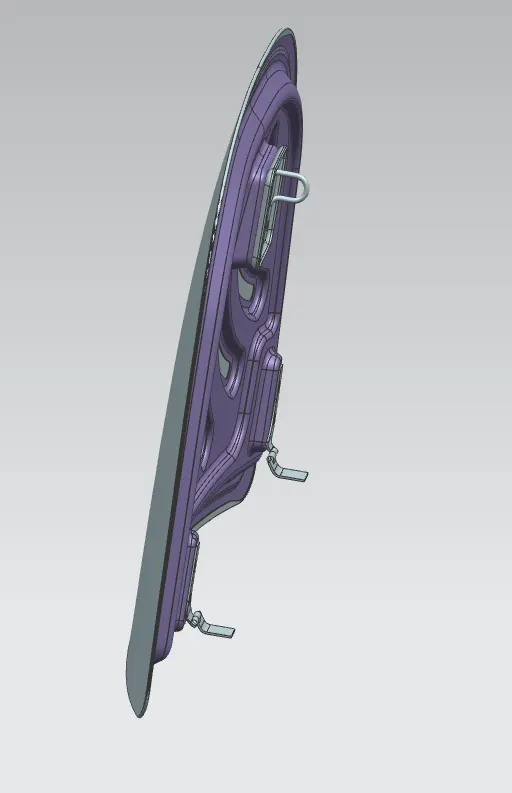
Side View
Front View
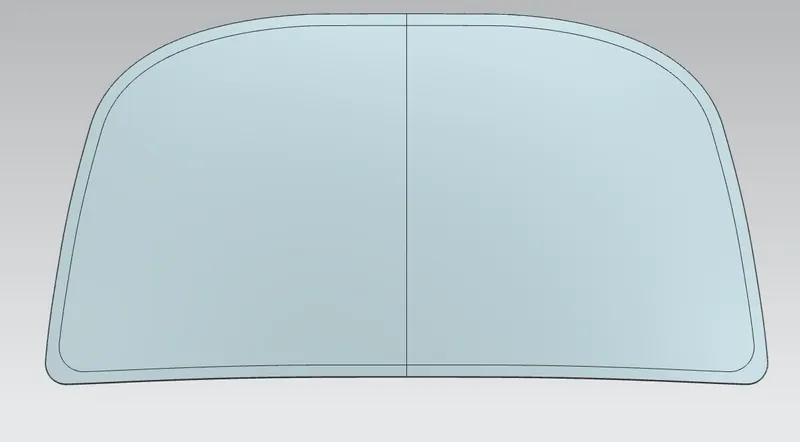
Top View