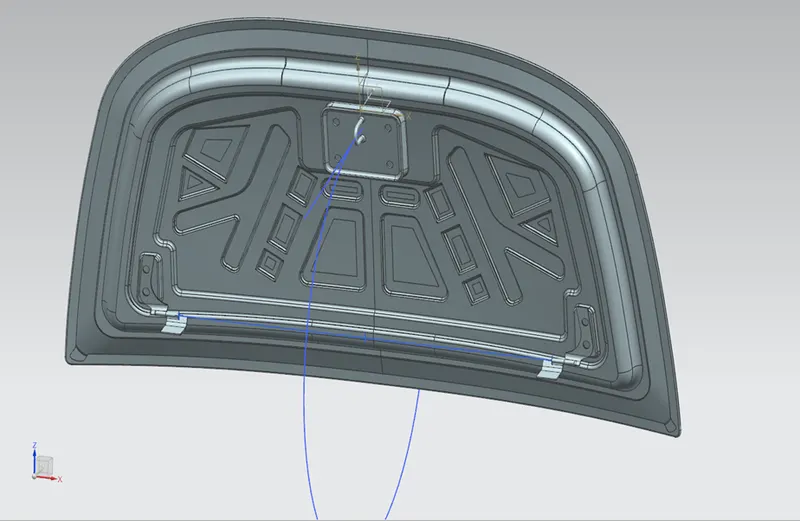
Hood design-Week 2
Challenge 3- Hood Design
Title of the project: To design the hood of a car using surface designing in NX CAD.
Introduction:
A car hood, also referred to as a bonnet in some other countries, is the hinged cover that rests over the engine of a front-engine vehicle. Its purpose is to provide access to the engine for repair and maintenance. A concealed latch is typically used to hold down the hood.
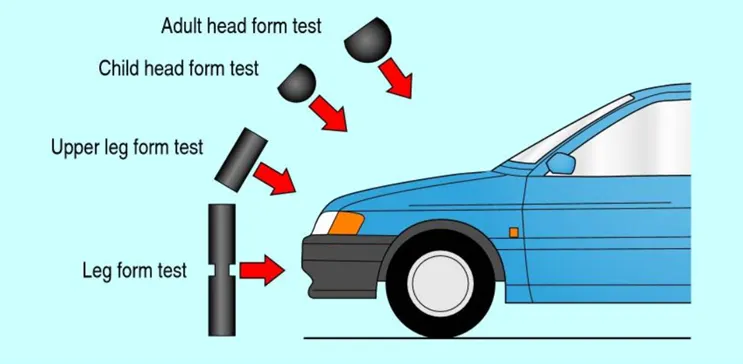
Design Methodology and Requirements:
Parts of hood Assembly:
- Hood Inner Panel
- Hood Outer Panel
- Hinge Assembly
- Latch and striker
- Mastics
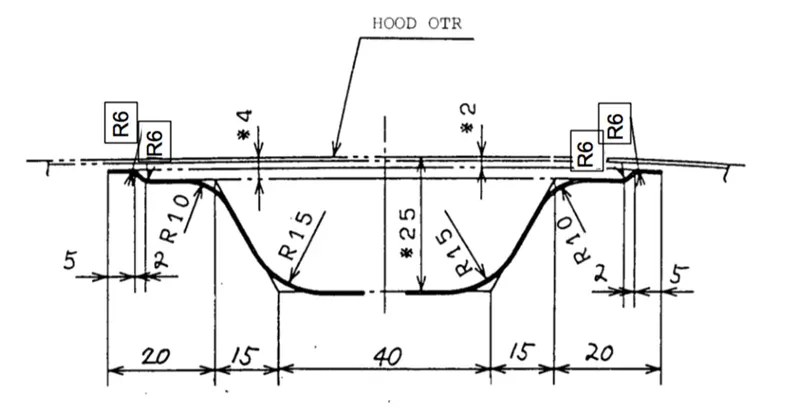
To design the hood inner panel, hemming operation, thickness, corner reliefs etc, we are provided with master section for designing.
Designing approach
- Inner panel created
- Assembly file created
- Inner Panel, outer panel, hinge, latch and Stricker etc components added
- Components are modified according to the designing requirements by double clicking the component part file
- Final assembly done by placing hinge at corner with emboss and latch Stricker on a required sketch.
Master Section:
Commands used for designing:
- Offset surface
- Curve on surface
- Trim sheet
- Law Extension
- Emboss
- Edge blend
- Project Curve
- Bridge Curve
Design of Hood outer panel and hemming:
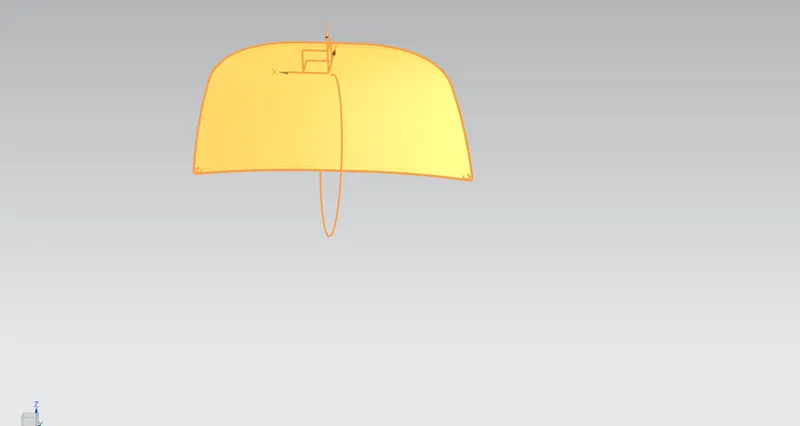
Outer Panel structure is given and with that we have performed first the offset surface operation followed by law extension and trim sheet, we created a surface for hemming which is used to strengthen and support the inner panel. It is done by folding the edge of sheet metal. After that, the outer panel is thickened to the required offset given that is 0.75mm.
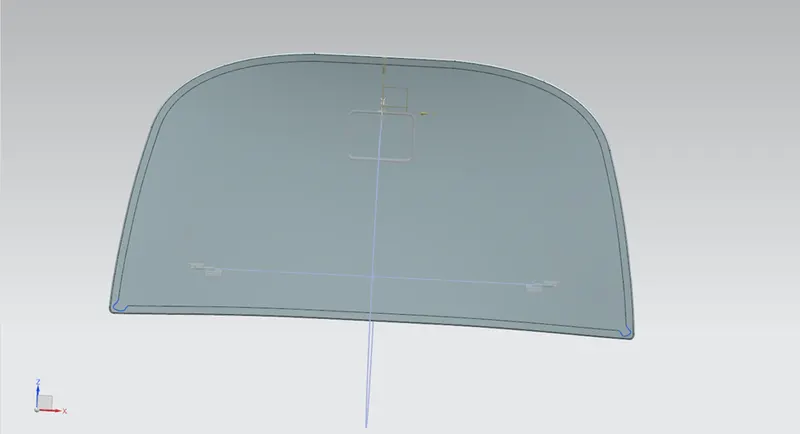
Hood Inner Panel Designing
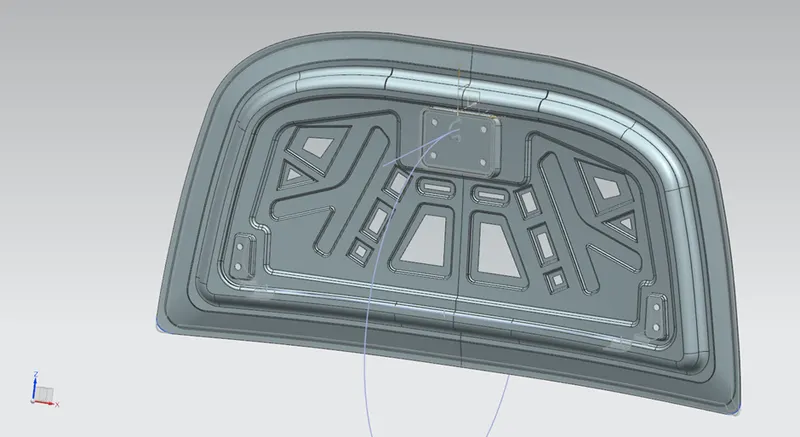
Hood inner panel is created with reference to the outer panel by offsetting the surfaces with respect to the master section and after that creating embosses which is done by projecting a section with end caps and edge blends followed by thickening to 0.75mm. The embosses on the inner panel are designed to distribute the impact forces on the outside which protects the passenger during a crash.
Hinge Assembly
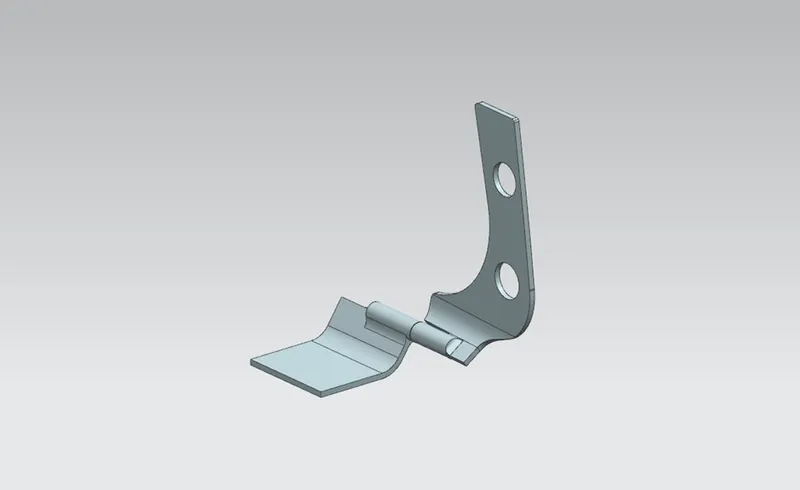
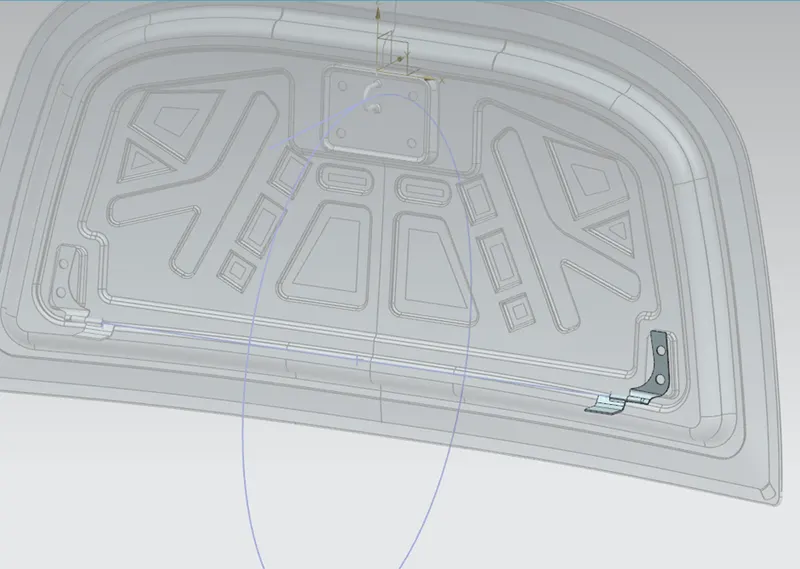
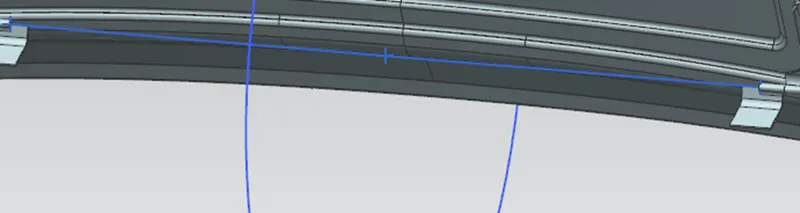
Hinge assembly is attached in the assembly of hood at the corners by aligning a parallel constraint with x axis.
Latch and Stricker
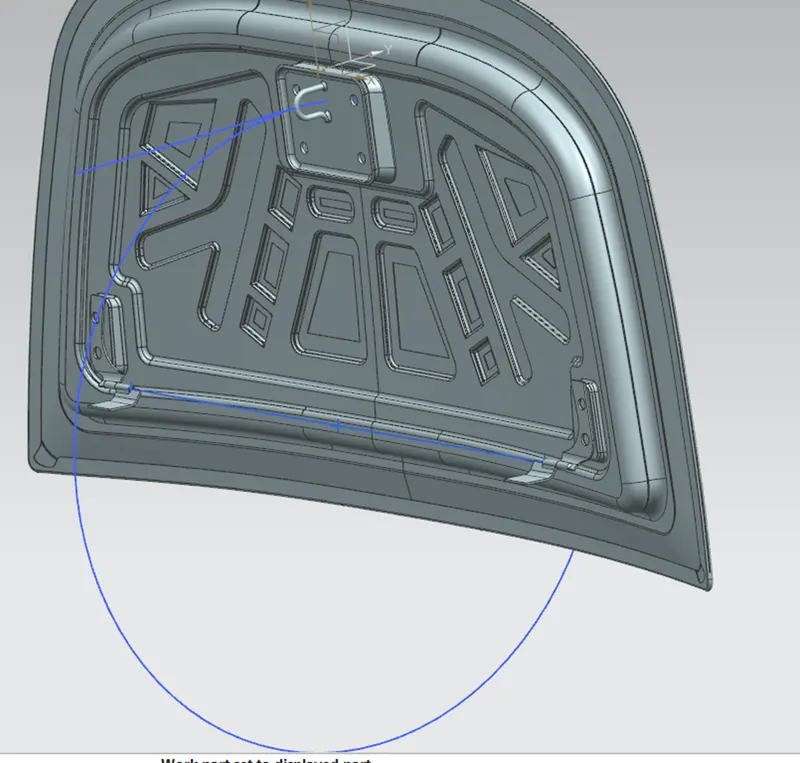
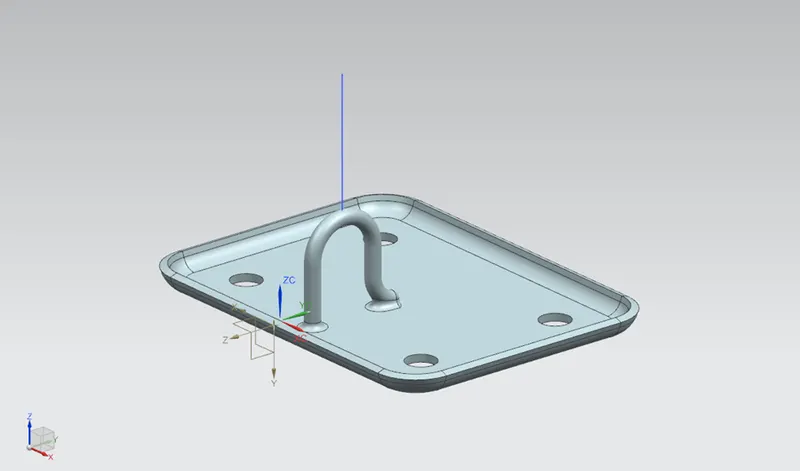
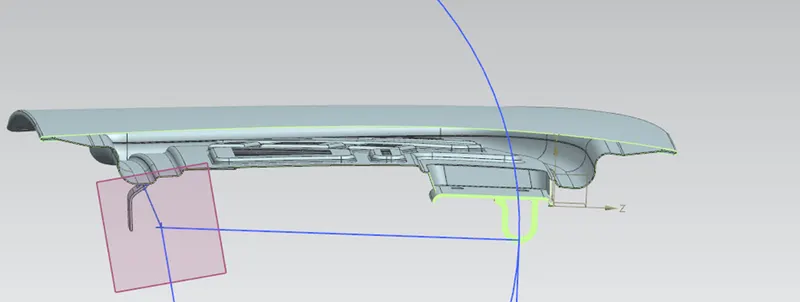
Latch trajectory: Latch trajectory is created by drawing a big circle at the midpoint of the hinge axis and then creating a tangent line at the circle and a line in the Stricker which is then aligned with the tangent of the circle and also the points are made coincident after that the Stricker is linked in the inner panel and accordingly the angle is changed in order to maintain the assembly
HINGE AXIS
LATCH TRAJECTORY
LATCH AND STRICKER
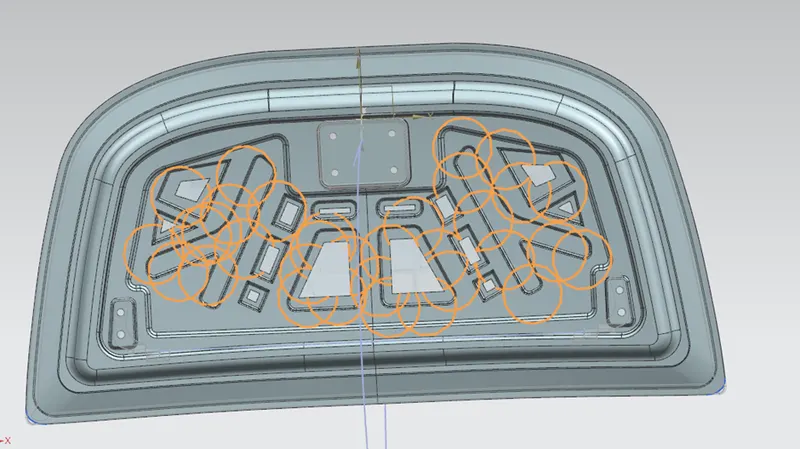
Mastics
Mastics sealants are applied to join the hood outer and the inner panel. The circles are shown below which means that the mastic paste can be spread upto 80mm of diameter.
Hemming
Hemming is a technology used by the automotive industry to join inner and outer closure panels together. It is the process of bending/folding the flange of the outer panel over the inner one. It is done by folding the outer edge of sheet metal around the inner edge.
Hood Assembly