Hood design-Week 2
Hood Design
Objective:
To create a detailed 3D model of Automobile Hood using Catia V5.
Introduction:
A car hood also referred to as a bonnet in some other countries is the hinged cover that rests over the engine of a front-engine vehicle. Its purpose is to provide access to the engine for repair and maintenance. A concealed latch is typically used to hold down the hood. On vehicles with an aftermarket hood and on racecars, hood pins may be used to hold down the car hood. Car hoods are typically constructed from steel and sometimes from aluminum. Aftermarket car hoods may be constructed from various other materials, including carbon fiber, fiberglass, or dry carbon. The hood design may vary from one make and model to another, including SUV, crossover, truck, minivan, and passenger-car models.
Concerns regarding the severity of a potential pedestrian head injury during a collision with a motor vehicle have led to advanced hood designs on many models. Such designs may include a multi-cone inner hood panel design. An active structure that is capable of pushing the surface of the hood away from the vehicle's hard motor components in the event of a pedestrian crash is also in use. Pyrotechnic or spring force designs are often used in the active-hood design.
Components of a Hood:
- Outer panel
- inner panel
- Hinges
- Latch& Stricker
Input Data
- Head clearance zone
- Pedestrian Safety
- Consideration of Noise Vibration Harshness (NVH)
- Vehicle Quality
- Occupant safety
- Styling
- Manufacturing
Head clearance zone:
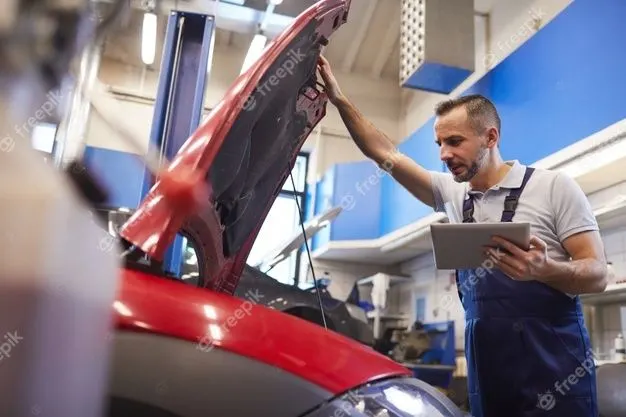
The head clearance zone is the clearance such that when the hood is in the fully open condition it does not hurt the head of the person that is standing next to the hood. this is controlled by the opening angle of the hood. the opening angle of the hood is decided for the region the car is manufactured. some regions may have people with an average height of 5.5 ft and another region may have people with an average height of 6 ft . so deciding the right opening angle for the hood is an important criterion.
Pedestrian Safety:
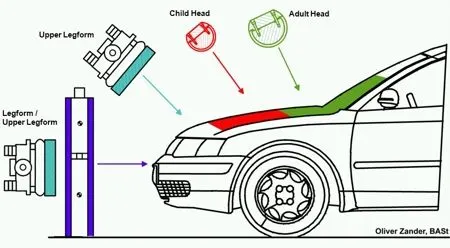
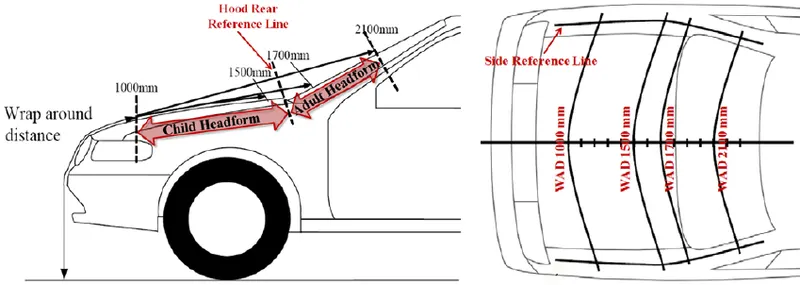
According to the requirements of the Australian New Car Assessment Program (ANCAP) for pedestrian protection, it needs to define zones of car hood for analysis, as shown below in Figure. It can be noted that when the collision projection point locates between (Wrap Around Distance) WAD 1000 and WAD 1500, the head type will use the children's head type. The adult head type will be used while the collision projection point locates between WAD 1700 and WAD 2100. In the collision projection point located at WAD 1000 when the children's head type will be used
Wrap Around Distance (WAD):
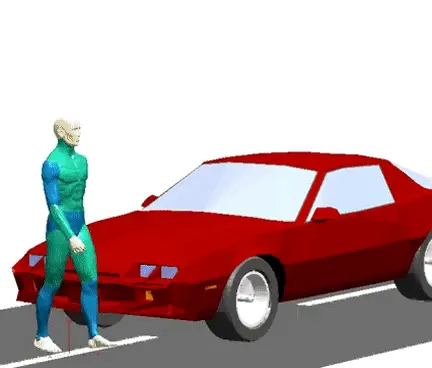
When a car crashes on the pedestrian, the whole human body wraps around the front shape of the car, and the head impacts on the bonnet or the windscreen. The distance at which the head impacts the car from the ground is mentioned as Wrap Around Distance (WAD).
To be specific the Wrap Around Distance is a measurement of the distance from the ground to the head impact zone over the outer surface of the car. The wrap-around distance is measured longitudinally in the center of the vehicle from the ground.
The Head Injury Criterion (HIC) indicates a measure of a head injury arising from an impact, which is evaluated by the impactor in terms of the simulation of the child's head. HIC includes the effects of head acceleration and the duration of the acceleration. ANCAP provides measures for the assessment of pedestrian protection performance of a passenger car experimentally by firing subsystem impactors representing a child head, adult head, upper leg, and lower leg at a specified angle and speed to the front end of a stationary vehicle. The resulting injury measures from these physical tests are assessed against the bounds specified by the protocols.
Consideration of Noise Vibration Harshness (NVH)
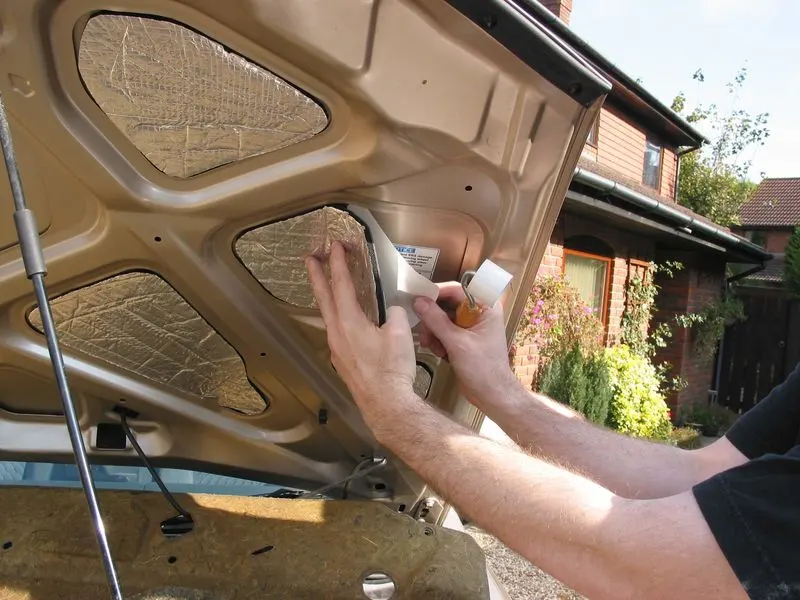
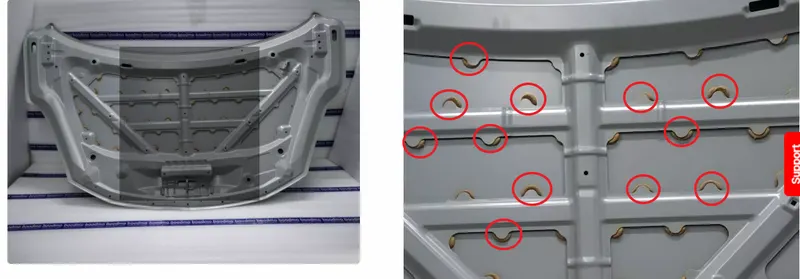
NVH plays an important role in car design. the noise and vibration produced by the car should be minimized. in the hood, to avoid vibrations stiffener pads are provided. mastic sealants also reduce the NVH. stiffener pads and mastic are added between the inner and outer panels of the hood.
From the fig below u can see the small flanges provided for the mastic points
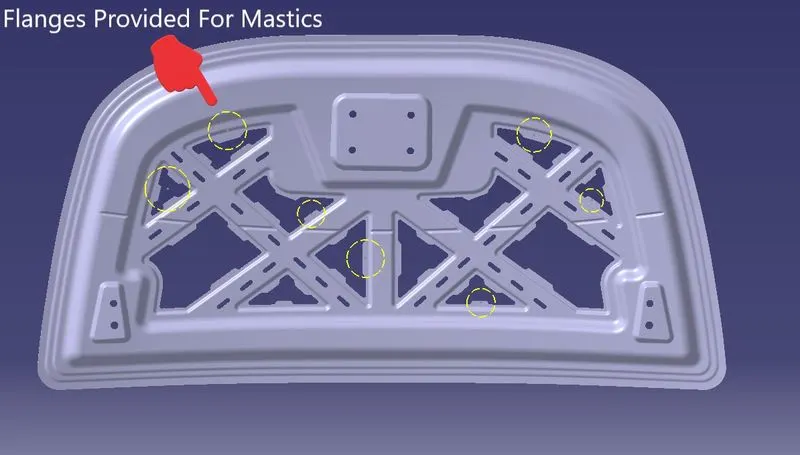
The Silver foiled type material is the stiffener pads that are used to overcome the NVH
Vehicle Quality:
The material selection followed with its manufacturing feasibility giving optimum results to mechanical properties benchmarking is the key factor for vehicle quality. Hood materials are manufactured generally using steel, aluminum alloy, or composite material like fiberglass/carbon fiber. Various factors are considered like analysis of torsional stiffness, dent resistance, corrosion resistance, bending stiffness, noise attenuation, etc.
Occupant safety:
The hood panel is designed in such a way that, during the crash, the hood section deforms completely so that the maximum impact of the crash is absorbed by a hood to get deform and divert collision forces away from the cabin. This helps to properly damp the force to avoid or reduce the risk of injuries and death.
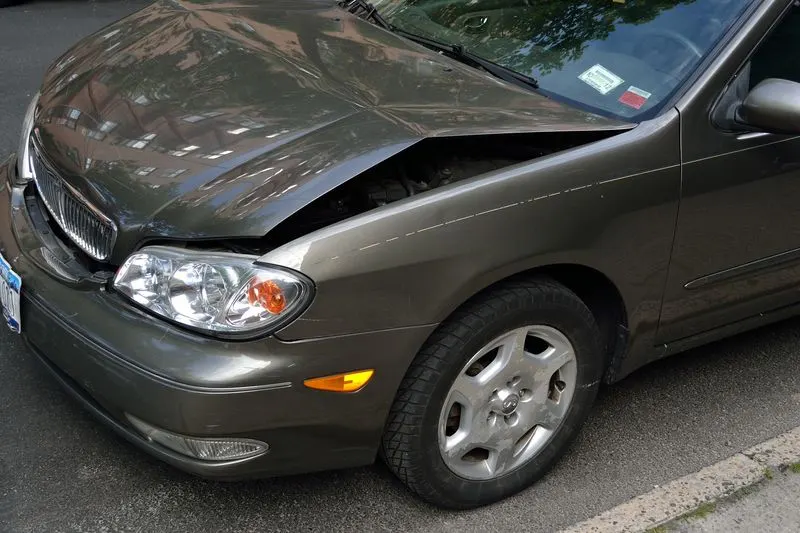
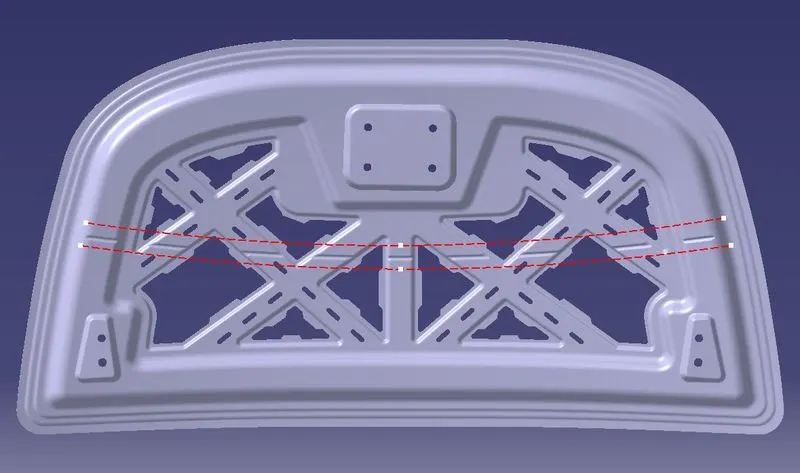
The deformation is achieved by designing the hood in a two-piece that is outer panel and inner panel separated by mastic sealants. Thus the cavity between the panel and the blanking in the inner panel acts as the weakest section to get deform while crashing. The impact of the crash is diverted to hinges which are reinforcement plates
Styling: The styling team designs the outer skin or class A surface of the car hood considering the major factor that often influences vehicle sales in the market. The outer panel is the main consideration here as it is the only component that is visible outside. The factors such as surface quality, tight radii on hemmed panel edges aesthetic design, etc. are crucial. Other than styling, aerodynamic factors are important while designing the outer panel.
Manufacturing Process:
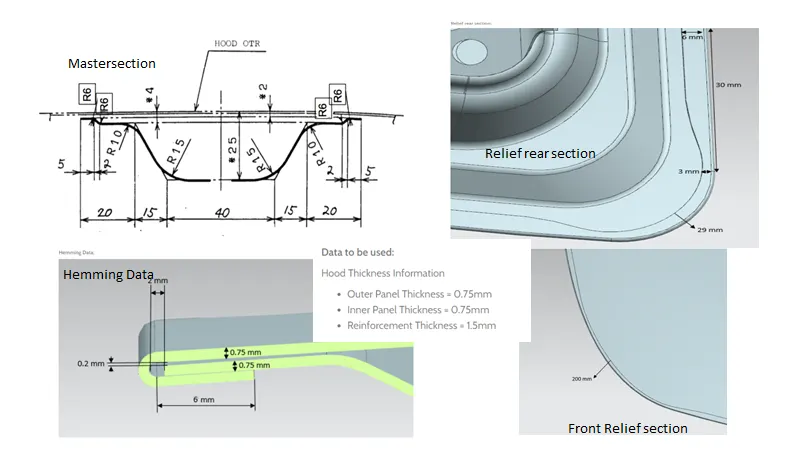
In the manufacturing of car hood various sheets, metal operations are carried out like profile cutting of sheet metal, blanking, piercing followed by deep drawing and hemming process. In the manufacturing of inner panel embossed surfaces are achieved by deep-drawing where a minimum 7mm degree drat angle is maintained respectively to the tool direction. fix cutout for jig and fixture with a distance of more than 5 mm from embossing corner.
Blanking:
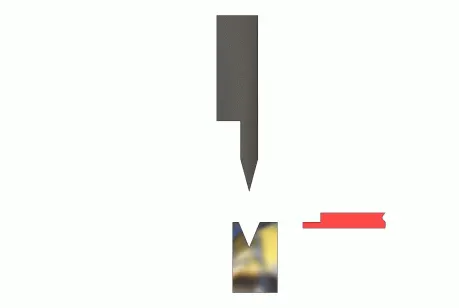
Blanking is a metal fabricating process, during which a metal workpiece is removed from the primary metal strip or sheet when it is punched. The control of the quality by the punch and die clearance. The ability to produce holes of varying shapes quickly.
Deep drawing:
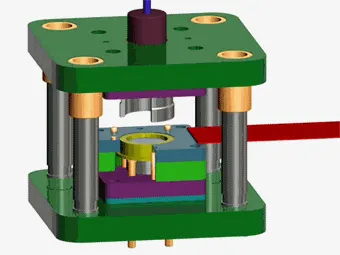
Deep drawing is a sheet metal forming process in which a sheet metal blank is radially drawn into a forming die by the mechanical action of a punch. It is thus a shape transformation process with material retention. The process is considered a "deep" drawing when the depth of the drawn part exceeds its diameter. We give a positive draft or an angle for a better drawing process. Process definition: The deep drawing process is a forming process that occurs under a combination of tensile and compressive conditions. A flat sheet metal blank is formed into a hollow body open on one side or a hollow body is formed into a hollow body with a smaller cross-section.
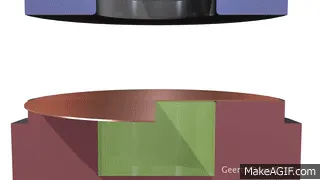
Trimming:
Trimming is a manufacturing process that is used as a finishing operation for forged parts, to remove flash. Most often it is desirable to perform this operation while the work is still hot for maximum efficiency, therefore it is usually incorporated into the larger production process.
Hemming:
Hemming is a sheet metal forming process in which sheets are joined by bending it usually to 180°. Automotive body panels and automotive parts such as deck-lids, trunk-lids, doors, hoods, and tailgates are formed by the hemming process. Hemming is a forming operation in which the edges of the sheet are folded or folded over another part to achieve a tight fit. Normally hemming operations are used to connect parts, to improve the appearance of a part, and to reinforce part edges.
EMBOSSING:
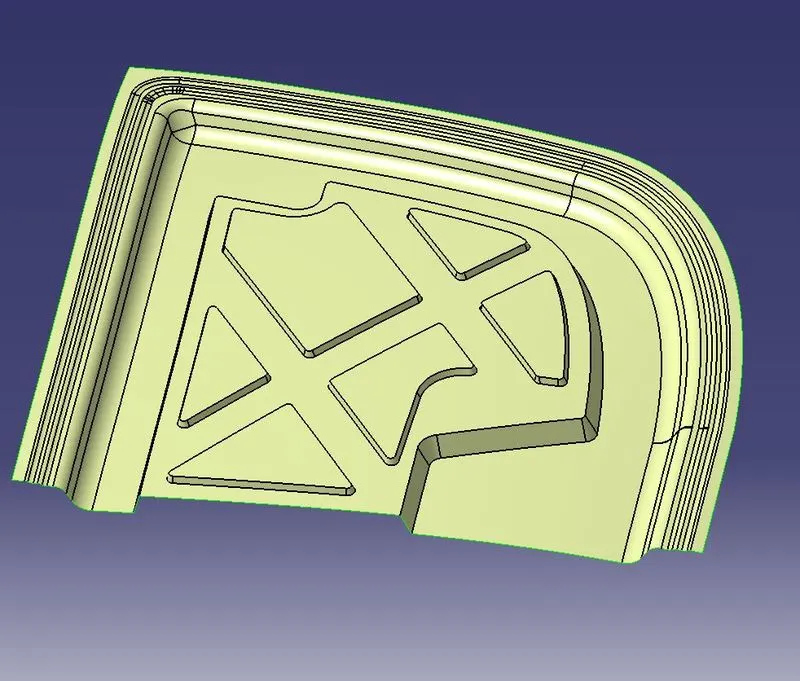
Embossing is a metal forming process for producing raised or sunken designs or relief in sheet material by means of matched male and female roller dies, theoretically with no change in metal thickness, or by passing sheet or a strip of metal between rolls of the desired pattern.
The metal sheet is drawn through the male and female roller dies producing a pattern or design on the metal sheet. Depending on the roller dies used, different patterns can be produced on the metal sheet.
Emboss should be in 7 degrees to 25-degree incline in angle and it should not be in a 90-degree angle, why because when we do stamping in manufacturing the stamping tool fits the sheet metal hence it will not come out of that sheet metal, So this is the main reason why the emboss face is in angle.
Characteristics of the metal embossing process include:
- Its ability to form ductile metals,
- Its use in medium to high production runs,
- The ability to maintain the same metal thickness before and after embossing,
- The ability to produce unlimited patterns, depending on the roll dies, and
- The ability to reproduce products with no variation.
- Located within the embossing stand itself are two engraved and mated hardened steel rolls, geared together to maintain top-to-bottom pattern registration. The width and diameter of these rolls depend on the strip width, material thickness, pattern depth, and material tensile strength and hardness.
- In most machines, the upper roll blocks are stationary, while the bottom roll blocks are movable. The pressure with which the bottom roll is raised is referred to as the tonnage capacity. This figure also depends on the aforementioned parameters.
- Embossing machines are generally sized to give 2" of strip clearance on each side of an engraved embossing roll. Many embossing machines are custom-manufactured, so there are no industry-standard widths. It is not uncommon to find embossing machines in operation producing patterns less than 6' wide all the way up to machines producing patterns 70"+ wide.
- The illustration that follows provides a two-dimensional look at a typical embossing line setup with an embossing roller in the middle. The illustration shows the metal sheet entering the roller, and then the embossed sheet leaving toward the drawing rollers.
- Embossed metals are used in industry for two reasons: aesthetic and functional. Aesthetic applications also include appliance panels, building products, elevator panels, garage door panels, automotive trim, metal office furniture, and others.
- Functional applications are those in which a performance characteristic is enhanced. This can include a metal product's ability to disperse liquid more effectively, reduce friction and static, increase a metal panel’s stiffness and rigidity, increase a metal surface area for acoustic or heat transfer applications, and improve traction.
- The embossing process can produce a variety of patterns. Some of the most common patterns include stucco, leather grain, wood grain, weather grain, and rough sawn cedar. Most embossers will tool to form any needed pattern, depending on the cost parameters involved.
Materials commonly used in the metal embossing process include:
- Aluminum (All Alloys)
- Aluminum (T1/T2)
- Brass
- Cold-rolled steel
- Copper
- Galvanized steel
- High strength, low alloy, steel
- Hot rolled steel
- Steel (All Alloys)
- Zinc
MASTIC SEALANTS
A mastic sealant is a type of liquid sealant that cures in an elastic state, thus making it flexible while holding the bond of the surfaces that have attached together. It adheres to just about any material making an all-purpose type of sealant.
- The main purpose of the outer panel is for aesthetic looks. Thus we cannot use bolts or welding. This has to be done with the help of the hemming and mastic sealants. Mastic sealants are elastic compound that behaves like the rubber. It is placed between the outer and inner panels. Initially is it in paste form, but after the hot furnace bath, it gets hardened thus joining the outer and inner panel. Mastic sealant has the tendency to increase the strength of the panel and has the influence of 80mm diameter
Advantages
- One positive characteristic of mastic sealant is that it has a very smooth exterior while keeping its rigid form underneath.
- Surfaces do not have to be primed when using this type of sealant, and although applied thick, it adheres smoothly to any surface. It is important that the area to be joined or sealed be clean and dry, just like any other sealant on the market.
- Mastic sealant may be used outdoors as well because of its waterproof quality. It can be applied on rain duct leaks outdoors, for example.
- It is also favored for areas under high or low temperatures such as heater vents or drier vents and contains ultraviolet inhibitors to make sure that it is protected from damaging effects of the sun that will often weaken other types of sealants. That makes it a good choice for use on roofs, or any surface that is constantly exposed to sunlight. Most mastic sealants will also work well with metal because they do not corrode over time.
- it functions well in areas with mild vibration and heat, like heating ducts.
Disadvantages
- Mastic sealant is not recommended for areas that have too much joint movement, or anything that will be moved a long length.
- It works well with constant pressure on it, but not a constant movement.
- It also works best when applied thickly and is not recommended if only a thin layer is needed such as touch-ups. Another sealant is a better choice for those types of repairs
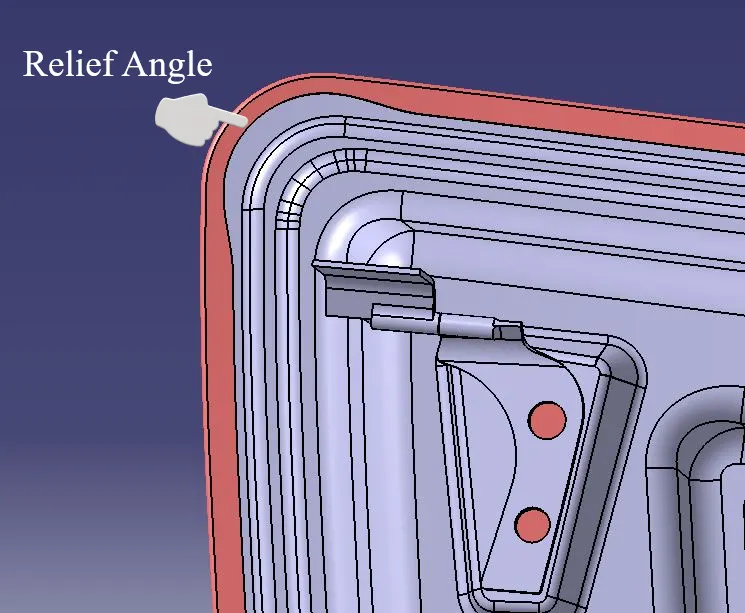
RELIEF CORNER
- Relief is provided onto the part or component in order to remove any stresses developed in a particular area i.e sharp corners that take place during the hemming process is carried out. Thus corners are rounded or chamfered.
- We leaving 2 mm from sheet metal for the Roll hemming process.
POSITION OF STRIKER AND HINGE
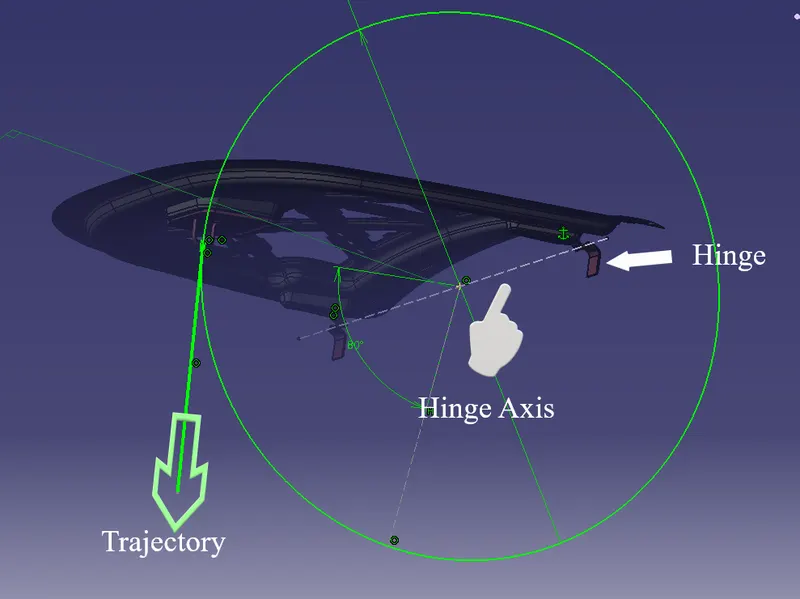
For the proper opening and closing of the hood, the striker should be perpendicular to the trajectory of the hood. For this, the hinge is assembled at its position. Once it is placed, the hinge axis is drawn.
- To check the hinge axis as the center we draw a big circle to position the latch in such a way that it is perpendicular to the hood trajectory.
- In between the two hinges, the striker is perpendicular to the midpoint of the two hinges, Why because while closing and opening the latch and the striker the opening position be similar actions.
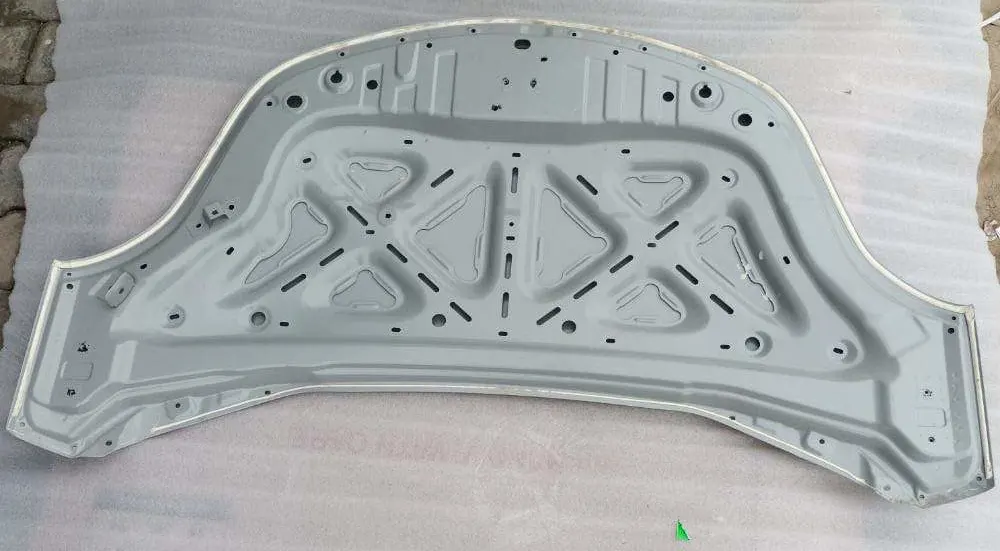
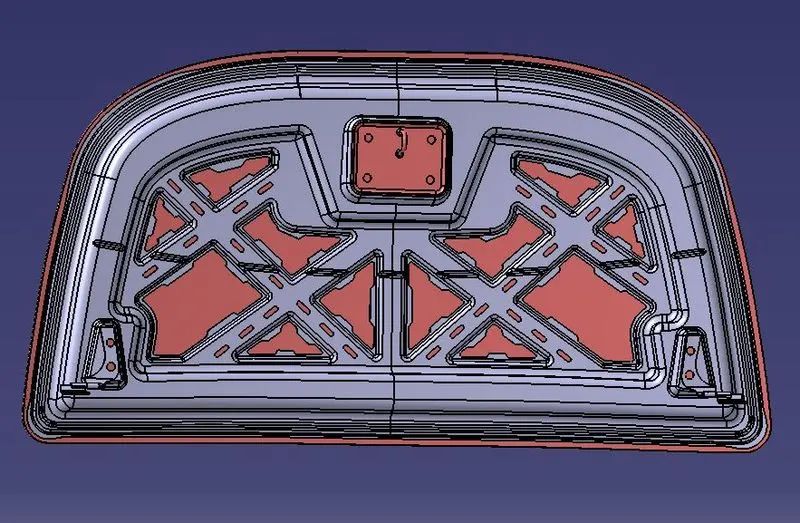
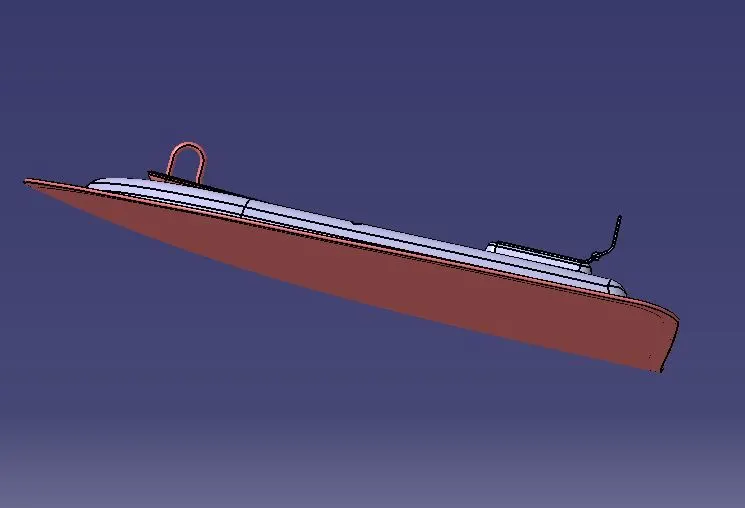
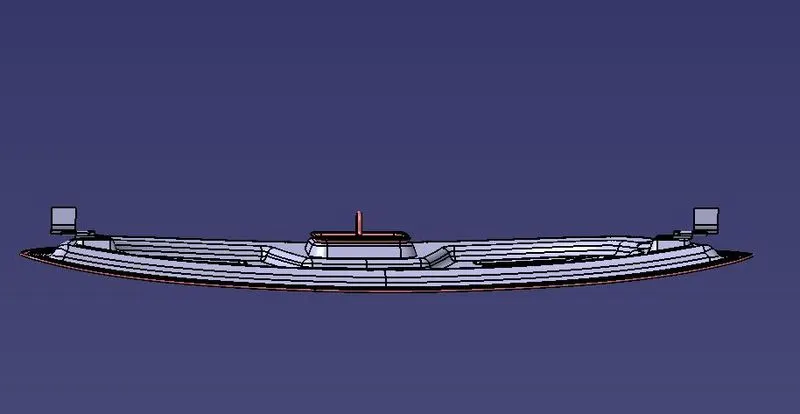
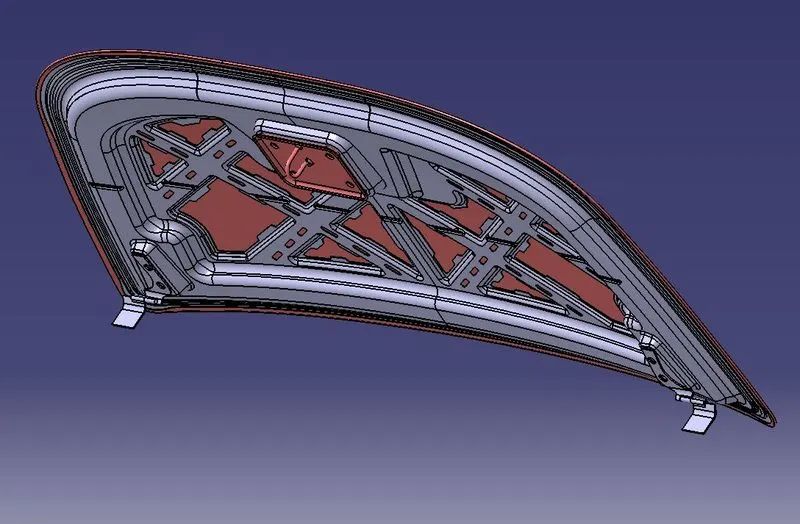
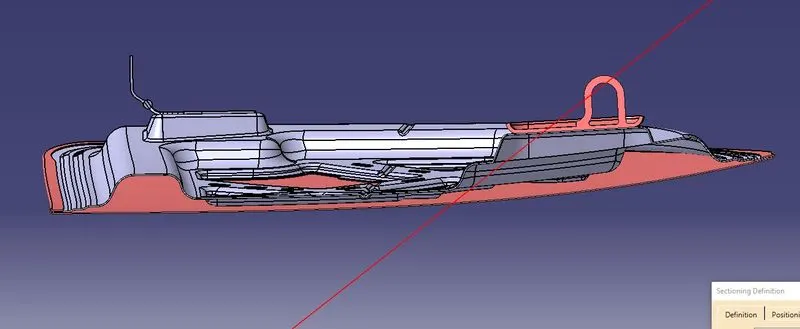
Here are some of the views of the Automotive hood which I designed. I took Tata Nexon Hood as the reference for designing