Hood design-Week 2
TITLE: HOOD DESIGN AND ASSEMBLY USING SIEMENS NX.
OBJECTIVES:
- To learn the basics of the BIW through designing the hood of vehicle.
- Learning the industrial approach of how vehicles sheet metal parts are designed in industry.
INTRODUCTION:
What is BIW?
In the Automotive Industry BIW (Body in White) is the common terminology used to mention the car sheet metal welded structure (body shell). In today's situation, automotive BIW is made of steel as well as made of aluminium alloy.
Sub-assemblies like Under body, Body side Left Hand Side/ Right Hand Side, Front End, Roof etc. gets welded together by various metal joining process e.g. resistance spot welding, Laser welding, MIG welding to make welded metal shell called Body in White.
Automotive car shell made before painting is called Body in White. BIW joinery decides the exterior and interior look of any car.
In car industry outer look defines the style. BIW sheet metal part shell defines overall car style.
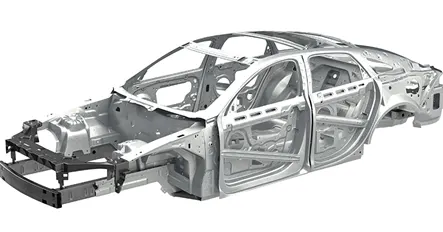
At this automotive manufacturing stage, the plain, non-painted, steel frame components are welded and assembled together to form the vehicle's basic structure.
What is Hood?
A car hood, also referred to as a bonnet in some other countries, is the hinged cover that rests over the engine of a front-engine vehicle. Its purpose is to provide access to the engine for repair and maintenance. While designing a hood in industry hood should consider the following conditions.
- Pedestrian Safety.
- Passenger Safety (force distribution when vehicle subjected to frontal collision).
- NVH consideration while assembling hinges, latch and striker.
- Manufacturability.
Types of Hood
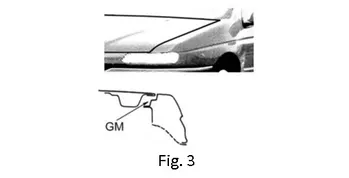
- Inlaid hood
There is a gap between the hood and the car body as shown in the fig. Here the end point or the side reference line of the car lies on the fender, which uses more damage to the pedestrians and hence affecting their Euro-NCAP ratings.
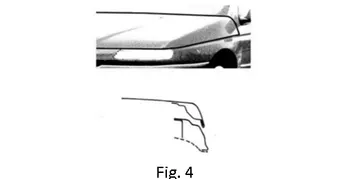
- Wrap around Hood
This type tend to wrap around the car body as shown in the fig. here the end point or side reference line of the car lies on the hood itself. This will reduce the head impact zone hence it can be able to achieve higher Euro NCAP rating. This is the most commonly used type of hood.
Types of support stay for Hood
A hood stay is an apparatus for an engine room of a car, which can safely keep an engine hood in an open state if an external force abruptly generated due to vibration, wind and can facilitate an opening/closing operation of the engine hood. The angle of opening varies from country to country as per the average height of people in that country. There are two types of support stay mostly used.
|
Rod Stay support |
Gas Stay support |
|
Rod stay are basically long cylindrical steel rod either fixed to hood inner panel or engine chassis. Other end is hooked during opening condition. |
it is gas filled cylinders with sliding shaft which are fixed at the both the ends of hood inner panel and engine chassis with the stud balls. |
|
To open the hood, rods need to be engaged manually to keep the hood supported. |
To open the hood only initial force need to be applied after specified angle, it actuate to push the hood to its maximum opening angle and stay upright. |
|
It is cheap and used for smaller hood only. |
Its expensive and generally preferred for long hood having heavy weight. |
|
While hooking rod get scratch to painted body result in rusting in contact area. |
Being fixed at two ends, it does not scratch to body anywhere. |
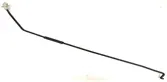 |
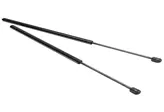 |
Design consideration for Hood:
The hood in a vehicle is generally fabricated from sheet metal, which is capable of absorbing energy posing a comparatively lesser threat. However, most fatal injuries occur when there is not sufficient clearance between hood sheet of vehicle and underlying engine components. By creating a gap of approximately 10 cm pedestrians head can achieve controlled deceleration and reduced risk of death. Creating this room is challenging task for hood design engineers because there are other design constraints such as styling and aerodynamics. As per the Aluminium Automotive Manual following parameters are considered while designing the hood.
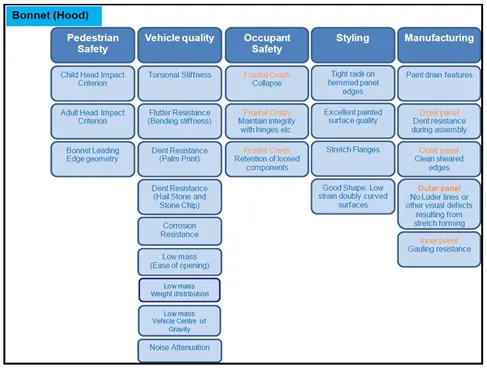
- Pedestrian Safety:
Many pedestrian crashes involve a forward moving car (as opposed to buses and other vehicles with a vertical hood/bonnet). In such a crash, a standing or walking pedestrian is struck and accelerated to the speed of the car and then continues forward as the car brakes to a halt. The pedestrian is impacted twice, first by the car and then by the ground, but most of the fatal injuries occur due to interaction with the car. Vehicle designers usually focus on understanding the car-pedestrian interaction.
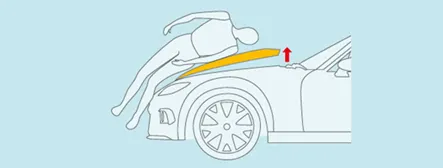
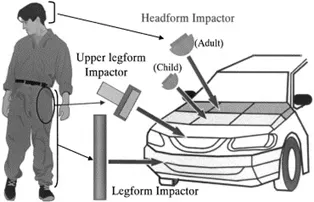
Most pedestrian accidents occur within city areas where speed is moderate. The head, the lower body and the legs are amongst the most frequently injured body regions. To estimate the potential risk of head injury in the event of a vehicle striking an adult or a child, a series of impact tests is carried out at 20 km/h using an adult or from child head impactor. Impact sites are then assessed and the protection offered is rated as good, adequate, marginal, weak or poor.
- EURO NCAP
Euro NCAP is a voluntary vehicle safety rating system created by the Swedish Road Administration, and International Consumer Research & Testing, backed by 14 members, and motoring & consumer organisations in several EU countries.

They publish safety reports on new cars, and awards 'star ratings' based on the performance of the vehicles in a variety of crash tests, including front, side and pole impacts, and impacts with pedestrians.
The tests are widely welcomed by legislative and motoring Organisations because basic governmental regulations would only require a legal car to score the equivalent of a one-star rating out of five to be acceptable for use on the road.
However, cars tested by Euro NCAP are awarded an overall rating out of five stars for their overall safety, as well as individual percentage scores for adult, child and pedestrian protection, with an additional score awarded for a variety of types of safety equipment and aids being fitted. This helps car buyers know which cars are safest.
Euro NCAP tests are widely credited for playing a key role in reducing the number of deaths or serious injuries from road accidents. The tests are frequently updated, and the criteria for achieving high scores regularly re-evaluated in order to ensure that safety advances are rewarded with higher rankings.
- Vehicle quality:
In the vehicle design and development stage, the customer’s perception of quality for certain nameplate vehicles or brands needs to be translated into engineering requirements that often need to be a trade-off with other requirements such as vehicle handling, weight, function, and cost. Material selection followed with its manufacturing feasibility giving optimum result to the mechanical properties. Hood material are manufactured generally using steel, aluminium alloy or composite material like fibre glass/carbon fibre. Various factors are considered like analysis of torsional stiffness, dent resistance, bending stiffness etc.
- Occupant Safety:
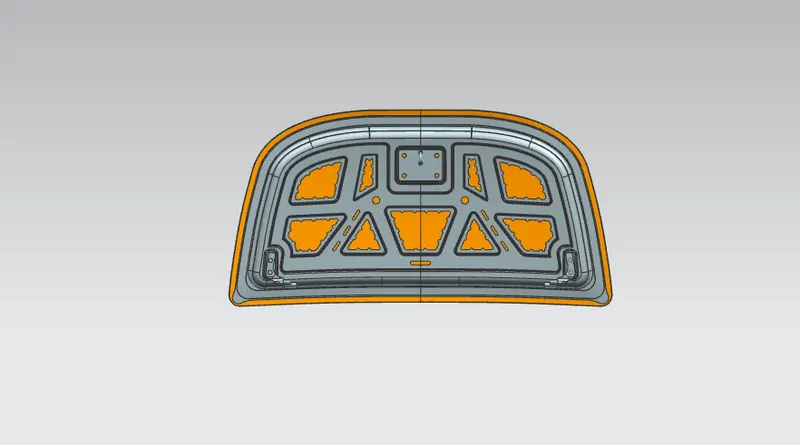
The hood panel designed in such a way that, during crash the hood section deforms completely so that maximum impact of crash is absorbed by hood to get deform and divert collision force away from the cabin by designing the hood inner panel in Y and V shapes. This help to properly damp the force to avoid or reduce the risk of injuries and death.
The deformation is achieved by designing the hood in two piece that is outer panel and inner panel separate by mastic sealants. Thus, the cavity between the panel and the blanking in inner panel act as weakest section to get deform while crashing. The impact of crash diverted to hinges which are reinforcement plates.
- Styling:
Styling team design an outer panel of hood also called as class A surface of the car hood by considering major factors which influence vehicle aerodynamics and sales in the market. In automotive design, a class A surface is any of a set of freeform surfaces of high efficiency and quality. Although, strictly, it is nothing more than saying the surfaces have curvature and tangency alignment to ideal aesthetical reflection quality. Class A surfaces can be defined as any surface, that has styling intent, that is either seen, touched, or both. The factors such as surface quality, tight radii on hemmed panel edges, aesthetic design and aerodynamic factors are crucial factors while designing outer skin.
- Manufacturing:
A typical automotive body is a complex structure comprised of many sub-assemblies each made of many parts. Often times these parts are sheet metal stampings that must be joined together using spot weld or hemming processes to make the subassemblies. In manufacturing of car hood various steel metal operation are carried out like profile cutting of sheet metal, blanking, stretch forming, trimming and punching, deburring, welding, grinding, painting, baking, polishing and waxing, coating blanking, piercing followed by deep drawing where minimum 7mm degree draft angle maintained respective to the tool direction.
Hemming is widely used in the automotive manufacturing industry to assemble inner and outer panel of hood. The purpose of hemming is to fold the outer panel sheet to the inner panel of hood.
Design Methodology:
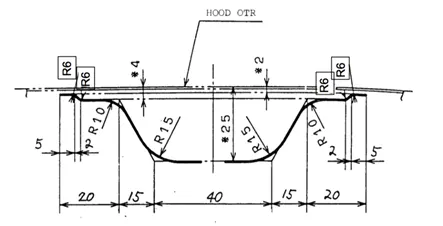
Pedestrian safety and the awarding the flow of forces to the side of hood in case of vehicle crash for the safety of passenger or occupants are the two main aspect taken into the account while designing the hood. Here is the data given for hood design.
Hood Thickness Information
- Outer Panel Thickness = 0.75mm
- Inner Panel Thickness = 0.75mm
- Reinforcement Thickness = 1.5mm
Description:
Inner panel:
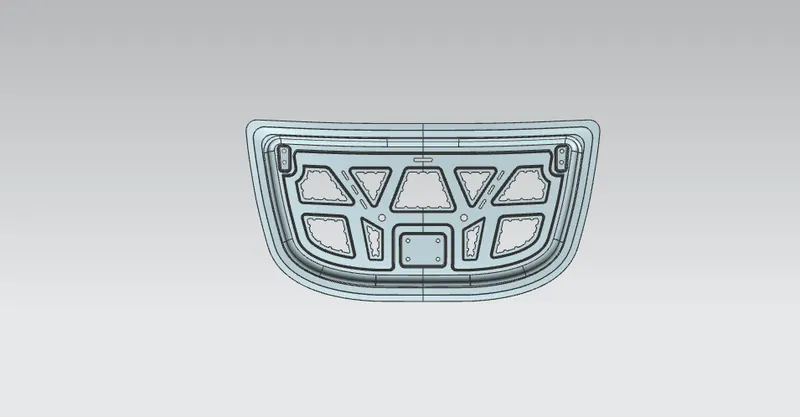
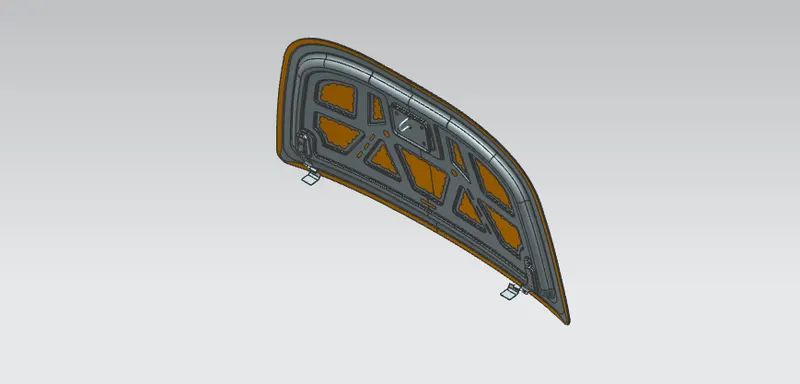
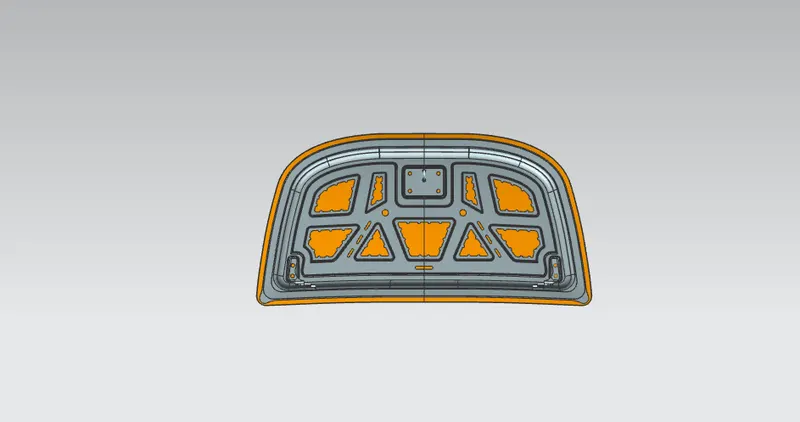
The inner surface is designed like master section. So, I started with creation of master section by creating three offset surface and by using trim sheet, through curve and law extension. After that main emboss is created by emboss feature. After creating main emboss I created various small embosses for easy flow of frontal forces to the side in case vehicle crash. This emboss should be in V or Y shape so that forces can transfer easily. Then I created emboss seat for the latch and striker, this emboss were different from other embosses as this embosses were created by using end cap condition by creating datum plane. That’s why the upper surface of this emboss parallel to the hinge and latch surface. Blend with approximate dimensions were created at every edge so that there should no stress concentration. After all this process the part is thicken so that it is converted into solid one.
Outer Panel:
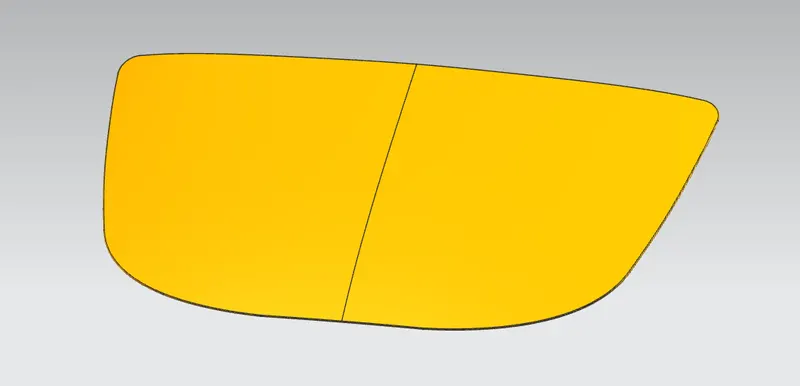
Outer panel i.e. class A surface was received from styling team. The outer panel serves as aesthetic component while also providing extra strength to the inner panel. The curvature of inner panel is based on the design of the outer panel.
Latch trajectory:
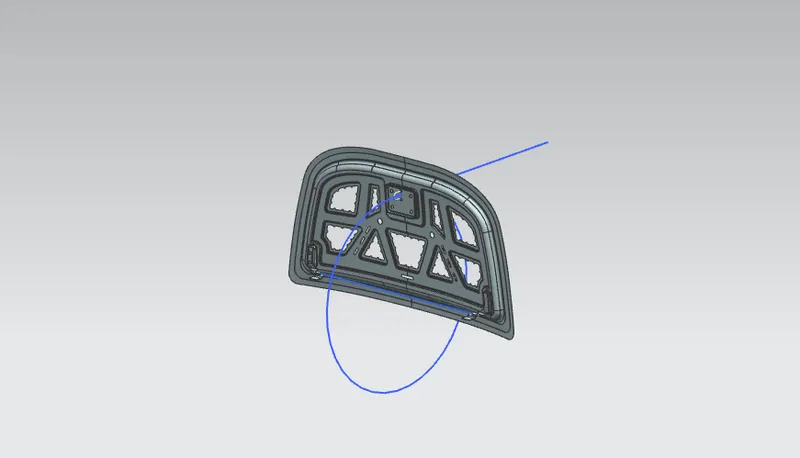
The latch trajectory shows the path of the striker when the hood is opened and closed on a vehicle. The radius of the circular trajectory is determined by set standard based on the average height of a person. Latch trajectory plays an important role in assembling the latch with inner panel in accurate manner so that there will not be NVH issues form due to surface irregularities. For this I created sketch on hinges axis by taking this axis as the central axis. Then created a circle of radius 625mm. after that I created a line tangent to the circle. And attached this line with the line drawn on to the latch by using prefer touch constrain. For proper mating condition the striker axis through the tip of the striker should be tangential to the latch trajectory.
Mastic data:
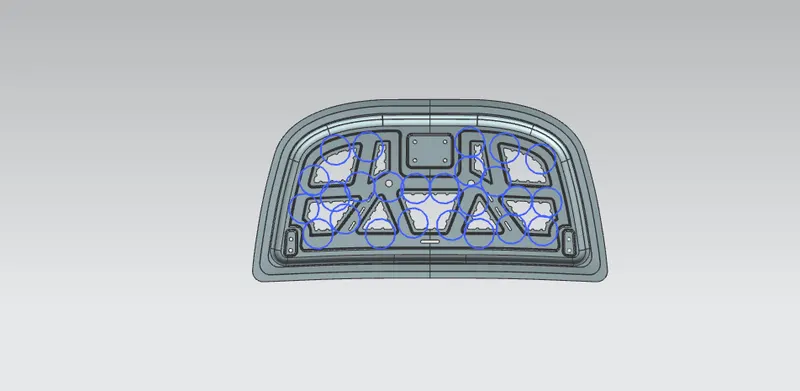
As we know the main purpose of outer panel is for the aesthetics looks. Thus, we cannot use bolts and spot welding because they leave mark on outer panel. So, mastic sealant used to stick inner and outer panel of the hood. It is basically a noise, vibration and hardness NVH parameter where mastics are provided inside the embossed surface between gap of outer panel and inner panel of hood to achieve best NVH value. Lower the value better the NVH rating. So, mastic sealant is filling adhesive material used to occupy vacant space between inner and outer panel to reduce the NVH value. One spot of mastic sealant cover and provide strength to around 80mm diameter.
Deep Drawing:
Deep drawing is a sheet metal forming process in which a sheet metal blank is radially drawn into a forming die by the mechanical action of a punch. It thus a shape transformation process with material retention. This is completed in gradual steps to ensure an even distribution of metal across the shape, which is important for preserving the integrity and strength of the finalised deep drawn component. The process is considered “deep” drawing when the depth of the drawn part exceeds its diameter. This is achieved by redrawing the part through a series of dies. the deep drawing process is a forming process which occurs under a combination of tensile and compressive conditions.
Hemming:
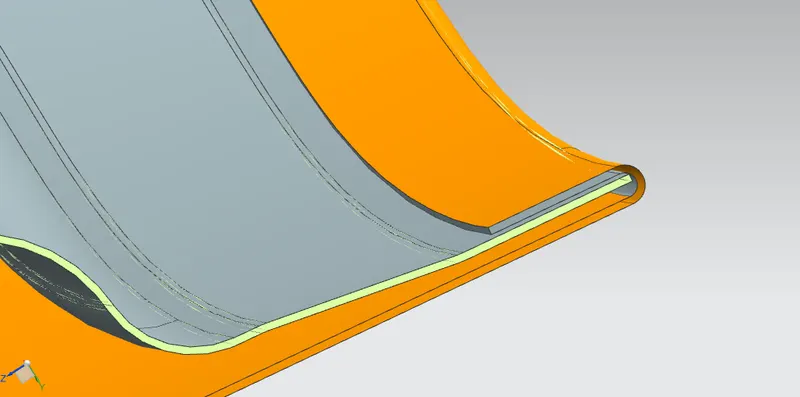
Hemming is a sheet metal forming process in which sheets are joined by bending it usually to 180-degree. Automotive body panels and automotive parts such as deck-lids, trunk-lids, doors, hoods and tailgates are formed by hemming process. For joining inner panel with outer panel, we cannot use spot welding as spot welding would leave weld marks on the outer panel. As outer panel is an aesthetic part of the hood so it should be free from any mark. That’s why we use hemming process for joining. Normally hemming operation is used to connect parts together.
The accuracy of hemming operation is very important since it affects the appearance of the surface and surface quality. Thus, for creating hem in hood first I offset the surface of hood outer panel then offseted a curve on surface by 1.5mm then use law extension with this offset curve then again, I use offset surface to offset law extension by 15mm then trim the sheet upto law extension and then use three face blend to create a hem.
Assembly:
In hood assembly I have given an outer panel by styling team so firstly I fixed the outer panel by creating co-ordinate system. Then inner panel was created by offsetting the surface from outer panel thus inner panel also fixed automatically. After creating inner panel there is a main challenge to assemble hinges to the inner panel so first, I make hinge axis parallel to the X-axis. after that by using distance constraint hinge is assemble to the inner panel. Striker is assembled to the inner panel by using prefer touch constraint twice.
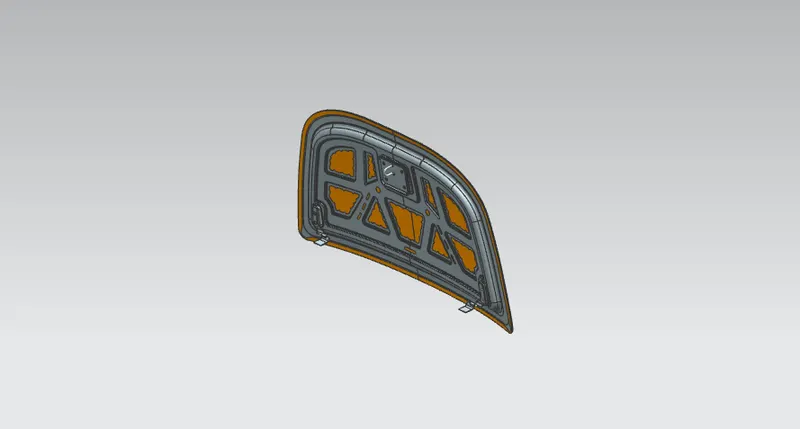
Different Views of Hood:
Isometric view:
Front View:
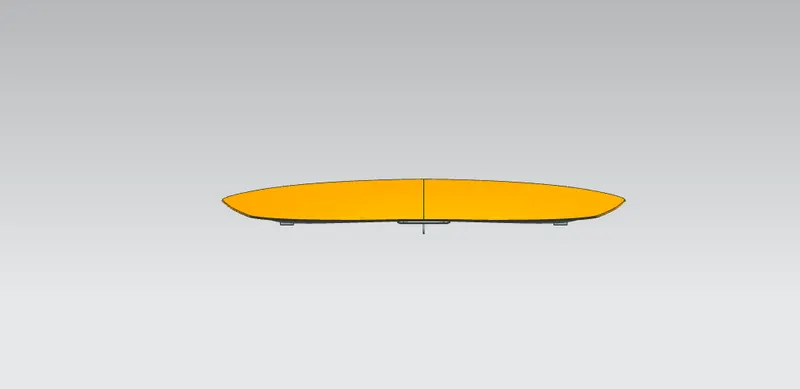
Top View:
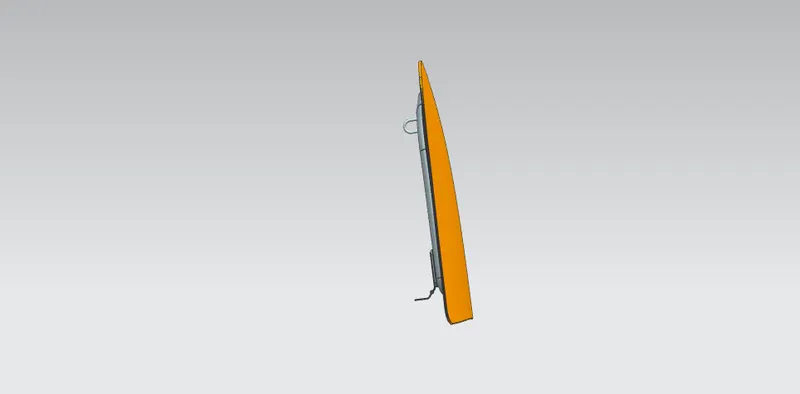
Side View:
Conclusion:
In this way I have successfully designed and assembled the hood and engineering behind the hood design of vehicle in siemens NX. learnt the basics of BIW and This project helps me to enhance my designing skills which help me to become industry ready for the role of mechanical design engineer.