Hood design-Week 2
Automobile Hood Design
Hood:
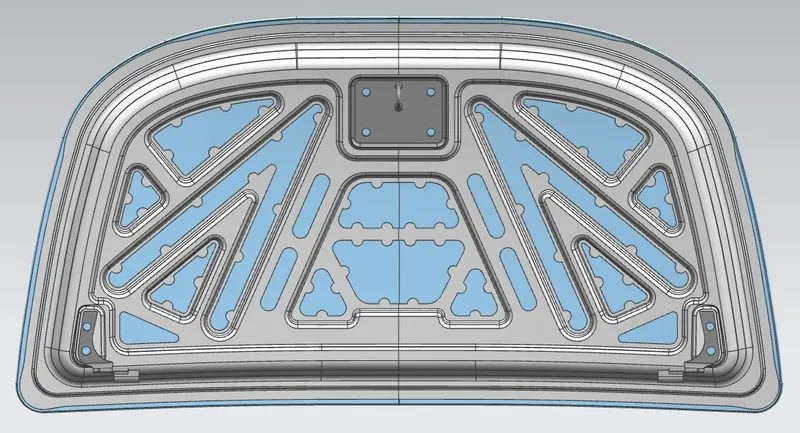
Fig shows: Hood
- A car hood, also referred to as a bonnet in some other countries, is the hinged cover that rests over the engine of a front-engine vehicle. Its purpose is to provide access to the engine for repair and maintenance.
- A concealed latch is typically used to hold down the hood. On vehicles with an aftermarket hood and on racecars, hood pins may be used to hold down the car hood. Hoods sometimes also contain a hood scoop, wiper jets, power bulge, and/or hood ornament.
- Car hoods are typically constructed from steel and sometimes from aluminum. Aftermarket car hoods may be constructed from various other materials, including carbon fiber, fiberglass, or dry carbon.
- Hoods are typically made out of the same material as the rest of the body work. This may include steel, aluminium, fiberglass or carbon fiber. However, some aftermarket companies produce replacements for steel hoods in fiberglass or carbon fiber to make the vehicle lighter.
- On front-engined cars, the hood may be hinged at either the front or the rear edge, or in earlier models. It may be split into two sections, one each side, each hinged along the centre line.
- A further variant combines the bonnet and wheelarches into one section and allows the entire front bodywork to tilt forwards around a pivot near the front of the vehicle.
Pedestrian-Vehicle Collision:
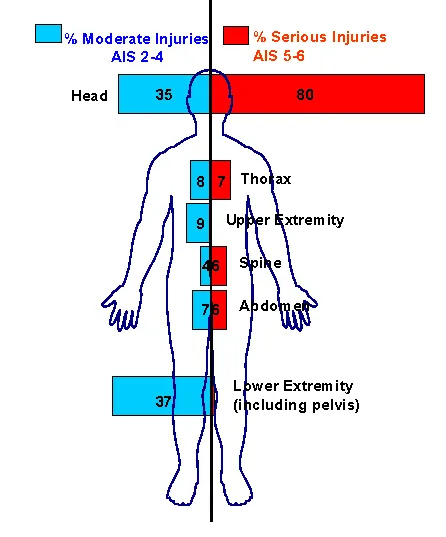
- Concerns regarding the severity of a potential pedestrian head injury during a collision with a motor vehicle have led to advanced hood designs on many models. Such designs may include a multi-cone inner hood panel design.
- An active structure that is capable of pushing the surface of the hood away from the vehicle's hard motor components in the event of a pedestrian crash is also in use. Pyrotechnic or spring force designs are often used in active-hood design.
- Vehicle safety factors should simultaneously consider occupant and pedestrian safety, given that pedestrians are the third largest category of traffic fatalities.
- Most pedestrian deaths occur due to traumatic brain injury, resulting from the hard impact of the human head against the vehicle's stiff hood or windshield.
- The hood in a majority of vehicles is generally fabricated from sheet metal, which is capable of absorbing energy posing a comparatively lesser threat.
- However, most fatal head injuries occur when there isn’t a sufficient clearance between the hood sheet and the underlying engine components.
- By creating a gap of approximately 10 cm pedestrian’s head can achieve a controlled deceleration and a reduced risk of death.
- But creating this room is a challenging task because there are other design constraints, such as aerodynamics and styling.
- Thus engineers attempt to overcome this problem by using deformable mounts, and by developing more ambitious solutions such as airbags that cover the stiff regions of the hood when activated.
- It will ensure that the new cars meet a minimum requirement of safety for the pedestrians. It’s one of the phases of Bharat New Safety Vehicle Assessment Program (BNVSAP).
Fig Shows: Special design feature in hood for Pedestrian safety
Design specifications for hood design:
Master section data provided-
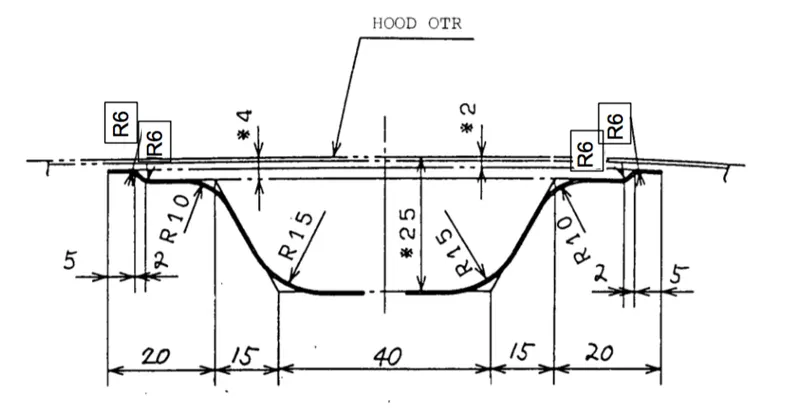
Thickness of various components-
- Outer Panel Thickness = 0.75mm
- Inner Panel Thickness = 0.75mm
- Reinforcement Thickness = 1.5mm
Various processes involved in hood design:
- Blanking
- Hemming
- Punch cutting or Piercing
- Deep drawing
- Embossing
HOOD DESIGN:
Inner panel-
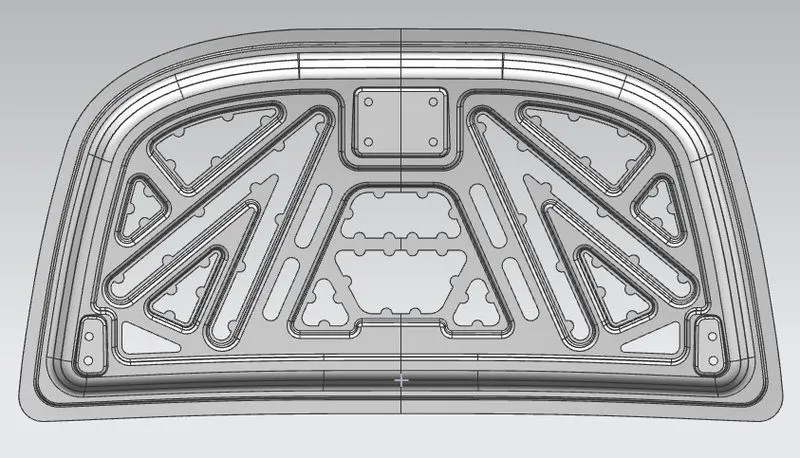
Fig shows: Front view of inner panel
- A hybrid hood inner panel for a vehicle is provided to improve rigidity, durability, and pedestrian protecting performance by comprising a composite structure in which a multi-cone structure and a frame structure are individually arranged on the front and the rear.
- In general, the hood panel is installed in the front of the vehicle so as to protect parts in the engine compartment and the engine compartment and at the same time open and close the hood panel for replacement and repair of components in the engine compartment.
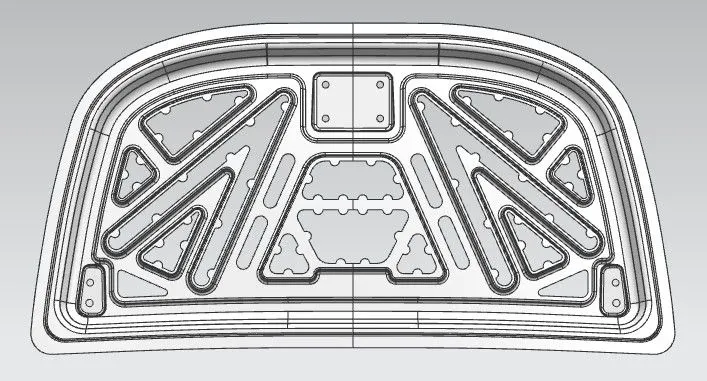
Fig shows: Back view of inner panel
- The inner panel has some embosses to dissipate the reaction force and energy during collision and diverts it to the hinge area.
- In this panel the embossing is done and other aspects like reinforcement, mastic points are also provided.
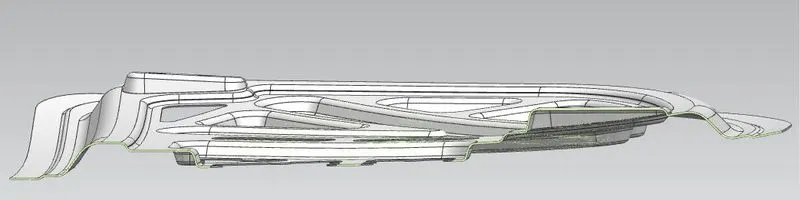
Fig shows: Cross sectional view of inner panel
Embossing in sheet metal-
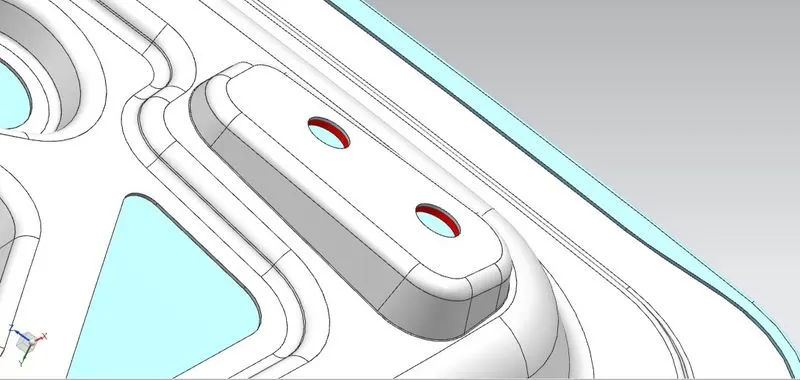
Fig shows: Embossing in Inner panel design
- The metal sheet embossing operation is commonly accomplished with a combination of heat and pressure on the sheet metal, depending on what type of embossing is required. Theoretically, with any of these procedures, the metal thickness is changed in its composition.
- It is mainly done to provide pedestrian safety and safety for the people in the vehicle. The energy created during collision is dissipated by the 'V' or 'Y' shaped embossing provided in the inner panel.
- It also reduces the weight of the panel therby increasing the performance of the vehicle and cost reduction can be achieved.
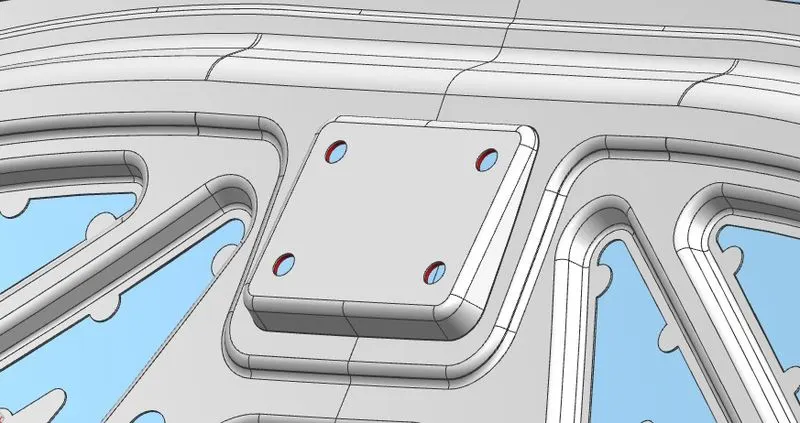
Fig shows: Embosse for Striker Reinforcement
Deep Drawing-
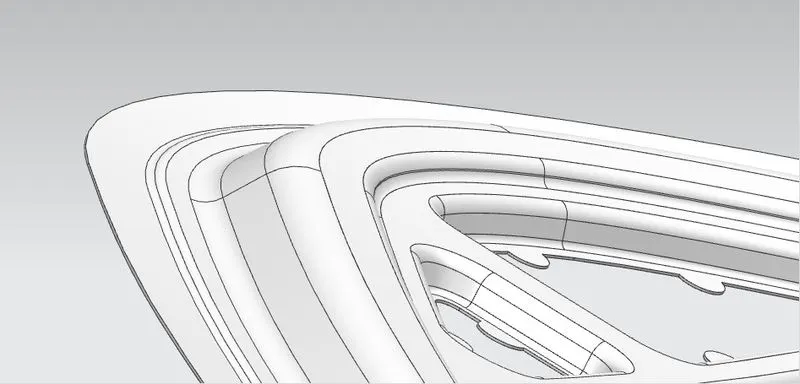
- Deep drawing is one of the most widely used processes in sheet metal forming. Apart from its use in many other sectors, it is applied in the automotive industry for the manufacturing of car body parts.
- The deep drawing process is a forming process which occurs under a combination of tensile and compressive conditions. A flat sheet metal blank is formed into a hollow body open on one side or a hollow body is formed into a hollow body with a smaller cross-section.
- Deep drawing processes are divided into three types:
- Deep drawing with tools
- Deep drawing with active means
- Deep drawing with active energy
- In the automotive industry, deep drawing is usually carried out using rigid tools.
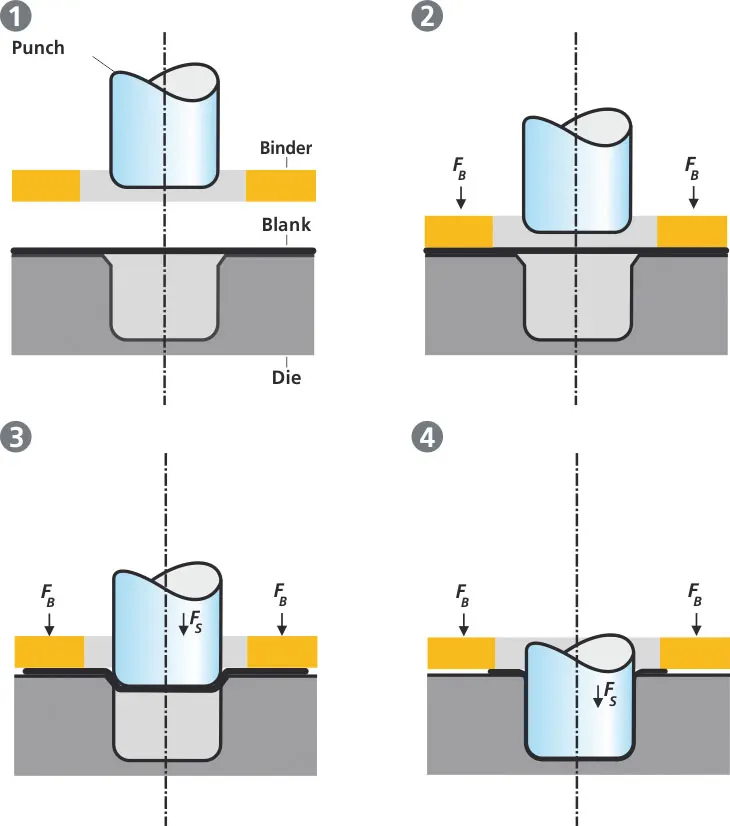
Fig shows: Deep drawing with tools
Hemming in sheet metals:
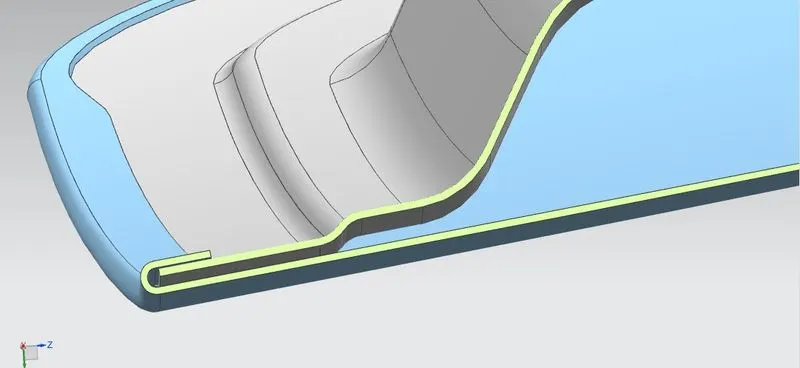
Fig shows: Hemming in Hood design
- Hemming is a sheet metal forming process in which sheets are joined by bending it usually to 180°. Automotive body panels and automotive parts such as deck-lids, trunk-lids, doors, hoods and tailgates are formed by hemming process.
- Hems are commonly used to reinforce an edge, hide burrs and rough edges, and improve appearance.
-
In car part production, hemming is used in assembly as a secondary operation after deep drawing, trimming and flanging operations to join two sheet metal parts (outer and inner) together. Typical parts for this type of assembly are hoods, doors, trunk lids and fenders.
-
The accuracy of the hemming operation is very important since it affects the appearance of the surface and surface quality. Material deformations, which occur during the hemming process, can lead to dimensional variations and other defects in parts. Typical hemming defects are splits or wrinkles in the flange, material overlaps in the corner areas or material roll-in. This is why it is important to use simulation tools in order to, on the one hand, better understand the hemming process and, on the other hand, significantly reduce the number of “trial and error” loops during tryout und production.
There are various types of hemming operations:
- Conventional die hemming
- Roll hemming
- Conventional die hemming is suitable for mass production. In die hemming, the flange is folded over the entire length with a hemming tool. Normally the actual hemming is a result of a forming operation in which the flange is formed with a hemming tool after the drawing and trimming operations have been completed.
- Roll hemming is carried out incrementally with a hemming roller. An industrial robot guides the hemming roller and forms the flange. Roll hemming operation can also be divided into several pre-hemming and final hemming process steps. Roll hemming is very flexible to use and tool costs are significantly lower as compared to those of conventional die hemming.
- In automobile industries roll hemming is widely used.
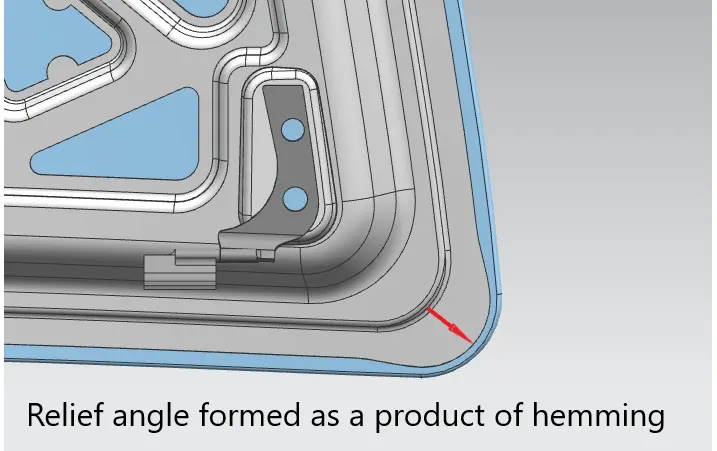
- During hemming process a relief angle is provided at the corner edges of the sheet metal design.
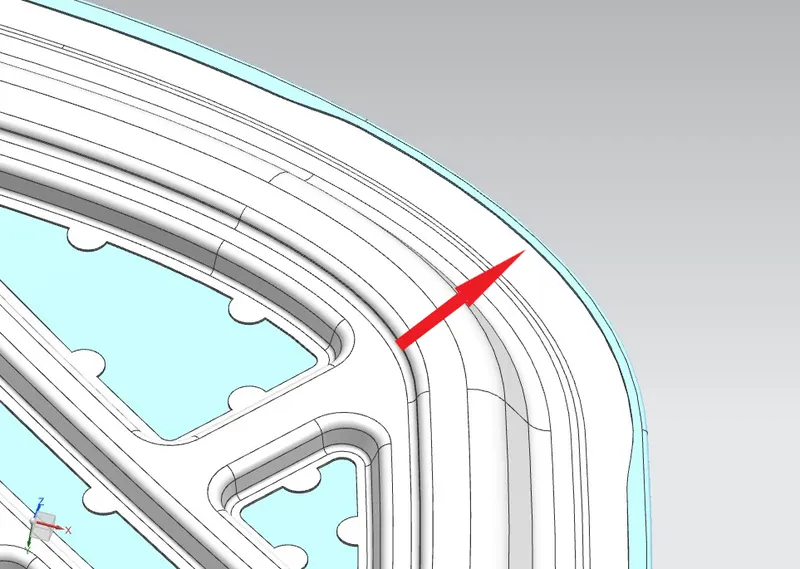
Fig shows: Relief angle provided
Mastic Data:
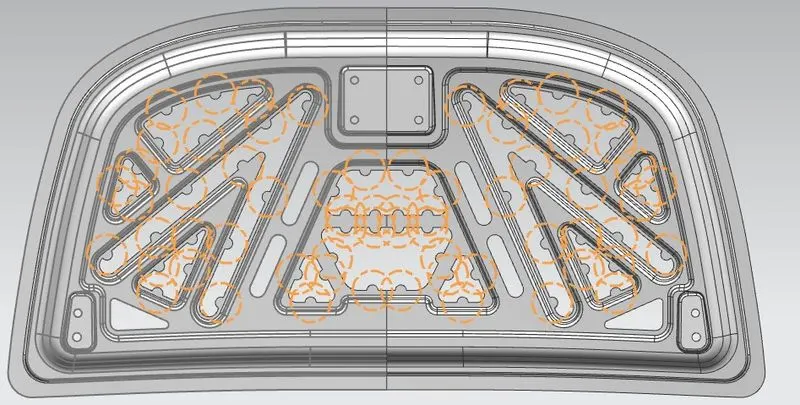
Fig shows: Mastic points in the panel
- Mastic sealant points must be between inner and outer panel. Mastic Sealants are used to Join Inner and outer Panel as welding both panel will neglect the shape and appearance of the panel.
- Mastic Sealer is a synthetic rubber based sealer material which has a good filling properties and corrosion resistance. It is designed to applied at doors, roof, hood, in specific, the gaps between inner & outer panel.
- The material is cured through e-coat oven, and it has a property of paste before curing processes.
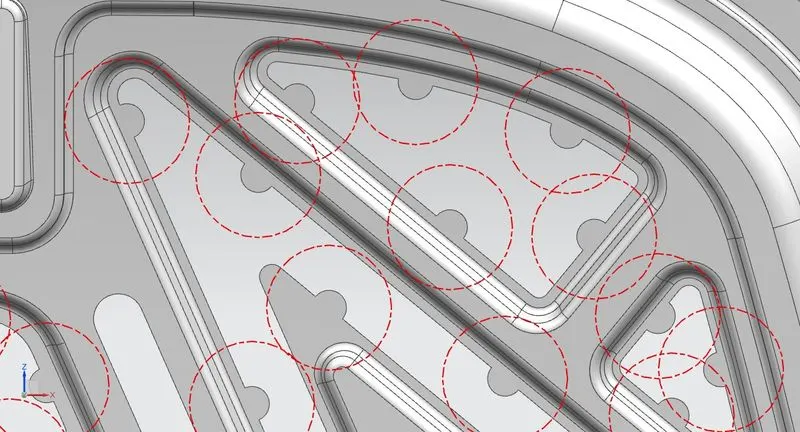
Fig shows: Mastic points in a region
- Latch-
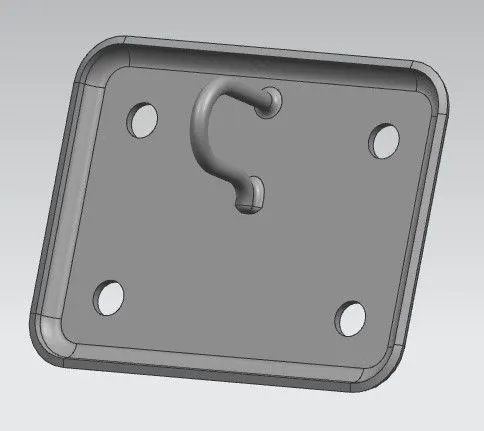
A vehicle hood latch and release mechanism is latched when the hood striker engages the latch portion of the mechanism as the hood is moved to its closed position. The mechanism is actuated to release the hood striker by a pushing action on the cable or strand movable in the sheath of a cable assembly rather than by the typical pulling action on current hood releasing mechanisms. The pushing action is obtained with actuation of a hood latching and releasing control, by movement of a handle which operatively pushes on the cable or strand, transmitting a longitudinally compressive force rather than a longitudinally tensional force to the latch mechanism and moving that mechanism to the striker-released position.
- Hinge-
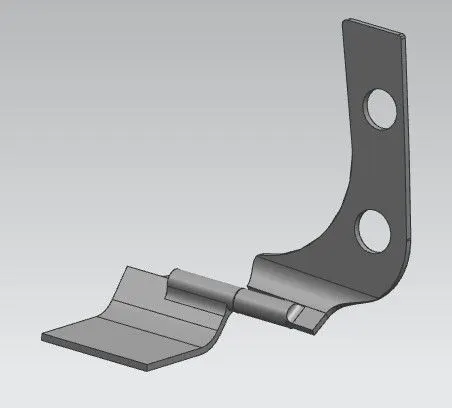
The hood hinge is a pivot and bracket mechanism that makes it possible for you to open and close your hood. Each car typically has a pair of hood hinges (driver and passenger side) installed in the front of the vehicle.The hinges control the up and down movement of the panel, limiting how far it can swing open while also supporting the weight of the hood when it is propped open for a longer period.
- Latch trajectory motion-
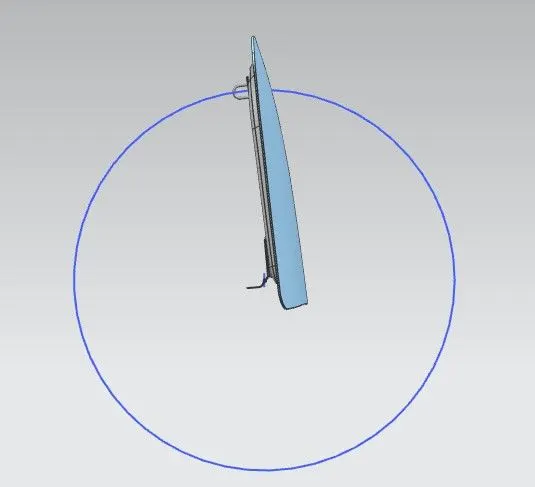
While opening and closing the hood, the latch must be perfectly alligned to the fixing or the striker position to avoid malfunction of the latch and striker mechanism. To ensure the position of the latch, the latch trajectory is drawn perpendicular to the hinge axis. The latch fixing or striker point is adjusted so that it would be perpendicular to the hinge axis and travels along the latch trajectory in its open and closed positions.
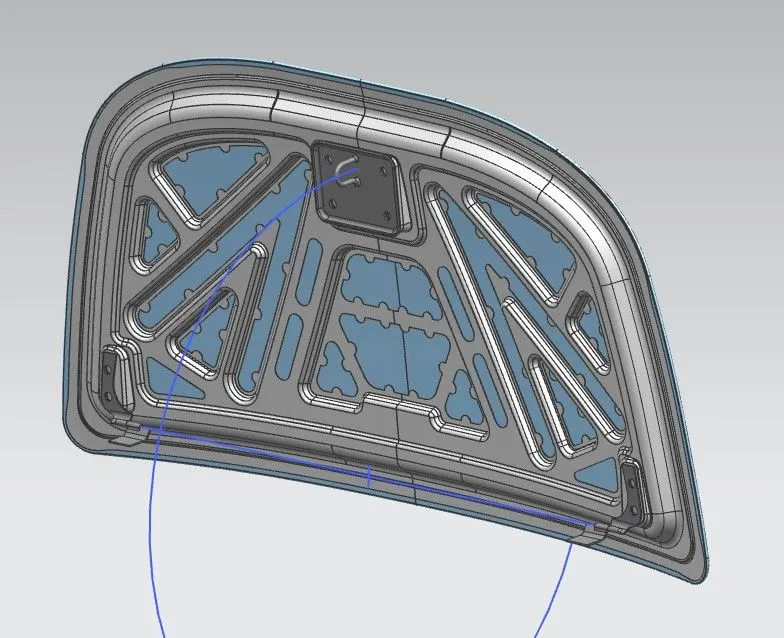
Fig shows: Latch trajectory and its postion with hinge axis
Reinforcements:
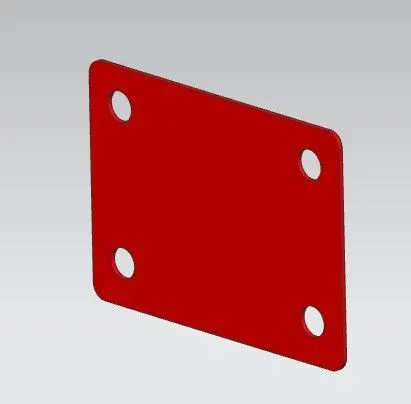
Hood reinforcement structure as provided to reduce impact in collisions to passengers. When latch and striker attached to the panel, the strength will be reduced in that area. In order to improve the strength in that area the reinforcement is added. They are added to compensate the strength lost in the specific region yet increasing the weight of the panel.
- Hinge reinforcement-
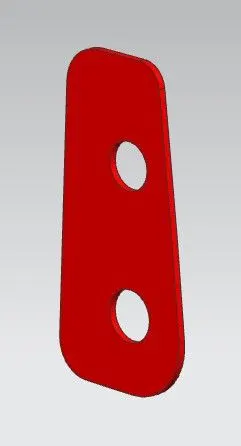
- Latch& Striker reinforcement-
Impact force distribution during collision:
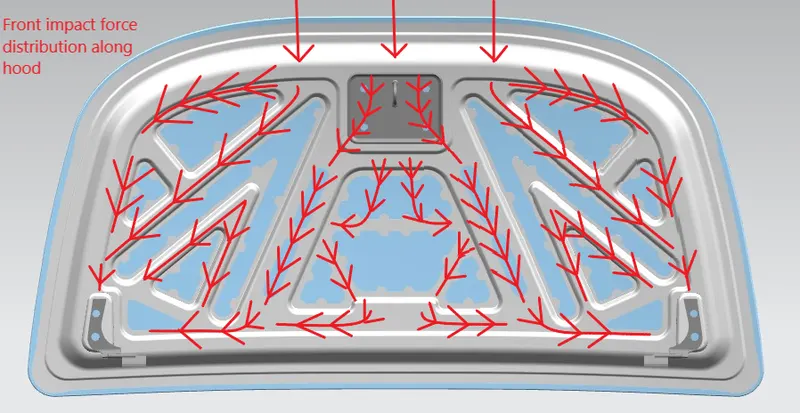
Fig shows: Force distribution during front collision
During front collision external forces act at the hood. To reduce the effect of this force, the inner panel is designed in such a way that the energy is distributed along and across the hood and directed outwards from the vehicle. This reduces the impact force experienced by the driver and other passengers.
Draft analysis:
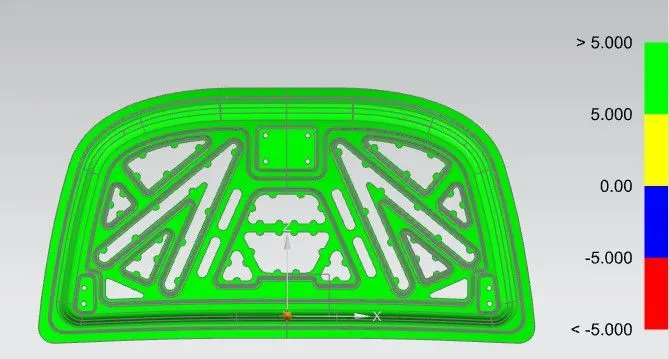
- Draft analysis is done to make sure that there is no negative draft in the panel design before it is move to the CAE team for analysis.
- Here, a 5 degrees of draft analysis is done and analysed for negative drafts or undercuts. Since all the faces are green in colour the drafts are positive.
- The design of the inner panel is positive one to be submited to the CAE team.
Images of Hood design:
Fig shows: Hood assembly (Front View)
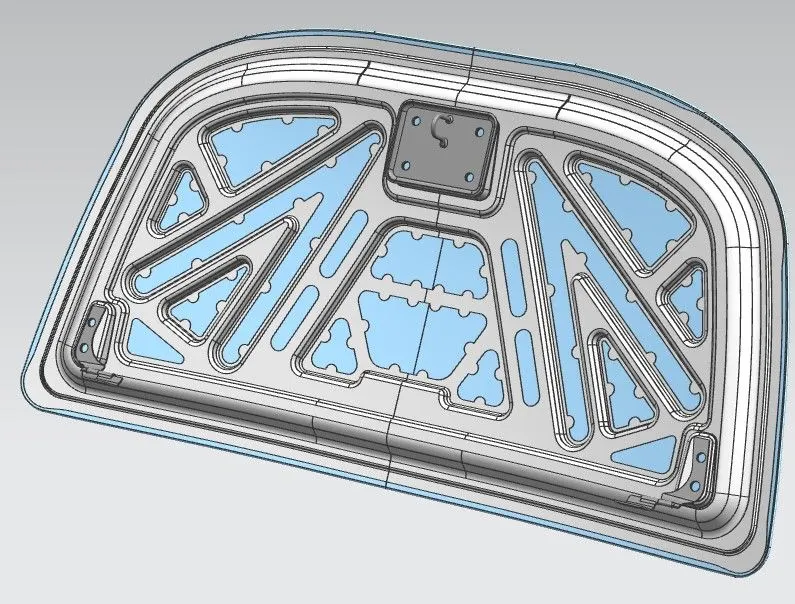
Fig shows: Hood assembly (Isometric view)
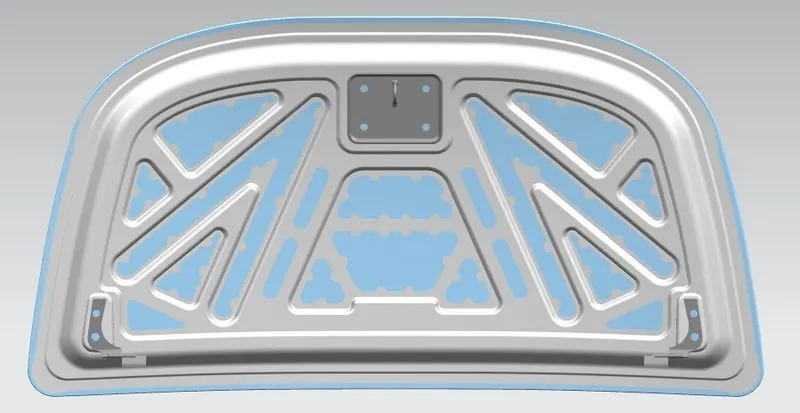
Fig shows: Hood assembly (Front shaded View)
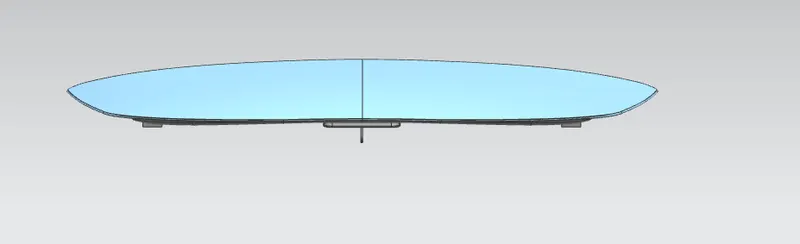
Fig shows: Hood assembly (Top View)
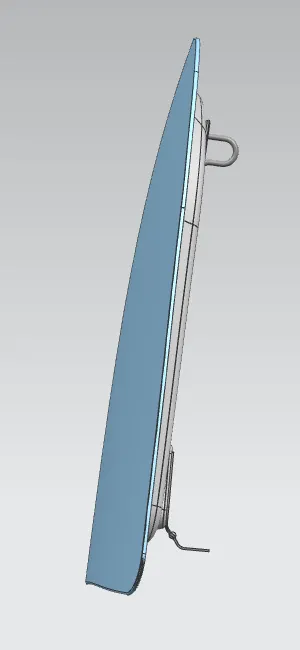
Fig shows: Hood assembly (Left View)
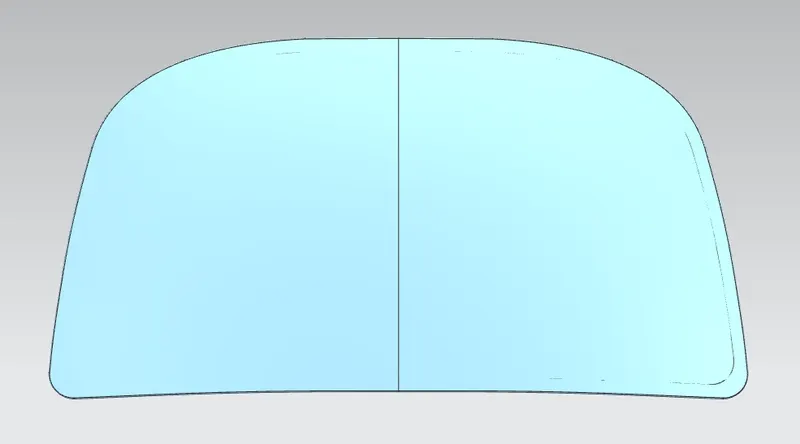
Fig shows: Hood assembly (Back View)