Hood design-Week 2
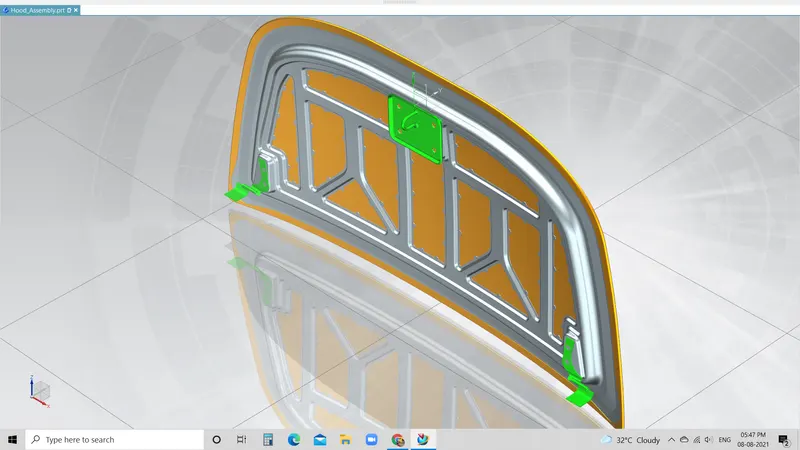
AIM: Design Hood of Outer car panel, Inner panel and necessary reinforcements by following the Master section mentioned with the design parameter.
SOFTWARE: NX CAD.
INTRODUCTION:
CAR HOOD:
A car hood, also referred to as a bonnet in some other countries is the hinged cover that rests over the engine of a front-engine vehicle. Hoods sometimes also contain a hood scoop, wiper jets, power bulge, and hood ornament. Car hoods are typically constructed from steel and sometimes from aluminium.
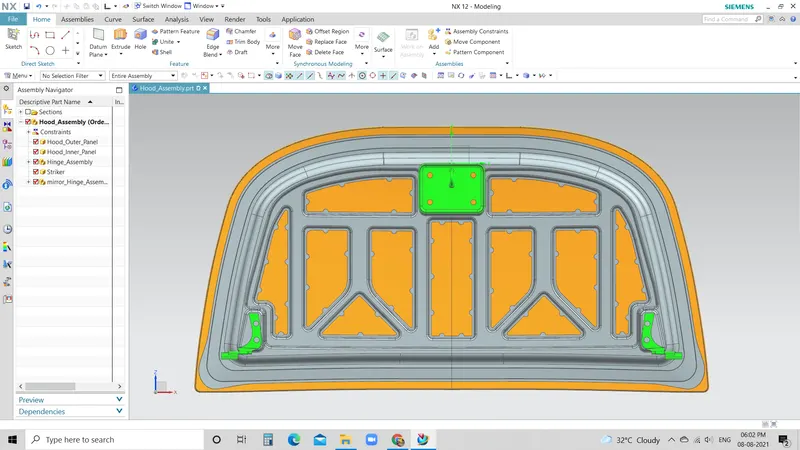
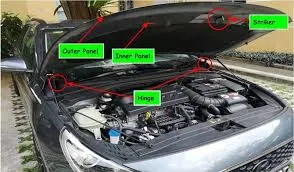
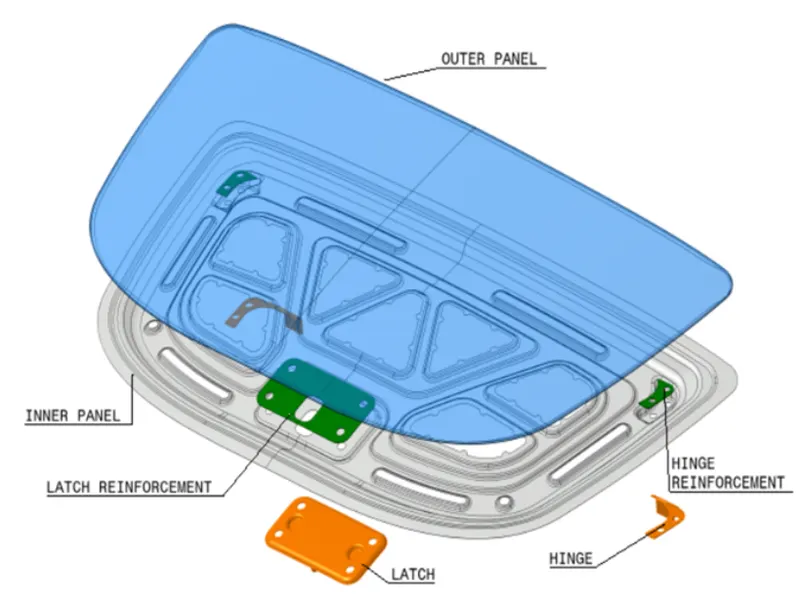
Hood mainly consist of 4 components like Outer panel, Inner panel, Hinges and Latch striker.
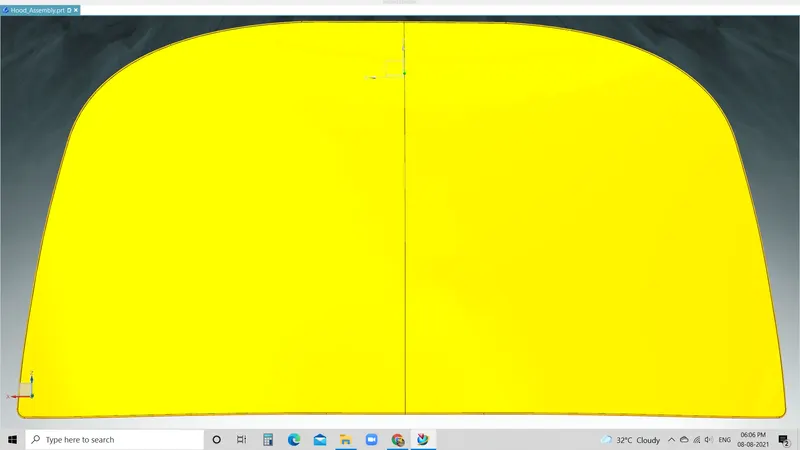
The outer panel gives an aesthetic look, and the Inner panel has Embossing on it according to the force distribution and safety requirements.
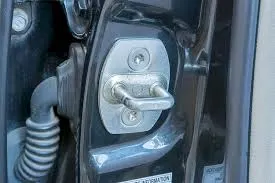
Latch Striker:
Our Hood Latch Striker is designed for long-lasting use. Its durable steel construction safeguards against body damage, ensuring the vehicle hood won't be unexpectedly open while driving. Easy to install - latch restores proper hood functionality—direct replacement for a good fit every time.
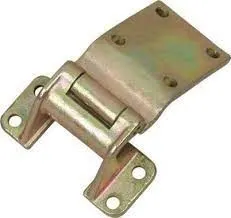
Hinge:
The hood hinge is a mechanism that makes it possible for you to open and close your hood. This part allows the hood panel to move up and down, similar to how a hinge allows the movement of doors and windows. Each car typically has a pair of hood hinges (driver and passenger side) installed in the vehicle's front.
DESIGN CONSIDERATIONS
Pedestrian Rating
Ensuring DFM
Hood Standards
Pedestrian Rating:
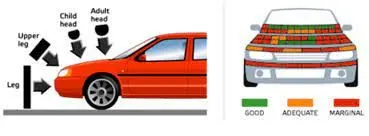
Many pedestrian crashes involve a forward-moving car (instead of buses and other vehicles with a vertical hood/bonnet). In such a crash, a standing or walking pedestrian is struck and accelerated to the car's speed and then continues forward as the car brakes to a halt. The pedestrian is impacted twice, first by the car and then by the ground, but most fatal injuries occur due to interaction with the car. Vehicle designers usually focus on understanding the car-pedestrian interaction, which is characterised by the following sequence of events: the vehicle bumper first contacts the lower limbs of the pedestrian, the leading edge of the hood hits the upper thigh or pelvis, and the head and upper torso are struck by the top surface of the hood and windshield.
Short Video of Pedestrian Rating
Since the 1970s, crash engineers have begun to use design principles that have proved successful in protecting car occupants from developing vehicle design concepts that reduce the likelihood of injuries to pedestrians in the event of a car-pedestrian crash. These involve redesigning the bumper, hood (bonnet), and windshield and pillar to be energy-absorbing (softer) without compromising the car's structural integrity. With the advent of ADAS (Automated Advanced Driver Assist Systems) since 2005, new pedestrian detection and crash avoidance and mitigation systems offer even more significant improvements through active rather than passive protection systems. For example, omniview technology allows a driver to see what is around the vehicle before moving.
Wrap Around Distance:
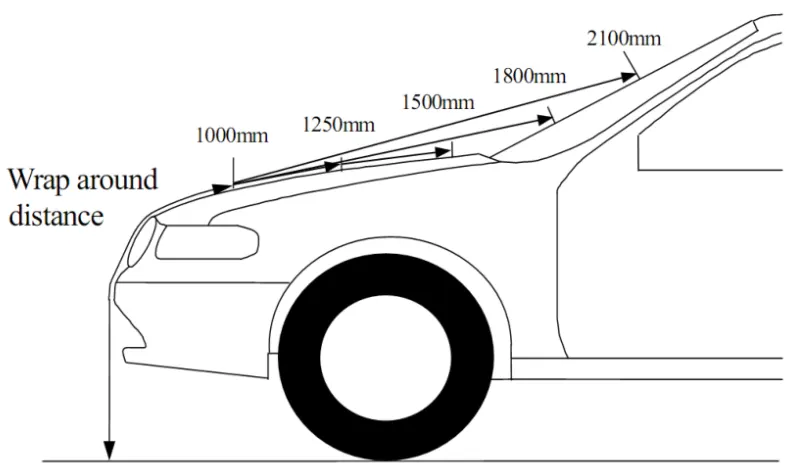
When a car crashes on a pedestrian, the whole body warps around the front shape of the; vehicle the distance the head impacts the car from the ground is called Warp Around Distance (WAD).
The Child Head impact zone 1000mm - 1700mm
The Adult Head impact zone 1700mm - 2100mm
SHEET METAL:
Generally, The sheet metal process is produced by Pressing, Stamping and Forming ETC...
- Hood Thickness 0.75MM
EMBOSS:
We can increase the stiffness of the inner panel. The shape and size of the emboss also determine the direction of force distribution resulted from the frontal collision. The force should always be distributed away from the passenger.
MASTIC SEALANT:
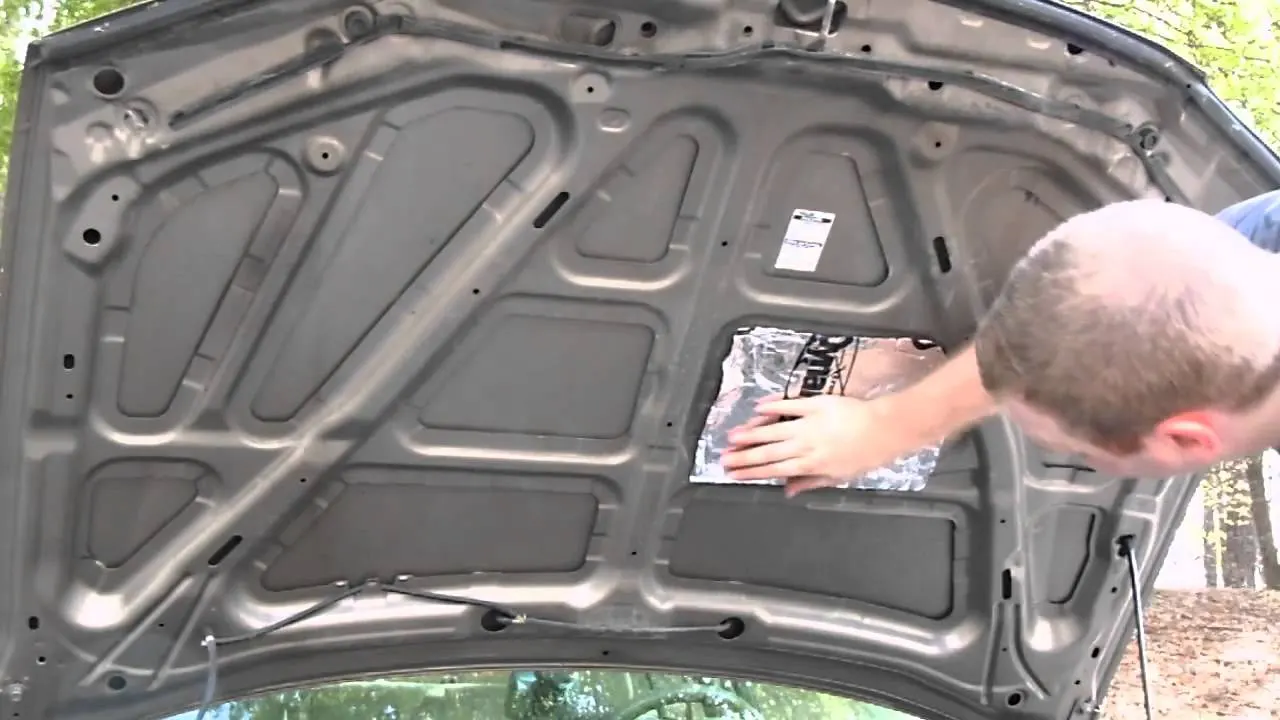
This is used to stick the inner surface of the outer and inner panels. Mastic sealants are elastic compounds that behave like rubber. It is applied between the inner and outer panels at specified spots. Each spot of mastic sealant has its effect around a circular region of 80mm diameter. The mastic points are arranged to cover the area away from the hemming, which is more vulnerable to vibrate.
HEMMING:
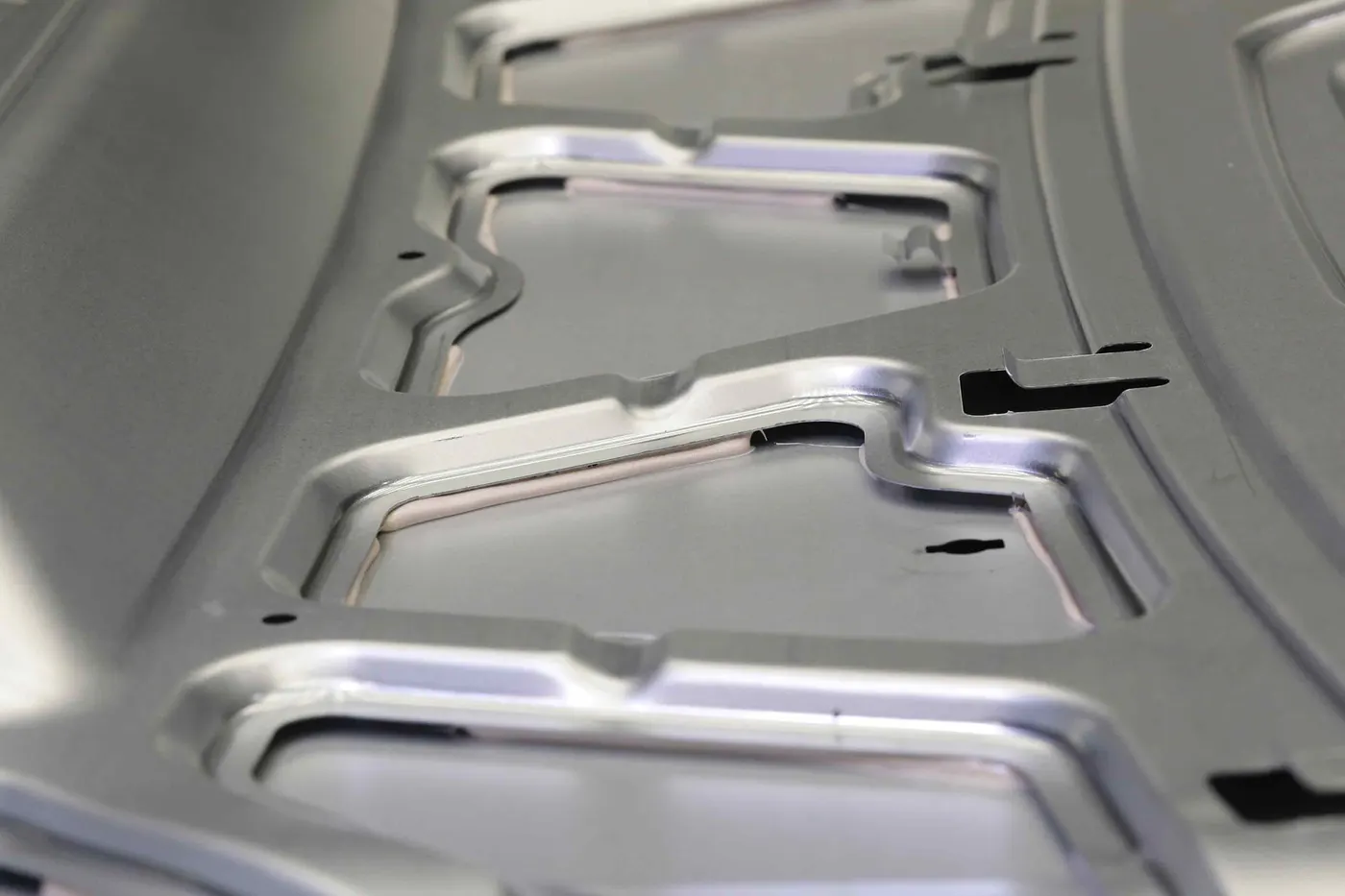
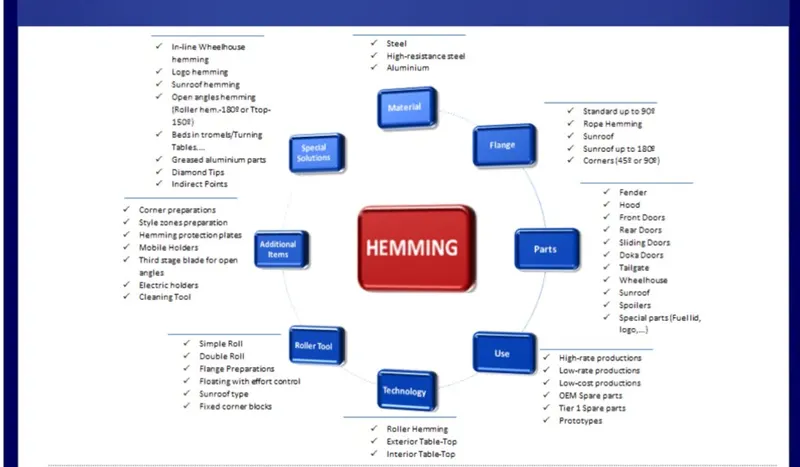
Hemming is a technology used by the automotive industry to join inner and outer closure panels together (hoods, doors, tailgates, etc.). It is the process of bending/folding the flange of the outer panel over the inner one. The accuracy of the operation affects the appearance of the car’s outer surfaces significantly and is, therefore, a critical factor in the final quality of a finished vehicle.
Hemming is performed to:
- Achieve a better final geometry in the vehicle´s part
- Add resistance and rigidity to the part
- Allow safe handling of the part
The Hemming process can be carried out in diverse vehicle components: closures (Hood, doors, tailgates), sunroof, fenders, wheelhouses and in special applications such as fuel lid, brand and special parts. Both the outer perimeter and the inner frame of the part can be hemmed.
PROCEDURE:
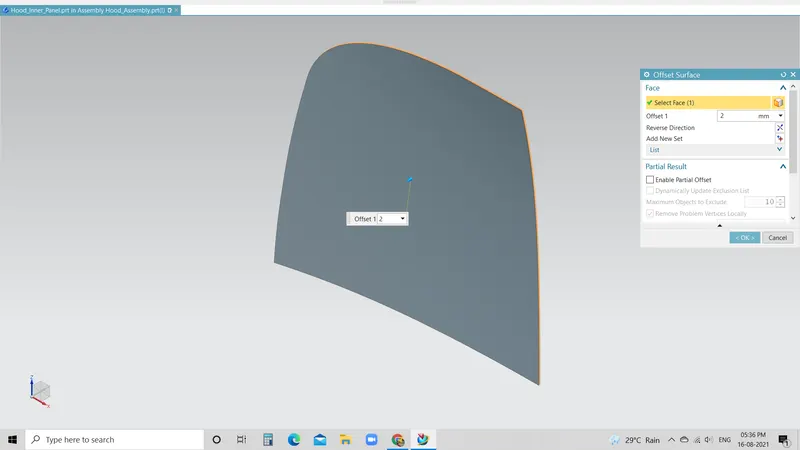
Offset the surface to the working surface about 2mm.
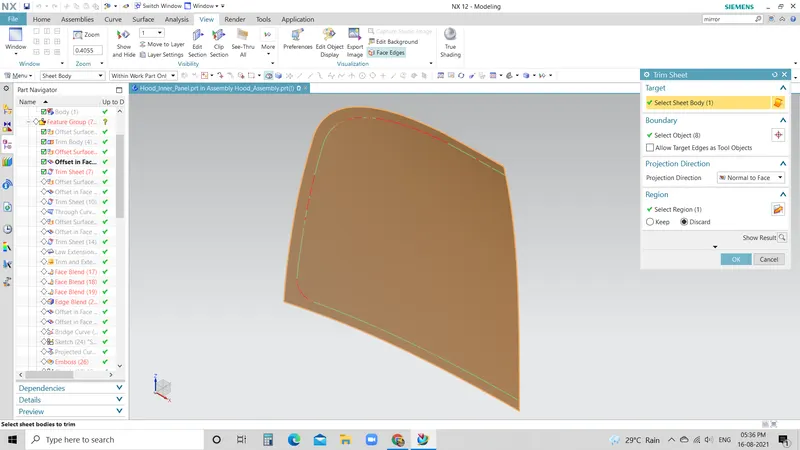
Offset the curve to 20mm; trim the sheet.
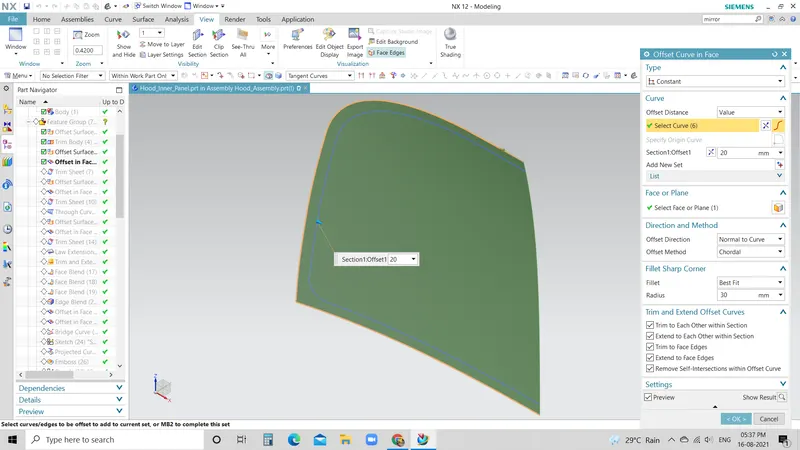
Again offset the surface to 4mm, Offset the curve to 22mm.
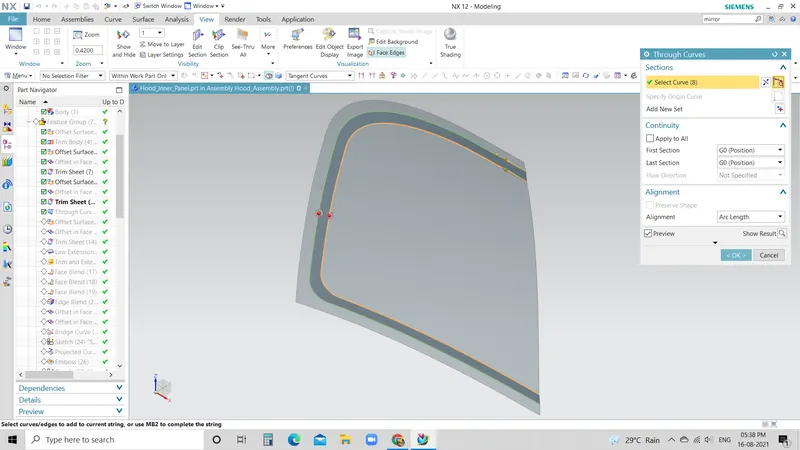
Join the surfaces using the through curves.
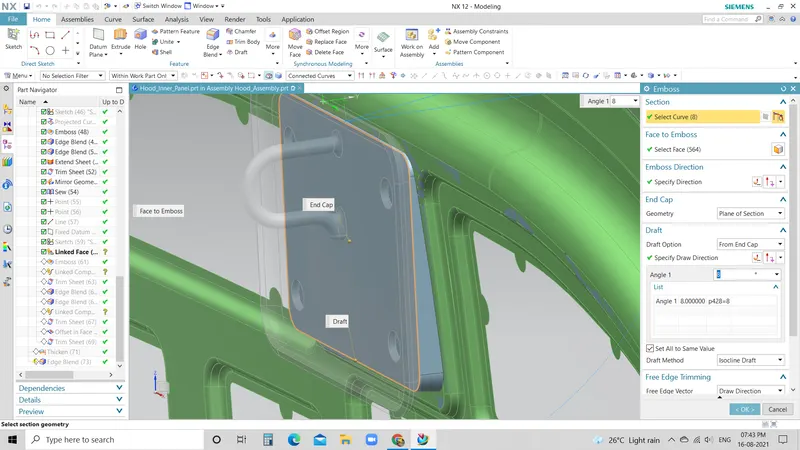
For Emboss, offset the surface to 25mm and curve to 50mm.
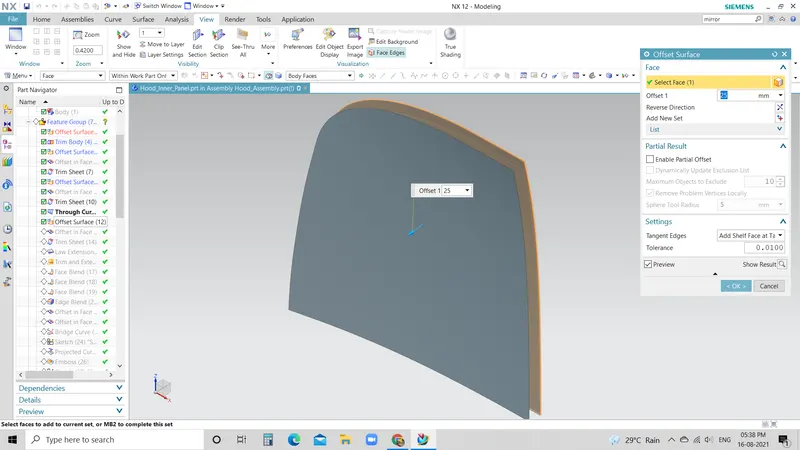
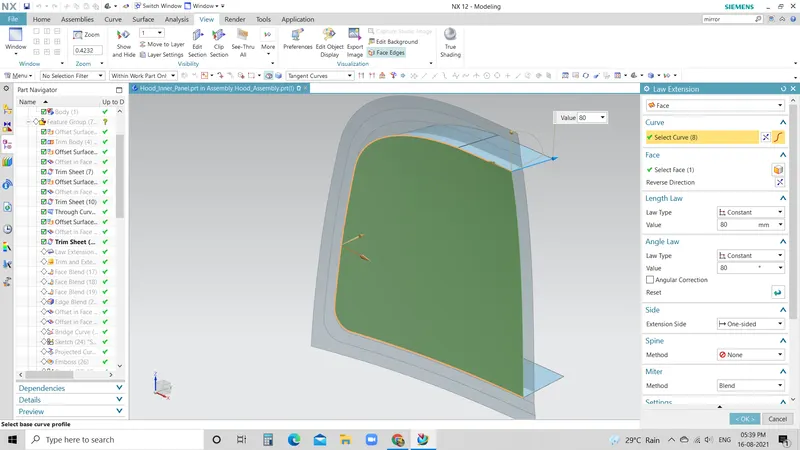
Use the law extension for Emboss and trim the sheet.
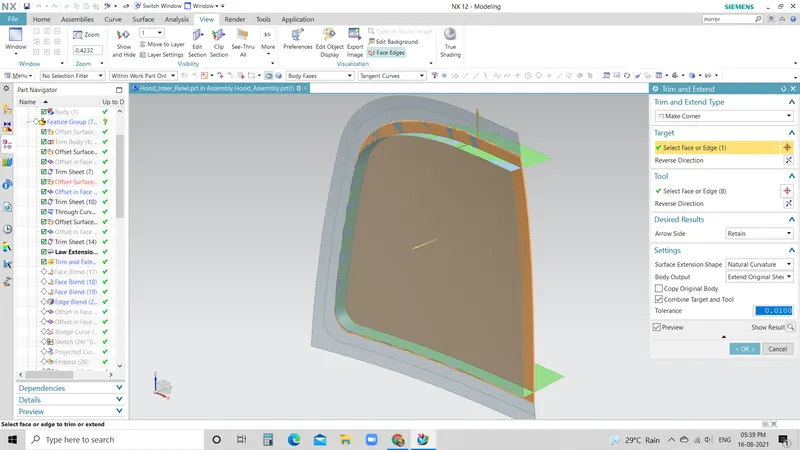
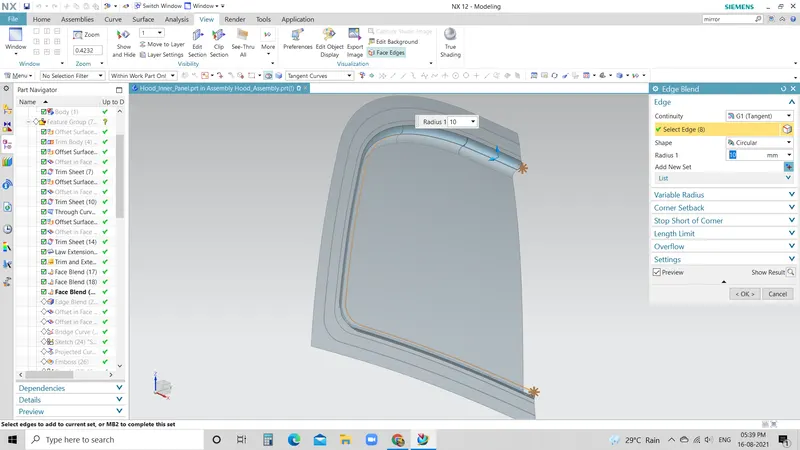
Join the layer with a face blend of 6mm and finally layer of 15mm.
Create the sketch on the ZX plane by offsetting the curve to 15mm and project the surface to get the emboss.
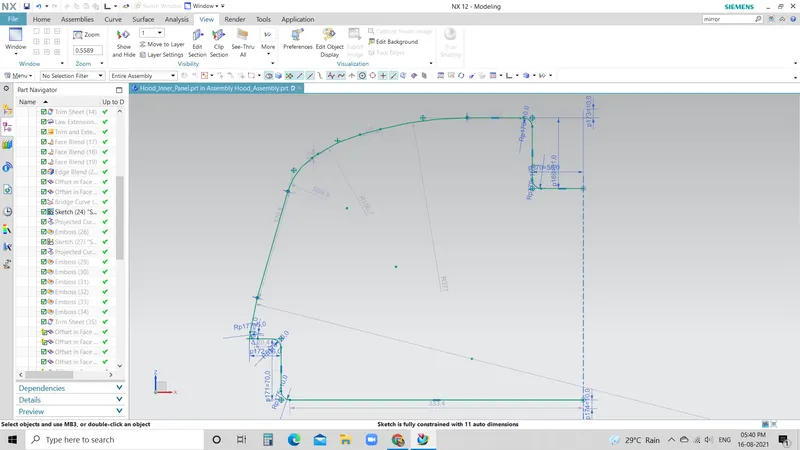
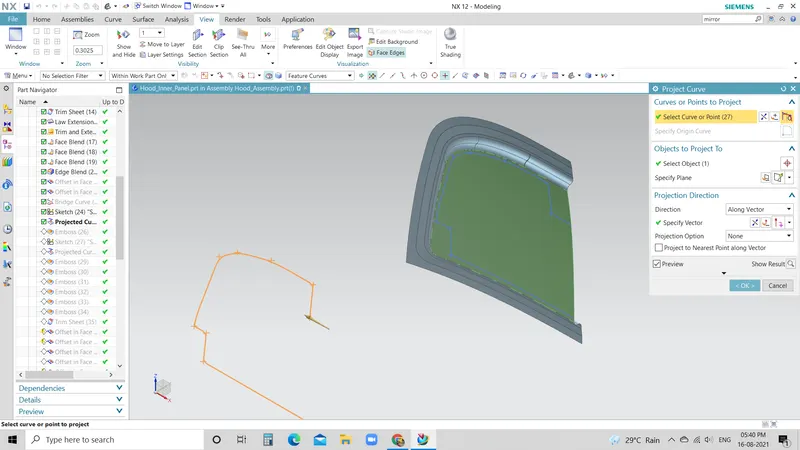
Draw the required sketch also project to the surface for embossing and stiffness of the hood inner panel.
Create mastic points and trim the sheet.
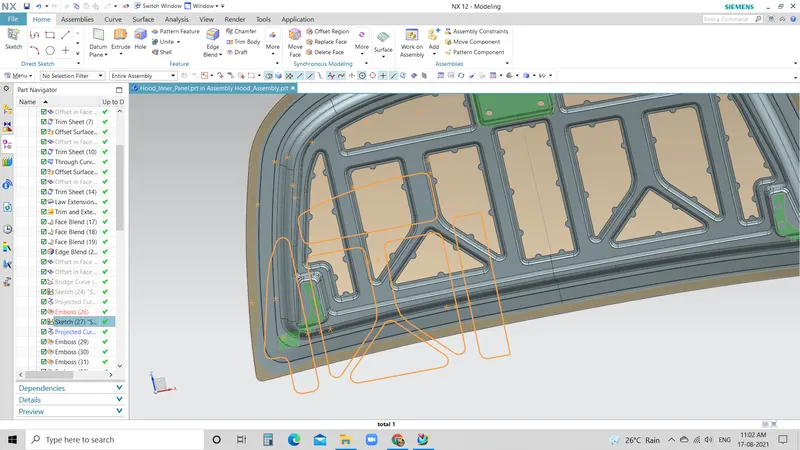
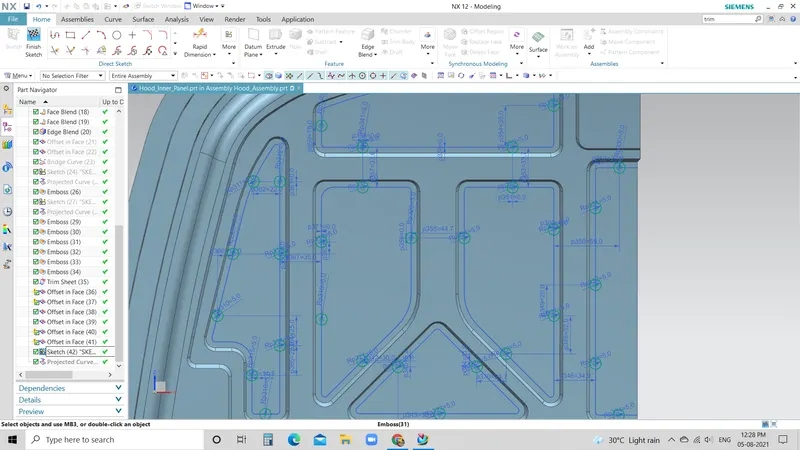
For Stricker and Hinges reinforcement extract the surface.
Create emboss make edge blend as required.
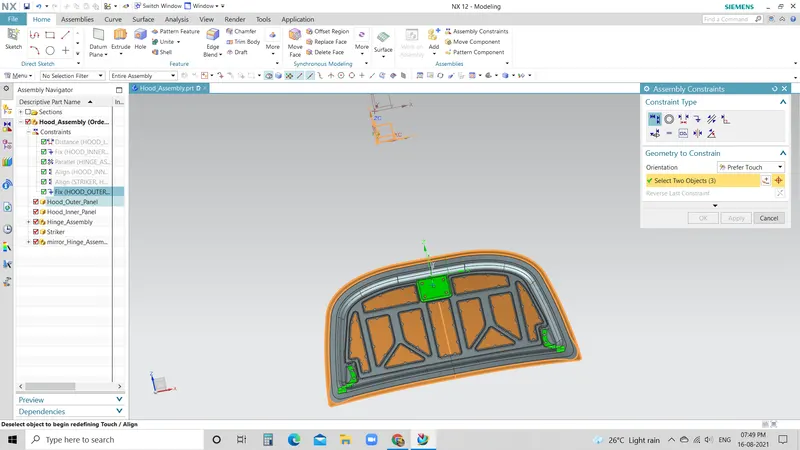
Adjust the Hinges at an embossed place and mirror to the other side with point and line; axis creation also fixes with reinforcement.
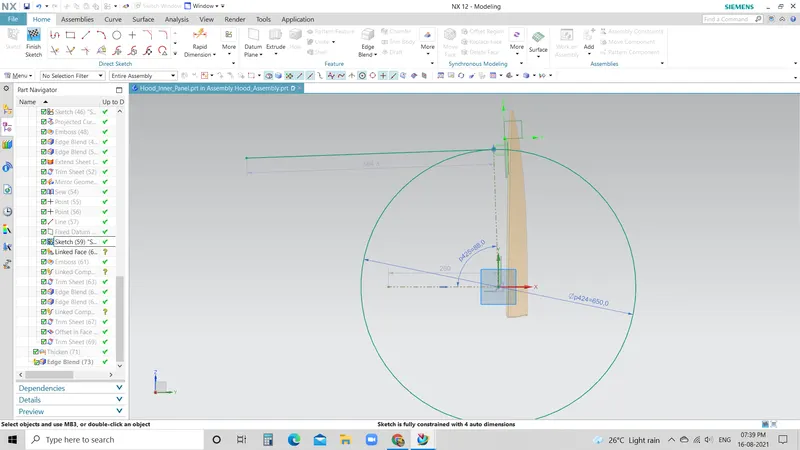
Create another Datum plane for sticker adjustment.
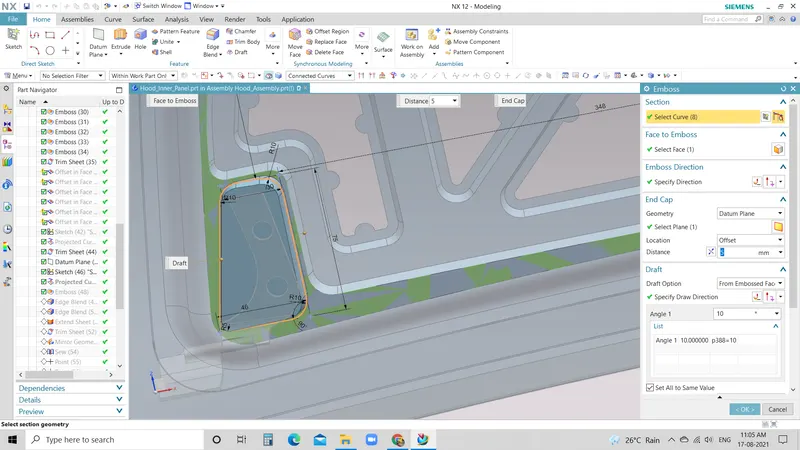
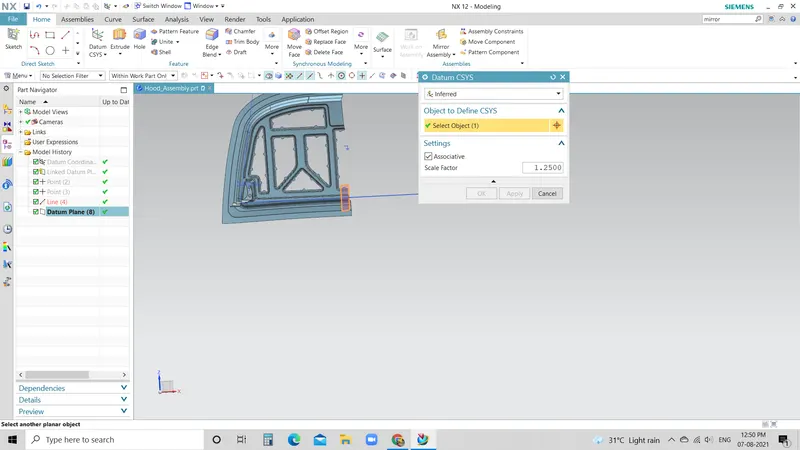
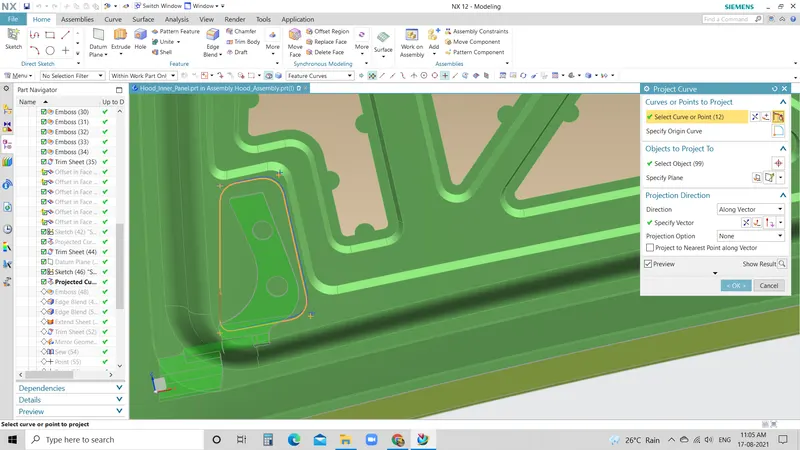
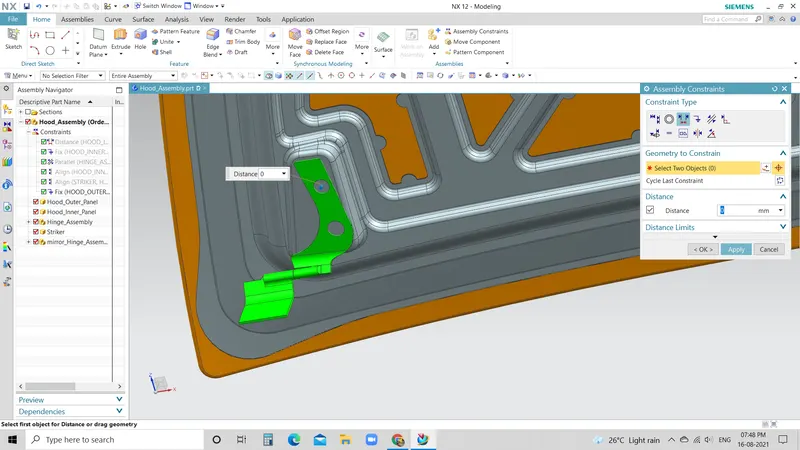
Create circles and lines for sticker angle.
Adjust the Stricker with some sketches at an embossed place, then fix to reinforcement.
Hemming for the outer panel to be created, we must have top and bottom surfaces.
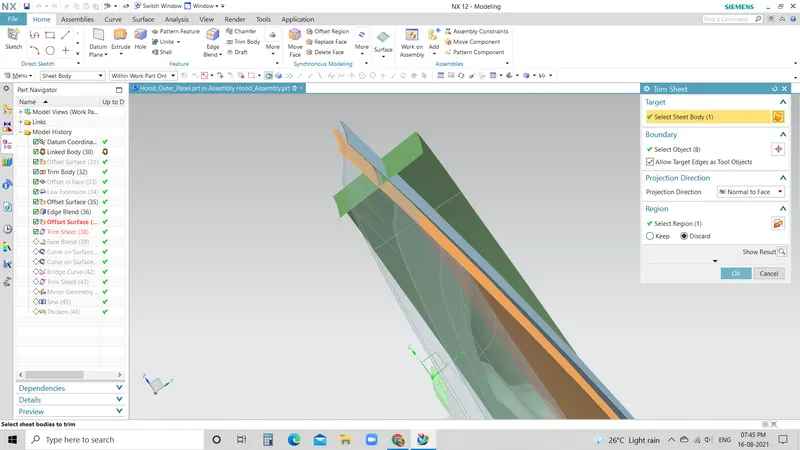
Offset the edge curve to 3.15mm and law extension on both sides.
Offset the law extension to 15mm inside.
Trim the sheet with three surfaces.
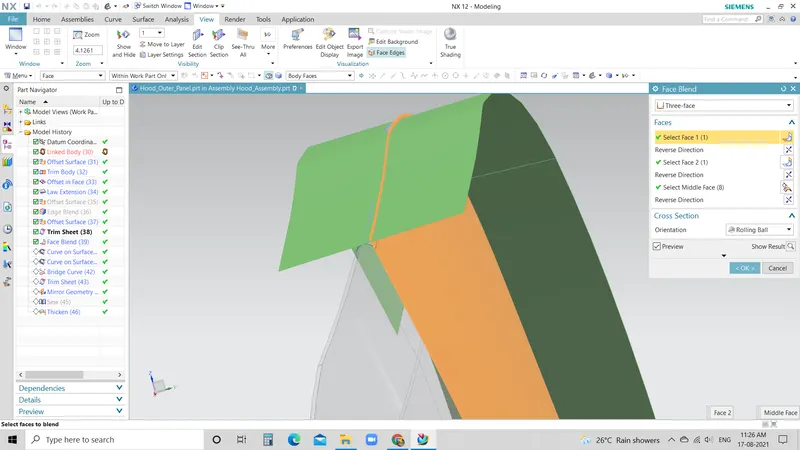
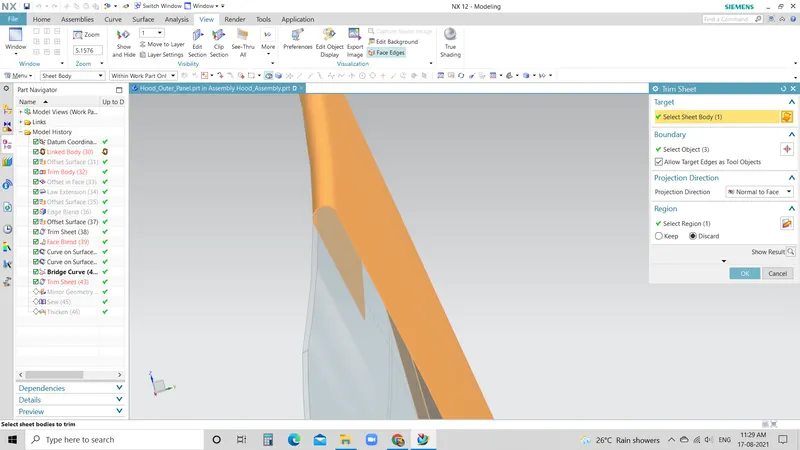
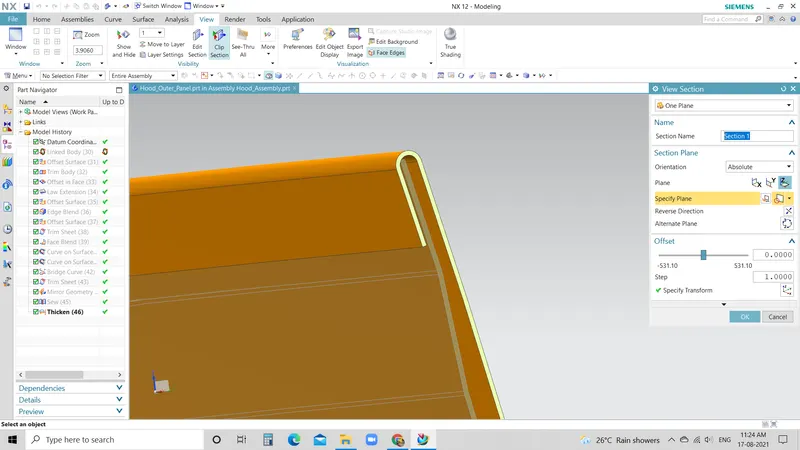
Create a relief at the edge using the spline and trim from the surface.
Finally, thicken the surface to 0.75mm of inner and outer panels.
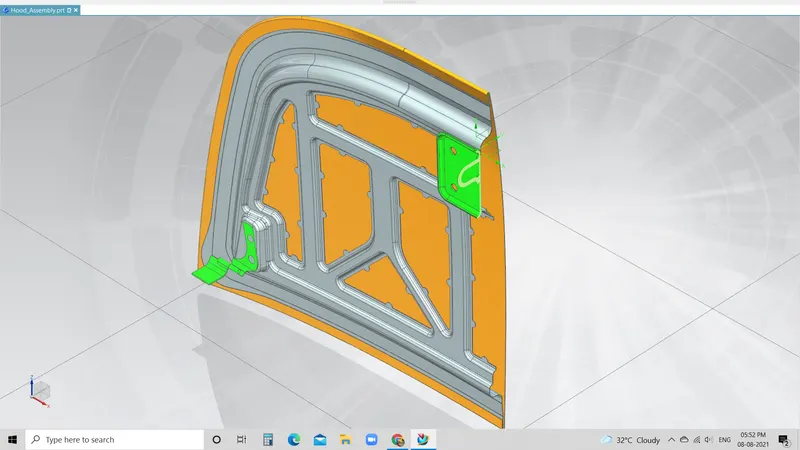
CONCLUSION: The car hood panel is performed using the given master section of hood skin, hinges and stickers with required aspects and rules.