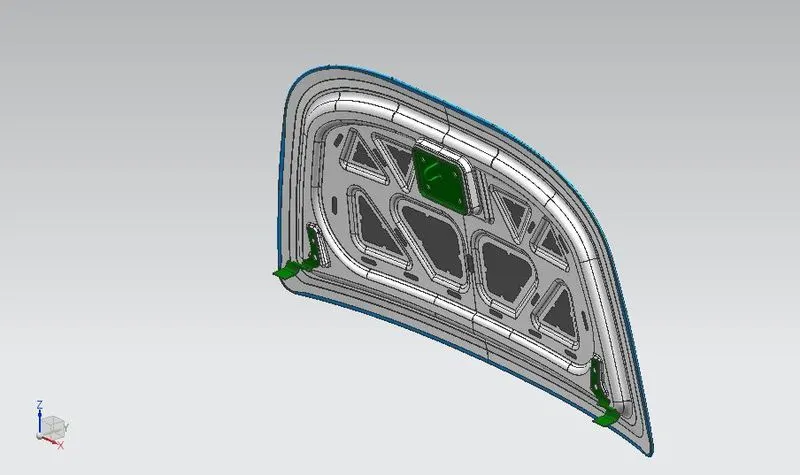
Hood design-Week 2
HOOD DESIGN AND ASSEMBLY
Aim :
The hood design and assembly by using of NC CAD software
Introduction :
The hood or bonnet system is an access panel to the engine compartment to enable maintenance of power train, drive belts, battery, fluid levels and lamp units. It is fundamentally a reinforced skin panel with many safety and quality requirements
The hood (or bonnet as it is known in many places) is the most vulnerable part of the vehicle front in terms of head injury in a pedestrian vehicle collision.Head injury is the main cause accounting for the fatality of the accident because of obvious reasons of the brain being sensitive, and that even a slight impact on the head area can lead to serious circumstances. The hood must absorb a significant amount of energy over a small area while precluding impact with a hard engine compartment component, but there is limited space between the hood and the critical components under the hood, such as engine cover or washer fluid bottle due to demanding sleek design of the modern vehicles
Pedestrain Safety :
Vehicle safety factors should simultaneously consider occupant and pedestrian safety, given that pedestrians are the third largest category of traffic fatalities. Most pedestrian deaths occur due to traumatic brain injury, resulting from the hard impact of the human head against the vehicle's stiff hood or windshield. Therefore, how to design a pedestrian-friendly vehicle and propose a new hood structure is a matter of urgency for minimising pedestrian head injuries. In this study, three kinds of sandwich hood structures are proposed for reducing pedestrian head injuries, including carbon fibre-reinforced polycarbonate, carbon fibre-reinforced foam and aluminium-reinforced polycarbonate. In assessing the friendliness of vehicle hoods, this study adopts the EEVC/WG17 regulations on headforms for hood tests. The finite element method is used to simulate the impact between the vehicle's hood and the headform impactor. The software used in simulation is LS-DYNA. The results predicted by the headform-hood tests show that the hood structure with aluminium-reinforced polycarbonate material provides enough absorption capability to protect pedestrians from the impacts of accidents. It is also stiff enough to keep pedestrians' heads away from the inner parts of the engine cavity. The analysis models and sandwich materials proposed herein contribute to efforts to design vehicle hood structures and pave the way for developing pedestrian protection technologies.
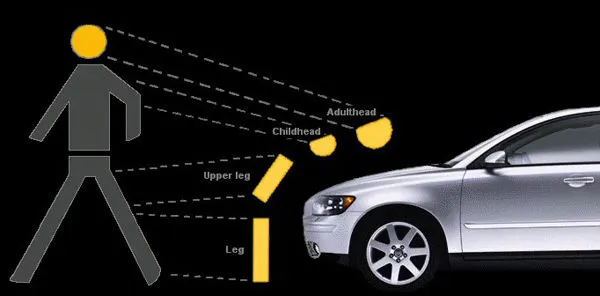
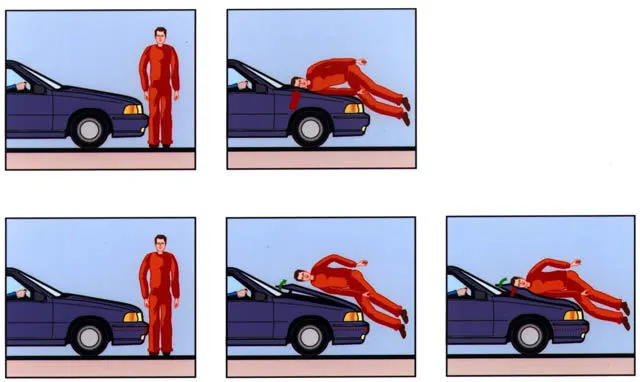
The Head Injury Criterion and the value is called HIC score, which is a threshold for head injury in vehicle collisions (Vesna Savic, 2014). Injury is unlikely for HIC scores below an established threshold, while the likelihood of injury is greatest for HIC scores above an established threshold. The threshold value is mandated by different regulatory requirements, and that set by the EuroNCAP is 1000. The common method of evaluating the vehicle for pedestrian protection is to project a headform at the vehicle (Vesna Savic, 2014). The headform is usually instrumented with accelerometers that provide acceleration versus time data acquired during headform impact with a vehicle hood. With this the HIC score can be computed by,
Pedestrian-Vehicle collisions befalls pedestrians a high fatality rate. Thus, various countermeasures to prevent accidents involving pedestrians and to lessen the severity of such accidents needs to be devised. This study focused on the injury reducing capability of three systems, the modified bumper energy absorber, the Active Hood Lift System (AHLS), and the pedestrian airbag technology. Also an introduction of the energy absorbing hood was studied as an extension of the AHLS.
Parts of Hood:
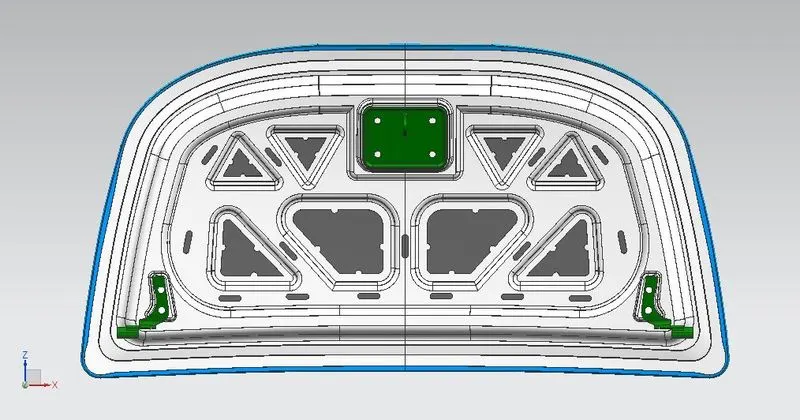
1.Inner panel
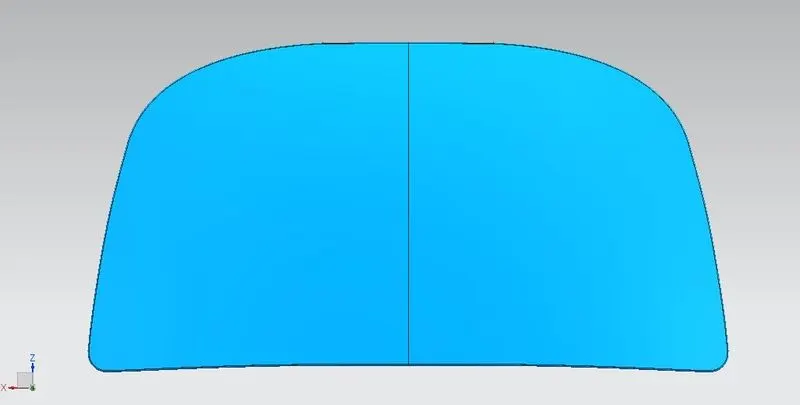
2.outer panel
3.Hinge
4.Latch and striker
5.Mastic material
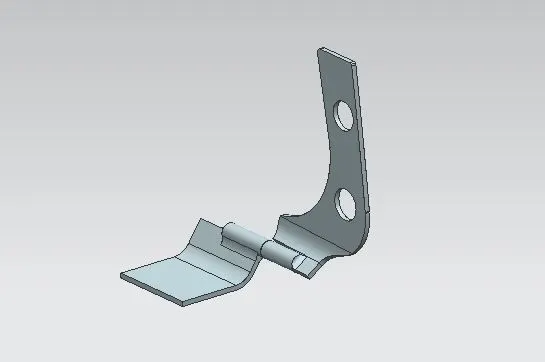
Hinge :
Hinges are used to operate the doors in many systems like doors of houses, automobile doors etc. It facilitates the opening and closing of any type rotating doors. Generally, door hinges are either welded or fixed with Nut- bolt system to the doors and to the body of the system. They get permanently attached to the door and cannot be removed easily whenever desired. In case of automobiles, there are situations like Car drowning in Water, Car catching fire etc., where the doors get locked up due to failure of Centre Lock System. In such incidents, the only way to escape is by breaking the glasses which is very difficult in such situation. As a result of which there is a huge loss of lives of the persons in the car. Hence there is a need to replace the conventional system with a new design which could serve for the better purpose in such situations.
Inner and outer panel :
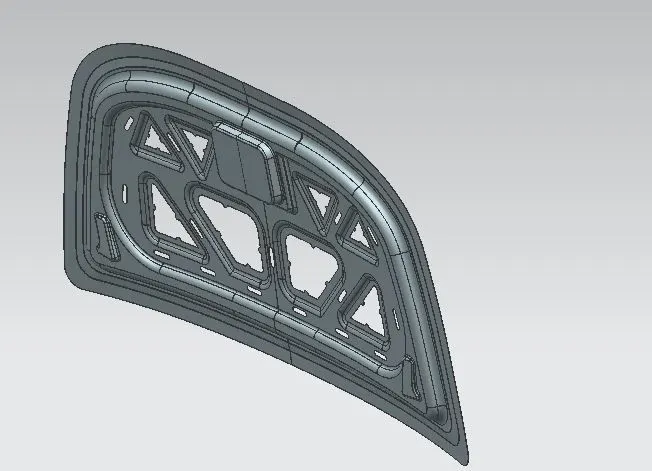
Rather than seeing it as a panel with holes, see it as stiffening members to make the outer skin structurally rigid when the two parts are bonded, which is how the inner panel is designed and punched from sheet metal.
It is fundamentally a reinforced skin panel with many safety and quality requirements. developed which is capable to simulate head impact phenomenon between head form impactors and composite bonnet. Then the behaviour of three identical bonnets made of steel, aluminium and composite have been investigated by the developed model. It is shown that the energy absorption of aluminium bonnet is smaller than steel and composite ones and for keeping the aluminium bonnet at the same level of stiffness, it is necessary to increase the thickness.
Latch and striker :
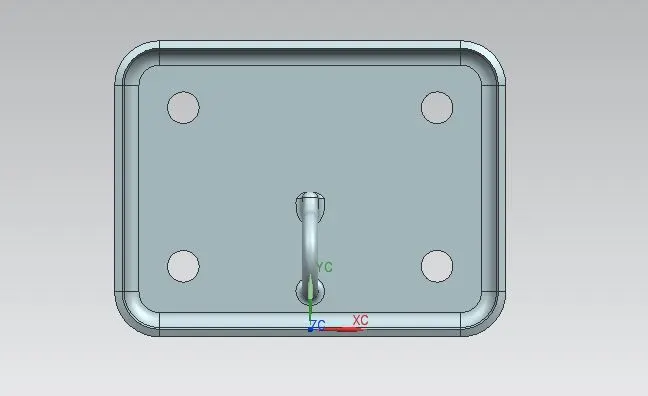
A single piece striker for a latch formed from stock, comprising a mounting plate with an integral striker bar. The striker bar extends out from the mounting plate via a neck portion. The engagement area of the striker bar has a greater diameter than the thickness of the mounting plate. The striker is formed using a progressive die. The striker bar is formed by compressing a portion of the stock to a greater thickness than the rest of the striker. Compressing a portion of the stock also provides a rounded engagement area across the length of the strike bar. Compression occurs over a series of dies that provide a progressively rounder shape. Locator channels within the dies help retain the striker bar during compression.
Emboss :
The Emboss feature raises or recesses a profile relative to the model face by a specified depth and direction. The embossed area can provide a surface for a decal or painting. A recessed embossed area can provide clearance for another component in an assembly
Emboss Command in NX :
Step 1: Create the surface you want to Emboss..........I've created a curved surface.
Step 2: Create a sketch of your desired shape on a plane, it can be any distance from the surface.
Step 3: Launch the Emboss command; Insert > Design Feature > Emboss
Step 4: The Emboss dialogue opens with relative options, follow the options down, Select the Curve, Select the Surface...
Step 5: you've just Embossed your surface.
Deep drawing :
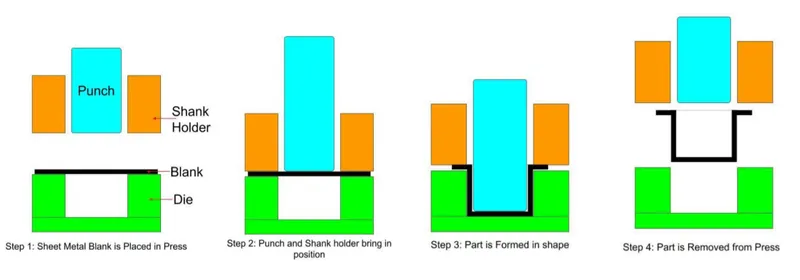
Deep drawing is a sheet metal forming process in which a sheet metal blank is radially drawn into a forming die by the mechanical action of a punch.[1] It is thus a shape transformation process with material retention. The process is considered "deep" drawing when the depth of the drawn part exceeds its diameter. This is achieved by redrawing the part through a series of dies. The flange region (sheet metal in the die shoulder area) experiences a radial drawing stress and a tangential compressive stress due to the material retention property. These compressive stresses (hoop stresses) result in flange wrinkles (wrinkles of the first order). Wrinkles can be prevented by using a blank holder, the function of which is to facilitate controlled material flow into the die radius.
Hemming :
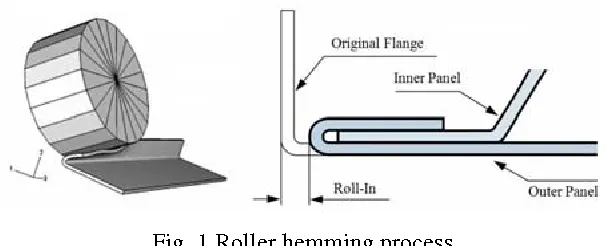
Hemming is a technology used in the automotive industry to join inner and outer closure panels together (hoods, doors, tailgates, etc.). It is the process of bending/folding the flange of the outer panel over the inner one. The accuracy of the operation significantly affects the appearance of the car’s outer surfaces and is therefore a critical factor in the final quality of a finished vehicle.

Robot (roller hemming) :
Robot hemming is utilized for the manufacture of Low to medium production volumes. It uses a standard intustrial robot integrated with a roller hemming head to provide a flexible method for forming closures. The flange of the outer panel is bent over the inner panel in progressive steps, by means of a roller-hemming head.
One advantage of this process is that it can use the robot-controlled hemming head to hem several different components within a single cell. Another is that minor changes or fluctuations in panel-hemming conditions can be quickly and cost-effectively accommodated. If equipped with a tool-changing system, the robot could serve a variety of additional functions within the same assembly cell, such as operating dispensing equipment for adhesives and sealants, or carrying out panel manipulations, using a gripper unit.
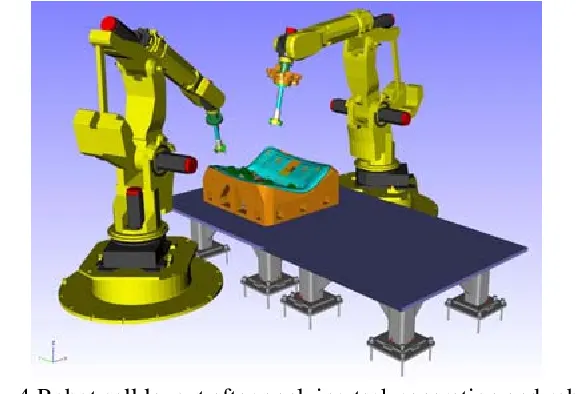
Robot hemming features and benefits :
The ideal solution for all volume production demands, via multiple robots and split operations
Overall quality better than press or tabletop with MBE hemming technologies implemented
Flexibility:
Robot can hem various panel shapes that press and tabletop can't achieve due to flange attack angles and physical accessibility
Can perform panel shape changes via quick program changes, while saving the original programs for future recall
Can perform other tasks by changing the hemming tool with another tool such as a dispensing nozzle
Low cost, simple and quiet in operation when used with standard industrial robot
Reduced mechanical effort for tryout
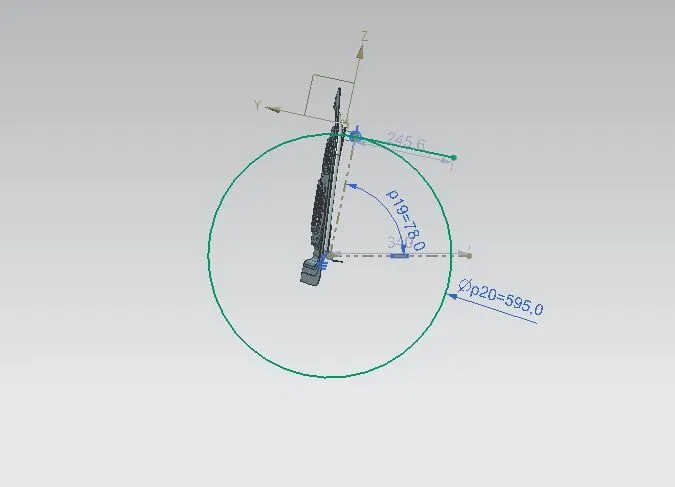
Latch Trajectory :
Create Hinge axis line From two hings center point
Draw Tangent line in circle
Draw perpendicular line for Hinge face and also this line center of latch
Give touch constrain tangent line start point of circle and perpendicular line start point of hinge
Give touch constrain tangent line of circle and perpendicular line of hinge
Mastic data :
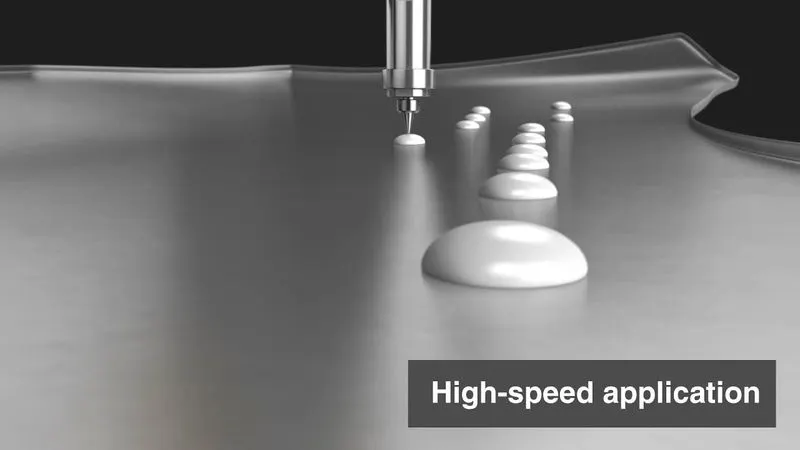
Many projects require some type of sealant to either join one surface to another, or protect the area to which it is applied. In some cases, it is best if the sealant stays flexible even after it dries. Mastic sealant typically is good for this type of project, as it can bend and flex while maintaining a durable bond for years.
Mastic sealant adheres to nearly any material. The most common types that it works particularly well with include wood, glass, aluminunm, concrete, marble, steel, and duct board. It often is used in construction projects, such as connecting windows to structures. It also can be used in projects at home, including sealing the area around bathtubs and filling in cracks in various types of masonry. Mastic sealant also often is applied to roofing, brick structures, and even cars and boats to keep them dust-free.
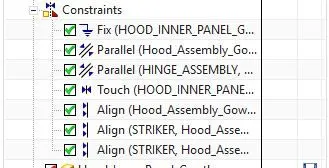
Hood assembly constrains :
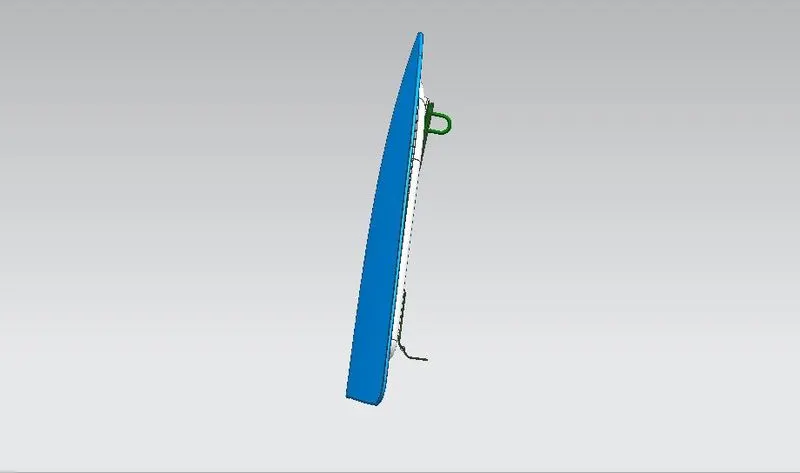
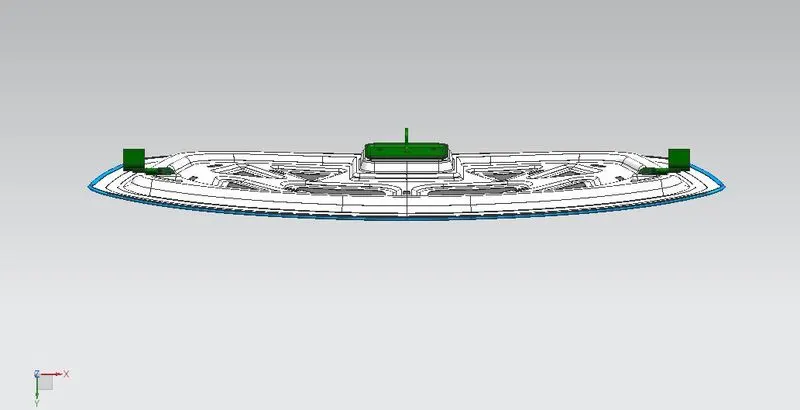
Differend Views of Hood