Hood design-Week 2
HOOD DESIGN
OBJECTIVE
To understand the design strategy and consideration that goes under designing and developing an automotive hood to achieve maximum safety for everyone in and around the vehicle.
In this report, the flow of information will be as follows
- Understanding of Hood or Bonnet
- Design Consideration
- Design
- Assembly
- Conclusion
1. Understanding of Hood or Bonnet
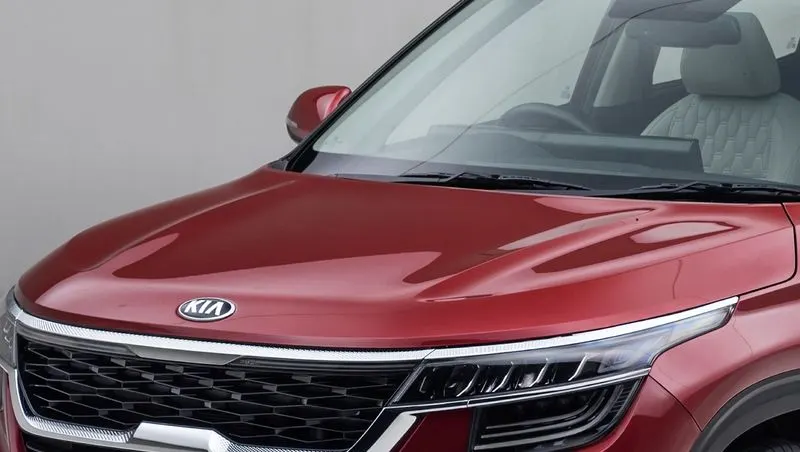
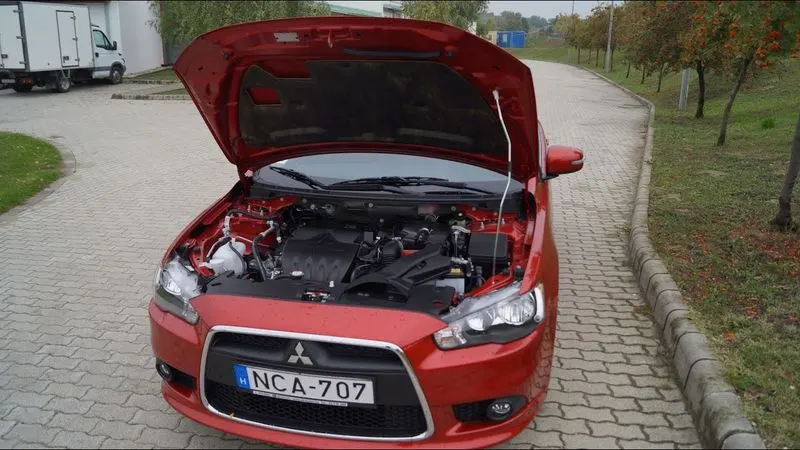
Hood, which also goes by the term bonnet, the hood or bonnet is hinged cover over the engine of motor vehicles that allows access to the engine compartment or trunk for maintenance and repair. Aside from being a hinged cover to engine providing easy access to maintenance and repair, it also acts as a critical safety component both for the vehicle occupant as well as the pedestrian.
Hood is one of the other major closure systems in a vehicle and is fundamentally a reinforced skin with many design quality and safety regulations Hood may come with several subcomponents, but the two most important ones are the outer and inner panels. The inner panel serves as a structure for the vehicle to dissipate and channel shock waves at the event of a crash while the outer panel serves more as an aesthetic for the automobile’s overall presentation and to channel airflow over the vehicle. Hence, both require critical precision as well as a dedicated strategy right from the design conceptualization to the production step. The initial design goes through iterative design modification based on structural analysis such as fatigue analysis and crash analysis to name a few before it sees the light of the day.
Once the design for the two subcomponents is finalized, the manufacturing process begins. The inner panel is generally manufactured by the deep drawing process. Once manufactured, the outer and inner components are united to form one unit by one or combination of several types of joining methods such as hemming, riveting, gluing, and spot welding to name a few. In this project, hemming was utilized to join these two components. Hemming is performed after the parts have been deep drawn, trimmed, and flanged. It involves folding of the outer overlap portion around the inner panel and pressed using hemming rollers to maintain a consistent surface joining.
2. Design consideration
Before we dive into the design, let us understand the rules and regulation standards for designing the hood.
- A perfect hood design means it should have a great impact distribution angled outside the car.
- In Japan and Europe, regulations have come into effect that places a limit on the severity of pedestrian head injury when struck by a motor vehicle. This is leading to more advanced hood designs, as evidenced by multicore hood inner panel designs.
- European Enhanced Vehicle-Safety Committee (EEVC), European New Car Assessment Program (euro NCAP)
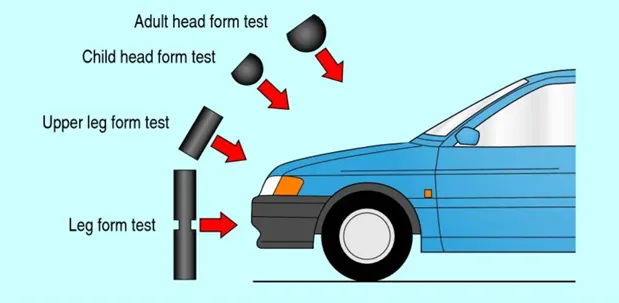
As discussed in the earlier section, the hood plays a critical safety function in an automobile, not only for the occupants of the vehicle but also for the pedestrian. Hence, a lot goes in while designing the hood and must be compliant with the standards and considerations. In this project, the European New Car Assessment Programme, popularly known as EuroNCAP, was followed to understand the consideration and standards one must follow while designing a hood. EuroNCAP plays an instrumental role in raising awareness on safe and effective design for the pedestrian. It programs and develops test series and rating systems for accessing design safety for pedestrian during impact with a vehicle. The tests are generally executed for vehicle hit speed at around 40 km/h and covers the pedestrian body interaction with the vehicle upon collision.
Pedestrian’s safety:
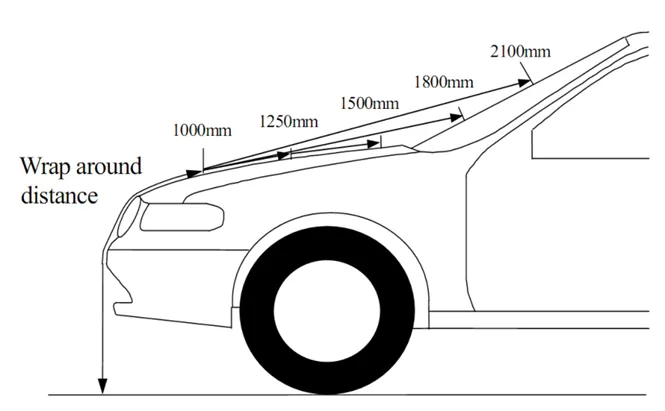
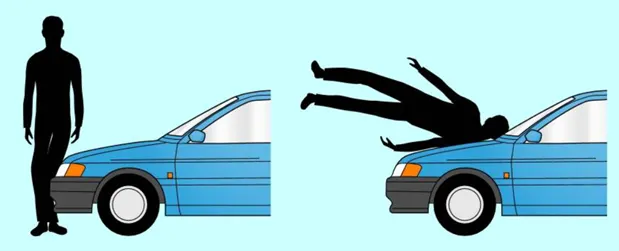
Pedestrian safety is one of the important criteria which must be taken into consideration during designing a hood. Based on the wrap-around distance and pedestrian head impact zone, the hood is designed so that during a collision impact on the person must be reduced. Around the impact zone, the hood is made softer by removing material. There are two main zones in the hood that are considered while designing it. The Child head impact zone (1000mm to 1500mm) and the Adult head impact zone (1500mm to 2100mm) as shown above. The wrap around distance is the distance from the ground level to the end of the hood. Pedestrian safety is to avoid severe injuries to the head, the high impact area for adults and children is subjected to less thickness. In addition, no reinforcement should be provided in that area as, during the head collision, the hood will absorb the head impact energy leading to collapse of the hood and thus protecting the severe head injury. To protect the occupants inside the car during the front collision, the design of the hood should be in such a way that the force should travel in the upward direction through the embossed and directed towards the body of the car during the collision. Mastic sealants and embossed help to meet pedestrian safety standards. The adult and child impact zones are taken into consideration, and the deformation zone considered with respect to the engine compartment and outer panel thereby determining the interference. This generated deformation is considered critical and needs to be relocated or tuned to fill. Relocating or tuning leads to reduce the force exerted on pedestrians especially in heat during collision generally, inner and outer panels are made of 0.65 to 0.75mm thick and reinforcements are made of 1.5mm thick. Adding more reinforcement improves the strength but also increases the cost and weight of the car.
Opening angle: Head clearance zone is the clearance such that when the hood is in the fully open condition it does not hurt the head of the person that is standing next to the hood. This is controlled by the opening angle of the hood. The opening angle of the hood is decided for the region the car is manufactured. Some regions may have people with an average height of 5.5 ft. and another region may have people with an average height of 6 ft. so deciding the right opening angle for the hood is an important criterion.
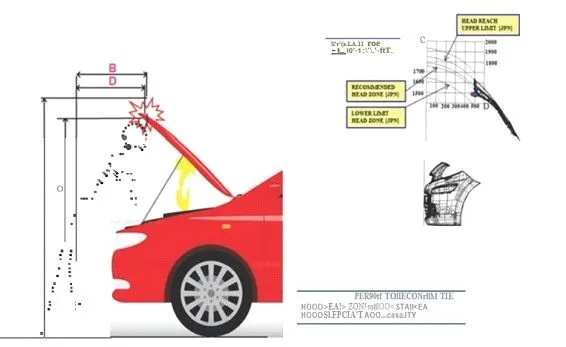
As we could see the impact region, based on these impact regions the thickness of the hood at those regions are reduced to allow softer landing and lower impact. Upon impact of the pedestrian, the hood in those regions should absorb and dissipate the energy allowing deformation and hence collapsing, which in turn would result in a lower impact on the pedestrian.
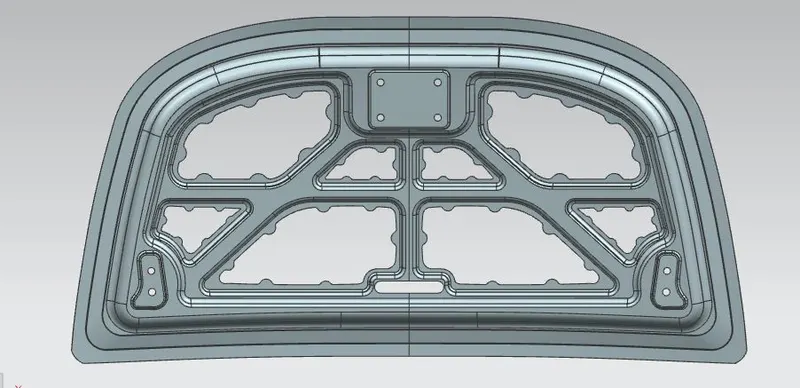
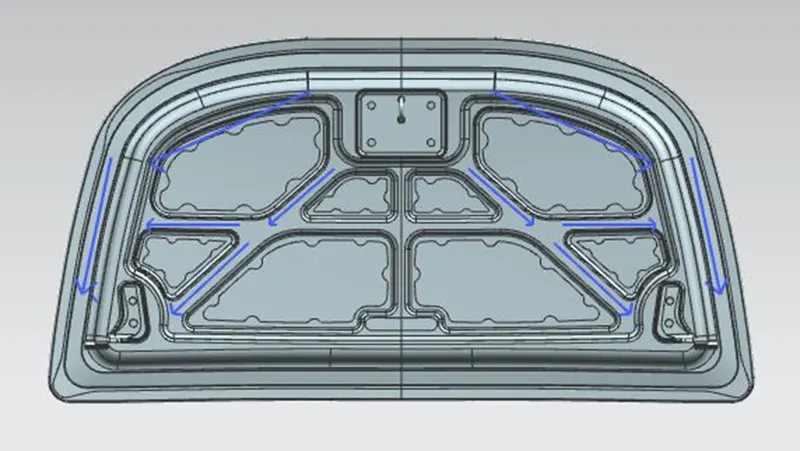
At the same time, the impact on the vehicle should be channelled outside the vehicle to safeguard the occupants from severe injuries. Based on these considerations, the inner panel should be embossed with strategized channels and empty cut-outs to allow for maximum absorption of such impacts.
With this understanding, the below-provided design was executed using Siemens NX 11.
3. Design
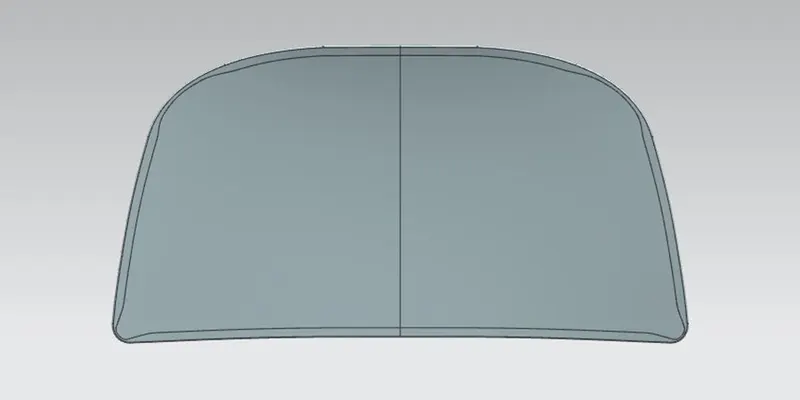
The designing of the inner and outer hood panel was performed with the below-presented specification
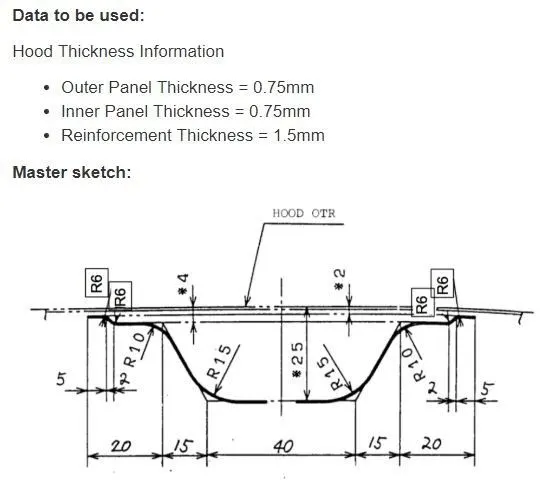
Upon designing the initial structure based on the master section, embossing was performed to strengthen the structure as well as to integrate channels to direct shock flow and dissipate maximum energy away from the cabin. With successful designing of these channels using the process of embossing, latch and hinge placements are designed for attachment of this structure to the vehicle. Once the structure for the inner panel is prepared, reinforcement is provided to compensate the strength drop which occurred due to the inclusion of latch and hinge placement. At this stage, the NVH team also contributes to implementing major design changes and the inclusion of components to reduce vehicle vibration and noise control.
Inner Panel
Outer Panel
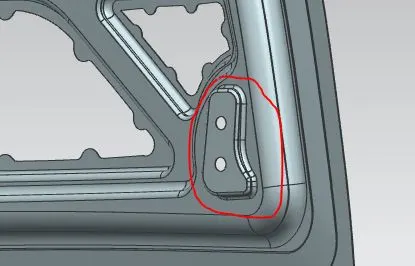
Embossing in sheet metals
- The metal sheet embossing operation is commonly accomplished with a combination of heat and pressure on the sheet metal, depending on what type of embossing is required. Theoretically, with any of these procedures, the metal thickness is changed in its composition.
- A metal sheet is drawn through the male and female roller dies, producing a pattern or design on the metal sheet. Depending on the roller dies used, different patterns can be produced on the metal sheet. The pressure and a combination of heat actually "irons" while raising the level of the image higher than the substrate to make it smooth. The term "impressing" refers to an image lowered into the surface of a material, in distinction to an image raised out of the surface of a material.
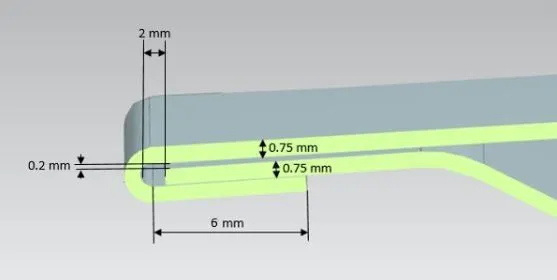
Hemming and reliefs in sheet metals
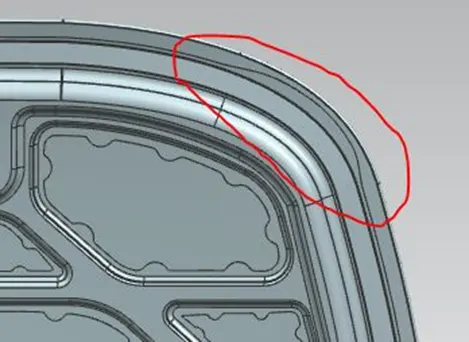
- Hemming is a sheet metal forming process in which sheets are joined by bending it usually to 180°. Automotive body panels and automotive parts such as deck-lids, trunk-lids, doors, hoods, and tailgates are formed by hemming processes.
- Conventional die hemming is suitable for mass production. In die hemming, the flange is folded over the entire length with a hemming tool. Normally the actual hemming is a result of a forming operation in which the flange is formed with a hemming tool after the drawing and trimming operations have been completed
- Roll hemming is carried out incrementally with a hemming roller. An industrial robot guides the hemming roller and forms the flange. Roll hemming operation can also be divided into several pre-hemming and final hemming process steps.
- If weld or bolts were used to join the hood panels then the design and the aerodynamic features would get damaged so hemming is more significant to use.
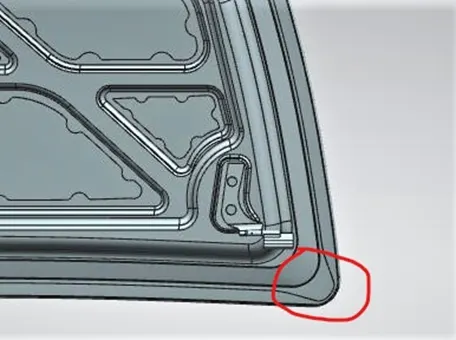
Mastic Sealant Regions
Apart from hemming, the centre region of the inner panel structure is kept in contact with the outer panel using mastic sealants. Mastic sealants are rubberized components placed between the outer and inner panel to provide annexed contact. These sealants help maintain the outer panel aesthetically pleasing as well due to the absence of welds, nuts or bolts in the process of consolidation. Mastic sealants generally have an influence area of about 80mm.
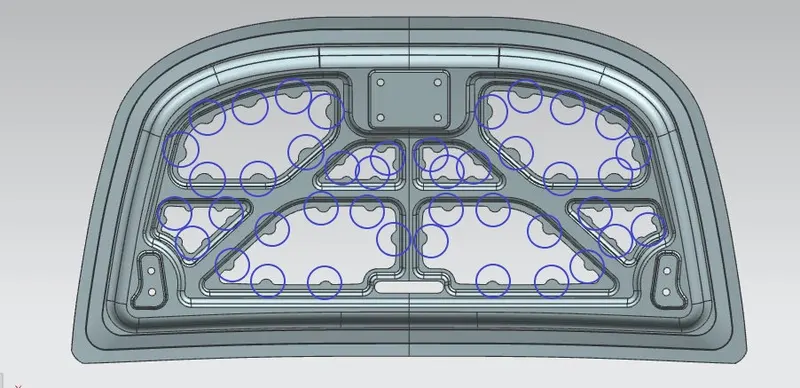
- They can provide thermal and acoustical insulation, and may serve as fire barriers. They may have electrical properties, as well. Sealants can also be used for simple smoothing or filling. They are often called upon to perform several of these functions at once.
- A sealant has three basic functions: It fills a gap between two or more substrates; it forms a barrier through the physical properties of the sealant itself and by adhesion to the substrate; and, it maintains sealing properties for the expected lifetime, service conditions, and environments. The sealant performs these functions by way of correct formulation to achieve specific application and performance properties.
Hood Components
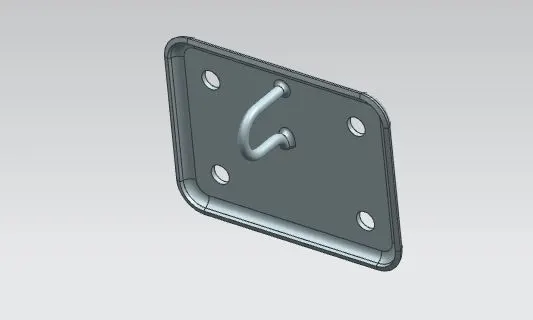
Latch & Striker: A hood latch is a very simple component. It's basically the fastener that keeps your hood closed shut. This latch ensures that your hood is securely connected to your vehicle and that it doesn't pop open unexpectedly. When tension is applied to the cable from the hood release handle, it pivots the secondary latch, which pulls away from a retaining seat located under the hood. By design, the secondary latch then releases the hood a few inches before a safety latch takes over.
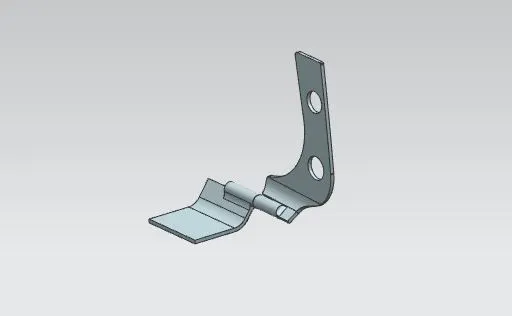
Hinge: Hinge is a component that fixes the hood to the fenders of the car. The latch must be fixed perpendicular to the hinge axis so that the hood opens or closes properly.
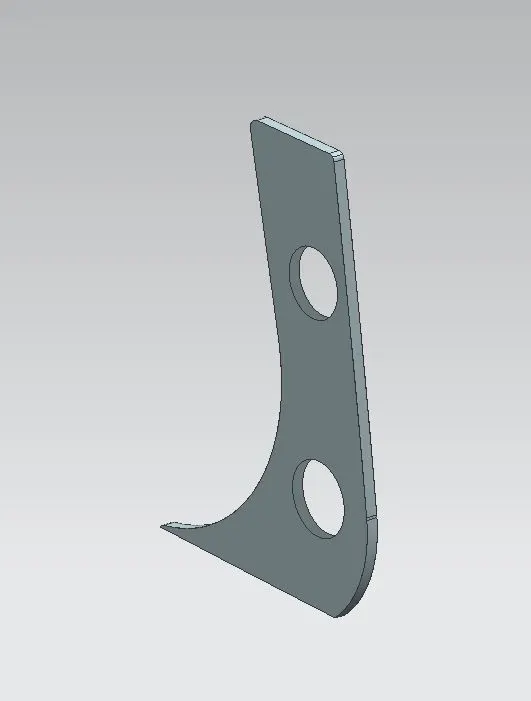
Reinforcement:
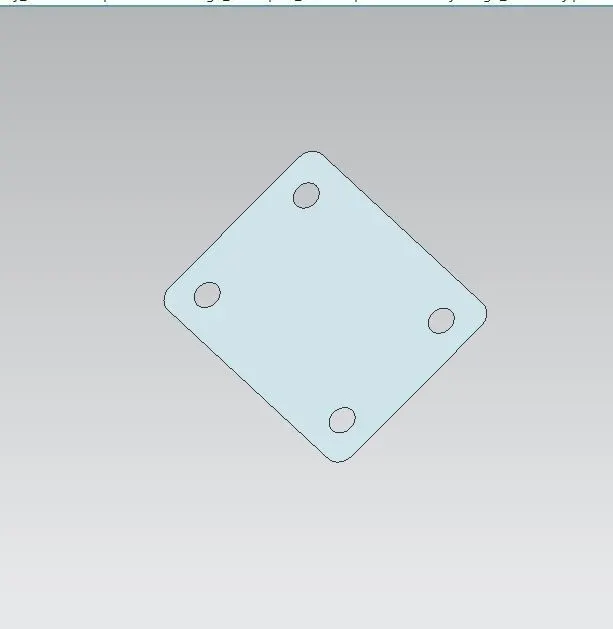
It provides latch and hinge region it provides and improves strength locally. the thickness of the reinforcement is more than the inner panel thickness according to design requirement hear it is given 1.5mm.
Latch trajectory:
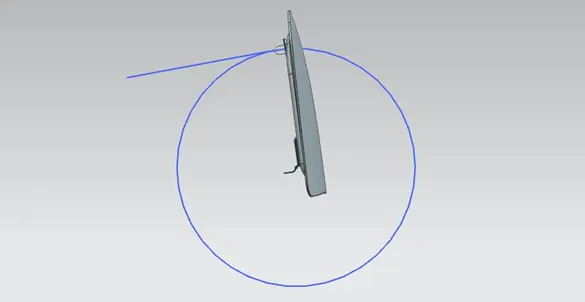
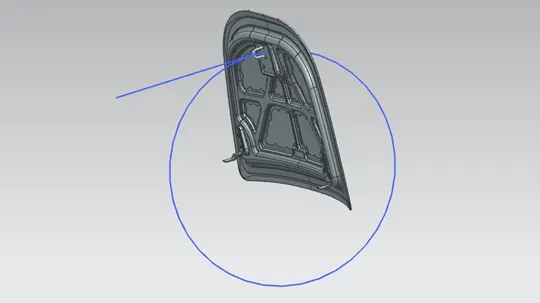
Hood Opening and Closing Trajectory: While opening or closing the hood, the latch must be perfectly aligned to the fixing or striker point. For that, the latches trajectory must be perpendicular to the hinge axis.
4. Assembly of Hood part
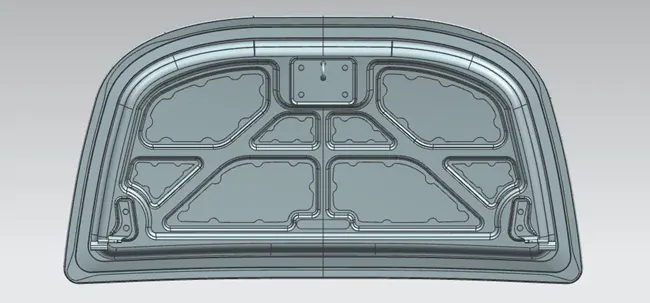
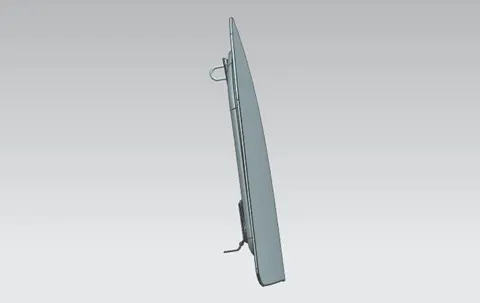
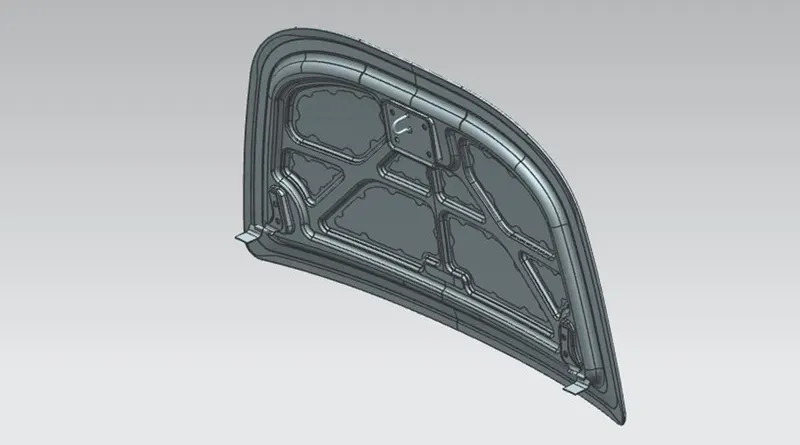
Shock Flow
Impact Force Distribution in Hood design: A hood design must be made in such a way that when a force is impacted in the front of the hood, all the force must be directed outwards from the vehicle. And the distribution of the force must be controlled along with the hood.
5. Conclusion:
With the completion of the design and analysing it for successful manufacturability, we can conclude that this can be utilized for a vehicle. Also, the design was executed under the EuroNCAP safety standards and hence satisfies hood safety both for occupants and the pedestrians.