Fender Design Challenge
Front Fender Design
OBJECTIVE: To design the car front fender with the help of using skin data shared by the styling team and make it ready for manufacturing.
Introduction:
Fender is a part of an automobile, cycle or any other vehicle that frames a wheel well. Its primary purpose is to prevent sand, mud, rocks, liquids, and other road spray from being thrown into the air by the rotating tire.
When vehicle is moving, tires pick up stones and others and hurl them in all directions. Fenders are basically present to prevent any injuries to pedestrians and contain the motion of these particles.
In additional to fender other components like inner mount, side, and cowl mounts which are fastened with the help of well nuts. They provide sufficient protection to the engine room components and suspension etc.,
Types of fender
The type of fender is based upon the area covered i.e., full fender type and half fender type.
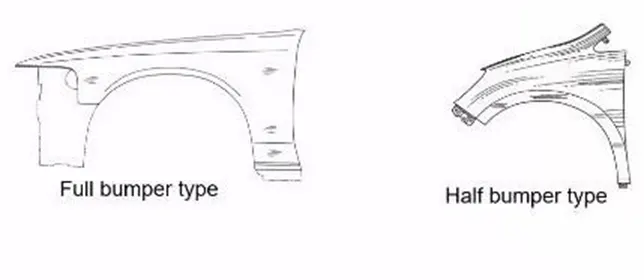
Types of fender
- Full fender type:
Full fender type is traditional type of fender where more material consumption is observed. This type is used in old design of automobiles where it increases the overall weight and thus reduces performance. The maintenance also relatively more due to more surface.

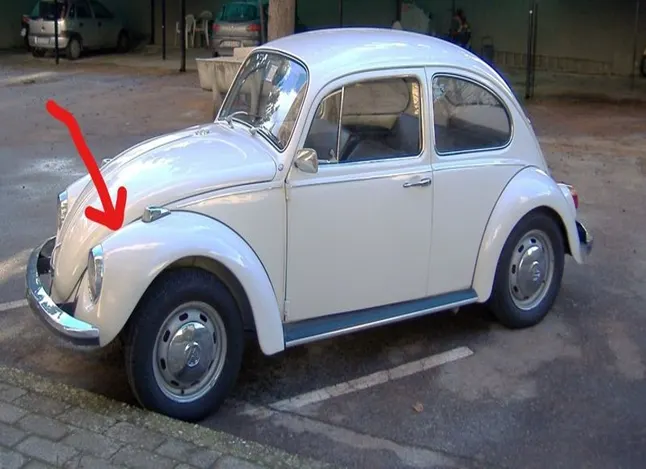
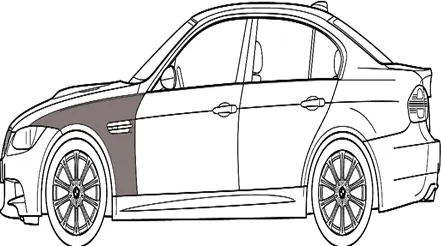
2. Half fender type:
Half fender type is modern design where less material consumption is observed, so productivity increases by reducing size of blank and thus providing more performance. The maintenance also relatively low compared to full bumper type.

Design consideration:
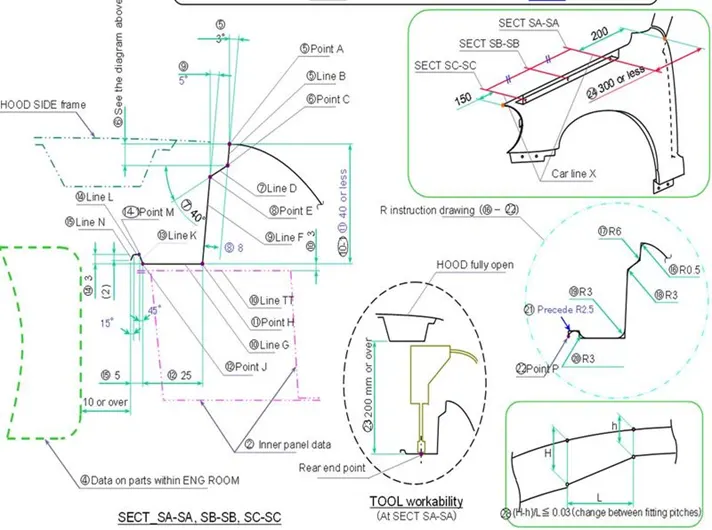
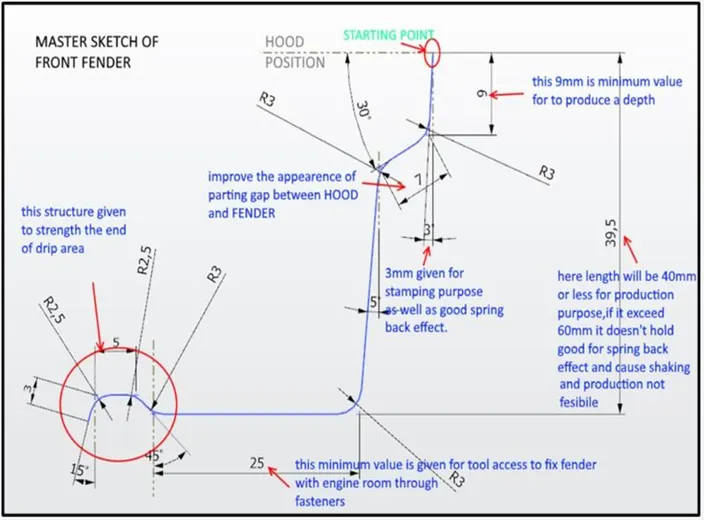
Fig: Master section to drip area
- As per the master-section provided the location of drip should be at 150mm from the bumper side and the gap of 200mm from the A-pillar.
- Check for the wheel arch radius and design of the fender outer by following the different regulations.
- Allow the draft, which should be manufactured without an error.
- The clearance distance should be maintained between the hood and the base drip area of about 200mm when the hood is at an open-angle.
- Clearance should be provided for the nutting tool to assemble the fender with the body of the car.
Mounting points on fender:
- Drip Area
- Bumper Mounting Region
- Sill mounting Region
- A-Pillar Mounting Region
- Splash/Baffle Mounting Area
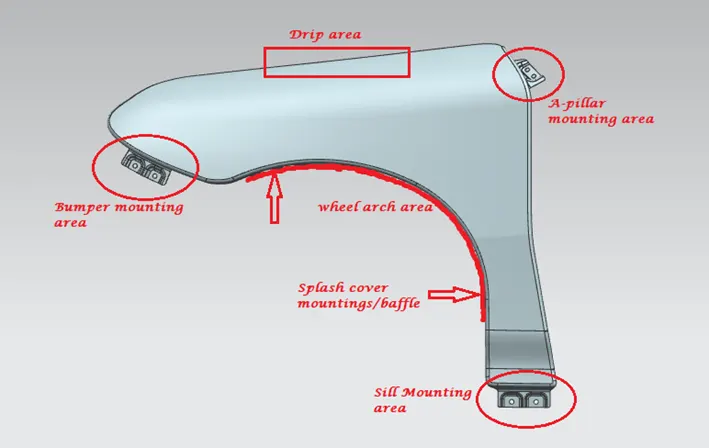
EXPLANATION:
- Drip Area: It is the critical mounting area which is attached to the car body and near the engine compartment. This is designed according to the master section provided, an optimal opening angle is maintained to make it look well assembled from the outside. Minimum clearance from headlamp and cowl part is maintained. The vertical distance of the drip mounting is maintained at less than 40mm to avoid the spring-back effect. The edge of the mounting should at least 10mm away from any nearby component in the engine. Bead is provided at the outer edge to increase the rigidity of part.
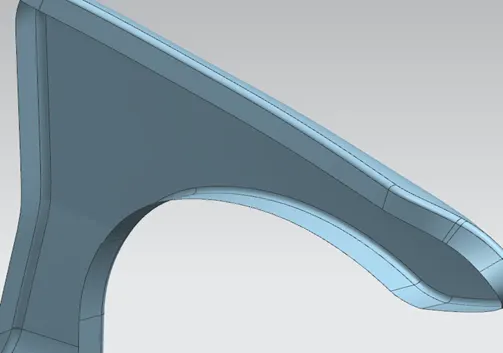
Before
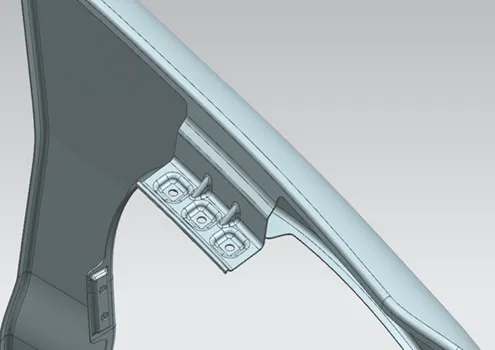
After
- Bumper Area: This mounting will fix with the car bumper. This is designed by consulting the bumper design team to share the model of assembly techniques.
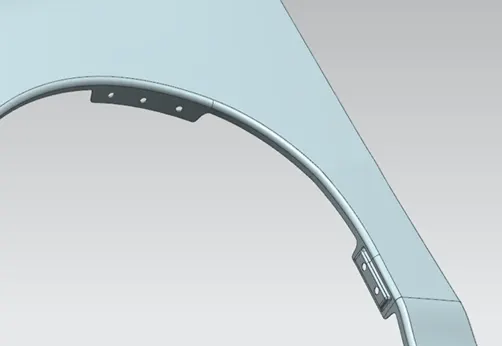
- Sill Area: Sill area mounting is also an important mounting part. This mounting point is basically on the bottom of the fender. The mounting part should be created such that the fender is firmly attached to the sill.
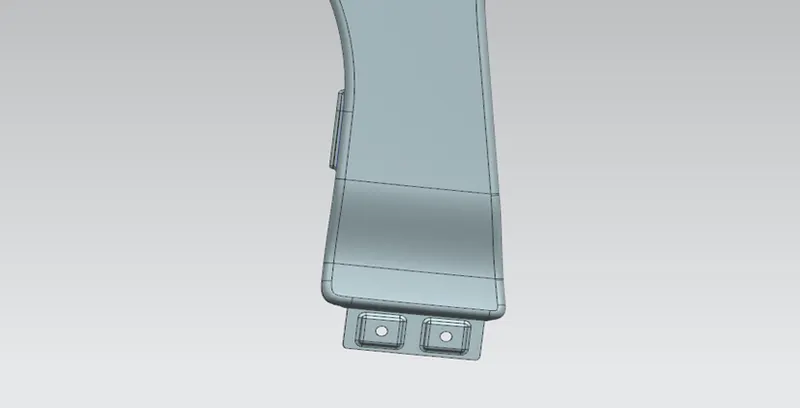
- Baffle mounting Area: In this section, holes are created which allow the baffle to be fitted with good tolerances. For improvement of NVH in car, usually a baffle is mounted on the fender of the car. It is mounted on the wheel arch area.
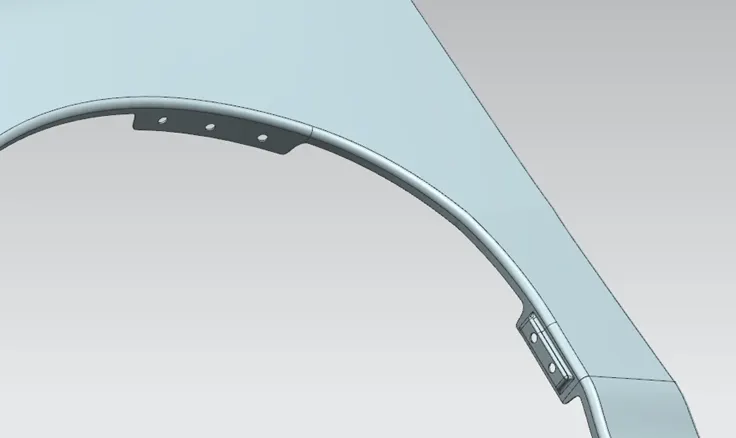
- A-Pillar Mounting Area: The A-pillar mounting area depends upon the A-pillar of the car. The mounting can also be provided with ribs to strengthen the part. This mounting is critical in design as it has to be mounted on A-pillar properly.
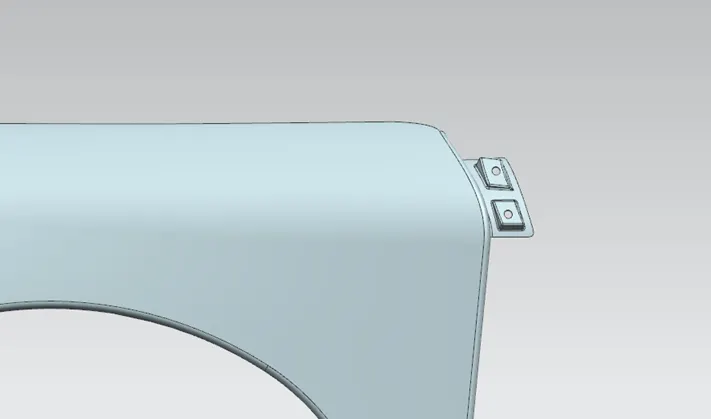
Here are the some images of final output of Front Fender.
|
Fender Skin data |
Modified Fender |
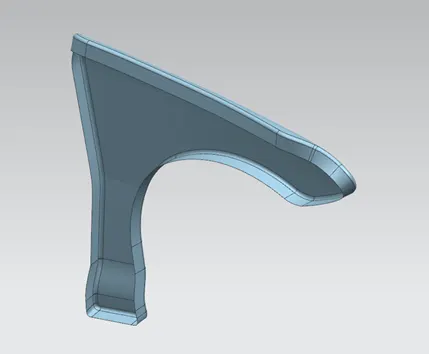
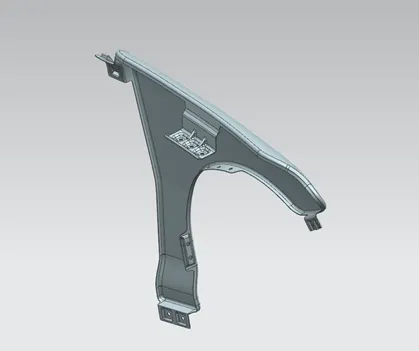
|
Fender Skin data |
Modified Fender |
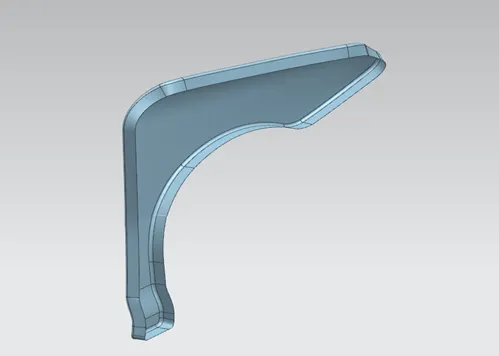
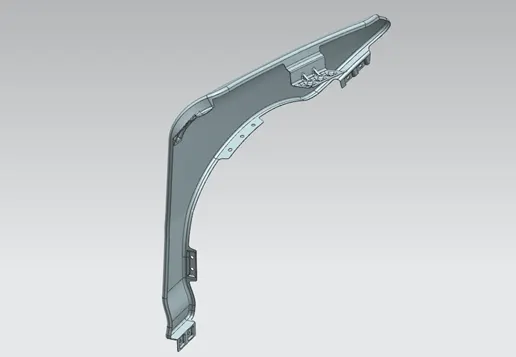
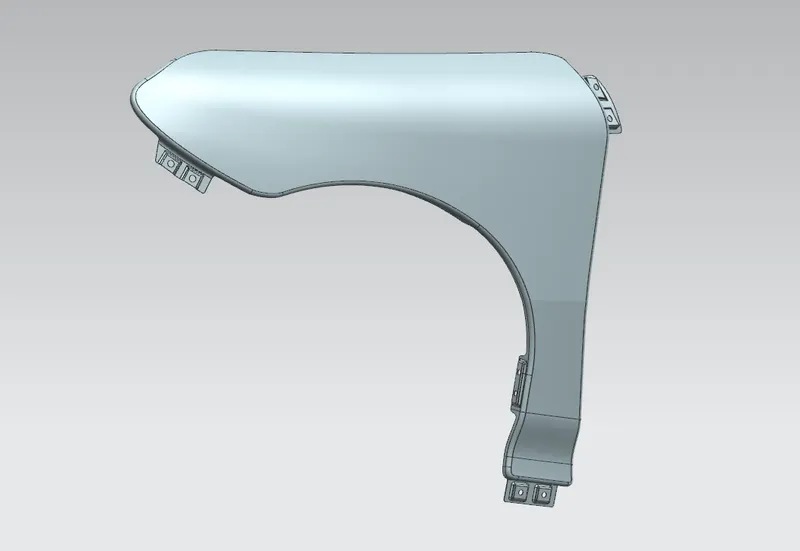
CONCLUSION:
The front fender of the car was designed with the A-Pillar, Baffle, Drip, Bumper and Sill Mountings following the master section and the engineering standards.