Hood design-Week 2
HOOD PANEL DESIGN
WHAT IS HOOD?
HOOD also called as Bonnet,it is simply an cover for engine compartment.It is also considered as another type of Door in a vehicle as it consists of outer panel & inner panel.The inner panel provides strength while the outer panel functions as metal cover.
Picture of hood is shown below:-
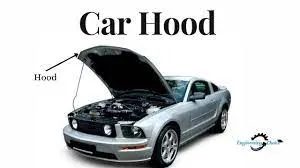
source :web
the inner & outer panel are kept joined together by sealant used between them called mastic seal alongside HEM provided on outer panel.
WHAT IS MASTIC?
- Mastic step in as the sealant,they fill the gaps,creates a continuous seal that helps maintain the vehicles structural integrity.
- mastics helps in noise dampening.
- It can be used to create smooth,seamless finishes on cars exterior,it also help protect against corrosion and wear.
WHAT IS EMBOSSING?
In an embossing operation,shallow surface detail is formed by displacement of the metal between two opposing mated tool surfaces.In one surface we have the depressed detail,on the other the relief detail.The metal is stretched into the detail rather than being compressed.
Embossing is used to follow the outside profile of the part.
Embossing often are ribs or crosses stamped in the metal to help make a section of blank stronger by stiffening.
DRAWING PROCESS :
It is a process of changing a flat,precut metal blank into a hollow vessel without excessive wrinkling,thinning or fracturing.the various forms produced may be cylindrical or box shaped with straight or tapered sides or a combination of straight ,tapered,or curved sides.the size of the part may vary from 1/4" diameter or smaller,to aircraft or automotive parts large enough to require the use of mechanical handling equipment.
HEMMING PROCESS:-
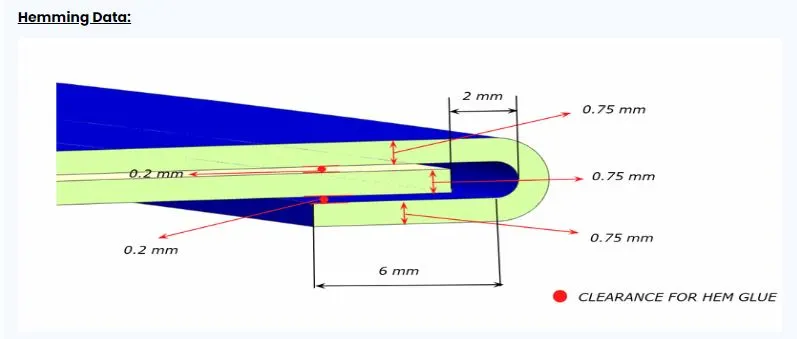
It is simply process in which a metallic sheet is covered by outer metallic sheet by forming in inward folded edge,extreme of which is beneath the inner sheet, with an gap left per side 0.2 mm for sealant.
- Flat hems should be avoided because they risk fracturing the material at the bend.
- for open hems the inside dia. should atleast equal to material thickness & the return length should be atleast 4 times the material thickness.
- tear drop must maintain an inside dia. of atleast equal to material thickness,an opening of atleast 1/4 of material thickness,and the return length should also be atleast 4 times the material thickness.
PARAMETERS THAT ARE TAKEN INTO CONSIDERATION FOR DESIGNING HOOD PANEL:-
- WAD(wrap around distance) , HIC(head impact criterion)FROM EURO NCAP & BHARAT NCAP REGULATIONS.
- HEAD ZONE:- opening angle.
- HEM DESIGN & RELIEF.
- PASSIVE HOOD DESIGN.
INPUT I RECEIVED:-
- HOOD OaUTER PANEL.
- HINGE ASSEMBLY FILE.
- STRIKER OF LATCH-STRIKER MECHANISM.
I followed the passive type of hood design where geometry & material choices are the 2 main factors.
I emphasize to make the hood inner panel as skeleton type design.
Material options for hood inner & outer panel are: aluminum ,steel,CFRP.
MASTERSECTION:-
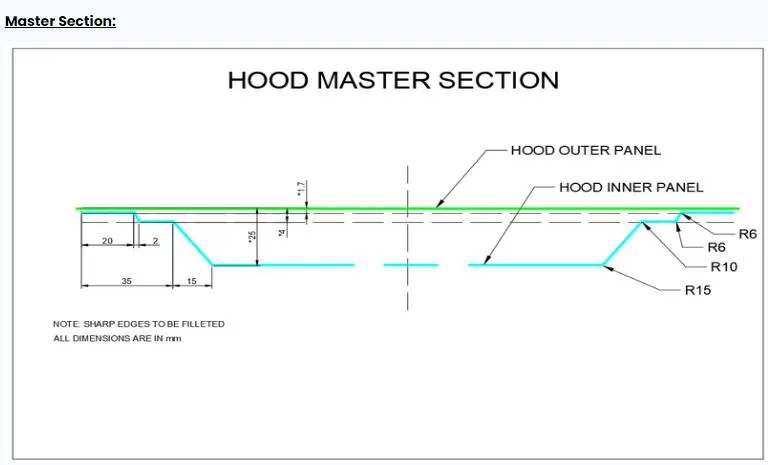
From the mastersection data hood inner panel is structured.
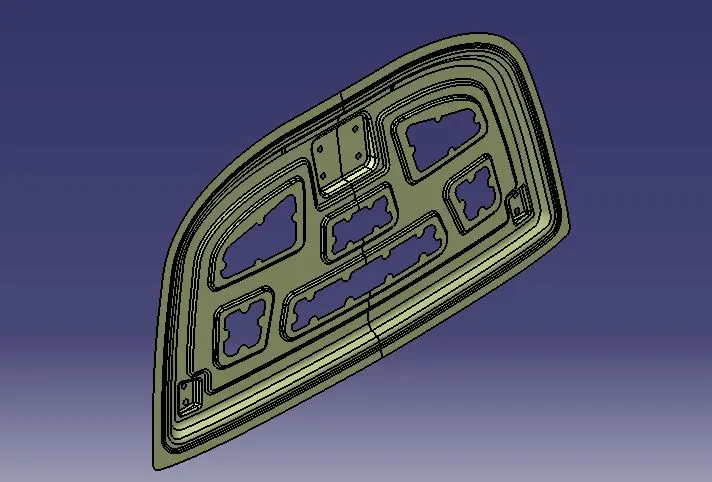
Later on the embosses & its positions and cutouts in it are created considering HIC for adult(1700mm to 2100 mm) and for child dummy(1000mm to 1700 mm),altogether considering passive design of hood with skeleton type.
HOOD INNER PANEL THICKNESS = 0.75MM
HOOD OUTER PANEL THICKNESS = 0.75 MM
MIN. HEM RELIEF is given based on following input images:-
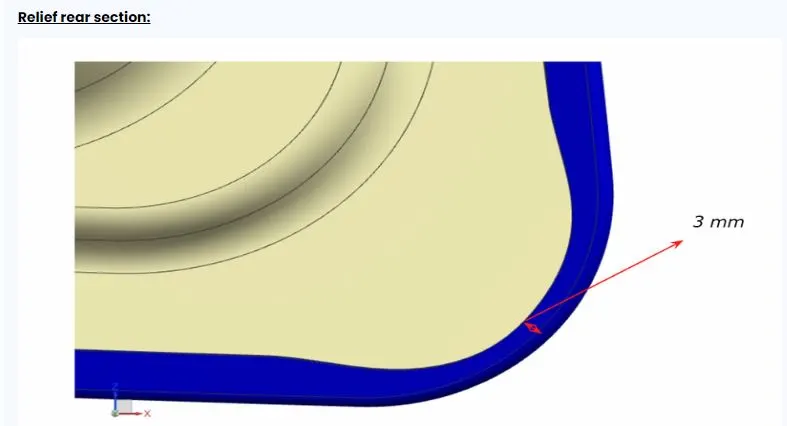
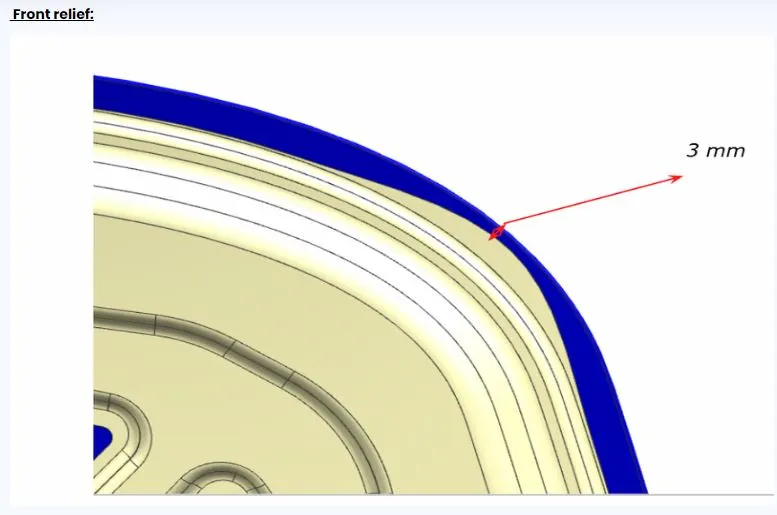
The final output images are as follows :
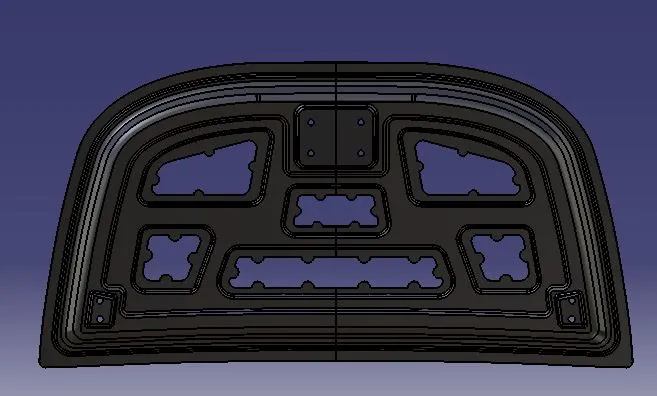
HOOD INNER PANEL
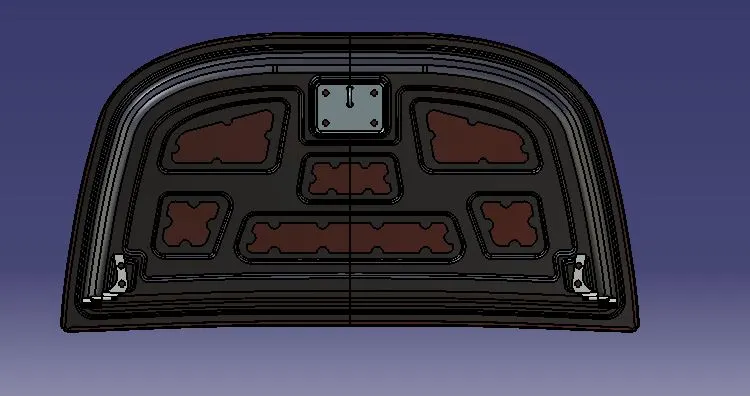
HOOD PANEL ASSEMBLY.
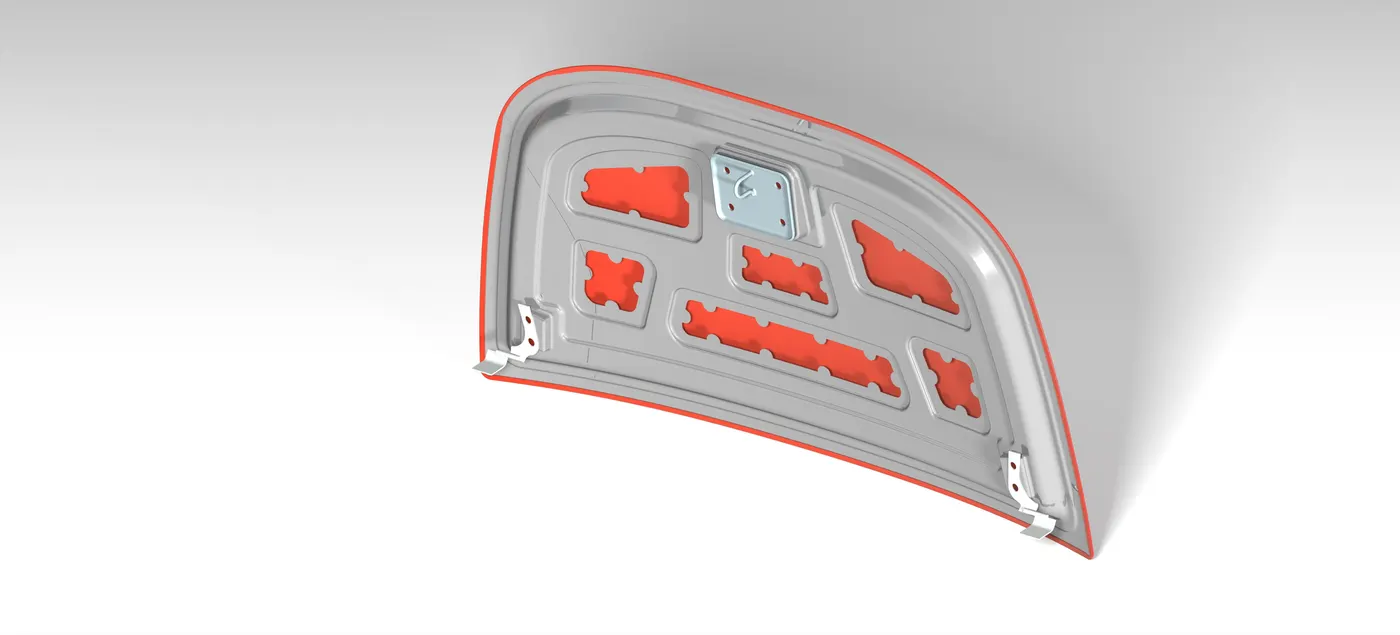
RENDERED IMAGE OF HOOD PANEL ASSEMBLY
REFERENCES:-
- https://journals.sagepub.com/doi/epub/10.1177/1045389X19880016.