Hood design-Week 2
Hood design
Aim
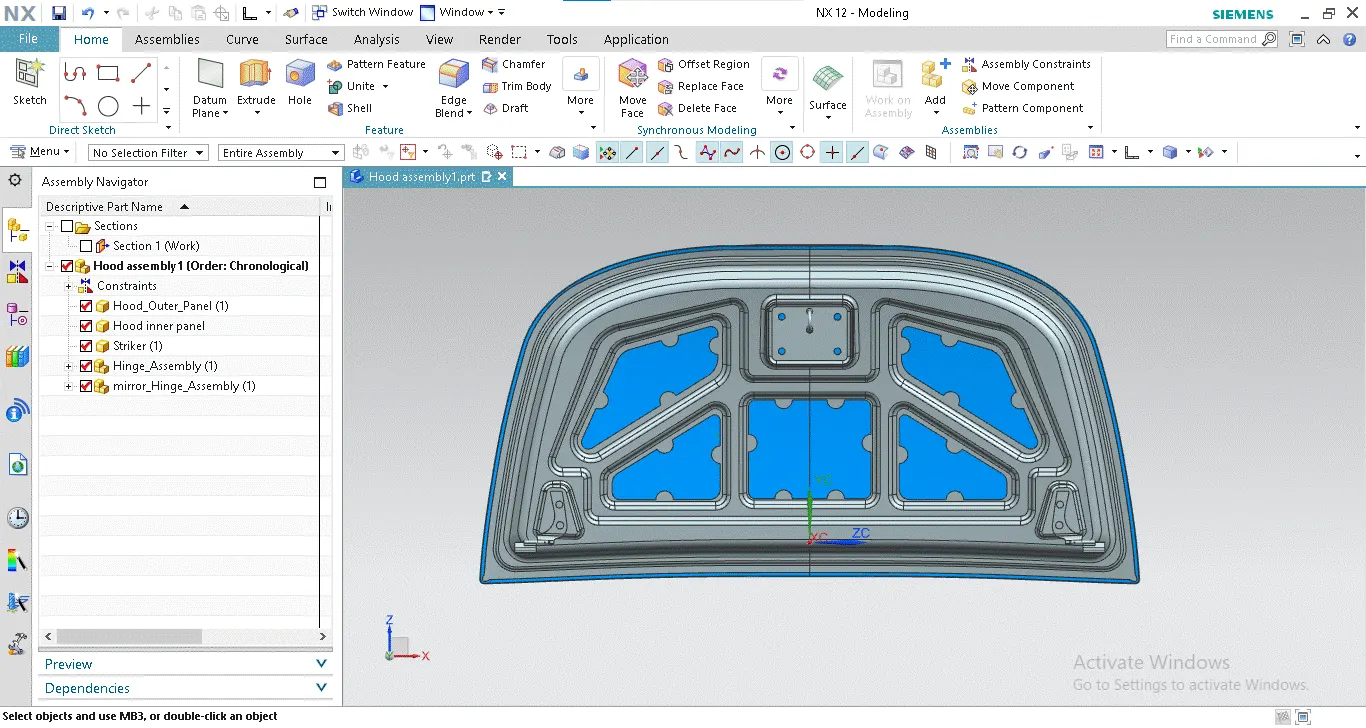
To Design and assemble the hood's outer panel, inner panel, and necessary reinforcements, ensuring they meet the design parameters and integrate correctly with the latch, hinge, and other components.
Introduction
The hood, or bonnet, is the hinged cover over a vehicle's engine, allowing access for maintenance and repair. Design considerations include pedestrian safety, hood head zone for the lock striker, force distribution during collisions, and manufacturability. Hood assemblies typically include outer and inner panels, latch and striker, hinge, and hood stay. Design Parameters The hood design process involves several critical steps and considerations to ensure that the final product meets both aesthetic and functional requirements. Here’s a summary of the key components and processes involved
Design parameters
Hood Thickness Information:
- Outer Panel: 0.75mm
- Inner Panel: 0.75mm
- Reinforcement: 1.5mm
Common materials for hoods are steel and aluminum.
Manufacturing Processes
Master section
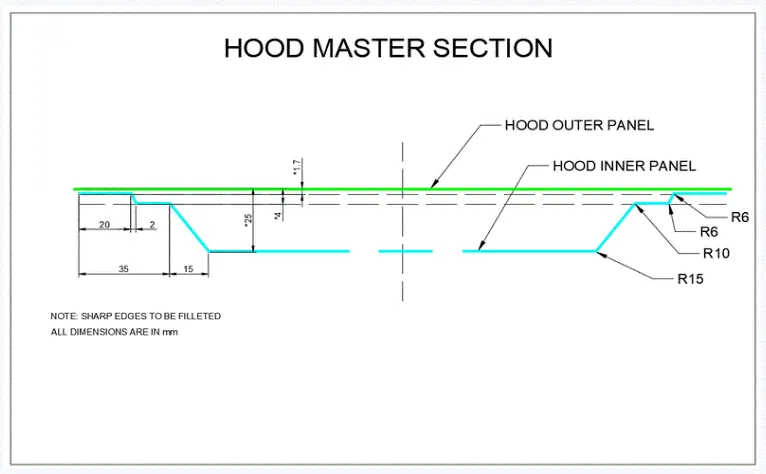
In automotive design, the Master Section could refer to a detailed section drawing or model that captures the precise contours and dimensions of a vehicle's hood (bonnet). This section is critical for ensuring proper fit, aerodynamics, and aesthetic appeal.
Components
a. Hood Outer Panel:
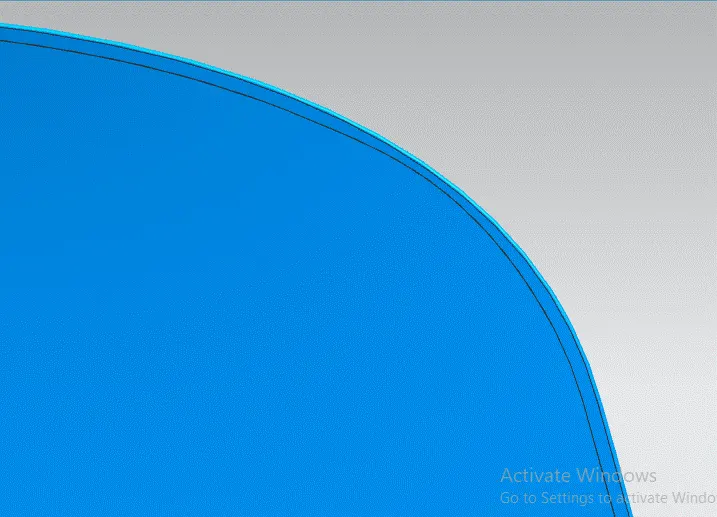
Provides aesthetics and is attached to the inner panel via hemming. Considerations include meeting safety norms and using mastic sealants to reduce vibration. The outer panel in hood design is the visible exterior surface of a vehicle's hood, fulfilling aesthetic, aerodynamic, protective, structural, and customizable functions. It contributes to the vehicle's overall appearance, aligning with design language and brand identity, while also managing airflow for aerodynamic efficiency. Additionally, it shields internal components from environmental elements, adds structural integrity to the hood, and offers opportunities for customization such as paint colors, finishes, and functional elements like air vents, collectively defining the vehicle's visual identity and performance characteristics.
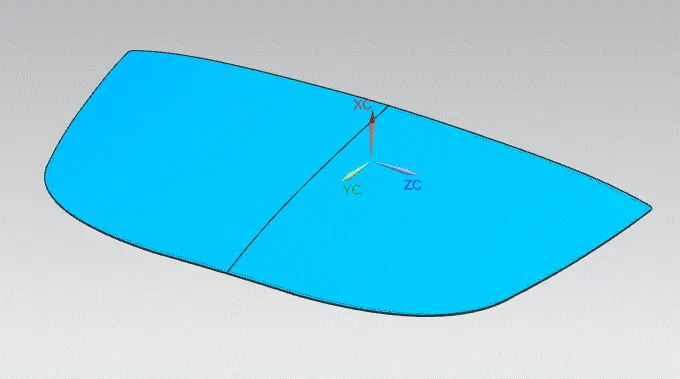
Relief front & Relief rear
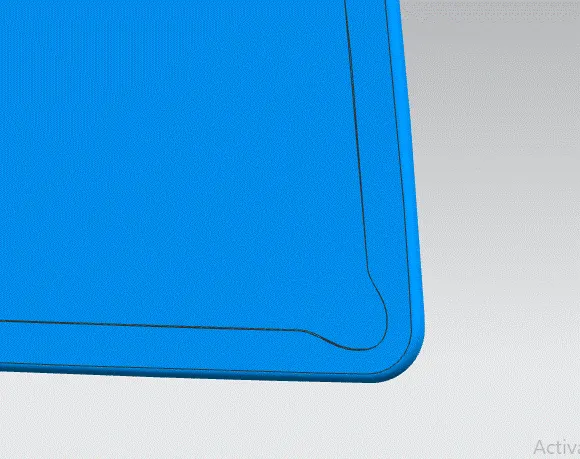
b. Hood Inner Panel:
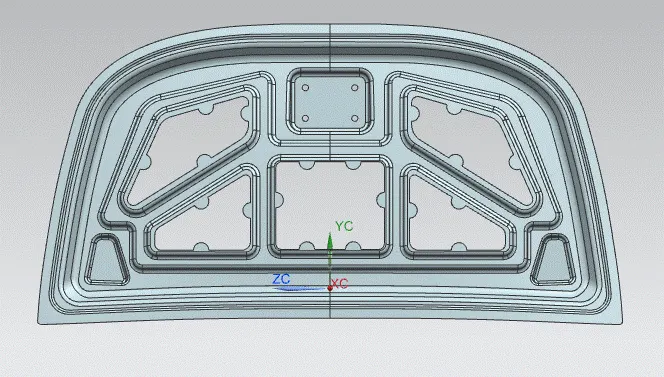
The hood inner panel is a structural component located beneath the exterior surface of a vehicle's hood. It serves as the framework that supports the hood's shape and provides rigidity. Typically made of metal, such as steel or aluminum, the inner panel is designed to withstand various stresses encountered during vehicle operation, such as impacts and vibrations. It also houses components like latch mechanisms, hinges, and insulation materials. While not visible from the outside, the hood inner panel is essential for the hood's proper function and structural integrity & Provides strength and rigidity to the outer panel. Embosses are added for latch and hinge elements after fixing their locations.
C. Reinforcements
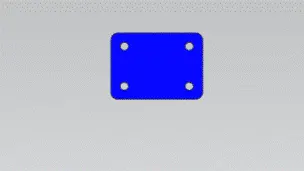
Reinforcements in hood design play a crucial role in ensuring structural integrity and durability, particularly in areas prone to stress concentration such as hinge and latch regions. By providing additional thickness compared to inner panels, these reinforcements effectively distribute forces and resist deformation during operation, improving overall hood performance and longevity. The choice of a 1.5mm thickness for both hinge and latch reinforcements strikes a balance between strength requirements and cost considerations, meeting design specifications while optimizing material usage
Striker Reinforcement
Latch Trajectory
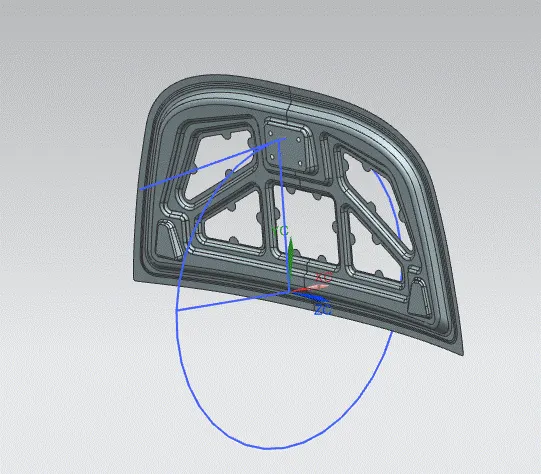
In hood design, latch trajectory is determined by drawing a circle with the hinge axis point as its center. The hinge axis point represents the central point of the hinge axis. When either the latch or the hinge position is fixed, the trajectory circle for the latch is plotted accordingly. This trajectory ensures proper alignment between the latch and the corresponding striker or latch receiver on the vehicle's body. Specifically, for a proper mating condition, the axis passing through the tip of the striker should be tangential to the latch trajectory. This alignment ensures smooth engagement and disengagement of the hood latch, enhancing overall functionality and safety. By accurately plotting the latch trajectory and ensuring alignment with the striker axis, engineers can optimize hood latch operation and minimize the risk of hood-related issues.
Emboss definitions
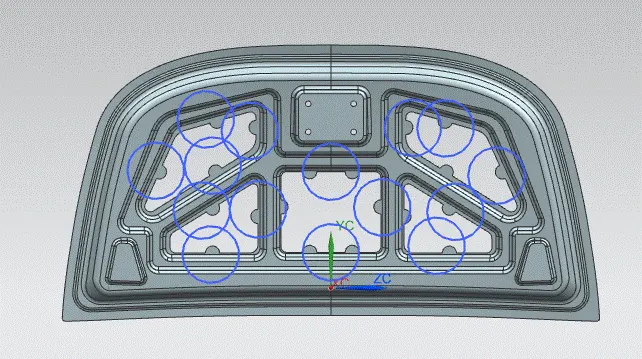
In the event of a car crash or accident, the embossed surface on the hood plays a critical role in ensuring safety. As the hood often absorbs the brunt of the impact during a collision, it must effectively distribute and manage the forces involved to protect the driver and passengers. Typically, the inner hood panel features V- or Y-shaped embosses strategically placed to direct impact forces away from the cabin and towards the vehicle's structure. By directing these forces towards the hood's corner points, where energy absorption is maximized, the embossed surface helps minimize the risk of intrusion into the passenger compartment, enhancing occupant safety. This design feature helps ensure that the hood effectively absorbs and disperses impact energy, contributing to the overall crashworthiness of the vehicle and reducing the severity of injuries in the event of a collision.
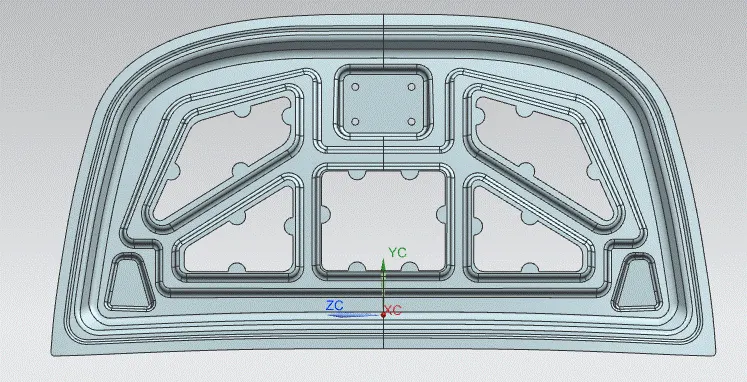
Mastic Data
In hood design, mastic sealant plays a crucial role in ensuring proper sealing and joining of panels while also helping to reduce noise, vibration, and harshness (NVH) levels. Mastic sealant serves as both a sealant and an adhesive, effectively bonding and sealing the two panels together. Its rubber-like consistency allows it to conform to irregularities in the panel surfaces, creating a tight seal that prevents the ingress of water, air, and noise.
Deep Drawing
Deep drawing is a metal forming process used to create complex, three-dimensional shapes from flat sheet metal. In hood design, deep drawing is commonly employed to form the main body of the hood panels. The process involves clamping a flat sheet of metal (typically steel or aluminum) into a die and then using a punch to deform the metal into the desired shape.
Hemming
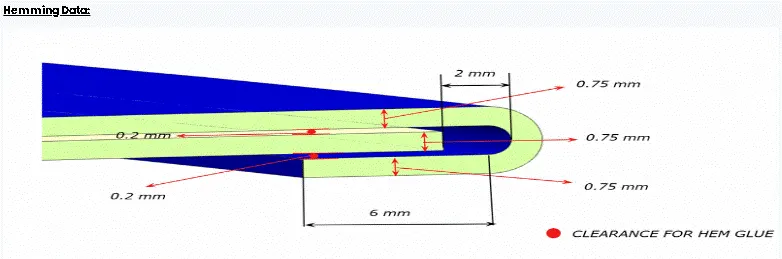
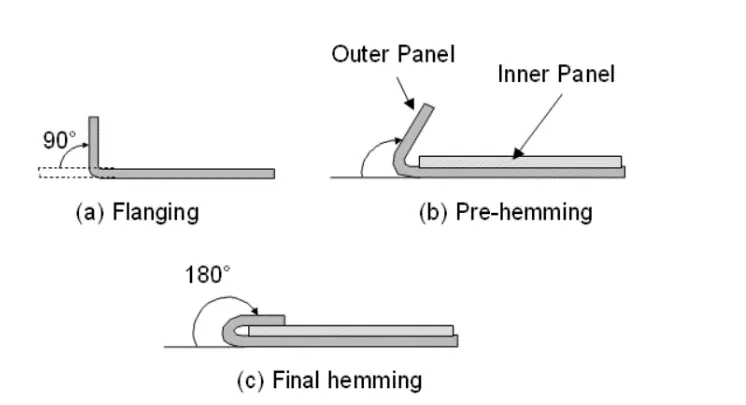
Hemming is a critical process in hood design, where the edge of the panel is folded or bent to create a smooth, sealed perimeter. This not only enhances the appearance of the vehicle but also provides structural reinforcement and protection against moisture and debris infiltration. By creating a uniform edge, hemming contributes to the overall aesthetic appeal of the hood assembly while also facilitating the integration of additional components such as weather seals and trim pieces. The manufacturing process involves specialized equipment and careful quality control measures to ensure consistent and accurate hemming across all edges of the hood panels. Overall, hemming plays a vital role in achieving both functional and aesthetic objectives in hood design, contributing to the quality and durability of the final product.
Conventional die hemming
Conventional die hemming is an essential process in hood design, primarily used to create a folded edge along the perimeter of sheet metal hood panels. This method ensures structural integrity, aesthetic appeal, and weather resistance.
Roll hemming
The roll hemming process involves the gradual shaping of the flange using a hemming roller. An industrial robot guides the movement of the hemming roller along a defined path, applying pressure to gradually bend the edge of the sheet metal.
Final Hood Assembly