Hood design-Week 2
HOOD
car hood is a hinged cover that rests over a engine in a front engine car .a latch is provided under the hood in order to prevent accidental opening during driving . the purpose of the hood is to provide acess to the engine and battery for repair and maintenance. it also protect these parts from direct sunlight and dust.
COMPONENTS
1) HOOD OUTER PANEL
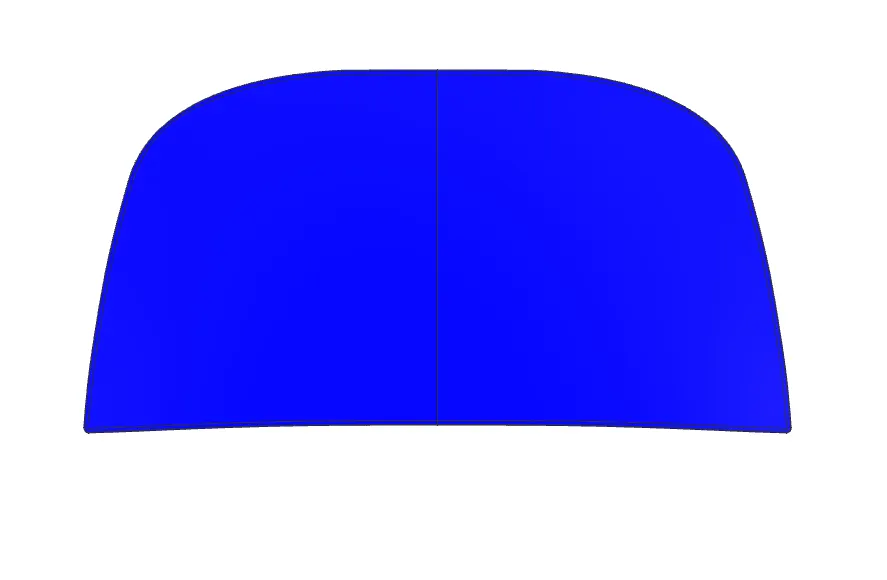
the outer panel works as a metallic cover. it is responsible for the aesthetics of the vehicle.
HOOD INNER PANEL
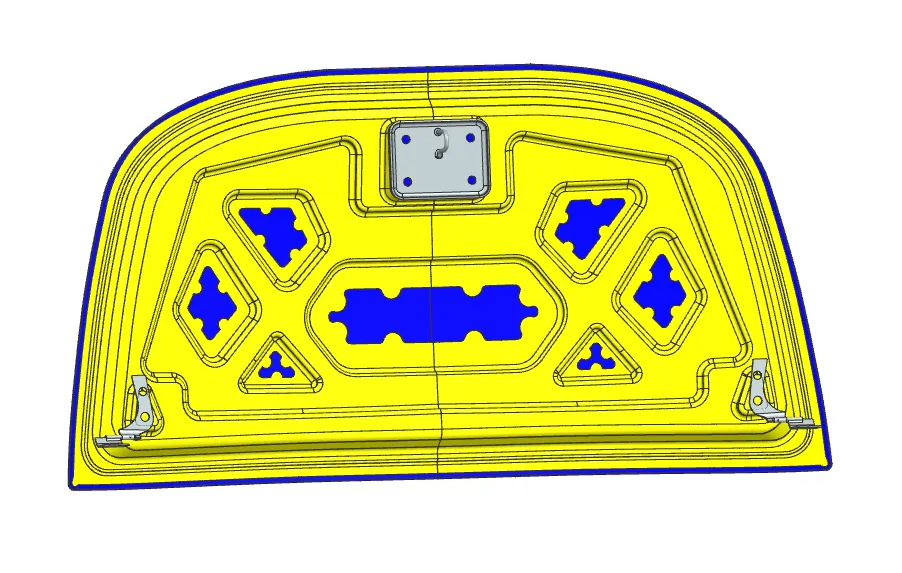
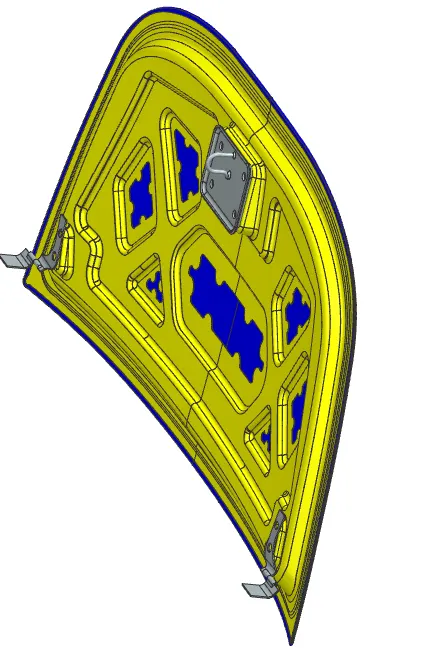
the inner panel provides strength and support to the outer panel. itis where hood balancer and hinges are attached.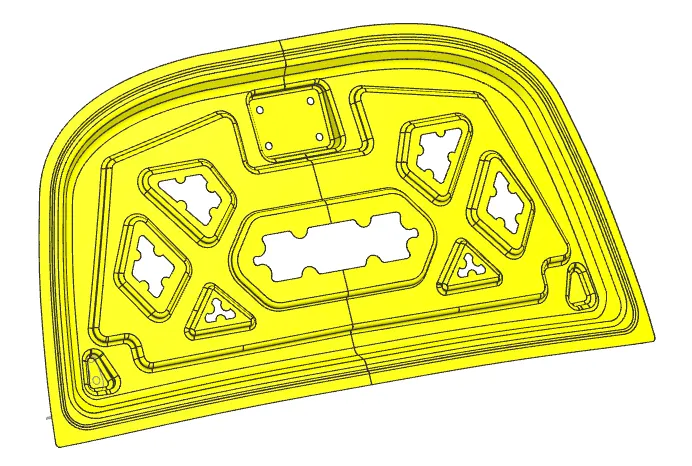
HINGES
hinges allow hood to rotate around a fixed axis for opening and closing movement.one part of the hinge is fixed with the engine compartment,while other part is connected to hood.
LATCH AND STRIKER
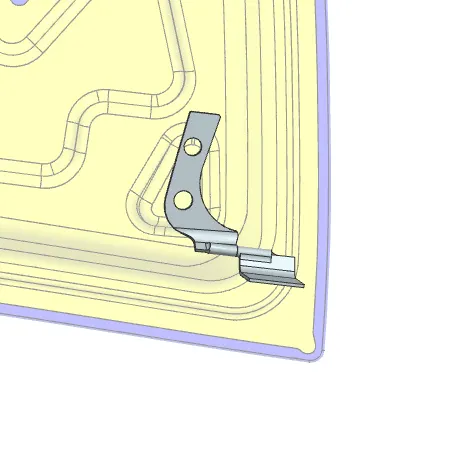
LATCH AND STRIKER
latch and striker mechanism is provided to lock the hood, in order to prevent accidental openig of hood during driving. the latch is present on the engine compartment while the striker is attached to inner part of the hood.
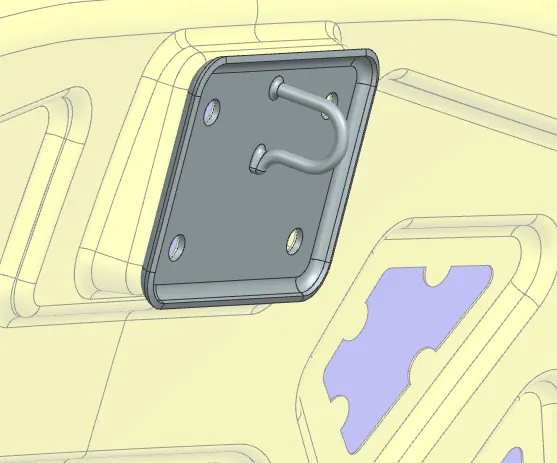
LATCH TRAGECTORY
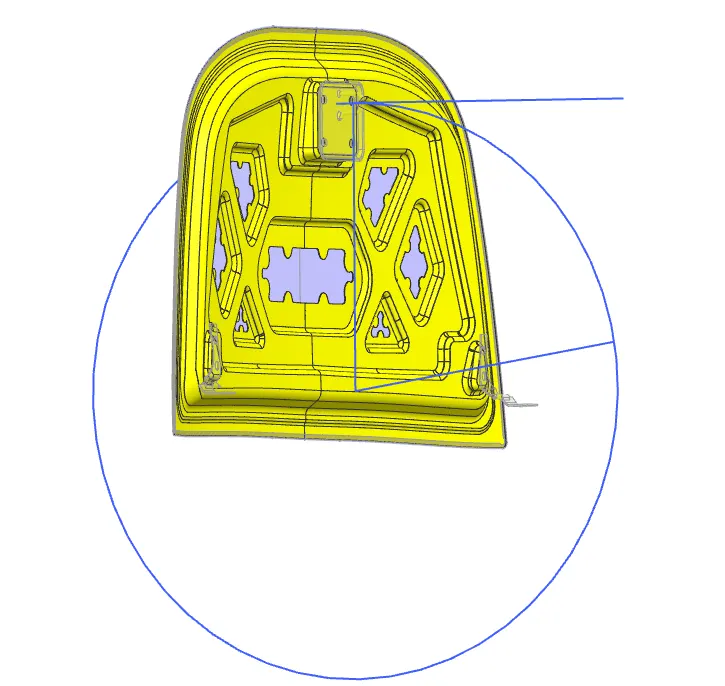
it is the path along which the hood rotates during the opening and closing movement. the striker on the hood follows a particular path while opening or closing the hood, which is along circumference of a circle with centre at the hinge axis.the path is nothing but latch tragectory.it is very impertant aspect in hood design,in order to decide hinge,latch and striker installation points.
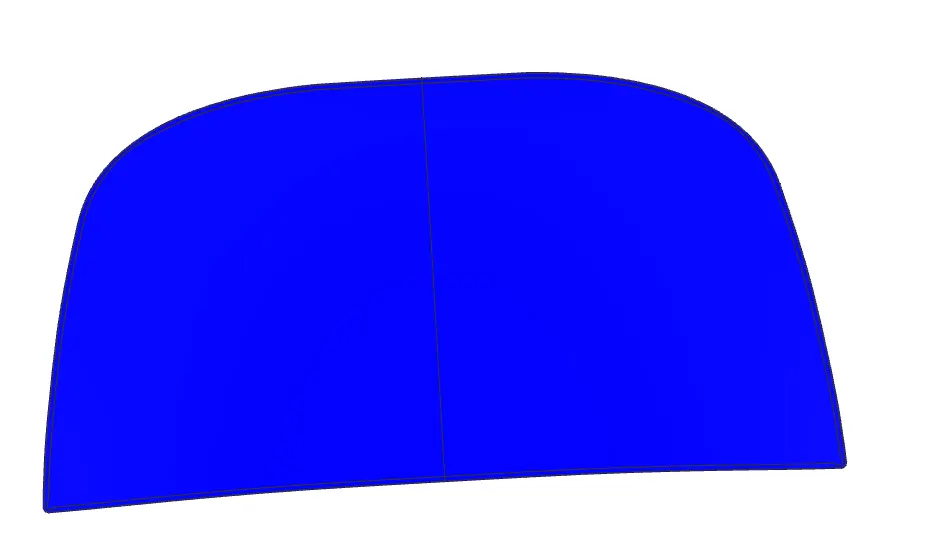
MASTIC SEALENT
it helps to locally improve strength of the hood. it is generally a hard rubber part, which is introduced as a paste in between inner and outer panel of the hood, which will get hardened inside the furnance.
DESIGN METHODOLOGY
the procedure followed for designing the hood and its components is as follows,
. first the inner panel is designed from the given master section using the various commands and features. we create the embossing using the offset surface from the original master section. similarly, we create the cuts on the emboss by sketching and using trim surface option.
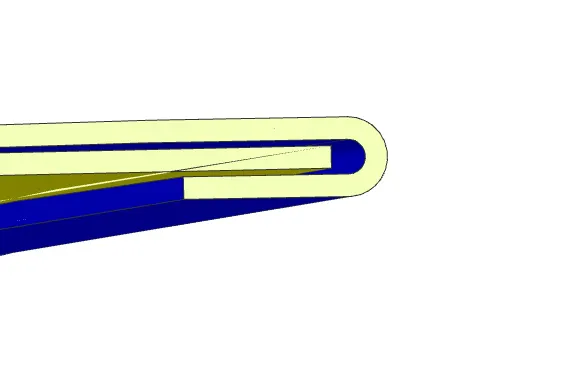
. then the outer panel is created from the same master section. here we are supposed to provide the hemming to the outer panel. the parameters of hemming are taken as per given values.
. now, on the inner panel, the embossing for the hinge and striker are produced by considering their respective dimensions and assembly positions. first the emboss for hinge is created and then by fixing the hinge into its position, we draw an axis passing through both side hinge axes to form a commom axis. and then we position the striker such that it will move along circumferance of a circle whose centre is at midpoint of a common axis. thus,position of striker is decided and we can create emboss for the same.
. using hinge emboss we created, we can create our hinge reinforcements by creating new parts in the assembly itself.
HEMMING
hemming is a forming operation in which the edges of the sheets are folded over the other part or simply folded in order to achieve a tight fit.
REINFORCEMENTS
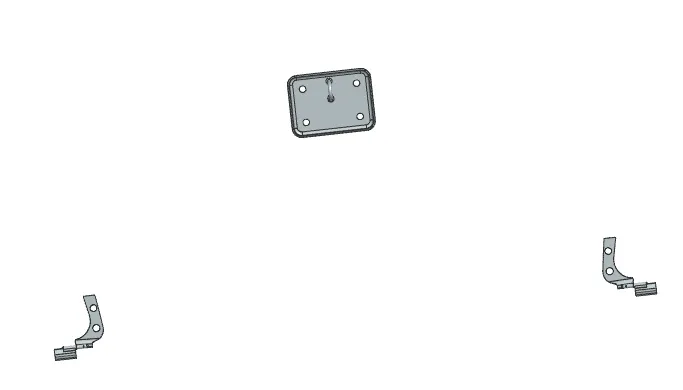
Reinforcements are provided according to the design requirements. mainly it is provided at the hinge and latch regions to improve the strength locally.
FINAL ASSEMBLY