Hood design-Week 2
TITLE - MODELLING OF HOOD
OBJECTIVE
To understand the design strategy and consideration that undergoes under hood design and developing and automotive hood to achieve maximum safety for the people inside the car and around the car.
INTRODUCTION
Hood is also known as bonnet, it is the main component of car at the front portion. The bonnet system is an access panel to the engine compartment to enable maintenance of power train, drive belts, battery, fluid levels and lamp units. It is fundamentally a reinforced skin panel with many safety and quality requirements. Practically the bonnet is designed by taking all the necessary considerations like pedestrians safety. Crash force is also the major factor, it should travel across the hood instead of travelling straight to the driver, that results in reducing the cause of injuries.
HOOD - The hood or bonnet is the hinged cover over the engine of motor vehicles. Hoods can open to allow access to the engine compartment, or trunk on rear-engine and some mid-engine vehicles for maintenance and repair.
DESIGN DATA CONSIDERATIONS
Given data to be considered - Hood thickness information
- Outer panel thickness = 0.75mm
- Inner panel thickness = 0.75mm
- Reinforcements thickness = 1.5mm
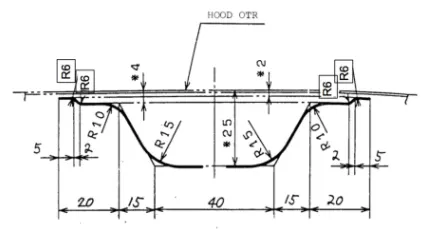
Master sketch
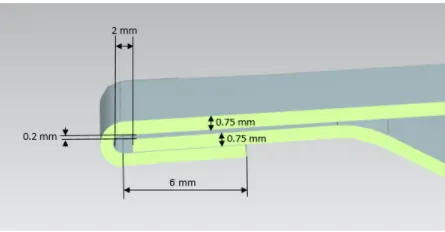
Hemming data
Relief rear section
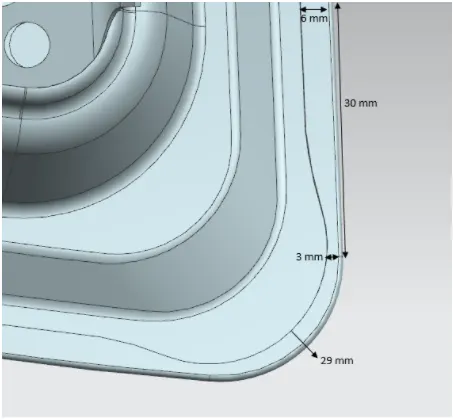
Relief front section
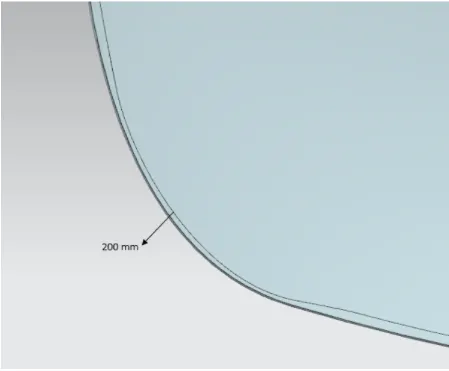
IMPORTANT CONSIDERATIONS
- The first and most important safety consideration of the hood is pedestrian safety.
- The European New Car Assesment programme(NCAP) has developed test specifications and rating systems for assessing pedestrian injuries during impacts.Few tests are conducted and these tests are generally executed for vehicle hit speed at around 40km/hr and covers he pedestrian body interaction with the vehicle upone collision.
- Below represented chart shows considerations for the frontal crash of a vehicle with a pedestrian.
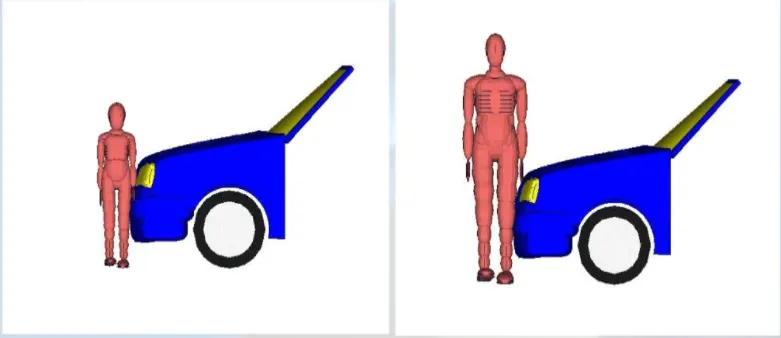
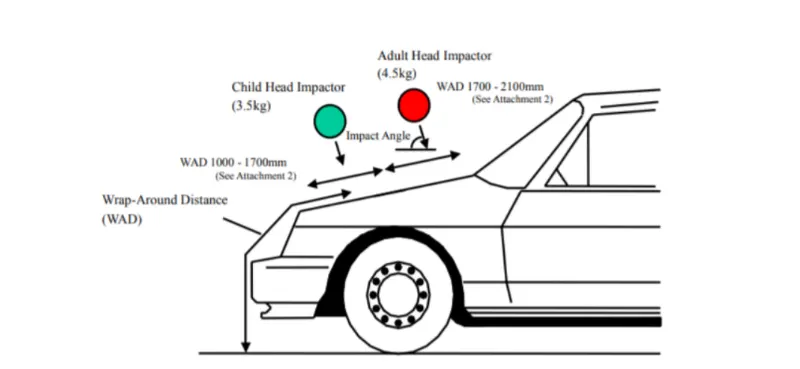
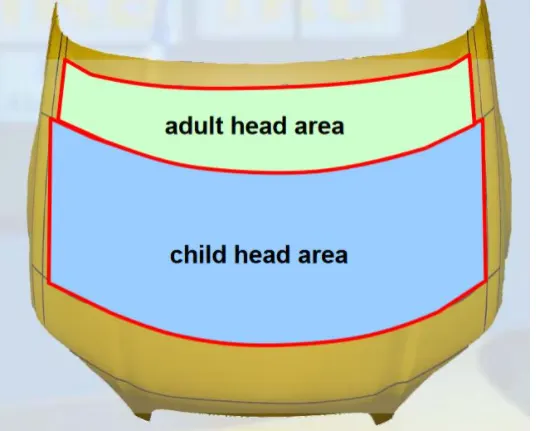
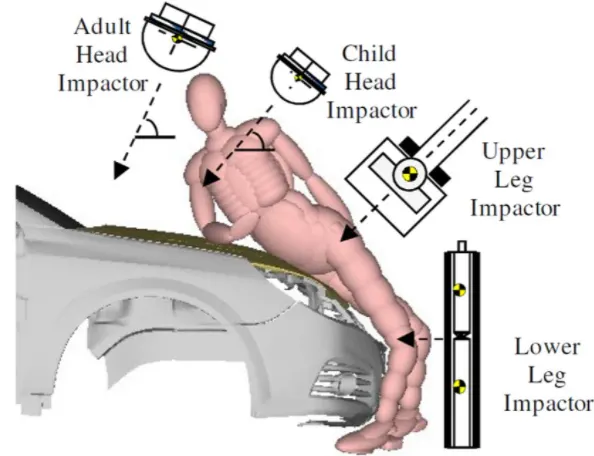
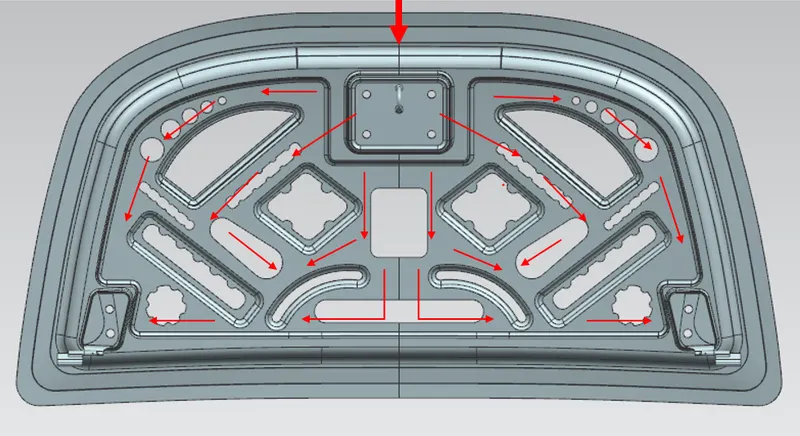
As we could see the impact region, based on these impact regions the thickness of the hood at those regions are reduced to allow softer landing and lower impact. Upon impact of the pedestrian, the hood in those regions should absorb and dissipate the energy allowing deformation and hence collapsing, which in turn would result in a lower impact on the pedestrian. At the same time, the impact on the vehicle should be channeled outside the vehicle to safeguard the occupants from severe injuries. Based on these considerations, the inner panel should be embossed with strategized channels and empty cut-outs to allow for maximum absorption of such impacts.
HOOD DESIGN FLOW
- Outer panel
- Inner panel
- Hinge assembly
- Striker
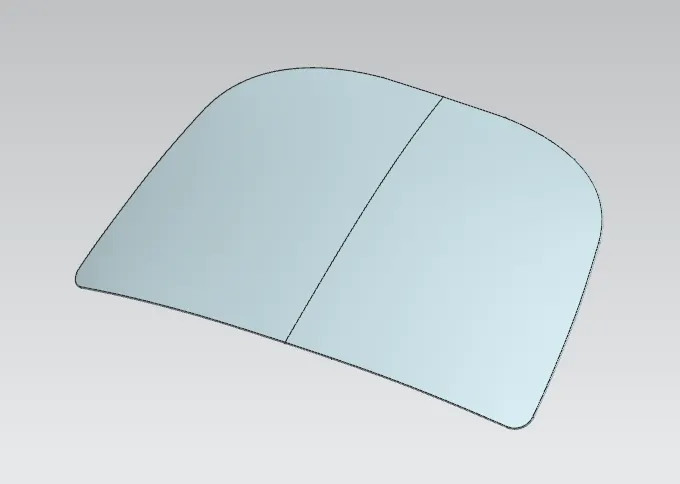
OUTER PANEL
- It is nothing but outer skin of inner panel. It is the part that gives smooth and luxury look to the hood and also for car.
- It is used to cover the inner panel which includes engine compartment, battery, fluid levels, etc. It functions as metal cover.
INNER PANEL
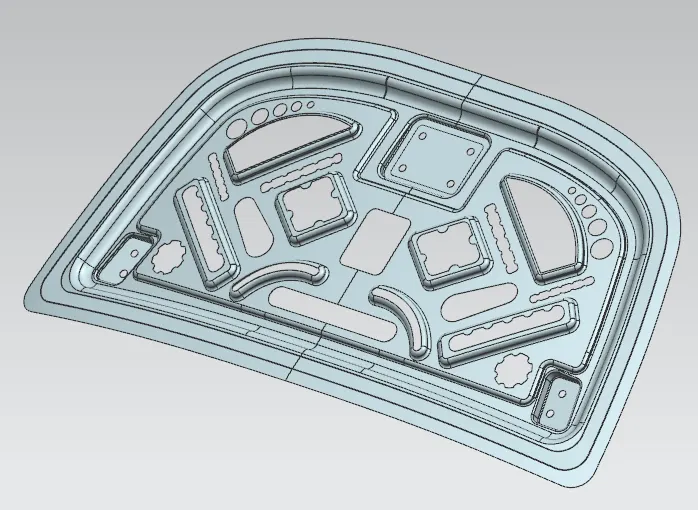
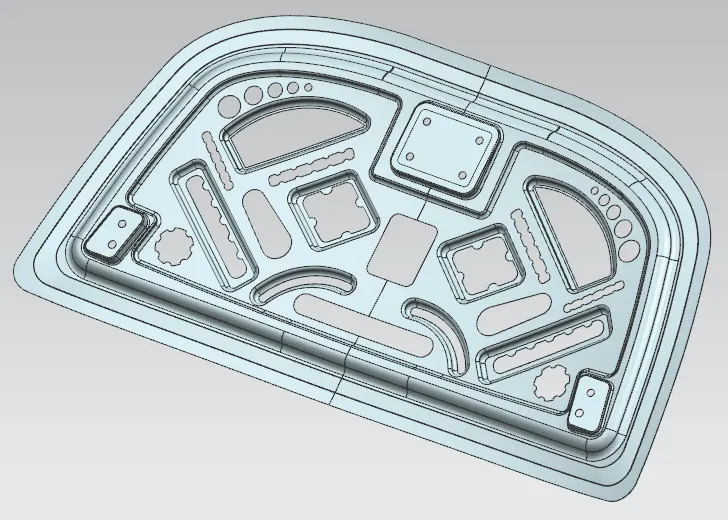
- It consists of different structured embosses at various places.
- Embosses are the one which provides strength to the hood and it dissipates the energy outside of the car rather than going inside the car.
HINGE ASSEMBLY
- A hinge is a mechanical bearing that connects two solid objects, typically allowing only a limited angle of rotation between them.
- It is used to connect both inner panel of hood and engine compartment, it functions a like door for engine section.
STRIKER
- It is the locking mechanism for the hood. It is used to lock and unlock the hood.
- A vehicle hood latch and release mechanism is latched when the hood striker engages the latch portion of the mechanism as the hood is moved to its closed position.The handle is also in this position when the latching mode of the hood latching and releasing mechanism latches the hood striker to hold the hood closed.
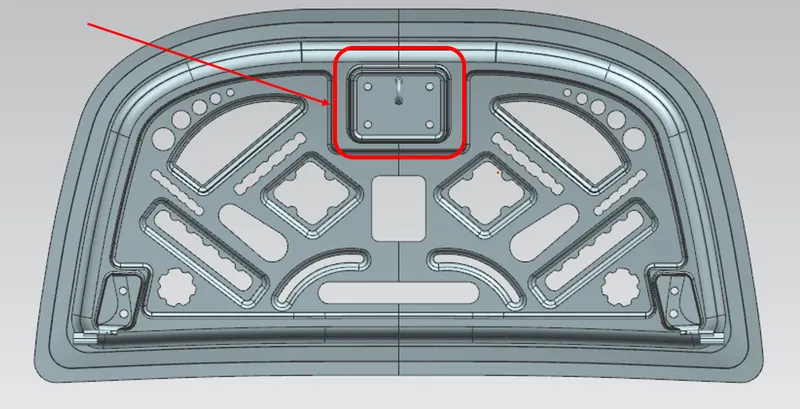
EMBOSSES
- Embosses are the projections made on inner panel of the hood using deep drawing techniques. It is nothing but mould, or stamp a design on a surface or object, so that it stands out in relief.
- This operation is used to provide the strength to the component.
- The important function of the emboss is to dissipate the force acting on the hood during the collision towards the hinges or away from the car to reduce the impact of force on the driver(passenger).
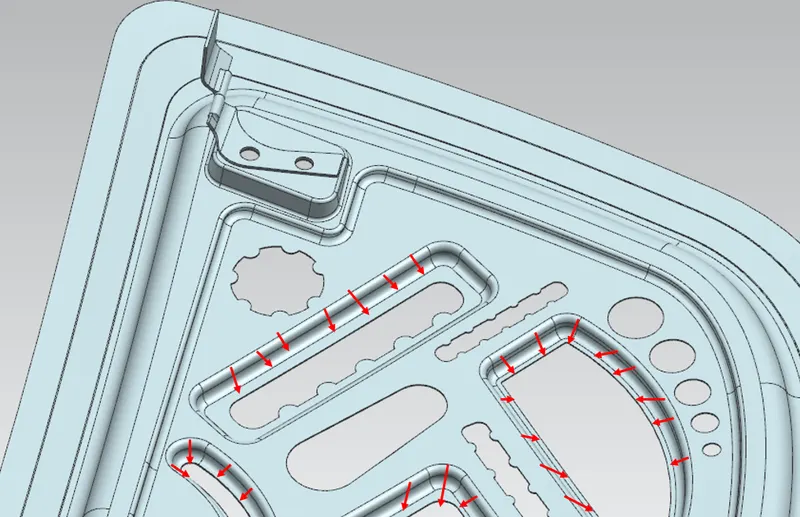
FORCE DISTRIBUTION IN HOOD DESIGN
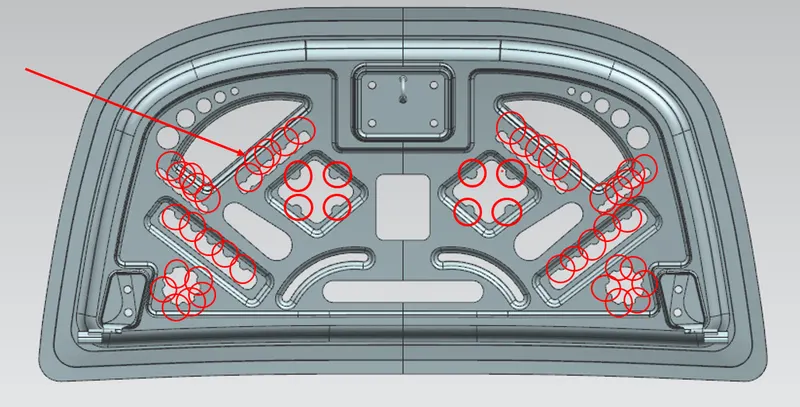
MASTIC DATA
- It is the point used to join the both outer panel and inner panel.
- Mastic sealand is nothing but its like elastic compound behaves like a hard rubber in order to reduce the NOISE VIBRATION AND HARDNESS while the car is in motion.
- The mastic points are defined on inner panel where the hood can easily deform. The mastic has an influence area of 80mm.
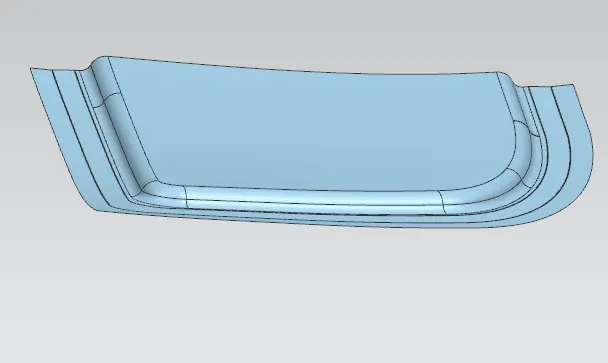
DEEP DRAWING
- Deep drawing process is also known as cup drawing, which is a part of sheet metal forming process.
- Deep drawing is a sheet metal forming process in which a sheet metal blank is radially drawn into a forming die by the mechanical action of a punch.
- The process is considered deep drawing when the depth of the drawn part exceeds its diameter. This is achieved by redrawing the part through a series of dies.
- It is widely used for making products like utensils, cup shaped objects, pressure vessels, gas cylinders, cans, vehicle gas tanks, etc.
HEMMING
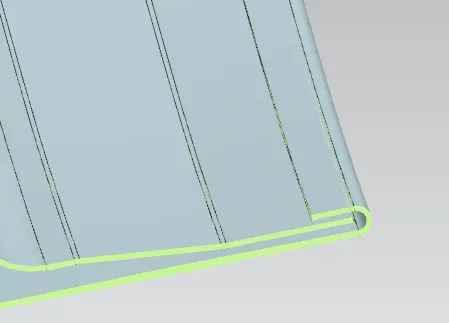
- Hemming is used in the automotive industry to join two sheet metal panels by bending the flange of the outer panel over the inner one.
- In roller hemming process, a robot guides a small roller across the flange to fold a sheet onto itself or onto another sheet.
- It is the method to join the inner panel and outer panel using hemming process, it is the process of bending of outer panel over the inner panel.
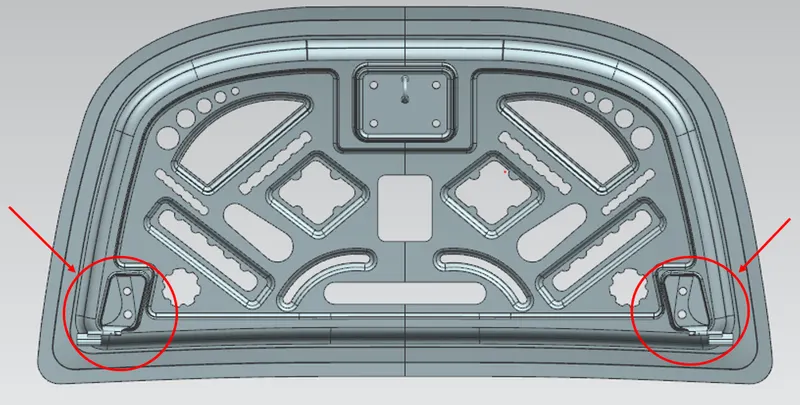
CORNER RELIEF
- There are various types of hemming processes are present, but in hood design roller hemming is used.
- Hemming is used in the automotive industry to join two sheet metal panels by bending the flange of the outer panel over the inner one. In roller hemming process, a robot guides a small roller across the flange to fold a sheet onto itself or onto another sheet.
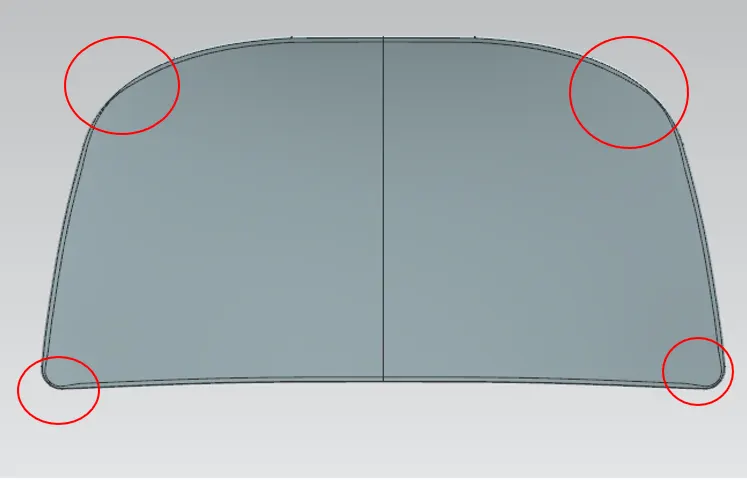
- There are some areas at the corners where the rolling cannot done properly, so in that areas we try to give some corner relief to get accurate result.
POSITION OF HINGE AND STRIKER
- The major function of the hood is to open and close the hood, this can be done by the help of hinge and striker position.
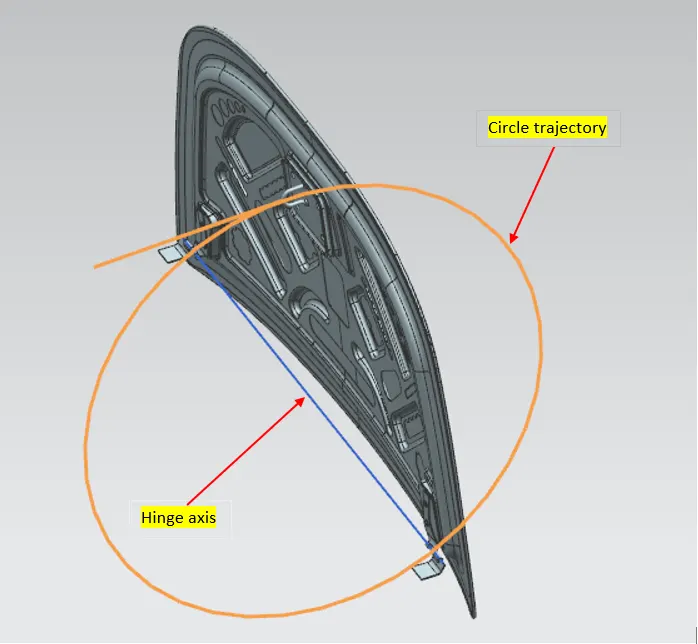
- To position latch and striker effectively, we position the hinge and draw the hinge axis. Using hinge axis as a center we draw a trajectory circle to where we want to place the striker.
- Then draw a tangent line to the circle at that point and place the striker in that region and also make sure that circle and its tangent should be perpendicular to the striker.
REINFORCEMENTS
- Reninforcements are nothing but adding material to the sheet metal to improve the strength of the component locally.
- In the hood design we provide two reinforcements for latch and striker and hinges, because while placing them component will loose strength in those particular area.
- Hence we are providing latch and striker reinforcement and hinge reinforcement. All the reinforcements are made from the sheet metal of thickness of 1.5mm.
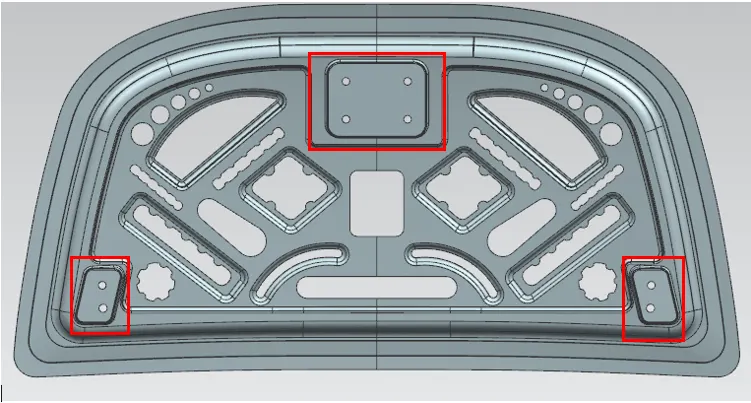
HOOD ASSEMBLY
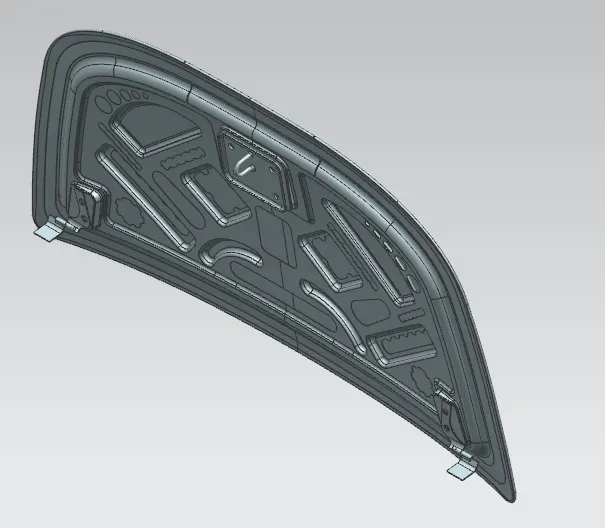
CONCLUSION
- All the components of hood are successfully designed based on the requirements and given dimensions, assembled together to get the complete design of hood.