Hood design-Week 2
HOOD ASSEMBLY
AIM
To design a hood assembly with the help of given master section.
OBJECTIVE
- To design an inner panel from the given master section.
- To assemble the hinges on inner panel.
- To do a position analysis for the placement of striker.
- To assemble the outer panel on to inner panel.
INTRODUCTION
A hood is a hinged part which covers the engine compartment and boot space in some cars. The bonnet act as an access panel to the engine compartment, power train, drive belts, battery, fluid levels and lamp units for the maintenance. It is fundamentally a reinforced skin panel with many safety and quality requirements. Safety of the occupant and pedestrian is the most important criteria, a properly designed hood will take care of the safety of both.
Hood or a bonnet forms the segment of vehicles called “closures” which include the tail gate, doors etc,. A hood influences several factors in a car such as overall vehicle mass, fore weight distribution, CG of the vehicle, vibration and harshness.
A hood is typically made of 4 important parts
- Outer panel
- Inner panel
- Latch and striker
- Hinge
The design considerations of a bonnet is represented in the image below
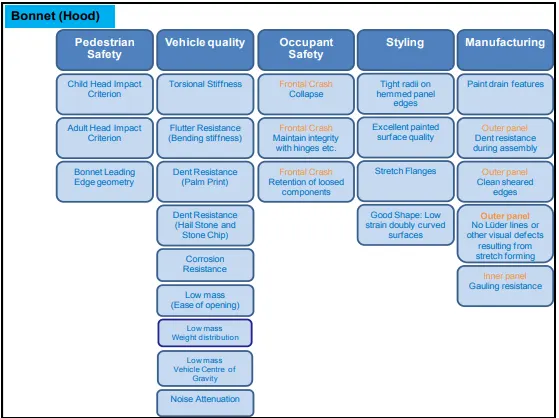
| Fig 1: Design considerations of a Hood (european-aluminum.eu) |
DESIGN OF HOOD
A hood assembly is designed using the given inputs. Inputs or data considered are
- Master section: It is the reference section received from the styling department from which inner panel and outer panel are created. Figure 2 depicts the master section.
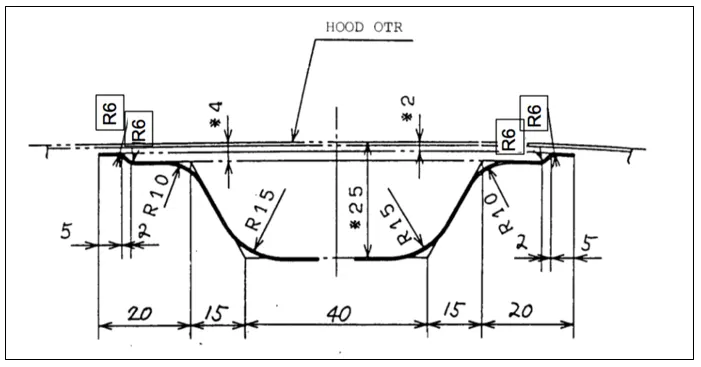
| Fig 2: Master section |
- Hem data with relief: Hemming is used to join the sheet metal parts usually by rolling.
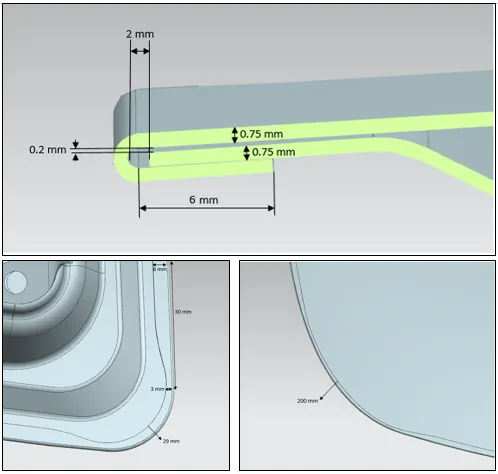
| Fig 3: Hem data with relief |
- Reinforcement thickness: 1.5mm
INNER PANEL
Inner panel is the structural member that support the outer panel and in case of collision inner panel collapses and ensures the safety of the occupant. Reinforcements are provided on the inner panel to make sure the majority of the force during collision is directed outwards. In this project inner panel is created with the help of styling surface provided. Figure 4 depicts the styling surface provided.
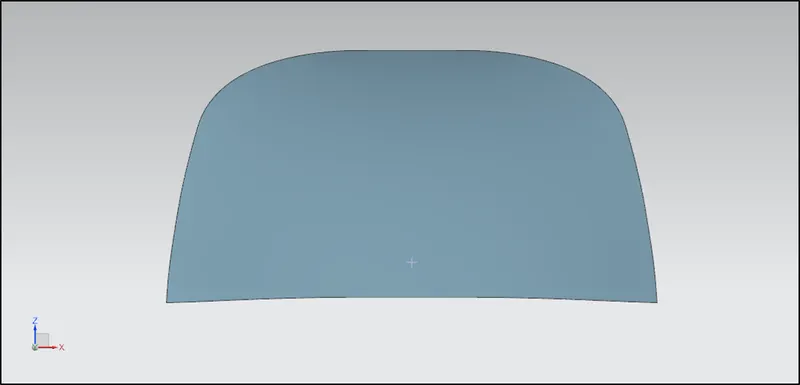
| Fig 4: Styling surface provided |
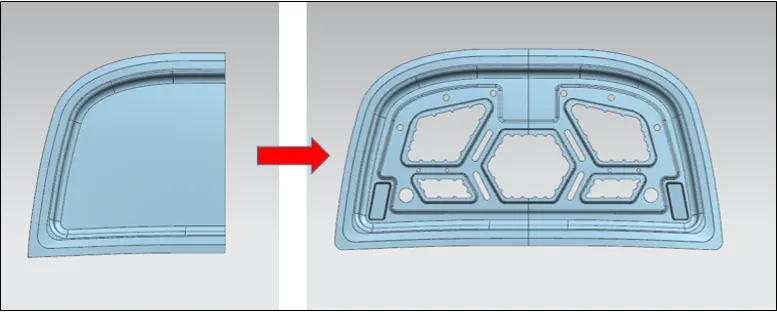
| Fig 5: Final Inner Panel |
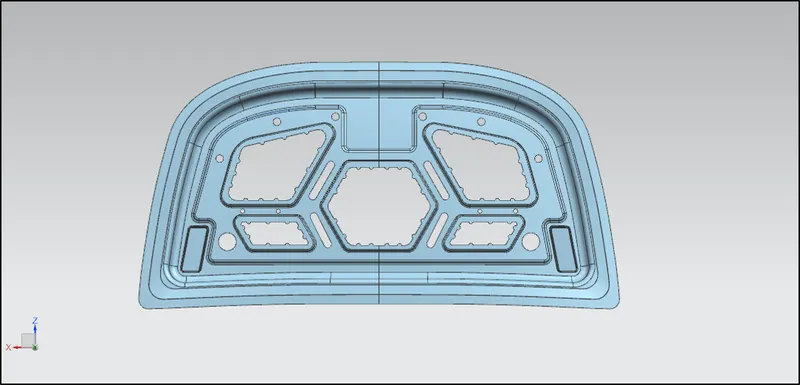
| Fig 6: Inner Panel |
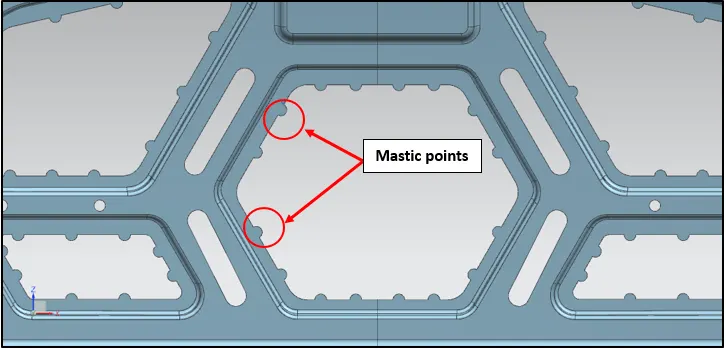
| Fig 7: Mastic Points |
Mastic points are the places where mastic sealants are applied for the gluing of inner panel and outer panel together.
HINGE ASSEMBLY
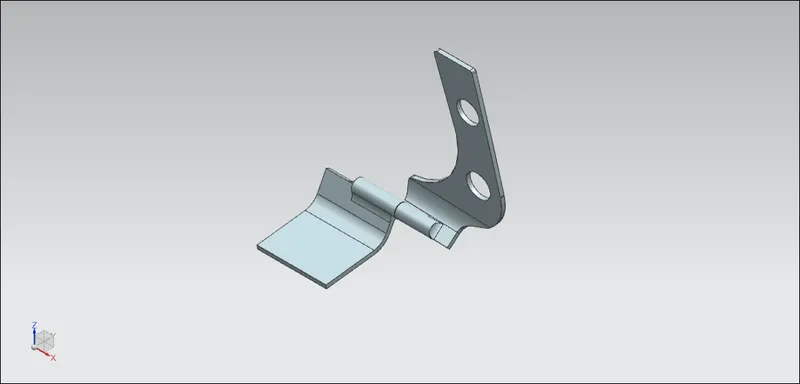
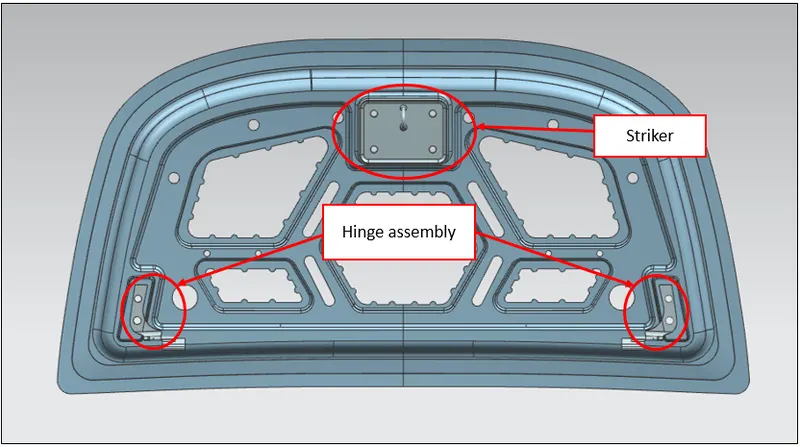
Hinge connects the hood with the body of the car and helps in the opening and closing of hood. Figure 8 shows the hinge assembly.
| Fig 8: Hinge assembly |
STRIKER
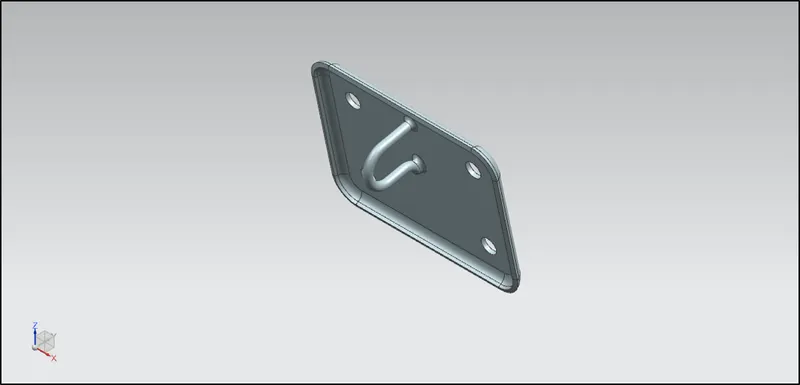
Striker along with latch ensures that the hood stays closed. Figure 9 shows the striker.
| Fig 9:Striker |
POSITION ANALYSIS OF STRIKER
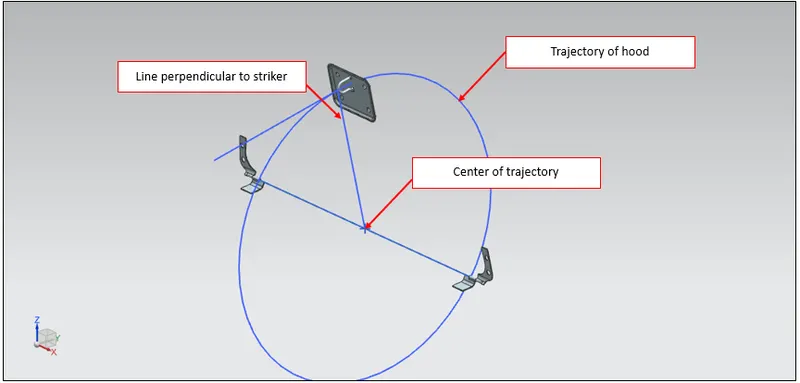
To ensure the proper closure of hood and to decide the opening height of the hood placement of the striker is of utmost importance.Figure 10 shows the position analysis. Steps followed in the anslysis
- Find the mid point of hinge axis.
- Draw a circle with midpoint of hinge axis as center.
- Draw a line perpendicular to the striker.
- Coincide the line tangent to circle with the midline of the striker.
| Fig 10: Positon analysis of the striker |
| Fig 11: Inner panel with hinge and striker |
OUTER PANEL
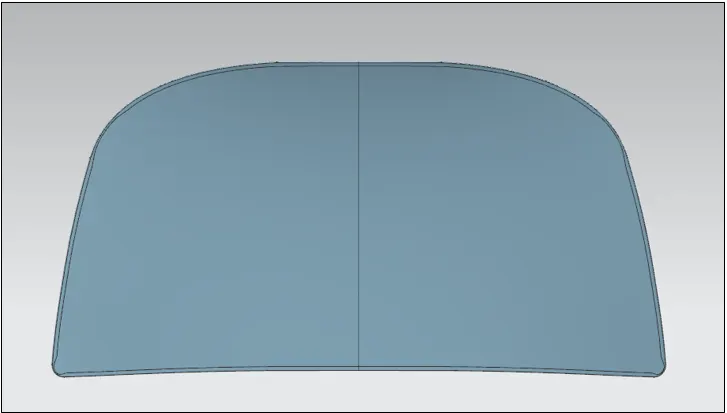
Outer panel is an aesthetic surface. Figure 12 shows the outer panel.
| Fig 12: Outer panel |
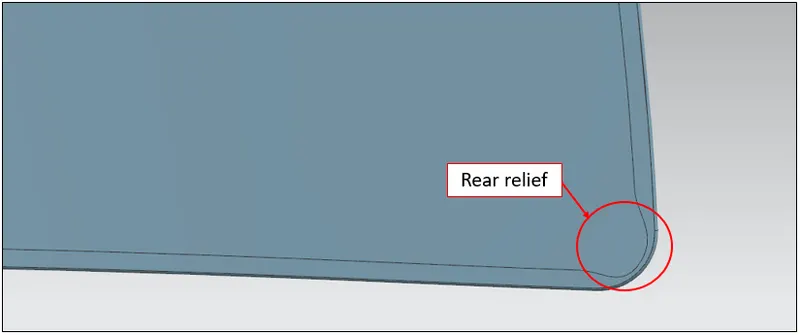
| Fig 13: Rear relief on outer panel |
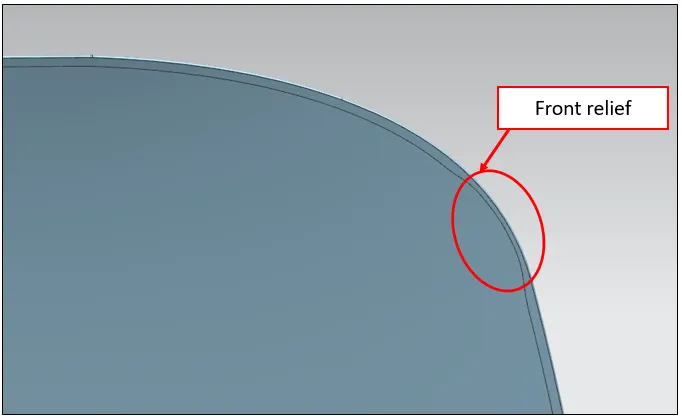
| Fig 14: Front relief on outer panel |
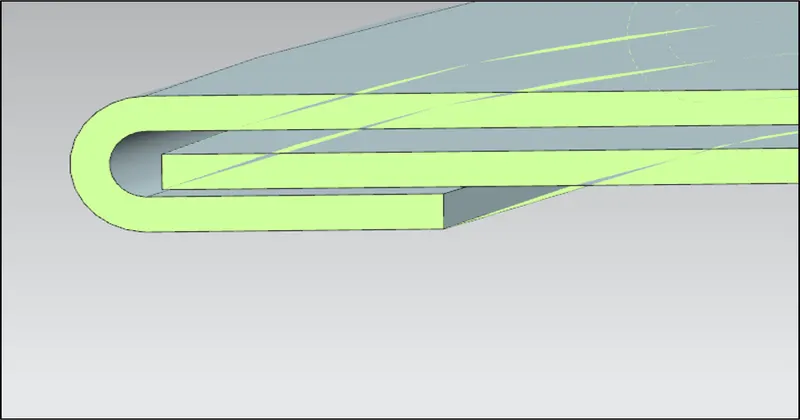
| Fig 15: Hemming of outer and inner panel |
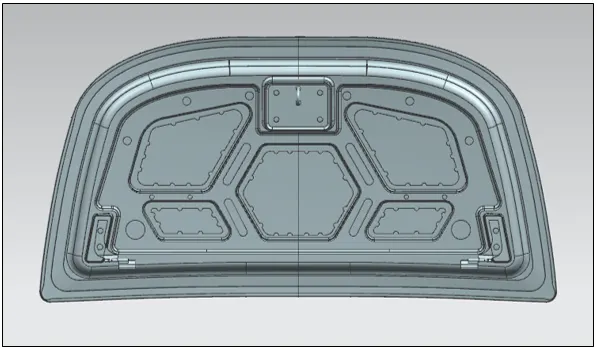
| Fig 16: Assembly |
CONCLUSION
Inner panel and outer panel is designed with the help of given master section and appropriate design parameters are considered. An assembly of hood with hinge and striker is created and a positon analysis is carried out for the same.