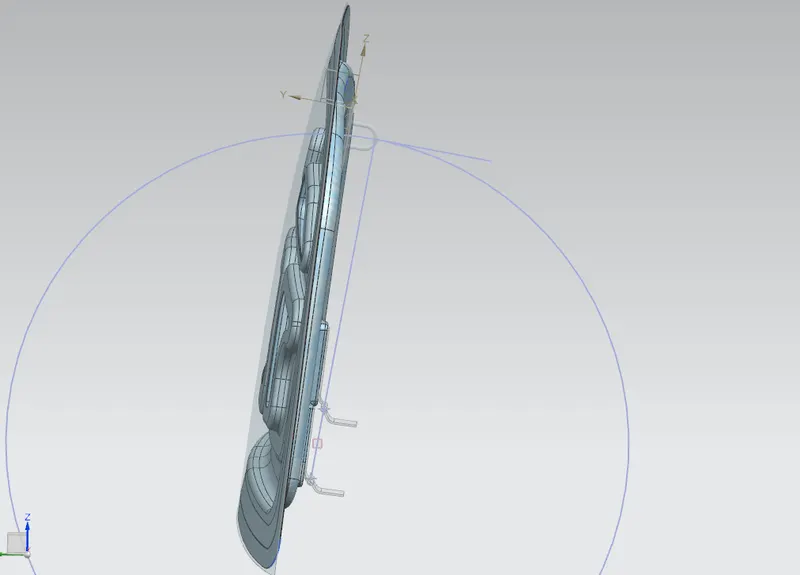
Hood design-Week 2
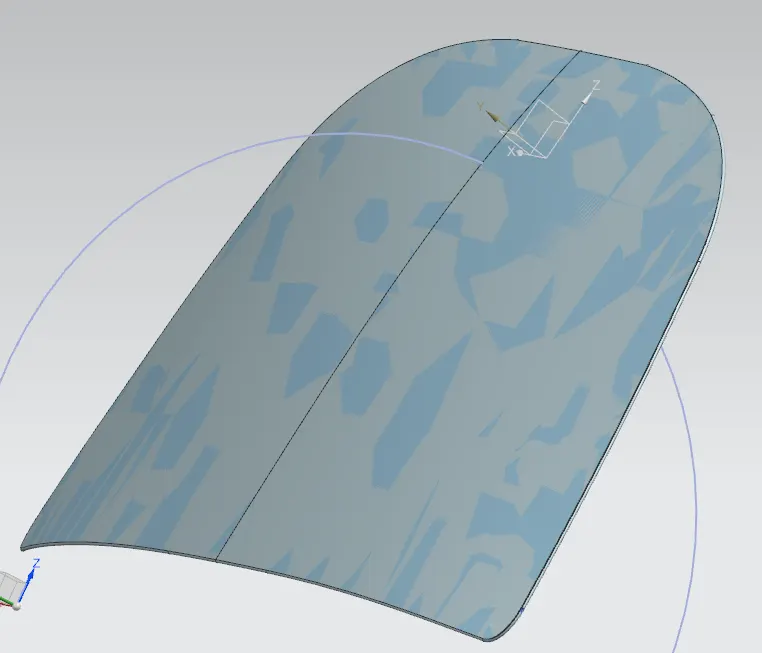
The hood of a car is a metallic cover which covers the engine and also allows access to the engine for repair and maintainence. The overall hood assembly consist of hood outer panel, hood inner panel, hinges and striker.
1.Hood outer panel : Hood outer panel is the outer sheet metal cover which provides aesthetics to the car. The thickness provided for the sheet metal is about 0.75mm.
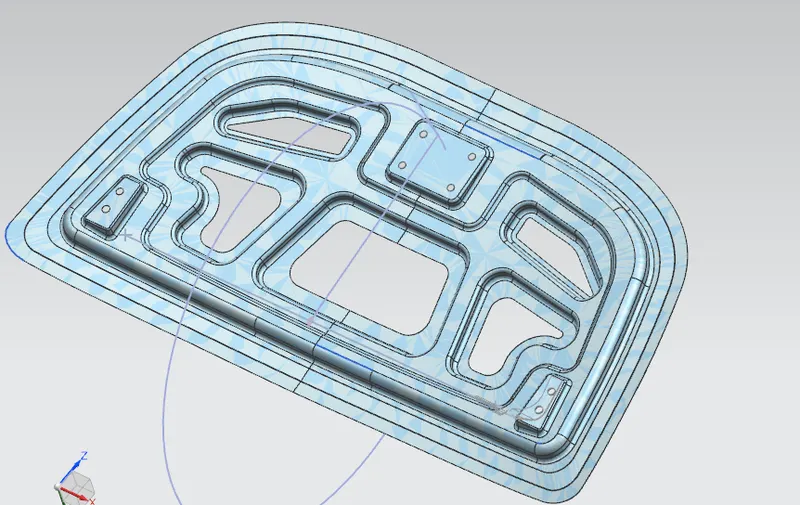
2.Hood inner panel : Hood inner panel is a sheet metal cover right above the engine and under the hood outer panel which functions to provides strength to the hood.The thickness provided for the sheet metal is about 0.75mm.
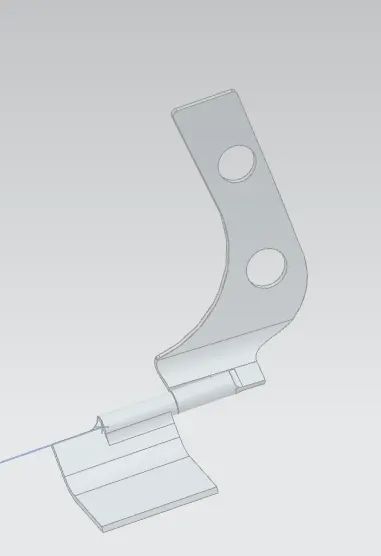
3. Hinges : Hinges are used to mount the hood above the engine compartment. Hinge is the component that helps in the swivel motion of the hood to provide access to the engine for repair and maintenance . The thickness provided for this reinforcement is about 1.5 mm.
4.Latch : Latch is a reinforcement component mounted on the hood inner panel that provides locking system to the engine comparment. The thickness provided for this reinforcement is about 1.5 mm.
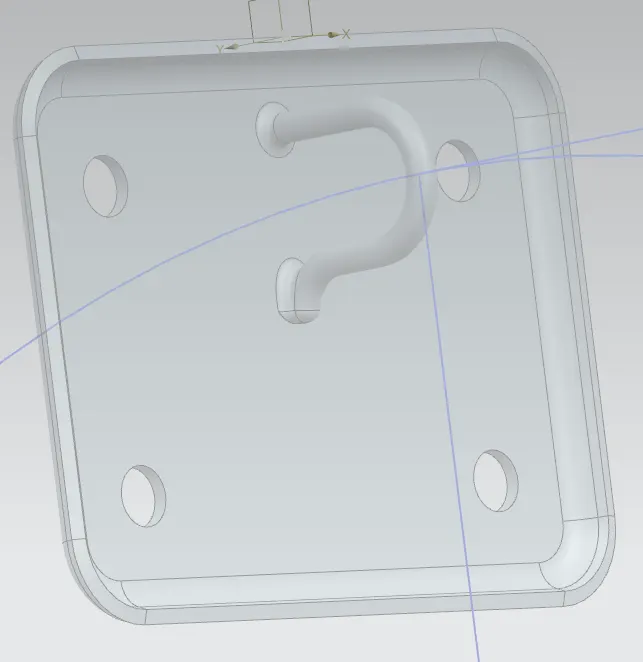
The design requirements to be considered while manufacturing hood are :
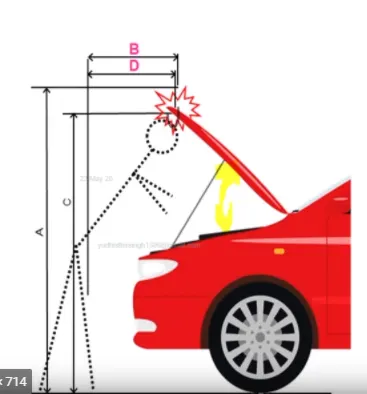
1. Hood head zone for lock striker : The hood opening angle is an important factor to consider so that there is no injury to a human head on the striker, considering the marketabilty of the cars to which region we are supplying for. When the hood is opened the length of the support rod holding the hood in open position providing the hood opening angle and the length of the hood is to be considered so that there is a clearance between head and the striker.
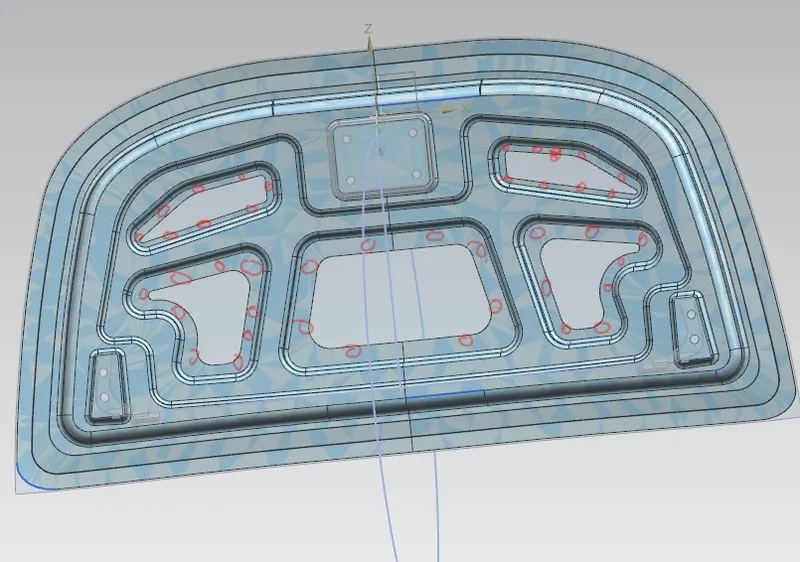
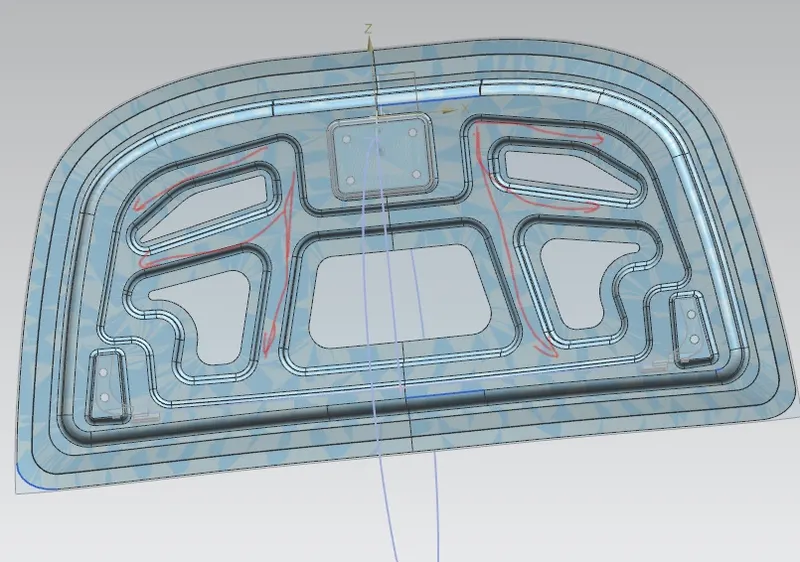
2. Mastics data : Mastic sealants are placed between the hood outer panel and hood inner panel to provide localised strength to the hood. Each mastic sealant provides the strength to the localised region around its 80 mm diameter. Mastics are placed in between the inner and outer hood panels in such a way that it covers most of hood area. Mastic sealant is a hard rubber placed in the form of paste, which after hot oil bath treatment joins the 2 sheets (hood outer and inner panel). In order to maintain the aesthetics, mastic are applied instead of riveting. Below areas in red represents mastics data.
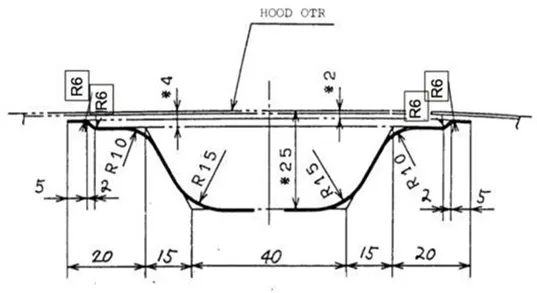
3. Manufacturing Processes: The 2 main processes involved for hood manufactucturing are discussed below:
Deep drawing : The master section of the hood inner panel is given for refrence. the hood inner panel middle portion is embossed here to 25 mm considering pedestrian safety requirements. For producing the hood deep drawing is used, where the tool is stamped normally against the workpiece provided with opening angles over it so that the tool can be removed with ease and in turn improves productivity.
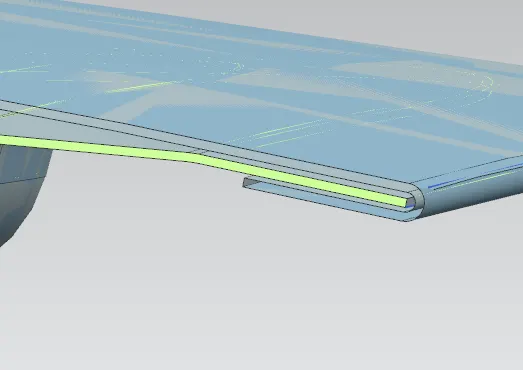
Hemming : Hemming is done on the hood outer panel to fix it over the inner panel to avoid riveting and welding which drastically reduces the aesthetics.
4. Emboss definition : The hood inner panel is provided with embossing structures in such a way that the force dissipates towards outside (along the hinge direction) in order to ensure the passengers safety. Below shows the example of embossing design consideration to dissipate the force away from the passenger during the crash. The embosses are also provided on the inner panel with flat surface on the hood to provide resting for the hinge assembly and latch and striker attachment.
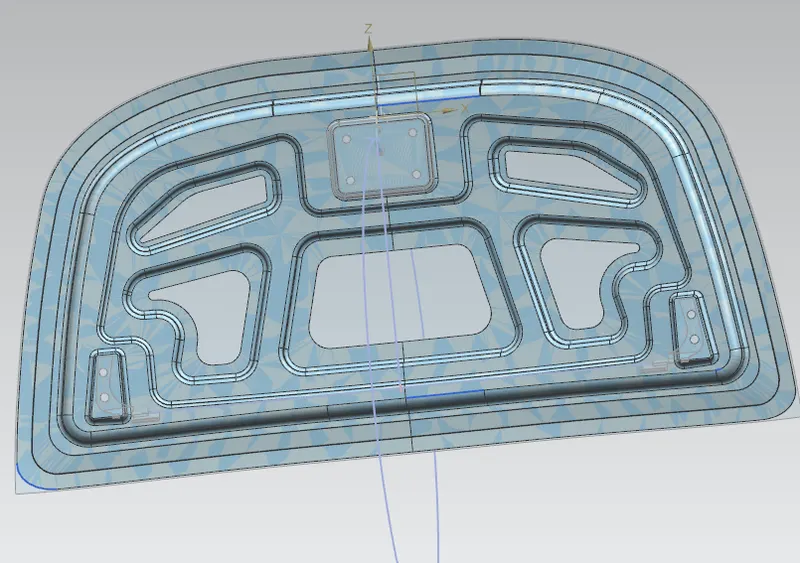
5. Cut out sections : The cutouts are given on the inner panel considering the pedestrian safety so that the impact of head injury can be reduced to a great extent.
6. Latch trajectory : Before placing the latch emboss the hinge assembly is contrained onto the inner panel of the hood emboss and also to the x axis. Then a circular trajectory is drawn along the centre of axis plane of hinges in such a way that the striker locks into the latch. The emboss plane for striker is then placed in such a way that the striker locks into the latch i.e. the striker trajectory should be tangential to the circular trajectory drawn along the hinge axis considering the locking into a latch.