Hood design-Week 2
AIM: To Design Hood Outer Panel, Inner Panel and the necessary reinforcements by following the Master Section mentioned with the Design parameters.
Input:
Master Section
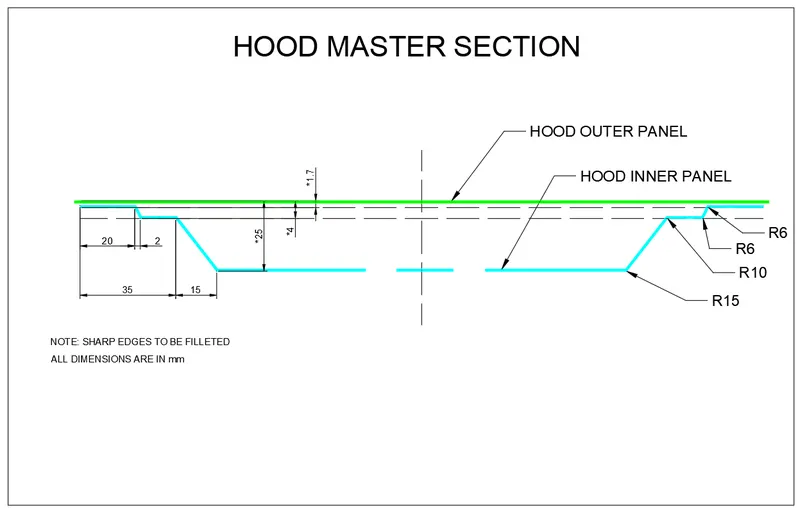
- Outer Panel Thickness = 0.75mm
- Inner Panel Thickness = 0.75mm
- Reinforcement Thickness = 1.5mm
Introduction:
Hood:
Car hood is hinged coer which is connected to the main chassis through hinges.
Hood as many purposes as listed below-
- Save and safety of purposes inside the car.
- Cover all engine parts and radiators.
- Reduce the Air effect due to design aerodynamic shape.
- provide access to the engine for repair and maintenance.
- reduces engine noise, providing you with a quieter drive.
- It can also help keep the paint underhood last longer.
- it can give motorists more time to get out of the car before the fire blazes out of the hood.
Design Considerations For Hood:
- NVH (Noise Vibration and Harness)
- Hinge Axis
- Gas stay requirement
- Latch and Stricker point
- Deformation Bracket
- Pedestrian Rating
- Euro Ncap regulations
- Draft Analysis
- Asthetic and Aerodynamics
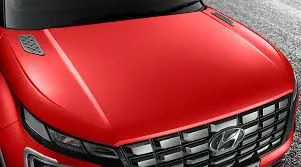
Hood Components:
- Outer Panel
- Inner Panel
- Hinges
- Striker
- Reinforcements
- Hood Stay
1. Outer Panel
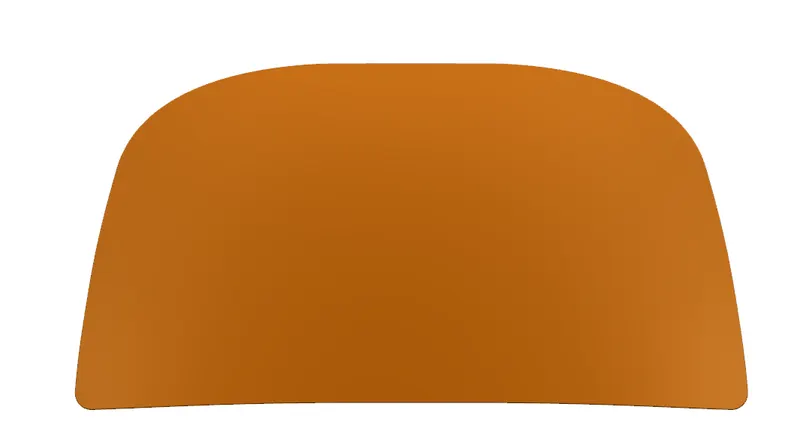
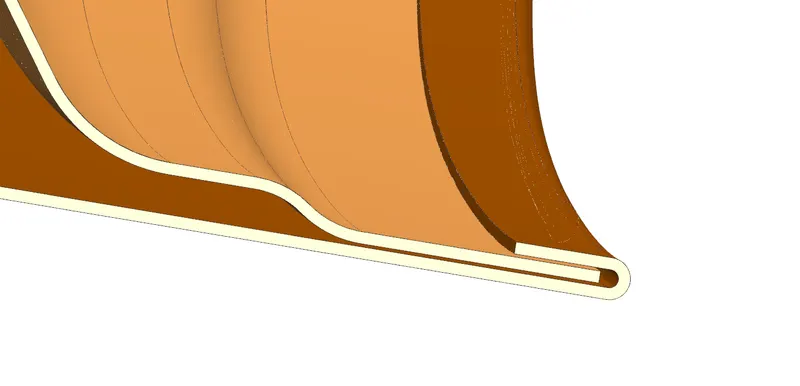
Outer panel is a asthetic component of car. It provides good asthetic look to the vehiclr. It is designed to reduce the drag to improve the performance of vehicle. outer panel is joined with the inner panel using hemming process. pedestrian safety is considered while designing the hood outer panel.
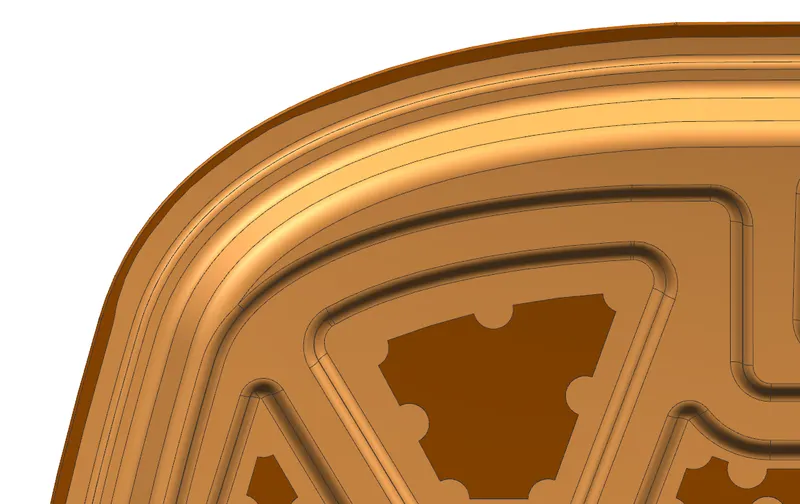
Hemming with reliefs:
2. Inner Panel
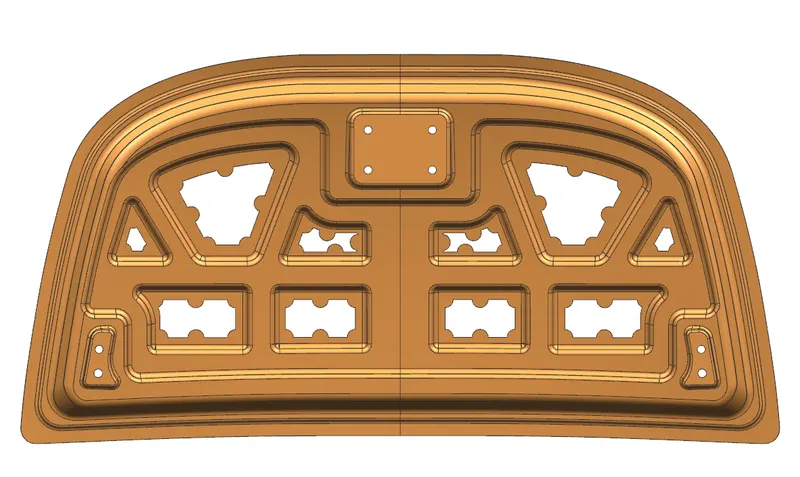
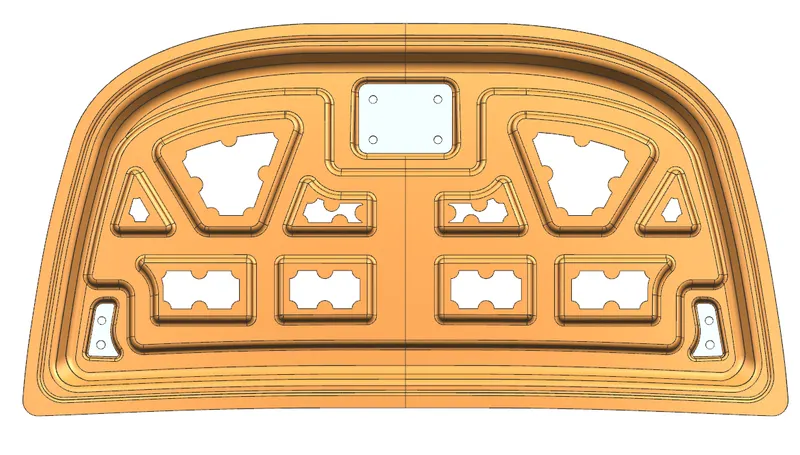
Inner panel is the part that gives strength and rigidity to the outer panel. Inner Panel is a supporting component for diffferent parts like hinges, supprt rod mounting, striker, Mastic points, etc. The master section represents the initial emboss shape and size. Then we provide the emboss for the Striker and hinge elements after fixing the location.
3. Hinges
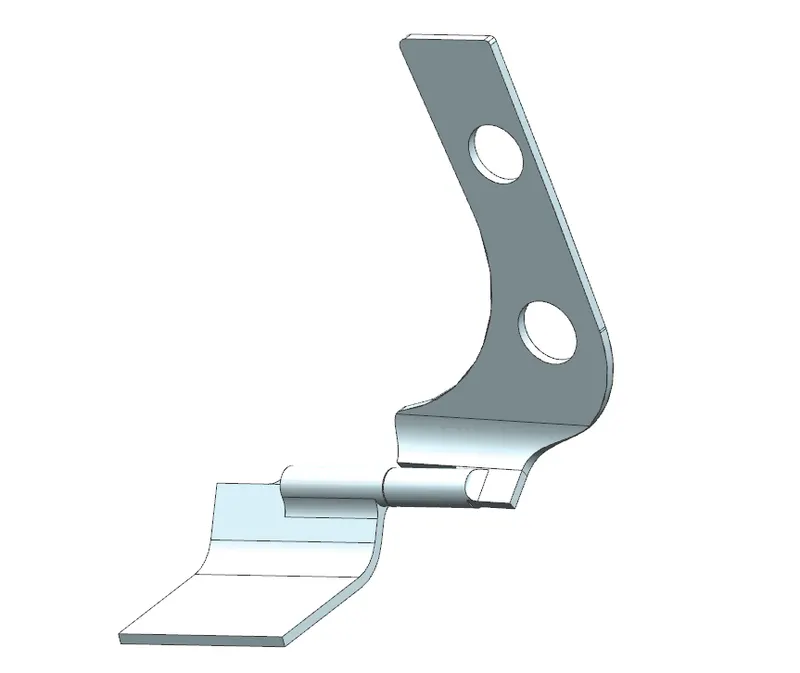
Hinges are used to proper opening and closing of hood at certain angles.
Hinge consist of two parts
a. Hinge at inner panel side
b. Hinge at engine compartment side
4. Striker
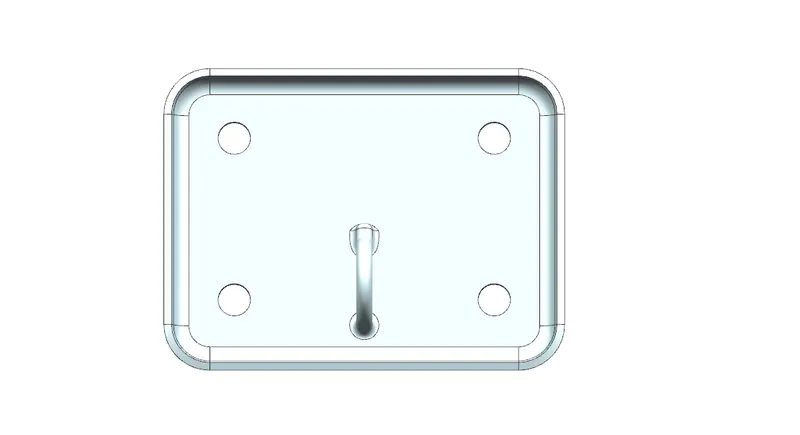
Hood Striker is a very simple component. It's basically the fastener that keeps your hood closed shut. This Striker ensures that your hood is securely connected to your vehicle and that it doesn't pop open unexpectedly.
An engine hood Striker mechanism for locking an engine hood in a closed position includes a striker fixed to the lower surface of the engine hood and a base member having a vertical slit into which the striker is dropped in response to closure of the engine hood.
A locking mechanism engages with the striker in response to drop of the striker into the vertical slit and locks the striker in a closing position where it holds the engine hood in the closed position.
Striker Location
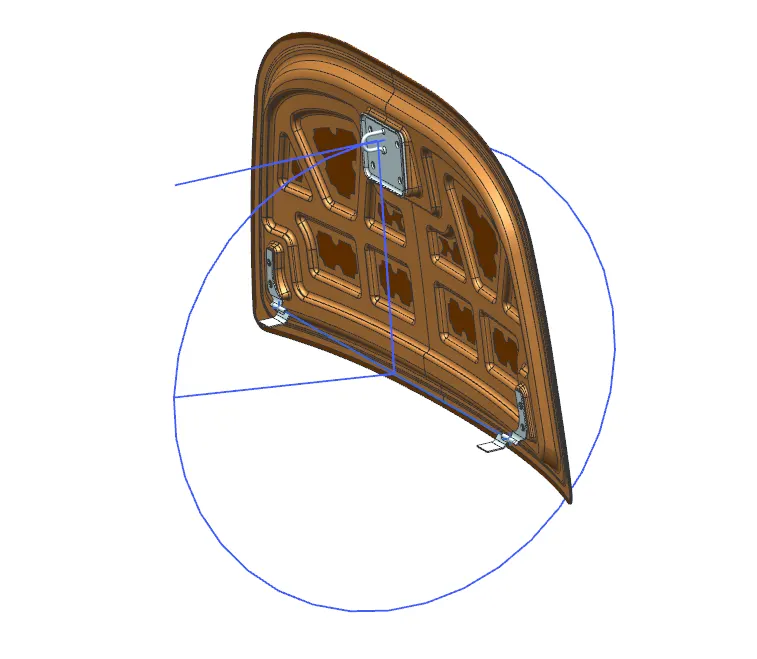
For proper closing of hood with latch the location of striker must be tangential to the trajectory of the hood.
5. Reinforcements
Reinforcements are provided according to the design requirements. Mainly it is provided at the hinge and Striker regions to improve the strength locally. Usually thickness of reinforcements will be higher than that of the inner panels and the value varies according to cost and requirement. According to the design requirement here it is given 1.5mm thickness to both hinge and Striker reinforcements.
6. Hood stay:
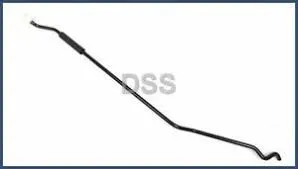
The part which is used for holding the hood in it's place is known as hood stay. It can be a rod or a gas stay.
The rod is either mounted in the hood or in the engine bay. The shape of the stick depends on the space available.
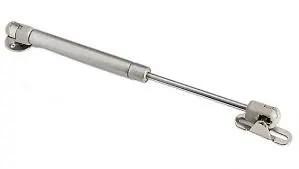
The gas stay is used in expensive cars or cars which have a heavy hood.
Mastic Points:
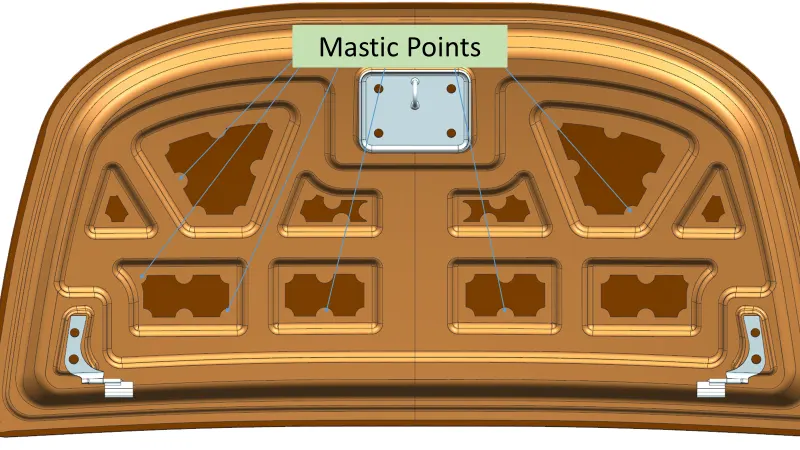
The mastic sealant is elastic compound that behaves like rubber, used to join two material. All assembly processes seal the inner joints of the two panels with a soft shrink-free mastic, extruded in a channel drawn in the inner panel, mainly to provide damping. The mastic points are defined on hood in inner panel as shown. They help the hood outer panel to come back to its original shape after it gets deformed. The mastic has an influence area of 80mm.
Manufacturing processes:
Deep Drawing:
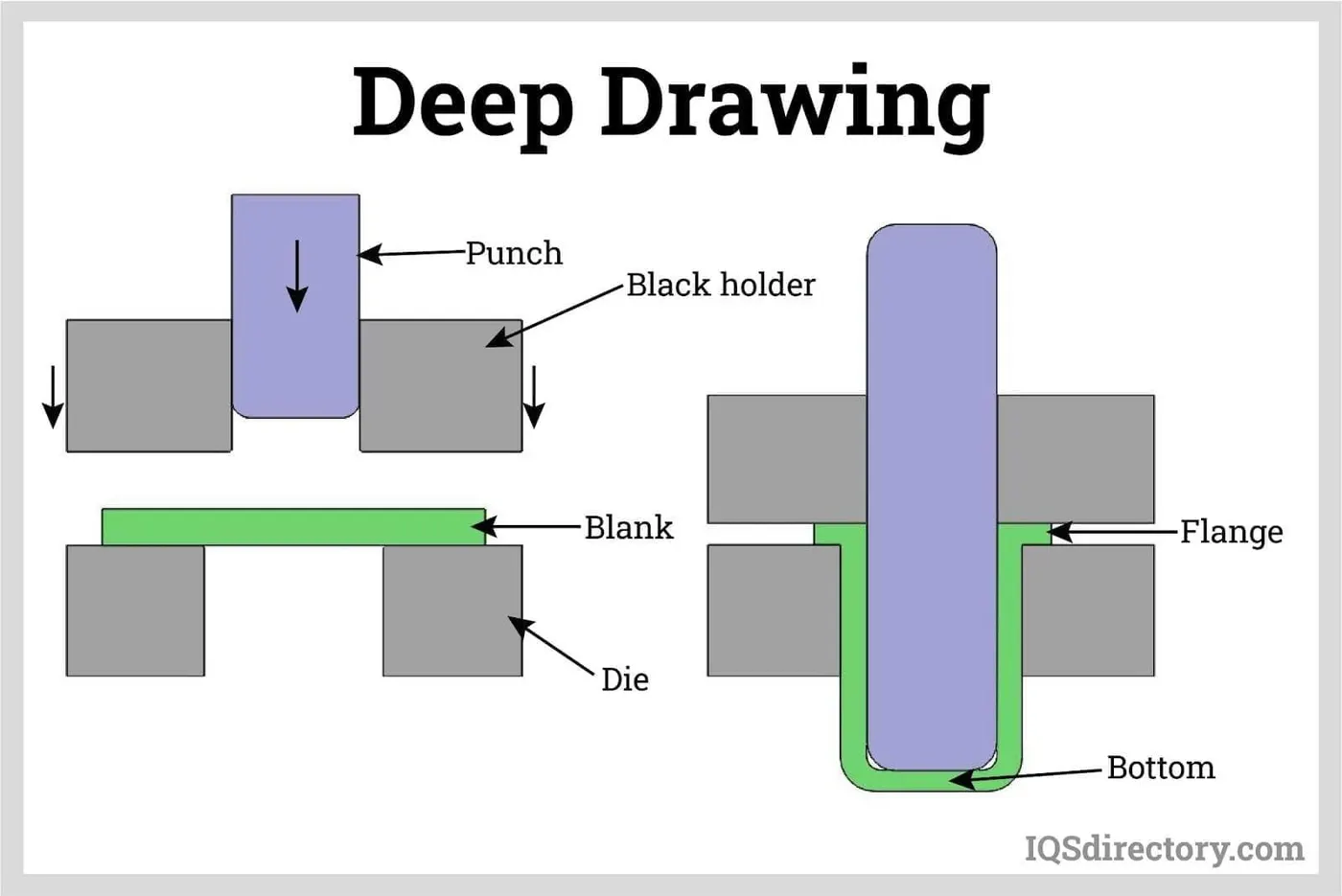
Deep drawing is a manufacturing process in which a sheetmetal is applied with a force by a metal die to form a desired shape. If the depth of the drawn part is more than the diameter of the metal flange the process is called 'deep drawing'. In the Automobile industry the deep drawing is done using rigid tools like punch, die and binders.
The deep drawing process is divided in three types:
- Deep drawing with tools
- Deep drawing with Activity mean
- Deep drawing with Energy mean
In auto industry, the binder closes the sheetmetal and the punch is applied in the die, this process is done slowly to prevent the formation of the wrinkles.
Hemming Process:
Hemming is the process in which hems are formed on the edges on sheet metal for joining two sheets together. The hems are fromed with the help of rollers. The rollers roll over the sheet edges multiple times ( approx 3-4 times).
Hemming process helps to join the sheets without compromising the surface quality of the sheets.
There are different types of hems
- Open Hem
- Flat Hem/ Closed hem
- Rolle Hem
- Teardrop Hem
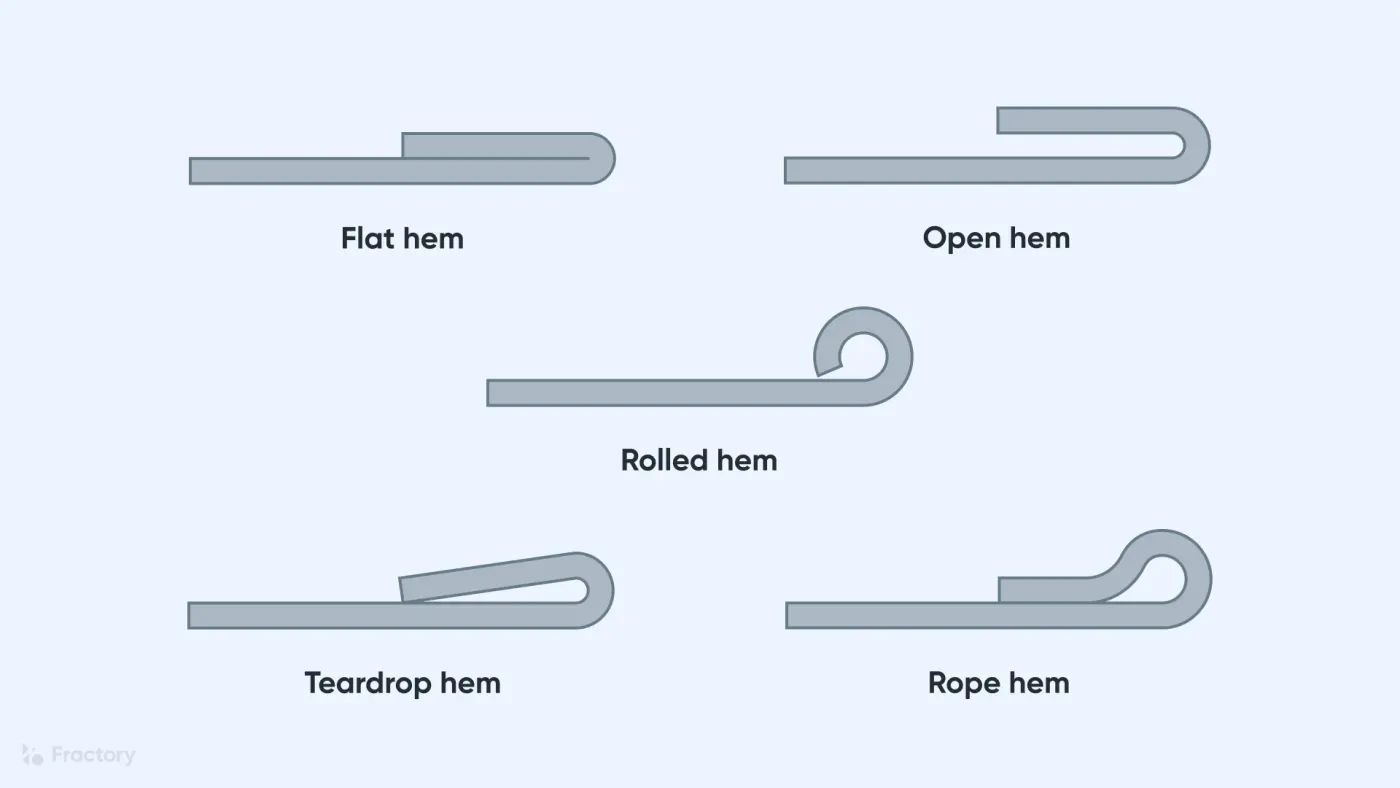
Opened Hem is used for the Car Hood.
Final Car Hood Assembly:
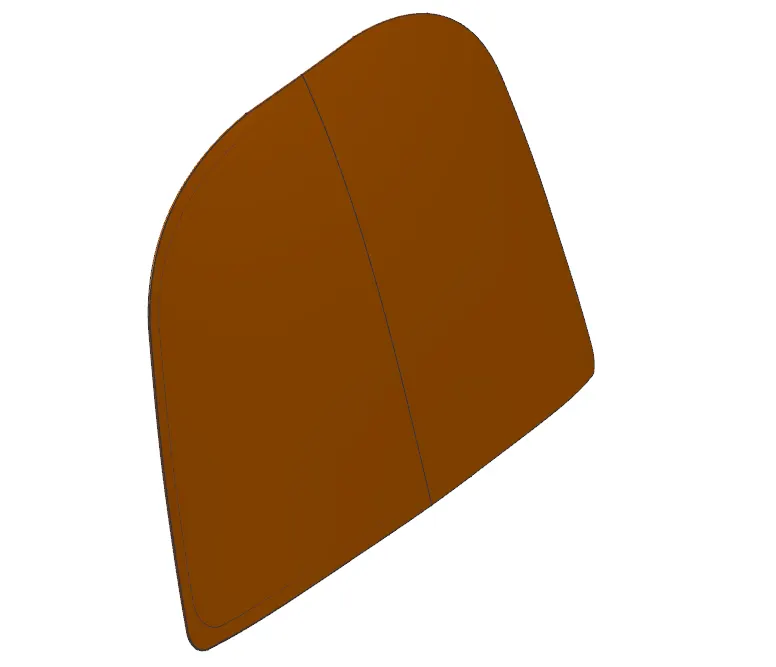
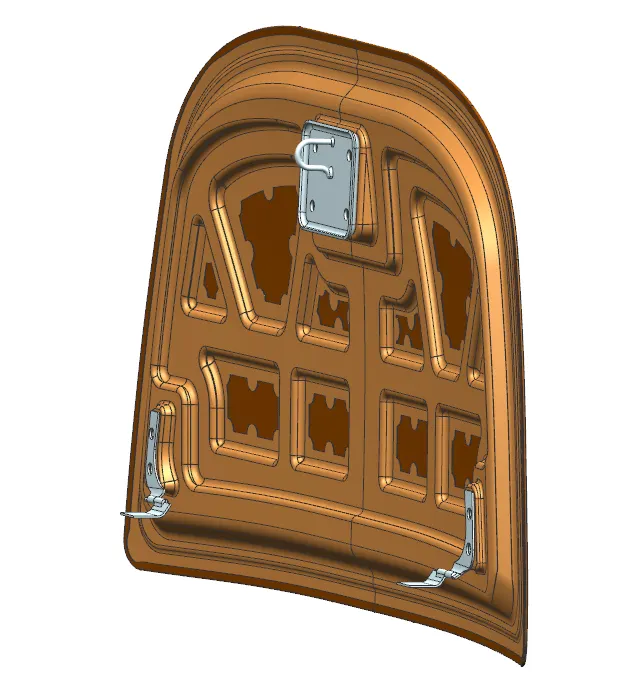
Conclusion:
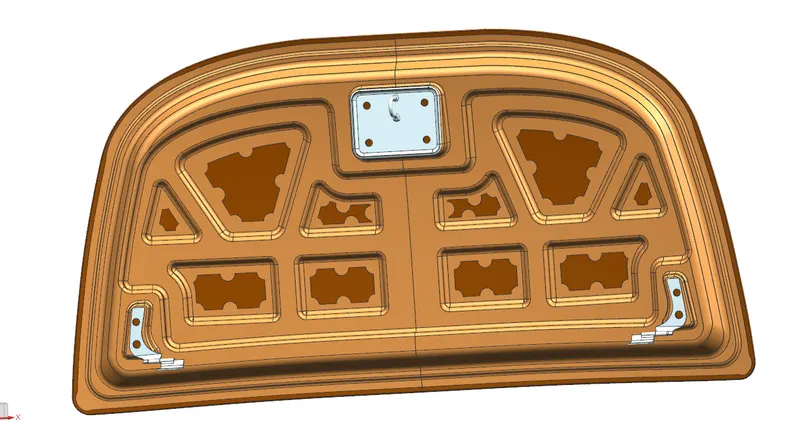
Successfully created car hood with striker, hinges and inner panel.