Hood design-Week 2
HOOD DESIGN
AIM
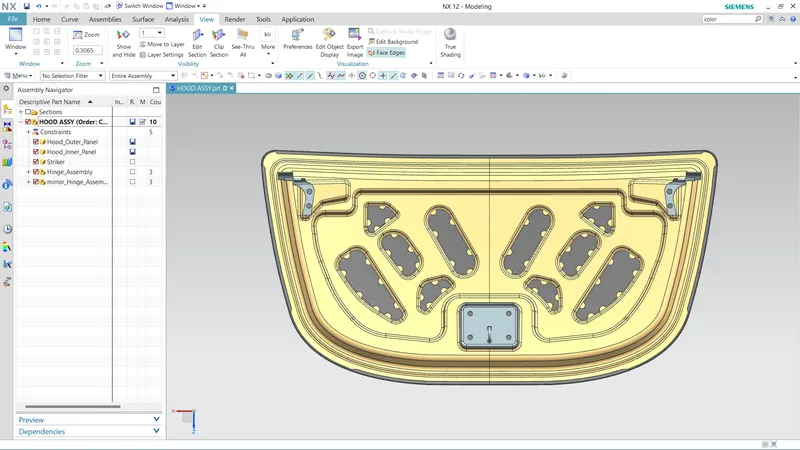
To Design Hood Outer Panel, Inner Panel and the necessary reinforcements by following the Master Section and assmebling the hinge and striker
HOOD OUTER PANEL
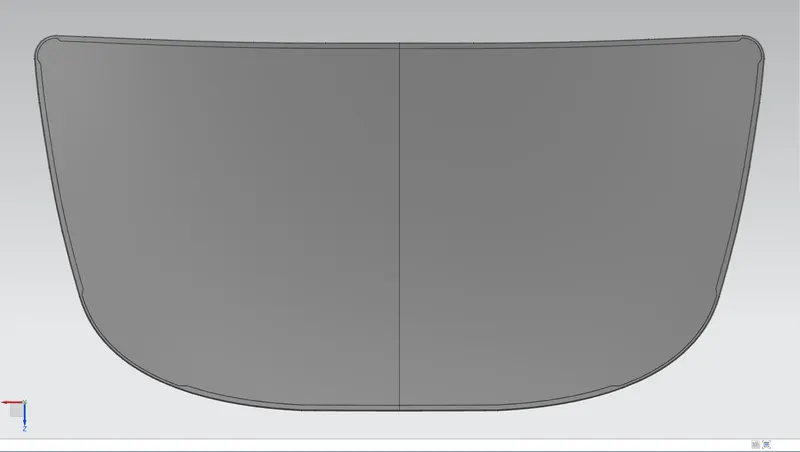
- The class A is given and we need to create the outer panel and inner panel with this
- Following hemming clearance is must one for the best quality on the outer panel
INNER PANEL
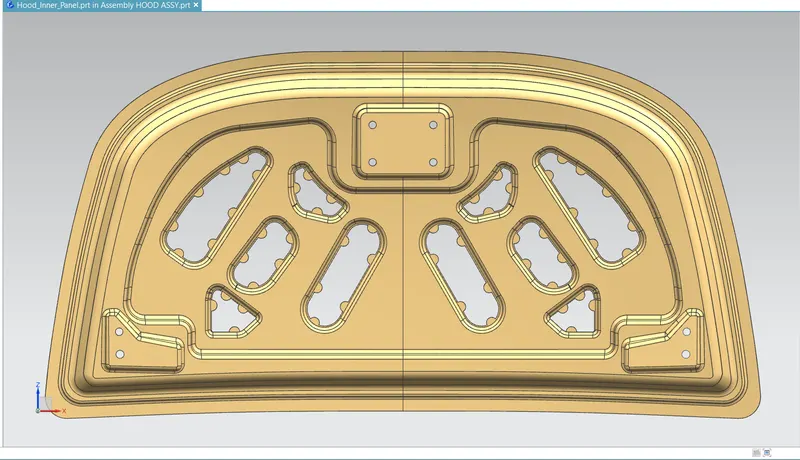
- The inner panel is offseted from the class A as per the master section
- Then the emboss is created the clearance on the outer panel and inner panel emboss is 5 mm then mastic placing area is created
- The emboss is created in flat for the hinge assembly area and striker assembly area
- Holes are created in the emboss for attaching the hinge and striker
Trajectory
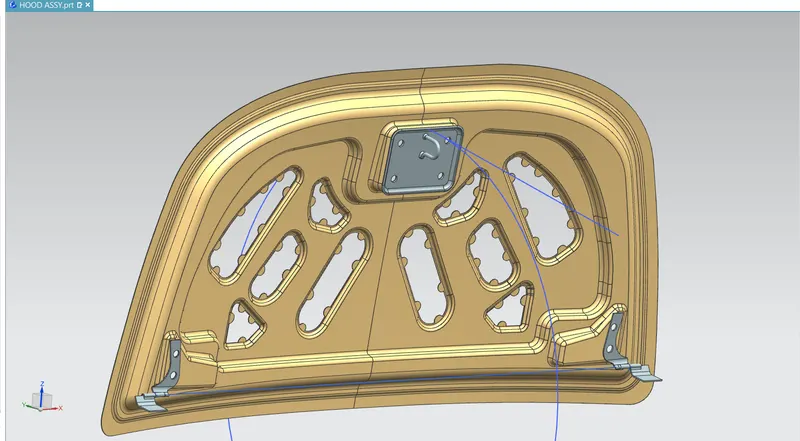
- For placing the striker in the right place the trajectory is needed
- First we need to assemble the hinge with the touch and parallel constrains the mirror the hinge
- The centre point is created in the hinges then line have been created with those points
- From the centre point a circle is created approximately the tangent line is created
- The perpendicular line from the striker and the tangent line coincide by align constrain
MASTIC DATA
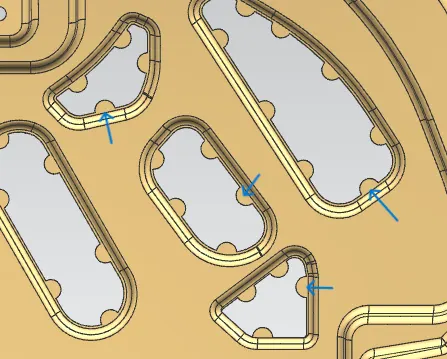
- Mastic is a sealing component that will connect two of the suface together
- In this inner panel the mastic surface area is created with 7mm radius
- The mastic will melt during heating tha hood so this mastic will help to join the inner panel and outer panel
- A single mastic will strength to the hood around 80mm
- The mastic is used in the hood to avoid welded mark and give the asthetic look in the outer panel
EMBOSS DEFINITION
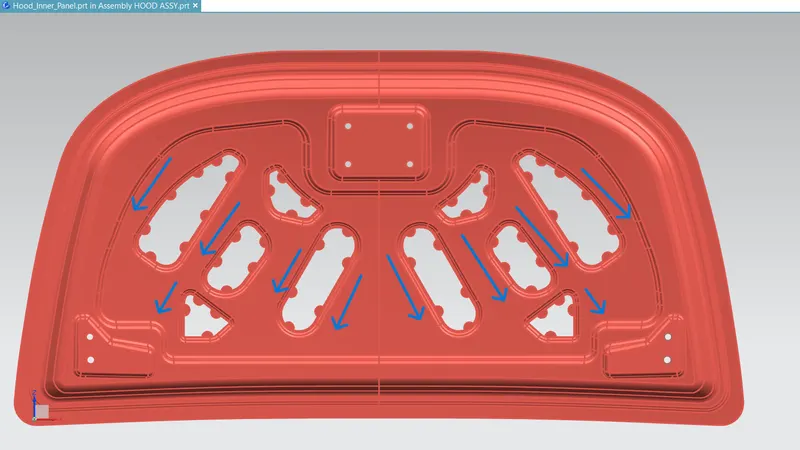
- The emboss is created for joing the inner and outer panel
- The cutouts are made in the emboss it will reduce the weight of the hood
- If the car met with an accident the force will be distribute in the hood first so the cutouts will help to shrink the hood
Deep-Drawing
- Deep drawing is a sheet metal forming process in which a sheet metal blank is radially drawn into a forming die by the mechanical action of a punch.
- It is thus a shape transformation process with material retention.
- The process is considered "deep" drawing when the depth of the drawn part exceeds its diameter.
Hemming
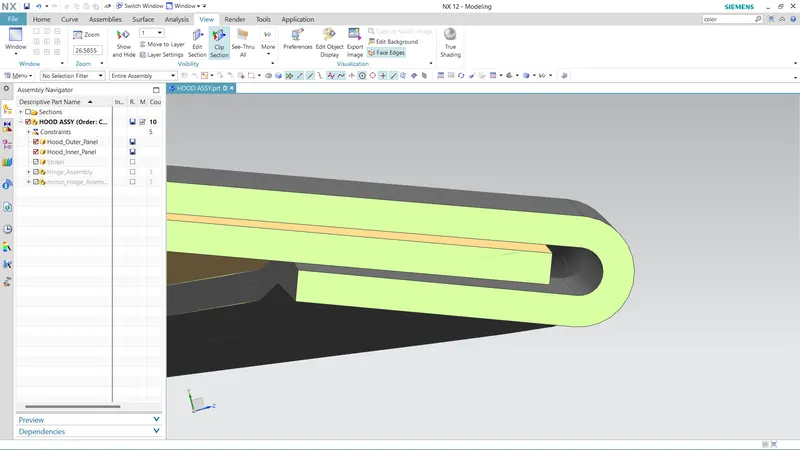
- Hemming is a sheet metal forming process in which sheets are joined by bending it to 180°.
- This hood is formed by hemming process.
- In this process, usually a sheet is bent with the help of inner sheet.
- The clearace of the inner panel and outer panel is 0.2 mm
RELIEF SECTION
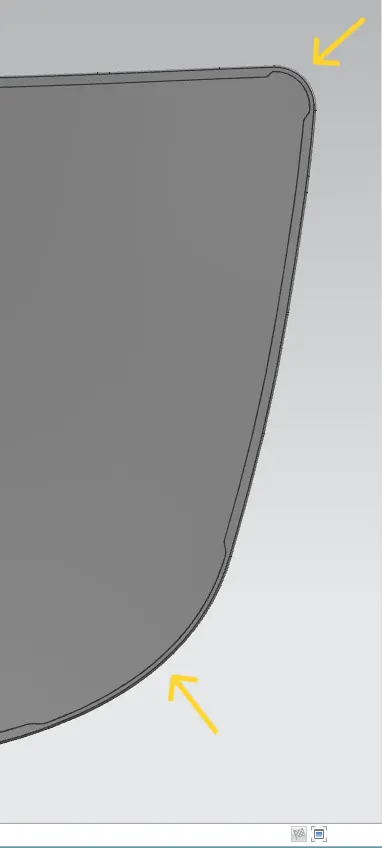
- Relief section is done in the outer panel for 3mm because the roller can't go through on the curve area
FINAL ASSEMBLED THICKEN PART