Hood design-Week 2
HOOD DESIGN
Introduction:
The hood of a car, also known as the bonnet in some regions, is a hinged panel that covers the engine compartment of a vehicle. It is typically located at the front of the car and is designed to provide access to the engine and other vital components for maintenance and repair. The hood is usually made of metal, such as steel or aluminum, and is attached to the car's frame with hinges that allow it to be raised and lowered. The hood is secured in place when closed by a latch mechanism, often located at the front center of the hood. In addition to providing access to the engine, the hood also serves as a protective barrier for the engine and other components from debris, such as rocks and gravel, that may be kicked up while driving. It can also help to reduce wind resistance and improve the car's aerodynamics.
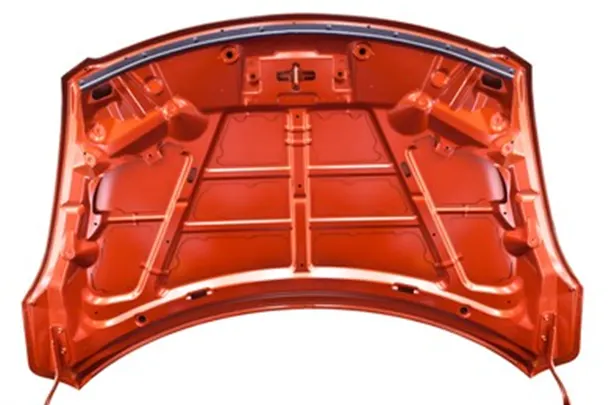
Hood of a car
Hood design:
The design of a car hood, or bonnet, can vary greatly depending on the make and model of the car, as well as its intended purpose and style. However, there are some common design elements that are present in many car hoods. One of the most important design considerations for a car hood is aerodynamics. The shape of the hood can greatly affect the car's wind resistance, and designers often strive to create hoods that are as streamlined as possible to improve fuel efficiency and overall performance. Another important design consideration is ventilation. The engine compartment of a car generates a significant amount of heat, and the hood must be
Assembly of the hood consist of,
- Hood inner panel
- Hood outer panel
- Latch and striker
- Hinge for hood and engine
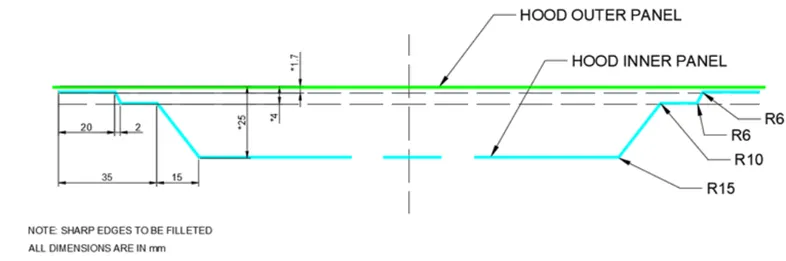
The master section for hood design is given as shown below,
Hood inner panel:
The inner panel of a car hood, also known as the hood liner or hood insulation, is a layer of material that is attached to the underside of the hood to provide thermal insulation and sound dampening. The inner panel is typically made of a heat-resistant material such as fiberglass or a synthetic polymer, and is designed to prevent engine heat from radiating into the passenger compartment of the car. This can help to keep the cabin of the car cooler, especially during hot weather or in stop-and-go traffic. The design of the inner panel can vary depending on the make and model of the car. Some inner panels may be relatively thin and lightweight, while others may be thicker and more substantial for added insulation and noise reduction. Some inner panels may also feature embossed patterns or designs for added visual appeal.
Overall, the inner panel of a car hood plays an important role in providing thermal insulation and sound dampening to help create a more comfortable and enjoyable driving experience.
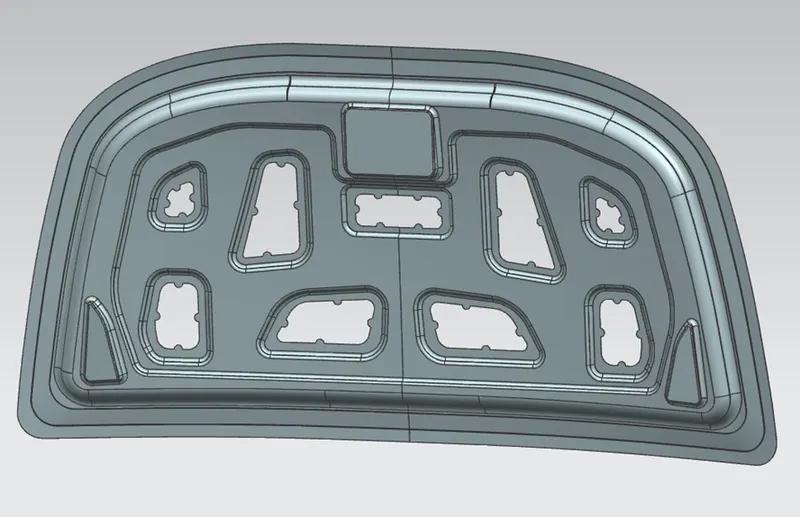
Inner panel
Hood outer panel:
The outer panel of a car hood is the visible outer layer of the hood that is exposed to the elements and can be seen from outside the vehicle. It is typically made of metal, such as steel or aluminum, and is designed to protect the engine compartment and other vital components from debris, weather, and other environmental factors.
The outer panel may also be painted or coated to match the color of the car or to provide a unique visual accent. Some hoods may also feature decals or other decorative elements, such as hood scoops or vents, to enhance the overall appearance of the car. Overall, the outer panel of a car hood is an important component of the vehicle's design, providing protection, style, and aerodynamic benefits.
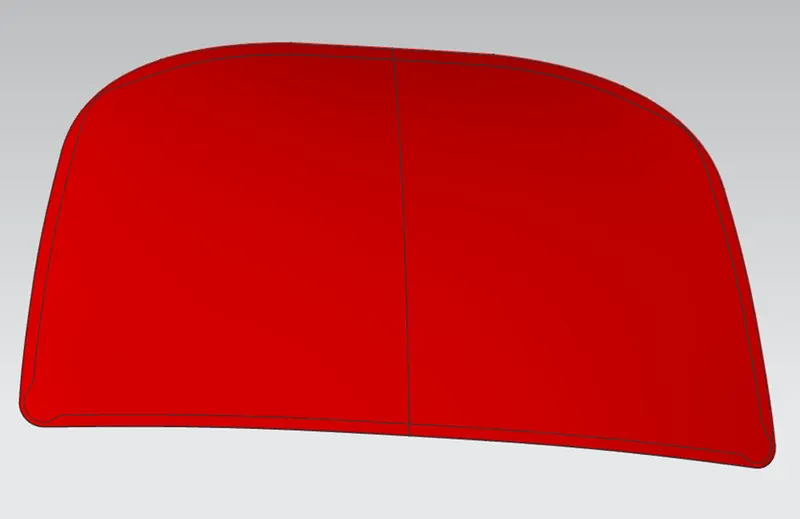
Outer panel
Latch and Stricker:
The latch and striker are two components of the hood latch mechanism on a car. The latch is typically located on the hood itself, while the striker is located on the body of the car. The striker is typically a metal plate that is attached to the body of the car, often located near the front of the engine compartment. When the hood is closed, the latch mechanism engages with the striker to securely hold the hood in place.
The design of the latch and striker is important for ensuring that the hood is securely held in place while driving. The latch should engage with the striker with enough force to hold the hood firmly in place, but not so much force that it damages the latch or the body of the car. To ensure that the latch and striker are functioning properly, it is important to periodically inspect and lubricate the latch and striker components. Additionally, if the hood is not closing properly or is difficult to open, it may be necessary to adjust the alignment of the latch mechanism or striker. It is recommended to have a professional mechanic inspect and make any necessary adjustments to the latch mechanism and striker to ensure proper function and safety.
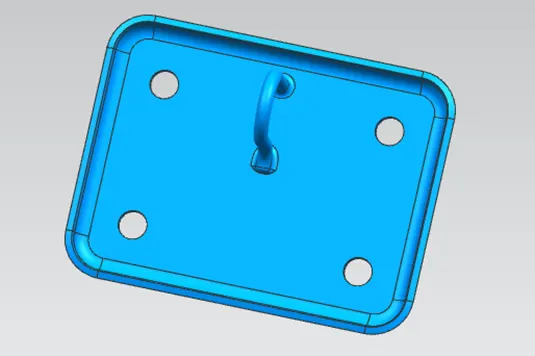
Latch and Stricker
Hinge for hood and engine:
Hinges for the hood and engine are an important component of a car's design, as they allow the hood and engine compartment to be easily opened and closed for maintenance and repairs. The hood hinge is typically located at the front of the car and is responsible for holding the hood securely in place while driving.
The engine hinge, also known as the hood support or strut, is typically located at the rear of the engine compartment and is responsible for holding the engine hood open while maintenance or repairs are being performed. The engine hinge is typically made of a combination of metal and plastic components and is attached to both the engine hood and the body of the car. If the hood or engine hinges are damaged or not functioning properly, it can be dangerous to drive the car. It is recommended to have a professional mechanic inspect and repair any issues with the hinges to ensure proper function and safety.
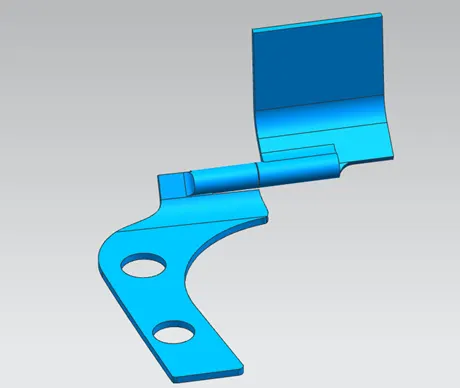
Hing for hood and engine
Hood assembly is shown below,
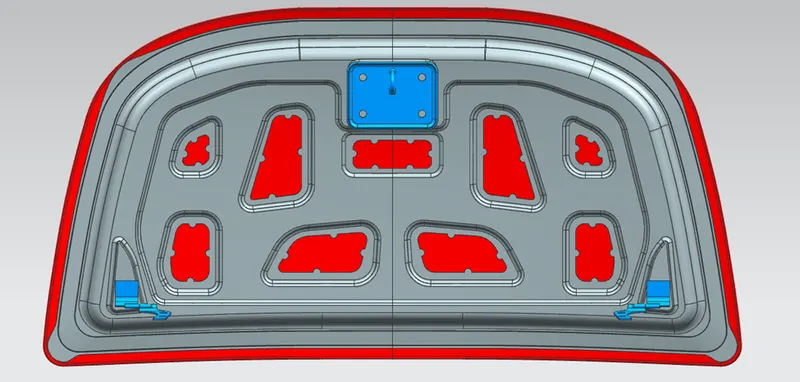
Hood assembly
Design process:
Hemming: Hemming is a process used in sheet metal fabrication where the edge of a metal sheet is folded over onto itself to create a double-layered edge. This creates a stronger and smoother edge, while also reducing the risk of injury from sharp edges.
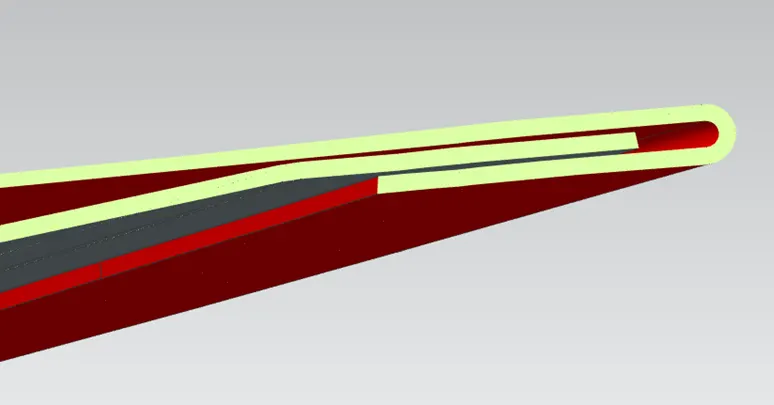
Hemming
Corner relief:
Corner relief is a design feature that is often incorporated into the hood design of cars. It refers to the rounded or beveled corners that are added to the edges of the hood to provide a smooth transition from the hood surface to the surrounding body panels. The purpose of corner relief is to improve the aerodynamics of the car and reduce wind resistance. Sharp corners and edges on the hood can create turbulent airflow, which can increase drag and reduce fuel efficiency. By adding corner relief, the air flows more smoothly over the hood and around the car, reducing drag and improving performance.
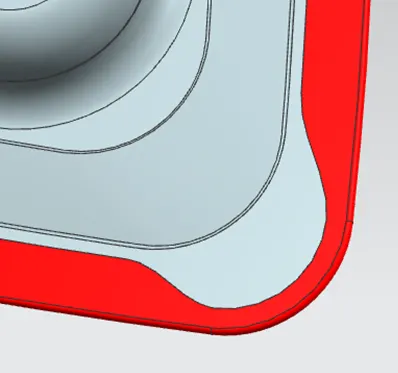
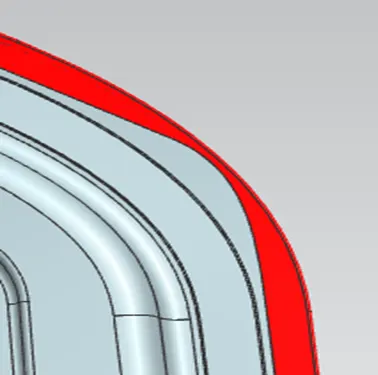
Corner relief
Mastic points:
Mastic points, also known as adhesive points, are small dots or strips of adhesive material that are commonly used in the automotive industry to attach trim pieces and weatherstripping to car hoods and other body panels.
The use of mastic points in car hoods can help to improve the overall quality and durability of the vehicle, as they can help to prevent rattling and noise caused by loose trim or weatherstripping. They can also help to protect the car hood from damage caused by vibration, impact, or exposure to the elements.
Mastic points are shown below in blue circles,
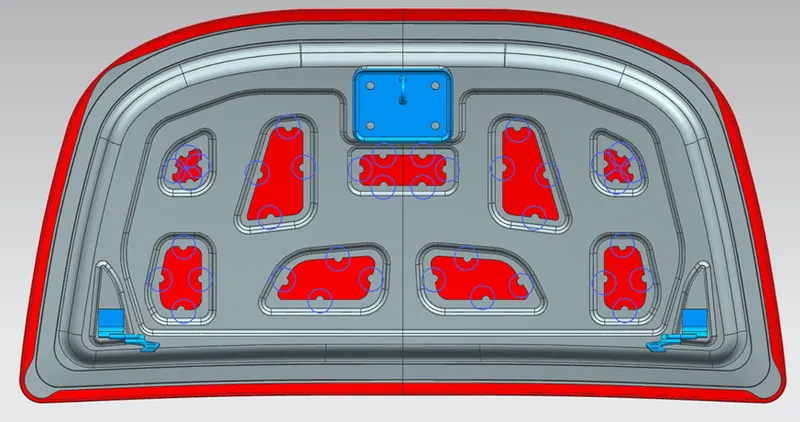
Mastic points
Embosses:
Embossing is a design technique used in graphic design, printing, and other fields to create a three-dimensional, raised effect on a surface. It is accomplished by pressing an image or design into a material, such as paper or metal, to create a raised or indented impression.
There are two main types of embossing,
- Blind embossing is when the embossed area is left uncolored, creating a subtle and elegant effect.
- Foil embossing, on the other hand, involves adding a metallic or colored foil to the embossed area, creating a more dramatic effect.
The embossed surfaces are shown below in yellow color,
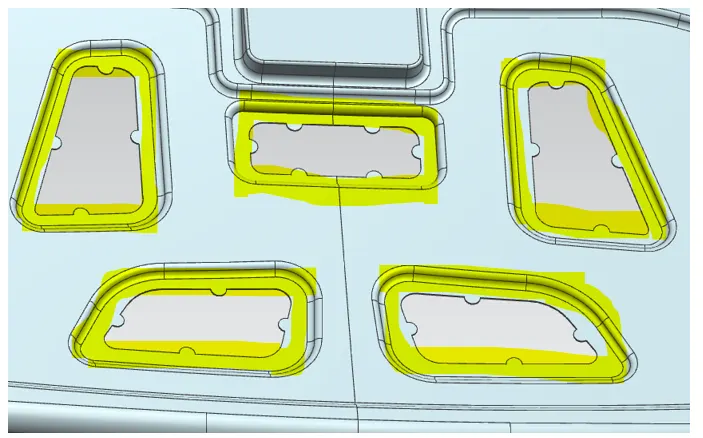
Emboss
Deep drawing:
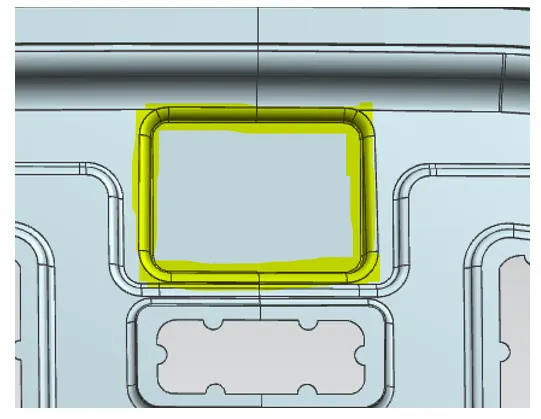
Deep drawing is a metal forming process that involves creating a three-dimensional shape from a flat metal sheet or coil. The process is commonly used in manufacturing to create a variety of products such as kitchen sinks, beverage cans, and automotive parts. In deep drawing, the metal sheet is placed on a blank holder and held in place by a draw ring or die. A punch then pushes the metal sheet into the die cavity, causing it to deform and take on the shape of the die. The metal is drawn into the die by applying a combination of tensile and compressive forces, which causes the material to thin as it forms the desired shape.
Deep drawing is a cost-effective and efficient process for producing complex shapes with high precision and accuracy. It is commonly used in the automotive, aerospace, and consumer goods industries, among others.
Deep drawing is shown below in yellow color,
Deep drawing
Tools used for hood design:
Offset surface- The offset surface gadget copies the picked surface at a provided distance and guidance.
Emboss- The embossing contraption makes a punched surface of the picked shut contour. The punch is produced using a chosen surface containing the contour surface. Sketch. a draft can be obliged the punch from either the end cap or the base surface.
Trim sheet- The trim sheet gadget parts the target surface along the intersection curve of the target surface and the gadget surface. The piece of the cover on either side of the intersection can be either discarded or retained according to need.
Through curves- This contraption creates a surface between two various surface sections where the shape can change in section.
Law Extensions- Creates an extended surface subject to an open-chain contour or a shut contour on the picked target surface. A draft can be obliged by the extension.
The curve on the surface- Creates a surface spline feature directly on the face.
Face blend- Creates a curved blend or fillet along two picked surfaces in gave direction vector. The blend curve can be changed regarding reach, width, and continuity.
Edge blend- This command creates smooth tangent faces between faces which connected on edge.
Extend sheet- Creates an extension of the picked sheet up to a given distance.
Offset in the face- Creates an offset in the front or edge on the target face up to a provided distance.
Bridge curve- Create a roundabout portion between two intersecting and non-intersecting curves. The beginning and endpoint of the roundabout changed by providing distance.
Projected curve- Creates a projection of a curved profile onto a goal surface. The surface can be linear and curved. The direction can be changed by a reasonable vector.
Mirror Geometry- Mirror a geometry along a face.
Sew- combines sheet bodies by sewing common edges together or combines solid bodies using sewing faces. Any opening between the surfaces can be closed.
Thicken- creates a strong body using thicken.
Extracted body- Creates a body of picked geometry that can be changed by editing the parent feature and rebuilding the extracted feature.
Conclusion:
Hood design for cars is an important aspect of automotive engineering and design. The hood is responsible for protecting the engine and other important components from external elements, as well as providing an aesthetically pleasing design element for the vehicle.
Overall, hood design for cars is a constantly evolving field that requires a balance of functionality and aesthetics. As the automotive industry continues to innovate and evolve, we can expect to see new and exciting developments in hood design and automotive engineering as a whole.