Hood design-Week 2
CAR HOOD:
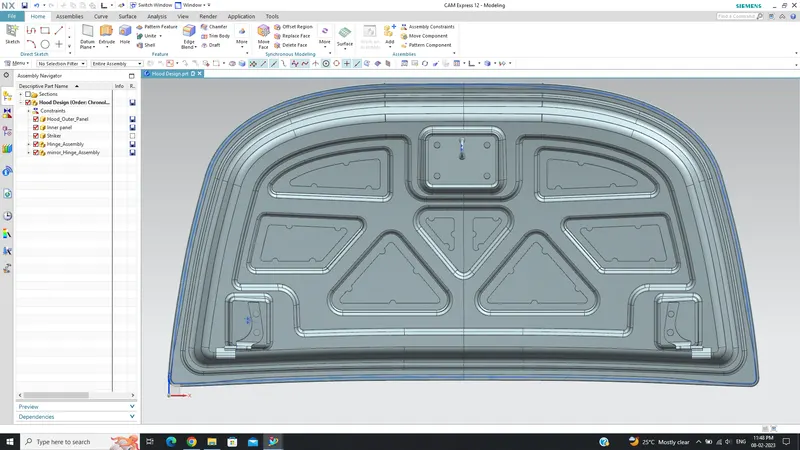
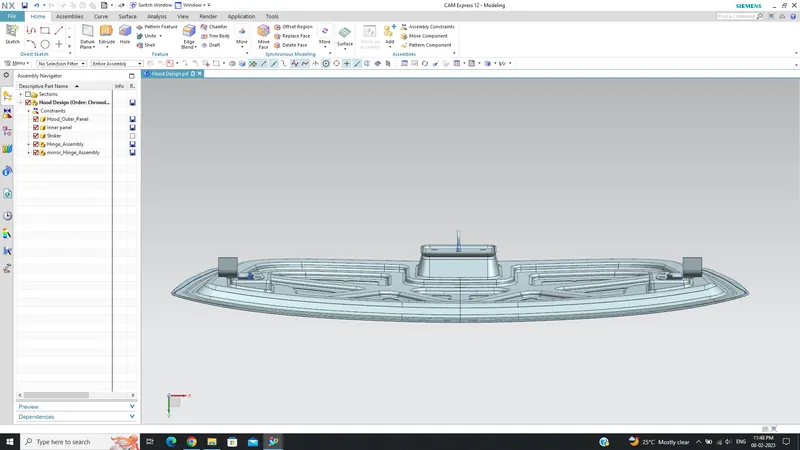
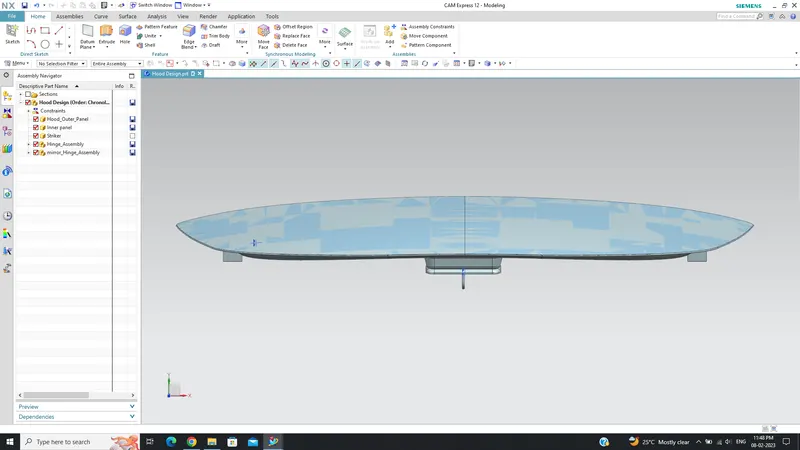
The fundamental functionality of the car hood is to safeguard the parts under it, for instance, the motor. Without this security, little stones kicked up by different cars could penetrate a liquid compartment or harm the motor. Moreover, most motors shouldn't be presented with an abundance of water. It makes your car more gorgeous. In most current vehicles, gas-powered motors "relax" under-hood air or air ducted from under the front guard through plastic and elastic tubing. The high working temperatures in the motor compartment bring about consumption air that is hotter than the encompassing temperature, and subsequently less thick. A hood scoop can furnish the motor with a cooler, denser external air, and expanding power.
IMPORTANCE OF HOOD:
- Protects radiator, engine, and other parts
- Due to its aerodynamic shape, drag is reduced
- Protection otravelerveller
- Reduce engine noise to make the vehicle quieter
- Give people access to the engine bay
- Absorbs the majority of the impact forces in frontal collisions
PEDESTRIAN SAFETY:
In a collision, a standing or moving pedestrian is hit, propelled to the vehicle's speed, and then allowed to keep moving forward when the vehicle comes to a stop. Although the pedestrian is struck twice, once by the car and once by the ground, the majority of fatal injuries are caused by the collision with the car. The sequence of events that characterises the car-pedestrian interaction is as follows: the vehicle bumper first contacts the pedestrian's lower limbs, the leading edge of the hood strikes the upper thigh or pelvis, and the top surface of the hood and/or windscreen strikes the pedestrian's head and upper torso.
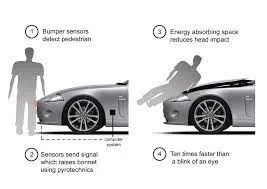
HOOD STAY:
A hood stay is a device for a car's engine room that safely maintains an open engine hood even if an external force is suddenly generated by wind or vibration and that also makes it easier to open and close the engine hood.
TYPES:
- GAS STAY
- SUPPORT ROD
GAS STAY:
These are used to raise the hood of the car. Its sole function is to lift the hood; once lifted, the car's hood automatically opens due to gas pressure. When lifting the car hood is difficult, this is employed. When utilised with upward-lifting doors, spring stays push the door to its completely open position after you've only slightly opened it. Nitrogen gas under pressure and some oil are used in struts to dampen movement and grease the seals.
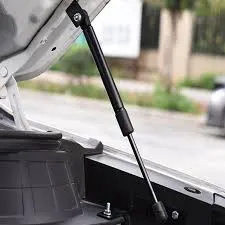
SUPPORT ROD:
Because it is inexpensive, this is frequently utilised in numerous autos. In order to use this type, we must lift the hood manually and insert the support rod into the slot that is either in the hood or an engine component. This primarily applies to situations where the car bonnet weight is light. Support Rods can be fitted with rod locking holes on the bonnet and grommet sides on the engine compartment of the body, or the other way around. The rod's grommet and clip are common components. Increased support force, automated buffering, stability, dependability, strong load-bearing capacity, safe use, difficult to fall, avoid hot hands, easier engine support, and force balancing without shaking are all achieved with the aid of support rods.
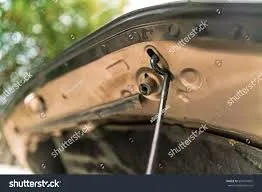
COMPONENTS:
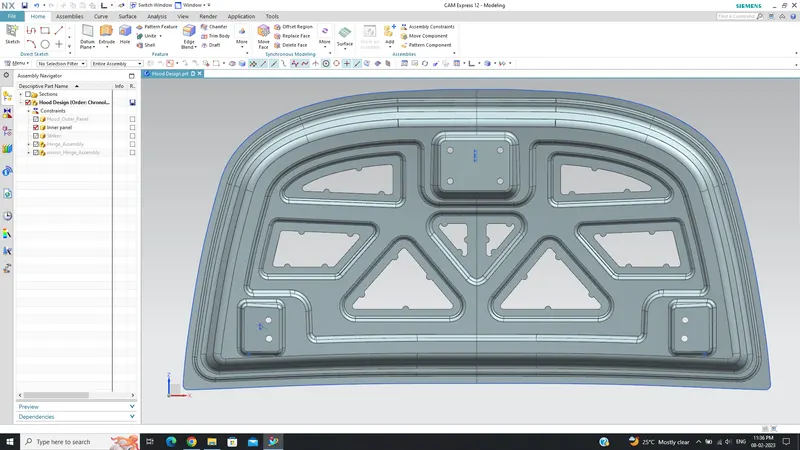
OUTER PANEL:
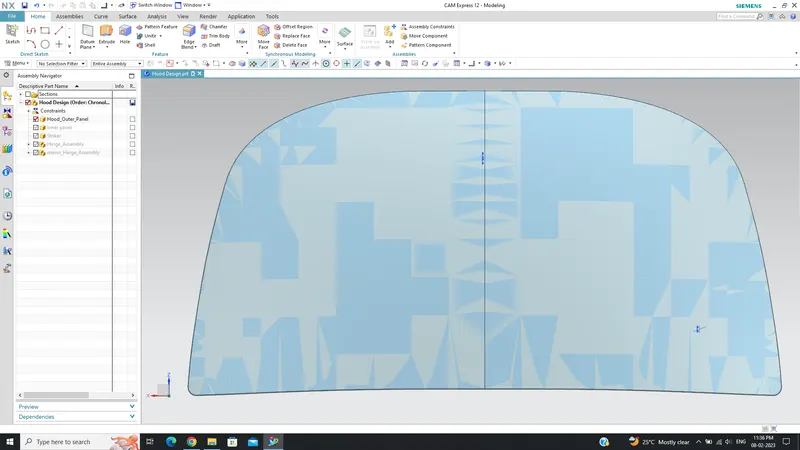
DESIGN METHODOLOGY:
- Creating assembly workbench
- Inserting given files as parts
- Create inner panel part
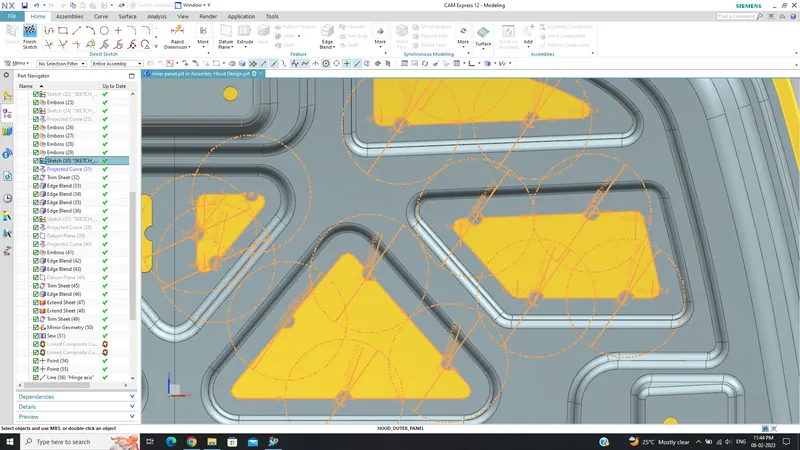
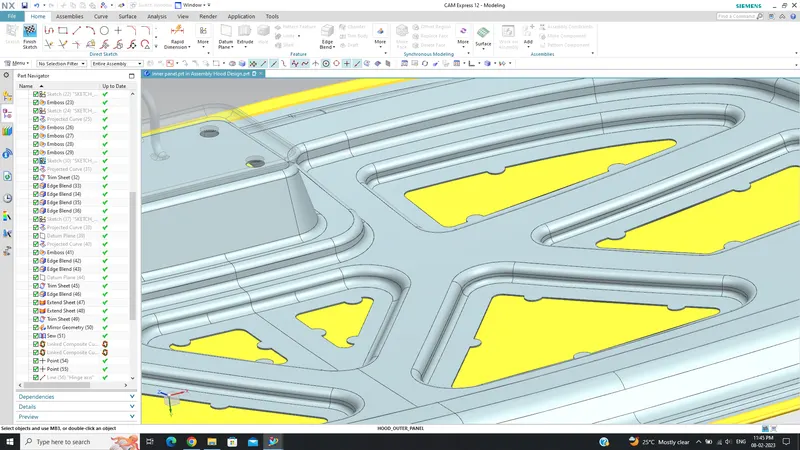
- Embosses on inner panel
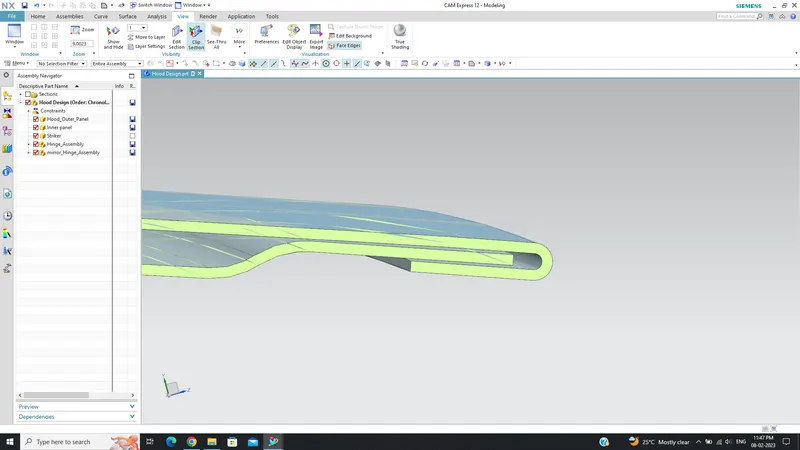
- Hemming flange and corner reliefs
- Provide mastic clearances
- Thicken Inner and Outer panel
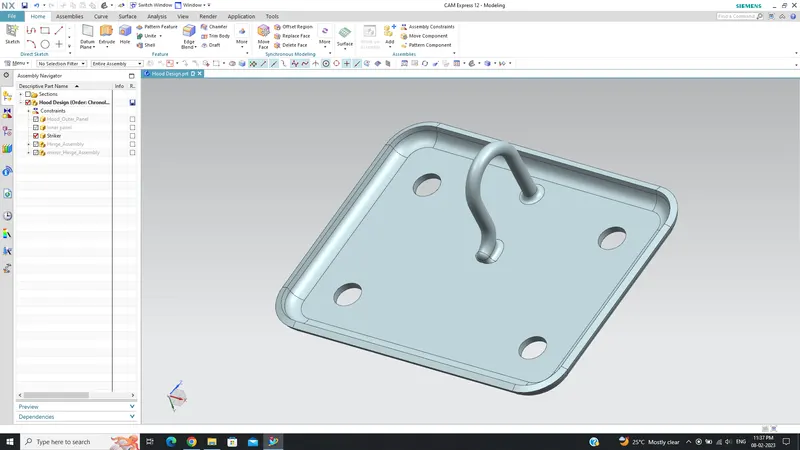
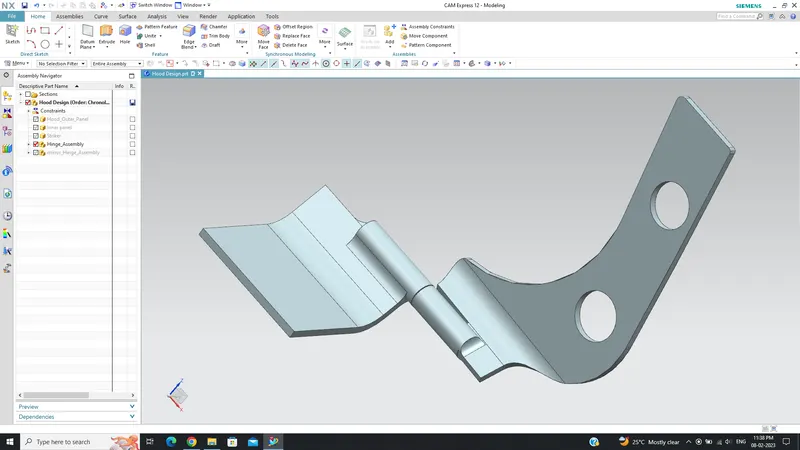
- Hinge and Striker embosses
- Assemble hinge and striker
- Latch trajectory
- Edge blends, mastic spots and other features
DESIGN CONSIDERATIONS:
LATCH TRAJECTORY:
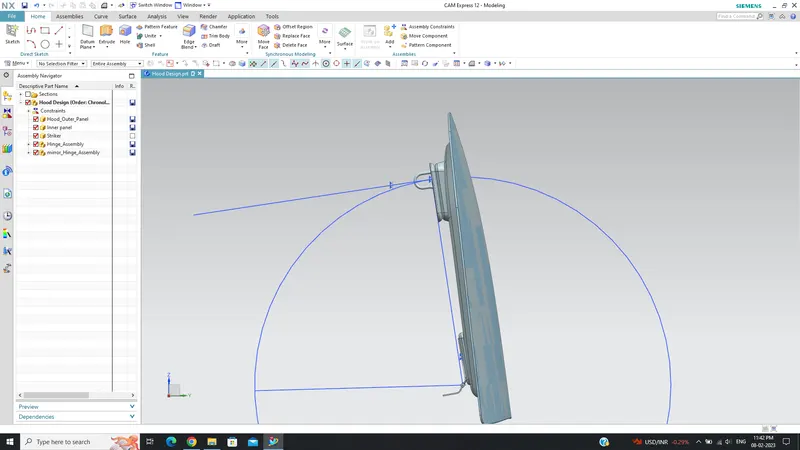
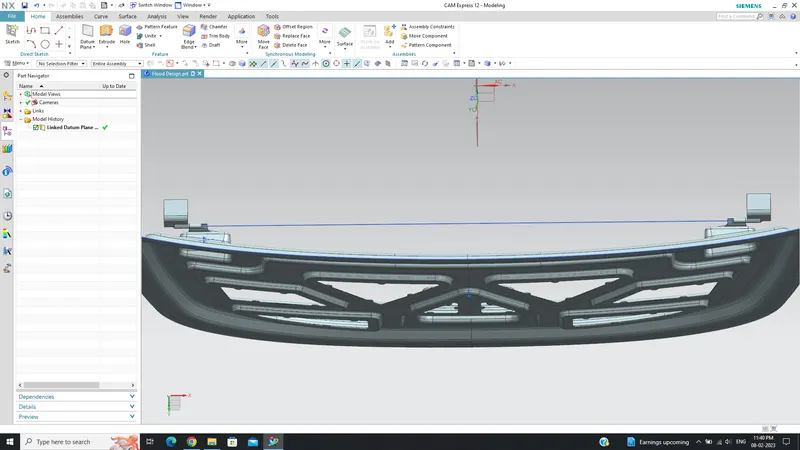
The latch trajectory depicts the striker's route while a vehicle's hood is opened and closed. The established criterion based on the average height of a person determines the radius of the circular trajectory. From the hinge axis up to the latch, the radius is calculated.
HINGE AXIS:
HOOD MANUFACTURING PROCESS:
EMBOSSING:
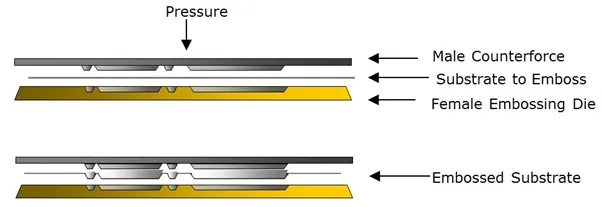
A stamping technique called sheet metal embossing is used to create raised or sunken motifs or relief in sheets of metal. This procedure can be carried out using male and female roller dies that are matched, or by sliding a sheet of metal or a strip of metal between rollers to create the desired pattern. To provide a lustrous, 3D impression, it is frequently used with foil stamping.
DEEP DRAWING:
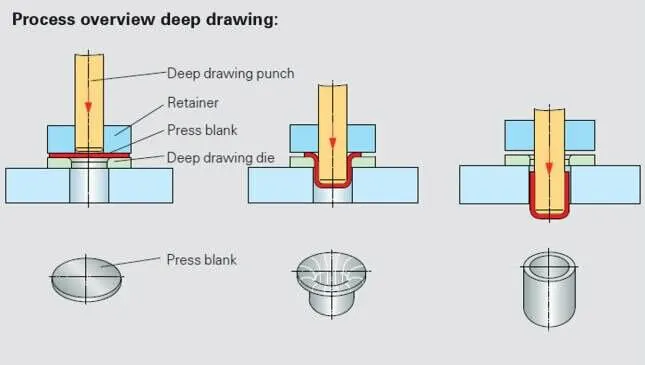
A sheet metal blank is radially dragged into a forming die by the mechanical action of a punch during the sheet metal forming process known as deep drawing. So, it is a material-retention shape modification process. When the drawn element is more deeply recessed than it is in diameter, the method is referred to as "deep" drawing. Redrawing the portion using a series of dies does this. The material retention property causes a radial drawing stress and a tangential compressive stress in the flange region. Wrinkles in the flange are caused by these compressive forces. By employing a blank holder, which serves to assist regulated movement, wrinkles can be avoided.