Hood design-Week 2
HOOD ASSEMBLY
INTRODUCTION
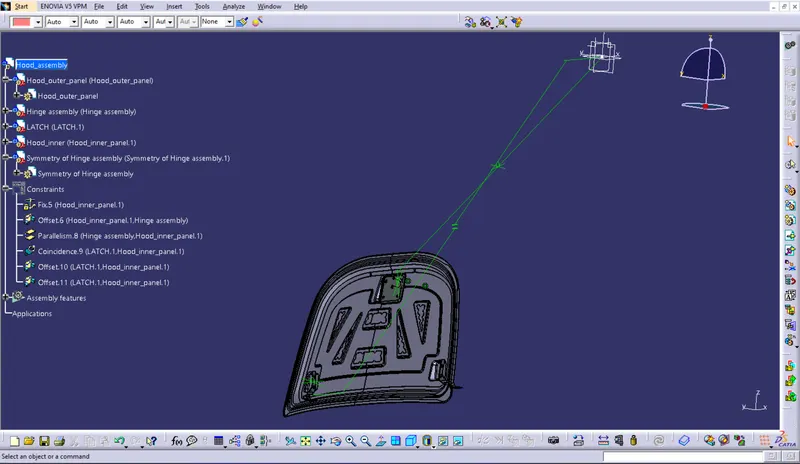
- A car hood also referred to as a bonnet in some other countries is the hinged cover that rests over the engine of a front-engine vehicle. Its purpose is to provide access to the engine for repair and maintenance. Car hoods are typically constructed from steel and sometimes from aluminum.
- Hood is main component of a car at the front portion. It is used to decorate the car & add luxurious look. The shape of the bonnet is made aerodynamic in order to minimize the air effect.

Parts are using in hood assembly for this report,
- Hood outer panel
- Hood inner panel
- Hinge assembly
- Striker assembly
Hood thickness
- Outer panel thickness= 0.75 mm
- Inner panel thickness= 0.75 mm
- Reinforcement thickness= 1.5 mm
Outer panel
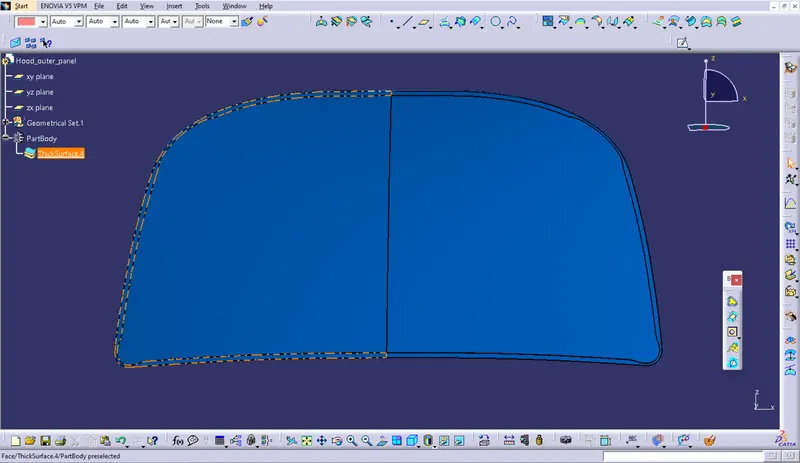
- We can also call it as cover of inner panel. It is the part, which gives luxurious look to the hood or bonnet. Outer & inner panel can not join by any welding process like spot welding or rivet, which spoil the outer look of a car. The outer panel is generally extracted model from the prototype design.
Inner panel
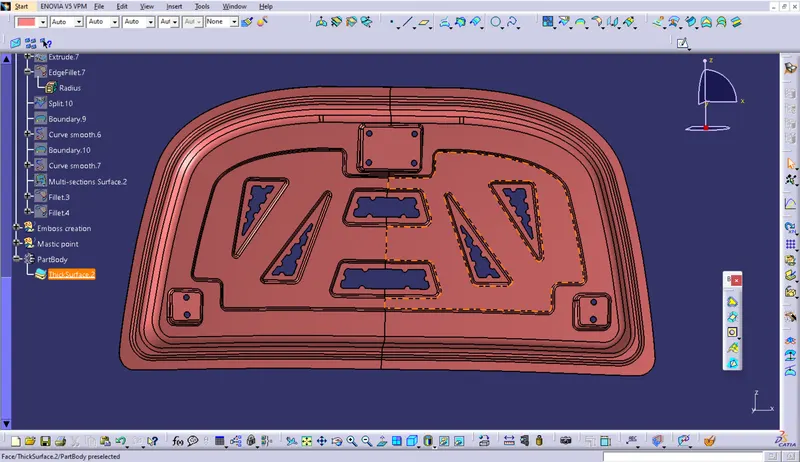
- hood inner panel for a vehicle is provided to improve rigidity, durability, and pedestrian protecting performance by comprising a composite structure in which a multi-cone structure and a frame structure are individually arranged on the front and the rear.
Hinge Assembly
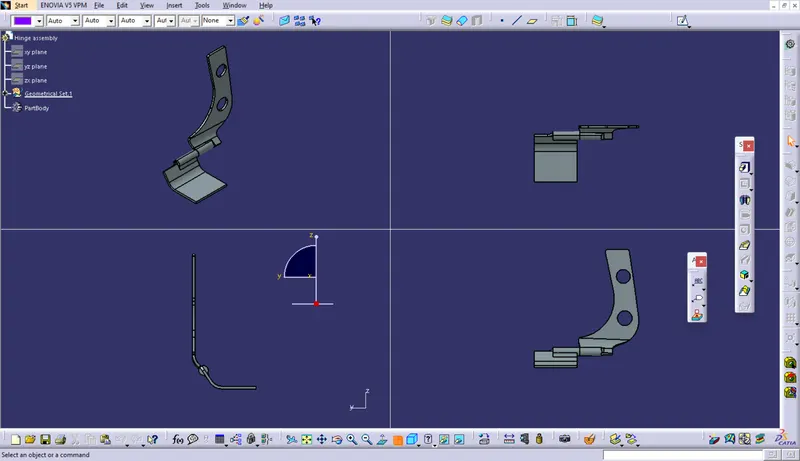
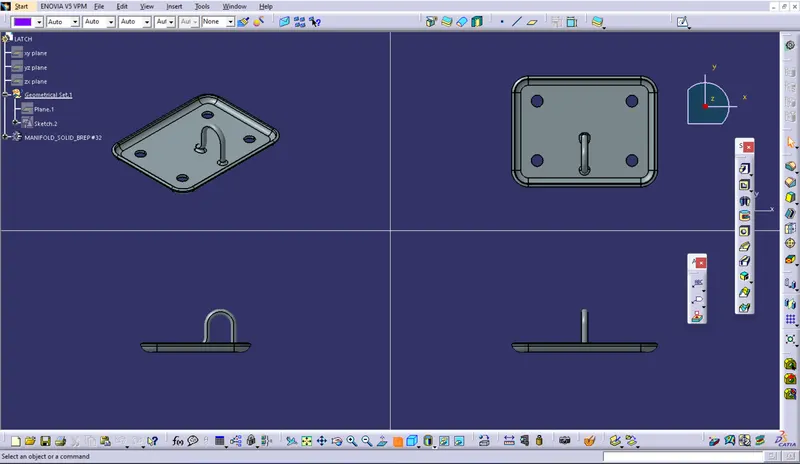
- Hinge is a component that fixes the hood to the fenders of the car. The latch must be fixed perpendicular to the hinge axis so that the hood opens or closes properly.
Striker Assembly
Hemming process
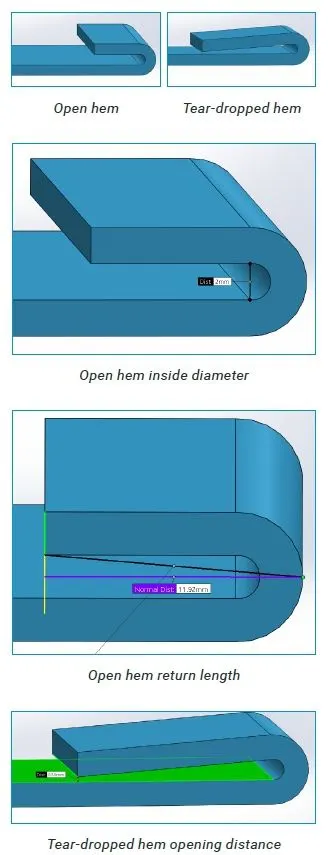
- Hemming is a sheet metal forming process in which sheets are joined by bending it usually to 180°.
- Automotive body panels and automotive parts such as deck-lids, trunk-lids, doors, hoods and tailgates are formed by hemming process.
- This paper present a systematic review of sheet metal hemming process based on materials used in hemming process, analytical models, experimental and computational investigations made in the domain of sheet metal hemming process.
- Various grades of high strength sheets, aluminium alloy recycle-friendly aluminium alloys, magneisum alloys, light weight alloys are used as workpiece materials in hemming process. Analytical models are also presented by few researchers for development in hemming process.
- New experimental set-up and novel experimental strategies of hemming process are devised and also adopted by researchers in past.
- Classical hemming, roller hemming, robot assisted roller hemming, laser assisted roller hemming and hemming with electro magnetic forming processes are the experimental different approaches utilized for performing sheet metal hemming operations.
- In FEM simulation of hemming process, three dimensional solid elements, shell elements and their combination are mostly employed by researchers in meshing of sheet metal blanks in hemming process.
- FEM simulation found to be an efficient tool for prediction of defects in hemming process and for optimization of process parameters as well. Besides, FEM simulation new computational approaches such as meta-model strategy are also applied for efficient design of hemming process.
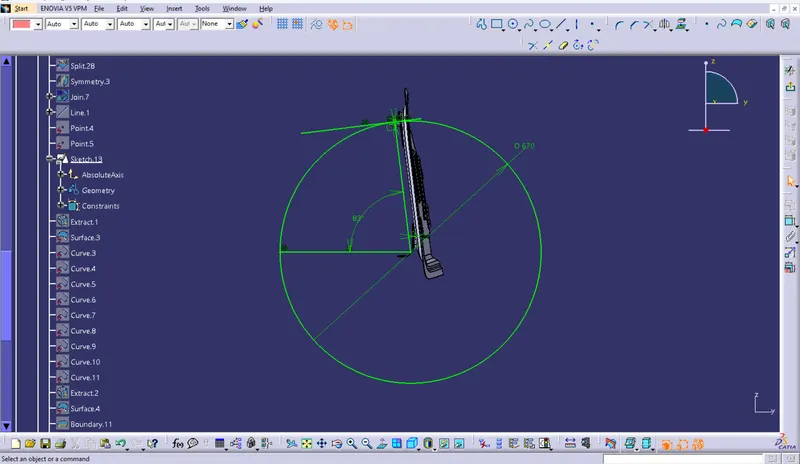
Latch trajectory
Final assembly
step 1
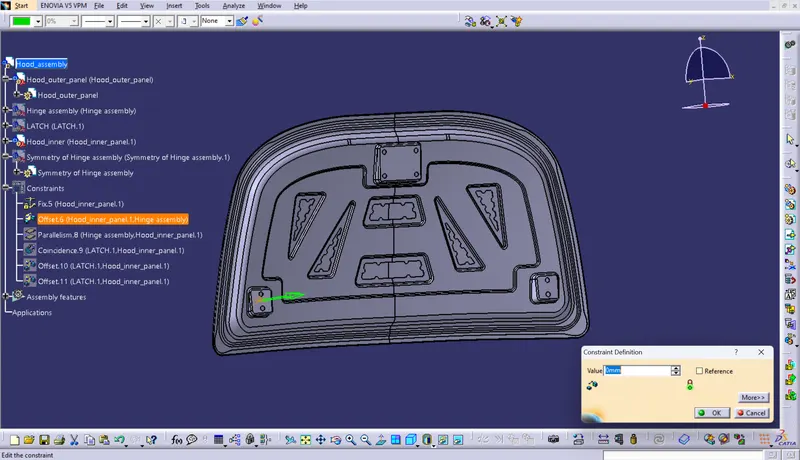
step 2
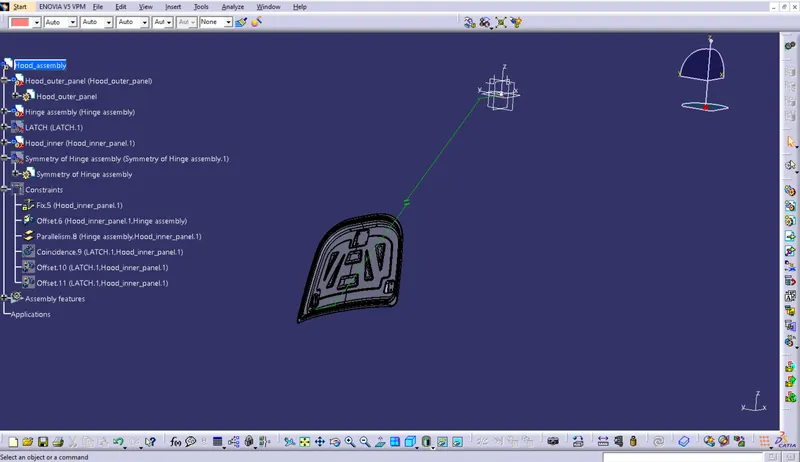
step 3