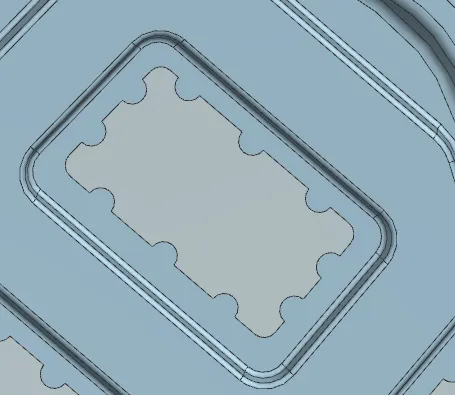
Hood design-Week 2
INTRODUCTION
The hood panel is installed in the front of the vehicle so as to protect parts in the engine compartment and the engine compartment and at the same time open and close the hood panel for replacement and repair of components in the engine compartment.
The hood panel of the vehicle has a form in which an outer panel and an inner panel are combined, and has a frame structure for rigidity reinforcement in order to ensure hood rigidity and durability.
HOOD DESIGN PHILOSOPHY
Traffic accidents are terrible scourge that occur in many countries, specially for developing countries where transportation affairs like tangled yarn. Besides functioning as an engine compartment cover, the hood of car can also help to manage the impact energy of a pedestrian’s head in a vehicle-pedestrian impact.
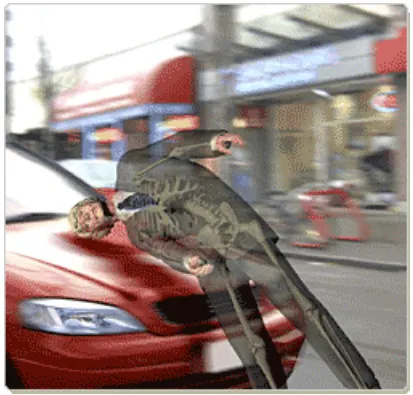
In 1965, Ryan and Mclean (Ryan & McLean 1965) described the sequence of events when a passenger car collides with an adult pedestrian standing erect. Those sequences are as follows:
- Contact between the bumper and the lower legs of the pedestrian
- Contact between the leading edge of the hood and upper legs/pelvis of the pedestrian
- Contact between the pedestrian’s head/upper torso and the top surface of the hood/windscreen/windscreen frame
- Contact between the pedestrian and the ground.
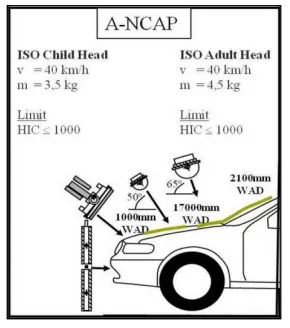
They also speculated that it would be possible to minimize injuries in Pedestrian–Passenger Car Front–end Collision (PPCFC) by changing the frontal shape of a car.
HOOD ASSEMBLY
The Hood Assembly comprises of the following components
- Outer Hood Panel
- Inner Hood Panel
- Striker
- Hinge Assembly
Outer Hood Panel: - Outer panel is the Class A surface of the hood which is visible to the outer world, as it is the Class A surface the aesthetic requirements of the component is very tight, due to which the inner & outer panel can’t be joined by any type of welding as it would reflect in the outer surface, so to join the both panel we use the Hemming process.
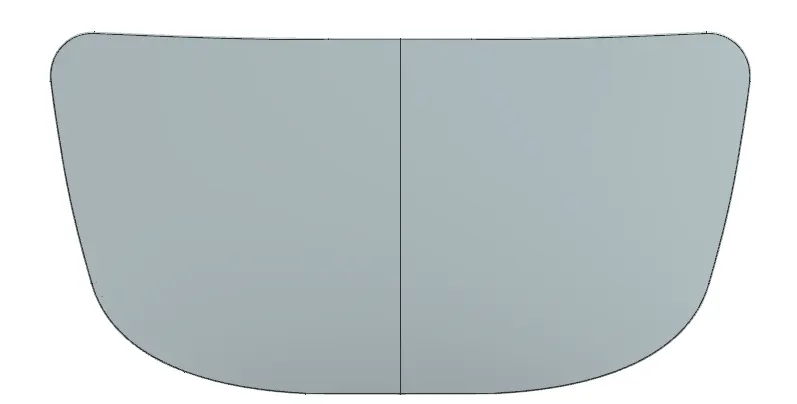
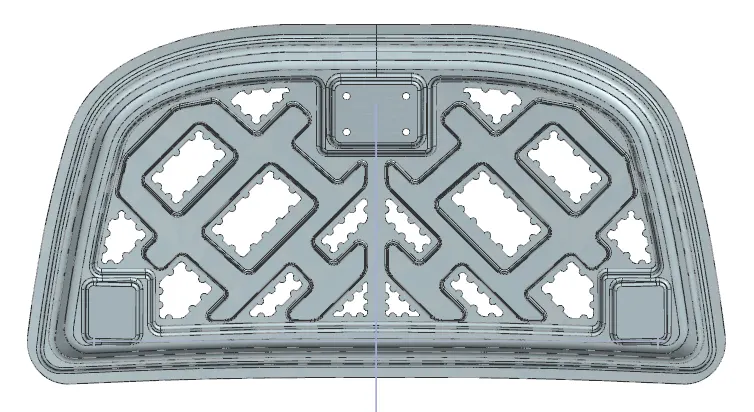
Inner Hood Panel: - The Inner panel is the one which provide the actual strength to hood as it is the Class B surface and can be engineered according to requirements & can be modifed to meet the Global NCAP & other safety parameters.
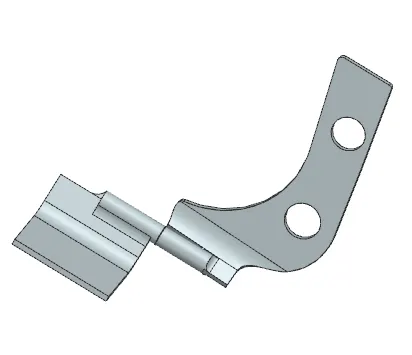
Hinge Assembly:-The hinge assembly is the component that provides the pivot point to the hood along which the hood can be opened & closed, so it is important to ensure that the hinge assemblies of the both side should be parallel to the axis of rotation of the hood.
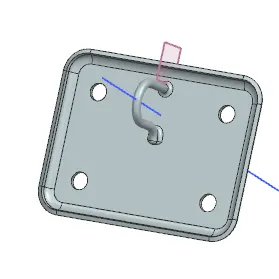
Striker:- The striker serves the purpose of locking the hood, so it must be ensured that it lies in the line of rotation of the hood, to that we create the trajectory of the movement of the hood.
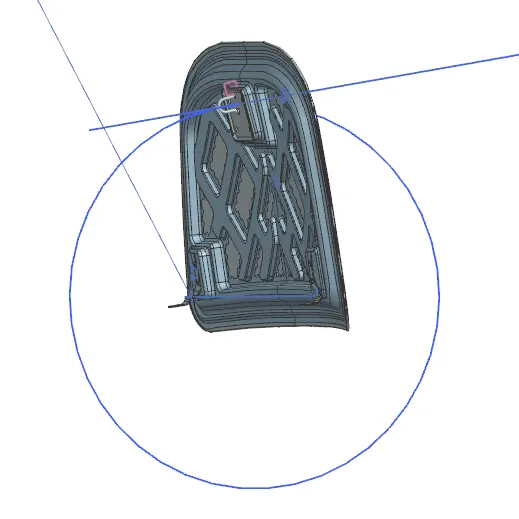
Latch Trajectory
The latch Trajectory is the path of the movement of the hood. It is predicted to place the striker in its position. For the hood lock to function properly the striker must be placed in the précised location.
To make the latch trajectory we first align the hinges to the axis of rotation the hood, then in exact center of the axis of rotation we make the circle whose center is the axis of rotation of the hood, and then we make the tangent to the circle at the extreme end where we can place the striker. Then we make a line perpendicular to the base of the striker & at the center of the hook, then we align the striker line & the tangent of the circle, hence the latch trajectory is created & we got the location of the striker.
Sheet metal operations used to produce the Hood Panels are as follows:-
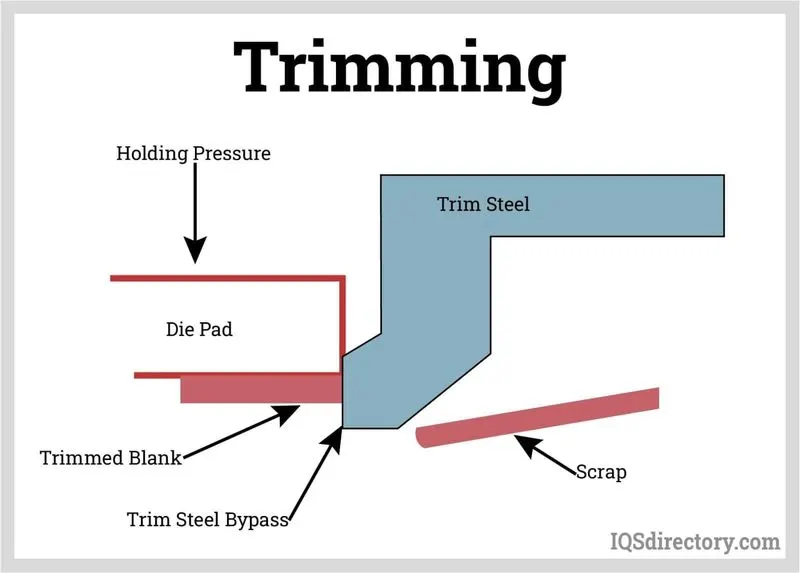
SHEARING/TRIMMING OPERATIONS:-
The Shearing operation is a cut in a straight line across a strip, sheet, or bar. It leaves a lean edge on the piece of metal that is sheared or cut. In this operation, a sheet metal workpiece is placed or kept between two dies from one end. And, the punch is hit at the other end of the sheet, producing a shearing effect.
DEEP DRAWING PROCESS:-
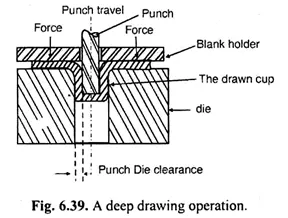
The manufacturing of deep, cuplike products from thin sheet metal is known as deep drawing. The process involves a punch with a round comer and a die with a large radius. The punch-die clearance is slightly larger than the thickness of the sheet metal to be deep drawn. As the load applied through the punch, the sheet metal is forced to flow radially and sink into the die cavity to form a cup. The process is best suitable for complex shaped problems
BENDING OPERATIONS:-
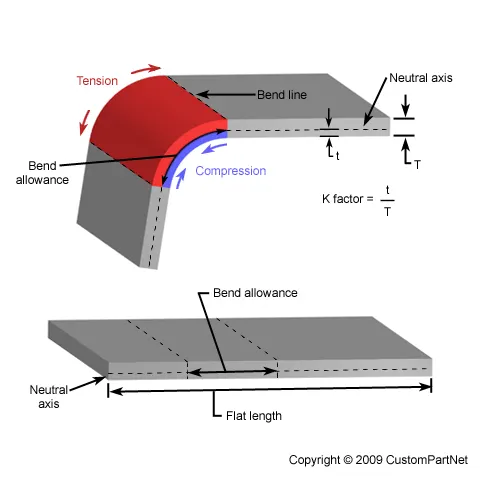
When forces are applied to certain regions, this happens. With the inner surface under compression and the outer surface in tension, the metal flow is uniform along the bend axis. The following are the various types of sheet metal bending operations
PIERCING OPERATIONS:-
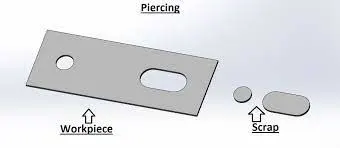
The piercing is the process of creating desired shape holes in a piece of sheet metal without taking any material from the sheet or removing a very little quantity of material. In this operation, both punch and die are used. Bullet-shaped punches are commonly employed in piercing operations.
EMBOSSING:-
Sheet metal embossing is a stamping process for producing raised or sunken designs or relief in sheet metal. This process can be made by means of matched male and female roller dies, or by passing sheet or a strip of metal between rolls of the desired pattern.
HEMMING:-
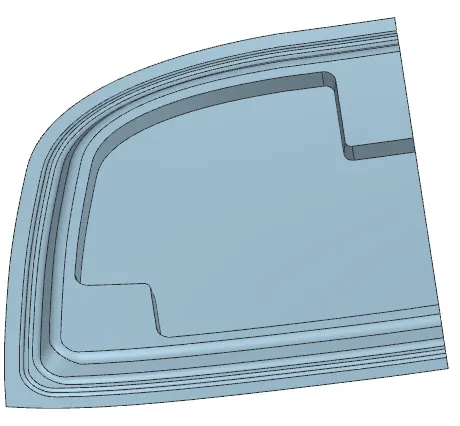
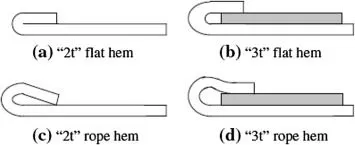
Hemming is a sheet metal forming process in which sheets are joined by bending it usually to 180°. Automotive body panels and automotive parts such as deck-lids, trunk-lids, doors, hoods and tailgates are formed by hemming process.
MASTIC DATA:-
Mastic Glue is used to stick the inner & outer panel & by using the mastic glue we can avoid the weld marks from the middle & used to reduce the NVH between the inner & outer panel. One mastic glue can influence the radius of 40~80mm(Mastic Influence). For placing the mastic glue we make the mastic points with atleast 5mm radius.