Hood design-Week 2
HOOD DESIGN
INTRODUCTION
The hood or bonnet is the front part of a car hinged over to cover engine. Hood allows access to the engine compartment for maintenance and repair. Hood is designed to be aerodynamic to reduce the air effect. Hoods are intended to reduce air resistance as it flows around the vehicle. The hood is an important component of the car body that must meet both safety and design criteria.
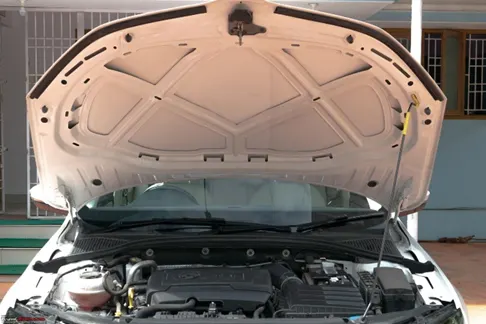
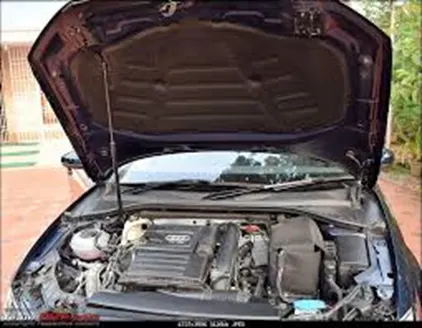
STYLES AND MATERIALS
Hood components include an inner panel, an outer panel, reinforcement (latch and striker). The latch and striker mechanism used to open and close the hood.
There are two types of supports in hood are:
- Gas stay
- Support rod
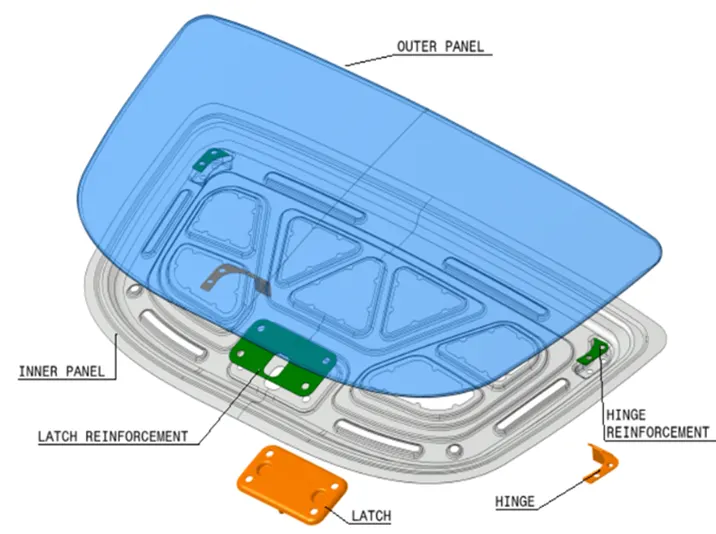
Hoods are designed and manufactured as the same material of the bodywork. Steel, aluminium, fibreglass, and carbon fibre are the commonly used material.
The hood release system consists of hood latch assembly, hood release cable, and interior hood latch handle. The hood latch handle is at lower side of the driver seat below the steering wheel.
DESIGN OF HOOD
Hood Thickness Information:
Outer Panel Thickness = 0.75mm
Inner Panel Thickness = 0.75mm
Reinforcement Thickness = 1.5mm
Hood design process involves:
- Blanking
- Deep drawing
- Embossing
- Punch cutting or piercing
- Hemming
Inner Panel Design
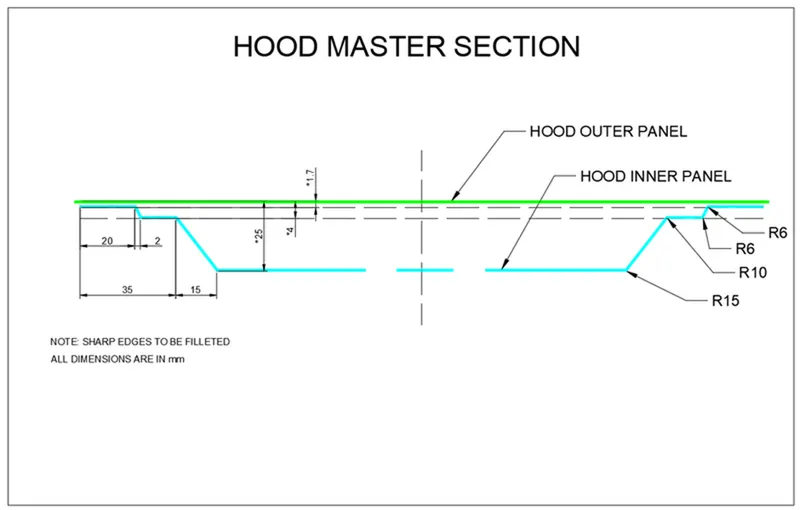
From the master section provided inner panel design was constructed using the commands:
- Offset Surface
- Offset curve in face
- Trim sheet
- Through curve
- Face blend
- Emboss
- Edge blend
- Extend sheet
- Trim body
- Projected curve
- Mirror geometry
- Sew
- Thicken
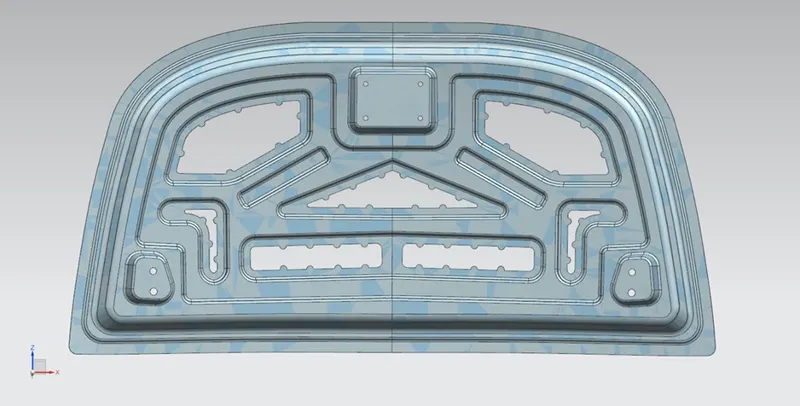
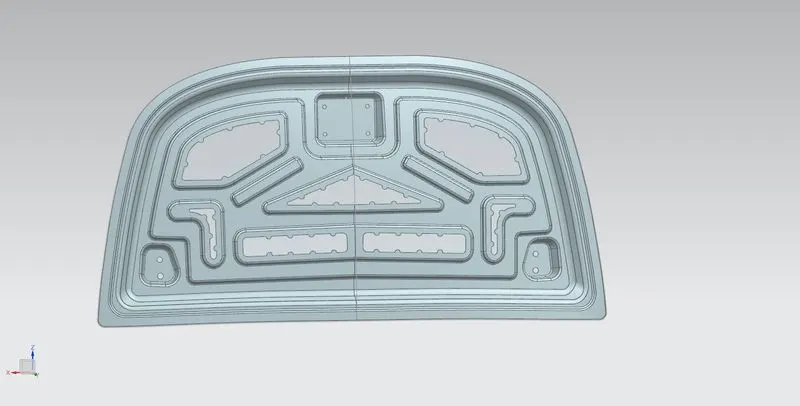
Embosses
Embosses are projected sections created from the inner panel surface to absorb or dissipate the impact force on the hood. Using emboss tool in NX a projected embossed surface of 10mm was created. Other emboss features was also created in the inner panel of varying parameters of 10mm and 8mm.
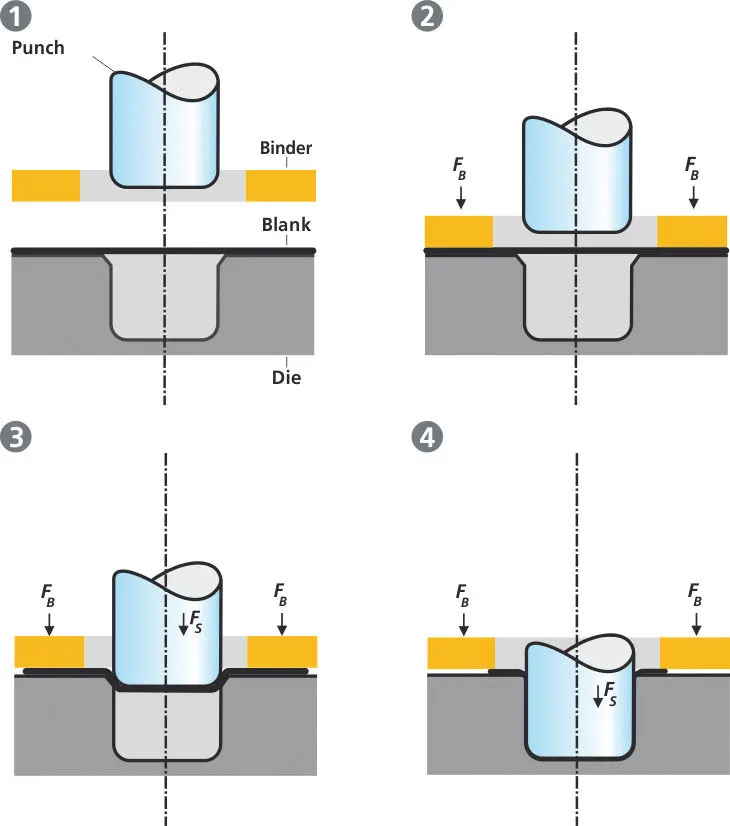
Deep Drawing
The deep drawing process is a forming process that takes place under tensile and compressive conditions. A flat sheet metal blank is formed into a hollow body with one side open or a hollow body with a smaller cross-section.After inserting the metal sheet blank, the plate holder closes in deep drawing process.
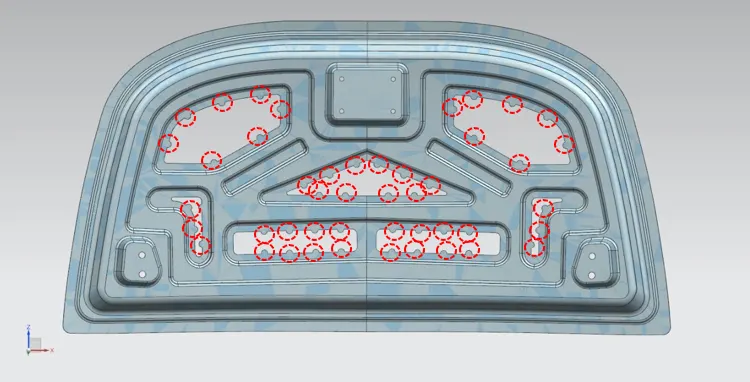
Mastic Data
Mastic sealant data is used to combine both inner panel and outer panel of hood. It has basically three functions:
- Fills gap between surfaces
- Adhesive property
- Increases the lifetime expectancy and maintenance
Hood Outer Panel
Hemming Process
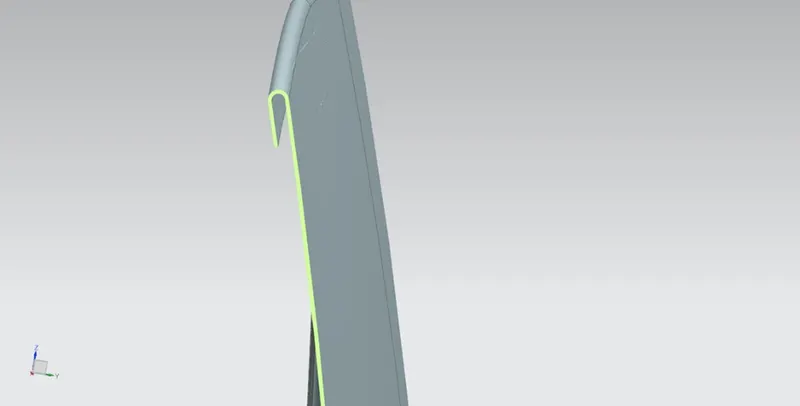
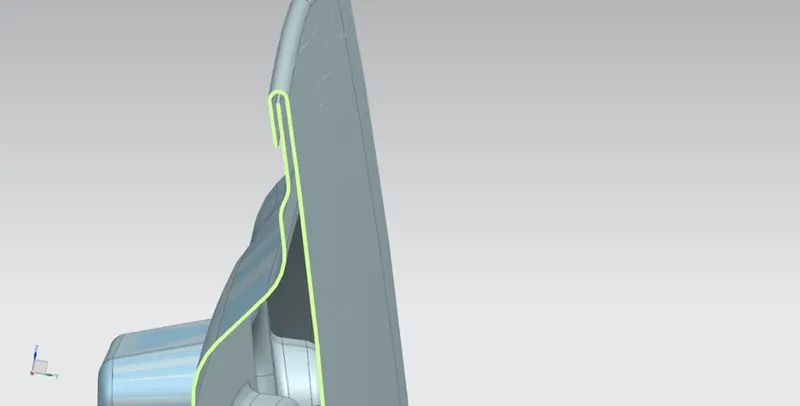
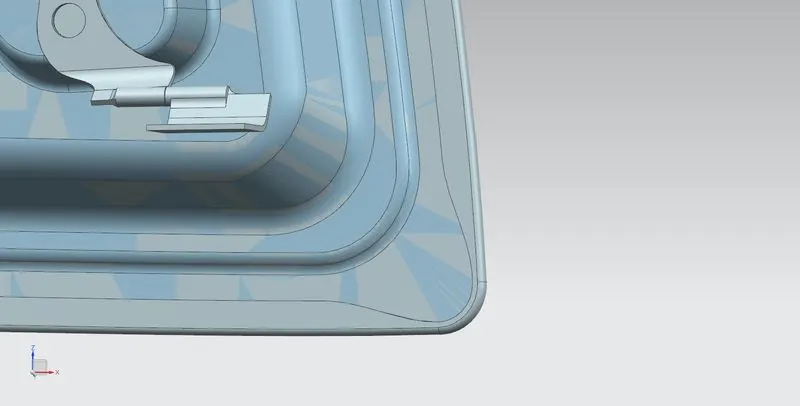
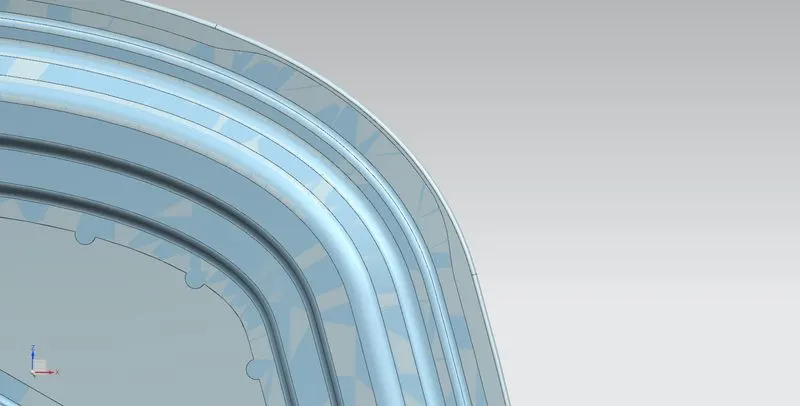
Hemming is a sheet metal forming process where sheets are joined by bending. In manufacturing industry there are two types of hemming process: Conventional die hemming and Roll hemming. While creating a hem in hood outer panel it is considered to provide a front and back relief at corners.
Rear Relief
Front Relief
Reinforcements
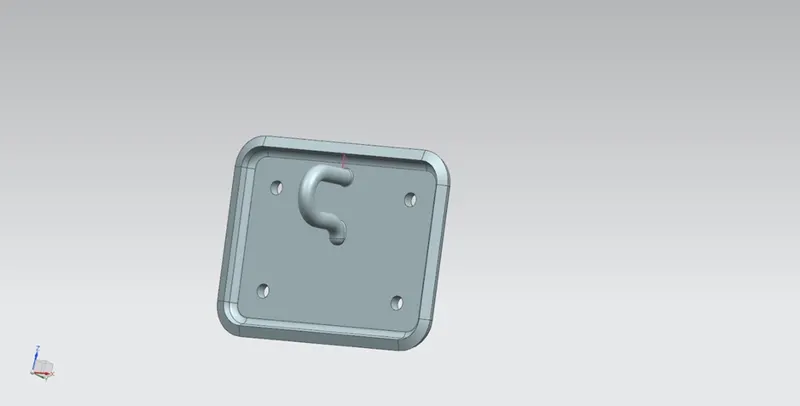
Latch or Striker
Latch or striker is the component used to fasten or fix the hood closed shut. It ensures the safety of hood to the car from sudden opening or pop-up.
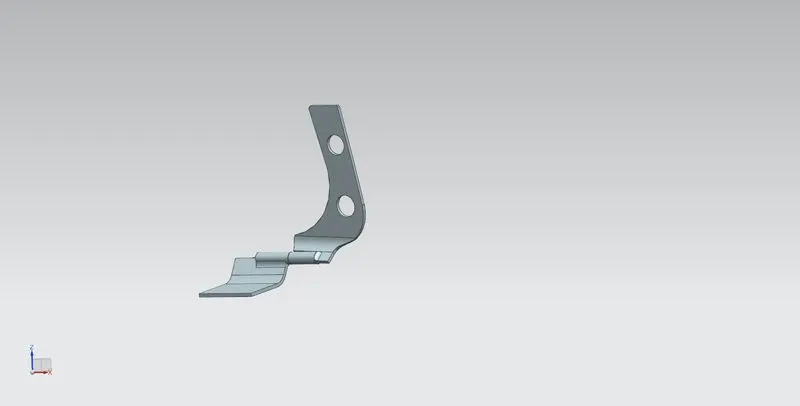
Hinge
Hinges are components that fixes the hood to the fender of car. The striker is fixed perpendicular to hinge axis to ensure the open-close mechanism in hood properly.
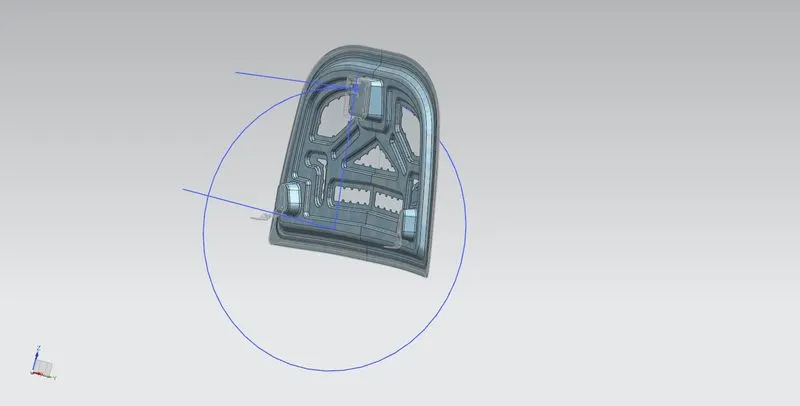
Latch Trajectory Motion
In order to maintain and ensure the latch or striker in open-close mechanism of hood, it is aligned and fixed perpendicular of hinge axis.
Hood Assembly Design
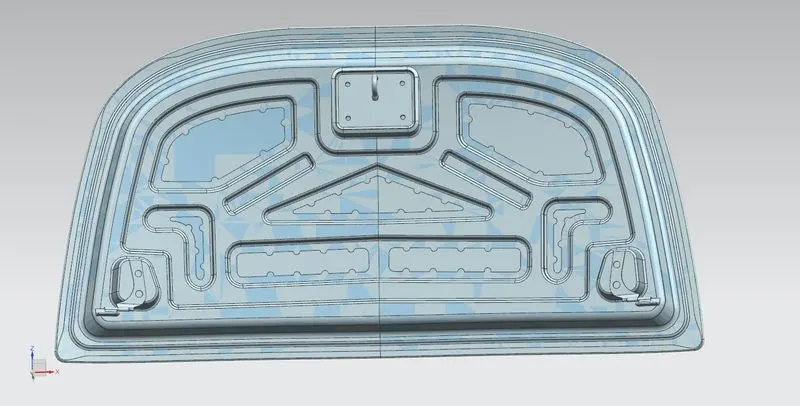
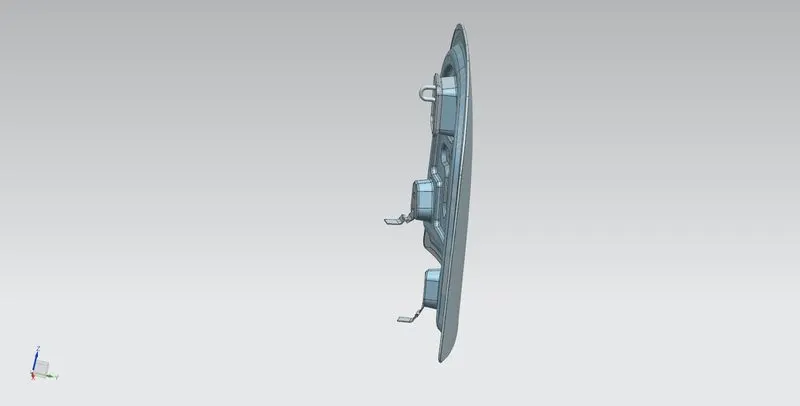
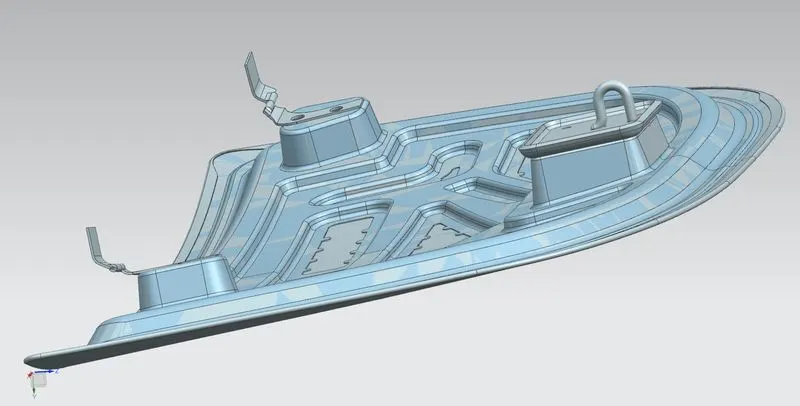
Impact Force Distribution
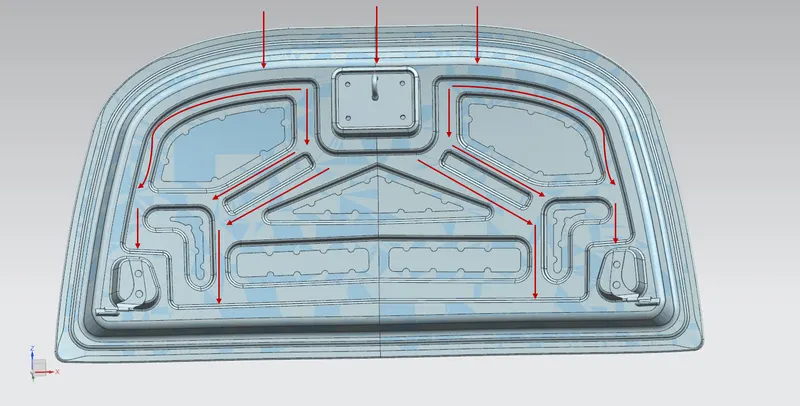
When a force is impacted in the front portion of the hood, all of the force should be directed outwards from the car, and the distribution of the force is always constrained in tandem with the hood.
Conclusion
The hood of car is thus designed meeting the manufacturing and design parameters using NX CAD.