Fender Design - Wheel Arch Challenge
OBJECTIVE
Calculate and verify the given distance of fender arch gap at required points to pass and meet European regulation.
INTRODUTCION
Wheel arch is the shaped part of a car or other vehicle's bodywork that allows access to the wheel and, as in particular instance of front wheels, for steering. The wheel arch of enders must be compliant with the standards and regulations set by the respective countries for the vehicle to have its use permit in different countries.
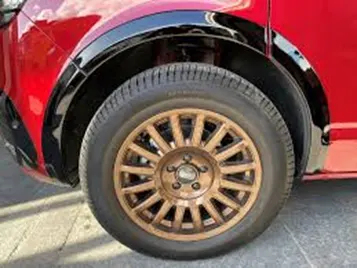
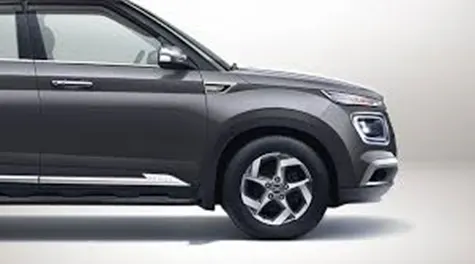
When a vehicle is moving, the tyres pick up stones and other debris and hurl them in all directions, so fenders are used to protect pedestrians from these stones. The wheel arch of a fender should be designed in such a way that it has shield wheels and protects both the passenger compartment and pedestrians from the water spray or spill, mud, and stones.
Vehicle Regulations
Vehicle regulations are the specifications that vehicles must meet to be authorised for sale or use in a specific nation or area. For different countries they are specified and adhered to regulations while designing and manufacturing of car. ARAI (Automotive Research Association of India) and SAE (Society of Automotive Engineers) are a couple of the regulations that the Indian automotive industry use.
Japan Regulation
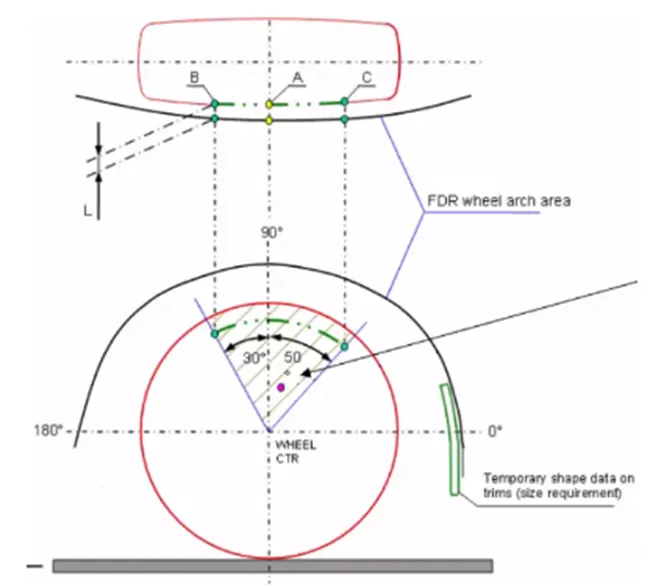
According to Japan regulation, there must be more than 5mm of clearance between the fender and the tyre profile. The value is determined by projecting a point 30 degrees forward and 50 degrees backward, respectively from the wheel centre.
European Regulation
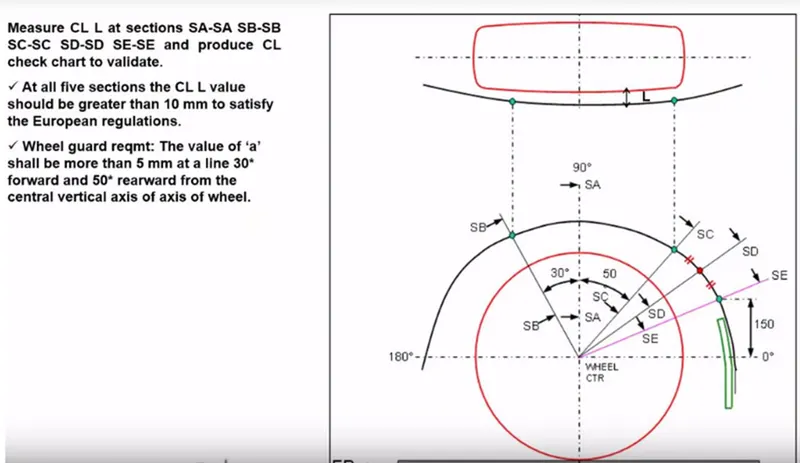
According to European regulation, there must be more than 10mm of clearance between the fender and the tyre profile. The value is determined by projecting a point 30 degrees forward and 50 degrees backward, respectively from the wheel centre.
METHODOLOGY INVOLVED
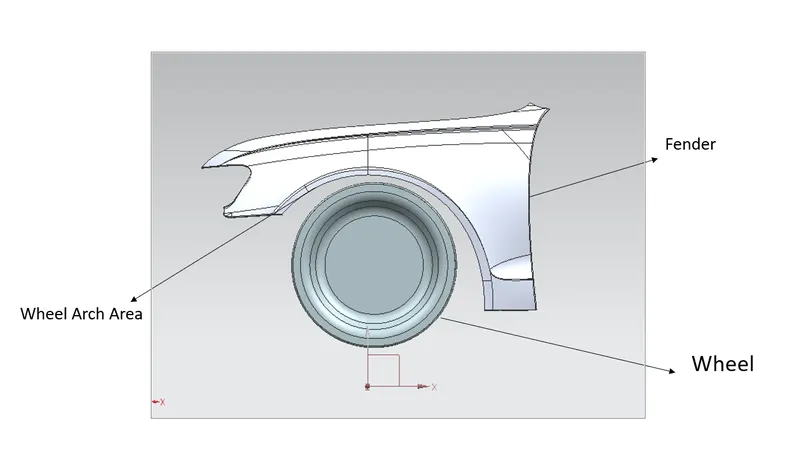
- Sketch the wheel and the fender outline.
- The circle centre is to be defined from the sketch.
- From the centre of the wheel circle, create horizontal and vertical axis that are perpendicular.
- Create a 300 angle from centre point to the left side of the circle (SB).
- Similarly create a 500 angle from centre point to the right side of the circle (SC).
- Sketch a line on the fender outline by creating a point at 150mm from the horizontal axis (SE).
- Sketch another line exactly in the middle of SC and SE to obtain SD.
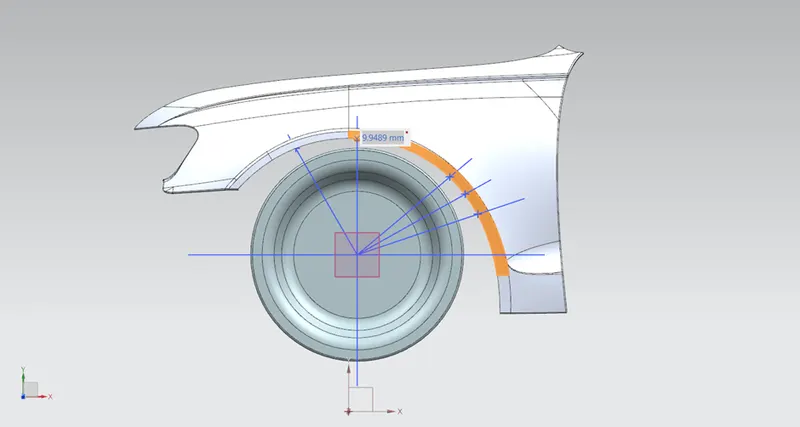
- Measure the distances between the points on the wheel circle and fender outline sketch. All of these should be greater than 10mm to meet European regulations.
- Also ensure that the horizontal distances from SA, SB, and SC points to the fender outline should be at least 5mm.
- Ensure whether all these data pass the European regulations and standards.
Fender and Tyre Profile
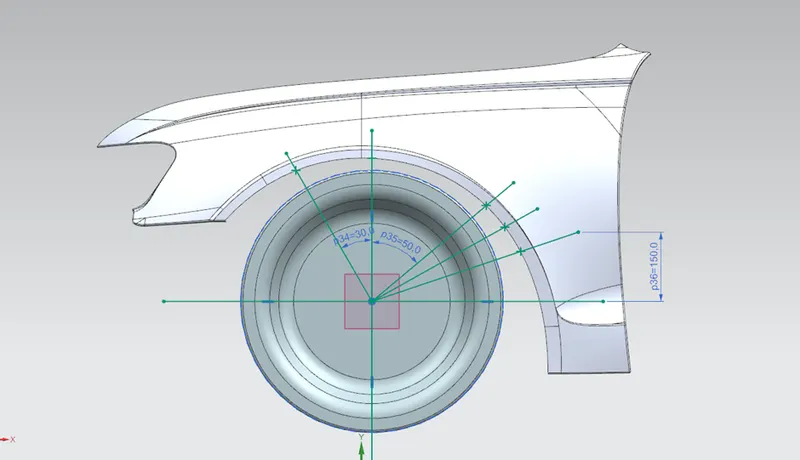
Clearance of L at SA
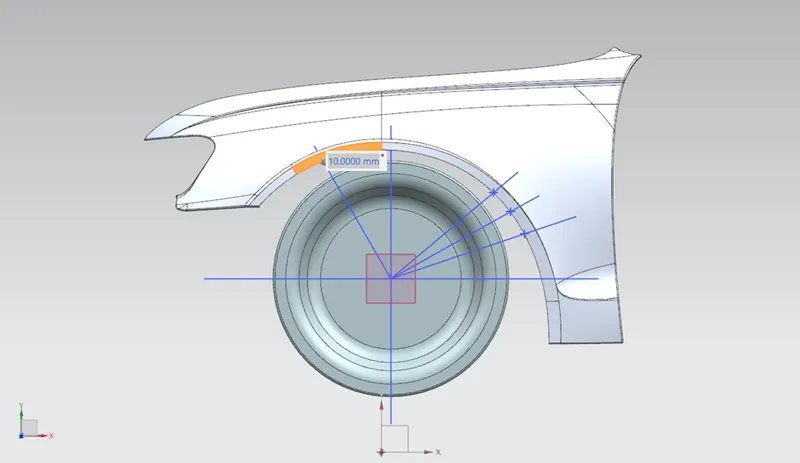
Clearance of L at SB
Clearance of L at SC
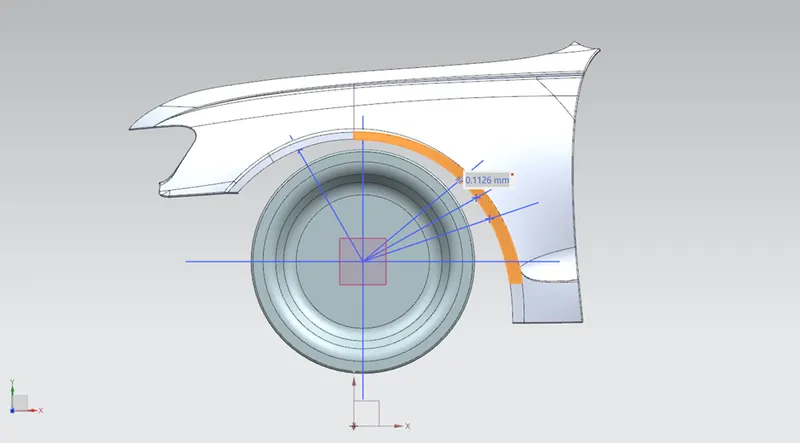
Clearance of L at SD
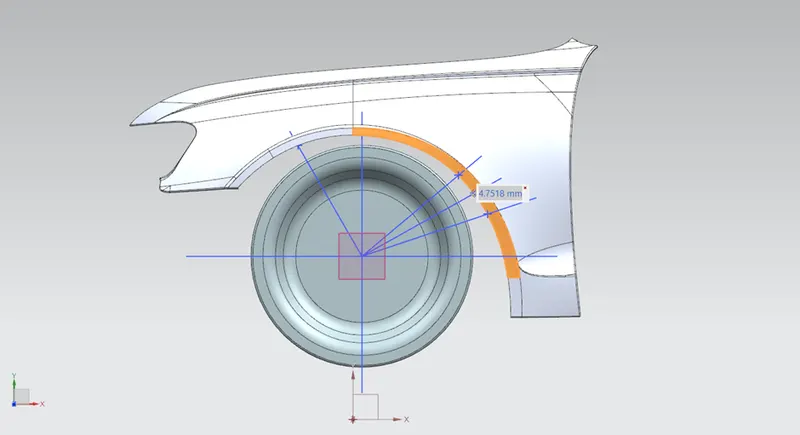
Clearance of L at SE
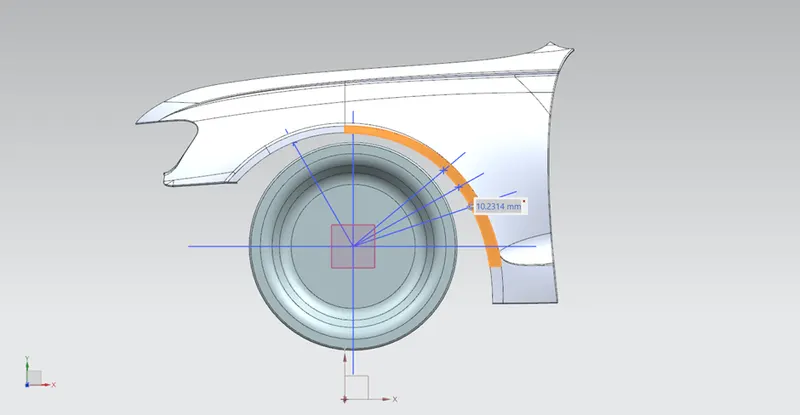
|
Clearance for L at |
Distance Measured |
Pass/Fail |
| SA | 9.95 mm |
Fail |
|
SB |
10 mm |
Pass |
|
SC |
0.11 mm |
Fail |
|
SD |
4.75 mm |
Fail |
|
SE |
10.23 mm |
Pass |
CONCLUSION
From the above measurement values and results, we can conclude that the fender does not pass the European regulations. The distances for SB, SC, SD and SE are 10mm, 0.11mm, 4.75mm and 10.23mm respectively. Thus this design does not meet the requirement and so it is needed to modify the design to meet the regulation.