Forces Acting on a Vehicle
AIM:-
- To solve the given questions related to forces acting on a vehicle.
THEORY:-
- Tire Nomenclature/C
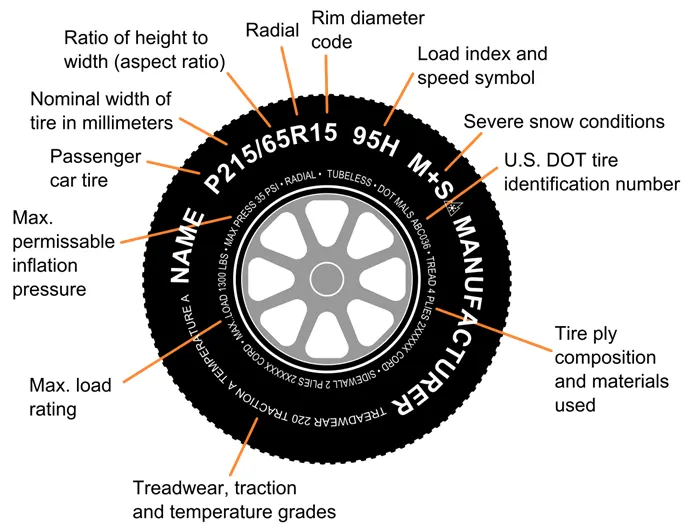
The ISO Metric tire code consists of a string of letters and numbers, as follows:
An optional letter (or letters) indicating the intended use or vehicle class for the tire:- P: Passenger Car
- LT: Light Truck
- ST: Special Trailer
- T: Temporary (restricted usage for "space-saver" spare wheels)
P indicates that the tire is engineered to TRA standards, and the absence of a letter indicates that the tire is engineered to ETRTO standards. In practice, the standards of the two organizations have evolved together and are fairly interchangeable, but not fully, since the load index will be different for the same size tire.
- 3-digit number: The "nominal section width" of the tire in millimetres; the widest point from both outer edges (sidewall to sidewall). The tire surface that touches the road usually has a narrower width (called "tread width").
- /: Slash character for character separation.
- 2- or 3-digit number: The "aspect ratio" of the sidewall height as a percentage of the nominal section width of the tire. If the information is omitted, it is assumed to be 82% (if written, it should be like xxx/82). If the number is larger than 200, then this is the diameter of the entire tire in millimetres.
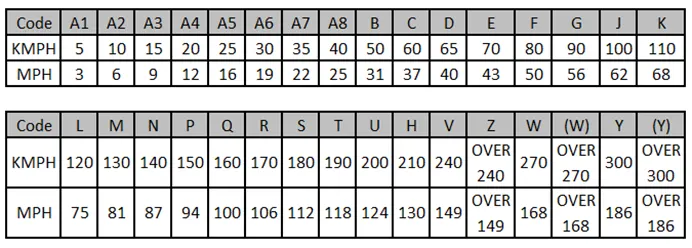
- An optional letter indicating the speed rating of the tire. Alternatively, the letter may appear at the end, following the load index. If the letter here is Z, indicating a maximum speed over 240 km/h (149 mph), then a more specific letter W or Y may appear after the load index (see speed rating, below).
- An optional letter indicating the construction of the fabric carcass of the tire:
- B: bias belt (where the sidewalls are the same material as the tread, leading to a rigid ride)
- D: diagonal
- R: radial
- if omitted, it is a cross-ply tire
- 1- or 2-digit number: Diameter in inches of the wheel that the tires are designed to fit. There is the rare exception of metric-diameter tires, such as the use of the 390 sizes, which in this case would indicate a wheel of 390 mm in diameter. Few tires are made to this size currently. The number may be longer where a half-inch size is used, for example, many heavy transport trucks now use 22.5-inch tires.
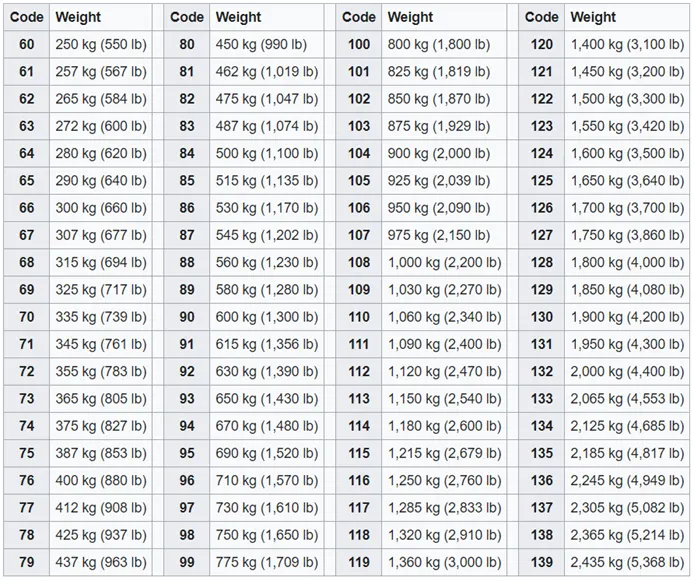
- 2- or 3-digit number: Load index; see table below. Some light truck tires are approved for "dual-use", that is they can be run in pairs next to each other. If so, separate
- load indexes will be specified for single and dual usage.
- 1- or 2-digit/letter combo: Speed rating; see table below
Governing Equations:
- Diameter of the tire (Dt):">(Dt):- Dt=Dr+2⋅Hs">Dt=Dr + 2 * H
Dr=RimDiameter (m)">Dr=RimDiameter (m)
Hs=sectionHeight (m)">Hs=sectionHeight (m)
Ws=sectionWidth(m)">Ws=sectionWidth(m)
- Aspect ratio (AR):">(AR):-
R= HsWs">R= Hs/Ws
- Angular Velocity (ω):">(ω):-
ω=vr⋅G Radian">ω=vr⋅G Radian
v=velocity(ms)">v=velocity(ms)
r=Radius (m2)">r=Radius (m2)
- Relation between Speed & Gear Ratio:-
S1.T1=S2.T2">S1.T1=S2.T2
S1=Speed of Driven Wheel (Tire)">S1=Speed of Driven Wheel (Tire)
S2=Speed ofDriver Wheel">S2=Speed of Driver Wheel (Motor)
T1=TeethofDriven Gear">T1=Teeth of Driven Gear
T2=TeethofDriver Gear">T2=Teeth of Driver Gear
- Gear Ratio(G):">(G):-
(G)=T1T2">(G)=T1/T2
- Rolling Resistance Force (Frr):">(Frr):-
Frr=μrr+m.g (N)">Frr=μrr+m.g (N)
Frr=μrr+m.g (N)">μrr μrr=">= Coefficient of rolling resistance
m=mass(kg)">m=mass(kg)
g=9.81(ms2)">g=9.81(m/s^2)
- Aerodynamic Drag Force (Fad):">(Fad):-
Fad=0.5⋅ρ⋅A⋅Cd⋅v2 (N)">Fad=0.5⋅ρ⋅A⋅Cd⋅v2 (N)
ρ=AirDensity (kgm3)">ρ=AirDensity (kg/m^3)
A=FrontalArea (m2)">A=FrontalArea (m^2)
Cd=Drag Coefficient">Cd=Drag Coefficient
v=Velocity(ms)">v=Velocity(m/s)
- Hill Climbing Force (Fh):">(Fh):-
Fh=m.g.sin(θ)(N)">Fh=m.g.sin(θ)(N)
- Total Tractive Force in case of no inclination (Fte):">(Fte):-
Fte=Frr+Fad">Fte=Frr+Fad
- Power (P)= Fte.v">(P)= Fte.v
QUESTIONS & SOLUTION:-
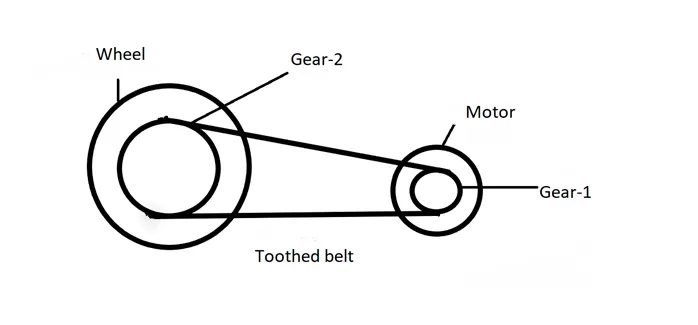
Q1.a What should be the maximum speed of the motor used in an electric scooter capable to run at 90 kmph, if the fixed gear ratio is 7 and tire size is 90/100 R10 53J? Assume the following arrangement from the motor to the wheel.
Solution 1.a
- Given Data –
- Speed(S2)= 90 kmph
- Velocity (v) = 90/3.6 = 25 m/sec
- Gear Ratio = 7
The Maximum Speed of the Motor (S1)
S1.T1=S2.T2
S1=S2*T1/T2
S1=90*7
S1=630 kmph - Tyre Info = 90/100 R10 53J
- Speed(S2)= 90 kmph
- To Find –
- Maximum Speed of the motor.
- Maximum Speed of the motor.
- Answer
- Tyre Decoding -90/100 R10 53J
- Section Tyre Width (Ws) = 90 mm
- Aspect Ratio (AR) = 100%
- Section Tyre Height (Hs) = 90 mm (Since Aspect Ratio is 100%)
- Load Index = 53 = 206 kg
- Speed Index = J = 100 kmph
- Rim Diameter (Dr) = 10*25.4 = 254 mm
- Tyre Diameter (Dt) = Dr+2*Hs = 254 + 2*90 = 434 mm = 0.434 m
- Tyre Radius = 0.434/2 = 0.217 m
- Section Tyre Width (Ws) = 90 mm
- Angular Velocity of Tyre (w)= v/r = 25/0.217 = 115.207 Rad/sec
- Angular Velocity of Motor = 115.207*7 = 806.452 Rad/sec
- Angular Velocity of Motor = 7705 RPM
- Tyre Decoding -90/100 R10 53J
Q1.b Recalculate the same value if the tire code is 90/90 R18 51P.
Solution 1.b
- Given Data –
- Speed = 90 kmph
- Velocity (v)= 25 m/sec
- Gear Ratio = 7
The Maximum Speed of the Motor (S1)
S1.T1=S2.T2
S1=S2*T1/T2
S1=90*7
S1=630 kmph - Tyre Info = 90/90 R18 51P
- Speed = 90 kmph
- To Find –
- Maximum Speed of the motor.
- Maximum Speed of the motor.
- Answer
- Tyre Decoding -90/90 R18 51P
- Section Tyre Width (Ws) = 90 mm = 0.09m
- Aspect Ratio (AR) = 90%
- Section Tyre Height (Hs) = AR*Ws = 0.9*0.09 = 0.018m = 81mm
- Load Index = 51 = 195kg
- Speed Index = J = 150kmph
- Rim Diameter (Dr) = 18*25.4 = 457.2 mm
- Tyre Diameter (Dt) = Dr+2*Hs = 457.2+2*81 = 619.2mm = 0.6192m
- Tyre Radius = 0.3096 m
- Section Tyre Width (Ws) = 90 mm = 0.09m
- Angular Velocity of Tyre (w) = v/r = 25/0.3096 = 80.749 Rad/sec
- Angular Velocity of Motor = 80.749*7 = 565.245 Rad/sec
- Angular Velocity of Motor = 5400 RPM
- Tyre Decoding -90/90 R18 51P
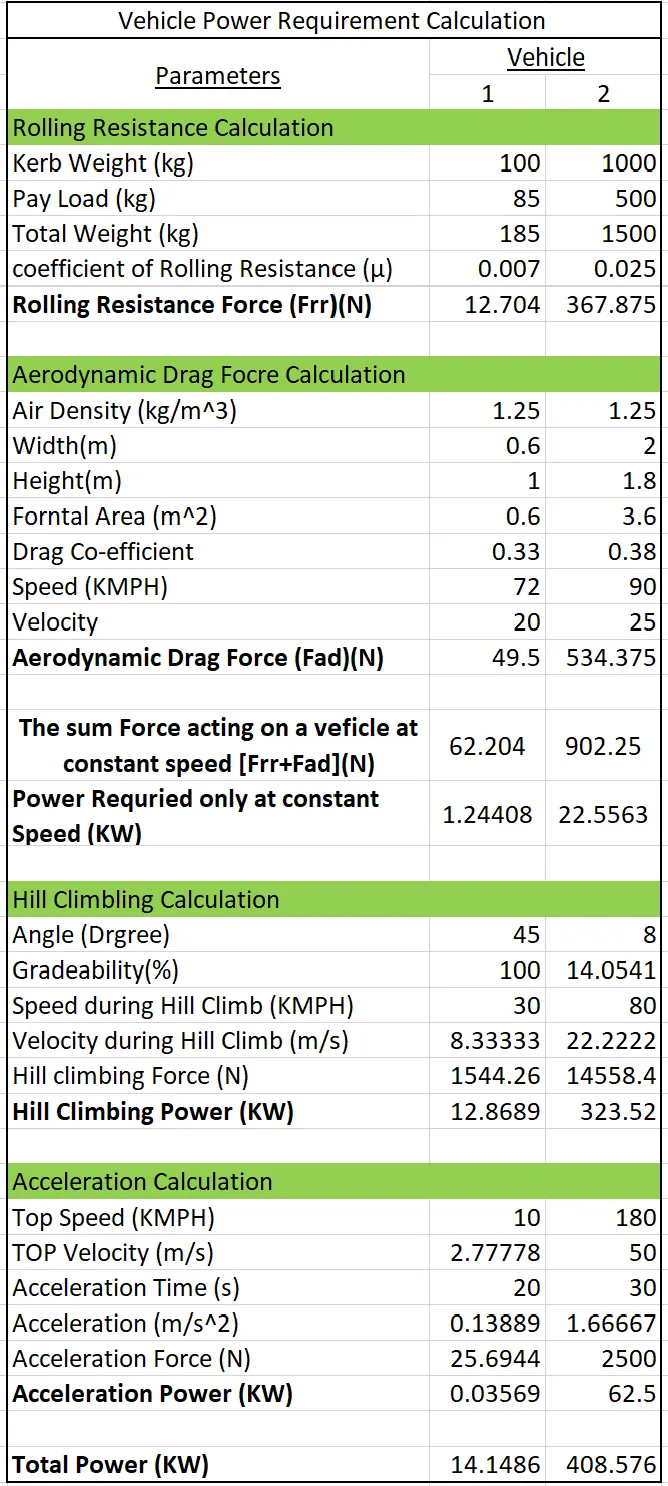
Q2. Prepare a simple excel calculator to identify vehicle propulsion power based on given inputs and outputs. Implement formulas in cells.
- Inputs: Kerb Weight (kg), Payload (kg), Coefficient of rolling resistance, Air density (kg/m3), Width (m), Height (m), Drag coefficient, Acceleration (0 to top speed in specified seconds), Hill climbing angle, Speed.
- Output: Total power in kW.
- What are the limitations of this calculation?
Solution- A file link and screenshot of a file are attached below.
- https://docs.google.com/spreadsheets/d/1ThBAcBvl-zrskKLujG3gdBqGKwe9jOdA/edit?usp=sharing&ouid=112385806723918946126&rtpof=true&sd=true
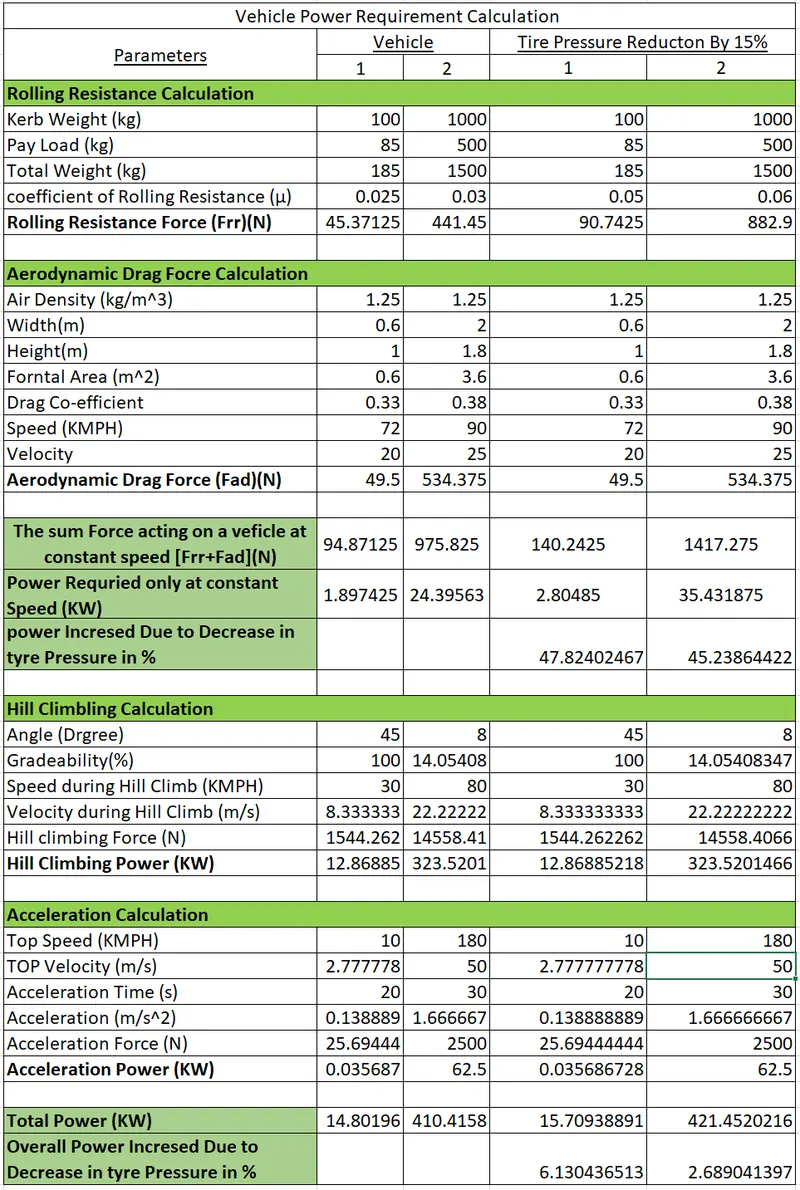
Q3. Assuming that tire pressure reduction by 15% results in the increase of rolling resistance effect by two times, how much will be the difference in total traction power keeping all other parameters the same?
Solution
- From the below figure we see that reducing the tire pressure by 15% doubles the coefficient of rolling resistance, which increases the tractive force by 47.82% & 45.23% of the respective vehicles.
- And increase the total power by 6.13% & 2.68% of respective vehicles.
- A file link and screenshot of a file are attached below.
- https://docs.google.com/spreadsheets/d/1iJFJRCgGtZYepUj_34I2p5Y7URD5sGKr/edit?usp=sharing&ouid=112385806723918946126&rtpof=true&sd=true
Q4. See the video of the Range rover sport dragon challenge. How much is the gradeability? What was the average speed? Which are the forces acting on the car?
Link to the video: https://www.youtube.com/watch?v=EUwzWHD3Htg
Solution
- The slope during the stairs climbing is 45 degrees, thus gradeability is 100%.
- The Average Speed = Total distance travel / Total time
- Total Distance = 11.3 kms = 11300 m (Reference link is attached in references)
- Total Time = 22 min 41 secs = 1361 secs (From the Video)
- Average Speed = 11300/1361 = 8.3027 m/sec = 30kmph
- Total Distance = 11.3 kms = 11300 m (Reference link is attached in references)
- Forces Acting on Vehicle
- Rolling Resistance Force (All the time)
- Aerodynamic Force (All the time)
- Hill Climbing Force (All the time, since the whole track was on a hill)
- Acceleration Force (During changing Speeds)
- Centrifugal Force (During taking turns)
REFERENCES: