Flow over an airfoil
Aim : To perform a flow simulation on a NACA-0017 Airfoil with various angle of attack.
Objective :
- Simulate the flow over an airfoil
- Compare the lift and drag force for the angle of attack 2, 4, 6, 8, and 10 degrees
TheoryIntroduction
What is NACA Airfoils? The National Advisory Committee for Aeronautics (NACA) developed and tested a series of airfoils, denoted as NACA Airfoils. The shape of the NACA airfoils is described using a series of digits following the word "NACA". The parameters in the numerical code can be entered into equations to precisely generate the cross-section of the airfoil. The early NACA airfoil series, the 4-digit, 5-digit, and modified 4-/5-digit, were generated using analytical equations that describe the camber of the geometric centerline of the airfoil section as well as the section's thickness distribution along the length of the airfoil.
How to read NACA Airfoil (4-digit)
For example :
- The NACA 2412 airfoil has a maximum camber of 2% located 40% (0.4 chords) from the leading edge with a maximum thickness of 12% of the chord. Four-digit series airfoils by default have maximum thickness at 30% of the chord (0.3 chords) from the leading edge.
- The NACA 0017 airfoil is symmetrical, the 00 indicating that it has no camber. The 17 indicates that the airfoil has a 17% thickness to chord length ratio: it is 17 % as thick as it is long
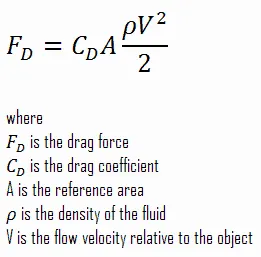
Drag Force - Drag is a mechanical force. It is generated by the interaction and contact of a solid body with a fluid (air). For drag to be generated, the solid body must be in contact with the fluid. If there is no fluid, there is no drag. Drag is generated by the difference in velocity between the solid object and the fluid. There must be motion between the object and the fluid. If there is no motion, there is no drag. It makes no difference whether the object moves through a static fluid or whether the fluid moves past a static solid object. Drag acts in a direction that opposes the motion.
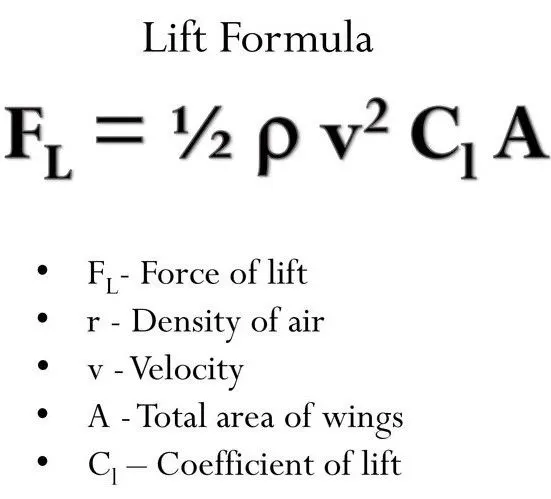
Lift Force - Lift acts perpendicular to the Drag Force. Lift Force is an upward-acting force on an airfoil. An aircraft in flight experiences an upward lift force, as well as the thrust of the engine, the force of its own weight, and a drag force. The lift force arises because there is a zone of low air pressure on the top of the airfoil and a zone of high pressure on the bottom of the airfoil caused by the flow of air over the airfoil.
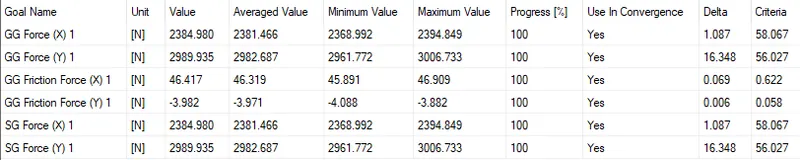
SG Force (X) = Drag force
SG Force (Y) = Lift force
Simulation Setup
Parameters :
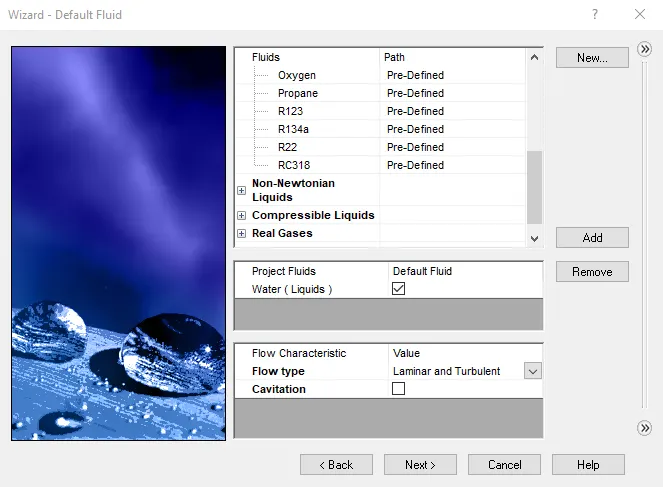
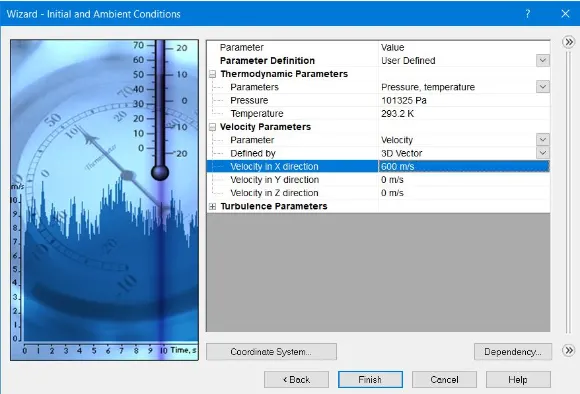
Flow Type : External
Pressure : 101325 Pa
Temperature : 293.2 K
Velocity at X-axis : 600 m/s
Fluid : Air
(Time Dependent Study)
Total analysis time : 5 sec
Output step time : 1 sec
Procedure :
- Insert the NACA-0017 airfoil DAT file(.txt). Dat file for 4 digit NACA Airfoil can be generated here
- Extrude the 2d sketch for 0.3 m
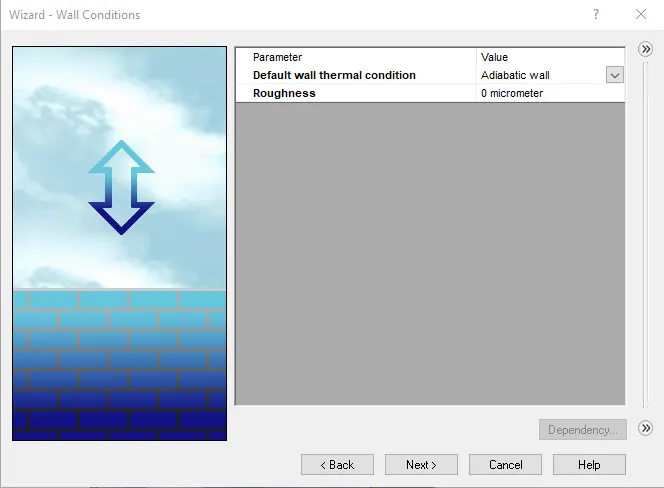
- Run the wizard setup
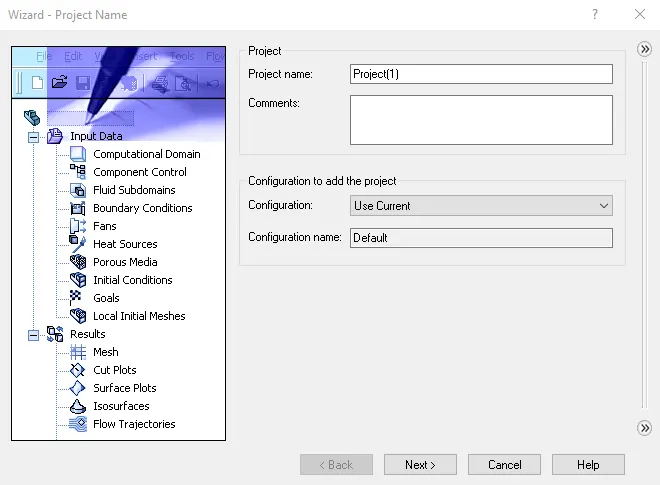
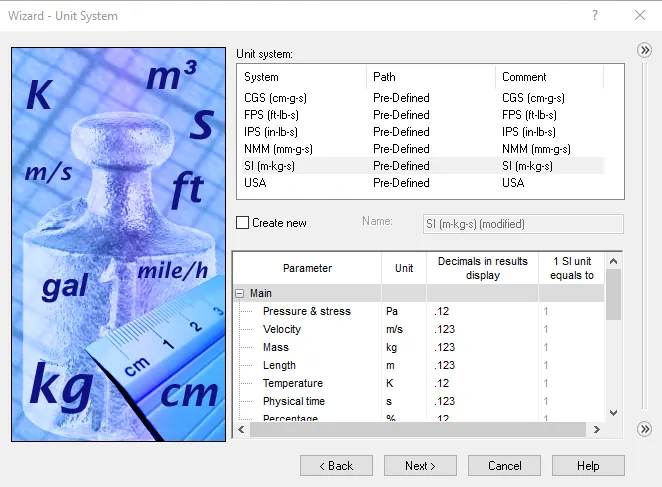
4. Computational domain setup
-
- Type : 2d Simulation
- Size : x-min = -5 , x-max = 10, y-min = -5 , y-max = 5
5. Result parameters(Goals)
-
-
- GG x-axis force
- GG y-axis force
- GG x-axis friction force
- GG y-axis friction force
- SG x-axis force
- SG y-axis force
-
6. Mesh Setting - Insert local mesh and select the airfoil surfacefor advance channel refinement
7. Run the simulation
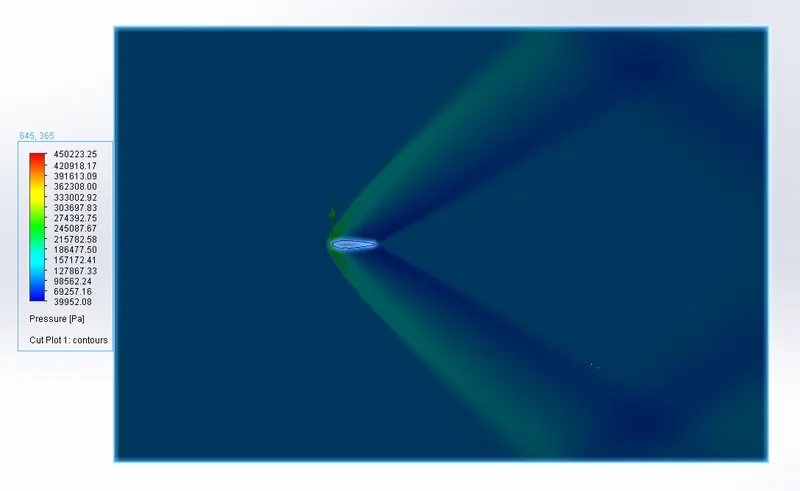
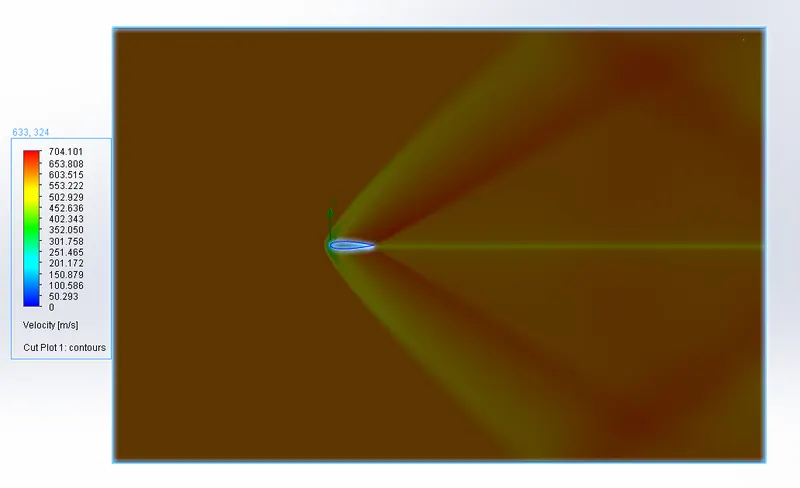
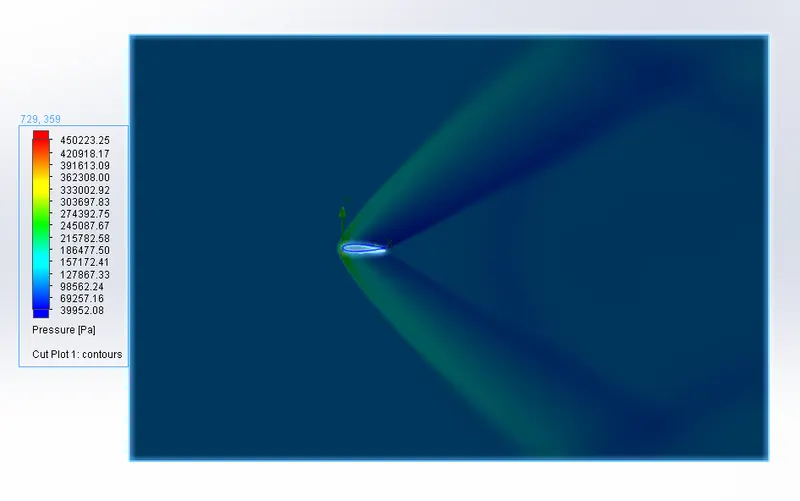
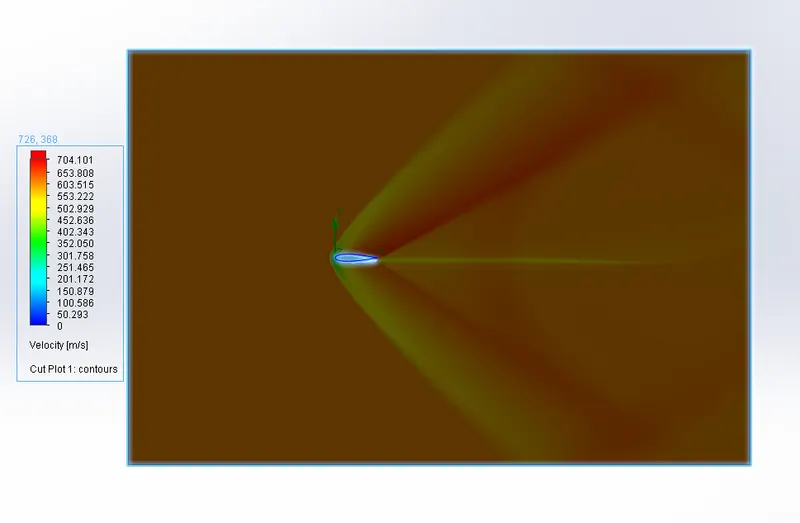
8. Insert pressure-velocity cut plot
Result
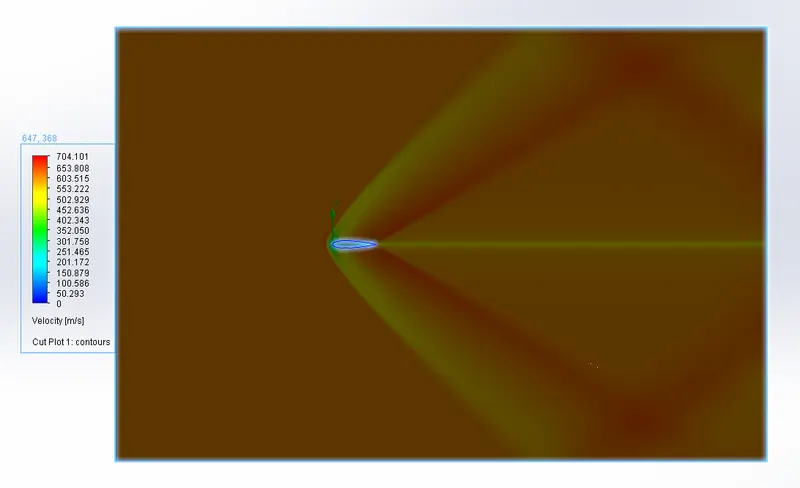
Case Study 1(Angle of Attack 0 deg)
Velocity cut plot
Pressure cut plot
Goal Plot result

Case Study 1(Angle of Attack 2 deg)
Velocity cut plot
Pressure cut plot
Goal Plot result

Case Study 1(Angle of Attack 4 deg)
Velocity cut plot
Pressure cut plot
Goal Plot result

Case Study 1(Angle of Attack 6 deg)
Velocity cut plot
Pressure cut plot
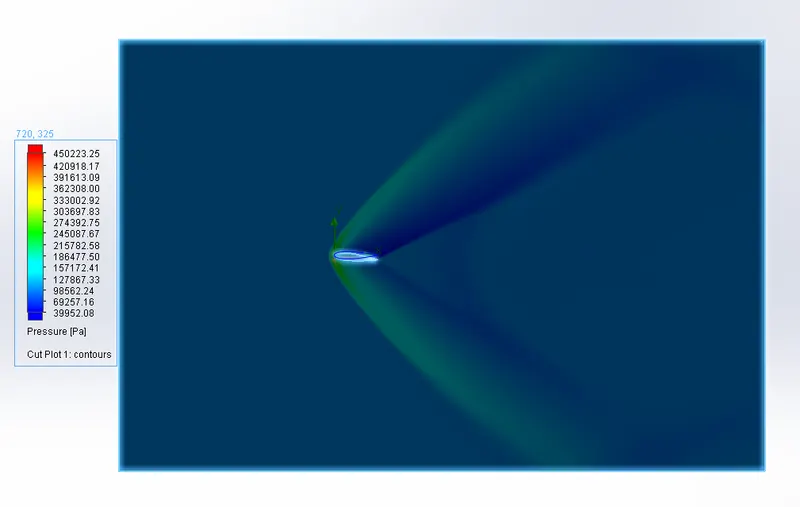
Goal Plot result
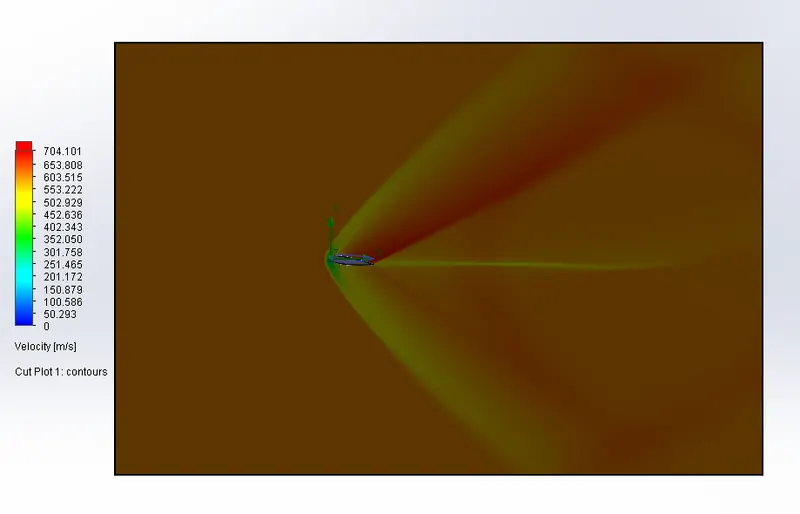
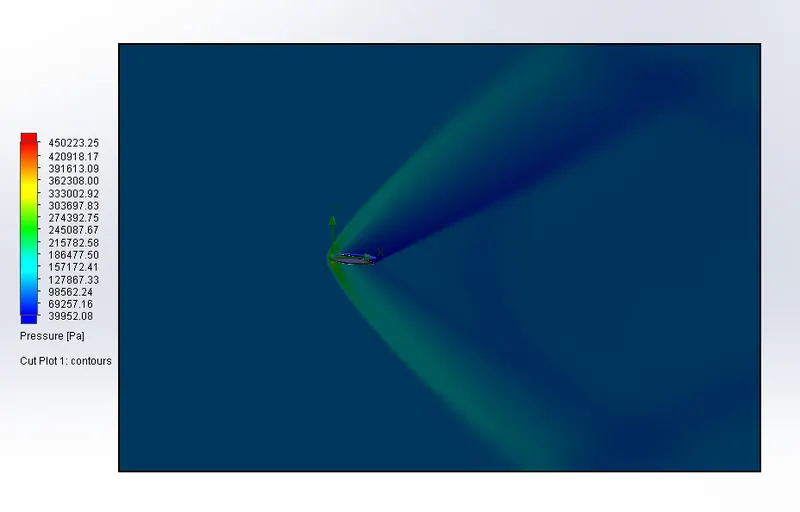
Case Study 1(Angle of Attack 8 deg)
Velocity cut plot
Pressure cut plot
Goal Plot result

Case Study 1(Angle of Attack 10 deg)
Velocity cut plot
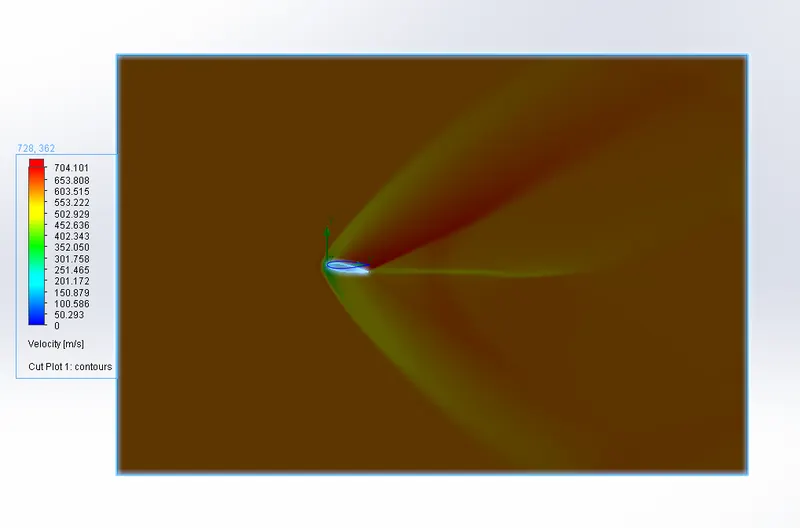
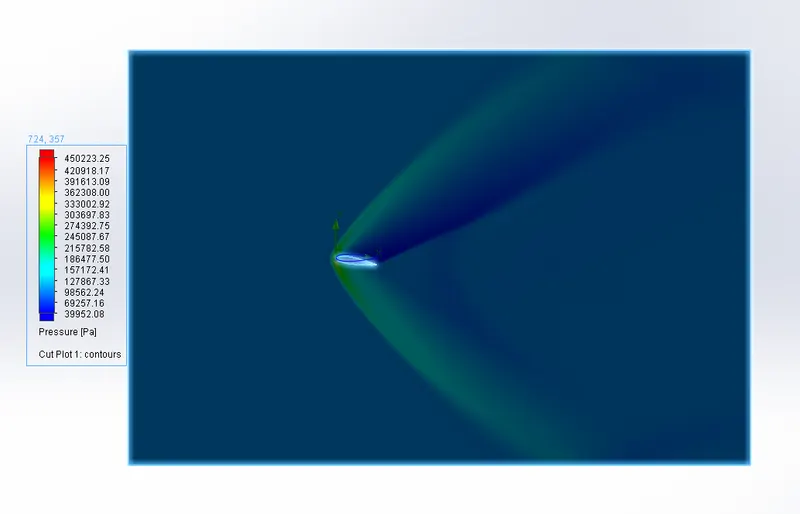
Pressure cut plot
Goal Plot result

Flow simulation Result
Angle of attack SG Force (X) SG Force (Y)
0 2088.693 -4.547
2 2119.043 947.794
4 2215.464 1966.865
6 2384.980 2989.935
8 2604.014 3994.086
10 2882.853 4949.506
SG Force (X) = Drag force
SG Force (Y) = Lift force
Conclusion/Observation
- The lift force increases faster then the drag force when the angle of attack incresesaa
- The angle of attack at 6 deg and above has a lift force higher than the drag force
- The lower the pressure above the airfoil the higher the lift force
- The higher the velocity the higher the drag force on