Final Project: Electric Rickshaw modelling
Electric Rickshaw modelling
ABSTRACT:-
Energy fuels has always been a pondering questions from decades. Not only due to scarcity fossil fuels but also due to alrming rising of pollutions due
to their combustion has compelled orselves to look forward for a better energy source. To work out with this problem electric motor has paved a reliable
path.
We are now entering into the era of electric vehicles , the alternate to IC's. Electric vehicles, as the name suggests, run at least partially on electricity.
Instead of fossil fuel-driven internal combustion engines, these vehicles are powered by electric motors for propulsion. The electric motor, in turn,
derives energy from rechargeable batteries, solar panels or fuel cells.
From point of view of public transportaion E-rickshaw is very good substitute.
Since 2008, E-auto rickshaws (also known as electric tuk-tuks or tricycles or sweepstakes or electric tricycles) have been used as alternatives to
auto-rickshaws and rickshaws. Compared with rickshaws, they have lower fuel costs and less manpower, so in some cities, they have become more and
more popular. They are often used as a substitute for gasoline/diesel/CNG-powered auto rickshaws.These are three-wheeled vehicles equipped with
650 to1400 watt electric motors. They are mainly produced in India and China, and few other countries produce these rickshaws.
E-rickshaws has been very successful in innovating public services and rickshaw concepts. In addition to meeting environmental needs, E-rickshaws is
also a pioneer in a green, pollution-free society.
Since 2008, E-rickshaw has been used as a substitute for manual rickshaws and automatic rickshaws in many Asian countries such as Japan, Nepal, China, and Thailand.
INTRODUCTION:-
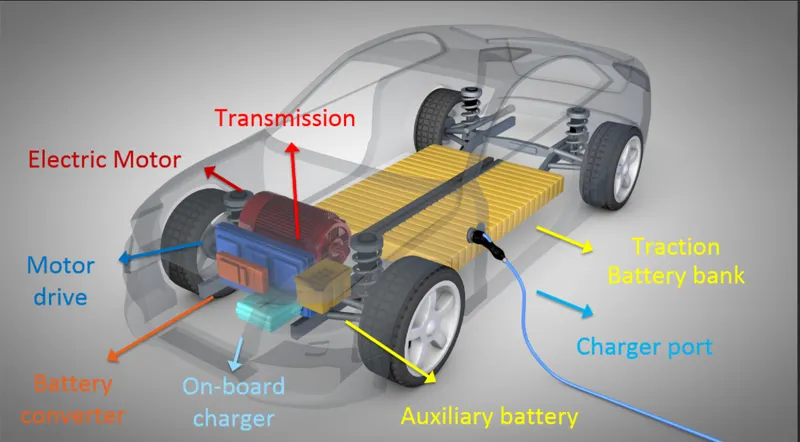
We are focused to develop a model of electric rickshaw. To start with, we will have understand the bsic structure to model any general electric vehicle.
To design a locomotive, basically its structure can be divided into three broad categories namely:-
(i) Chassis and suspension
(ii) Powertrain- Engines or Battery
(iii) Drivetrain- Motor, gears, cluthes, differential
MODEL SPECIFICATION:-
The designed model is three wheeled electric risckshaw equipped with 48 v DC motor. We have used a 70V battery pack to fulfill our energy requirement. To increase the scope of the model, two types of datta input for driving conditions is provided . One is the drive cycle source which will define a pre-designed conditions for vehicle motion and other is the user defined velocity input.
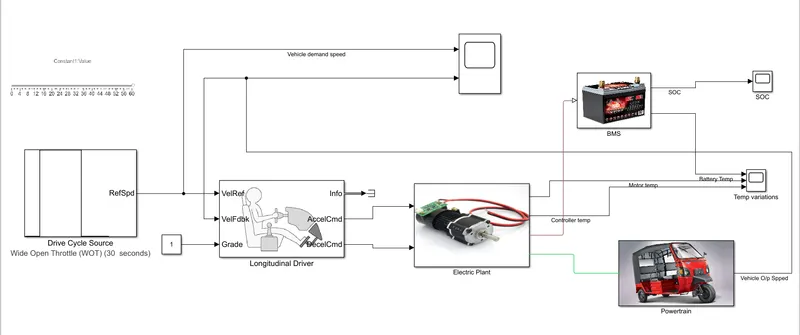
Now let us observe the model by describing each and every block used.
(i) Drive cycle source
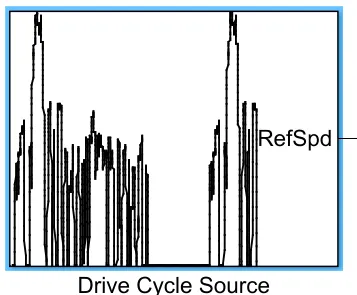
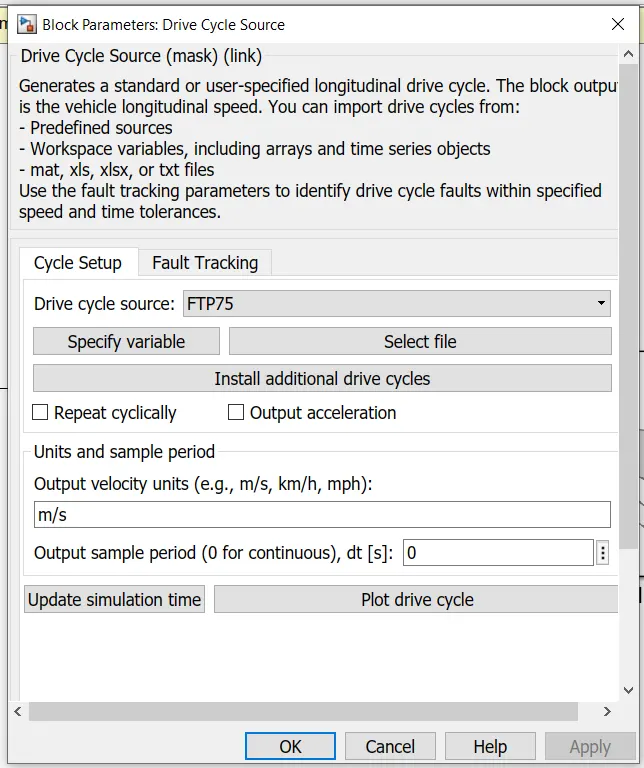
It is a MATLAB pre defined block which contains velocity vs time plots for various driving conditions. It can simply
be used to act as a source for velocity input.
(ii) User defined velocity Input
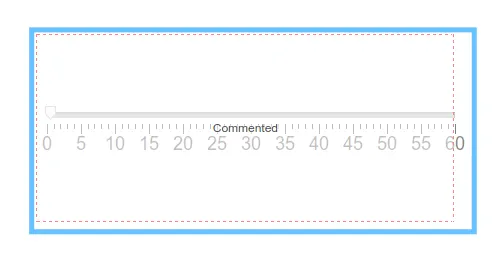
To give an user defined velocity input we have used a slider block. It is very simple block in which value is changed by just sliding the knob. For our purpose range of input is selected between 0 to 60 m/s.
(iii) Longitudnal driver
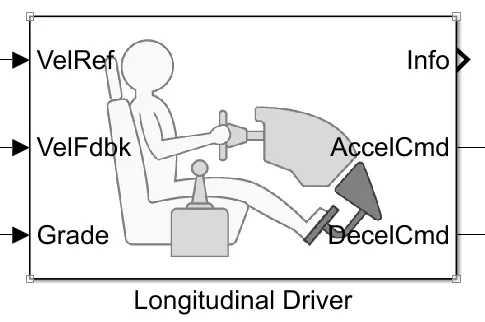
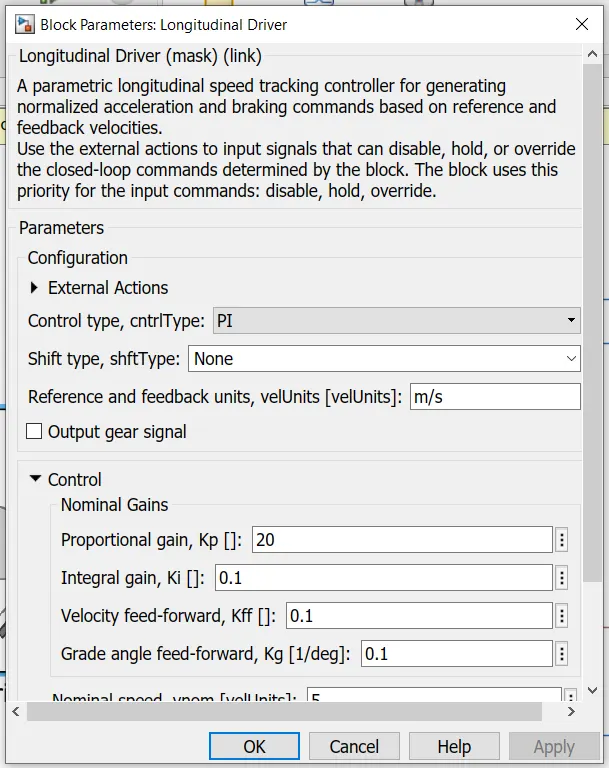
the need of thiss is to convert the velocity input to a system input format in tems of acceleration or braking commands. It works on a feedback mechanism. There are 3 inputa namely vehicle actual speed , vehicle reference speed and gradeability.
By calculating the error between feedback and reference speed, based on PI algorithm it provided the acceleration and braking commands to the sysytem.
(iv) PWM generator
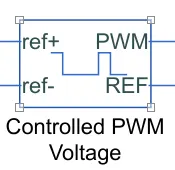
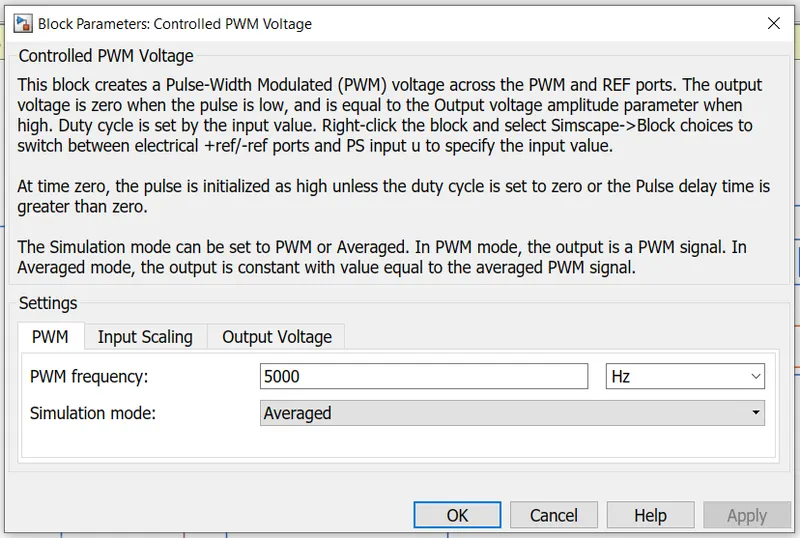
Pulse Width Modulation(PWM) is a digital technology that uses the amount of power delivered to a device that can be changed. The duty cycle of the PWM signal refers to the ratio of the time that the signal is in a high(on) state over the total time it takes to complete one cycle.
For a operting signal final output value is given as :- Vo= d*Vin
where d- duty cycle. `d= (t(on))/(t(on)+t(off))`
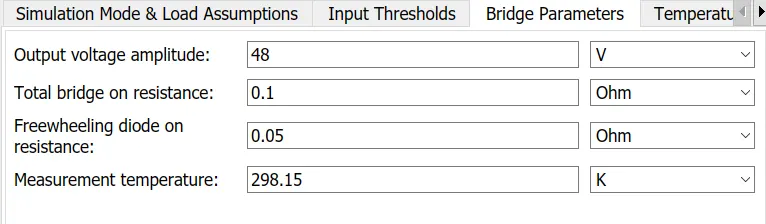
(v) H-Bridge
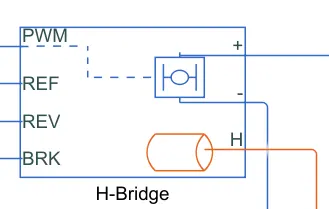
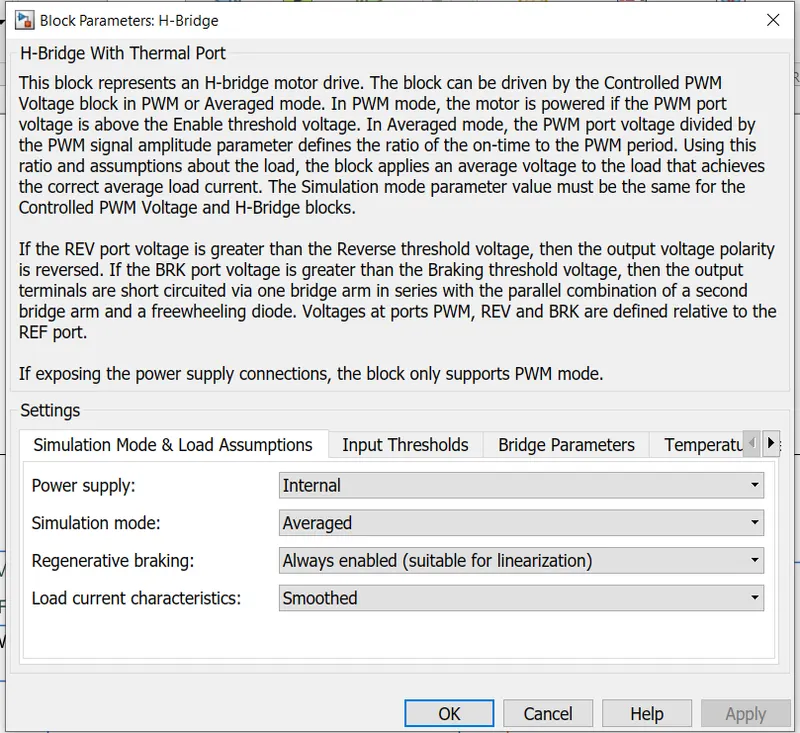
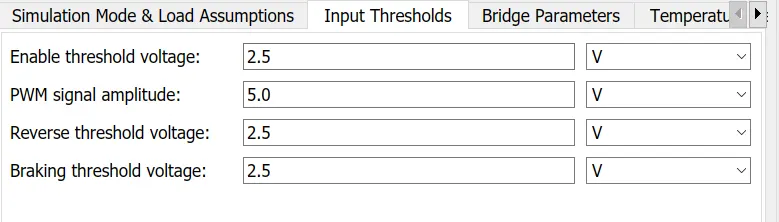

(vi) DC Motor
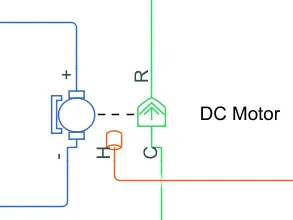
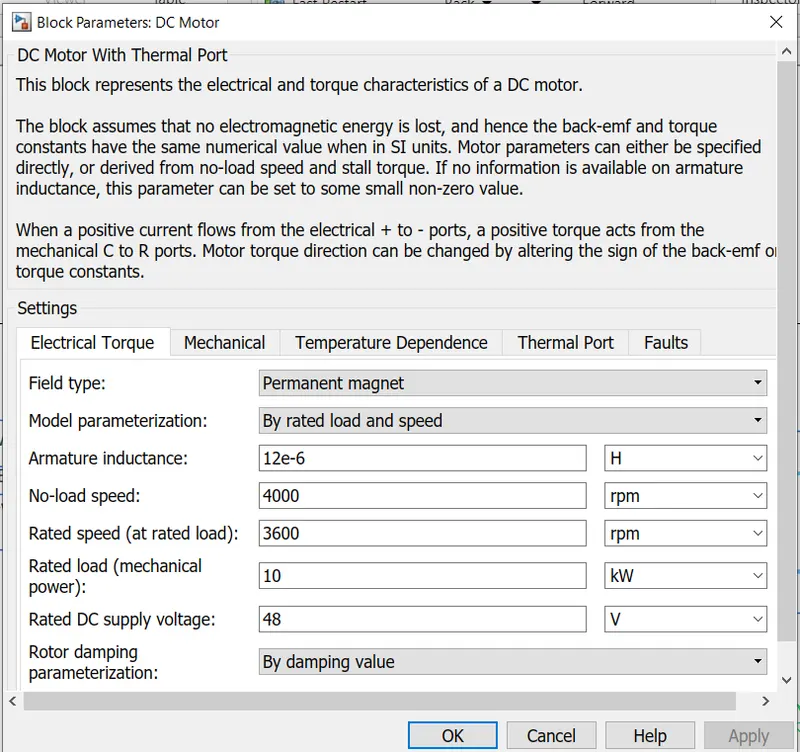
A 48 V DC motor is used here witha rated load power. It has been connected to H bridge for the seed control. We are also monitoring here the temperature changes in it.
It has basically 4 ports. Two electrical and remaining two mechanical ports. Electrical ports will be working as negative and positive terminal. Out of two mechanical ports one is the conservatiom port which is connected to rotational reference.
Other is the rotational port which cam be considered as motor axle.
(vii Vehicle body
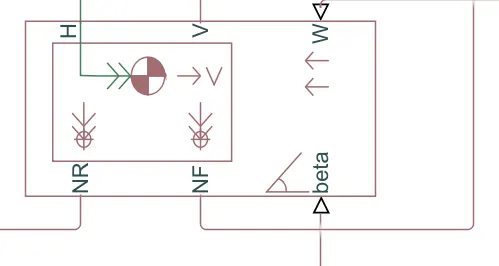
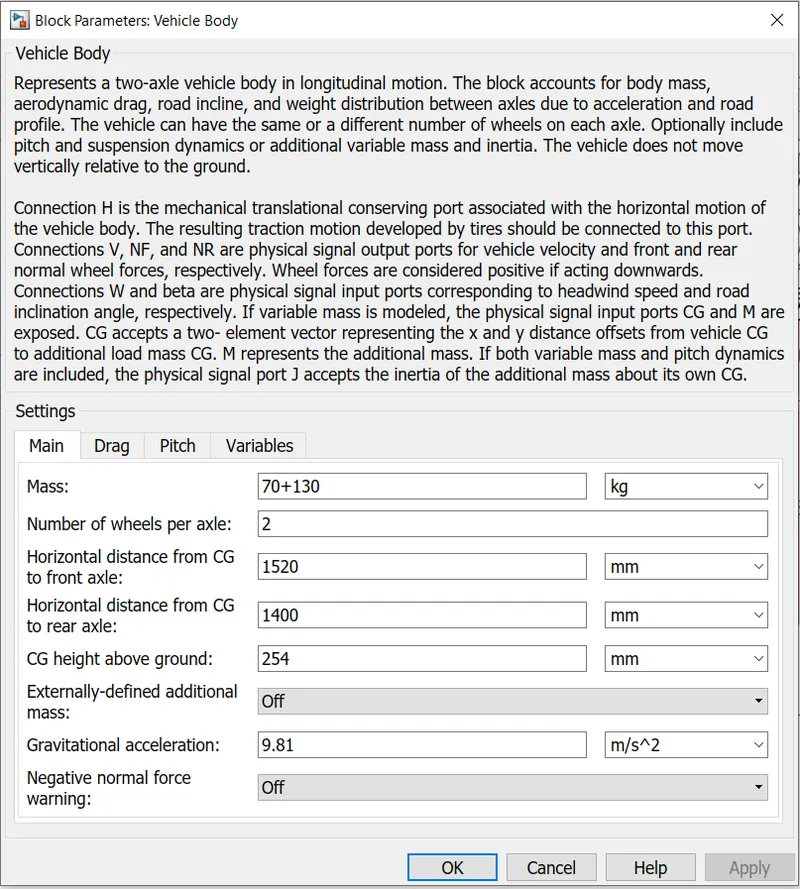
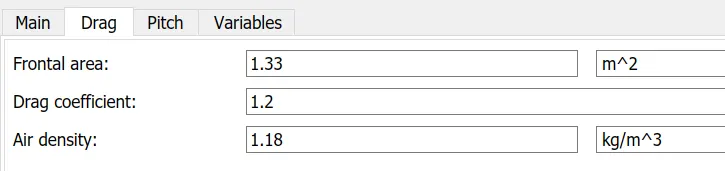
The prdefined vehicle body simulink block has been used. It has in total 6 ports .
NR= Connected to front tires and acts as normal reaction for front tires.
NF= Connected to Back tires and acts as normal reaction for rear tires.
beta= gradability
W= wind speed
H= connected to hub of all the wheels.
V= Output velocity of the vehicle.
This model is a vehicle body where all the physical parameters are assigned to it. It considers the drag force, rolling restsance also.
(viii) differential
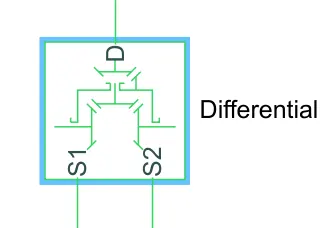
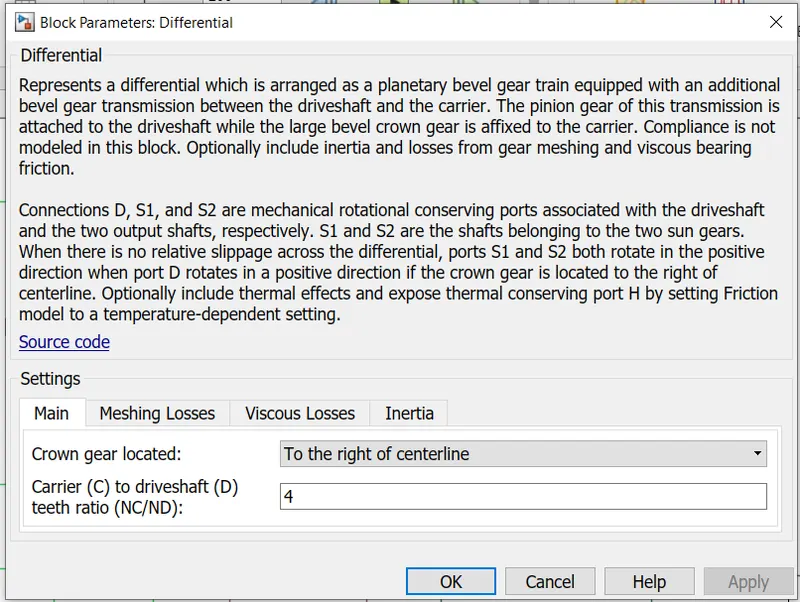
Differential is a mechanical device connected to axle of driving wheels of all vehiles. the purpose of its installation is to divide the motor torque to two wheels in
a required way.
(ix) Tires
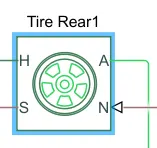
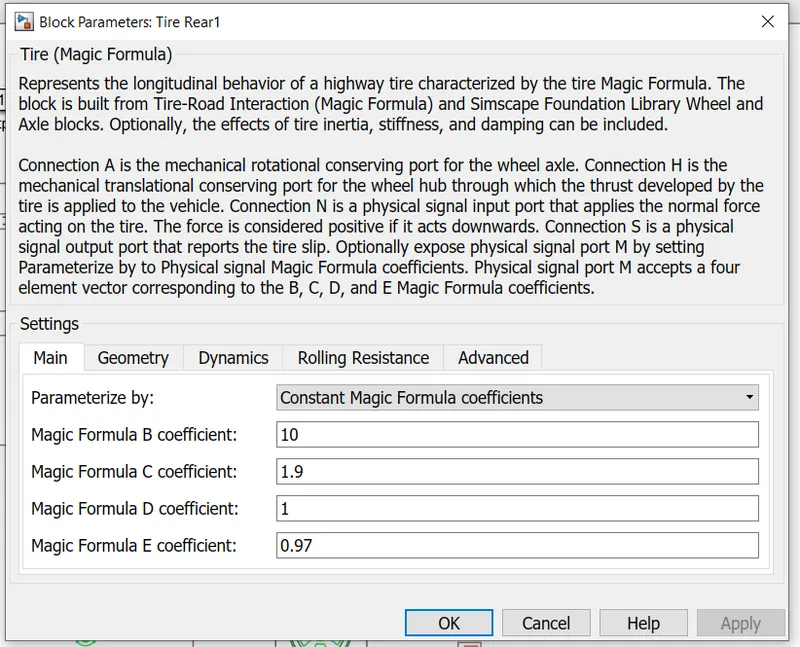

A simpel tire is used defined on the algorithms if the magic formula.
(x) battery
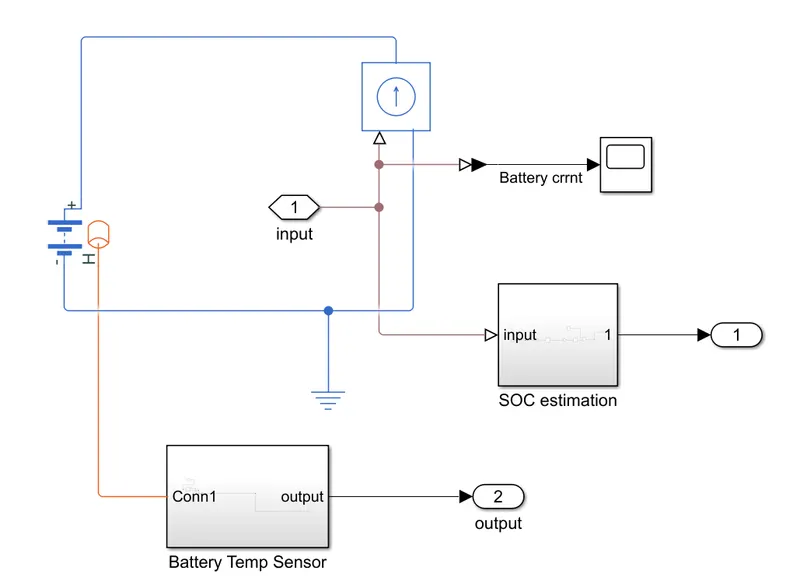 .
.
Soc estimation
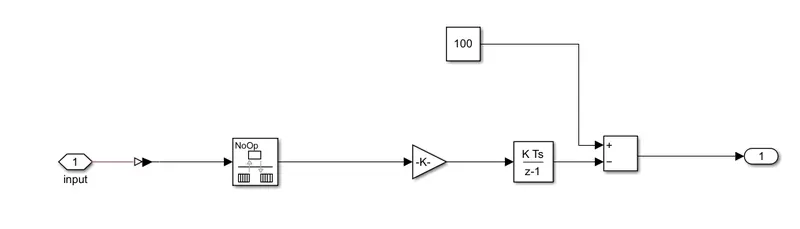
RESULTS and CONCLUSION:-
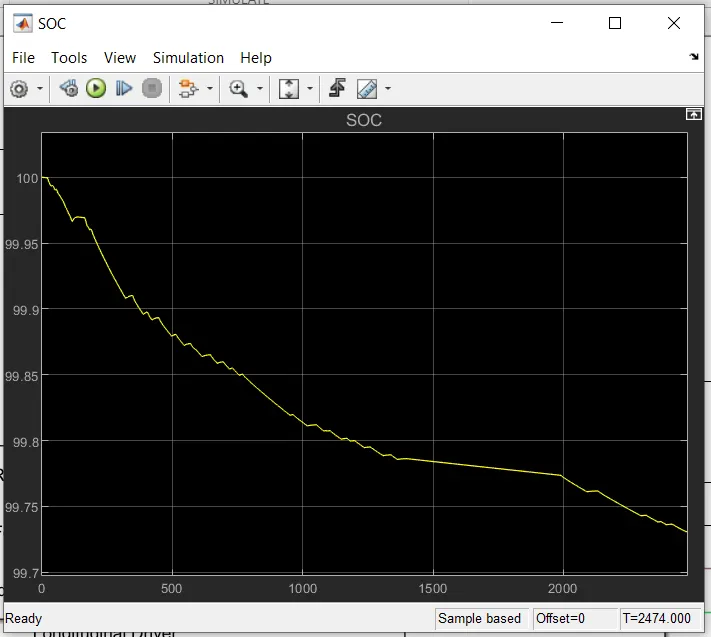
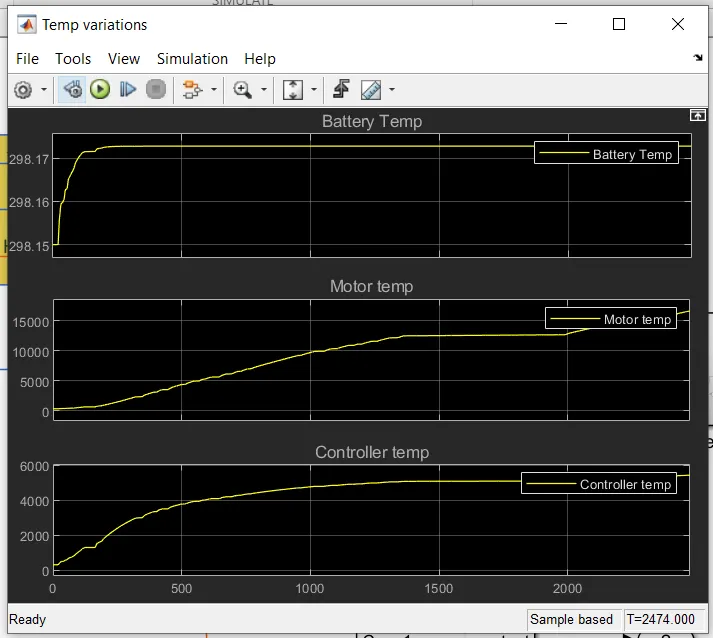
In this project an attempt has been made to visualise the functioning of a simple e-rickshaw. For this purpose system simulation is created along with the thermal parameters.
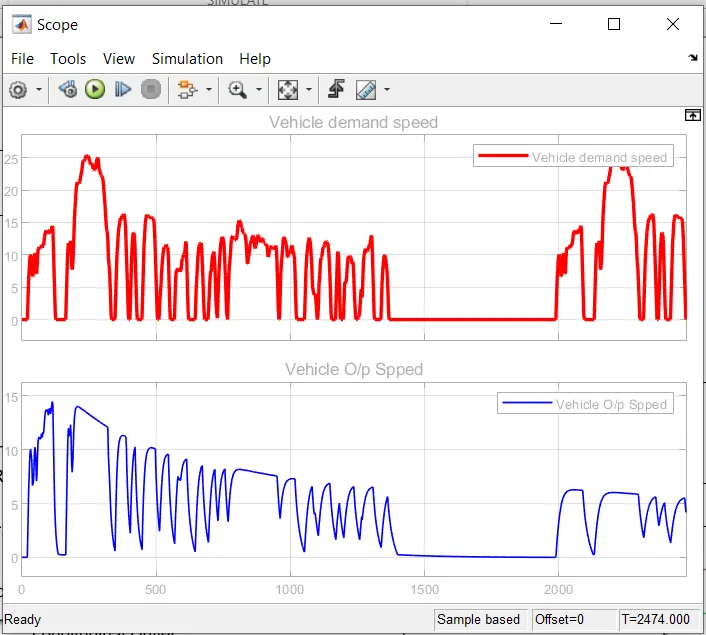
With the variation of demand speed of the vehicle a output velocity is obtained and has been tracked all long the time.
Let us first the velocity variation for a general US urban driving conditions.
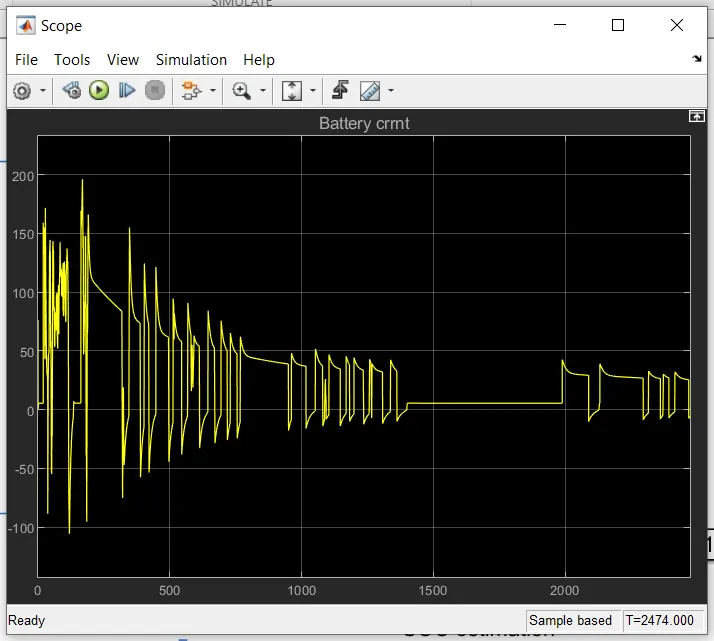
It is a simple US urban driving. The simulation time is 2474 sec for this simulation case.
(i) Velocity vs time
(ii) SOC
(iii) Battery current
(iii)Temperature variation
To know the capabilities of our model a Wide Open Throttle(WOT) Test has also been implemented.
(i) velocity trend
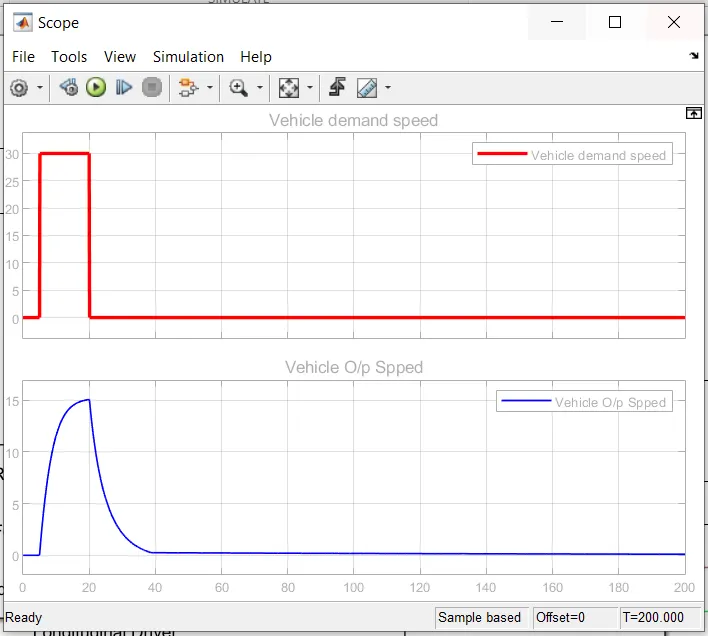
From the graph it can easily be visulaised that the top speed achiecved by our vehicle
is about 15 m/s which is equal to 54 km/hr. This shows our model is achieving a good spped with respect to urban start and stop driving.
(ii) Temperature variation
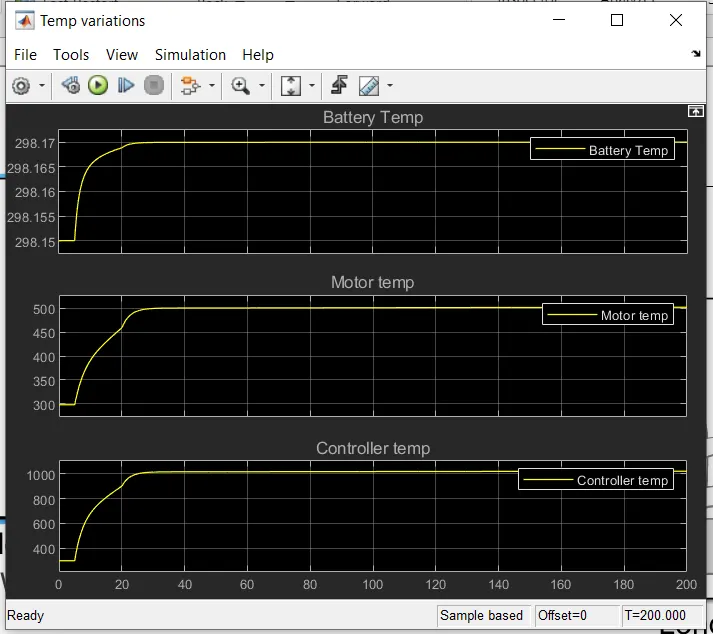
It is observed here that the temperature variation occured only at the stage when the body is in acceleration after that it has attend a steady temperature.
(iii) Battery Current
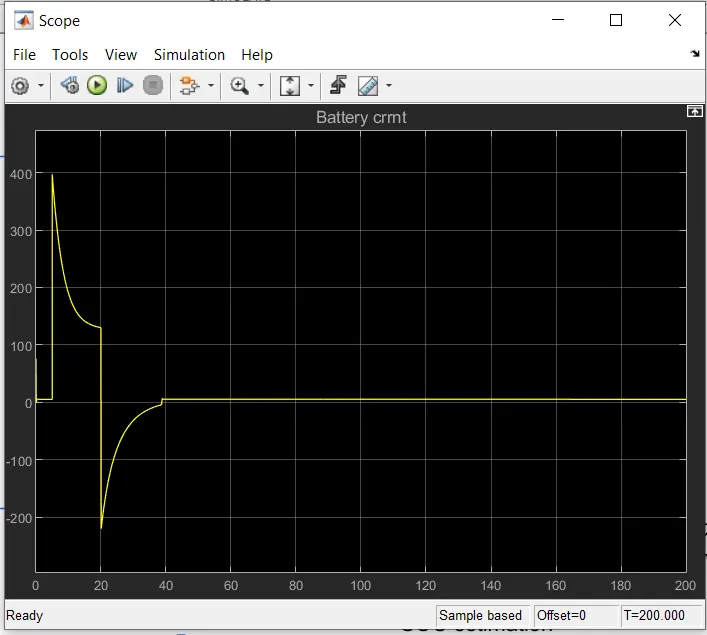
Battery current shows a sharp changes at the moments of accelerationa nd decceleration.
(iv) SOC
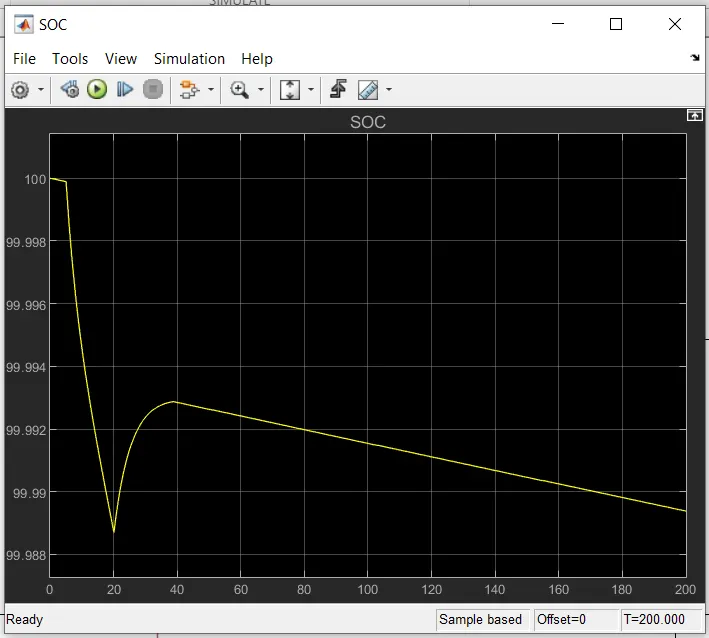
There is nominal drop of battery State of charge during the motion of vehicle.
REFERENCES:-
1. Design of an Electrically Powered Rickshaw, for Use in India-- Colin Cochrane *, Tariq Muneer and Bashabi Fraser
2. https://www.bestelectriccars.co.in/e-auto-rickshaws/
3. https://inc42.com/features/electric-vehicles-overview-indiae-evs/