Final Project: Electric Rickshaw modelling
Aim:
To design and model an electric rickshaw using Matlab and Simulink
Objectives:
To create a detailed MATLAB model of an electric rickshaw (three-wheel passenger vehicle) as per the details below:
1. Rear wheels driven by PM brushed type motor
2. Assume efficiency points of motor controller and motor
3. Make an excel sheet of all input and assumed data
Results: For any three standard driving cycles show energy consumption and the temperature rise of the motor and controller for 100 km constant speed driving at 45 kmph.
Solution:
Software used: MATLAB 2020
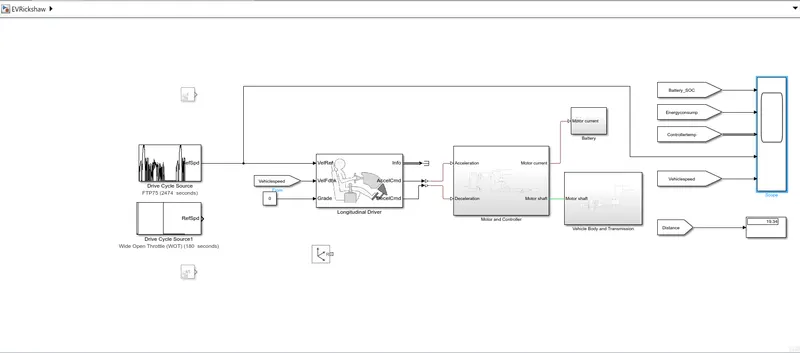
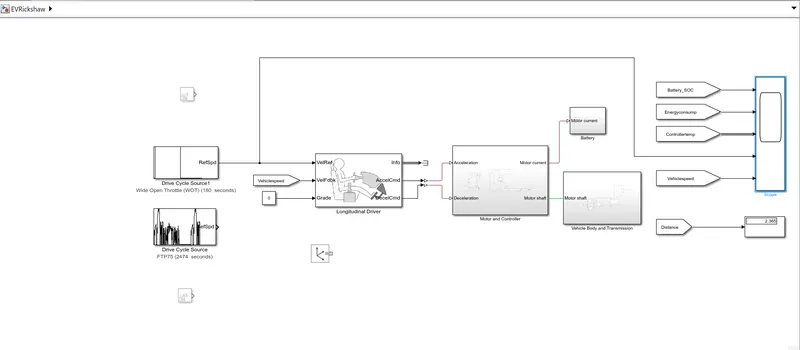
Matlab model for electric rickshaw:
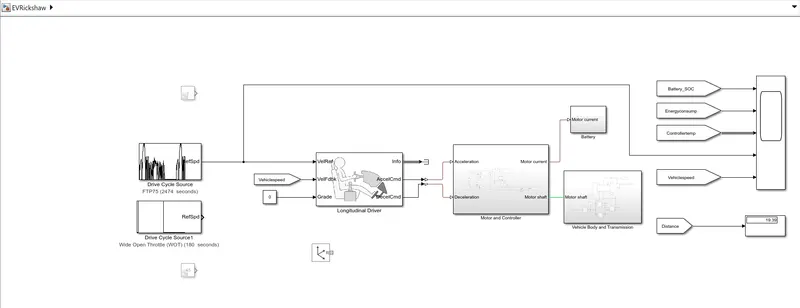
Above is the Matlab model of the electric rickshaw.
Driver:
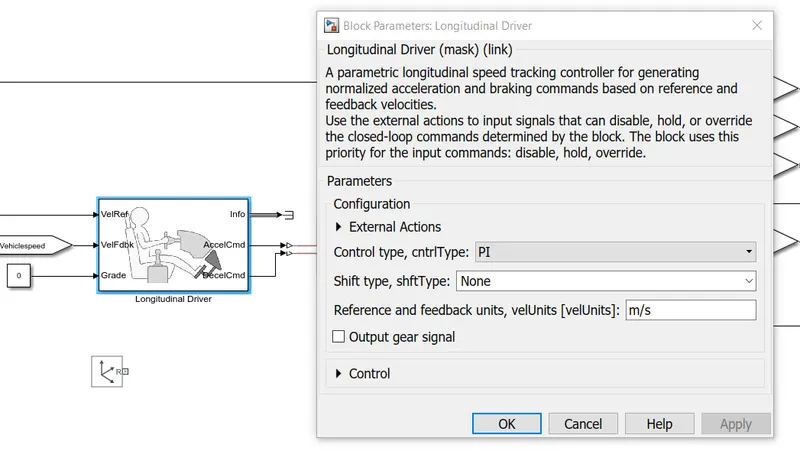
Parameters of the Driver used.
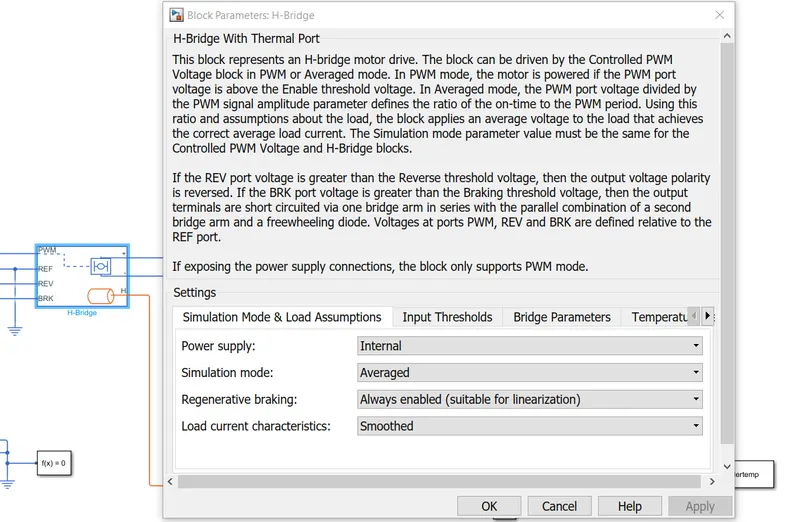
H-Bridge:
Temperature Sensor:

This sensor is used to measure temperature in the thermal block. When the temperature at port A is greater than at Port B, the temperature is positive.
Solver Configurator:
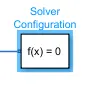
This block is used to define solver settings required for simulation.
Battery:
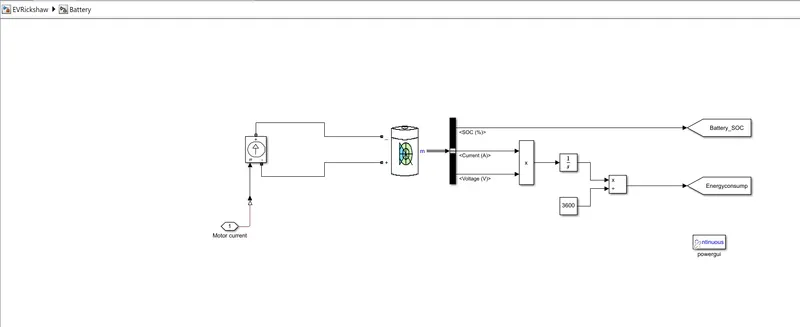
The battery voltage is 330V and the initial SOC is 100%.
The battery is required to power the controller and motor. The controller uses the battery power according to produce the input given by the motor to obtain maximum speed. The battery is also used to power every electrical component in the vehicle. The battery has two states one is charging and the other one is discharging state. The battery is of 75Ah capacity.
The battery is a series of internal resistance plus a charge-dependent voltage source defined by:
The battery has a positive and negative terminal which is given the voltage-controlled source where the battery consumption is controlled by the motor controller and then it is given to the SOC block.
Vehicle Body and Transmission:
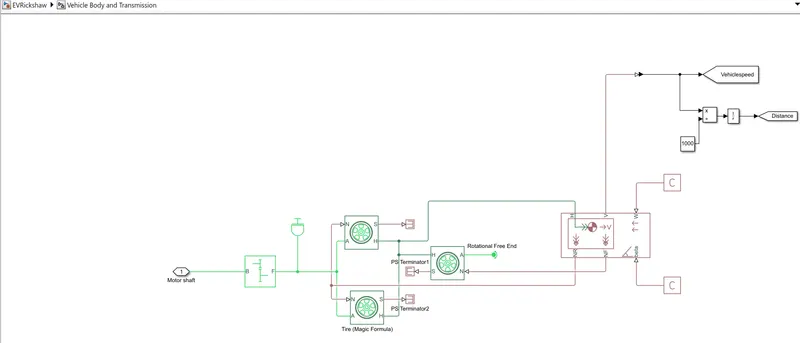
The above pic is a rear-wheel-drive transmission system.
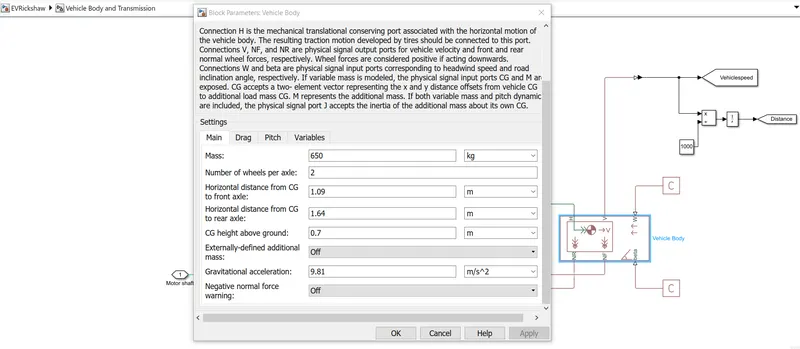
Vehicle Body:
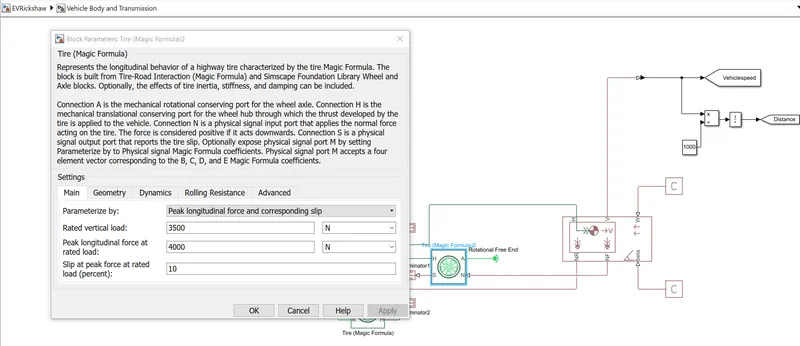
Wheels:
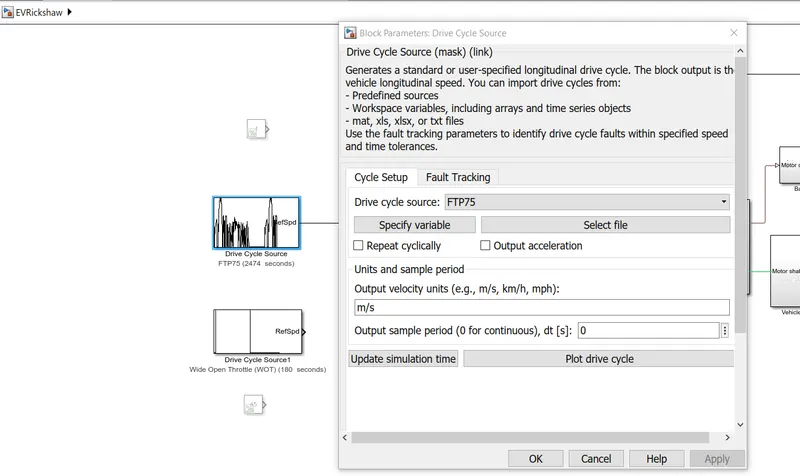
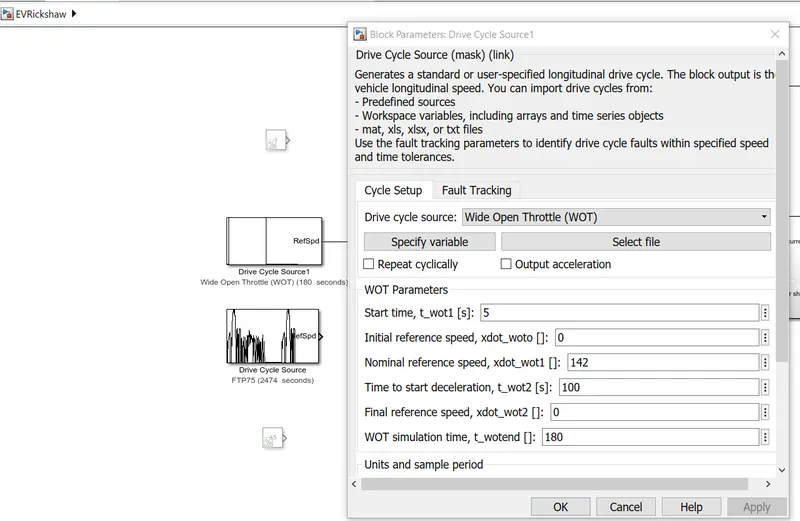
Drive Cycle:
FTP75 Drive Cycle:
WOT Drive Cycle:
Results:
Results for FTP75 Drive Cycle:
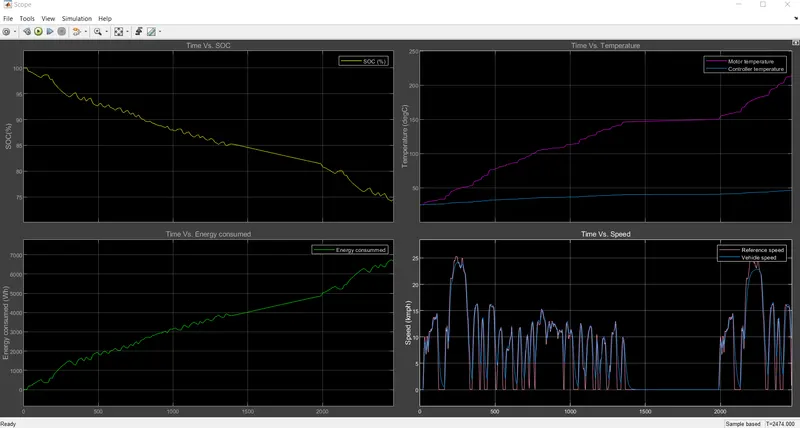
The temperature of the motor and controller increases.
The SOC of the battery is reduced to 74%.
The actual speed follows 90% of the reference speed.
Results for Wide Open Throttle (WOT) Cycle:
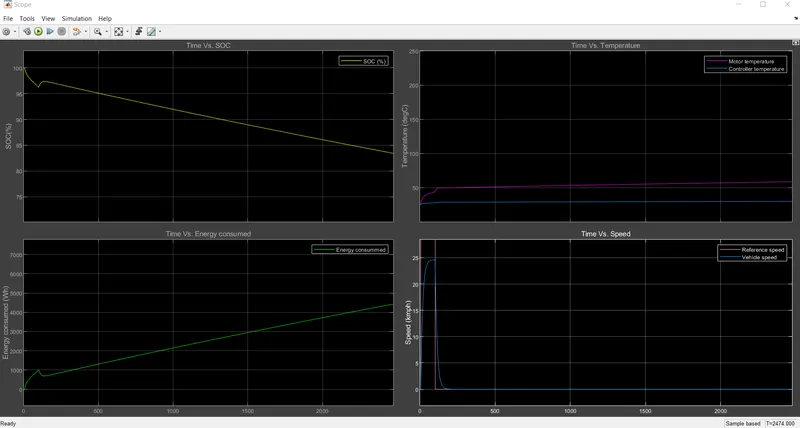
The Vehicle speed and Reference Speed match to a certain extent.
The temperature of the motor and controller increases.
During regenerative action, the SOC improves.
When SOC starts improving, there is a lesser amount of energy consumed.