Final Project: Electric Rickshaw modelling
Project Title: Electric Rickshaw modelling
Aim: Create a detailed MATLAB model of an electric rickshaw (three wheel passenger vehicle) as per details below:
Rear wheels driven by PM brushed type motor
Assume efficiency points of motor controller and motor
Make an excel sheet of all input and assumed data
Results: For any three standard driving cycles show energy consumption, temperature rise of motor and controller for 100 km constant speed driving at 45 kmph.
(Note- The simulink model file should be compulsorily attached)
Software Used: Simulink, MS Word.
Solution:
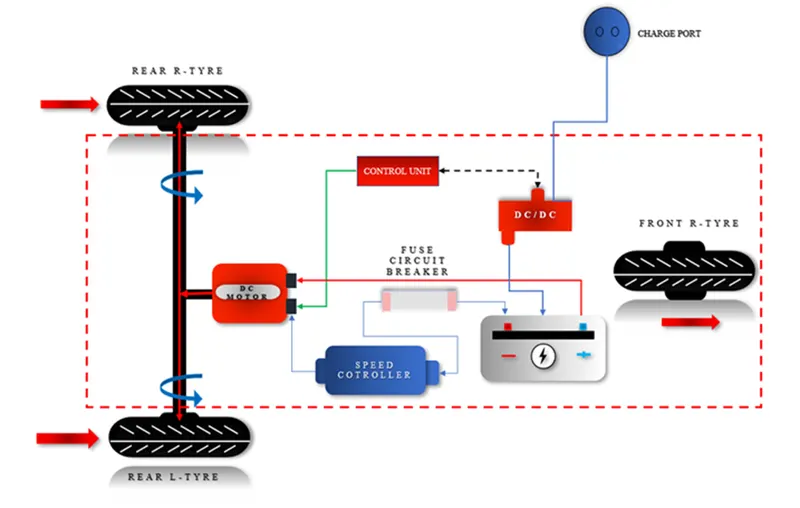
Internal Structure of an electric rickshaw:
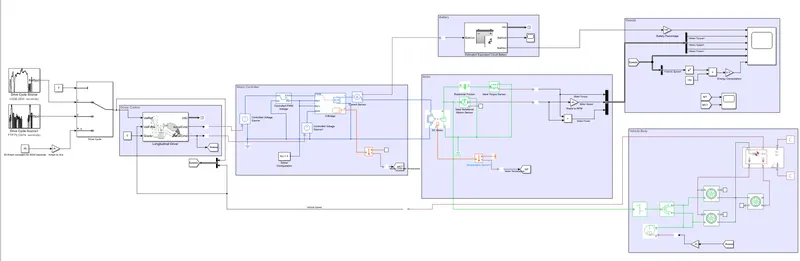
Simulink Model (open view):
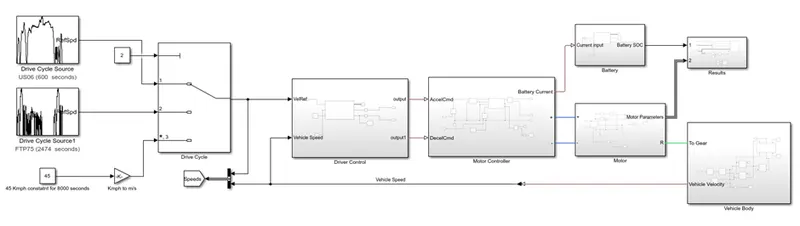
Simulink Model (subsystem view):
Model Parameters:
- Drive Cycle Source:
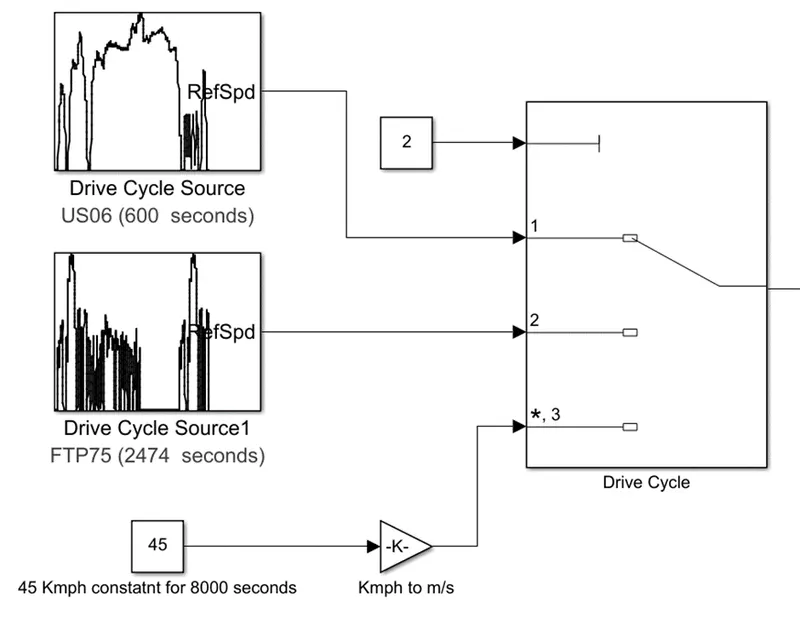
This block gives the vehicle speed input. For this Model, 3 drive cycle are considered for simulation:
- US06 drive cycle (600 seconds).
- FTP75 drive cycle (2474 seconds).
- 45 Kmph constant speed for up to 8000 seconds (100 kms distance covered).
- Driver Control:
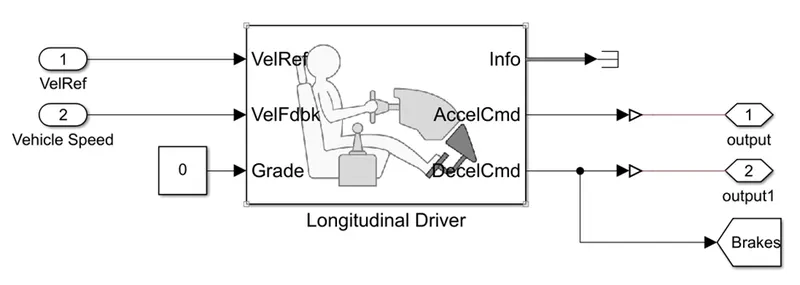
Here, Longitudinal Driver block is used to calculates acceleration and deceleration commands. The speed input from the Drive Cycle Source is used as vehicle reference input. The final velocity of the vehicle is used vehicle velocity feedback.
- Motor Controller:
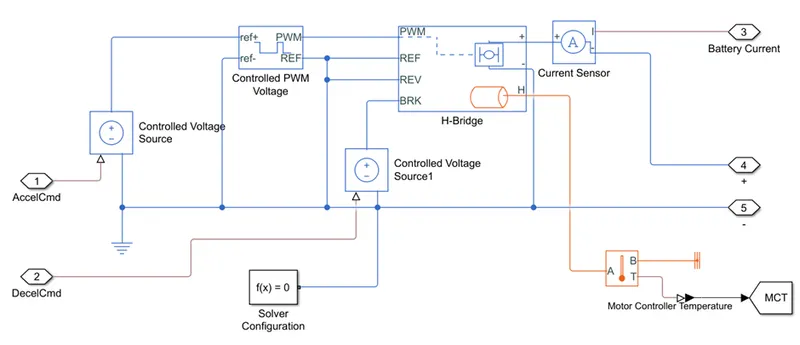
The acceleration and deceleration commands are connected to the controlled voltage source. The acceleration-controlled voltage source is connected to the controlled PWM Voltage block which generates PWM signals according to the acceleration command.
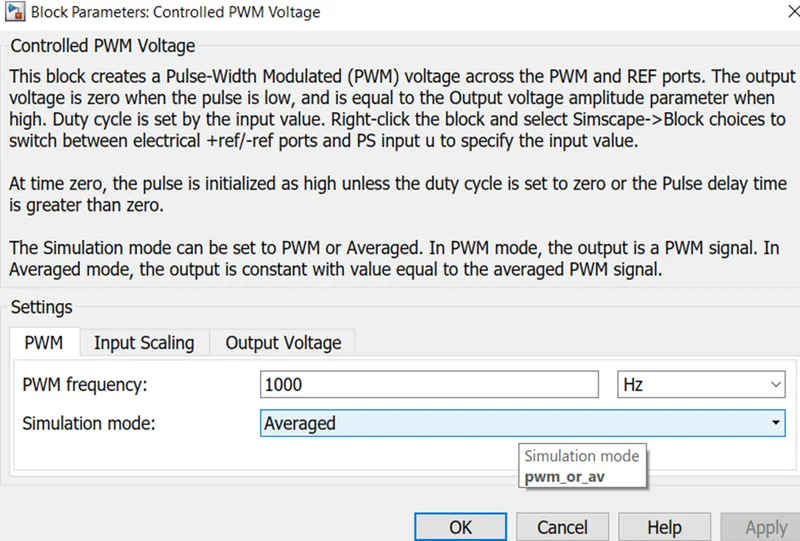
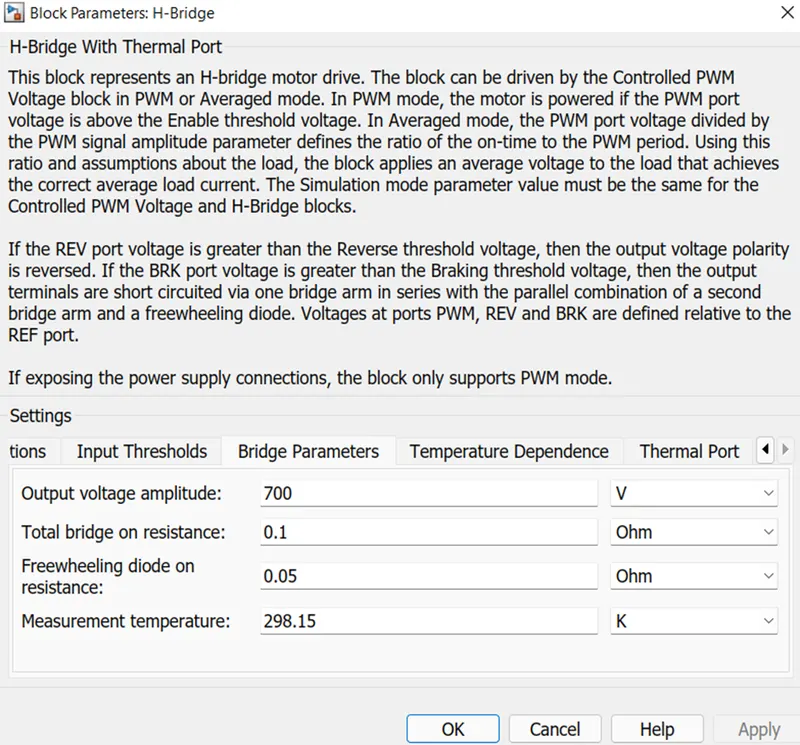
It is connected to H-bridge which generates signals for motor from the PWM signal.
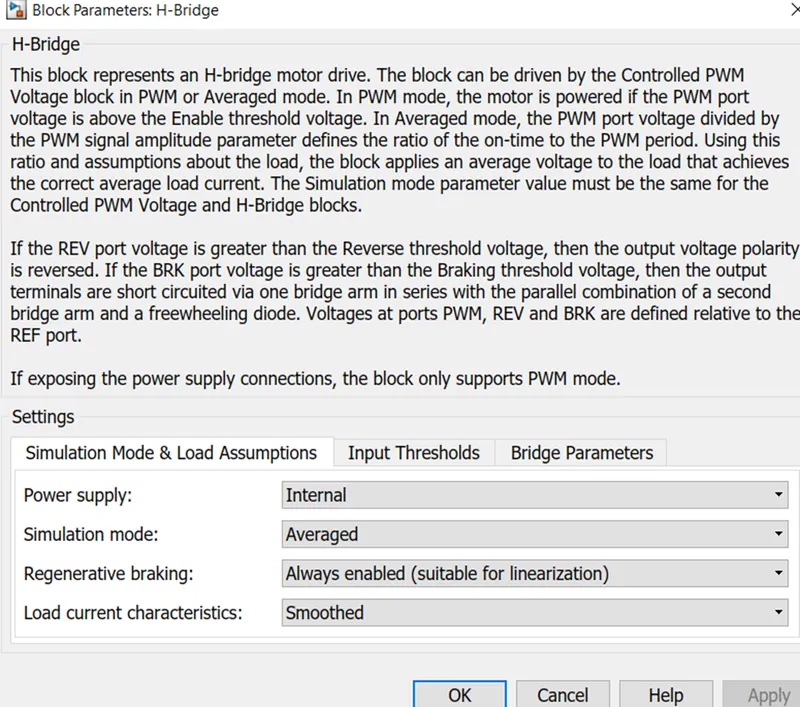
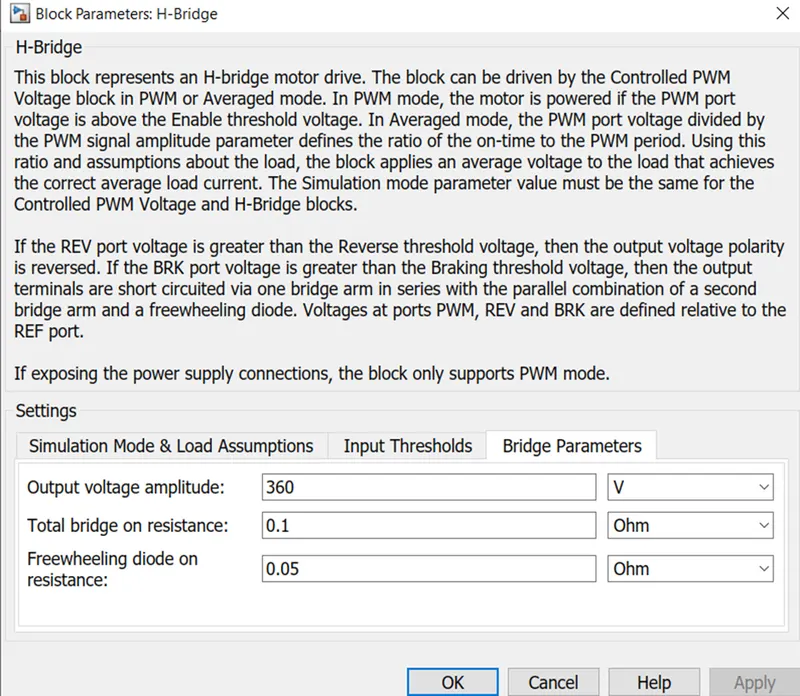
The deceleration-controlled voltage source is connected to the H-bridge for regenerative braking. When excessive braking is used manual brakes (disc brakes) are applied. The H-bridge then sends the battery current required signal to Battery subsystem and the positive and negative terminal to the motor.
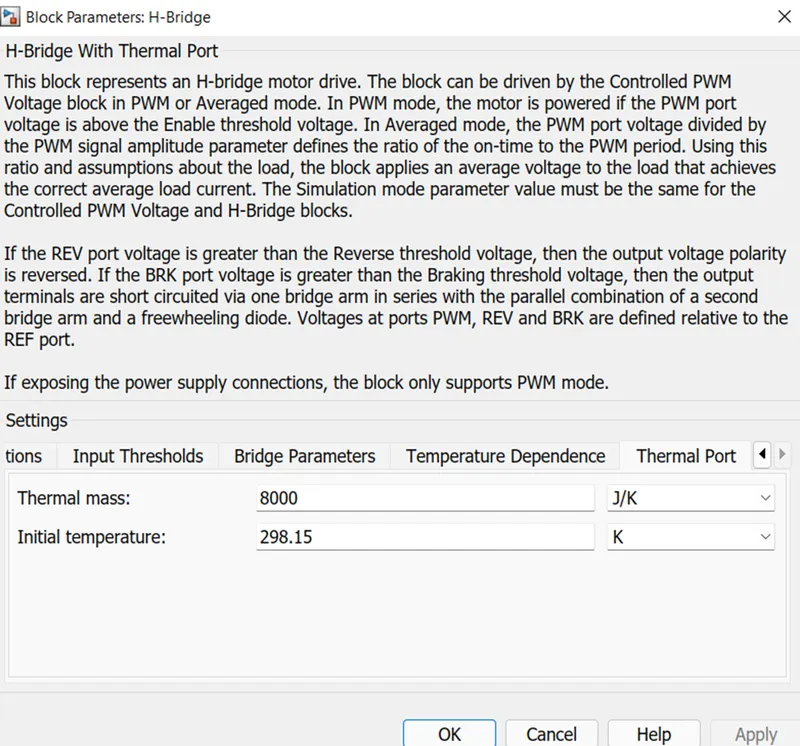
Thermal characteristics:
- Battery:
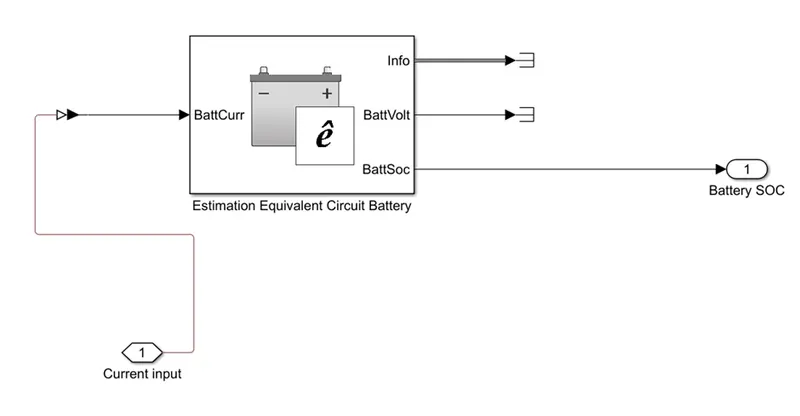
The battery current required input is connected to the Estimation Equivalent Circuit Battery block.
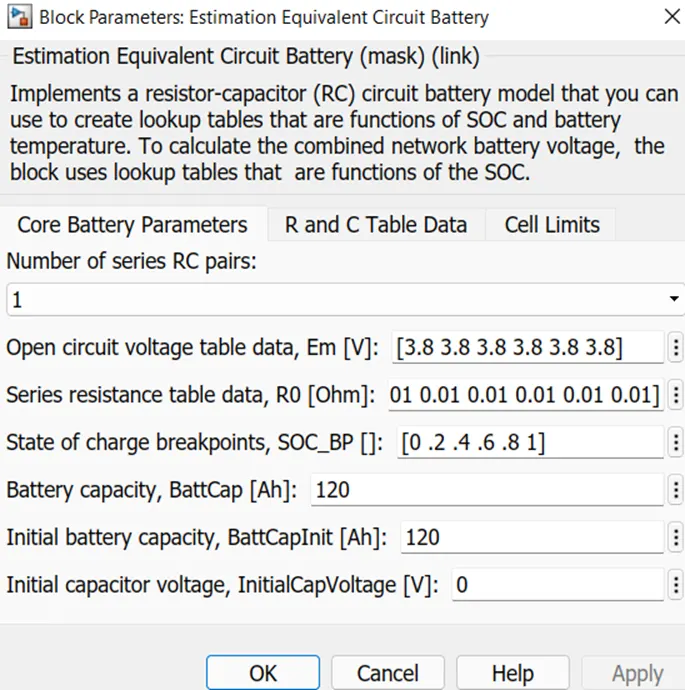
Battery capacity of 120 Ah is provided to the block and it calculates the Battery State of Charge.
- Motor:
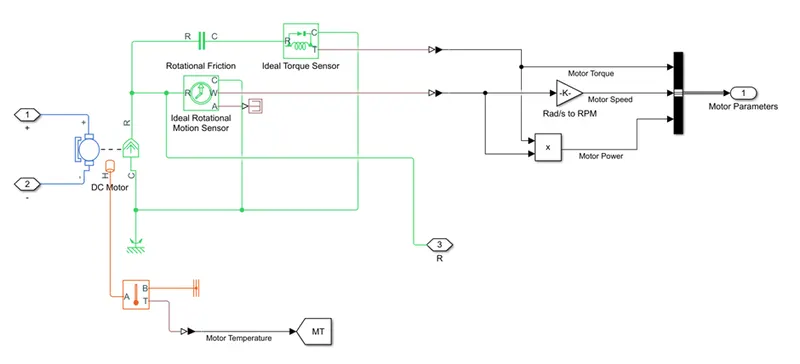
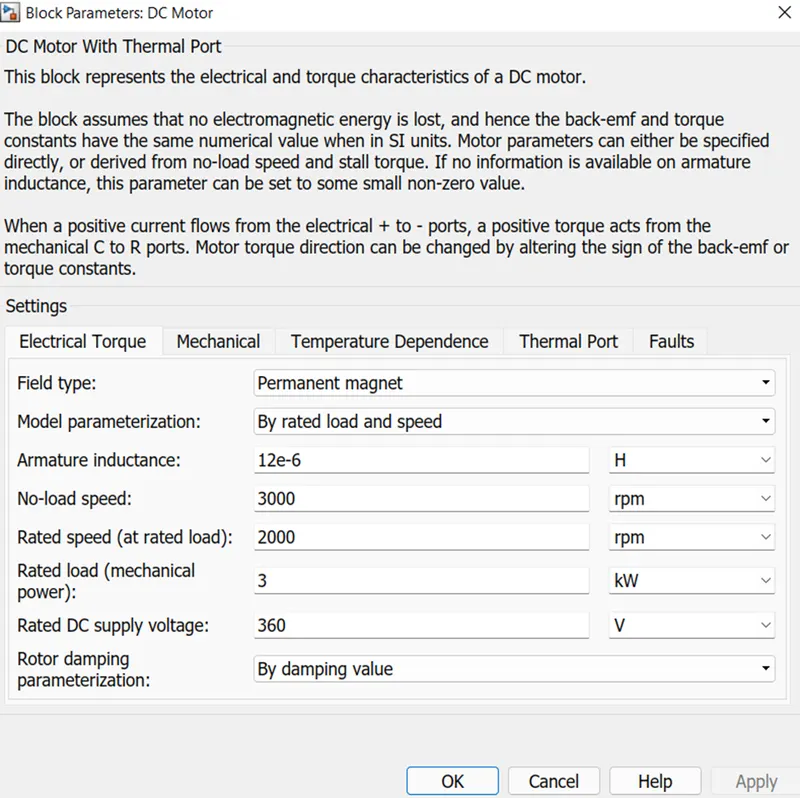
The DC motor is connected to the positive and negative terminals of the motor controller subsystem.
The subsystem calculates the motor speed, torque and power.
The shaft of the motor is connected to the vehicle body subsystem.
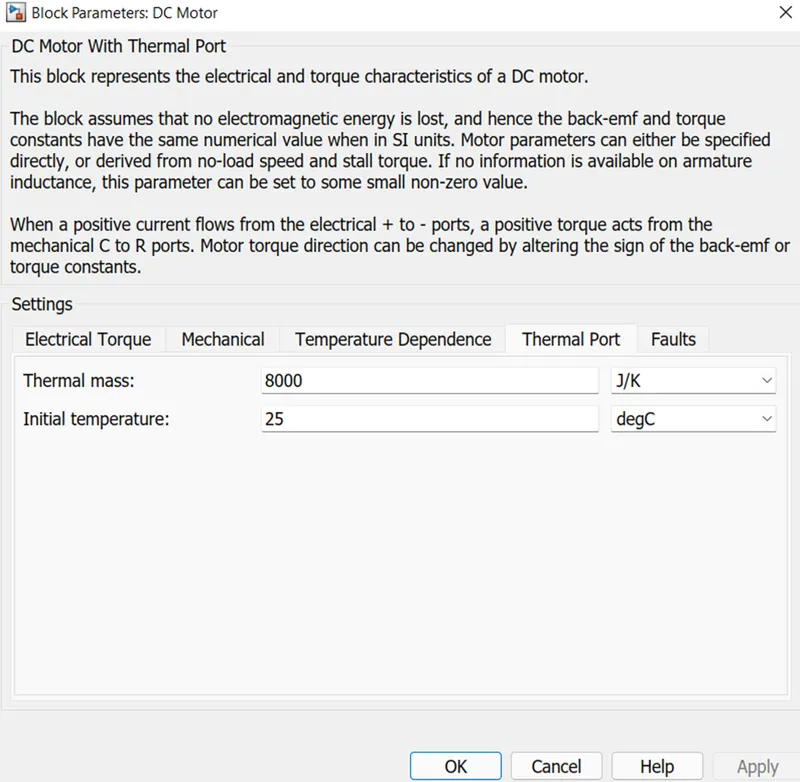
Thermal Parameters:
- Vehicle Body:
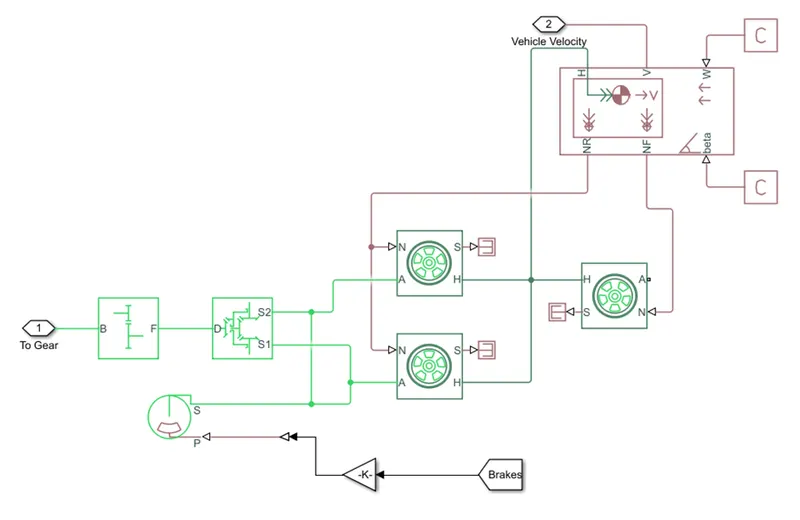
The vehicle body contains 3 wheels, vehicle body block, differential, disc brakes and simple gear. The shaft of the motor is connected to the simple gear. Disc brakes are connected to the rear wheel for manual braking.
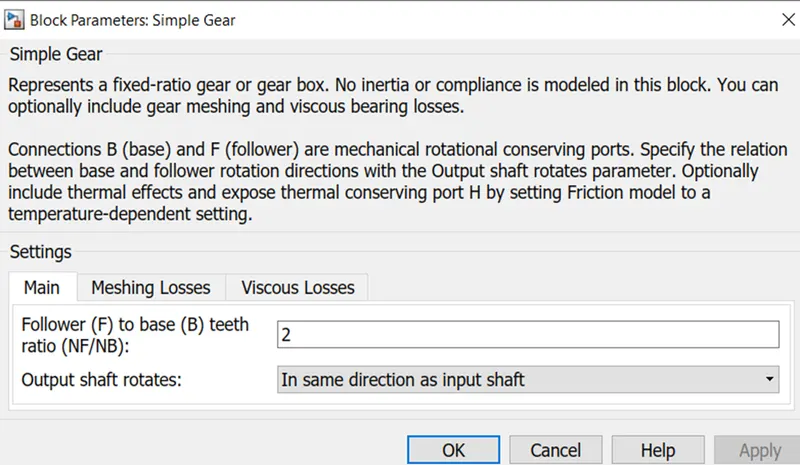
Simple gear is then connected to the differential.
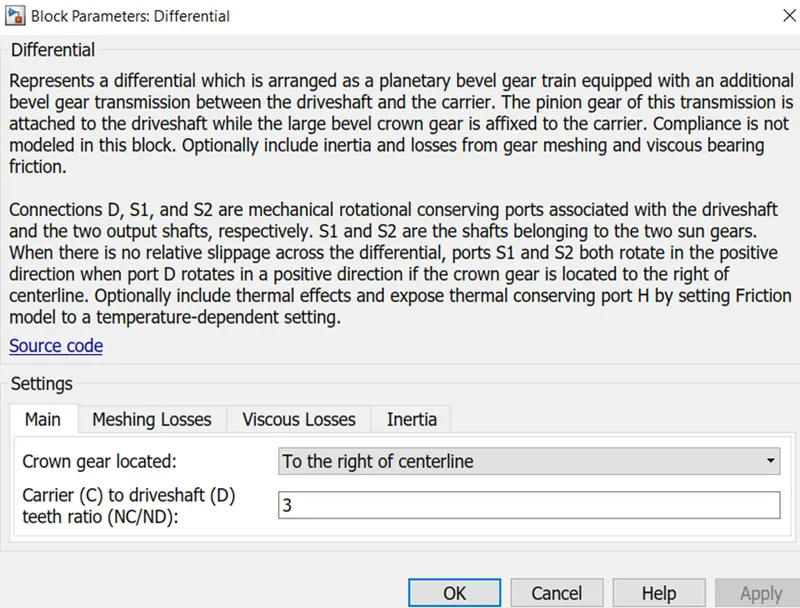
Differential is connected to both the rear wheels and is also connected with the disc brakes.
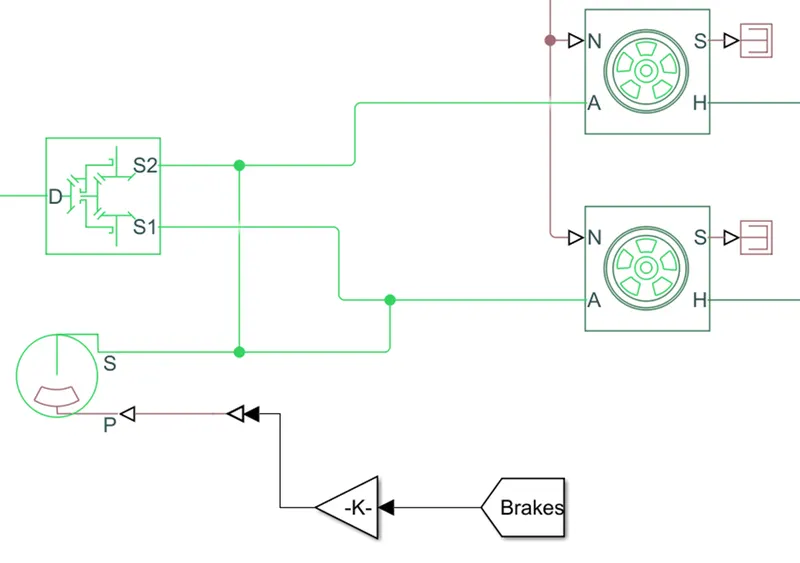
The deceleration command from the driver control subsystem is multiples by 1000 to calculate pressure applies by the cylinder on the brake pads.
Tyre System:
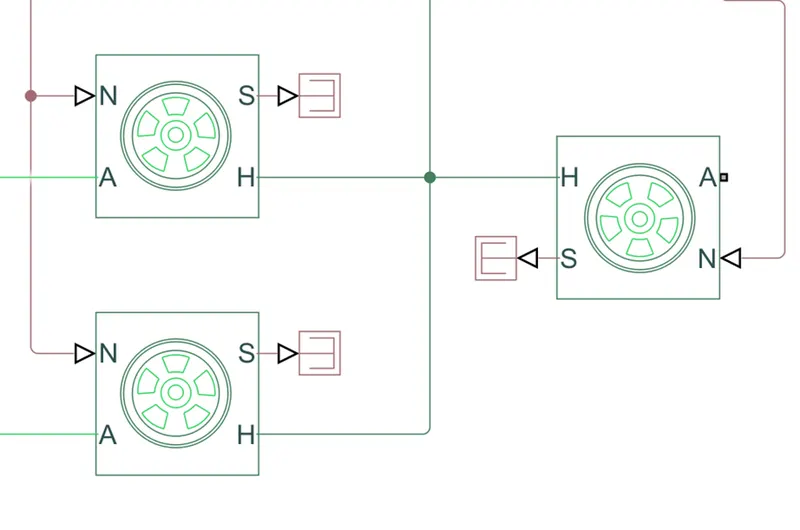
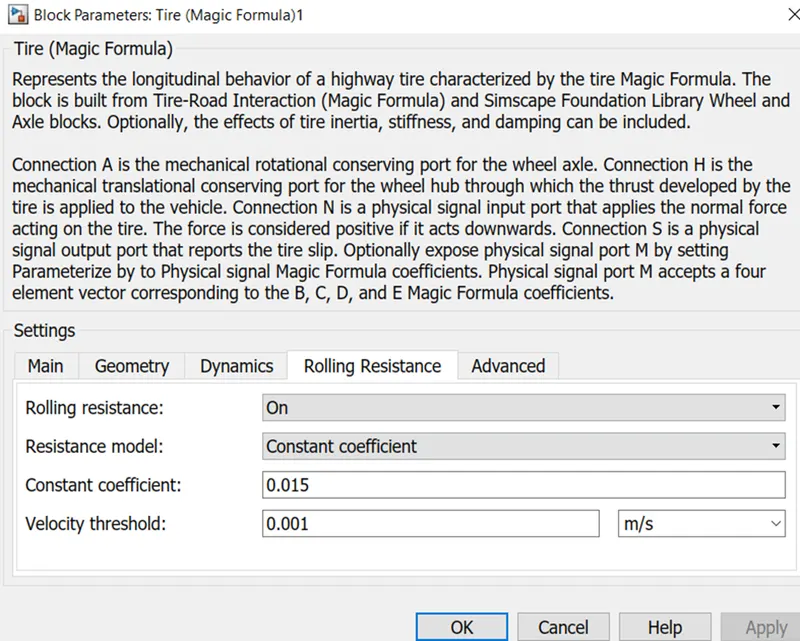
The vehicle is rear wheel drive where both the rear wheels are connected to the motor and the axle and single front wheel is connected to the vehicle body. The wheels are subjected to rolling resistance.
Vehicle Body:
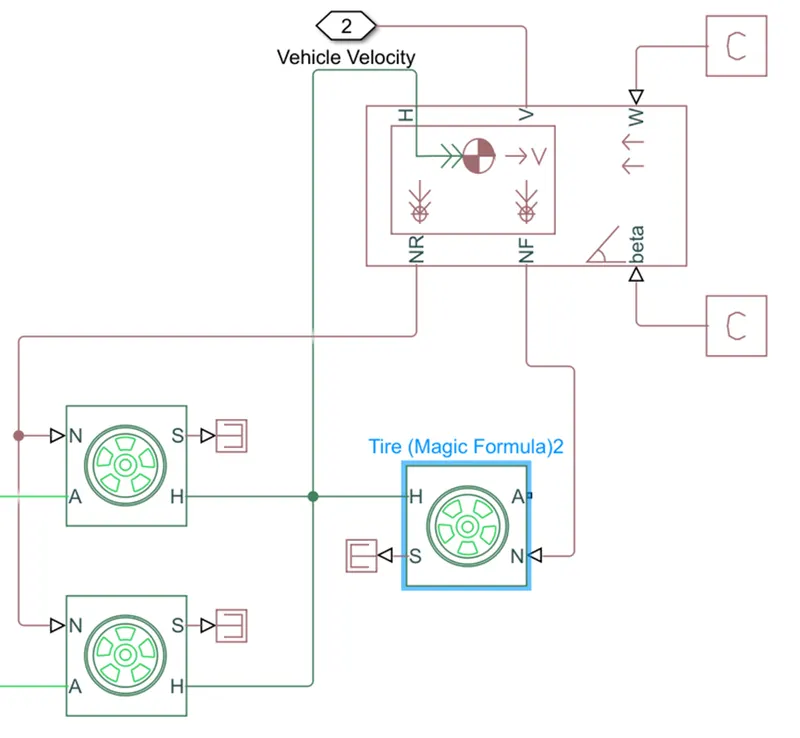
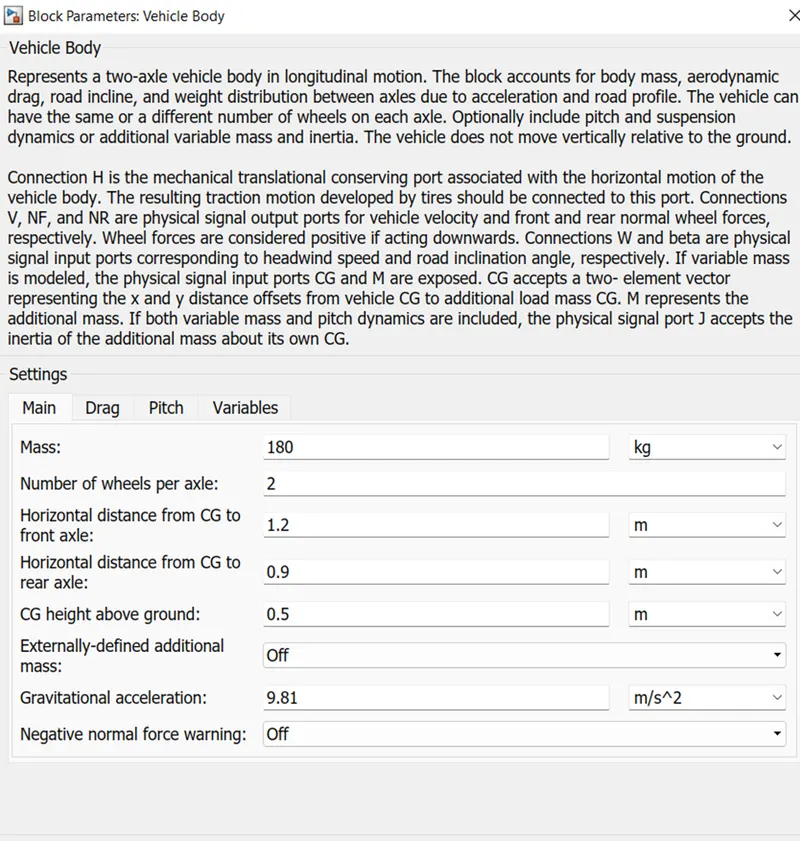
The reaction force of the vehicle body having a mass of 180 Kg is connected to the wheels, NR and NF are force applies to rear and front wheels. The hubs of all the wheels are connected to the vehicle body.
Results:
- For Drive Cycle US06 (600 seconds):
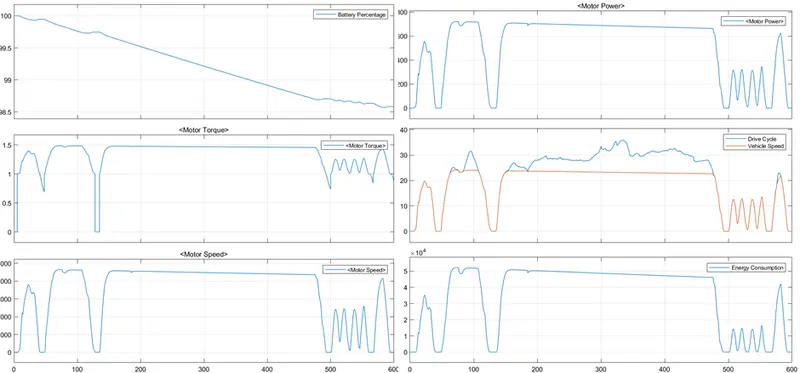
- Motor torque in Nm,
- Motor speed in RPM,
- Motor Power in Watts,
- Vehicle Speed in m/s,
- Energy Consumption in Joules.
We can see that the max speed of electric rickshaw is 25 m/s. So, the vehicle is not able to move above 25 m/s in the speed v/s time plot.
Motor and Motor controller temperature (for US06):
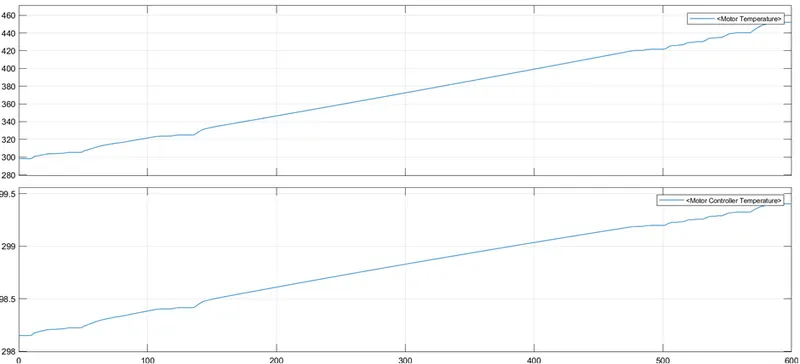
All temperatures in K.
- For drive cycle FTP75 (2474 seconds):
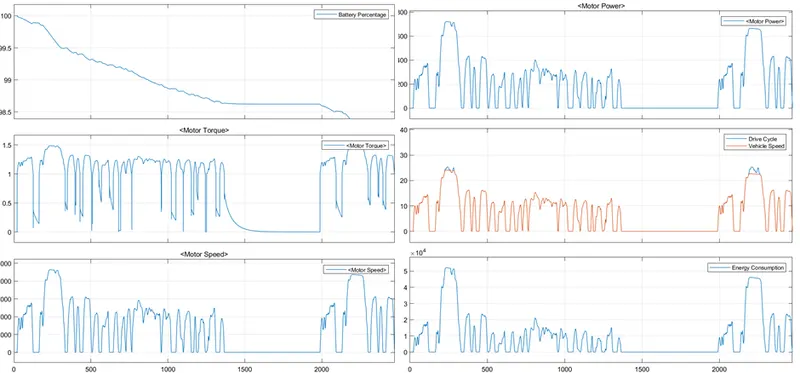
- Motor torque in Nm,
- Motor speed in RPM,
- Motor Power in Watts,
- Vehicle Speed in m/s,
- Energy Consumption in Joules.
Motor and Motor Controller Temperatures:
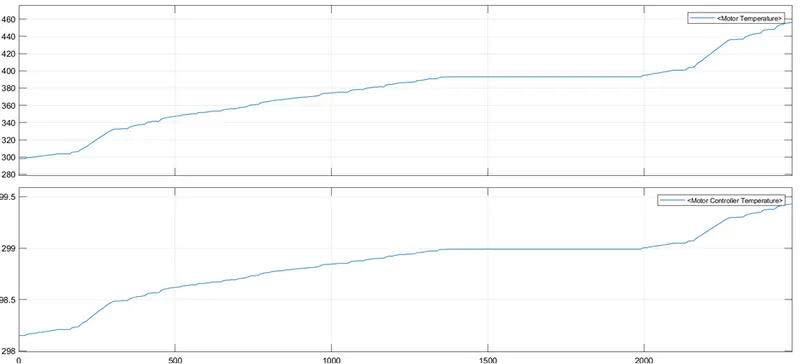
All temperatures in K.
- For vehicle driving at 45 Kmph constant up to 100 Kms (8000 seconds):
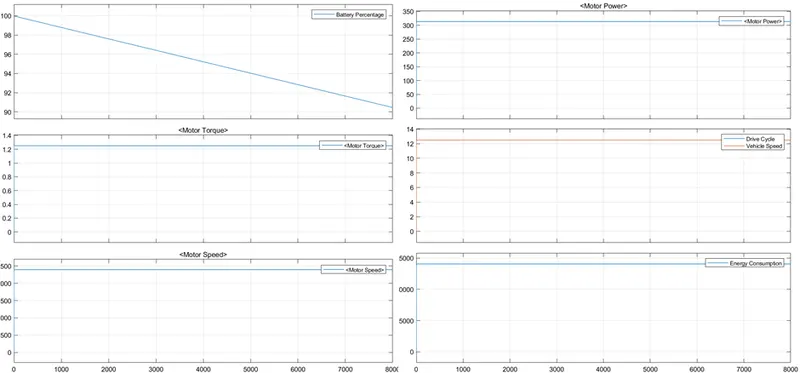
- Motor torque in Nm,
- Motor speed in RPM,
- Motor Power in Watts,
- Vehicle Speed in m/s,
- Energy Consumption in Joules.
Motor and Motor Controller Temperatures:
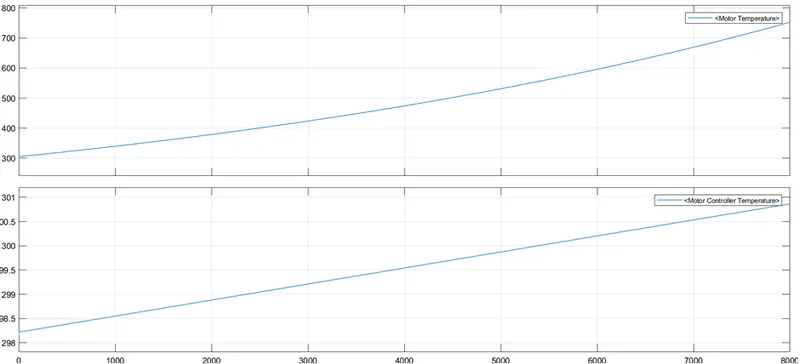
All temperatures in K.