Final Project: Design of an Electric Vehicle
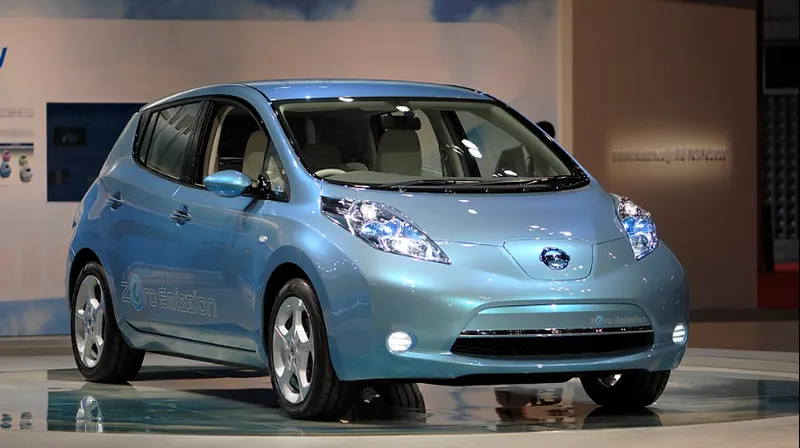
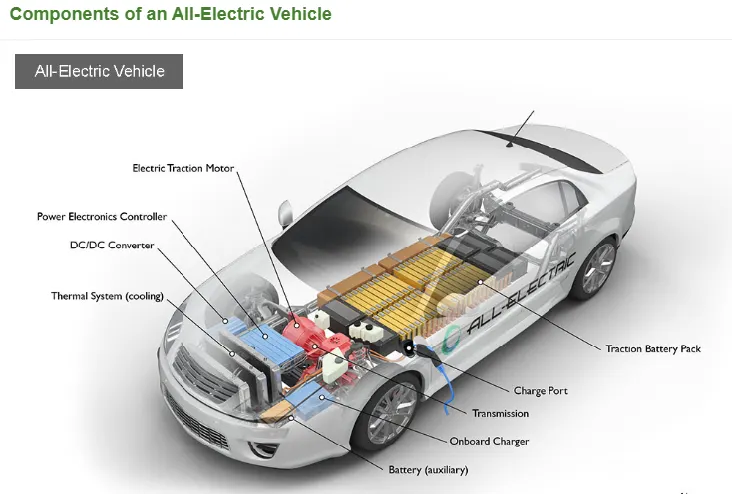
All-electric vehicles, also referred to as battery electric vehicles (BEVs), use a battery pack to store the electrical energy that powers the motor. The batteries are charged by plugging the vehicle in to an electric power source. Although electricity producction may contribute to air pollution, the U.S. Environmental Protection Agency categorizes all-electric vehicles as zero-emission vehicles because they produce no direct exhaust.
Both heavy-duty and light-duty all-electric vehicles are commercialy available . BEVs are typically more expensive than similar conventional and hybrid vehicles, although some cost can be recovered through fuel savings, a federal tax credit, or state incentives
Driving Range:
Today's all-electric vehicles generally have a shorter range (per charge) than comparable conventional vehicles have (per tank of gas). However, the increasing range of new models and the continued development of high-powered charging equipment is reducing this gap. The efficiency and driving range of BEVs varies substantially based on driving conditions. Extreme outside temperatures tend to reduce range, because more energy must be used to heat or cool the cabin. All-electric vehicles are more efficient under city driving than highway travel. City driving conditions have more frequent stops, which maximize the benefits of regenerative braking, while highway travel typically requires more energy to overcome the increased drag at higher speeds. Compared with gradual acceleration, rapid acceleration reduces vehicle range. Hauling heavy loads or driving up significant inclines also has the potential to reduce range.
Modelling of Electric Vehicle:
- Tires.
- Vehicle body
- Transmission system.
- DC motor.
- DC-DC converter (H-Bridge ) with direction control.
- Battery
- Auxillary power circuits.
Tires:
- Tires plays an important role in all vehicle development
- For cars 4 wheels are required. For heavy duty vehicles like trucks require additonal wheels based on Load capacity.
- Tire pressure is very important for vehcile
- Tire has a rolling resistance capabiliy.
- Rolling resiatnce is nothing but the resistance between tire and road is called as rolling resistance.
- In Ev vehicles rubber tyres are used so the tire has a formation and deformation capability.
- So that the tire patch area increases sothe rolling resistance was increased.
- So that if the pressure is decreased in tire the tire patch area increases so that the rolling resistance is also increased.
Vehicle body:
- Vehicle body is a metal structure which is used to form a vehicle
- all the systems linke motor, drivers battey and other systems are arranged.
- The front two wheels and back two wheels are connected by axial.
- The drive shaft can be connected to either front wheel are rear wheel based on requirements.
Transmission system:
- Transmission system is a system which is used to transfer power from motor to wheels.
- Gear box or belt type transmission are used.
- The gear has a fixed ratio in electric cars.
- unlike mechanical vehicle the EV vehicle as no clutch or gear changing system.
- The electric motor has wide speed range capability.
- So that electric vehicles doesn't have gear changing mechanism.
DC motor:
- Motors are used in electric vehicle.
- Motors like DC motor, Acmotor,BLDC , PMAC motors are used.
- For this model DC motors are used.
- When ever a current carrying conductor links the magnetic filed the current carrying conductor experiences a force according to flemings left hand rule.
- DC motor has to main components field and armature.
- Field is a stationary part and aramture as a rotating part.
- With the help of commutator and brush arrangement voltage is applied to armature part.
- LYNCH type DC motors are mostly used for Electric vehicles.
DC - DC Converter (H-bridge):
- DC - DC converter is a power electronics device which is used to convert one level of DC voltage to the another level voltage.
- It uses a power electronics switches for conversion.
- H-bridge topologies are prefered for EV vehicles.
- H- bridge supports forward and reverse motoring, forward and reverse braking.
- For h bridge four mosfets or igbts with freewheeling diodes are used. N channel type power electronics switches are mostly used.
Battery:
- Battery is a device which is used to store DC power.
- Most prefered battery are lithium ions.
- Lithium based prismatic batteries are used in EV vehicles.
- lithium battery cells have nominal voltage of 3.2 volt
- 15S 15 cells are connected in series to get 48volt.
- To increase AH capacity the battery sets are connected in parallel.
Auxillary power supply:
- Auxillary power supply is nothing but battery voltage level to lower voltage level.
- it is basically a buck converter.
- Buck converters are used in ev vehicles to power up a dashboard and head light componets.
Design:
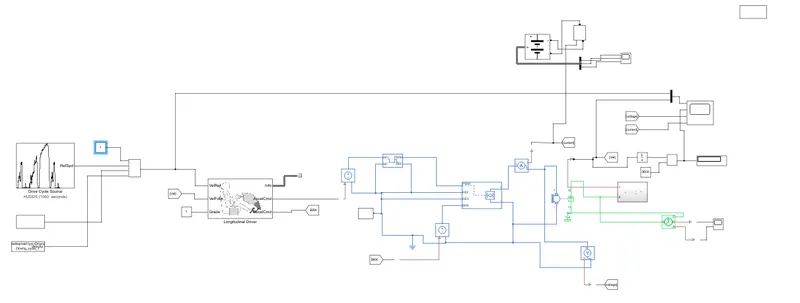
Vehicle sub system:
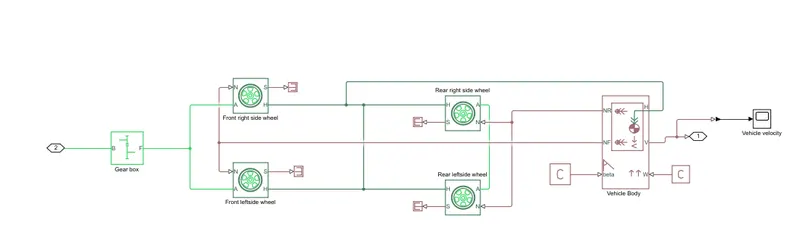
TIRE:

N- normal force
A - Axial
H- Hub
S - slip
Tire parameters:
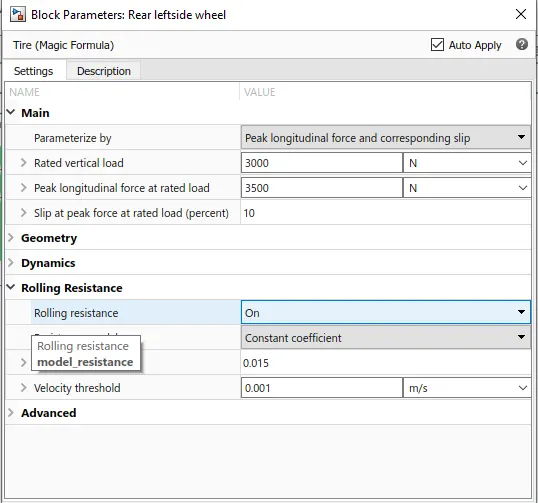
Vehicle body:
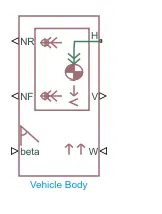
H- hub, W - wind speed, NF- front wheel force , NR- rear wheel force , V - vehicle velocity
Vehicle body Parameters:
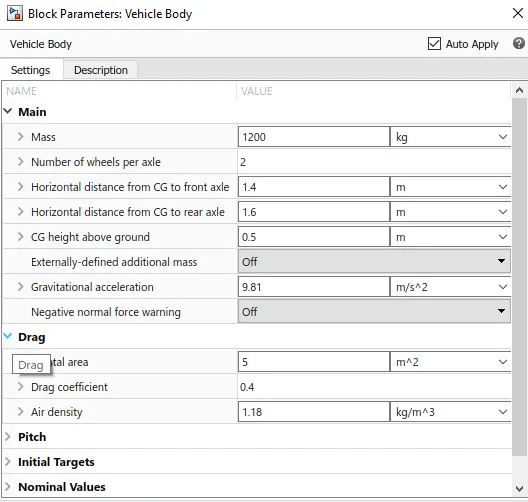
DC MOTOR:
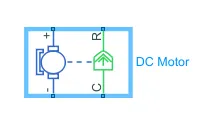
R- rotor
C- casing
+,- Motor input
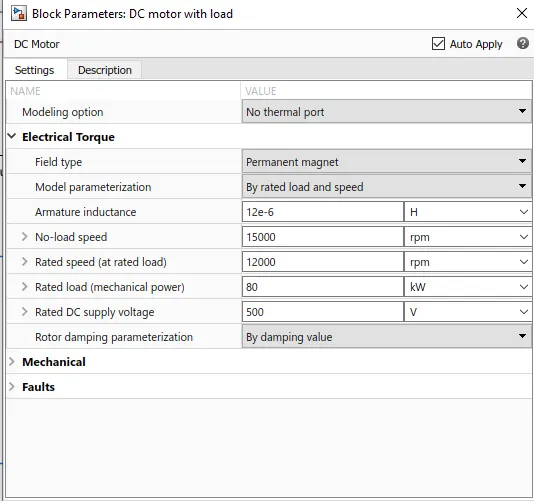
DC MOTOR PARAMETERS:
H-Bridge:
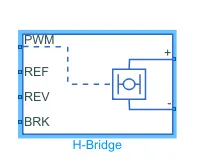
PWM- Pulse input for voltage control
REF - Electrical Ground
REV- forward / reverse control
BRK- Brake
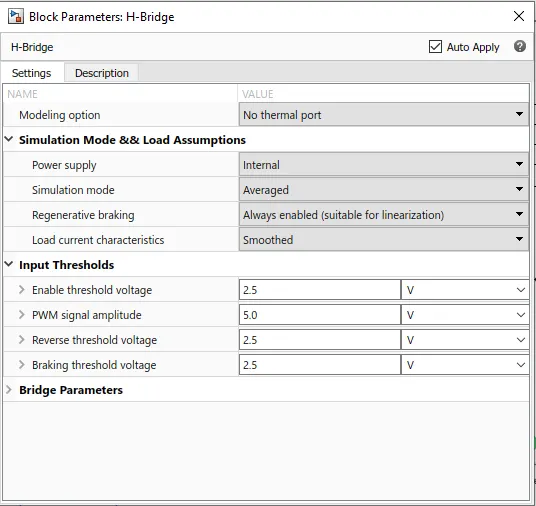
H-Bridge Parameters:
Longitudinal Driver:
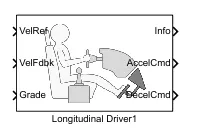
Velref- input velocity fron driving cycle
Velfdbk - velocity feedback from vehicle
Grade - vehicle gradabilty in percentage
AccelCmd- acceleration command which is given to h-bridge pwm through voltage sensor and pwm converter
DeceCmd- deceleration command whuch is given to h-bridge brake through voltage sensor
Longitudinal Driver Parameters:

Drive cycle:
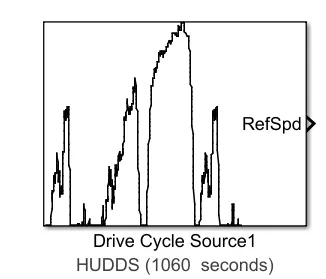
RefSpd - Reference speed for vehicle
Drive Cycle Parameters:

Multiport Switch:
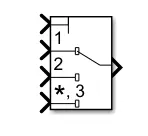
Multiport switch parameters:

Battery SOC Circut:
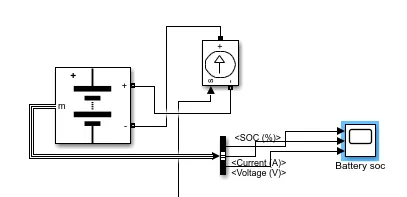
Motor speed and vehicle distance travel:
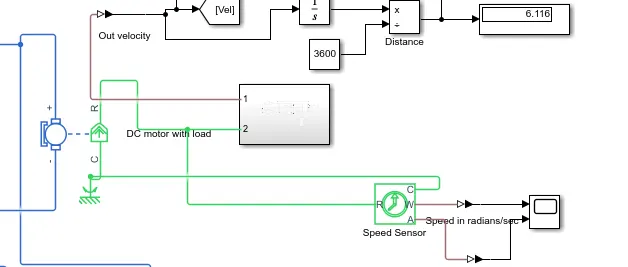
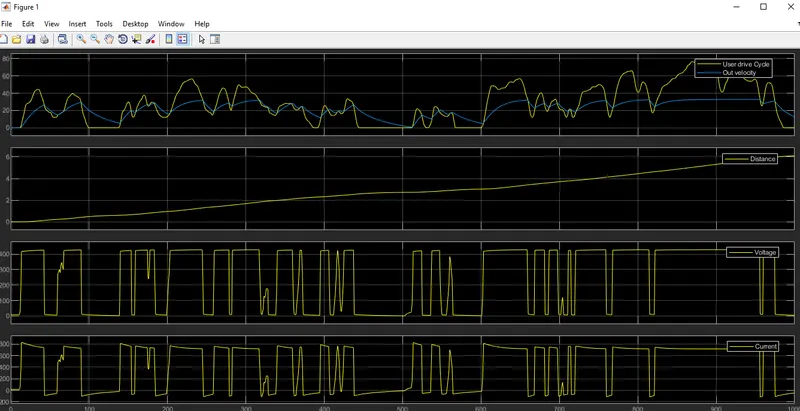
Velocity, Distance, Motor voltage,Motor current Results:
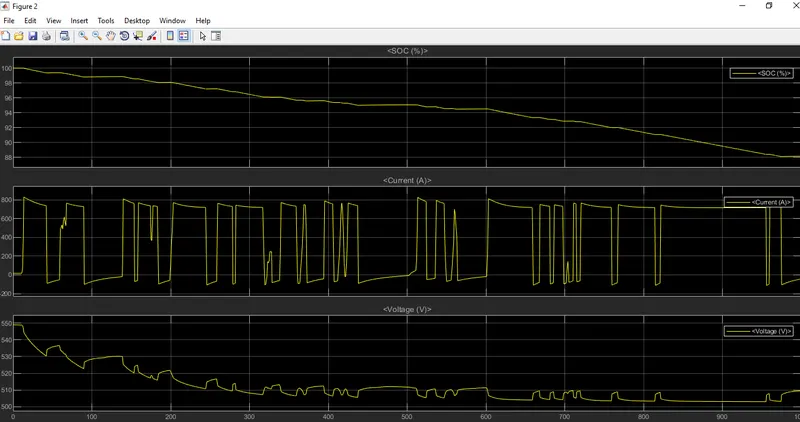
Battery Soc, Current, Nominal voltage: