Final Project: Design of an Electric Vehicle
AIM
To build an electric vehicle in MATLAB that employs a battery and a DC motor, select the appropriate blocks from the Powertrain block set.
Objectives:
Configurations at the system level
model parameters
Results
Conclusion
Introduction:
According to a recent study on vehicle/automobile engineering, the automotive industry will undergo a significant shift by the coming year. In order to reduce emissions and utilize electricity in future vehicles, many automakers are attempting to improve the technology of current vehicles. To cut CO2 emissions, researchers and automakers are always working.
Due to their low maintenance costs and minimal usage of fossil fuels, electric vehicles are also very eco friendly and have cheap running expenses (petrol or diesel). While some EVs utilised lead-acid or nickel-metal hydride batteries, lithium-ion batteries are currently thought to be the industry standard for modern battery electric vehicles. With a self-discharge rate of just 5% per month, they are good at preserving energy and have a longer lifespan. Although attempts have been made to increase the safety of these batteries, there are still issues with them due to the possibility of thermal runaway, which has, for instance, led to fires or explosions in the Tesla Model S.
THEORY
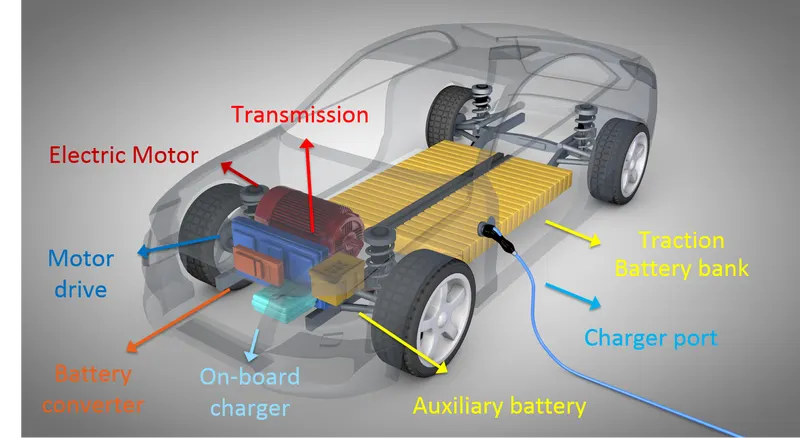
A car that is powered by one or more electric motors and rechargeable battery packs is known as an electric car. These are more efficient and environmentally friendly than ICE autos. When measured against the energy that has been stored, an electric vehicle is 69–72% efficient. However, when measured against the energy needed to recharge, it is just 59–62% efficient. They move with the help of electric motors. Permanent Magnet Synchronous Motors (PMSM) and three-phase induction motors are the two most frequently utilised motor types.
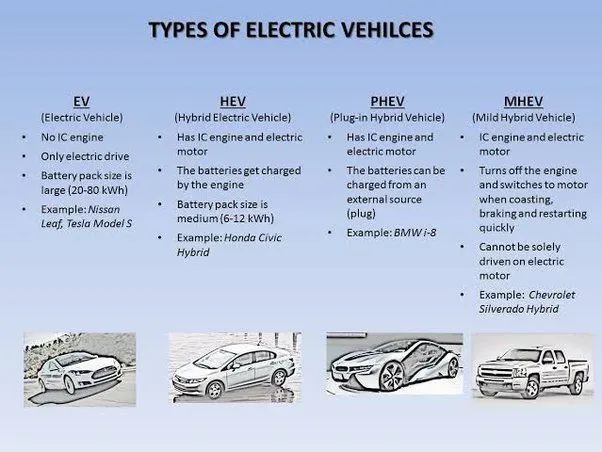
Fully electric,hybrid EV, plug-in hybrid cars (EVs) and Mild hybrid are the categories of EVs:
The brushless DC motor (BLDC) or the induction motor determines the power and performance of electric cars. Induction motors and DC brushless motors are used to replace direct current (DC) power sources. For EVs, lithium-ion batteries also take the place of the lead-acid battery. Because the needs and applications of both components—brushless DC motors and induction—determine their future.
The main parts of EVs are illustrating in the following figure
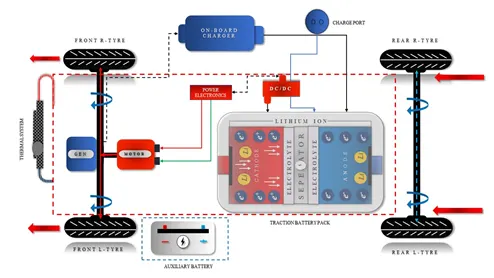
Working of Electric Vehicle:
The controller uses and controls electrical energy from batteries and inverters when the car's pedal is depressed. Once the controller is configured, the inverter gives the motor a specific amount of electrical energy based on how deeply the pedal is pressed. Electrical energy is transformed into mechanical energy by an electric motor .The motor's rotor rotates the transmission, which causes the wheels to turn and propel the vehicle forward.
BLOCK DIAGRAM
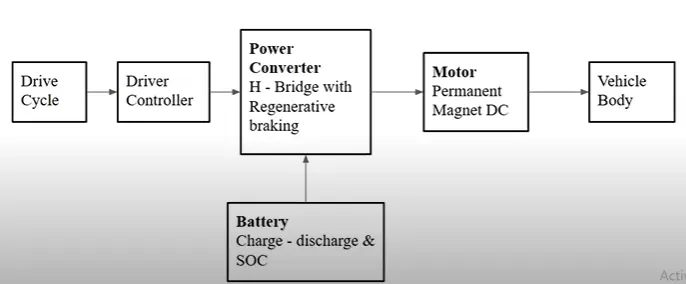
THE MAIN COMPONENTS OF THE ELECTRIC VEHICLE ARE:
Wheels/tire
Battery
Motor/generator
Motor controllers
Power converters
Transmission systems
Create an electric vehicle model in MATLAB:
Simulink model of an electric car
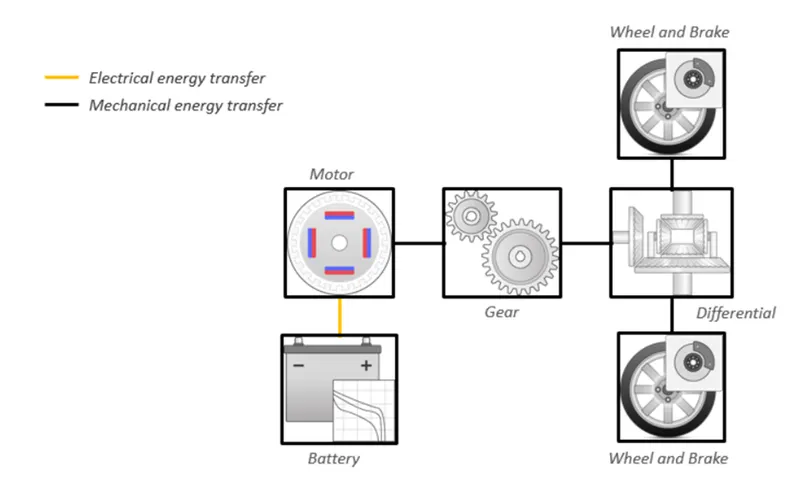
The model was built using the following building blocks:
- Vehicle body
- Tire (Magic formula)
- Simple Gear
- Inertai
- PS constant
- DC motor
- H-Bridge
- Controlled PWM voltage
- Battery
- Longitudinal Driver
- Drive cycle
- Constant
- Scope
- Gain
- Integrator
- Display
- Sum
- Controlled voltage source
- Current sensor
- Solver configuration
- Mechanical rotational refference
- Electrical refference
- Controlled current source
- Terminator
- Divide
- Subsystem
MODEL
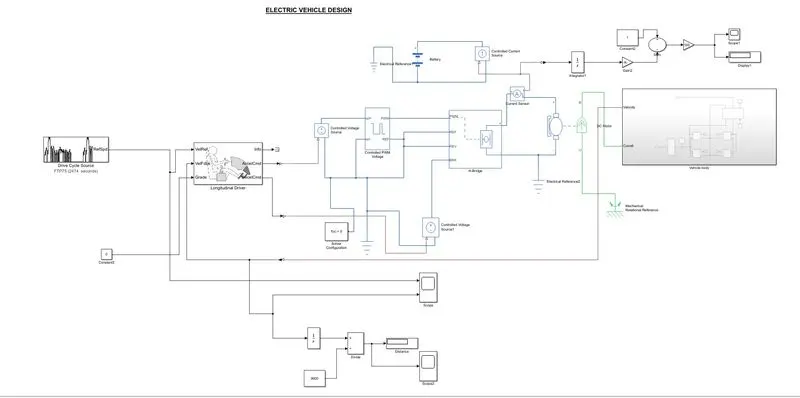
Let's now examine each of the MATLAB building elements that were used to build this model.
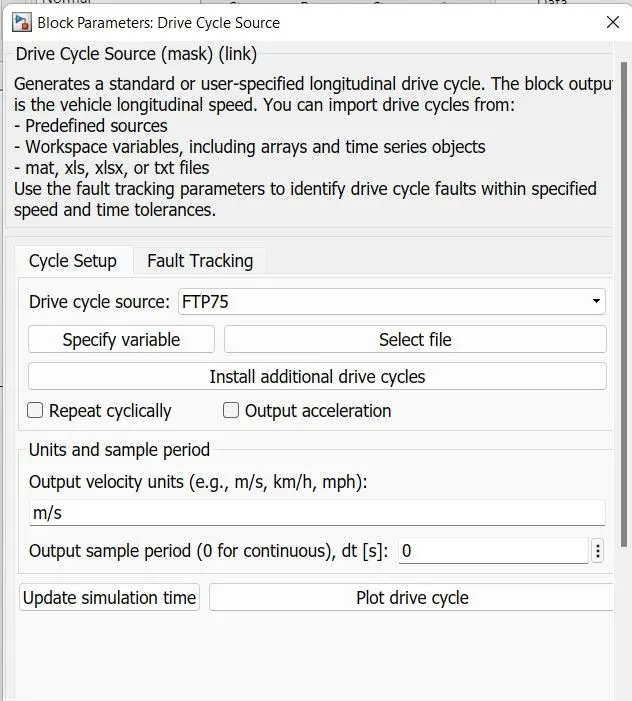
- Drive Cycle Data
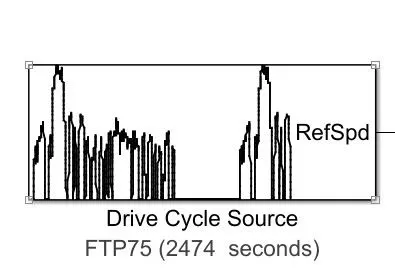
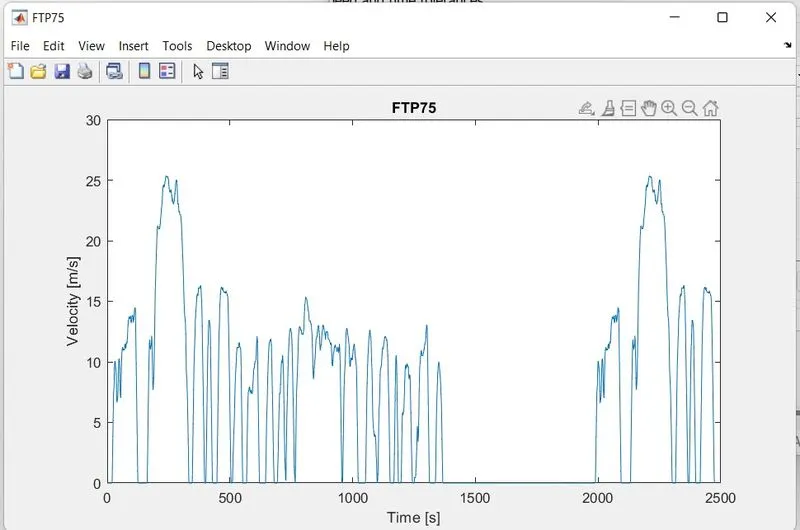
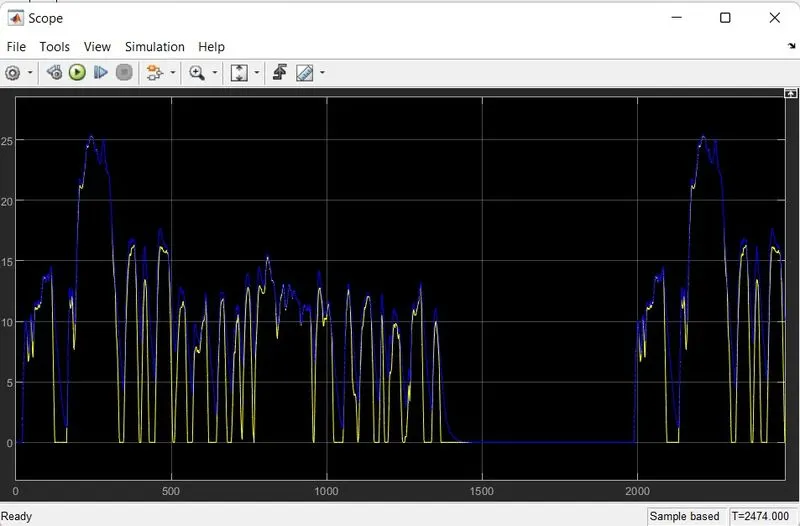
Generates a longitudinal drive cycle that is either predefined or customised. The block output is the longitudinal speed of the vehicle.Here we use the FTP75 drivecycle.
FTP75 drivecycle plot
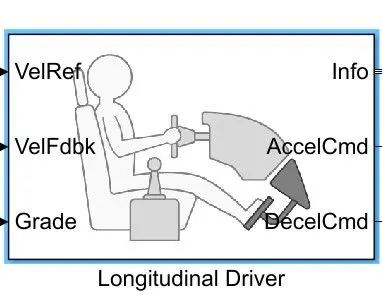
- Longitudinal Driver
Using reference and feedback velocities as inputs, a parametric longitudinal speed tracking controller may produce normalised accelerating and braking commands.
Utilize the external actions to send signals that can suspend, hold, or override the block-determined closed-loop orders. The block gives the input instructions disable, hold, and override this priority.
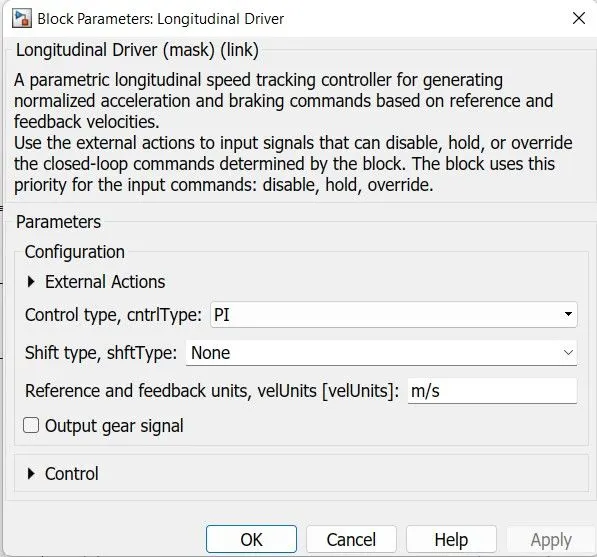
A longitudinal speed-tracking controller is implemented via the Longitudinal Driver block. The block generates normalised accelerating and braking commands that range from 0 to 1 based on reference and feedback velocities. The block can be used to simulate a driver's dynamic response or to produce the commands required to track a longitudinal drive cycle.
- Controlled Voltage Source
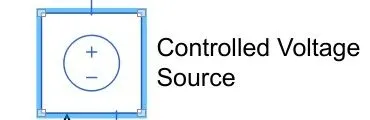
Regardless of the amount of current passing through the source, this block is utilised to keep the desired voltage constant at its output.
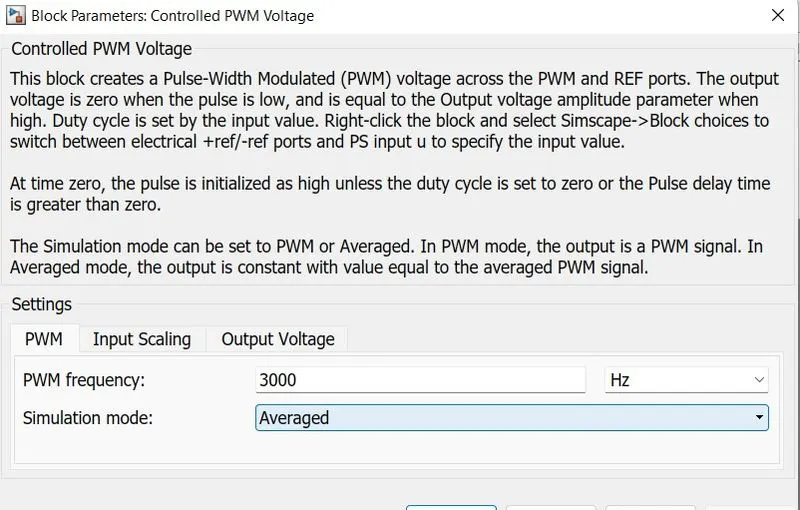
- Controlled PWM voltage
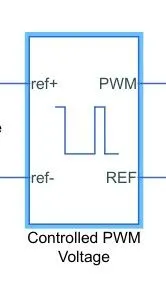
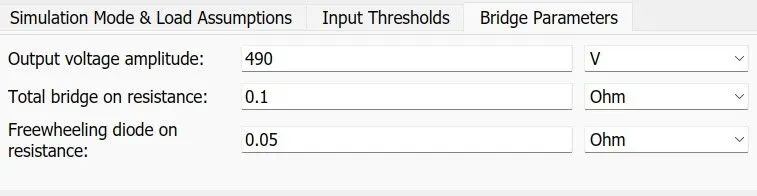
Through the PWM and REF ports, this block generates a pulse-width modulated (PWM) voltage. When the pulse is low, the output voltage is zero, and when it is high, it is equal to the Output voltage amplitude parameter. The input value determines the duty cycle
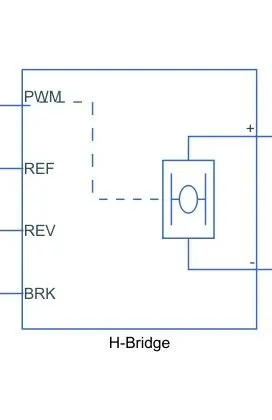
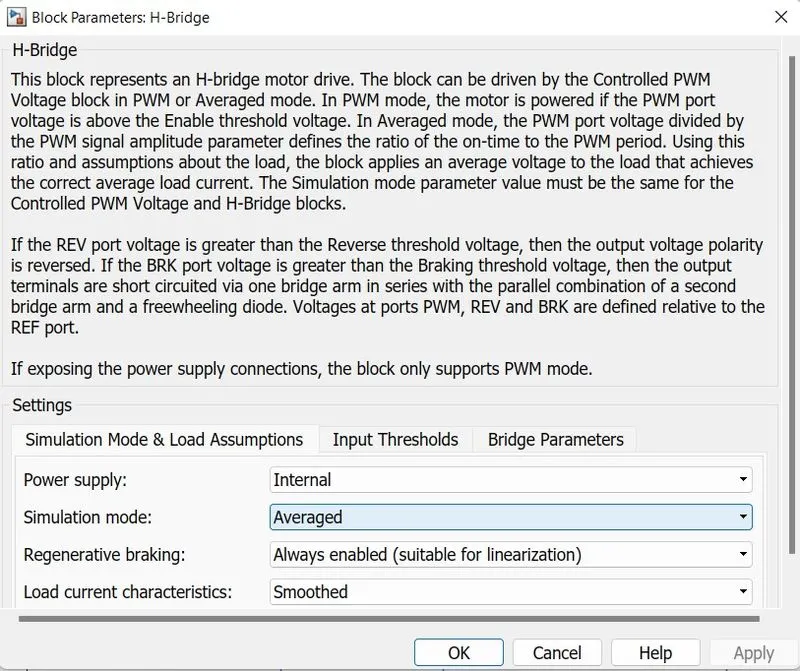
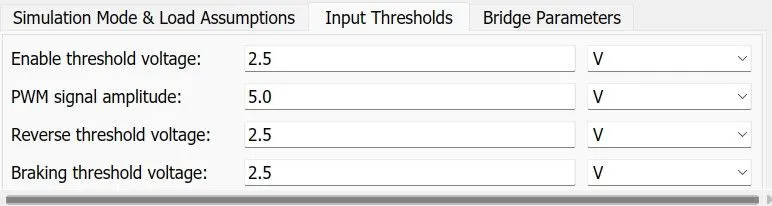
- H-Bridge
An electrical circuit known as an H-bridge changes the polarity of a voltage applied to a load. These circuits enable DC motors to move forward or backward in robotics and other applications. The name is derived from its typical schematic diagram depiction, in which the load is connected as the crossbar and the four switching elements are arranged as the branches of the letter "H."
H bridges are used by the majority of DC-to-AC converters (power inverters), the majority of AC/AC converters, the isolated DC-to-DC converter, the DC-to-DC push-pull converter, the majority of motor controllers, and many other types of power electronics. In particular, a motor controller with two H bridges nearly invariably drives a bipolar stepper motor.
- Current Sensor
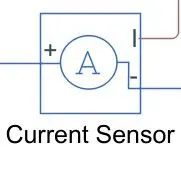
The block represents an ideal current sensor, that is, a device that converts current measured in any electrical branch into a physical signal proportional to the current. Connections + and - are conserving electrical ports through which the sensor is inserted into the circuit. Connection I is a physical signal port that outputs current value.
- DC Motor
We use motors to convert electrical energy into mechanical energy. We used a DC motor to drive this electric vehicle model. When braking with regenerative energy, this motor can also function as a generator.
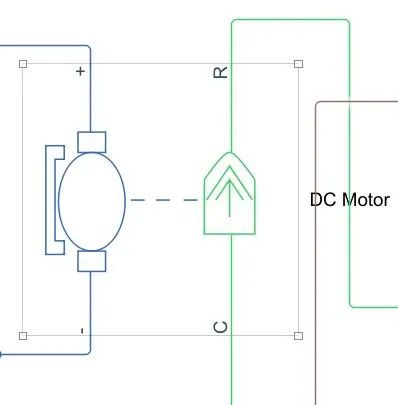
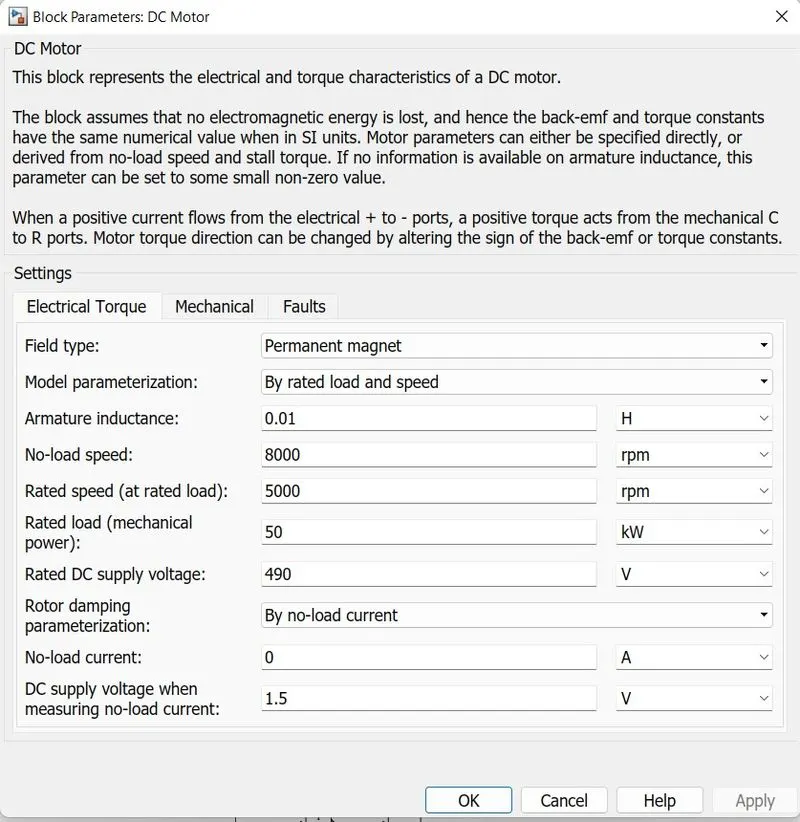
Here we use the permanent magnet feild type and by rated load and speed model

- Battery
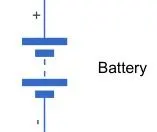
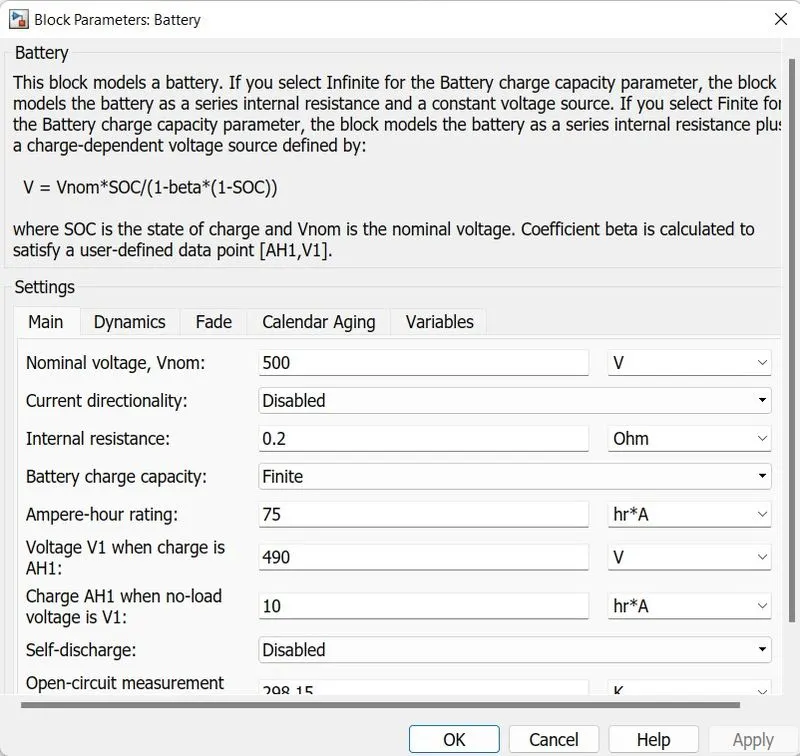
A basic battery model is represented by this battery block. The battery is represented by the block as a source of continuous voltage and series internal resistance.
- Battery SOC
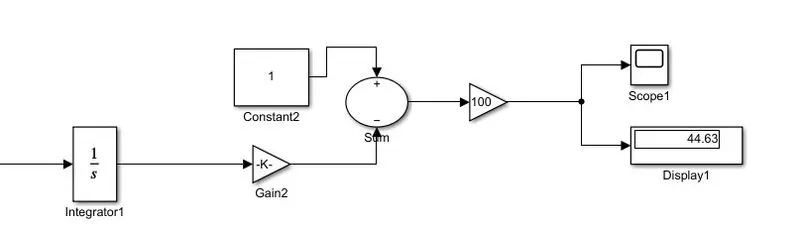
The model unit which calculate the State of Charge(SOC) of battery
- Vehicle body Subsystem
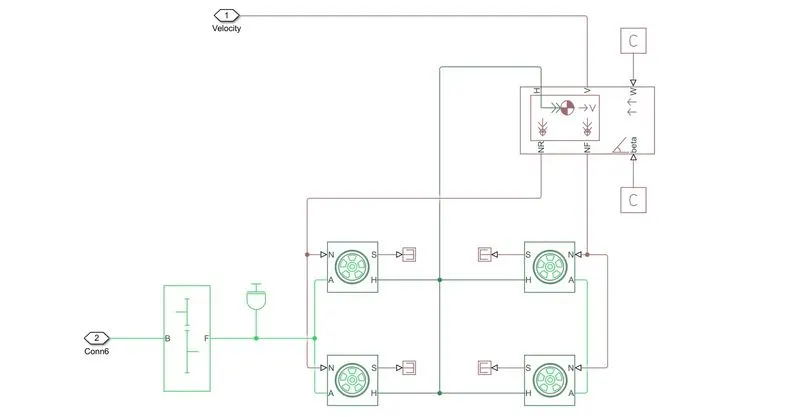
This subsystem includes the vehicle body, Tires, Inertia block and Simple gear system
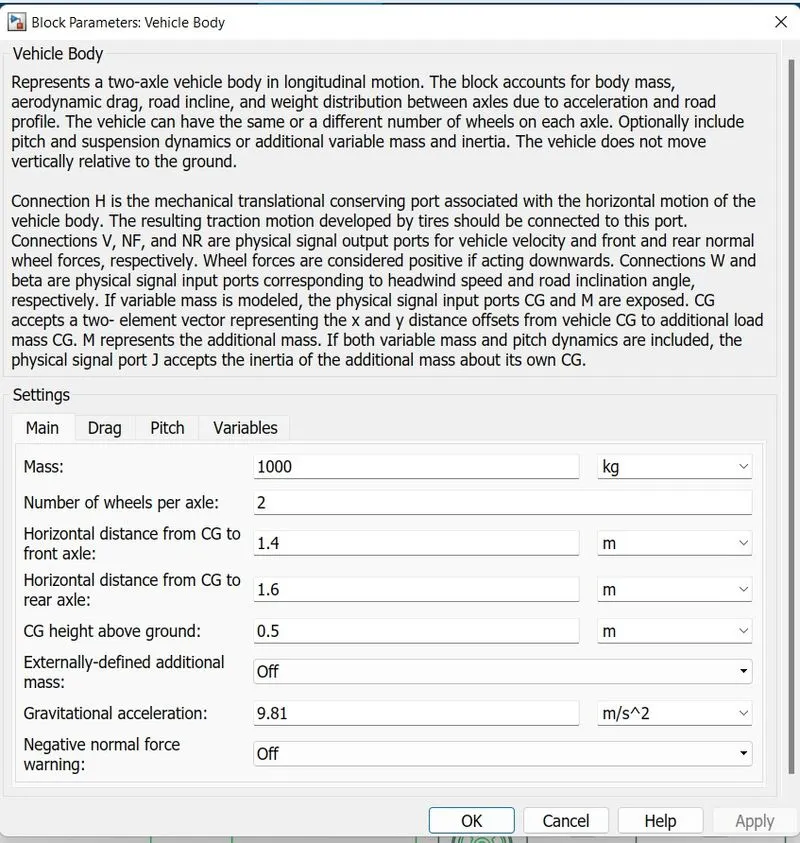
- Vehicle body
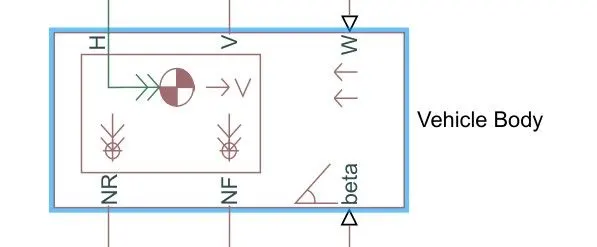
A two-axle vehicle body in longitudinal motion is represented by the Vehicle Body block. The number of wheels on each axle of the car may be the same or different. two wheels on the front axle and one wheel on the back, for instance. The size of the vehicle's wheels is presumptively the same. The vehicle's centre of gravity (CG) may also be on, near, or below the plane of movement.
The block takes into account weight distribution between axles caused by acceleration and road profile, as well as body mass, aerodynamic drag, road inclination, and other factors. Pitch and suspension dynamics are optional. When compared to the ground, the vehicle does not move vertically.There is an option for the block to have an externally defined mass and inertia. Throughout the simulation, system changes might alter the mass, inertia, and centre of gravity of the vehicle body.
- Tire (Magic formula)
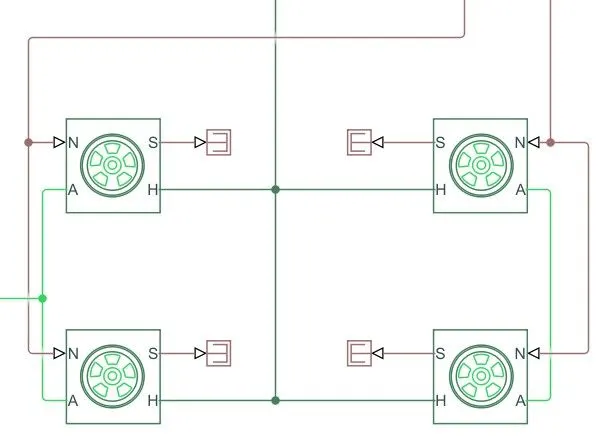
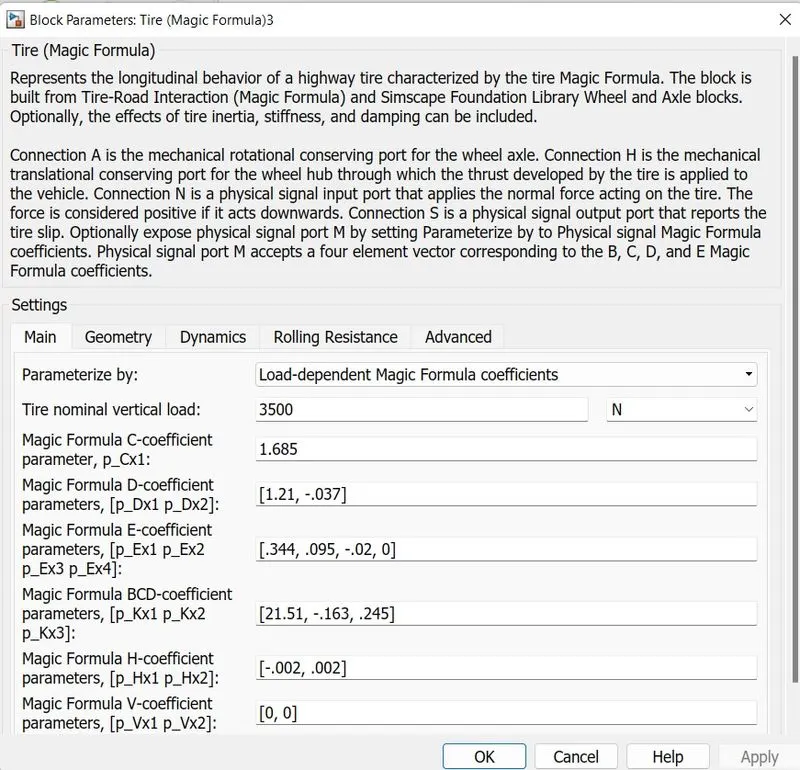
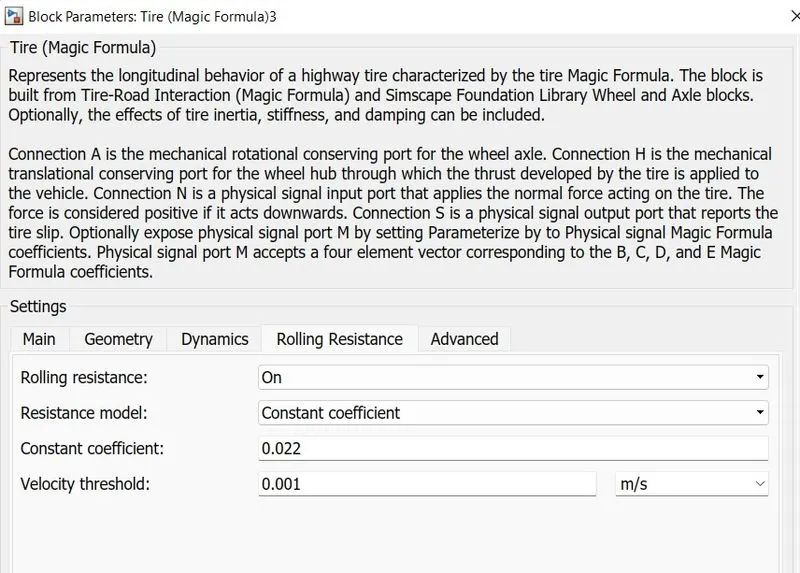
The tires with longitudinal behaviour determined by the Magic Formula , an empirical equation based on four fitting coefficients, is represented by the Tire (Magic Formula) block. The block can simulate tires dynamics on pavement with either constant or changeable circumstances. The tire's rolling motion on paved surfaces follows the same longitudinal direction. A structural element based on the Tire-Road Interaction block is this block.
You can define characteristics like tyre compliance, inertia, and rolling resistance to improve the tyre model's accuracy. These characteristics, however, make the tyre model more complex and may cause simulation to lag. If the model is being prepared for hardware-in-the-loop (HIL) simulation or is being simulated in real time, take into account disregarding tyre compliance and inertia.
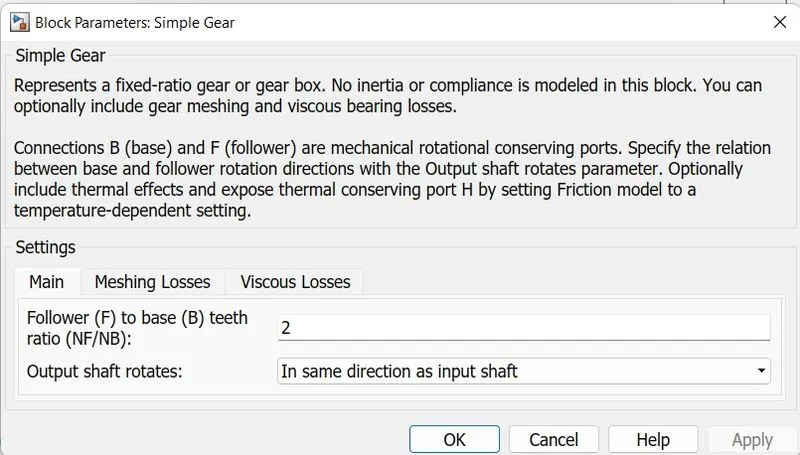
- Simple Gear
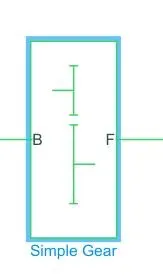
The Simple Gear block simulates a gearbox that requires the associated drivelines of the base gear (B) and follower gear (F) to rotate in accordance with a predetermined fixed ratio. We choose whether the follower axis rotates in the same direction as the base axis or in the opposite way.
- Velocity
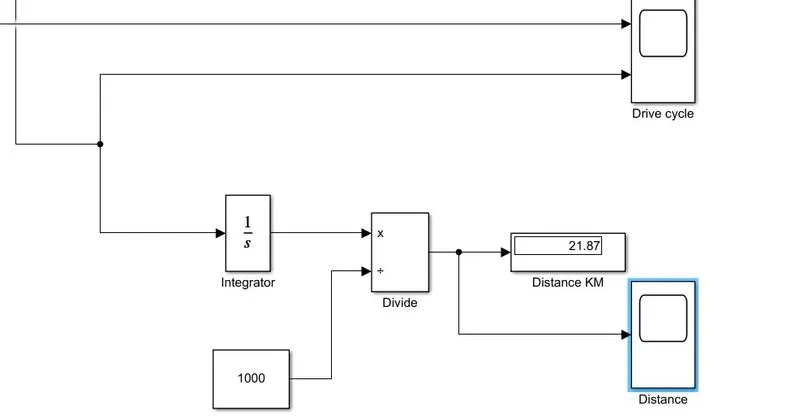
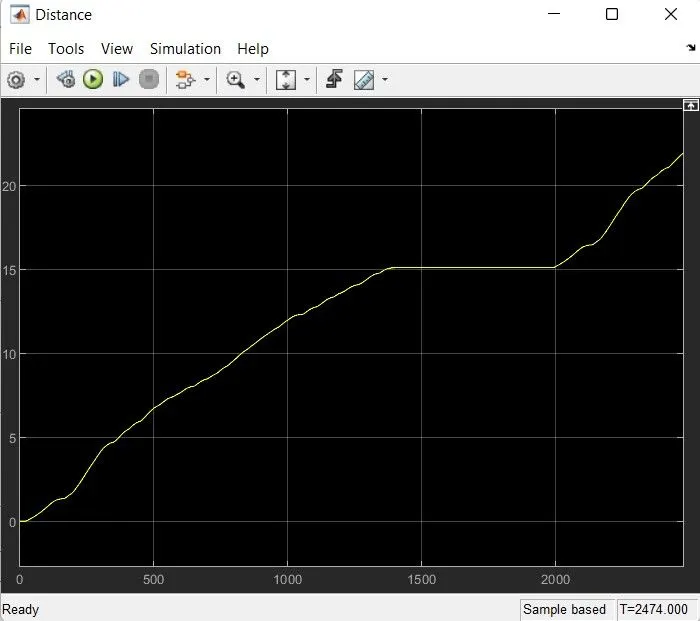
In this unit of block which gives the distance travelled, Drive cycle plot and distance plot
- Drive Cycle plot
- Distance Plot
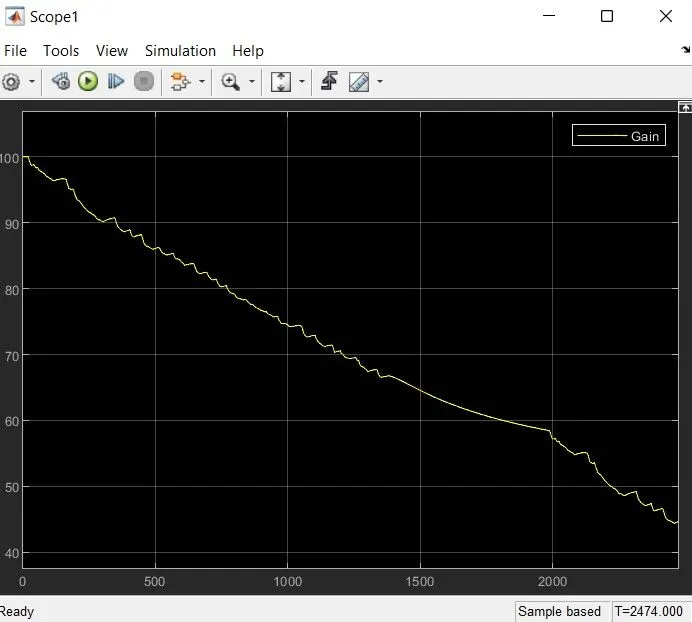
- SOC Plot
https://drive.google.com/file/d/1Sms6M89q7n2UV2QQTP8Dfcrur4e634fP/view?usp=share_link
- Result
By selecting appropriate blocks from the Powertrain block set, the MATLAB model of an electric vehicle that employs a battery and a DC motor was successfully created, and the following conclusions were formed from the findings.
- Conclusions
Simulink was used to develop the EV model, and Drive Cycle Source (FTP575(2474sec)) was used to simulate it. The simulation gave results for the vehicle's velocity with respect to acceleration, the current flowing state of charge, and the distance travelled throughout the simulation. With a 44..63% SOC, the car covered 21.87 kmph in 2474 sec. We can alter the battery type, the motor, and the power controllers to achieve greater efficiency.
- Refferences
- https://in.mathworks.com/help/sdl/ref/vehiclebody.html
- https://en.wikipedia.org/wiki/H-bridge
- https://in.mathworks.com/help/sdl/ug/simple-gear.html
- https://www.youtube.com/watch?v=xmdUFEfiAKk
- https://www.youtube.com/results?search_query=matlab+model+for+electric+vehicle+FTP75+drive+cycle
- https://www.youtube.com/watch?v=OFWCFefmvnM
- https://www.google.com/search?q=electric+vehicles&source
- https://en.wikipedia.org/wiki/Electric_vehicle