Final Project: Design of an Electric Vehicle
EV LIVE CLASS 16
1)
An EV is a shortened acronym for an electric vehicle. EVs are vehicles that are either partially or fully powered on electric power.
Electric vehicles have low running costs as they have less moving parts for maintaining and also very environmentally friendly as they use little or no fossil fuels (petrol or diesel). While some EVs used lead acid or nickel metal hydride batteries, the standard for modern battery electric vehicles is now considered to be lithium ion batteries as they have a greater longevity and are excellent at retaining energy, with a self discharge rate of just 5% per month.
Battery Electric Vehicles (BEV)
Compared to an internal combustion engine, battery powered electric vehicles have approximately 99% fewer moving parts that need maintenance.
Advantages of a BEV:
- Creates very little noise
- No exhaust, spark plugs, clutch or gears
- Doesn't burn fossil fuels, instead uses rechargeable batteries
BEVs can be charged at home overnight, providing enough range for average journeys. However, longer journeys or those that require a lot of hill climbs may mean that the fuel cells require charging before you reach your destination, although regenerative braking or driving downhill can help mitigate against this by charging the battery packs.
The typical charging time for an electric car can range from 30 minutes and up to more than 12 hours. This all depends on the speed of the charging station and the size of the battery.
Electric Car Components
Electric car or vehicle component and function depend on the car type. There are at least four types of electric cars currently sold commercially and operates in the world. The different types of electric car components determines how the car works. Electric cars (vehicles) components and functions can be explained by means of picture below.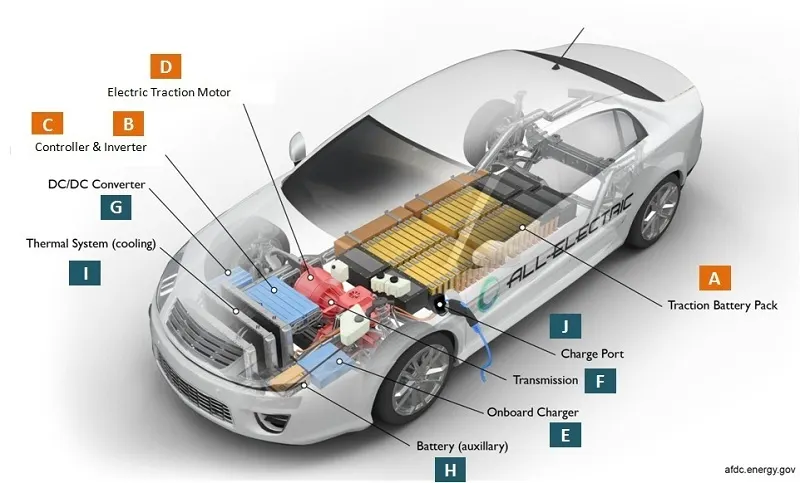
———————————————
How Does An Electric Car Work?
When the car pedal is pressed, then:
- Controller [C] takes and regulates electrical energy from batteries [A] and inverters [B]
- With the controller set, the inverter then sends a certain amount of electrical energy to the motor (according to the depth of pressure on the pedal)
- Electric motor [D] converts electrical energy into mechanical energy (rotation)
- Rotation of the motor rotor rotates the transmission so the wheels turn and then the car moves.
Note: The working principle above is for battery electric vehicle (BEV) type.
———————————————
Electric Vehicle Components
Basic Main Components of Electrical Vehicle
The basic main elements of electric cars installed in almost all types of electric cars are as follows:
Traction Battery Pack (A)
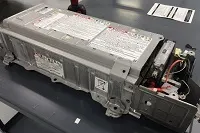
The function of the battery in an electric car is as an electrical energy storage system in the form of direct-current electricity (DC). If it gets a signal from the controller, the battery will flow DC electrical energy to the inverter to then be used to drive the motor. The type of battery used is a rechargeable battery that is arranged in such a way as to form what is called a traction battery pack.
There are various types of electric car batteries. The most widely used is the type of lithium-ion batteries.
Power Inverter (B)
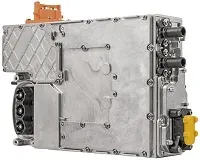
The inverter functions to change the direct current (DC) on the battery into an alternating current (AC) and then this alternating current is used by an electric motor. In addition, the inverter on an electric car also has a function to change the AC current when regenerative braking to DC current and then used to recharge the battery. The type of inverter used in some electric car models is the bi-directional inverter category.
Controller (C)
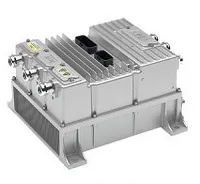
The main function of the controller is as a regulator of electrical energy from batteries and inverters that will be distributed to electric motors. While the controller itself gets the main input from the car pedal (which is set by the driver). This pedal setting will determine the frequency variation or voltage variation that will enter the motor, and at the same time determine the car’s speed.
In brief, this unit manages the flow of electrical energy delivered by the traction battery, controlling the speed of the electric traction motor and the torque it produces. This component will determine how electric car work.
Electric Traction Motor (D)
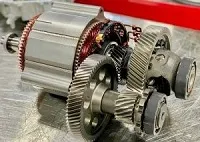
Because the controller provides electrical power from the traction battery, the electric traction motors will work turning the transmission and wheels. Some hybrid electric cars use a type of generator-motor that performs the functions of propulsion and regeneration. In general, the type of electric motor used is the BLDC (brushless DC) motor
———————————————
Other Electric Car Components
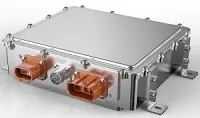
Charger (E) is a battery charging device. Chargers get electricity from outside sources, such as the utility grid or solar power plants. AC electricity is converted into DC electricity and then stored in the battery. There are 2 types of electric car chargers:
- On-board charger: the charger is located and installed in the car
- Off-board charger: the charger is not located or not installed in the car.
Transmission (F): The transmission transfers mechanical power from the electric traction motor to drive the wheels.
DC/DC Converter (G): This one of electric car parts that to converts higher-voltage DC power from the traction battery pack to the lower-voltage DC power needed to run vehicle accessories and recharge the auxiliary battery.
Battery (H): In an electric drive vehicle, the auxiliary battery provides electricity to power vehicle accessories.
Thermal System – Cooling (I): This system maintains a proper operating temperature range of the engine, electric motor, power electronics, and other components.
Charge Port (J): The charge port allows the vehicle to connect to an external power supply in order to charge the traction battery pack.
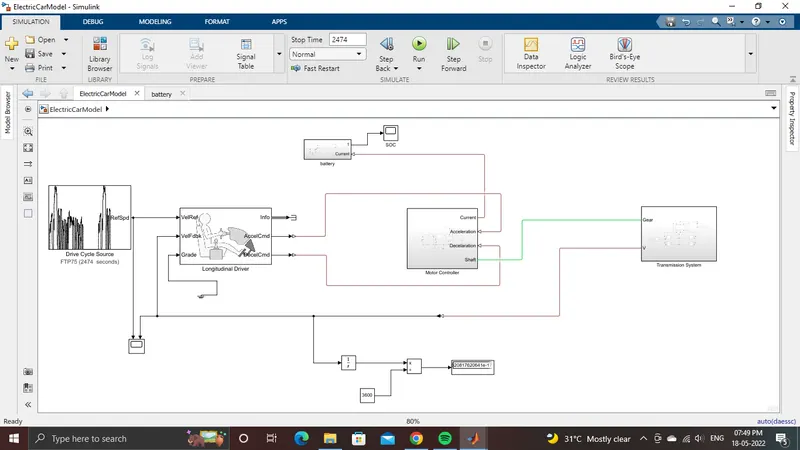
For the electric vehicle we create 3 subsystems for battery,motor controller and transmission system.
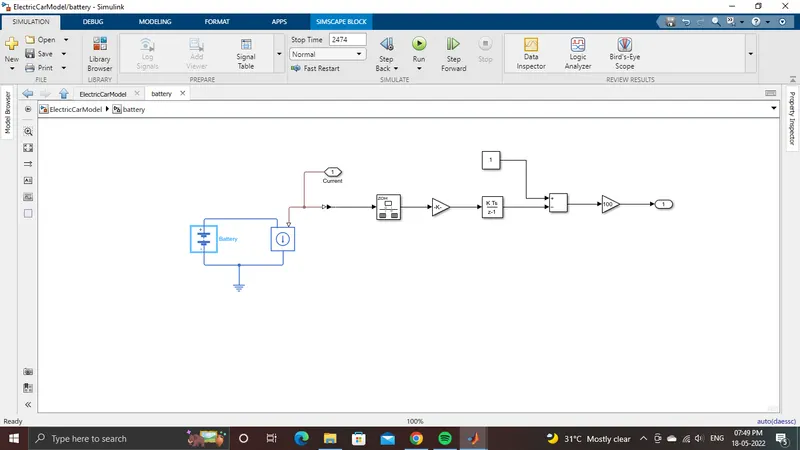
in battery subsystem we use battery,controlled current source,electrical reference.
For SOC we use rate transition ,gain,discrete time integrator,add block,connnection ports
the battery subsystem it includes a battery to send power to the electric motor and a circuit to calculate SOC variations.
The controller is somewhat of a “middleman,” as it ensures balance and proper flow of energy within an EV. It also serves as the “brain,” as it figures out how much energy is needed by the vehicle to go smoothly on the road.
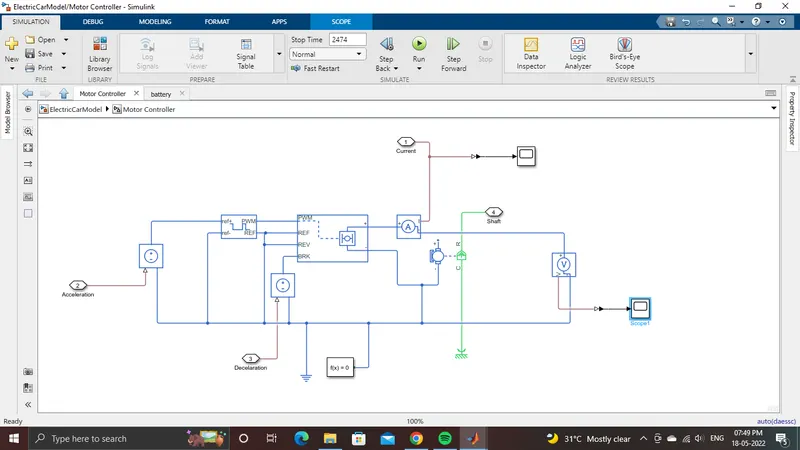
In Motor Controller subsytem we use controlled voltage source,controlled PWM voltage,H-Bridge,Current and Voltage sensor,Dc motor, solver configuration,PS-Simulink converter,Electrical reference,Mechanical reference,scope and connection ports.
in here Pulse-width modulation (PWM) provides the precision and the control range required by modern electronic devices. Using a simple circuit as an example, a modulating signal in the form of a sine wave applies to one terminal and a carrier signal applies to the other terminal. The output signal goes high when the modulating sine wave goes higher than the peak of the carrier signal.
An H-bridge is used to drive a load, such as a brushed DC motor, in both directions. And it controls the flow of current to a load.
the dc motor block represents the electrical and torque characterics of a dc motor using the equivalent circuit model.
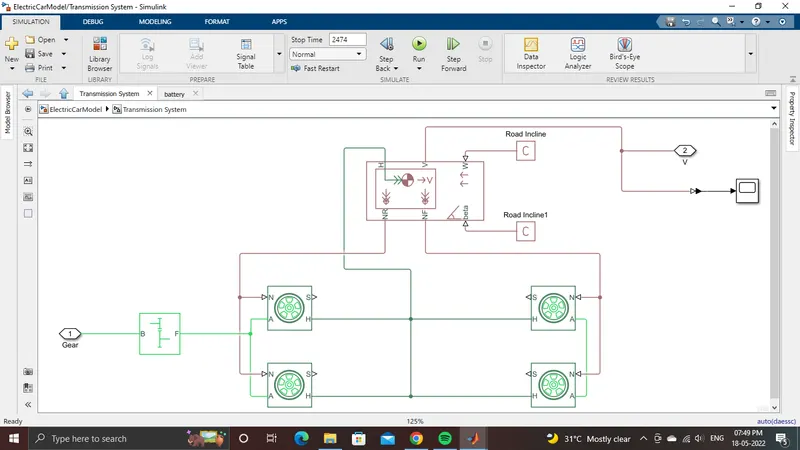
The blocks used in Transmission system are tire(magic formula),Vehicle Bdy,Simple gear,PS Constant,PS to simulink converter,scope and connection ports.
A nonslipping tire would roll and translate as Vx=rwΩ. However, as tires do slip, they respond by developing a longitudinal force, Fx.
The wheel slip velocity is Vsx=rwΩ−Vx. The wheel slip is k=Vsx∣Vx∣. For a locked, sliding wheel, k=−1. For perfect rolling, k=0.
For low speeds, as defined by ∣Vx∣≤∣Vth∣, the wheel slip becomes:
k=2Vsx(Vth+V2xVth)
This modification allows for a nonsingular, nonzero slip at zero wheel velocity. For example, for perfect slipping, that is, in the case of a nontranslating spinning tire, Vx=0 while k=2rwΩVth is finite.
The function of any transmission is transferring engine power to the driveshaft and rear wheels (or axle halfshafts and front wheels in a front-wheel-drive vehicle). Gears inside the transmission change the vehicle's drive-wheel speed and torque in relation to engine speed and torque.
The Tire-Road Interaction (Magic Formula) block models the interaction between the tire tread and road pavement. The longitudinal force arising from this interaction is given by the magic formula, an empirical equation based on four fitting coefficients. Tire properties such as compliance and inertia are ignored.
The Vehicle Body block represents a two-axle vehicle body in longitudinal motion. The vehicle can have the same or a different number of wheels on each axle. For example, two wheels on the front axle and one wheel on the rear axle. The vehicle wheels are assumed identical in size. The vehicle can also have a center of gravity (CG) that is at or below the plane of travel.
The block accounts for body mass, aerodynamic drag, road incline, and weight distribution between axles due to acceleration and road profile. Optionally include pitch and suspension dynamics. The vehicle does not move vertically relative to the ground.
The block has an option to include an externally-defined mass and an externally-defined inertia. The mass, inertia, and center of gravity of the vehicle body can vary over the course of simulation in response to system changes.
Gear sets serve to transfer rotational motion and torque at a known ratio from one driveline axis to another. Simscape™ Driveline™ contains angular gears for transferring rotational motion and torque and linear gears, for transferring translational motion and force. Determine how heat generation affects the efficiency and temperature of driveline components using thermal variants of gear blocks.
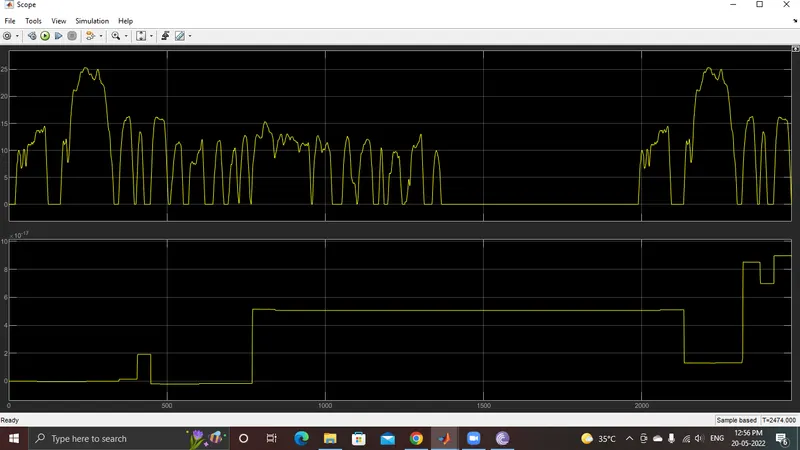
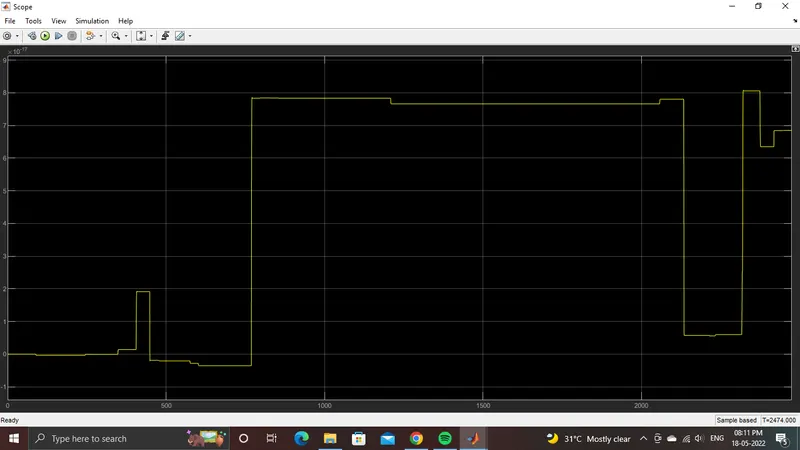
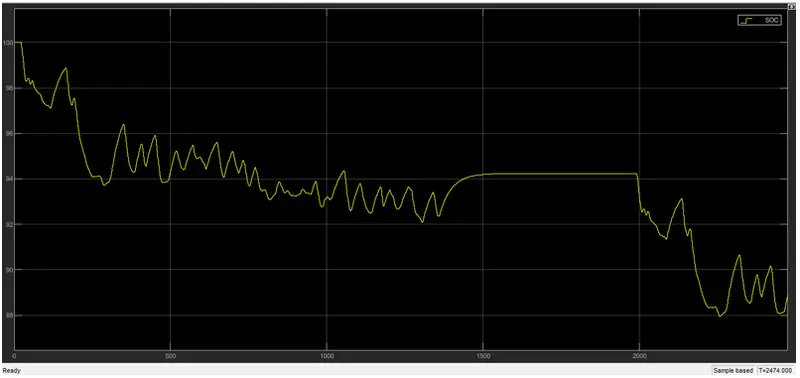
the following graphs are:
FTP
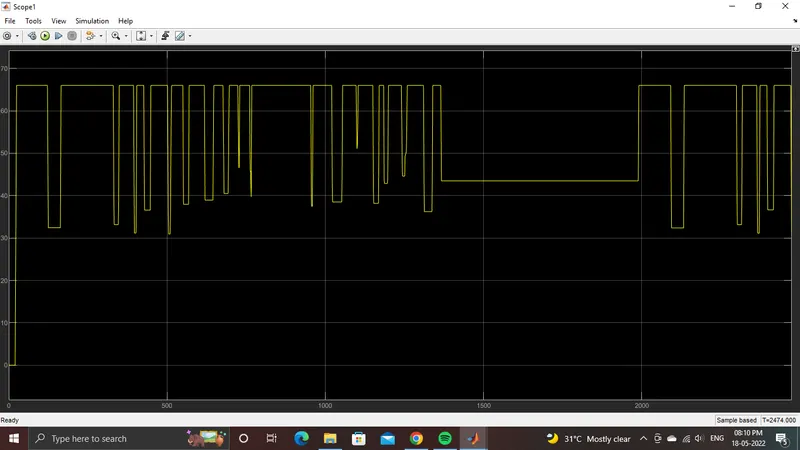
Transmission
Battery SOC
CONCLUSION:
the simulink model of an electric car which uses a battery and a DC motor has been made, and results plotted.the Blocks that have been used been mentioned.