Final Project: Design of an Electric Vehicle
Final Project: Design of an Electric Vehicle.
Aim: Create a MATLAB model of electric car which uses a battery and a DC motor. Choose suitable blocks from Powertrain block set. Prepare a report about your model including following:
Objectives:
- System level configurations
- Model parameters
- Results
- Conclusion
Software Used: Simulink, MS Word.
Solution:
Simulink Model:
Expanded View:
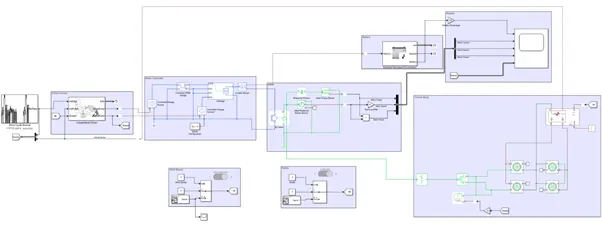
Subsystem View:
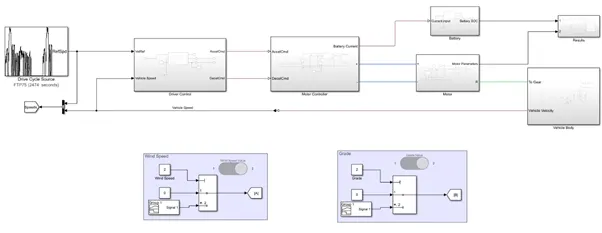
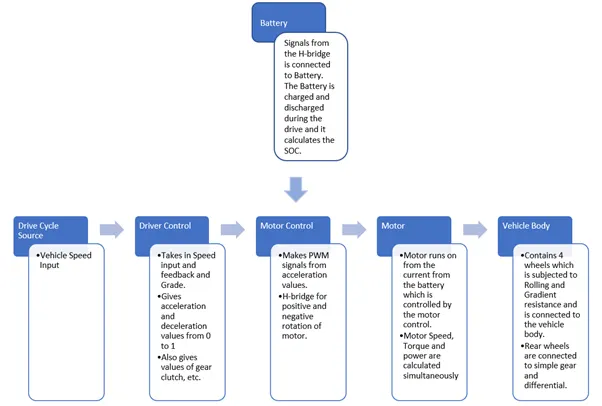
- System level configurations:
- Model Parameters:
Drive Cycle Source:
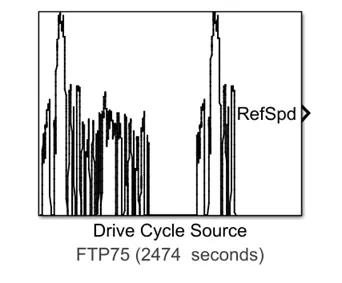
This block gives the vehicle speed input. For this Model, FTP75 Drive cycle is used which runs for 2474 seconds.
Driver Control:
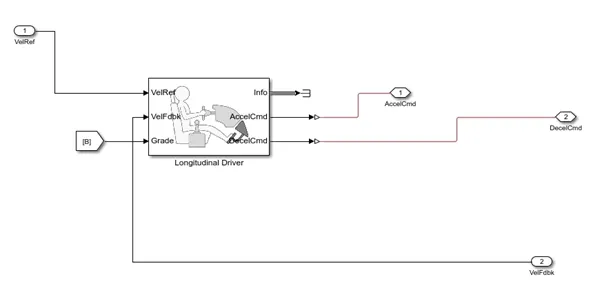
Here, Longitudinal Driver block is used to calculates acceleration and deceleration commands. The speed input from the Drive Cycle Source is used as vehicle reference input. The final velocity of the vehicle is used vehicle velocity feedback.
Grade values are given by the following system:
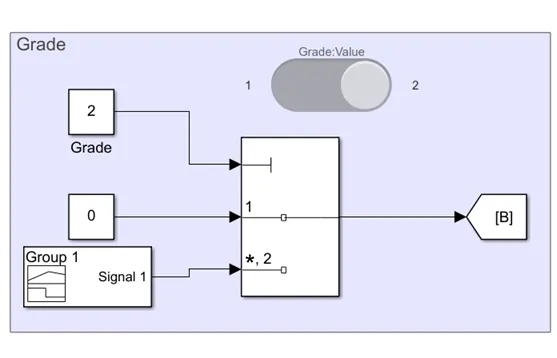
Grade Signal Builder:
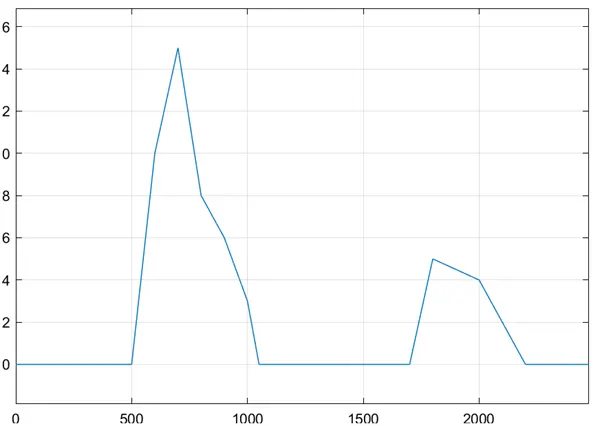
X-axis = Time (in seconds),
Y-axis = Grade (in %) (0-16).
The longitudinal driver block calculates the acceleration and deceleration commands from value 0 to 1 and sends the signal to motor controller.
Motor Controller:
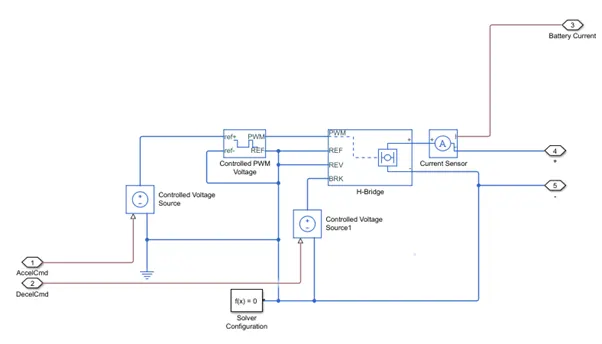
The acceleration and deceleration commands are connected to the controlled voltage source. The acceleration-controlled voltage source is connected to the controlled PWM Voltage block which generates PWM signals according to the acceleration command.
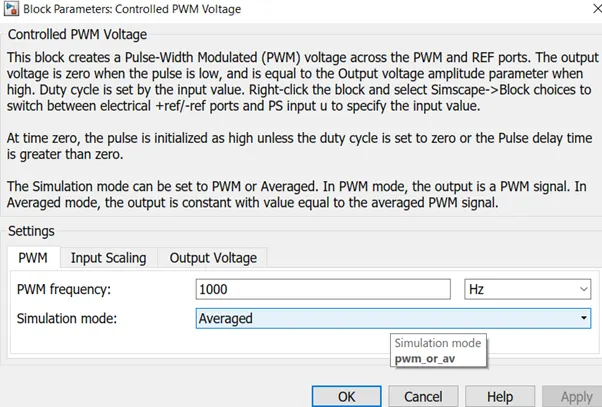
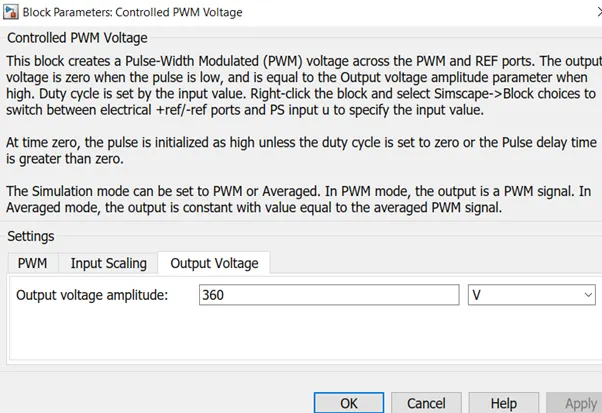
It is connected to H-bridge which generates signals for motor from the PWM signal.
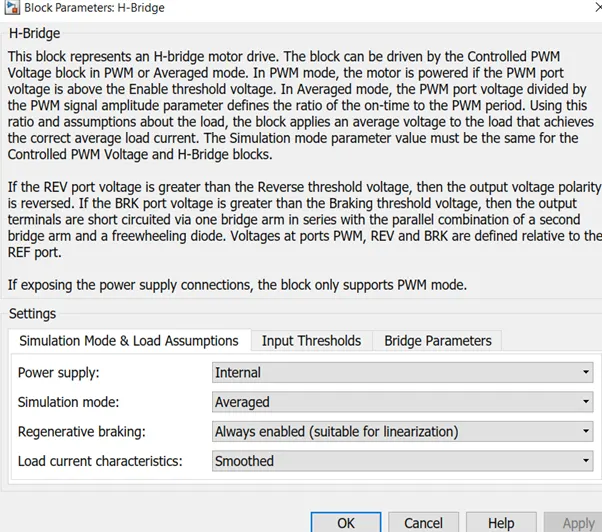
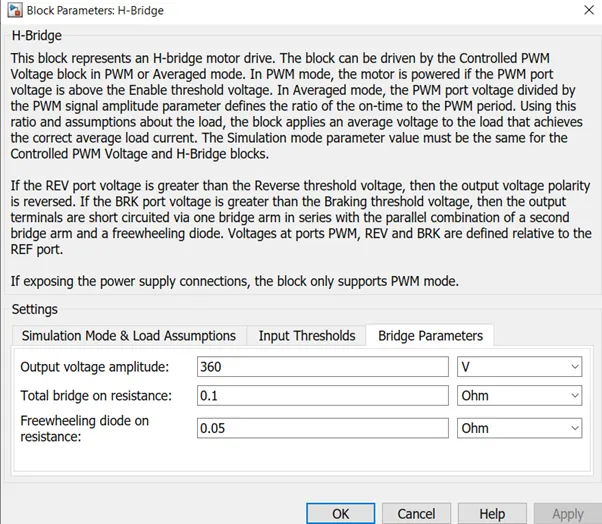
The deceleration-controlled voltage source is connected to the H-bridge for regenerative braking. When excessive braking is used manual brakes (disc brakes) are applied. The H-bridge then sends the battery current required signal to Battery subsystem and the positive and negative terminal to the motor.
Battery:
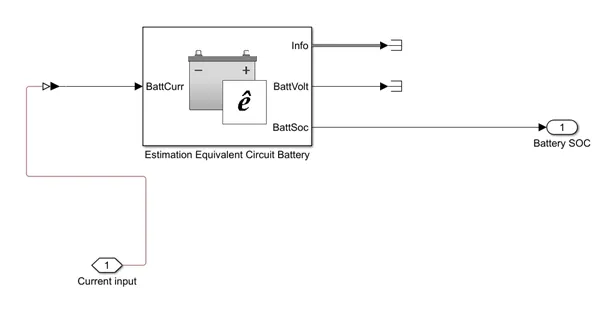
The battery current required input is connected to the Estimation Equivalent Circuit Battery block.
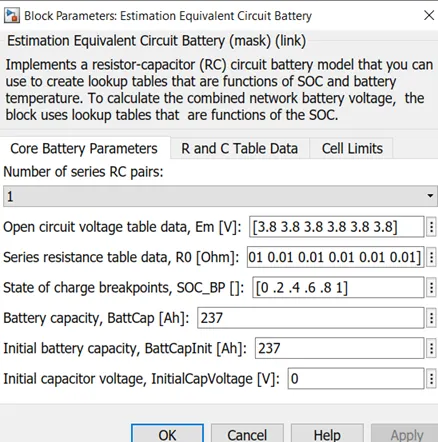
Battery capacity of 237 Ah is provided to the block and it calculates the Battery State of Charge after the drive cycle.
Motor:
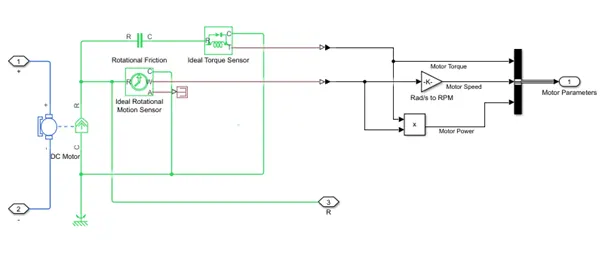
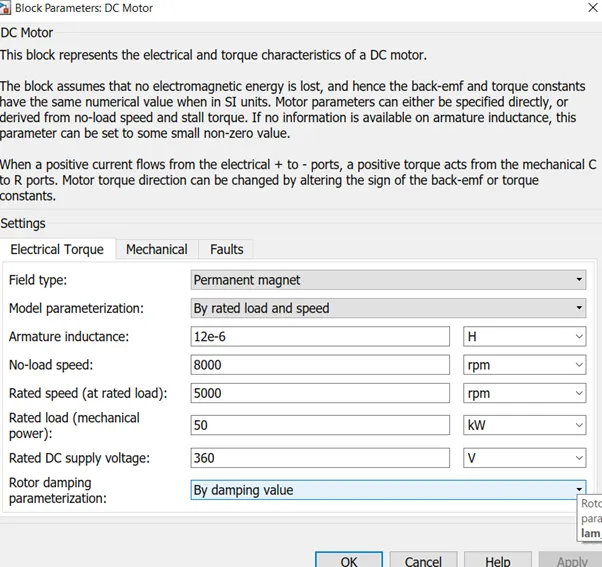
The DC motor is connected to the positive and negative terminals of the motor controller subsystem.
The subsystem calculates the motor speed, torque and power.
The shaft of the motor is connected to the vehicle body subsystem.
Vehicle Body:
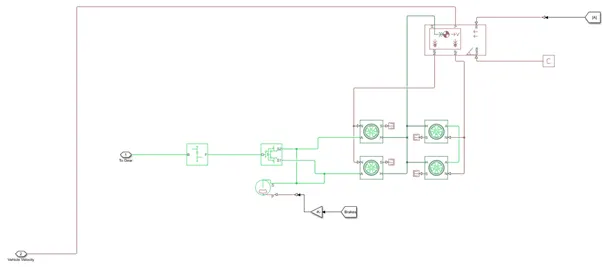
The vehicle body contains 4 wheels, vehicle body block, differential, disc brakes and simple gear. The shaft of the motor is connected to the simple gear. Disc brakes are connected to the rear wheel for manual braking.
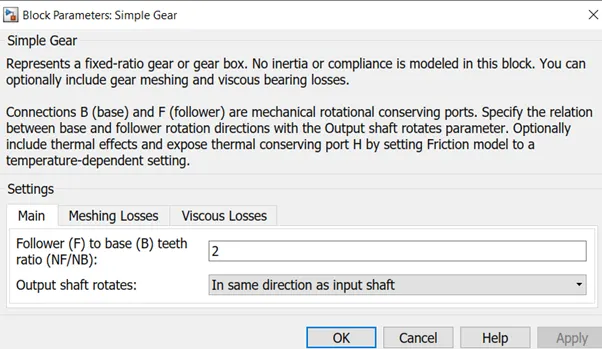
Simple gear is then connected to the differential.
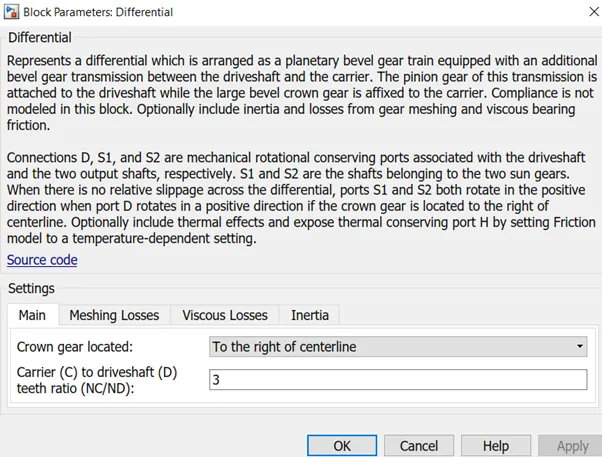
Differential is connected to both the rear wheels and is also connected with the disc brakes.
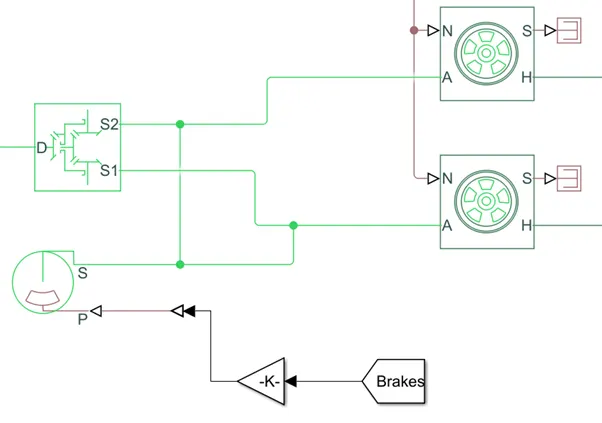
The deceleration command from the driver control subsystem is multiples by 1000 to calculate pressure applies by the cylinder on the brake pads.
Tyre System:
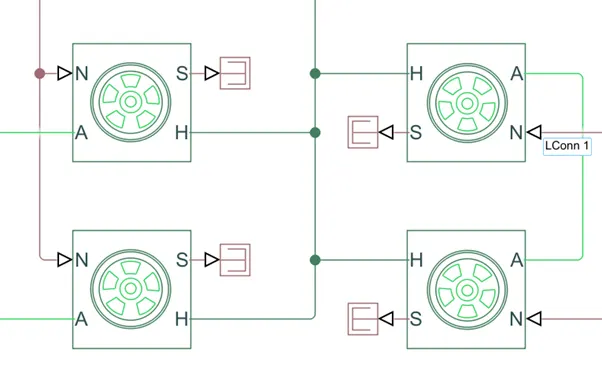
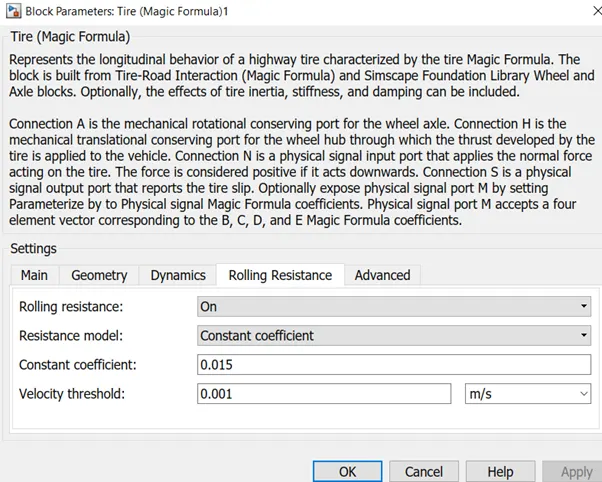
The vehicle is rear wheel drive where both the rear wheels are connected to the motor and the axle of the front wheels are connected to each other. The wheels are subjected to rolling resistance.
Vehicle Body:
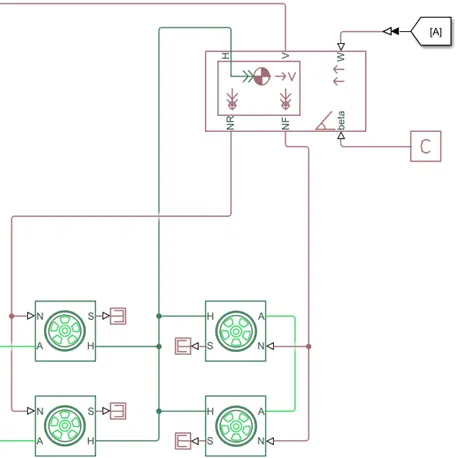
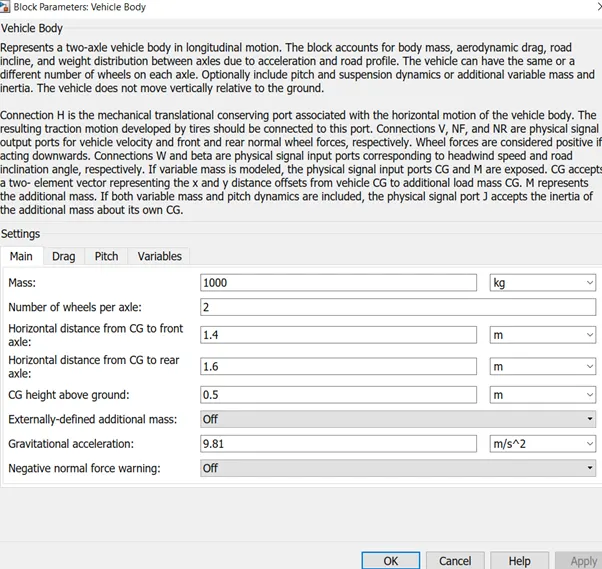
The reaction force of the vehicle body having a mass of 1000 Kg is connected to the wheels, NR and NF are force applies to rear and front wheels. The hubs of all the wheels are connected to the vehicle body. Beta input (inclination angle is zero) and wind speed is given by the following system:
Wind Speed Plot:
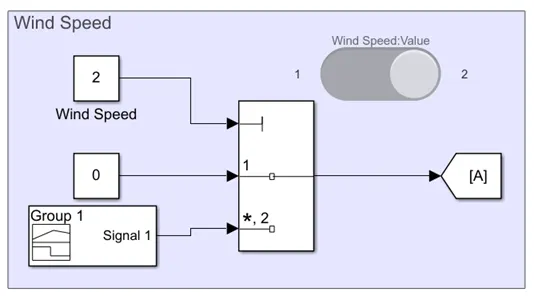
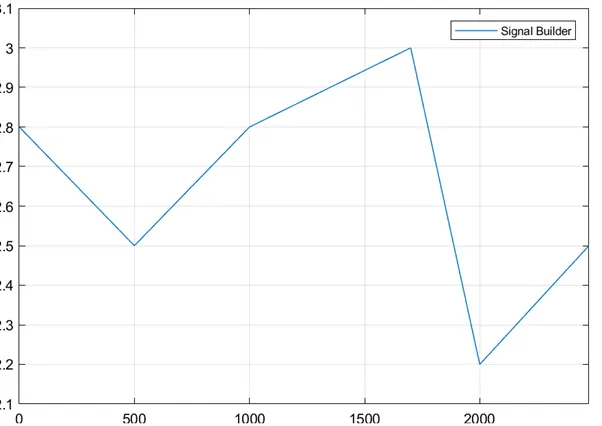
X – axis = Time (in seconds),
Y – axis = Wind Speed (m/s) (2.1 – 3.1).
The vehicle body block calculates the vehicle velocity.
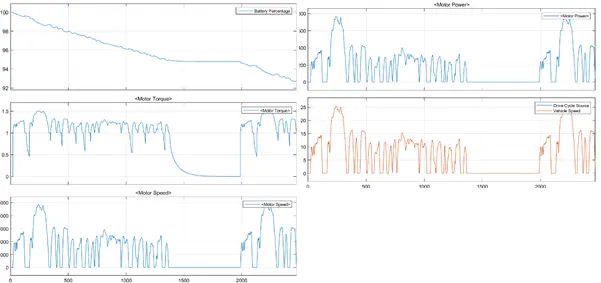
- Results:
|
Parameters |
Y-axis |
X-axis |
|
Motor Torque |
Nm |
Time (in seconds) |
|
Motor Speed |
RPM |
|
|
Motor Power |
Watts |
|
|
Drive Cycle Source and Vehicle Speed |
m/s |
- Conclusion:
The model only calculates Vehicle speed, torque, power and battery SOC in less time. To calculate Armature current, voltage and the duty cycles of IGBT switched inside the H-bridge requires a more complex model which requires much time to compile and calculate the values (DC_7 model). The following model doesn’t calculate the motor torque and power required with respect to the torque and power required for the vehicle.