FINAL INDEPENDENT PROJECT
Final Independent Project
Title
The Basis of Cylinder Engines with Pistons: A Comprehensive Report
Abstract
Cylinder engines with pistons represent a cornerstone of internal combustion engine technology, powering various vehicles, machinery, and equipment across the globe. This report delves into the fundamental principles underlying cylinder engines with pistons, discussing their construction, working mechanisms, applications, advantages, and limitations. Additionally, it explores the evolution of this technology and its future prospects in the context of emerging trends in automotive and industrial sectors.
1. Introduction:
Cylinder engines with pistons stand as one of the most fundamental and pervasive technologies in the realm of mechanical engineering. They are the beating heart of countless machines, from the vehicles that traverse our roads to the industrial equipment that drives global production. Understanding the basis of these engines is essential not only for engineers and enthusiasts but for anyone interested in comprehending the mechanics that power modern civilization.At its core, the concept of a cylinder engine with pistons revolves around harnessing the controlled explosion of fuel to generate mechanical energy. This process, known as internal combustion, has revolutionized transportation and industry since its inception. The beauty of these engines lies in their simplicity, yet their intricacies unveil a world of engineering marvels.
This report aims to delve into the foundational principles that underpin cylinder engines with pistons. We will explore their construction, operation, applications, advantages, and limitations. By dissecting these engines piece by piece, we can appreciate the ingenuity behind their design and the role they play in shaping our daily lives.
2. Construction and Components:
Assembly parts:
- Cylinder: The cylindrical chamber in which the piston moves up and down. It provides the housing for the piston and facilitates the compression and expansion of the air-fuel mixture.
- Piston: A cylindrical component that moves reciprocally within the cylinder. It seals the combustion chamber, transfers force from expanding gases to the connecting rod, and helps regulate the flow of air and fuel.
- Piston Rings: These are metallic rings fitted around the outer diameter of the piston. They create a seal between the piston and the cylinder wall, preventing leakage of combustion gases and oil into the combustion chamber.
- Connecting Rod: A rod that connects the piston to the crankshaft. It transmits the reciprocating motion of the piston into rotational motion at the crankshaft.
- Crankshaft: A shaft with offset crank throws or journals. It converts the reciprocating motion of the piston into rotational motion, which is then transmitted to the drivetrain.
- Wrist Pin (Piston Pin): A pin that connects the piston to the connecting rod. It allows the piston to pivot on the connecting rod as it moves up and down within the cylinder.
- Gudgeon Pin: Another term for the wrist pin or piston pin, depending on the context.
- Piston Skirt: The lower part of the piston that extends below the piston rings. It helps stabilize the piston within the cylinder and reduces rocking motion.
- Piston Crown (Head): The top surface of the piston that is exposed to combustion forces. It may feature features such as valve reliefs or combustion chambers.
- Piston Bowl (Depression): Some piston designs feature a bowl-shaped indentation in the piston crown to promote more efficient combustion by creating turbulence in the air-fuel mixture.
- Circlips: Retaining clips that secure the wrist pin to the piston, preventing it from sliding out of position.
- Piston Pin Retainers: Clips or rings that secure the wrist pin in place within the piston, preventing it from moving laterally.
- Piston Pin Bearings: Bearings or bushings located at the small end of the connecting rod to support the wrist pin and allow it to pivot smoothly.
- Piston Pin Locks: Retaining clips or rings that secure the wrist pin in place within the small end of the connecting rod, preventing it from moving axially.
These assembly parts work together in harmony to facilitate the combustion process and convert the energy released into useful mechanical work, driving various machines and vehicles. Each component plays a critical role in ensuring the efficient and reliable operation of the cylinder piston assembly.
3. Working Mechanism:
The working mechanism of a piston-cylinder assembly involves a series of steps that facilitate the conversion of fuel energy into mechanical work. This process occurs within an internal combustion engine and can be summarized in the following stages:
- Intake Stroke
- The cycle begins with the piston at the top of the cylinder, near the cylinder head.
- As the piston moves downward, it creates a vacuum within the cylinder.
- The intake valve opens, allowing a mixture of air and fuel (in spark-ignition engines) or air only (in diesel engines) to enter the cylinder from the intake manifold.
- The incoming air-fuel mixture or air undergoes compression as the piston continues its downward motion.
- Compression Stroke
- Once the intake stroke is complete, the intake valve closes.
- The piston then starts moving back upwards, compressing the air-fuel mixture or air within the cylinder.
- This compression increases the pressure and temperature of the mixture, preparing it for combustion.
- At the top of the compression stroke, just before reaching the top dead center (TDC), the spark plug (in spark-ignition engines) ignites the compressed air-fuel mixture, or in the case of diesel engines, fuel is injected into the highly compressed air, causing spontaneous combustion.
- Power (Combustion) Stroke
- The ignited air-fuel mixture rapidly expands, generating high-pressure gases that force the piston down with significant force.
- As the piston moves downward, it transfers this force through the connecting rod to the crankshaft.
- The crankshaft converts the reciprocating motion of the piston into rotational motion, which can be used to drive the vehicle's wheels (in automotive applications) or perform other mechanical work.
- Exhaust Stroke
- After the power stroke, the exhaust valve opens as the piston starts moving back upwards again.
- The high-pressure exhaust gases are expelled from the cylinder into the exhaust manifold.
- The piston pushes the exhaust gases out of the cylinder as it moves toward the top of the cylinder.
- Once the exhaust stroke is complete, the exhaust valve closes, and the intake valve opens again, starting a new cycle.
This cycle repeats continuously as long as the engine is running, with each cylinder in the engine firing at different intervals to maintain smooth operation. The piston-cylinder assembly, along with other components such as the crankshaft, connecting rod, valves, and spark plug (or fuel injector in diesel engines), forms the core of an internal combustion engine, driving a wide range of vehicles and machinery.
In Simple Terms:
- Four-stroke and two-stroke engine cycles: intake, compression, power, and exhaust strokes.
- Ignition systems: spark ignition (gasoline engines) and compression ignition (diesel engines).
- Fuel injection and carburetion processes.
4. Applications:
- Automotive: cars, motorcycles, trucks, buses.
- Industrial: generators, pumps, compressors, agricultural machinery.
- Marine: boats, ships, watercraft.
- Aviation: light aircraft, drones.
5. Advantages:
- High power-to-weight ratio.
- Efficiency in converting fuel energy to mechanical work.
- Versatility in applications.
- Relatively simple maintenance and repair procedures.
6. Limitations:
- Environmental impact: emissions of pollutants such as CO2, NOx, and particulate matter.
- Noise and vibration levels.
- Thermal efficiency limitations.
- Dependence on fossil fuels.
7. Evolution and Technological Advancements:
- Development of fuel injection systems.
- Introduction of turbocharging and supercharging.
- Hybridization and electrification trends.
- Advancements in materials and manufacturing techniques.
8. Future Prospects:
- Shift towards electrification and alternative fuels.
- Continued optimization for efficiency and emissions reduction.
- Integration with emerging technologies such as artificial intelligence and connectivity.
- Potential applications in renewable energy systems and sustainable transportation.
9. Designed Parts
a.Crank Shaft
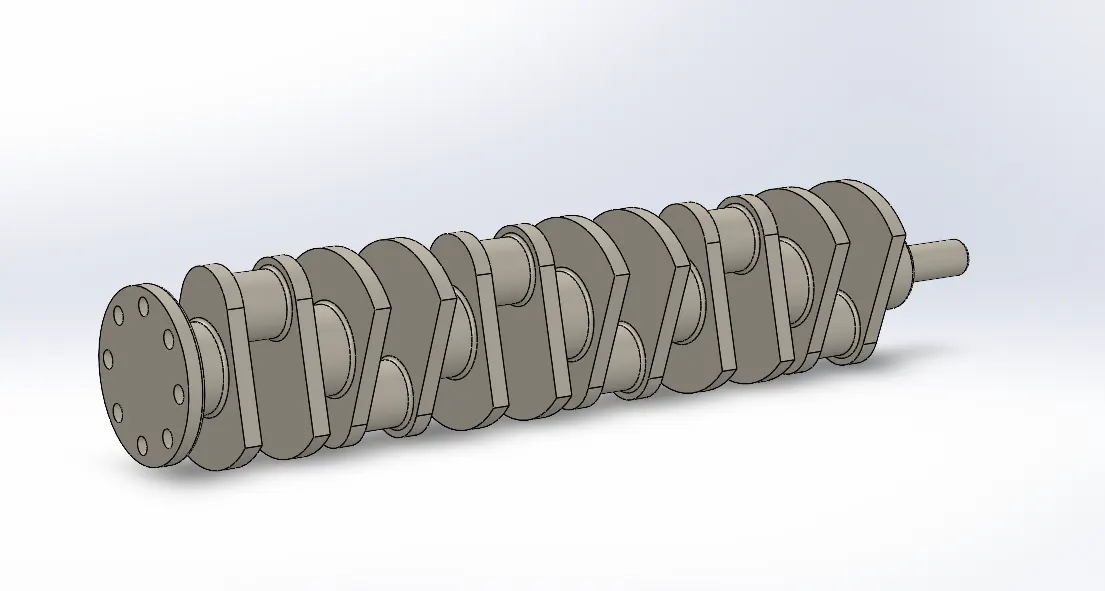
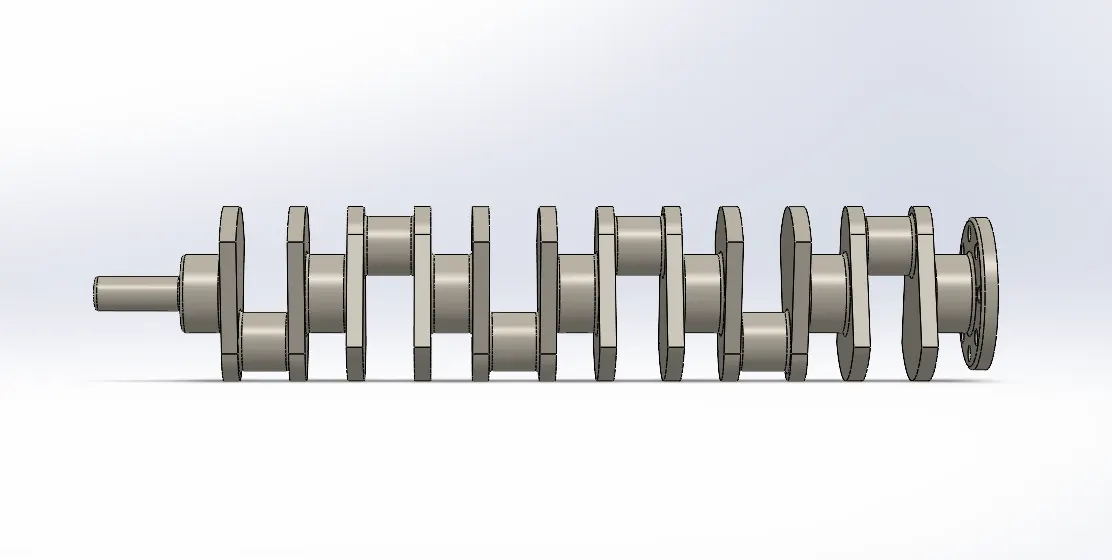
The crankshaft is a crucial component in a cylinder-piston assembly within an internal combustion engine. It converts the reciprocating motion of the pistons into rotational motion, which is then used to drive various mechanical systems. Here's a detailed overview of the crankshaft:
- Construction
- The crankshaft is typically made of high-strength alloy steel or forged steel to withstand the stresses and strains of engine operation.
- It consists of a series of offset crank throws or journals arranged along its length, typically corresponding to the number of cylinders in the engine.
- The crankshaft is precision-machined to ensure smooth rotation and minimize friction losses.
- Main Bearings
- The crankshaft is supported by main bearings housed within the engine block.
- These bearings are typically made of a durable material such as steel or a copper-lead alloy and are designed to withstand high loads and resist wear.
- The main bearings ensure smooth and stable rotation of the crankshaft within the engine block.
- Crank Throws
- Each crank throw is offset from the main journal and connected to a connecting rod.
- The offset design allows the reciprocating motion of the pistons to be converted into rotational motion as the crankshaft rotates.
- The size and shape of the crank throws are carefully engineered to optimize engine performance and reduce vibrations.
- Counterweights
- Counterweights are strategically positioned along the length of the crankshaft to balance the rotating mass.
- These counterweights help reduce vibration and ensure smooth operation of the engine.
- They are typically located opposite the crank throws and are designed to counteract the forces generated by the reciprocating motion of the pistons.
- Keyways and Keyslots
- Keyways and keyslots are machined into the ends of the crankshaft to facilitate secure attachment to other engine components.
- The keyways accommodate keys or key stock that prevent slippage and ensure proper alignment of the crankshaft with other rotating parts, such as the flywheel or harmonic balancer.
- Oil Passages
- The crankshaft may feature drilled oil passages or galleries to facilitate lubrication.
- These passages allow engine oil to flow to the main bearings, crank throws, and connecting rod bearings, reducing friction and dissipating heat generated during operation.
- Balancing
- Balancing the crankshaft is crucial to ensure smooth engine operation and minimize vibration.
- This process involves carefully adjusting the mass distribution of the crankshaft and counterweights to offset the forces generated by the reciprocating motion of the pistons.
- Integration with Other Components
- The crankshaft is interconnected with various engine components, including the pistons, connecting rods, flywheel, and timing gears or pulleys.
- Through these connections, the crankshaft plays a central role in coordinating the movement of engine internals and transmitting power to external systems.
The crankshaft is a fundamental component of a cylinder-piston assembly, providing the mechanical linkage between the reciprocating motion of the pistons and the rotational motion required for engine operation. Its precise design, construction, and integration are essential for the efficient and reliable performance of internal combustion engines.
b.Connecting Rod
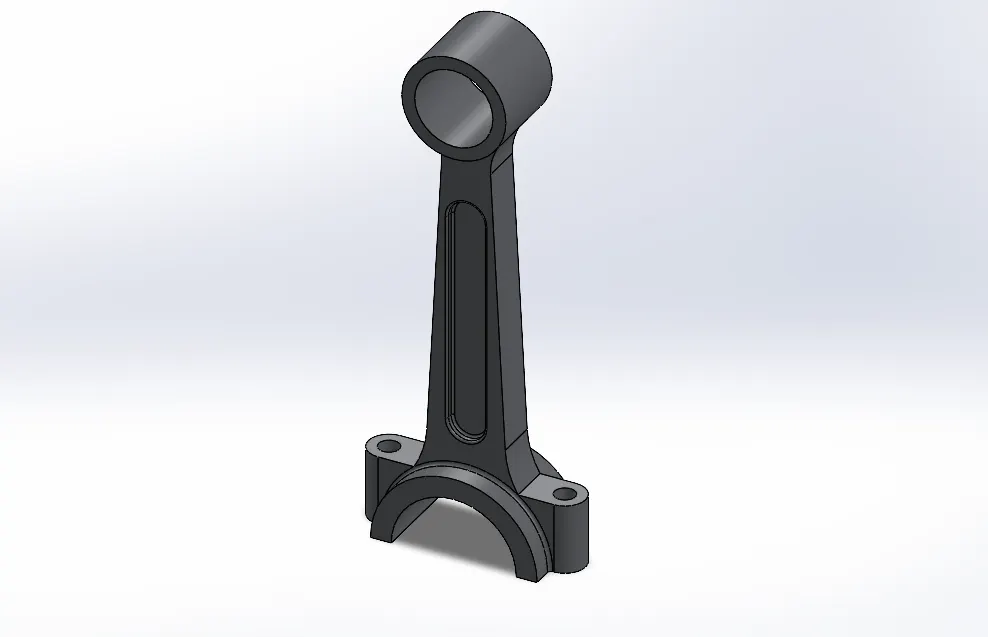
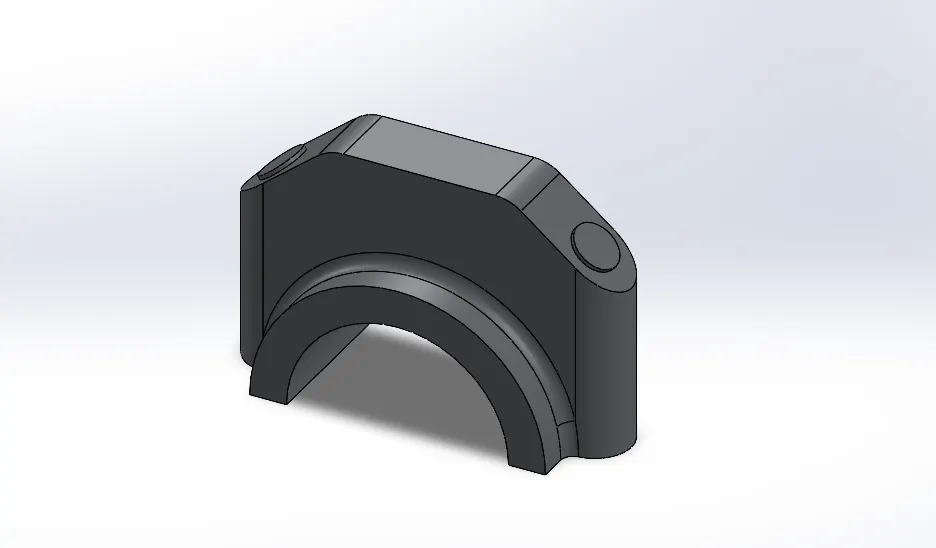
The connecting rod is a critical component within a cylinder-piston assembly of an internal combustion engine. It serves to transmit the reciprocating motion of the piston into rotational motion at the crankshaft. Here's a detailed overview of the connecting rod:
- Construction
- Connecting rods are typically made of high-strength steel or aluminum alloy to withstand the forces and stresses encountered during engine operation.
- They are often forged or machined to precise specifications to ensure strength, durability, and dimensional accuracy.
- Connecting rods have a rod-like shape with a large end, where it connects to the piston, and a small end, where it connects to the crankshaft.
- Big End
- The big end of the connecting rod features a bearing cap that attaches to the piston via a wrist pin or piston pin.
- This end is often split into two halves, allowing for easy assembly and disassembly of the connecting rod.
- The bearing surfaces of the big end are precision-machined to accommodate the wrist pin and ensure smooth movement.
- Small End
- The small end of the connecting rod attaches to the crankshaft via a crank pin or journal.
- It may be bushed or fitted with a bearing insert to reduce friction and wear.
- The small end is typically narrower than the big end and may feature oil passages to facilitate lubrication.
- Bolts and Fasteners
- Connecting rods are secured to the crankshaft and piston using bolts or fasteners.
- These bolts are torqued to specific specifications to ensure proper clamping force and prevent loosening during engine operation.
- High-strength fasteners are often used to withstand the forces exerted on the connecting rod.
- Design Considerations
- Connecting rods are designed to withstand the high forces and cyclic loading experienced within the engine.
- Factors such as material selection, cross-sectional area, and geometry are carefully considered to optimize strength, stiffness, and weight.
- Finite element analysis (FEA) and computer-aided engineering (CAE) tools are often employed to refine the design and ensure structural integrity.
- Balancing
- Balancing the connecting rods is essential to minimize vibration and ensure smooth engine operation.
- This involves matching the weight of each connecting rod to within a tight tolerance and often requires precision machining or material removal.
- Lubrication
- Connecting rod bearings are lubricated by engine oil to reduce friction and prevent wear.
- Oil passages within the connecting rod and bearing insert allow for the flow of lubricant to critical surfaces.
- Integration with Other Components
- Connecting rods form a crucial link between the piston and crankshaft, transmitting motion and forces between these components.
- Proper alignment and fitment are essential to ensure smooth operation and prevent premature wear or failure.
The connecting rod plays a vital role in the operation of an internal combustion engine, translating the reciprocating motion of the piston into rotational motion at the crankshaft. Its design, material selection, and manufacturing precision are critical factors in the performance and reliability of the engine.
c.Piston
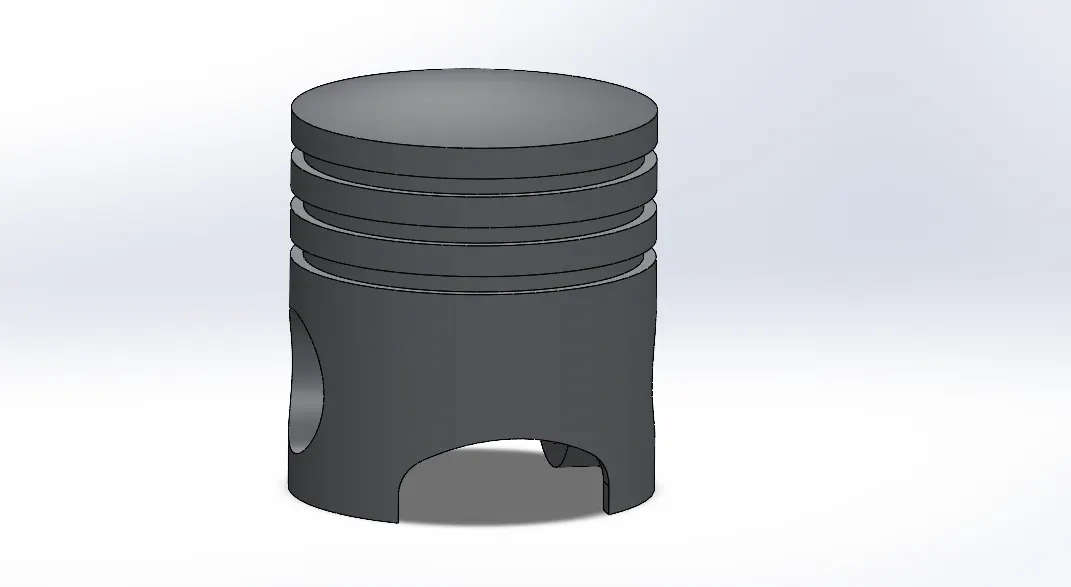
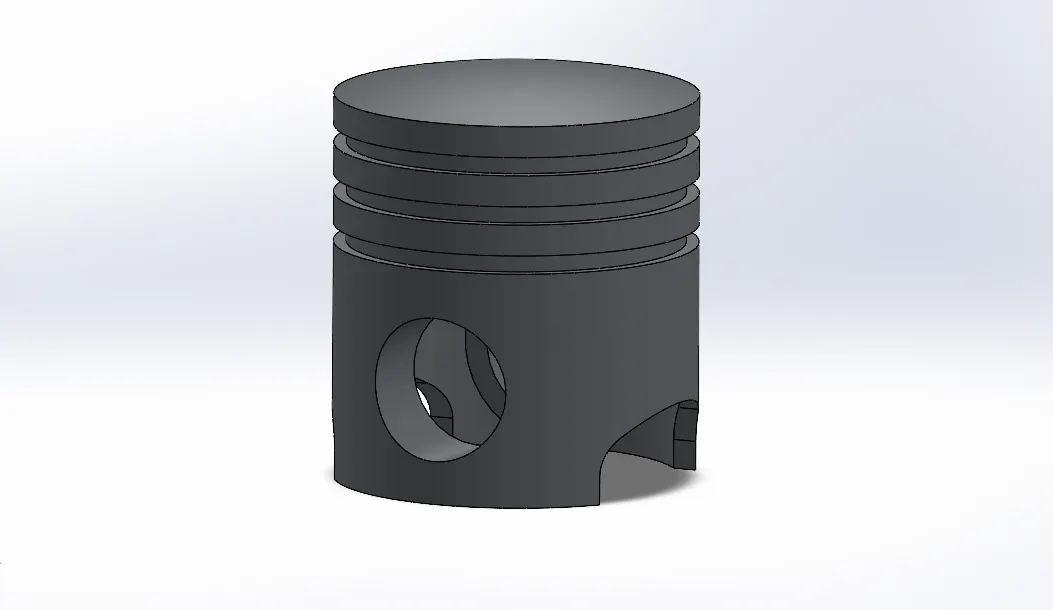
The piston is a fundamental component within a cylinder-piston assembly of an internal combustion engine. It undergoes reciprocating motion within the cylinder bore, converting the energy generated by combustion into mechanical work. Here's a detailed overview of the piston:
- Construction
- Pistons are typically made of high-strength aluminum alloy, cast iron, or other lightweight yet durable materials.
- They have a cylindrical shape with a crown (top) and skirt (bottom) portion.
- The crown is often domed or flat and may feature features such as valve reliefs or combustion chambers to accommodate valves and promote efficient combustion.
- The skirt extends downward from the crown and helps guide the piston within the cylinder bore.
- Piston Rings
- Piston rings are metallic rings fitted around the outer diameter of the piston.
- They create a seal between the piston and the cylinder wall, preventing leakage of combustion gases and oil into the combustion chamber.
- Piston rings typically consist of compression rings and oil control rings, each serving specific functions in sealing and lubrication.
- Piston Pin (Wrist Pin)
- The piston pin, also known as the wrist pin, connects the piston to the connecting rod.
- It allows the piston to pivot on the connecting rod as it moves up and down within the cylinder bore.
- The piston pin is typically press-fit into the piston and secured with retaining clips or rings.
- Piston Skirt**:
- The piston skirt is the lower portion of the piston that extends below the piston rings.
- It helps stabilize the piston within the cylinder bore and reduces rocking motion during operation.
- The skirt may be coated with materials such as graphite or Teflon to reduce friction and wear.
- Piston Crown
- The piston crown is the top surface of the piston exposed to combustion forces.
- It undergoes high temperatures and pressures during the combustion process.
- The design of the piston crown, including its shape and surface features, influences engine performance and efficiency.
- Piston Pin Boss
- The piston pin boss is the reinforced area of the piston where the piston pin is located.
- It is typically thicker and stronger to withstand the forces exerted by the connecting rod and piston pin.
- Piston Cooling
- Pistons may feature cooling channels or galleries to dissipate heat generated during combustion.
- These channels allow coolant or oil to flow around the piston, reducing thermal stress and preventing overheating.
- Integration with Piston Rings
- Piston rings are seated in grooves or lands machined into the piston.
- These grooves hold the piston rings in place and provide a sealing surface against the cylinder wall.
- Balancing
- Balancing the piston is essential to minimize vibration and ensure smooth engine operation.
- This involves optimizing the weight distribution and mass properties of the piston to reduce inertial forces.
The piston is a critical component within the cylinder-piston assembly, playing a key role in the combustion process and energy conversion within an internal combustion engine. Its design, materials, and manufacturing precision are essential factors in engine performance, efficiency, and reliability.
d.Piston Ring
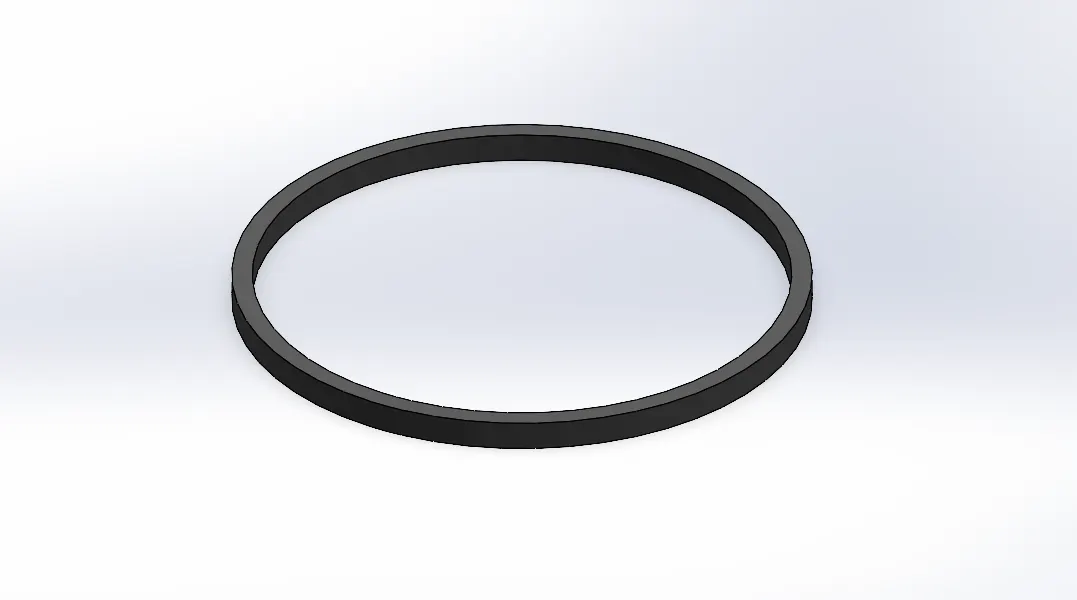

Piston rings are essential components within a cylinder-piston assembly of an internal combustion engine. They provide critical sealing between the piston and the cylinder wall, preventing leakage of combustion gases and controlling the distribution of lubricating oil. Here's a detailed overview of piston rings:
- Construction
- Piston rings are typically made of cast iron, ductile iron, or steel due to their high wear resistance and ability to withstand the rigors of engine operation.
- They are precision-machined to ensure dimensional accuracy and a tight fit within the piston grooves.
- Modern piston rings may also feature coatings such as chrome, nitride, or ceramic to enhance wear resistance and reduce friction.
- Types of Piston Rings
- Compression Rings: These rings are responsible for sealing the combustion chamber and preventing the escape of combustion gases past the piston into the crankcase. They are usually located closest to the piston crown.
- Oil Control Rings: Oil control rings regulate the distribution of lubricating oil along the cylinder wall. They scrape excess oil off the cylinder wall, preventing it from entering the combustion chamber and burning. Oil control rings typically consist of two parts: a spacer or expander ring and two scraper rings.
- Design Features
- Piston rings have a split or gap along their circumference, allowing them to expand and contract to fit the cylinder bore as the engine heats up and cools down.
- The inner surface of piston rings may feature a taper or barrel shape to ensure even contact with the cylinder wall and promote effective sealing.
- Ring tension, or the radial force exerted by the ring against the cylinder wall, is carefully engineered to achieve optimal sealing without excessive friction or wear.
- Installation
- Piston rings are installed into grooves or lands machined into the piston.
- They are carefully compressed and inserted into the grooves using specialized tools to ensure proper fitment and alignment.
- The gaps or end clearances between adjacent piston rings are staggered to minimize gas leakage and oil consumption.
- Function
- Compression Rings: During the compression stroke, compression rings seal the combustion chamber, preventing the escape of high-pressure gases into the crankcase. They also transfer heat from the piston to the cylinder wall.
- Oil Control Rings: Oil control rings regulate the amount of lubricating oil that enters the combustion chamber. They scrape excess oil off the cylinder wall and return it to the oil pan via drain holes or slots in the piston.
- Wear and Maintenance
- Piston rings are subject to wear over time due to the high temperatures, pressures, and friction encountered during engine operation.
- Regular inspection and maintenance are essential to ensure optimal ring sealing and engine performance.
- If piston rings become worn or damaged, they may cause compression loss, increased oil consumption, and reduced engine efficiency.
Piston rings play a critical role in maintaining engine performance, efficiency, and reliability by providing essential sealing and lubrication control within the cylinder-piston assembly. Their design, materials, and installation are crucial factors in engine durability and longevity.
e.Piston Pin
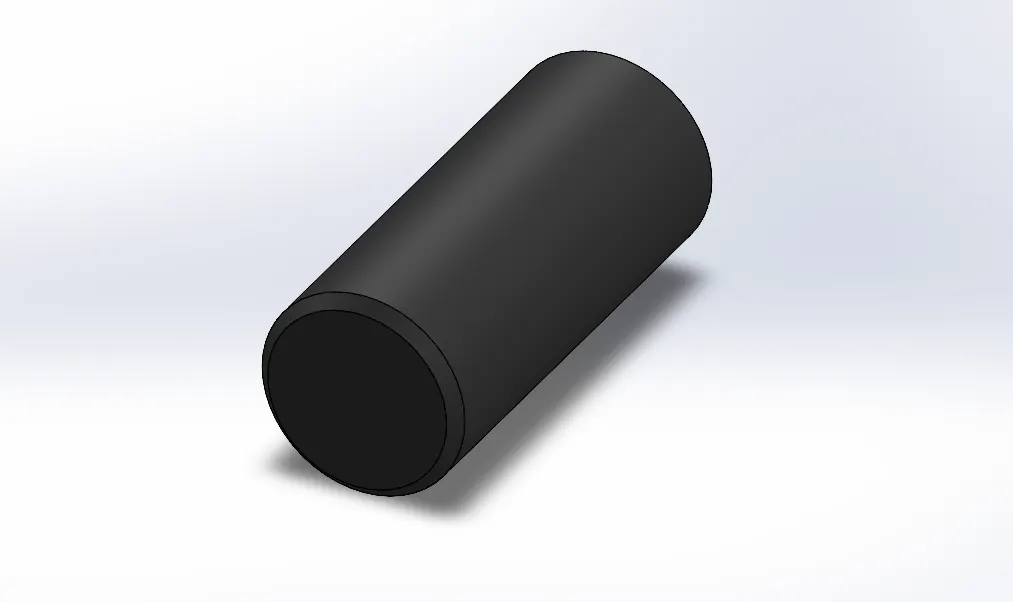

The piston pin, also known as the wrist pin, is a vital component within a cylinder-piston assembly of an internal combustion engine. It serves to connect the piston to the connecting rod, allowing for the transfer of motion and forces between these two components. Here's a detailed overview of the piston pin:
- Construction
- Piston pins are typically made of high-strength steel or alloy steel to withstand the forces and stresses encountered during engine operation.
- They are often hardened and precision-ground to ensure dimensional accuracy and surface finish.
- Piston pins are cylindrical in shape, with precise diameters and lengths tailored to fit the piston and connecting rod.
- Design Features
- Piston pins may be full-floating or fixed in design, depending on the engine configuration and application.
- Full-floating piston pins are free to pivot within the piston and connecting rod, allowing for relative motion between these components.
- Fixed piston pins are secured in place within the piston and connecting rod, typically with press-fit or locking mechanisms.
- Integration with Piston and Connecting Rod
- Piston pins are inserted through holes or bores in the piston bosses and small ends of the connecting rods.
- They serve as a pivot point for the piston as it moves up and down within the cylinder bore.
- The piston pin is secured in place within the piston and connecting rod using retaining clips, circlips, or other locking devices to prevent axial or lateral movement.
- Lubrication
- Piston pins are subjected to high temperatures and frictional forces during engine operation.
- They are typically lubricated by engine oil supplied through oil passages or galleries within the piston and connecting rod.
- Lubrication helps reduce wear and friction between the piston pin and its mating surfaces, ensuring smooth operation and longevity.
- Balancing
- Balancing the piston pin is essential to minimize vibration and ensure smooth engine operation.
- This involves optimizing the weight distribution and mass properties of the piston pin to reduce inertial forces and minimize stress on the piston and connecting rod.
- Wear and Maintenance
- Piston pins are subject to wear over time due to the high loads and repetitive motion encountered during engine operation.
- Regular inspection and maintenance are essential to ensure proper lubrication and secure attachment of the piston pin to the piston and connecting rod.
- Worn or damaged piston pins can cause excessive noise, vibration, and accelerated wear of surrounding components.
The piston pin plays a crucial role in the operation of an internal combustion engine, providing the mechanical linkage between the piston and connecting rod. Its design, materials, and integration are essential factors in engine performance, durability, and reliability.
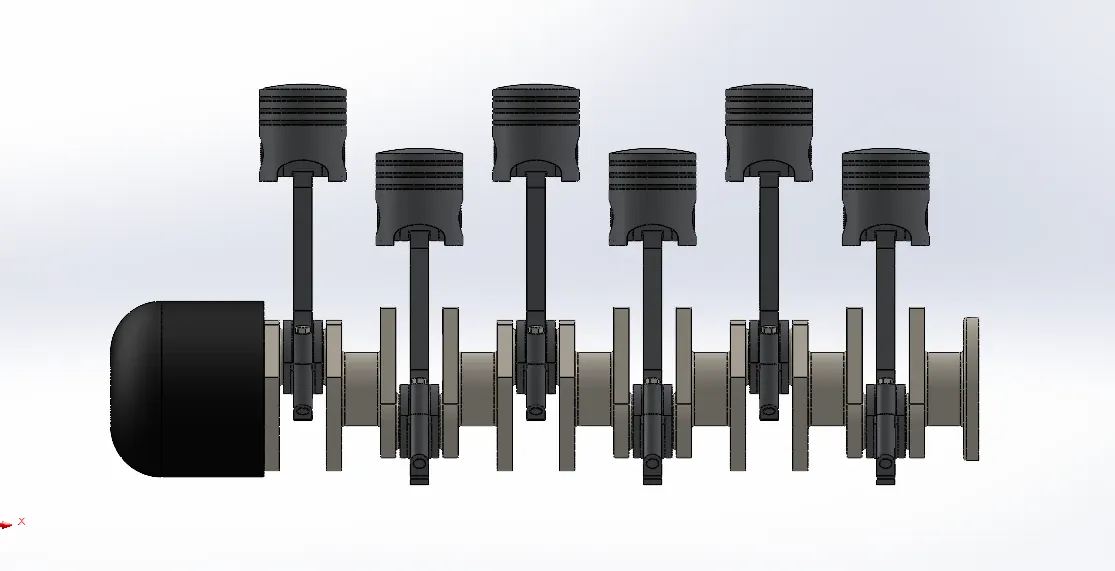
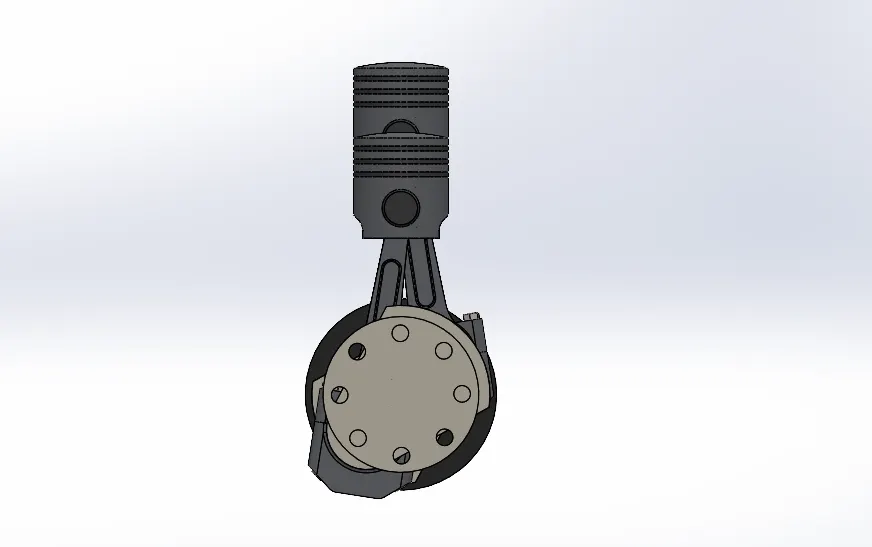
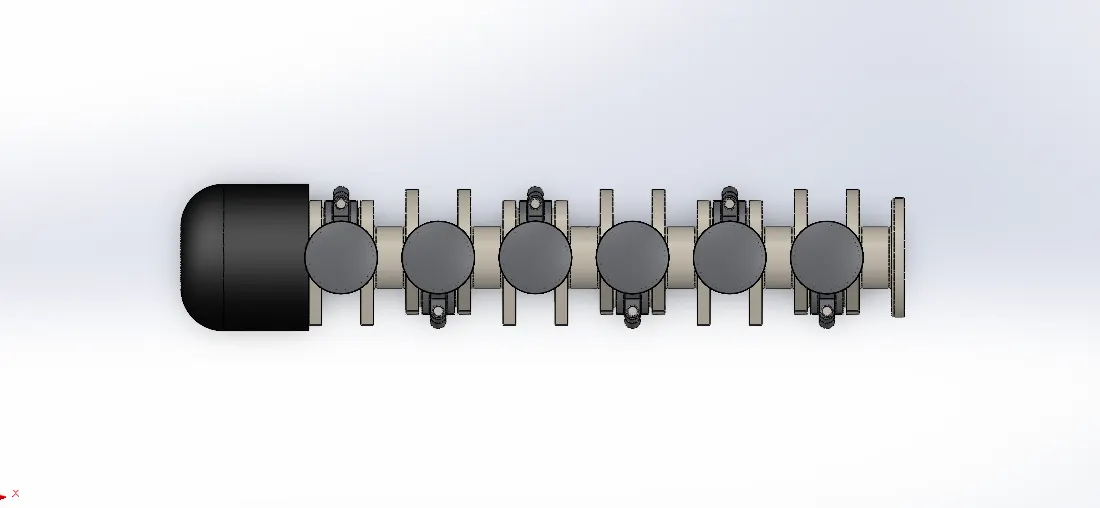
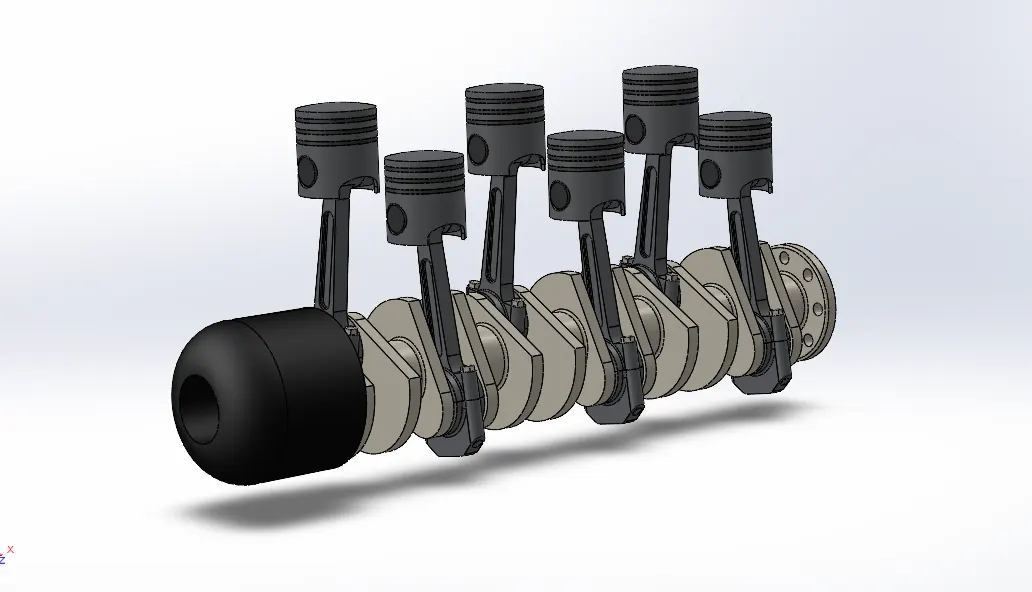
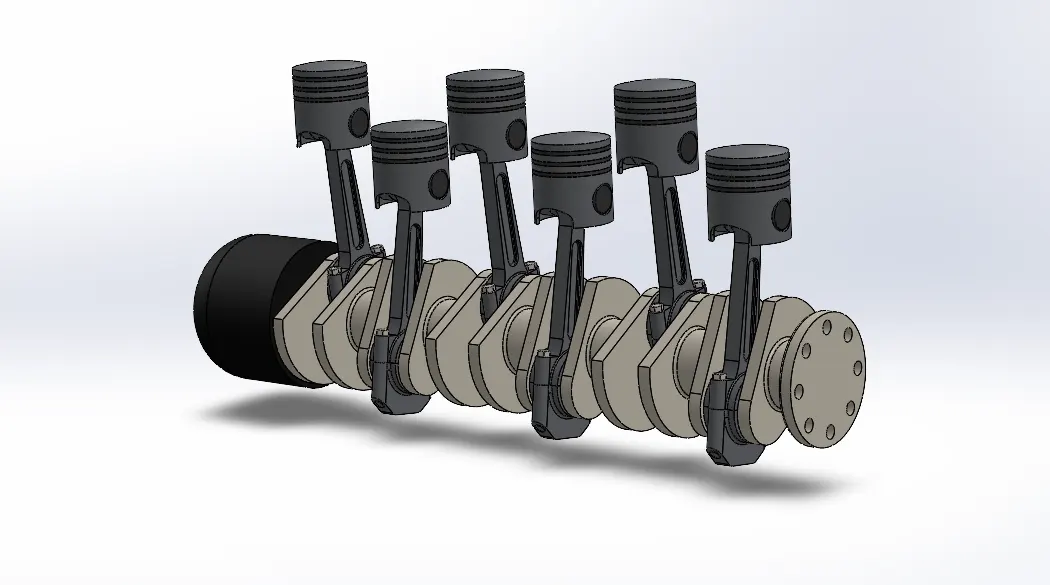
Final Assembly:
Conclusion:
- Cylinder engines with pistons have been instrumental in powering various machines for over a century.
- Despite their advantages, they face challenges related to emissions and environmental impact.
- Ongoing research and innovation are crucial for their continued relevance and sustainability in the future.
References:
- Textbooks
- Industry reports.