Fender Design - Wheel Arch Challenge
To examine the given fender design to verify if the wheel arch of the fender meets the European standards.
Fender:Fender is the part of a vehicle that surrounds the wheel. Apart from being the exterior aesthetic part of the vehicle, its important function is to prevent debris such as mud, gravel, rocks, fluids and other street particles from entering the engine compartment or being tossed into the air by the high-speed rotating wheel as this can cause damage to the engine components, nearby vehicles, or pedestrian nearby the moving vehicle.
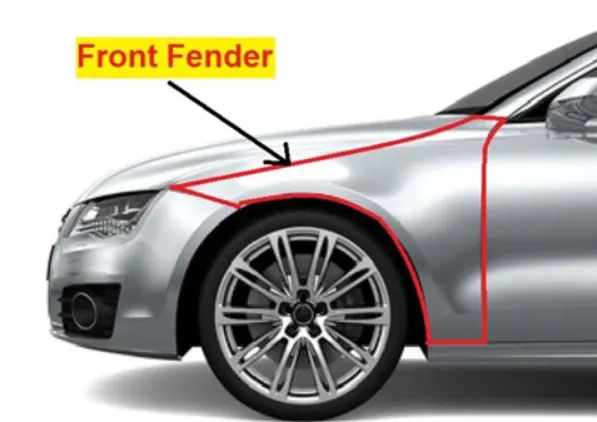
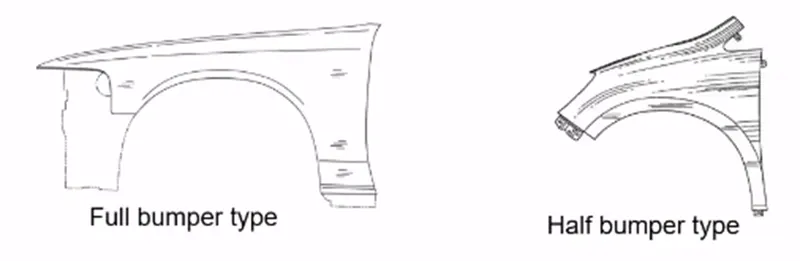
There are two types of front fenders:
1.Full bumper type
2.Half bumper type
VARIOUS INTERNATIONAL STANDARDS:
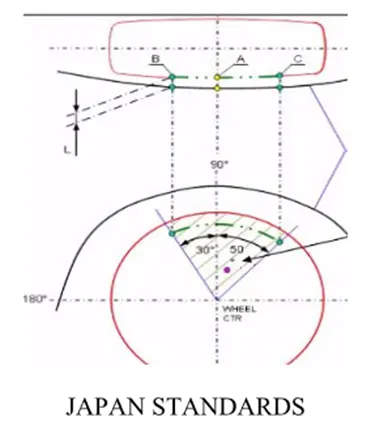
1)JAPANESE STANDARDS:
- Measure clearance L of the tire, hub, cap, and fender in three different positions within area K and produce a clearance check chart to validate.
- Clearance must be greater than 5 mm in all three positions (i.e., at A, B, C from fender curvature)
- Wheel guard requirement: The value of 'a' shall be more than 5 mm at line 30* forward and 50* rearward from the central vertical axis of the wheel.
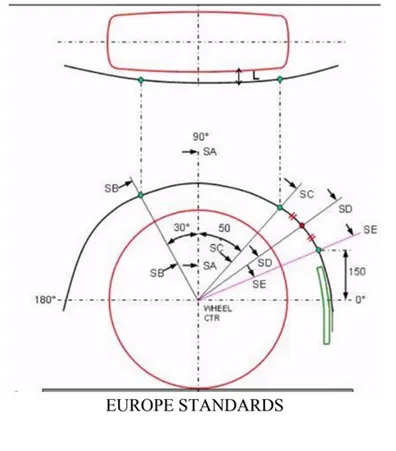
2)EUROPEAN STANDARDS:
- Measure Clearance L at sections SA-SA, SB-SB, SC-SC, SD-SD, SE-SE and produce CL check chart to validate.
- In all five sections, the Clearance L value should be greater than 10 mm to satisfy the European regulations.
- Wheel guard requirement: The value of 'a' shall be more than 5 mm at line 30* forward and 50* rearward from the central vertical axis of the wheel.
3)AMERICAN STANDARDS:
- Make clearance check details on all positions from -100* to 100* and make the clearance check table.
- All values should be greater than 5 mm to satisfy the regulations.
- The value of 'a' shall be more than 5 mm at line 30* forward and 50* rearward from the central vertical axis of the wheel.
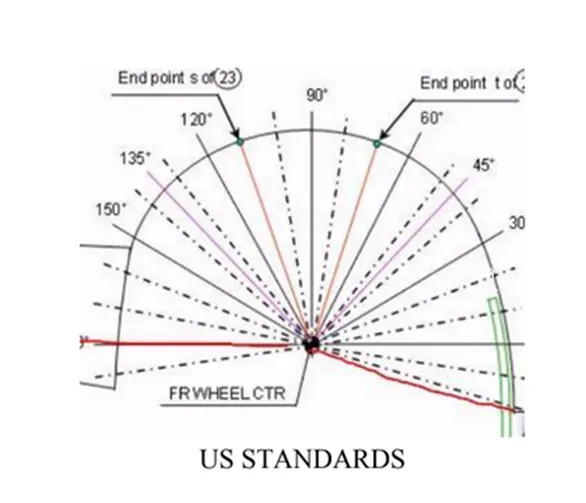
CONSIDERING WITH EUROPEAN STANDARDS:
To check the wheather the given fender is satisfifying the L value:
- Initially, draw a line that is 30 degree before the centre vertical line and consider it as SA.
- Measure the the distance between the edge of the fender to the line.
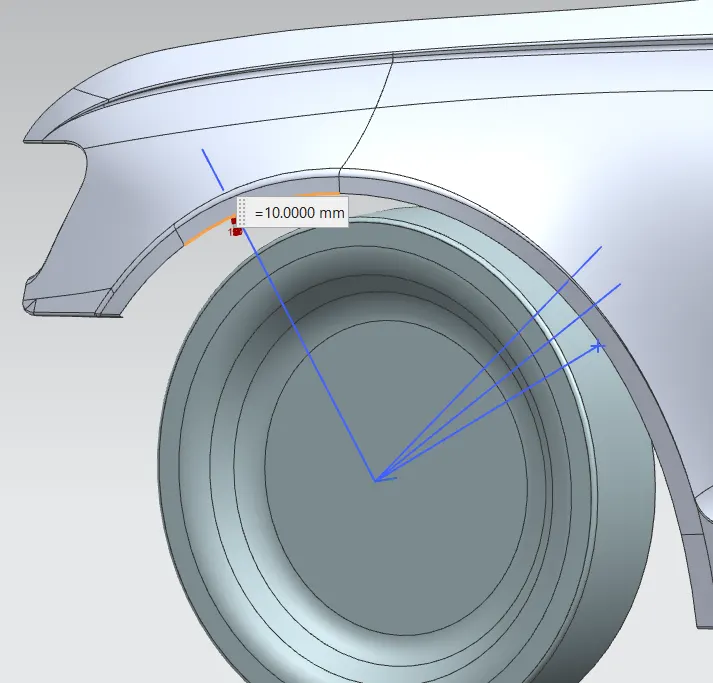
- Draw a vertical line and consider it as SB.
- Measure the the distance between the edge of the fender to the line.
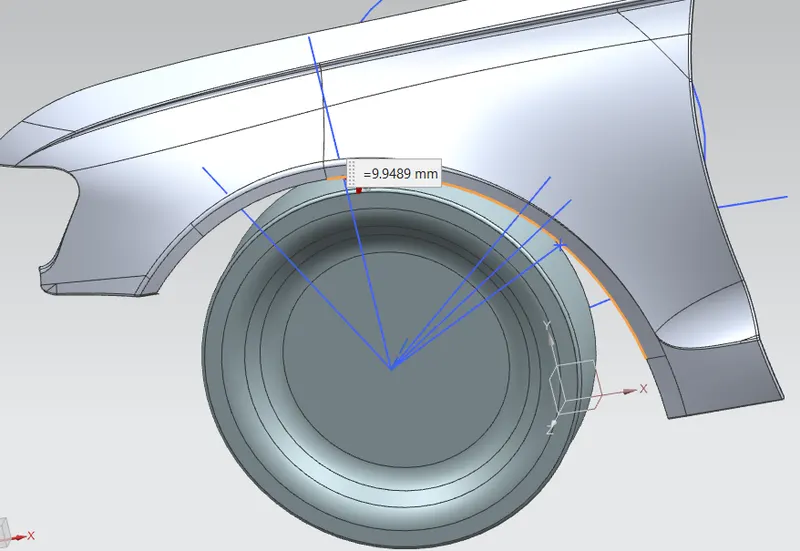
- Draw a line that is 50 degree after the centre vertical line and consider it as SC.
- Measure the the distance between the edge of the fender to the line.
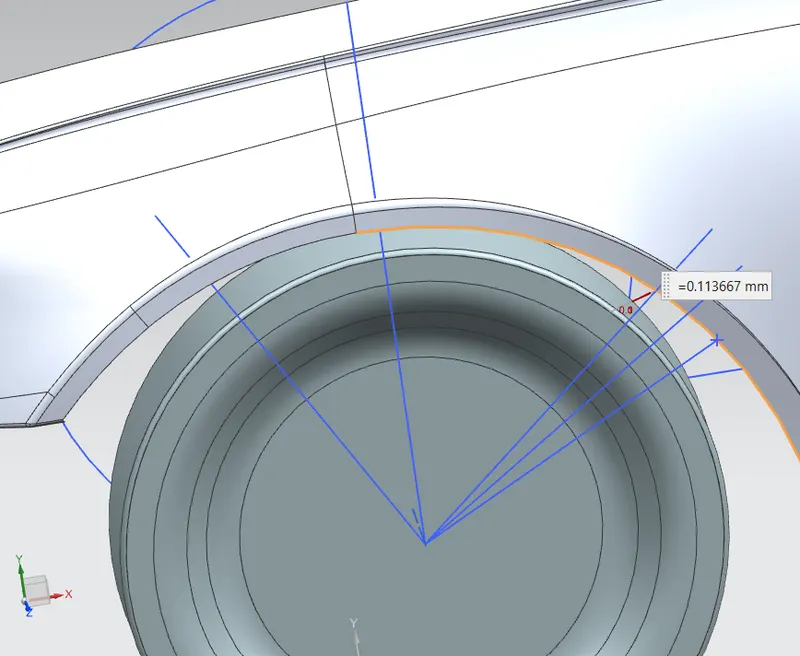
- Draw a line that is between the line of 150mm from the bottom edge of the fender and consider it as SD.
- Measure the the distance between the edge of the fender to the line.
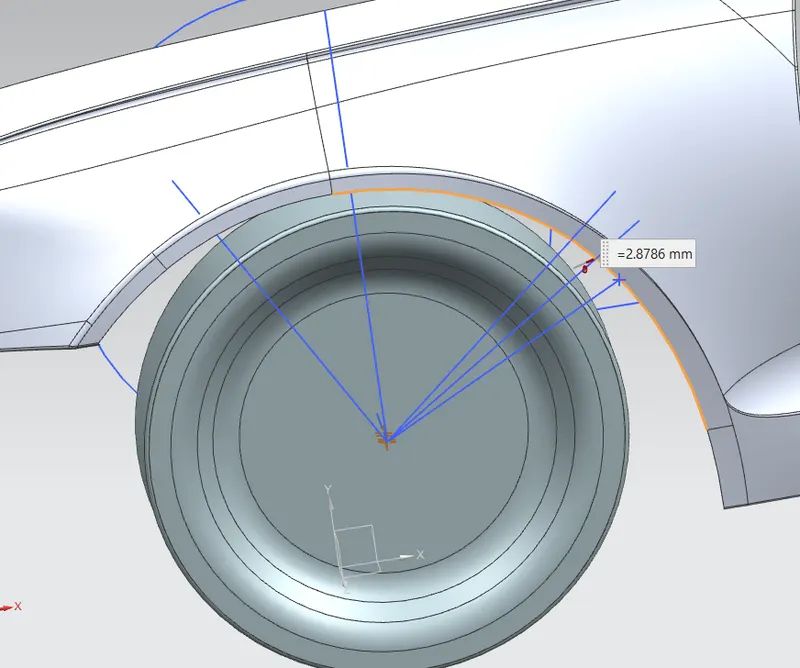
- Draw a line at a distance of 150mm from the bottom edge of the fender and consider it as SE.
- Measure the the distance between the edge of the fender to the line.
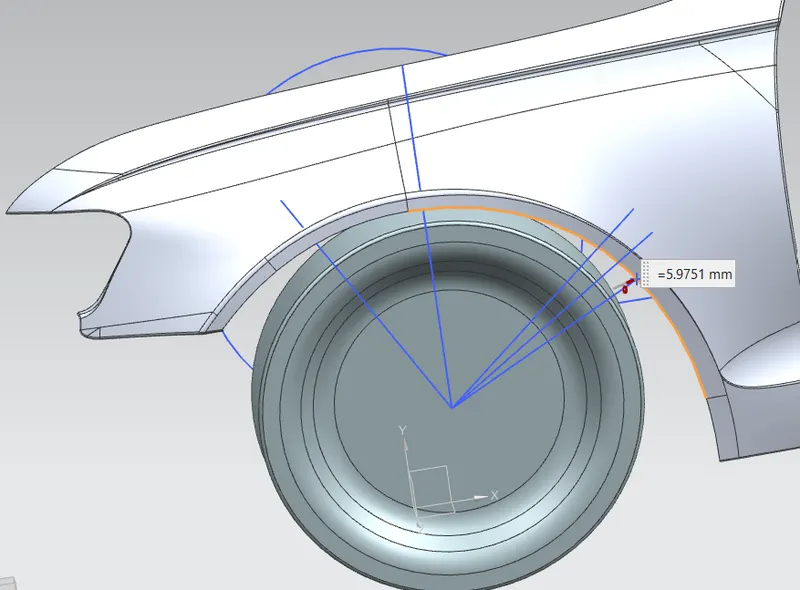
Sno Points Distance measured(in mm) Status
1 SA 10.000 Pass(=10)
2 SB 9.948 Fail(<10)
3 SC 0.1136 Fail(<10)
4 SD 2.878 Fail(<10)
5 SE 5.975 Fail(<10)
To check the wheather the given fender is satisfifying the a value:
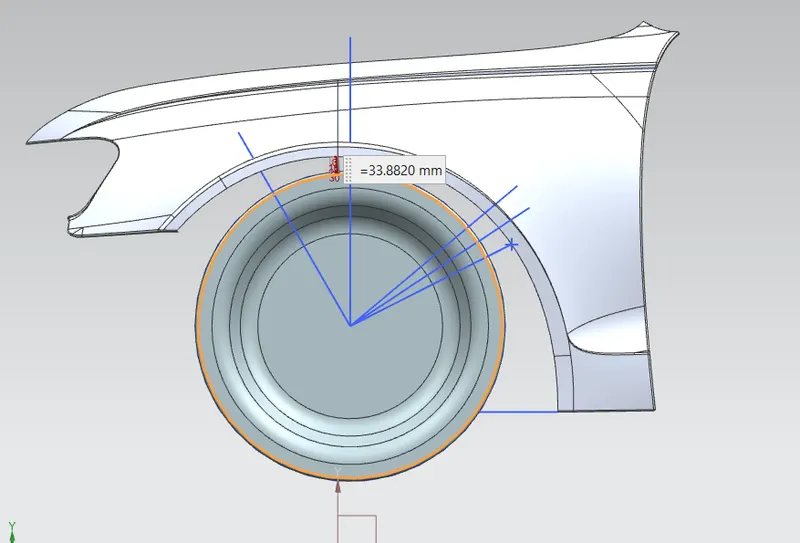
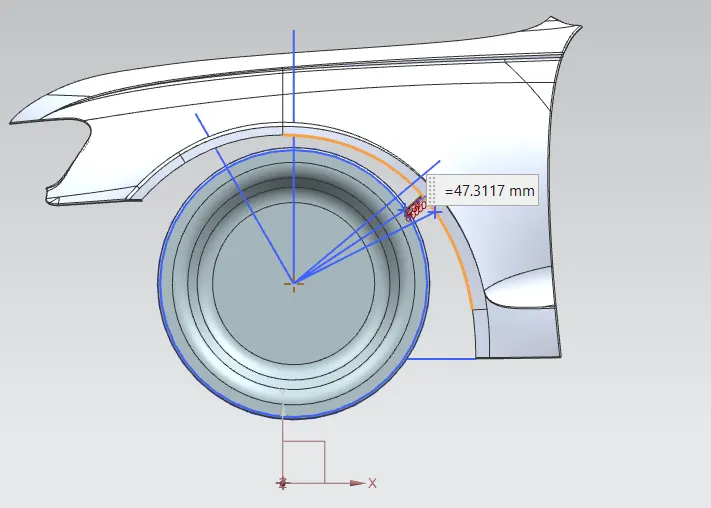
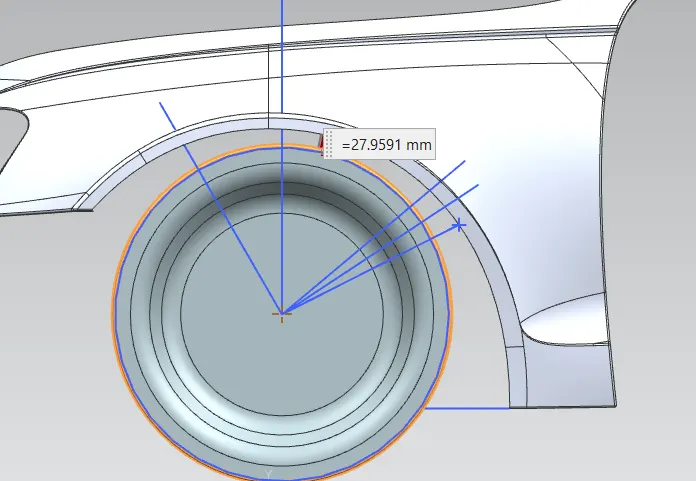
Sno Points Distance measured(in mm) Status
1 SA 33.8820 Pass (>5)
2 SB 27.9591 Pass (>5)
3 SD 47.3117 Pass (>5)
Conclusion:Since, the L value at SB, SC, SD & SE are less than 5mm so the given fender does not satisys the european standards.