Fender Design - Wheel Arch Challenge
FENDER DESIGN - WHEEL ARCH
AIM:-
To calculate the wheel arc area and prove whether the car will pass the European Standards or not.
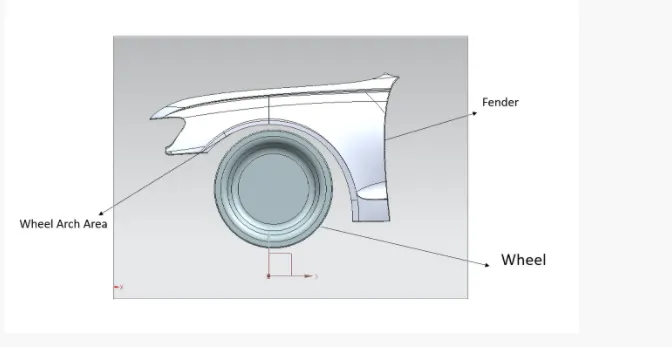
Fender:-
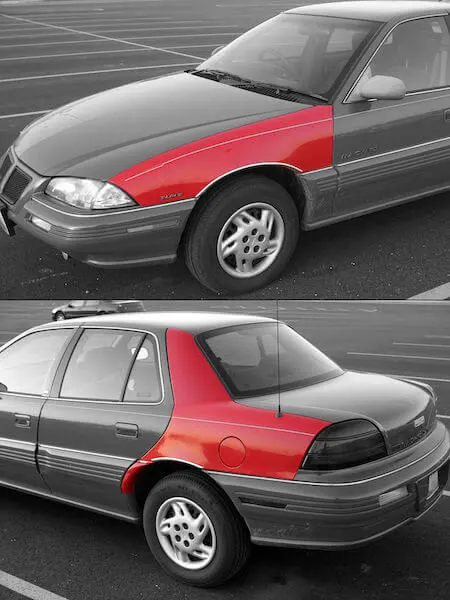
A fender is part of a car that protects and frames its wheel and keeps mud from splashing it. Its main purpose is to prevent debris, rocks, mud, liquids, sand, and other road debris from getting thrown in the air while the tires rotate. The fender is typically referred to as the front panel that covers the front wheel, and the quarter panel typically refers to the rear panel that covers the wheel that also includes the roof pillar. The below image shows a fender and quarter panel on a car The top half of the image is the fender or front fender. The bottom half of the image shows the quarter panel or rear fender.
Types of fender
The type of the fender is based upon the area covered i,e., full fender type and half fender type.
- Full fender type
- Half fender type
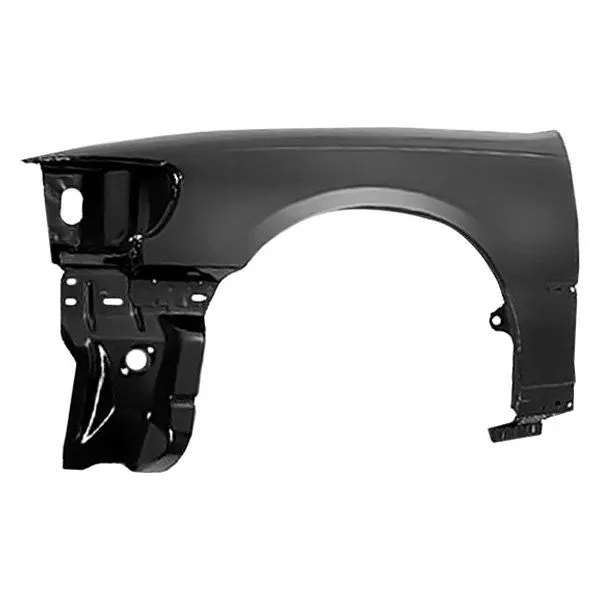
Full fender type:-
The full fender type is the traditional type of fender where more material consumption is observed. This type is used in hold old design of automobiles where it increases the overall weight and thus reduces performance. The maintenance is also relatively more due to more surface.
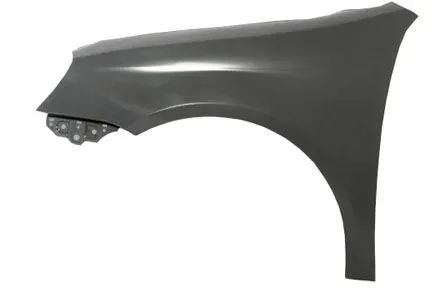
Half fender type:-
The half type is a modern design where less material consumption is observed, so productivity increases by reducing the size of the blank and thus providing more performance. The maintenance is also relatively low compared to the full bumper type.
Japan Requirements for fender wheel arch:-
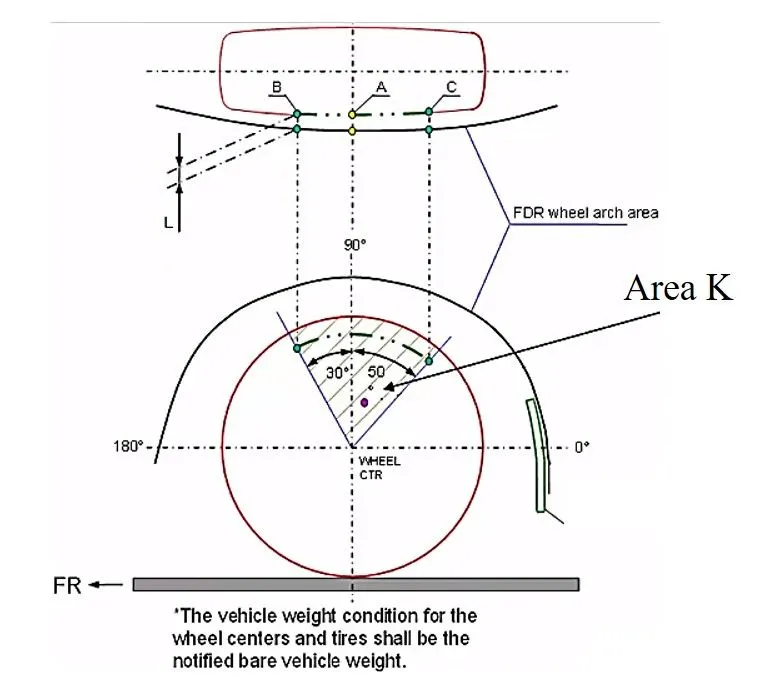
- Measure clearance L of tir, hub, cap, and fender in three different positions within area K and produce clearance check chart to validate.
- Clearance must be greater than 5 mm in all three positions.
- Wheel guard requirement the value shall be more than 5 mm at a line 30 degrees forwards and 50 degrees rearwards from the central vertical axis of the wheel.
US Standards regulation for fender wheel arch:-
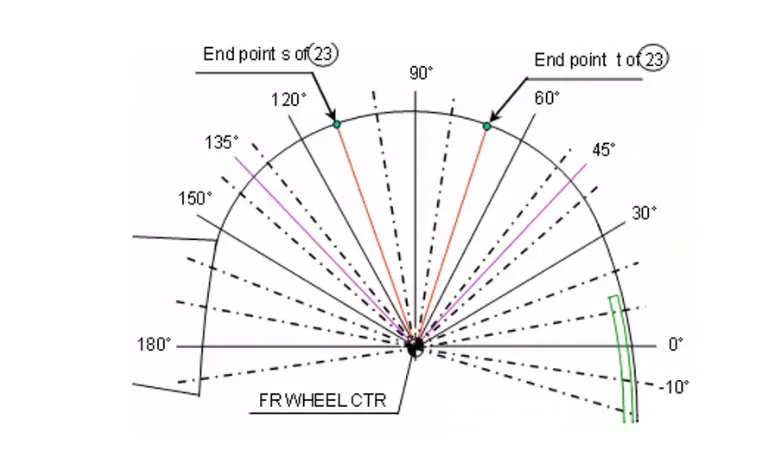
- Make clearance check details on all positions from -10* to 180* and make the clearance check table.
- All values should be greater than 5 mm to satisfy the regulation.
- The value of A shall be more than 5mm at line 30* forwards and 50* rearwards from the central vertical axis of the wheel.
European Regulation:-
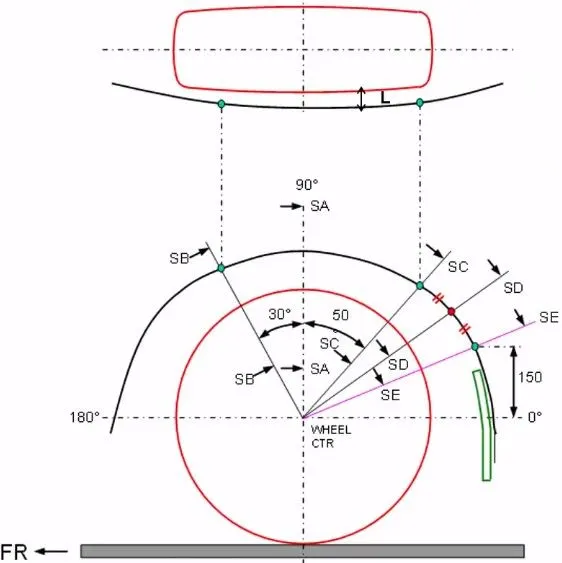
- Measure the clearance" L" as shown in the above fig at all the five sections SA-SA, SB-SB, SC-SC, SD-SD, and SE-SE should be greater than 10 mm.
Procedure
- Create the datum plane on the outer edge of the wheel.
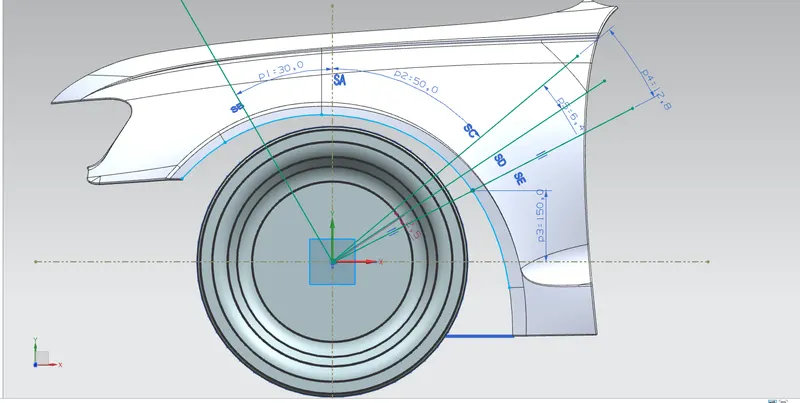
- Create the center axis.
- Create the sections SB, SA, SC, SD, and SE.
- Create the section SB by creating an inclined line 30* to the center axis that is SA.
- Create the section SC by creating an inclined line 50* to the center axis.
- The section SE is created by placing the line on the fender at a distance of 150mm.
- The section SD is created by placing on the center between the SC and SE.
- And at last we measure the length between the point and the fender edge and we decide the failure criteria.
Results obtained
Measuring L for given wheel and fender at section SB
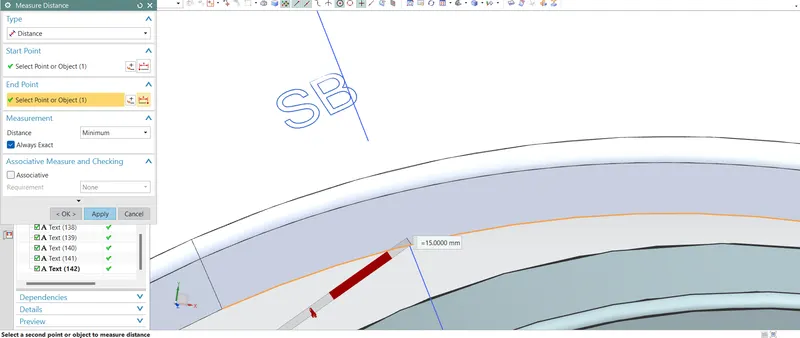
The value of L at section SB is 15mm.
Measuring L for given wheel and fender at section SA
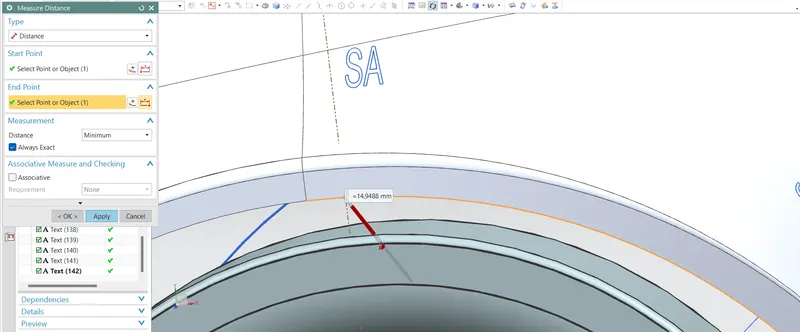
The value of l at section SB is 14.948mm.
Measuring L for given wheel and fender at section SC
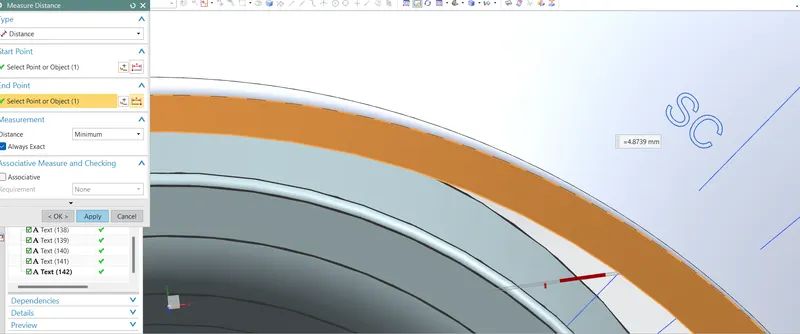
The value of L at section SC is 4.873
Measuring L for given wheel and fender at section SD
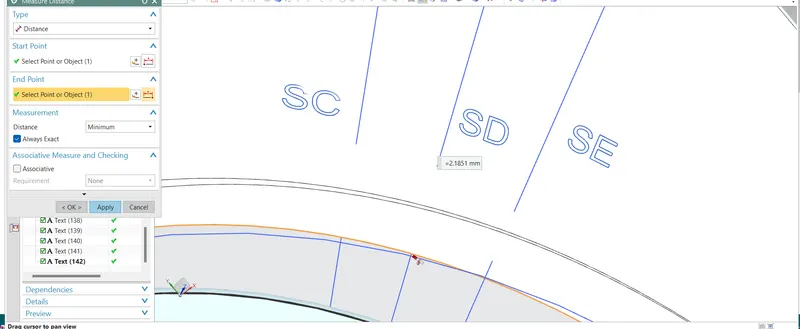
The value of L at section SD is 2.185mm
Measuring L for given wheel and fender at section SE
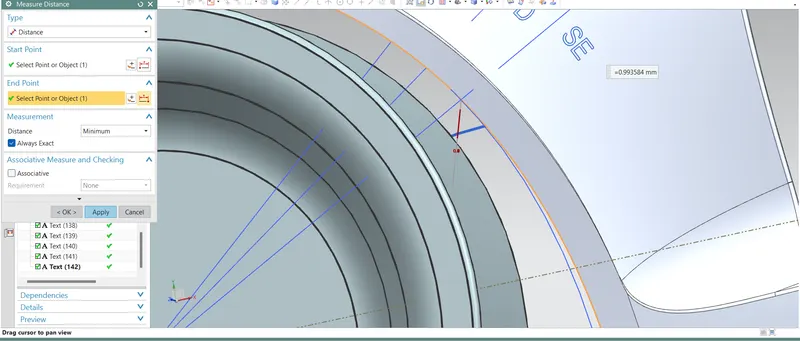
The value of L at section SE is 0.993 mm.
| SECTION | CLEARANCE "L" | STATUS |
| SB | 15 mm | 15>10(pass) |
| SA | 14.984 mm | 14.984>10(pass) |
| SC | 4.873 mm | 4.873<10(fail) |
| SD | 2.185 mm | 2.185<10(fail) |
| SE | 0.993 mm | 0.993<10(fail) |
Conclusion
only SA, SB has a clearance of 10 mm, and the rest of the other points do not have a clearance of 10 mm. That's why the given fender does not pass the European standards for wheel arch area.