Fender Design - Wheel Arch Challenge
Aim:-
To calculate the Wheel Arch gap at required points and check whether the car passes the European standard.
Introduction:-
Fender:-
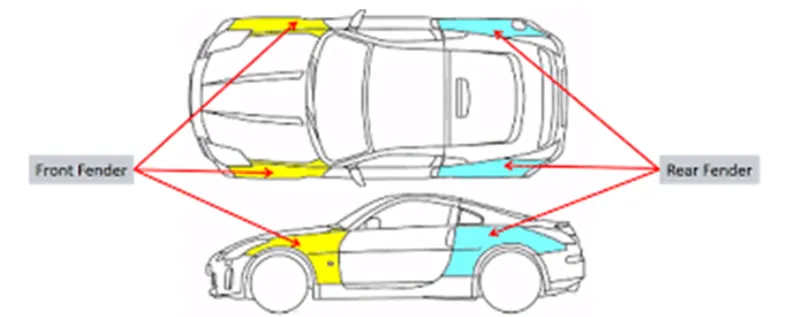
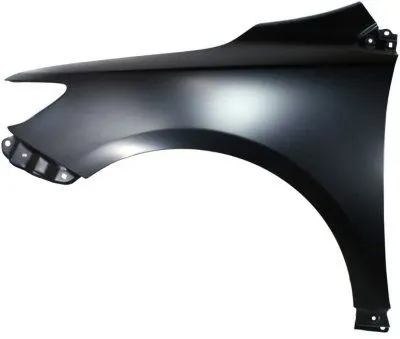
Fender is an automotive component that shields the wheel. The fender is for the two main reasons, one is to avoid the damage caused by the fying stones, debris, mud from the wheel upon moving on the road and second is to avoid the damage from the wheel for pedestrians.
Types of Fender:-
1) Full Bumber Type:-
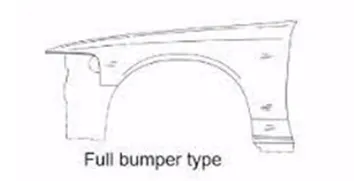
This bumper type was used in the olden days. The process of creation of full bumper leads to the lot of wastage as scrap and it also bulk so it reduces the efficiency and the performance of the vehicle.
2) Half Bumper Type:-
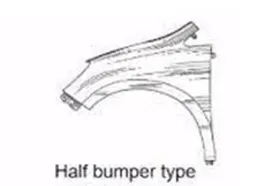
This bumper type is the upgraded verion of the full bumper type. This is the modern bumper which generates less scrap compared to the full bumper type and also it is light so it increases the vehicles performance.
Wheel Arch:-
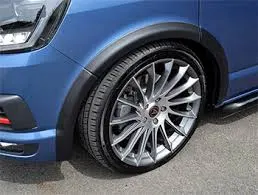
Wheel arch is the area around the wheel which potects the pedestrians and the engine compartment from getting damage from the rock, mud, debris while the car is moving. Baffle is the styling plastic surface which is fixed at the wheel arch to increase the NVH(Noise Vibration Hardness) score to get the better rating for the car.
Japan Regulations:-
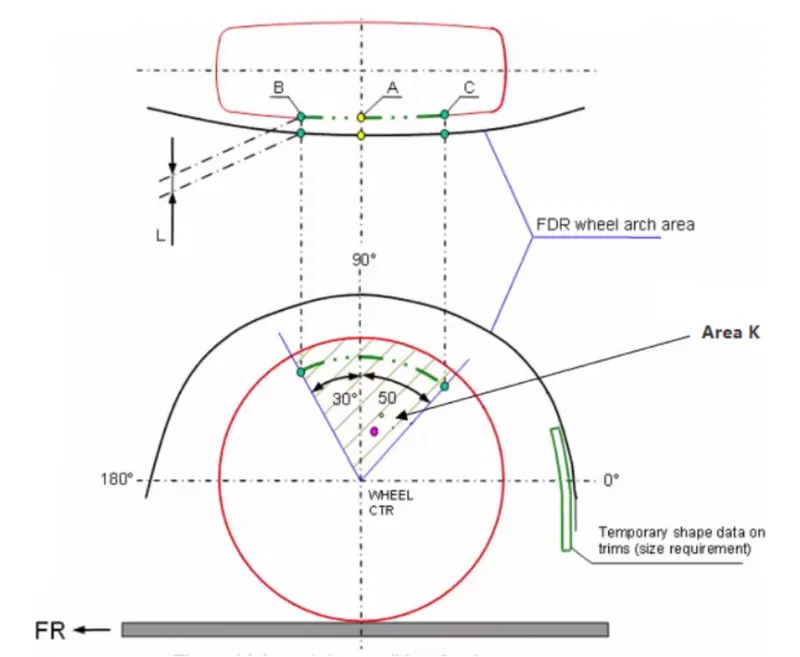
1)The clearance "L" for tire, hub, cap and fender is to be measured within area K and create clearance check chart to validate.
2) The value of L should be greater than 5mm at all positions.
3) Wheel guard requirement : The value of "a" should be more than 5mm at line 30degree forward and 50degree rearwards from the central vertical axis of the wheel.
European Regulations:-
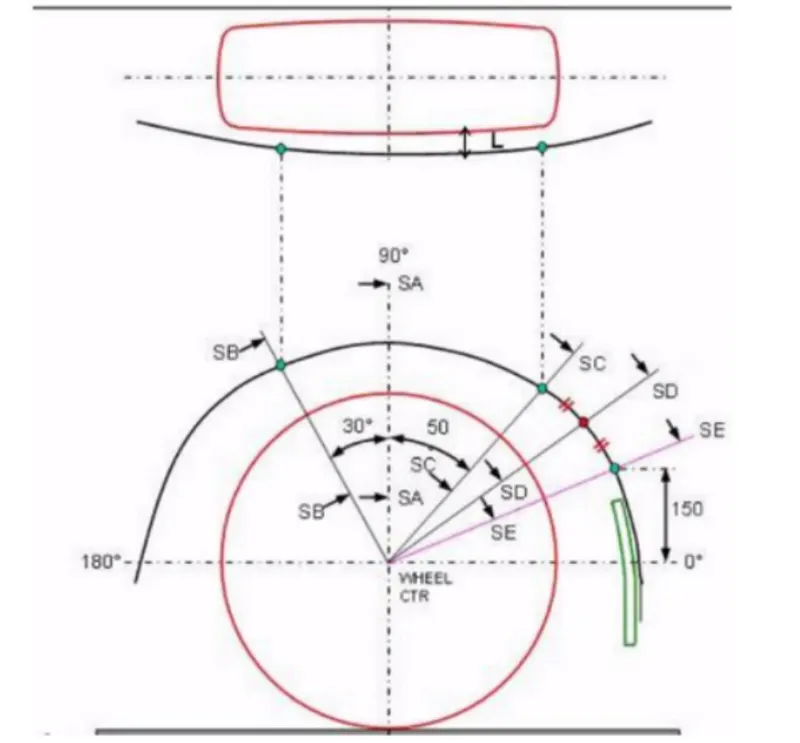
1) The clearance "L" should be measured at sections SA-SA, SB-SB, SC-SC, SD-SD and SE-SE and create clearance check chart to validate.
2) At all the five sections the value of L should be greater than 10mm to satisfy the European Regulations.
3)Wheel guard requirement : The value of "a" should be more than 5mm at line 30degree forward and 50degree rearwards from the central vertical axis of the wheel.
US Regulations:-
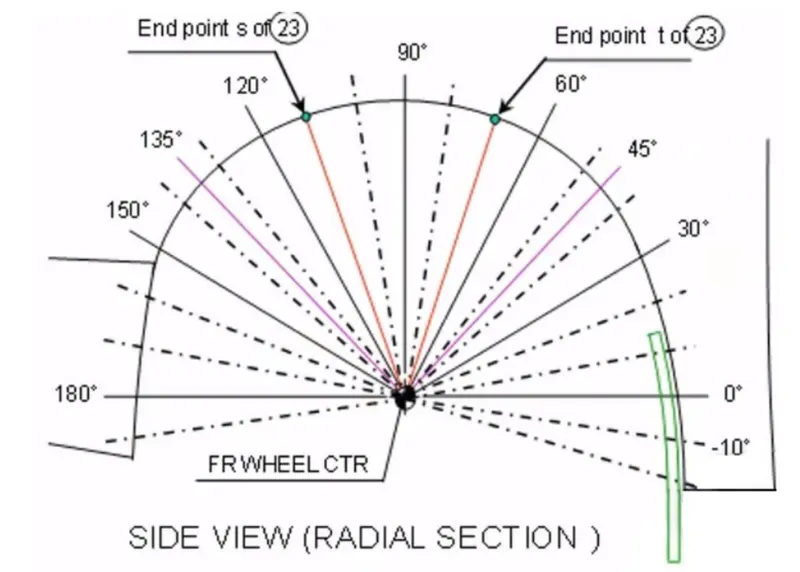
1) Clearance "L" is to be checked at all positions from -100degree to 100degree and create clearance check chart to validate.
2) The value of L should be greater than 5mm to satisfy the regulations.
3) Wheel guard requirement : The value of "a" should be more than 5mm at line 30degree forward and 50degree rearwards from the central vertical axis of the wheel.
Calculation of WheeL Arch for European Standards:-
Given wheel arch from this we have to calculate the wheel arch distance.
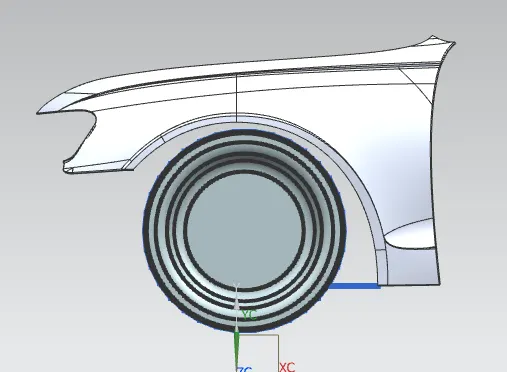
To measure the wheel arch distance first we need to create the datum plane on the outer most flat surface of the wheel from that only we can able to calculate the distance between the wheel and fender either the fender is clearing the standard or not.
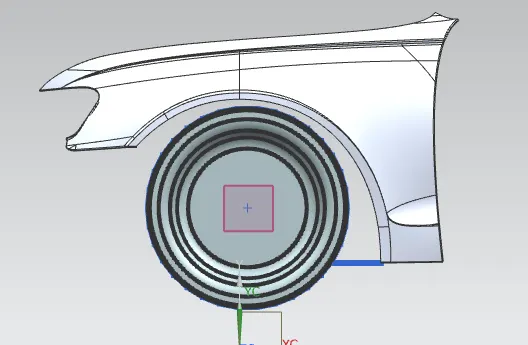
Sketch for the calculation of wheel arch on the created datum plane.
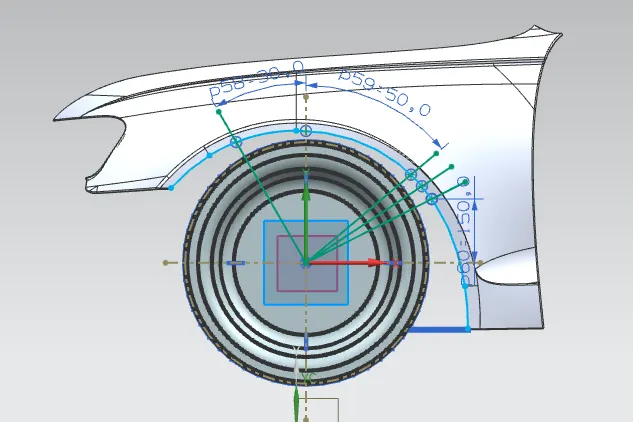
First create the horizontal and vertical line at the zero point then draw two lines one is on the forward of the wheel axis at 30° and draw another line on the rearward of the wheel axis at 50°. Then create the point on the projected fender line at a distance of 150mm from the bottom. Then create a line on the point which is 150mm above from the ground. Create a bisecting line between the 50° and the line on the point. Then finally create the intersecting point on each and every line with the projected fender curve.
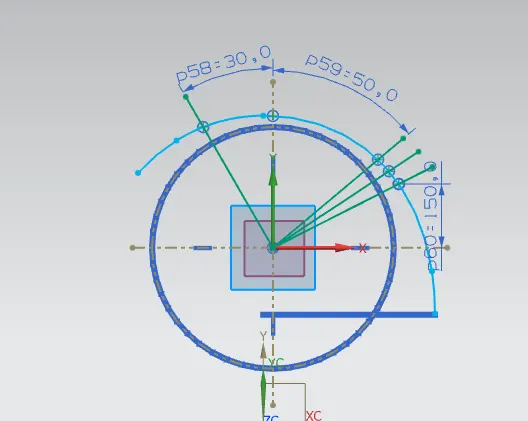
Project the sketch/points on the fender wheel by using the projection curve. Give notations/namings to the lines for the clear understanding.
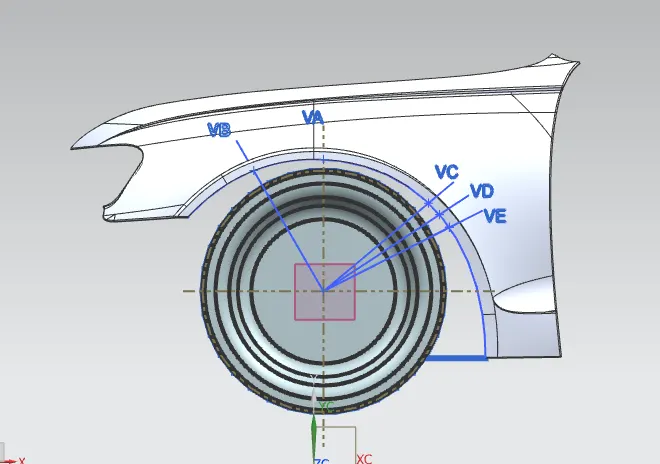
Final step is to measure the distance between the intersecting points on the sketch and the projected points on the fender. If the value is more than 10 means that area is clearing as per the European Standards.
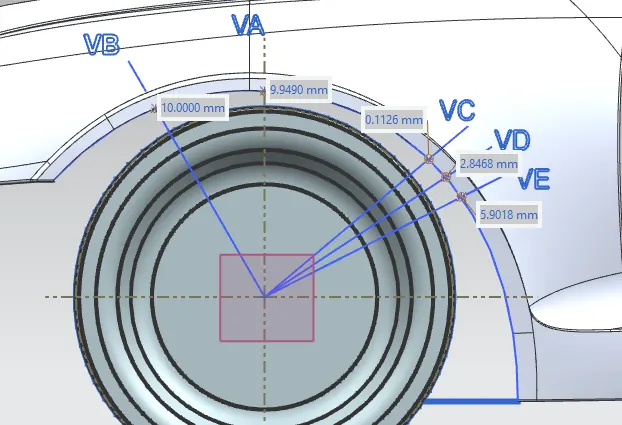
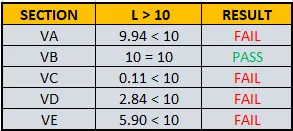
Final Result:-
Conclusion:-
The clearance value(L) measured from the above calculation at all five locations. Here the VB is the only area which is having the clearance value of 10 and the remaining four areas are not clearing as per the European Standards. So this model is not suitable European Standards.