Fender Design - Wheel Arch Challenge
AIM:
To calculate the wheel arc area and decide whether the car will pass the European standards or not.
FENDER:
- Fender is the US English term for the part of an automobile (vehicle body) that frames a wheel well (the fender underside).
- Its primary purpose is to prevent sand, mud, rocks, liquids, and other road spray from being thrown into the air by the rotating tire.
- When vehicle is moving, tyres pick up stones and others and hurl them in all directions. Fenders are basically present to prevent any injuries to pedestrians and contain the motion of these particles
- Most passenger automobiles have four fenders, one over each wheel. For vehicles with a narrow car body that exposes the tire, the fender is an exposed curve over the top of the tire. For wide body vehicles that cover the tire, the fender forms the wheel well surrounding the tire, and is not directly visible from above the car body.
- Wheel wells tend to be much larger than the diameter of the tire, because they do not move with the tire suspension and consequently must be large enough to allow the full range of tire motion on the suspension without touching the interior of the wheel well.
- More elaborate designs include fender skirts for enclosing the outside edge of the wheel well, and stylized pontoon fenders for exposed fenders.
TYPES OF FENDER:

WHEEL ARCH:
- Wheel Arch is the semicircular curve on the fender just above the wheels of the car
- It has some standard specifications
- For a vehicle to has its use permit in different countries, the wheel arch of the fender must compliant with the standards set by the respective countries
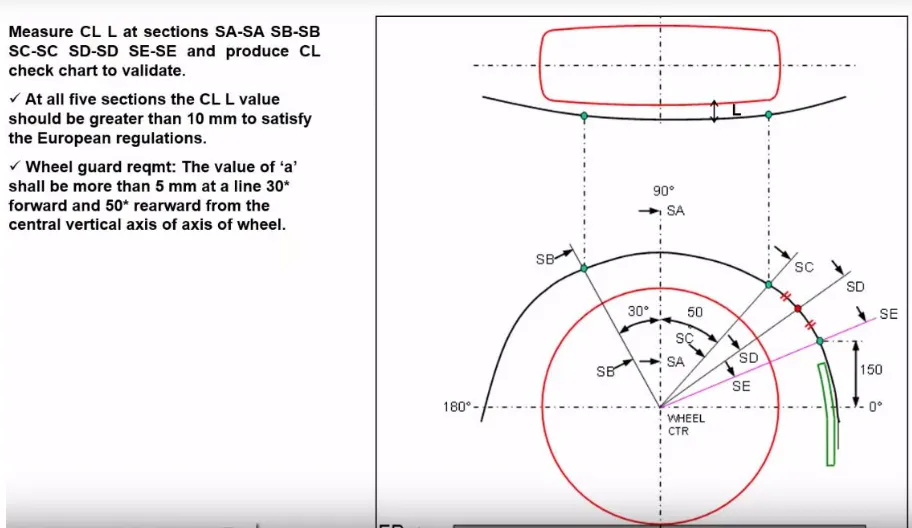
EUROPEAN REGULATIONS REQUIREMENTS:
INPUT:
WHEEL ARCH CALCULATION:
Drawing the sketch as per the European standards and regulations and projecting the sections on the fender to obtain the measurements for 'L' AND 'a'.
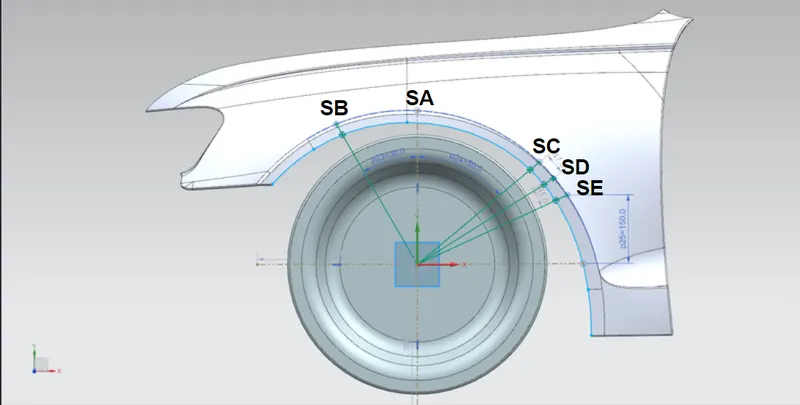
Measuring the values of clearance "L" at all sections:
At all five sections the value of 'L' should be greater than 10mm to satisfy the European regulations
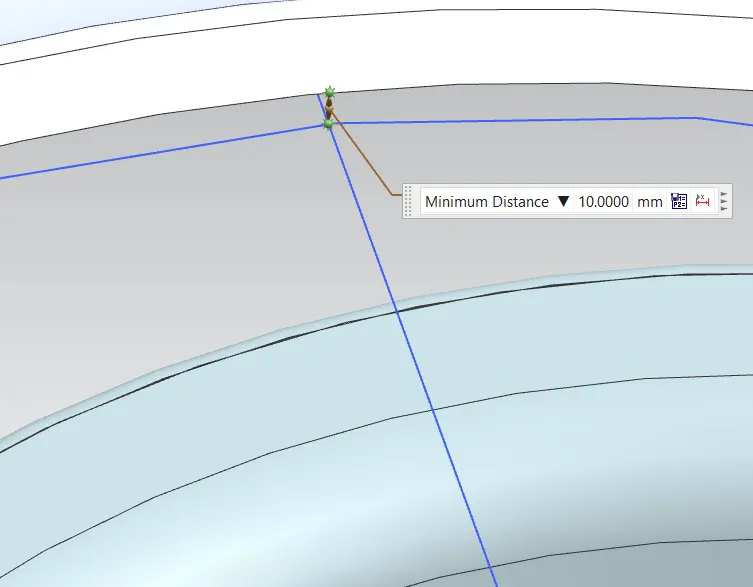
Measuring 'L' at SB:
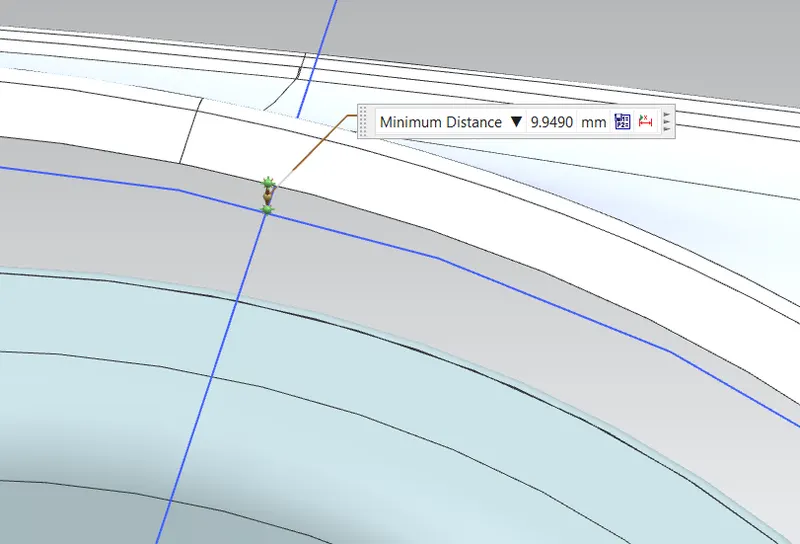
Measuring 'L' at SA:
Measuring 'L' at SC:
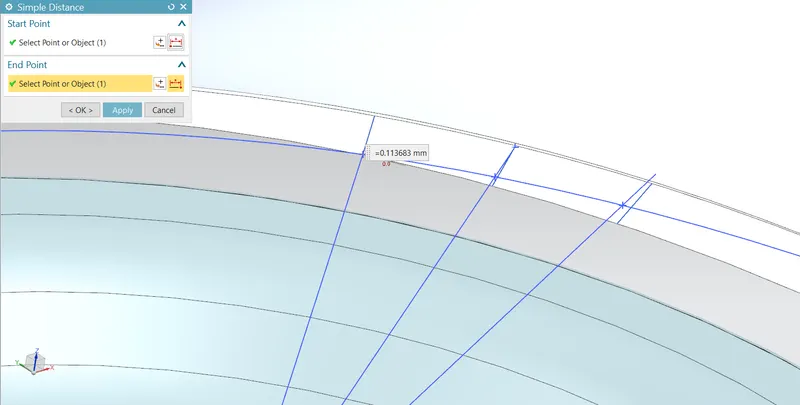
Measuring 'L' at SD:
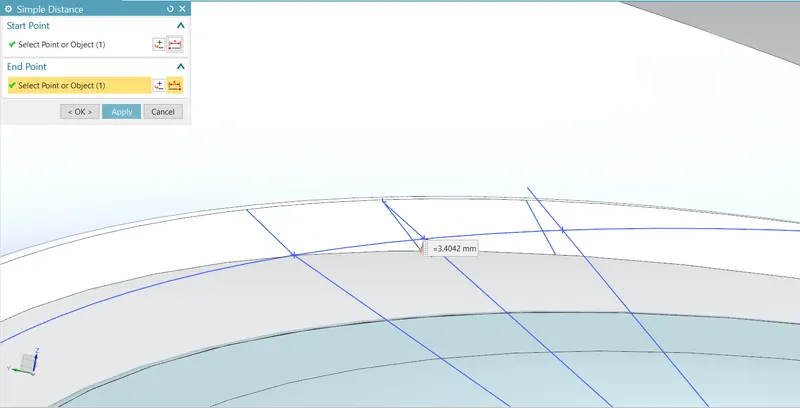
Measuring 'L' at SE:
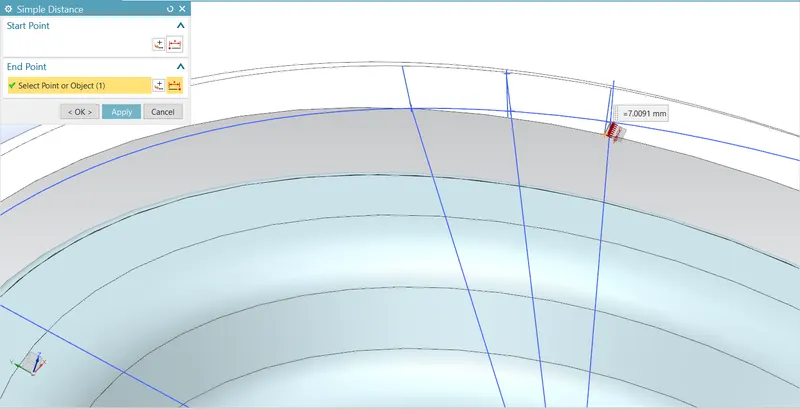
OBSERVATION TABLE:
| SECTION | CLEARANCE 'L' in (mm) | RESULT |
|---|---|---|
| SA | 9.9490 | FAIL |
| SB | 10 | PASS |
| SC | -0.1136 | FAIL |
| SD | -3.4042 | FAIL |
| SE | -7.0091 | FAIL |
Measuring the values of clearance "a" Wheel Guard requirement:
To satisfy the European requirements the value of 'a' should be more than 5mm at a line 30° forward and 50° rearward from the central vertical axis of wheel
Measuring the value of 'a' at line 30° forward from the central vertical axis of wheel:
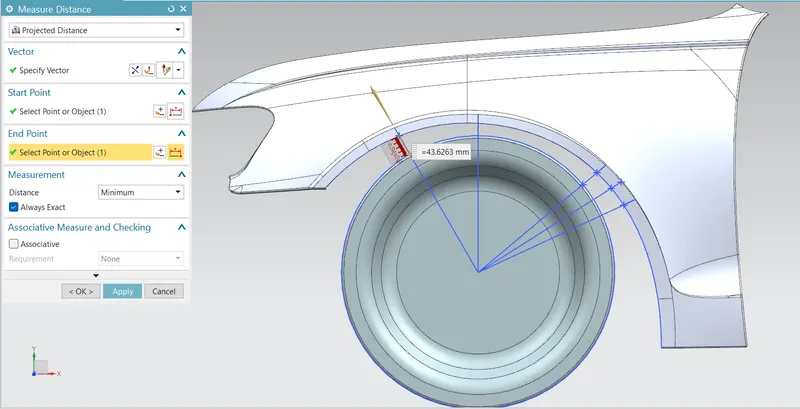
Measuring the value of 'a' at line 50° forward from the central vertical axis of wheel:
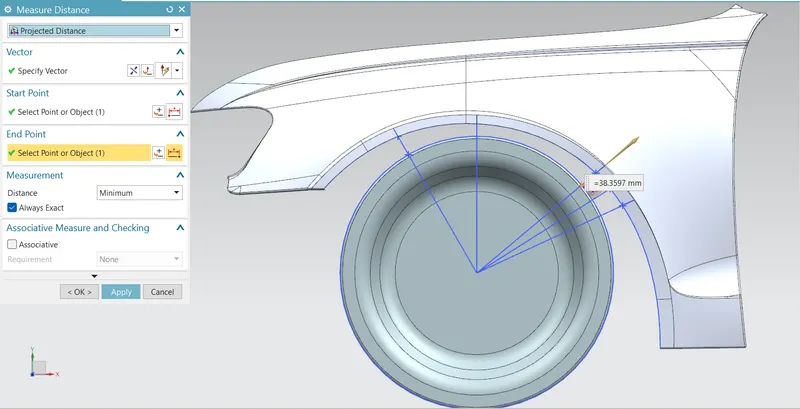
OBSERVATION TABLE:
| SECTION | ANGLE | CLEARANCE 'a' in (mm) | RESULT |
|---|---|---|---|
| SB | 30° | 43.6263 | PASS |
| SC | 50° | 38.3597 | PASS |
CONCLUSION:
From the above measurements it was observed that the clearance value 'L' at sections SA,SC,SD & SE was lower than 10mm and therefore it does not satisfy the European regulations. Whereas, the clearance value 'a' was more than 5mm at a line 30° forward and 50° rearward from the central vertical axis of wheel.