Fender Design - Wheel Arch Challenge
Fender Design - Wheel Arch Challenge
Aim :
To calculate the wheel arch gap at required points and check whether the car passes the European standard.
Objective :
- Study the different wheel arch gap standards.
- Draw the lines at the required angle and points for the European standard.
- Measure the distance at each angle and mention gave model is pass or fail.
Fender :
A fender is a part of an automobile, motorcycle, or other vehicle body that frames a wheel well (the fender underside). Its primary purpose is to prevent sand, mud, rocks, liquids, and other roads spray from being thrown into the air by the rotating tire. Fenders are typically rigid and can be damaged by contact with the road surface.
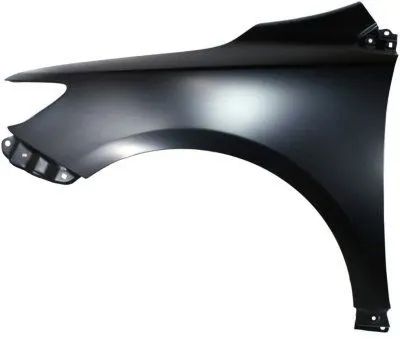
The main purpose of fenders on cars is that they shield the wheels and they protect the passenger the pedestrains and the other vehicles from stones, mud, liquid, and other debris that can fly in the air because of the speeding rotating wheels while the car is running.
Wheel Arch :
It is a curved part of the fender positioned right above the wheel. The wheel Arch is designed such that it protects both the pedestrian and car cabin from mud, water rocks and another road spray. Different countries have different wheel arch regulations in place, and the wheel arch design has to comply with them to be deemed usable in that country.
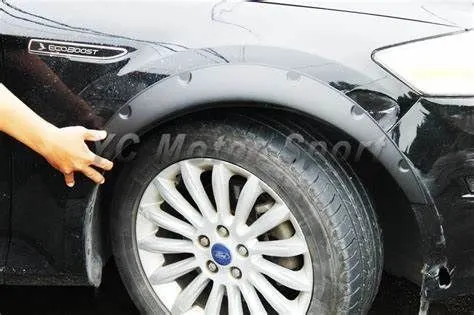
For avoiding design alterations of the same vehicle to meet the different regulations parameters are taken into consideration for design purposes.
Fender Wheel Arch Regulations :
Japan Regulations :
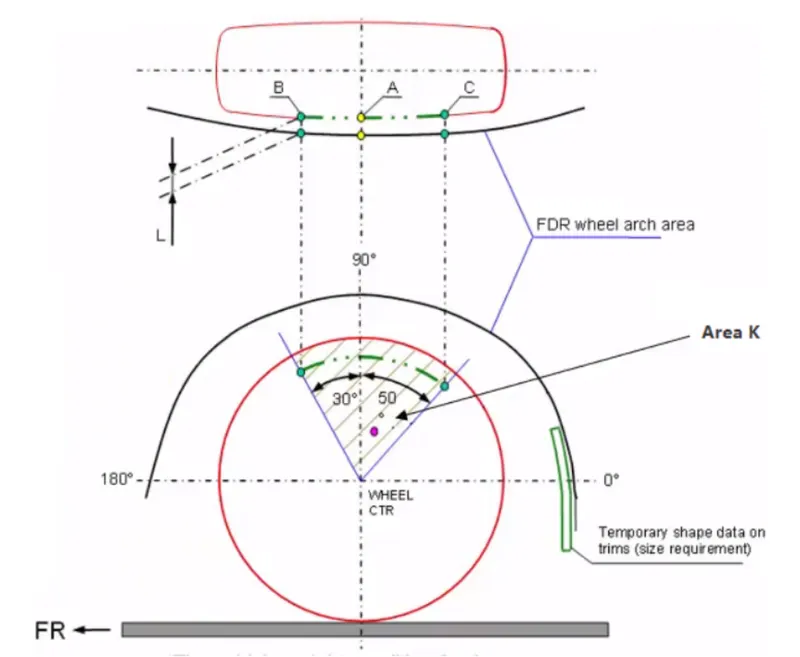
- The clearance "L" for the tire, hub, cap, and fender is to be measured within area K, and create a clearance check chart to validate.
- The value of L should be greater than 5mm at all positions.
- Wheel guard requirement: The value of "a" should be more than 5mm at line 30 degrees forward and 50degree rearwards from the central vertical axis of the wheel.
European Regulations :
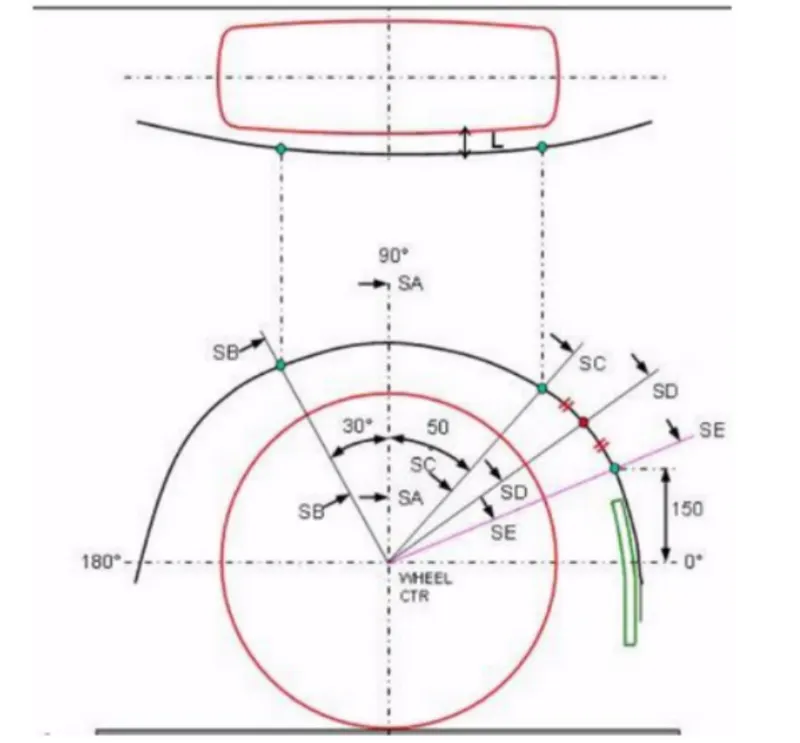
- The clearance "L" should be measured at sections SA-SA, SB-SB, SC-SC, SD-SD, and SE-SE, and create a clearance check chart to validate.
- At all five sections, the value of L should be greater than 10mm to satisfy European Regulations.
- Wheel guard requirement: The value of "a" should be more than 5mm at line 30 degrees forward and 50degree rearwards from the central vertical axis of the wheel.
US Regulations :
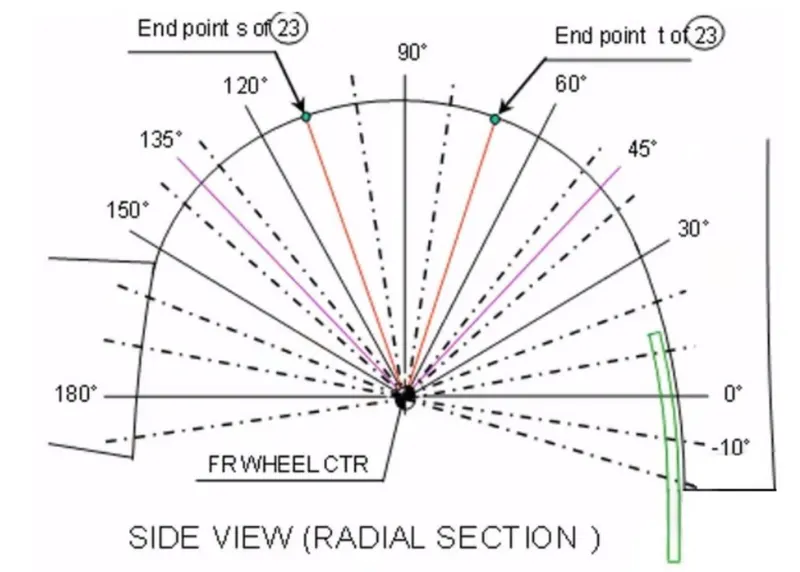
- Clearance "L" is to be checked at all positions from -100degree to 100degree and create clearance check chart to validate.
- The value of L should be greater than 5mm to satisfy the regulations.
- Wheel guard requirement: The value of "a" should be more than 5mm at line 30 degrees forward and 50degree rearwards from the central vertical axis of the wheel.
Calculations of wheel Arch area - European Regulations
For the calculation of clearance between the wheel Arch and wheel, we have to create a sketch on the outermost face of the wheel and the procedure as follows.
From the given part file we need to open in the NX cad and from the part file they give the fender and the wheel. So, now we need to check for the standard of European regulation. Now we need to create the Datum plane at the outermost face of the wheel as shown in the figure.
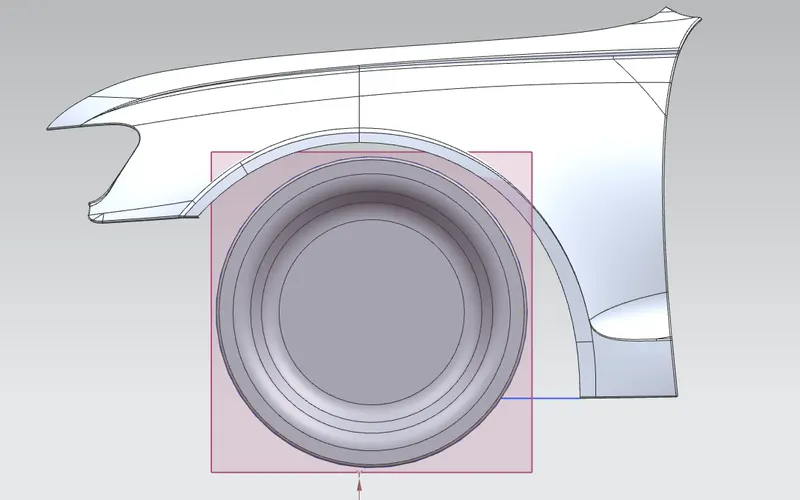
After that in that plane, we sketch the lines and give the required angle from the reference of the European standard drawing by using the Rapid dimension as shown in the figure.
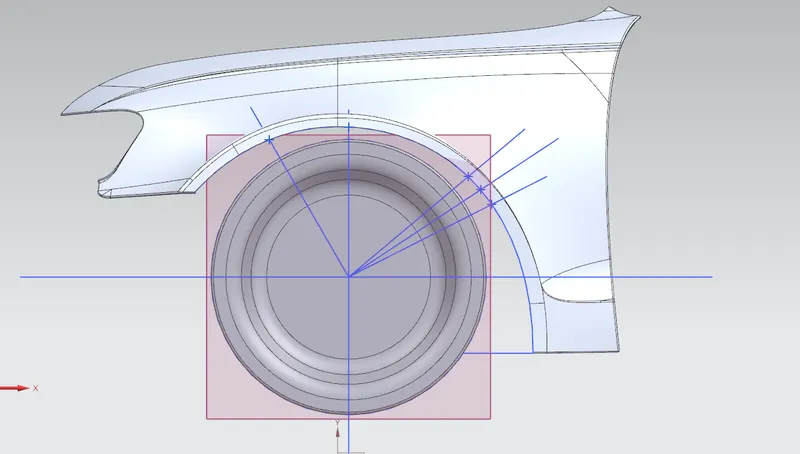
Then we need to measure the distance from the outermost wheel to the outermost wheel arch for that we add some points on the face and the angle line as shown in the figure
SECTION 1
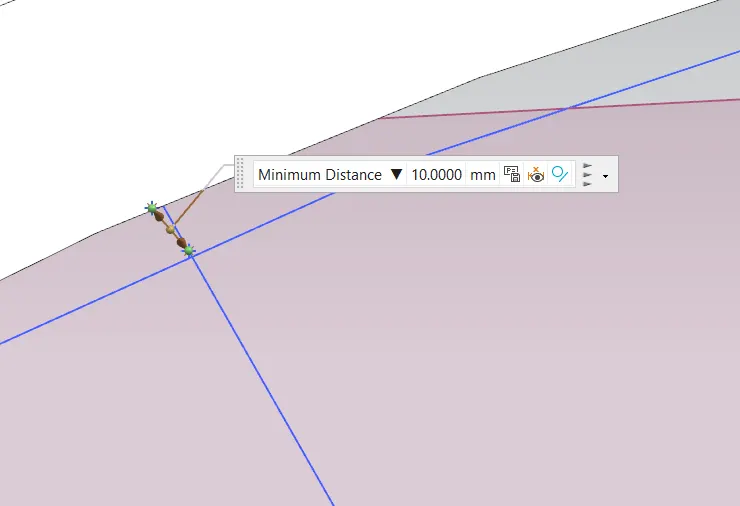
SECTION 2
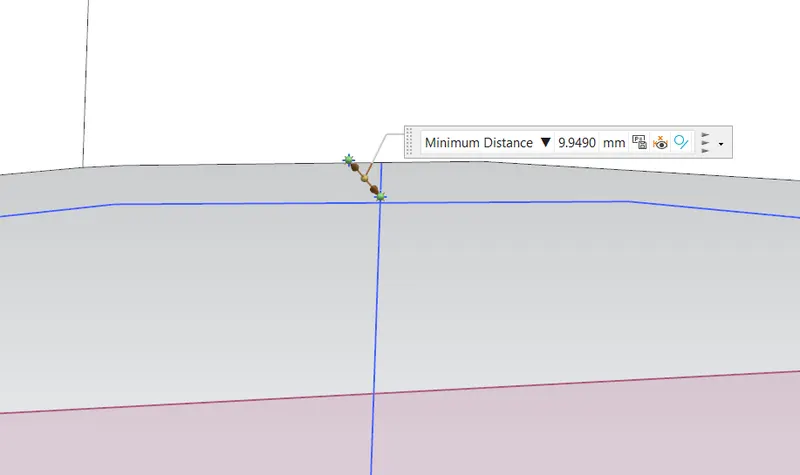
SECTION 3
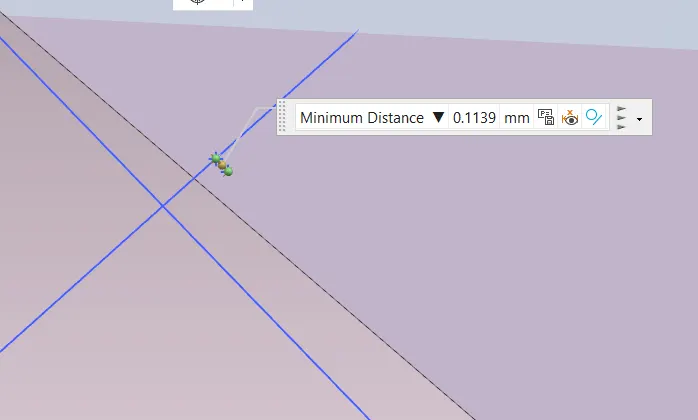
SECTION 4
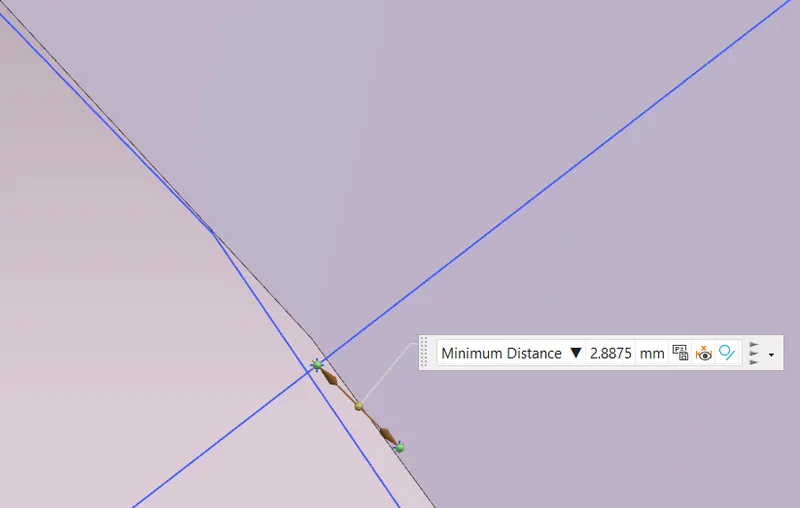
SECTION 5
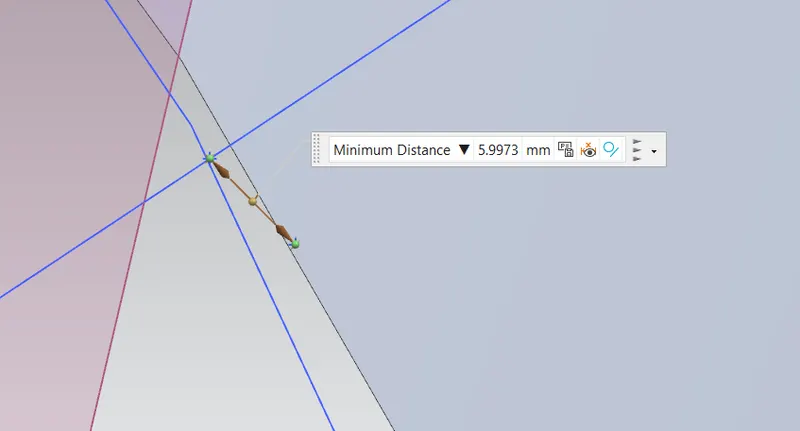
| S.NO | LENGTH | mm | RESULT |
| 1 | SECTION 1 | 10mm | PASS |
| 2 | SECTION 2 | 9.94mm | FAIL |
| 3 | SECTION 3 | 0.11mm | FAIL |
| 4 | SECTION 4 | 2.88mm | FAIL |
| 5 | SECTION 5 | 5.99mm | FAIL |
European standards
NOTE- So from the above-mentioned table we can see that only one length is equal to 10mm and remaining all the lengths are less than 10mm but according to the European standard all the lengths are equal to 10mm or greater the 10mm.
CONCLUSION -
From the above results, we can conclude that the Fender does not pass the European Regulations as the minimum clearance between the fender arch wheel to the outermost wheel is 10 mm and this design does not meet this minimum clearance so this fender design fails for the European Regulation standard.